
The Sweet Victory of Painted Trim: Our Journey to a Brighter Living Room
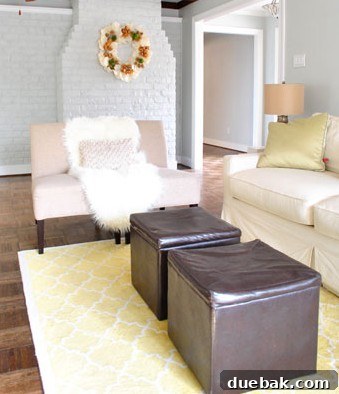
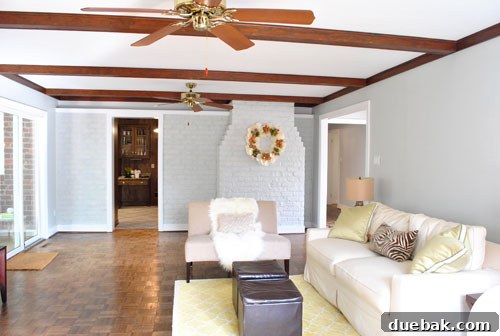
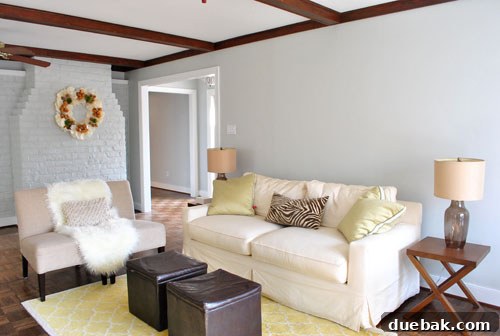
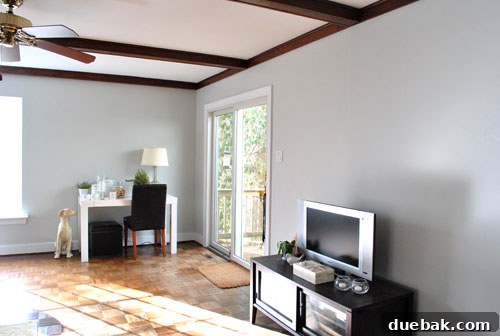
There are moments in home renovation that test your patience, push your limits, and make you question every life choice that led you to pick up a paintbrush. For us, painting the trim in our living room was one of those monumental, albeit somewhat agonizing, experiences. Yet, as the final brushstroke dried and the last drop cloth was folded, a wave of profound satisfaction washed over us. The relief was palpable, the joy undeniable, and yes, there were happy dances – one triumphant jig on Friday night as we finished, and another celebratory swirl the next morning as the room bathed in natural light. It’s a curious phenomenon, isn’t it? The way certain home improvement tasks can evoke an “ugly-cry” during their execution, only to inspire “happy tears” upon completion. This emotional roller-coaster is a hallmark of DIY, a testament to the effort, and ultimately, a path to creating a home that truly reflects your spirit. We never regret these projects in the end, especially when we see the stunning transformation. We’re just not quite ready to dive into the next one the very next day! But for now, the living room is looking incredibly fresh and inviting. Take a peek at the updated view (we’ll chat about those beams later):
The Art of Trim Painting: To Prime or Not to Prime?
When it comes to painting wood trim, especially previously stained or dark-painted surfaces, the prevailing wisdom from experts often includes a crucial first step: priming. Typically, an oil-based primer is recommended to block potential bleed-through from the underlying wood tannins or old paint, followed by two coats of a durable latex topcoat. This method provides superior stain-blocking properties, ensuring a pristine, long-lasting finish.
Our Bold Experiment: Embracing No-VOC Latex
However, in our pursuit of a more eco-friendly and less chemically intensive home, we decided to deviate from the traditional path. We threw caution to the wind and went straight for a white semi-gloss latex no-VOC paint – specifically, Olympic Premium from Lowe’s. This decision wasn’t entirely spontaneous; a few days prior, while tackling the wall painting project, some gray wall paint had inadvertently gotten onto the trim. To our pleasant surprise, it covered remarkably well, showing no signs of bleed-through. This small, accidental test gave us the confidence to bypass the primer altogether for the entire trim project.
It was undeniably a risk. The potential downsides were significant: uneven coverage, the dreaded bleed-through (especially with dark, old trim), and the daunting prospect of having to go back, apply primer, and then repaint everything, effectively doubling our workload and perhaps pulling out a good 60-80% of our hair in frustration. But, happily, none of that came to pass! It was an absolute relief.
By opting out of oil-based primer, we sidestepped the unpleasant fumes and higher VOCs (Volatile Organic Compounds) that typically accompany such products. For us, with a little one in the house, a baby-and-eco-friendly approach was paramount. This calculated risk paid off beautifully, leading to a completely zero-VOC result for our trim. Had it not worked, we would have diligently sought out the lowest VOC stain-blocking primer available. But the fact that we didn’t have to was, to put it mildly, “pretty sweet.”
The Reality Check: A Project That “Sucked”
That said, the phrase “pretty sweet” largely stops there when reflecting on this project. We’ve always vowed to keep it real with you, our readers. While we’re eternal optimists who genuinely love nearly every project we tackle – even the ones that don’t go perfectly – we promised to tell you if something truly sucked. And painting this trim? It absolutely did.
It wasn’t that the task itself was inherently difficult. I relied on this short-handled brush, which I swear by for its precision and ability to “stay in the lines,” allowing me to work significantly faster than with a traditional long-handled brush. The real challenge lay in the sheer, unending duration of the process. It took for.ever.
Beyond the Brushstroke: The Grueling Marathon of Application
Our trim painting marathon began around 10 am on a Friday morning. I tackled the first coat solo, working steadily until about 3 pm, while Clara took her morning nap and then John managed her and tended to the blog. By 3 pm, fueled by sheer desperation and the realization of the monumental task ahead, I enlisted John’s help. He traditionally shies away from detail work, preferring to be the “big picture” guy who rolls walls while I handle the intricate cutting-in. He often claims a lack of fine motor skills when it comes to a brush. However, at this point, I was ready to begin the second coat, so I simply asked him to apply the second coat down the middle of the trim and baseboards. I followed closely behind, adding the second coat to the top and bottom edges, which demands more control to avoid straying onto the floor or wall.
Teamwork and Tenacity: Tackling Multiple Coats
By the time we approached coat number three, it was already around 7 pm. This late hour was a testament to numerous interruptions: blog updates, Clara’s needs, and essential food breaks, among other things. It was at this point that a disheartening realization dawned upon us: what we initially believed would be a three-coat process was clearly going to require a fourth, full coat to adequately cover that dark, dark trim. Boo to the hoo indeed. There might have been a minor temper tantrum (not from Clara, surprisingly), but no actual tears were shed, which I consider a semi-mature response to such devastating news. We pressed on, fueled by a mixture of determination and the desire to finally be done. It was well past midnight when we finally finished, celebrating our hard-won victory with a slightly blurry “toast” of our paintbrushes in front of the microwave clock. Klassy, right?

Primer vs. No-Primer: A Deeper Dive into Our Choice
Reflecting on the grueling hours, it’s clear that if we had used an oil-based primer, the process would likely have been much quicker. After a single coat of primer, it would typically require only 1-2 coats of latex paint, bringing the total applications to 2-3. This scenario likely would have seen us finishing between 5 to 7 pm, rather than pushing past 12:30 in the morning. However, for us, those 1-2 extra coats of paint were a worthwhile trade-off for a completely zero-VOC result. The peace of mind and the health benefits outweighed the temporary drag the next day.
Practical Tips for Your Trim Project
For those seeking the expert recommendation for tackling similar trim painting projects, the advice remains consistent: begin with an oil-based primer applied with a high-quality brush, followed by 1-2 coats of latex gloss or semi-gloss paint, also applied with a brush. If precision is your priority or if you’re not confident in your freehand skills, certainly tape off your edges meticulously. However, if you’re curious about our specific method, here’s our process: I used my trusty short-handled brush, and we applied four full coats of semi-gloss latex paint without any taping. Over time, I’ve developed a nice, steady hand that allows me to cut in cleanly without the need for painter’s tape.
This isn’t our first rodeo with this method. We successfully painted all the wood trim in our first house – including areas like the bathroom and kitchen, which see a lot of wear and tear – using the exact same approach: no sanding and no primer. We were incredibly fortunate to experience zero chipping or bleed-through issues even after living there for over four years. We’re keeping our fingers tightly crossed for the same good luck and durability here in our new home!
Choosing the Perfect White: Our Paint Selection
The Nuance of White: “Base 2” by Olympic Premium
The choice of paint color, even white, can significantly impact the overall feel of a room. For our trim, we opted for the off-the-shelf white from Olympic Premium, specifically named “Base 2.” This paint comes without any tint, providing a crisp, clean white that we absolutely adore. It’s important to note that “Base 1” is often marketed as “Ultra White,” which can sometimes have a subtle, almost glowing blue tint to it that we wanted to avoid. Our goal was a pure, unadulterated white that felt fresh and bright without being overly stark or cool. We love the result so much that we plan to use it for all the remaining trim throughout the house. Of course, that’s a project for another time, once we’ve managed to work up the energy to tackle another trim painting marathon in a few years – har har!
Beyond Color: The Importance of Sheen
Beyond the specific shade of white, the sheen of the paint plays a crucial role in both aesthetics and functionality. For trim, a semi-gloss finish like the one we chose is often the preferred option for several reasons. Semi-gloss paints offer excellent durability, making them highly resistant to scuffs, chips, and daily wear and tear. This is particularly important for trim and baseboards, which are high-traffic areas prone to bumps and dirt. Furthermore, the slight sheen of semi-gloss makes it incredibly easy to clean. A quick wipe with a damp cloth is usually enough to remove dust, fingerprints, and smudges, keeping your trim looking fresh and new for longer. While other sheens like satin (less reflective) or full gloss (very reflective and durable) are available, semi-gloss strikes the perfect balance between elegance, durability, and ease of maintenance, making it an ideal choice for creating a polished and inviting space.
Unveiling the Beams: A Bold Design Statement
From Au Naturale to Architectural Anchor
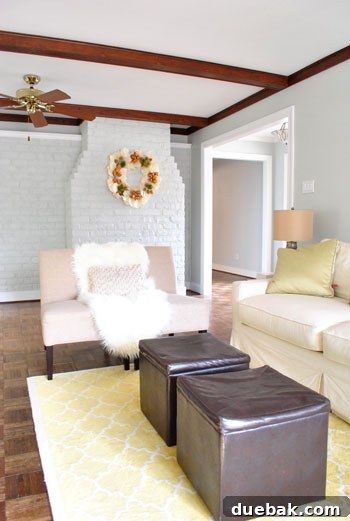
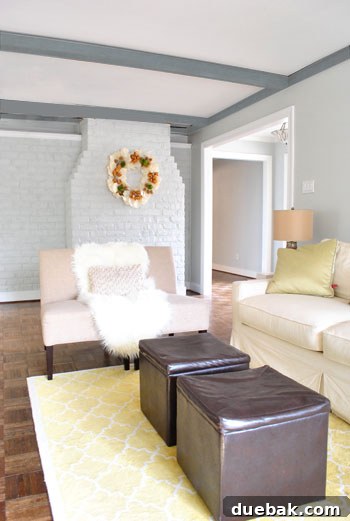
Now, let’s talk about those beams! We initially left them in their natural, unfinished state to give ourselves ample time to decide if we truly preferred them that way. The verdict is in: we definitely don’t. While “au naturale” might sound charming, in practice, they lacked definition and contributed to a somewhat unfinished feel in the room, particularly against the newly crisp white trim. After much deliberation, and with the fresh trim now defining the space, we’ve firmly decided that we want to either stain or paint them a deeper gray color. This choice is deliberate, aimed at introducing a rich texture and significant dimension to the living room. And, as an aside, those outdated fans are absolutely on their way out!
For a vague idea of what this future vision might entail, picture something like this:
… looking more specifically like this:
Balancing Aesthetics and Practicality: Design Considerations
While painting the beams white, matching the trim, would undoubtedly look gorgeous and cohesive, we’re keen on taking a slight design risk and doing something a little unexpected. We believe the deep gray will provide just the right amount of drama without making the ceiling feel too heavy. This is a crucial consideration, especially since we have standard 8-foot tall ceilings; the last thing we want is for the room to feel like it’s closing in on you. Instead, we anticipate a beautiful, well-grounded look that isn’t top-heavy. This effect will be further enhanced when we introduce a large, charcoal sectional sofa, which will anchor the room and add essential balance. With these foundational elements in place, we can then begin the exciting process of layering in bold colors through curtains, artwork, a statement rug, and various accessories, creating a vibrant, personalized, and truly inviting space. The journey promises to be interesting, and we’re excited to see it unfold!
A Look Back: The Journey of Transformation
Before & After: Appreciating the Progress
And why not conclude with a nostalgic little flashback to what this very space looked like just a little over a month ago, right when we first moved in?
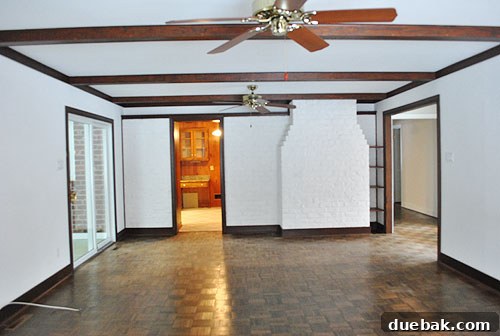
Oh, the memories! It’s incredible to see how far this space has come. This transformation truly underscores the power of home improvement and the impact a fresh coat of paint can have. Change is not just good; it’s often absolutely transformative.
Final Thoughts: The Enduring Joy of Home Improvement
Completing a project as demanding as painting all the trim in a living room brings an unparalleled sense of accomplishment. It’s a testament to patience, perseverance, and the collective effort that goes into making a house a home. Every brushstroke, every careful cut-in, and every late-night push contributes to a space that slowly but surely reflects our vision and personality. While the process itself can be grueling, the reward of stepping back and admiring the clean lines and bright finish is immense. It’s more than just aesthetics; it’s about crafting an environment that feels welcoming, fresh, and uniquely ours. We hope our honest recount of this journey, including our unconventional primer decision, provides valuable insights and perhaps a little inspiration for your own DIY endeavors. Home improvement is a continuous journey, filled with learning, challenges, and ultimately, immense satisfaction. We look forward to sharing more of our adventures as we continue to personalize our new space, one project at a time.