
Composting isn’t just a hobby; it’s a commitment to sustainability, a powerful way to reduce waste, and a secret weapon for any gardener. Since we first embarked on our composting journey in 2008, we’ve been captivated by its simplicity and immense benefits. The allure of free, nutrient-rich fertilizer, the satisfaction of diverting organic “waste” from landfills, and the subtle nudge to embrace more eco-friendly eating habits have kept us hooked. For years, our composting endeavors were constrained by the humble size of our DIY compost container, a modest bin that, while functional, couldn’t keep pace with our growing enthusiasm for sustainable living.
Beyond the Bin: Why We Needed a Composting Upgrade
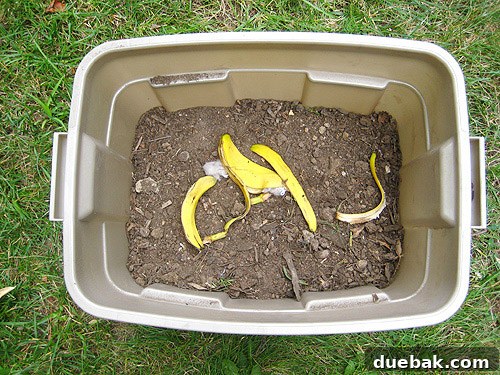
Our initial composting setup, built over three years ago, served its purpose admirably. We even added a second bin to cope with the demand. However, these small, individual units paled in comparison to the more expansive composting systems often showcased in gardening magazines or commercial setups. We frequently found ourselves limited by capacity, especially during peak gardening seasons or after enthusiastic kitchen clean-outs. Turning the compost became a more frequent chore, and the decomposition process, while effective, felt slower than we knew it could be with a larger, better-aerated system.
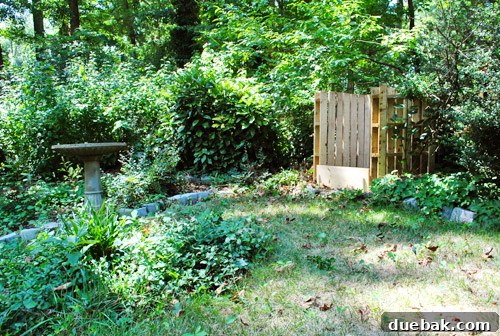
Even back in 2008, the vision of a more “legit” composting system, one crafted from sturdy shipping pallets, resonated deeply. I’d come across inspiring guides here and here, showcasing the potential of these readily available materials. However, the daunting task of sourcing and transporting bulky pallets from various locations was a commitment I wasn’t quite ready for at the time. My strategy then was to start small and gradually “graduate” to a more integrated, built-in solution. Fast forward three eventful years – years that perhaps felt a bit longer than they were – and destiny intervened. The arrival of our new patio supplies, conveniently delivered on a stack of robust pallets, finally provided the perfect, no-excuse opportunity to upgrade our composting system. The only remaining hurdle was deciding on the ideal placement for our new, larger bin, a decision that took us a few months to settle. We ultimately agreed on a secluded corner of our yard, a spot that promised both functionality and discretion.
Strategic Placement: Finding the Perfect Spot for Your Pallet Compost Bin
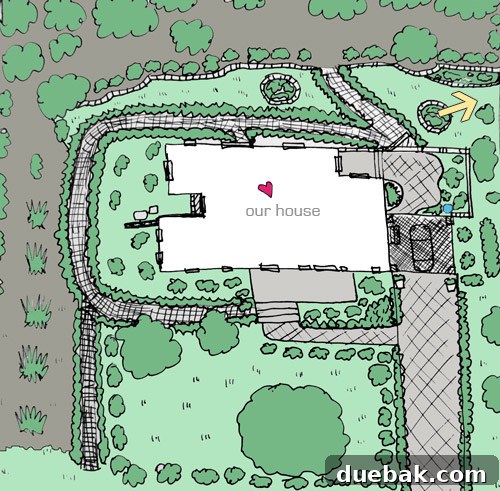
Choosing the right location for your compost bin is crucial for its efficiency and for maintaining harmony in your outdoor space. To give you a clearer perspective, Sherry once whipped up a not-at-all-to-scale map of our sprawling-yet-somehow-small yard (house too big, almost-an-acre yard too small!). The arrow on the map pinpoints the exact location where we established our new “compost station.”
Our decision to select this particular corner was guided by several key factors, which are worth considering for your own backyard composting efforts:
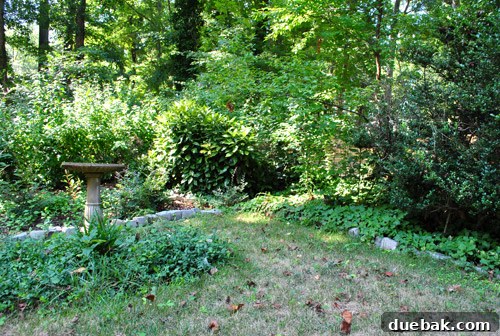
- Discretion and Aesthetics: It was largely hidden from the main lines of sight from the house and patio, ensuring the compost bin wouldn’t become an unwelcome focal point in our landscape. While composting is a beautiful act, the bin itself isn’t always the prettiest garden feature.
- Minimal Landscape Disruption: The chosen spot didn’t require sacrificing prime lawn space or established garden beds. It blended seamlessly into an existing, less-used area of the yard, minimizing disruption to our existing landscape design.
- Convenience vs. Proximity: The location was convenient enough for regular trips from the kitchen with scraps, yet far enough from the house to alleviate any concerns about potential odors. While our old bin never emitted a foul smell – a testament to proper composting practices – we preferred to err on the side of caution with a larger, new system. It’s always wise to allow some breathing room between your compost and your living spaces, just in case.
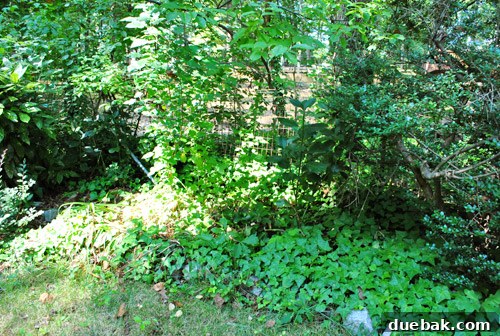
- Sacrifice of Unwanted Growth: The only “landscaping” that needed to be cleared for the bin was a patch of unruly ivy and a few stubborn weeds. This felt less like a sacrifice and more like an opportunity for natural tidying, allowing us to clear out undesirable growth while simultaneously establishing a functional area.
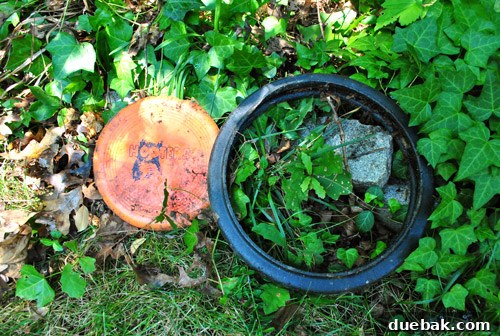
One unexpected benefit of clearing out the dense ivy was the unearthing of some rather unique “treasures.” Among the tangled vines, I discovered an ancient Hooters frisbee and a random plastic tire – curious relics from decades past, perhaps. It seems this upgraded composting system was already yielding dividends, offering a quirky form of “free stuff” before a single scrap of organic material had even entered the bin!
Prepping the Ground: Creating a Solid Foundation for Your Compost
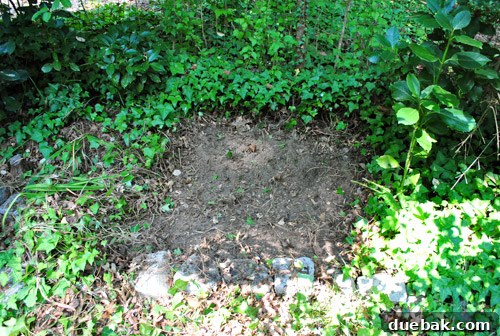
After a bit more dedicated work with my shovel and rake, the chosen corner was transformed into a clean, level clearing. The next consideration was the base of the compost bin. My online research offered a variety of opinions. Some guides suggested laying down an extra pallet as a base, arguing it provided stability and improved drainage. However, I also encountered experienced composters who complained that a pallet base made turning the compost a significant challenge, with pitchforks and shovels getting frustratingly snagged between the wooden slats. Another intriguing idea was a slanted base designed to collect “compost tea,” the nutrient-rich liquid runoff from the pile. While appealing, I opted for simplicity in this initial build, prioritizing ease of construction and future maintenance. For now, a simple, flat square of bare dirt would do the trick, providing direct contact with the soil organisms essential for healthy decomposition.
Gathering Your Supplies: Building a Pallet Compost Bin on a Budget
With the area prepped, it was time to gather the necessary supplies. Fortunately, this project proved to be incredibly budget-friendly, as we already owned everything we needed:
- Three Shipping Pallets: These were the star of the show, finally liberated from our basement where they had been patiently waiting for their moment to shine. Using existing pallets not only saved money but also gave these sturdy wooden structures a new lease on life, aligning perfectly with our upcycling ethos.
- A Few 2″ Wood Screws: Essential for securely joining the pallets.
- Electric Screwdriver (or Drill): A power tool that makes quick work of driving screws, significantly speeding up the assembly process.
- Work Gloves: Crucial for protecting hands from splinters and rough wood edges.
- Shovel: Used for clearing the ground and digging the initial trench.
The total cost for this project? A grand, satisfying goose egg. It’s hard to beat a free, functional upgrade! Even more delightful than the zero-cost factor was the time investment. The entire assembly process took me approximately 20 minutes, excluding the time spent meticulously capturing photographs for this guide. This was a genuinely pleasant surprise. My usual approach to small DIY projects is to brace for the unexpected, assuming they will take forever and present a myriad of unforeseen challenges. This mindset helps temper expectations and prevents dashed hopes when an obstacle inevitably arises – a common occurrence in the world of DIY. So, the fact that this quick and easy project truly lived up to its name was exceptionally gratifying.
Step-by-Step Guide: Constructing Your DIY Pallet Compost Bin
Building a pallet compost bin is a straightforward process that requires minimal skill but yields maximum reward. Here’s how we did it:
1. Setting the Back Wall: The Initial Trench
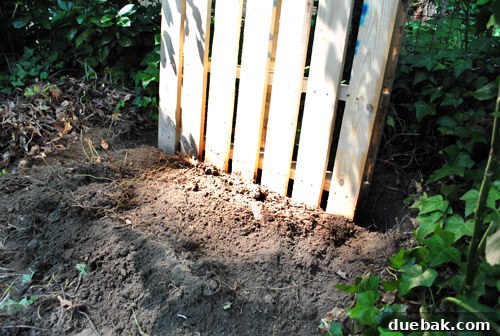
To ensure stability for the first pallet, I began by digging a shallow trench, approximately 4 inches deep, along the back edge of the cleared compost area. This trench provided a snug groove for the pallet to stand in, offering temporary support while I secured the subsequent sides. It’s a simple but effective trick to keep everything aligned and steady during construction.
2. Adding the First Side: Orientation Matters
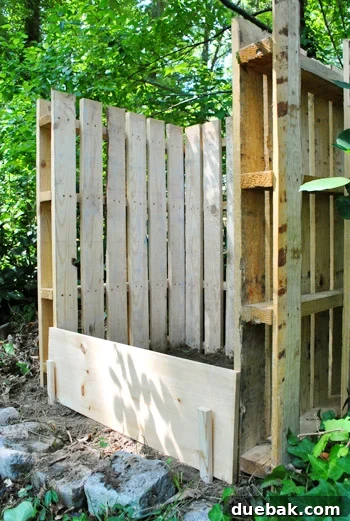
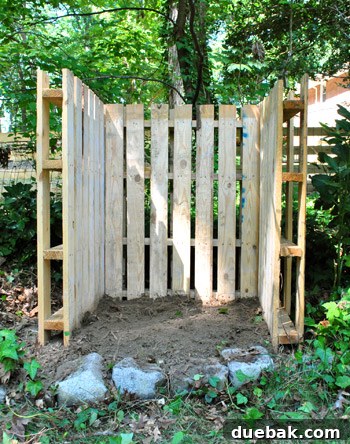
Next, I positioned the second pallet perpendicular to the first, creating one of the side walls of the bin. When arranging the pallets, pay close attention to the orientation of the slats. The side with more closely-spaced slats should face inwards. This design choice is crucial; it helps contain the composting material, preventing excessive spillage while still allowing for essential airflow. A completely solid wall would inhibit the necessary oxygen circulation, which is vital for the decomposition process and helps keep odors at bay.
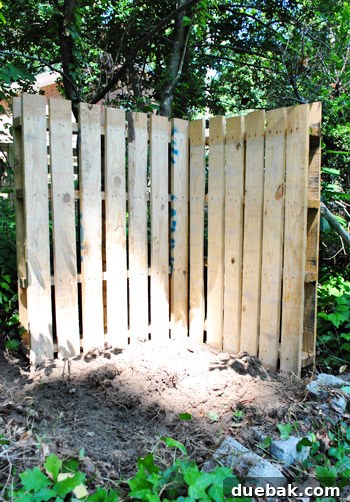
The beauty of slatted pallets for composting lies in their ability to facilitate aeration. Good air circulation is paramount for active decomposition, as it encourages aerobic bacteria to thrive, which efficiently breaks down organic matter without producing unpleasant smells. Without adequate airflow, your compost pile can become anaerobic, leading to a slower process and a distinctly putrid odor. Therefore, using pallets with gaps between the slats is a deliberate and beneficial design choice for any DIY compost bin.
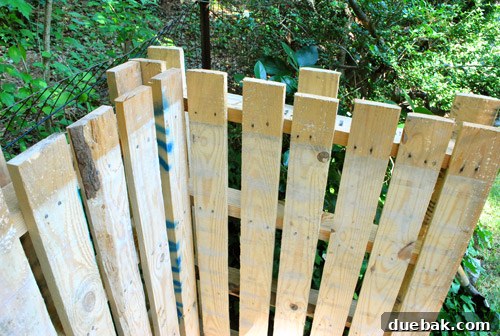
3. Securing the Pallets: Screws for Stability
To firmly connect the two pallets, I used my electric screwdriver to drill three 2-inch wood screws – one each at the top, middle, and bottom of the adjoining edges. Many online tutorials suggest using heavy-duty zip ties for this step, and I’m not surprised; much like duct tape, zip ties possess an almost universal utility. However, since I had wood screws readily available and it was another recommended method, I opted for them. Plus, there’s an undeniable satisfaction in wielding power tools for a project, a sentiment I’m sure Sherry often rolls her eyes at! Interestingly, the pallets were robust enough that they felt relatively stable on their own, but the screws provided invaluable “insurance,” ensuring the structure would withstand the test of time and weather. It was a worthwhile moment to pause, secure the connection, and greet my trusty drill.
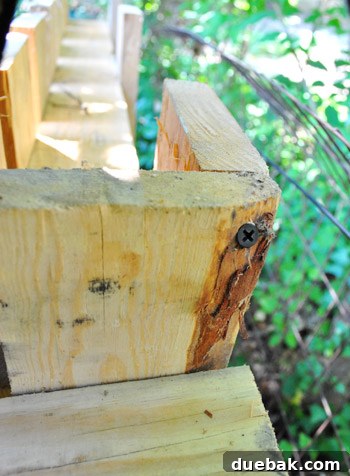
4. Completing the Third Side: Repetition for Structure
I then repeated the same process, attaching the third pallet to the other side of the back pallet. This established the essential three-sided structure of the compost bin, forming a sturdy and spacious enclosure ready for organic material.
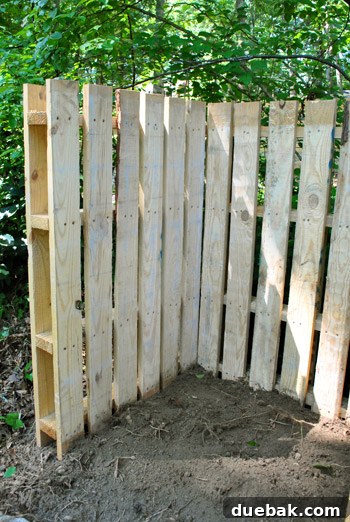
5. The Front Wall Dilemma: An Improvisational Solution
At this point, the basic structure was complete – and almost anticlimactically simple. Many guides suggest using a fourth pallet to create a hinged front door, or even a fifth pallet for a base, as mentioned earlier. However, a hinged door felt overly complicated for my immediate needs, and I didn’t have any hinges on hand. Initially, I contemplated leaving the front completely open, allowing the compost pile to potentially expand beyond its three defined borders. This seemed like a low-stress approach.
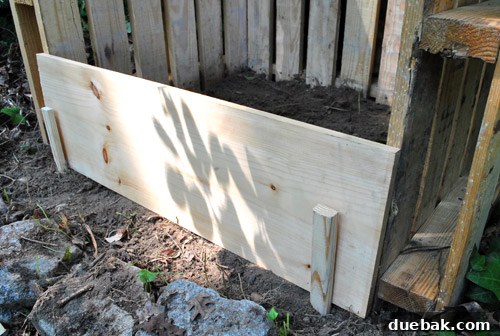
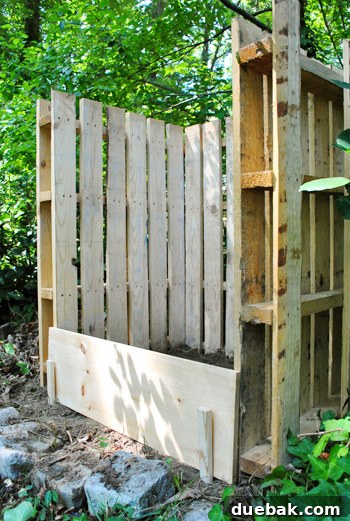
However, reality quickly set in. Given the slight slope of the ground, I realized an open front wasn’t the most practical solution. A heavy rainstorm could easily wash our precious “pile-o-decomposition” out into the yard – a messy and undesirable outcome. So, I opted for a simple, yet effective improvisation. I found a nearly perfectly sized piece of scrap wood that could serve as a removable fourth wall. With the assistance of two leftover wood stakes hammered into the ground on either side, this scrap wood panel holds securely in place. The beauty of this design is its ease of removal: when it’s time to turn the pile, or to retrieve a rich batch of finished compost, the front panel can simply be lifted out. This offers the best of both worlds – containment when needed and easy access for maintenance.
Future-Proofing Your Pallet Bin
As the compost pile grows and expands, this flexible front design also allows for easy upgrades. I envision stacking a few more boards on top, or perhaps using a taller piece of wood secured by taller stakes or poles, to keep the growing pile flush against the pallet walls. But for now, this simple setup is more than sufficient and entirely functional.
Initiating the Composting Process: The First Layer
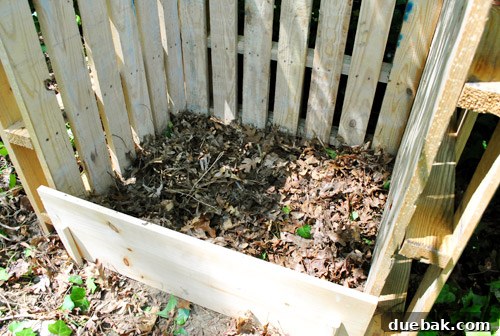
To kickstart the decomposition in our newly constructed bin, I added a generous layer of beautiful brown leaves from our backyard. This initial “brown” layer provides essential carbon and creates a good foundation for subsequent additions. Adding a mix of “greens” (nitrogen-rich materials like kitchen scraps) and “browns” (carbon-rich materials like leaves, straw, or shredded paper) in balanced layers is key to a healthy and active compost pile.
Composting for Beginners: Tips and Ongoing Learning
We’re the first to admit that even after years of diligent effort, we still consider ourselves somewhat novices in the grand scheme of composting. I might casually refer to “turning the pile” as if I’m a seasoned expert, fully aware of the optimal frequency and scientific rationale, but in truth, much of my knowledge comes from tidbits gleaned online. With our old system, our “turning” simply involved giving things a stir whenever we emptied a new batch of scraps. We maintained a lidded plastic container under the sink for kitchen compostables, emptying it into the bin about twice a week. To ensure we were only adding appropriate materials, we even printed out a list of compostable items and taped it inside our under-sink cabinet door for quick reference.
So, while I’m not yet “Captain Compost,” we’re always eager for pointers and resources from more experienced practitioners! The good news about composting is its remarkable resilience; for the most part, it tends to “do its own thing.” Our previous experiences, documented here, here, here, and here, consistently highlight a largely painless, almost auto-pilot process. We’ve never encountered issues with foul odors or pests, which speaks volumes about the forgiving nature of a well-managed compost pile.
Important Considerations: Safety and Sustainability with Pallet Wood
It’s crucial to address a common concern regarding pallet wood: the potential for chemical treatment. While many pallets are heat-treated (marked “HT”), some may be chemically treated (often marked “MB” for methyl bromide), which could leach undesirable substances into your compost. If there’s any uncertainty about the treatment of your pallets, it’s highly advisable to limit the use of the resulting compost to non-edible plants. This means using it for flowerbeds, shrubs, or trees, rather than in your vegetable garden or herb beds. This is precisely the approach we’ll be taking, just to be on the safe side. We’re a bit late in the season to harvest much usable compost this year – regrettably, no accidental pumpkin growing for me this Halloween! – but we are optimistic that by next year, we’ll have an abundance of free, rich fertilizer. Beyond safety, there are aesthetic considerations. We’re hopeful that the surrounding ivy will eventually grow to partially envelop the pallets, helping the bin to blend more naturally into the landscape. This would create a charming, secret compost oasis. Alternatively, we could stain or paint the pallets in an earthy tone like dark green, brown, or gray to help them visually recede into the environment. We’ll keep you updated on our progress!
Join the Composting Conversation!
Do you have a pallet compost bin, or perhaps a different composting system, at your place? How has it been working out for you? Are there any essential tips or insights you think we should know as we embark on this exciting new chapter in our composting lives? And on a lighter note, has anyone else ever accidentally grown a pumpkin from their compost pile? That, without a doubt, remains my crowning composting achievement thus far!