
Unveiling the Foyer: A Comprehensive Guide to Wallpaper Removal with a Steamer
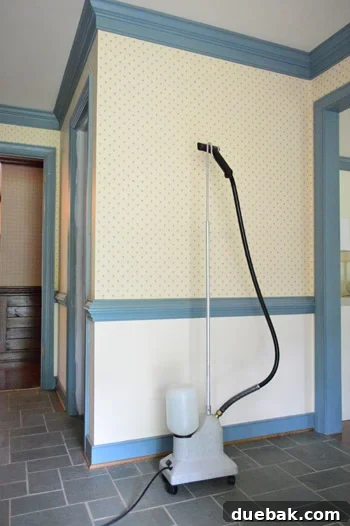
Embarking on a home renovation journey often means confronting the past, and for many homeowners, that past is covered in wallpaper. Our current adventure involves tackling five wallpaper-laden rooms, each slated for a different removal method. This series aims to unearth the most effective, efficient, and perhaps even enjoyable ways to strip away years of decorative history. Having previously explored the merits of hot water and a spray bottle – a surprisingly effective and budget-friendly approach – we’re now turning our attention to the steamy side of the equation. This week, our spotlight shines on the foyer, where a borrowed clothes steamer became our unlikely hero, or so we hoped. Join us as we delve into the world of steam-assisted wallpaper removal, sharing our real-world experiences, challenges, and ultimate triumphs in transforming our foyer.
The Foyer’s Transformation Begins: Farewell to Floral Patterns
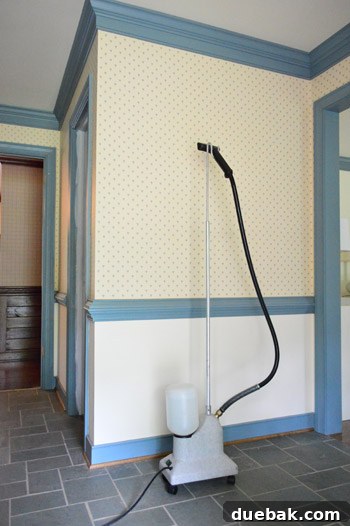
Before diving into the nitty-gritty of steam and scraping, we paused for a moment of quiet reflection. The foyer, with its charming (or perhaps, once charming) small blue floral wallpaper, was about to undergo a dramatic metamorphosis. Removing old wallpaper isn’t just a physical task; it’s an act of letting go of previous aesthetics and making space for a fresh vision. While some might find the process daunting, we see it as an exciting first step towards a completely revitalized living space.
Initial Approach: The “Steam, Then Peel” Method
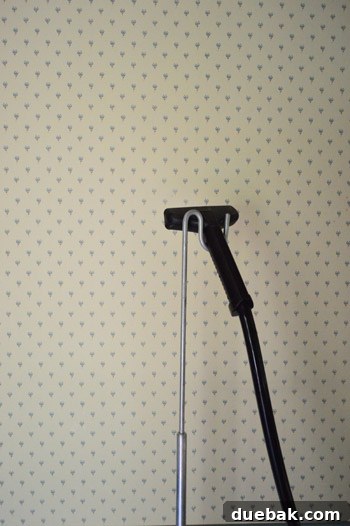
With our borrowed clothes steamer in hand, we embarked on the first section of the foyer. Our initial strategy involved a two-person operation: one person (John) handled the steamer, saturating a significant area of the wall with steam, while the other (myself) followed closely behind, peeling the softened wallpaper away. This method, while straightforward, offered an interesting insight into the dynamics of steam-assisted removal.
The process worked reasonably well. The steam effectively penetrated the wallpaper, loosening the adhesive and allowing for decent removal. In many sections, the wallpaper came off in satisfyingly large strips, revealing the bare wall beneath. However, some areas proved more stubborn, leaving behind portions of the paper backing. These sections required a second pass with the steamer and a subsequent re-peel, adding extra time and effort to the task. Compared to our boiling water method, we observed a slight improvement in efficiency – perhaps around 10% faster, as slightly more backing seemed to come off in the initial pull. This meant fewer instances of having to go back and remove lingering remnants.
When considering the financial aspect, the choice becomes a bit more nuanced. If you’re contemplating buying or renting a dedicated wallpaper steamer, which can range from $20 to $50 or more, the marginal improvement over a free hot water spray bottle method might not justify the cost for smaller projects. For us, borrowing a clothes steamer meant zero upfront expense, making the slight efficiency gain a bonus. However, opinions vary wildly; some DIY enthusiasts swear by steamers, reporting quick and effortless removal. This highlights a crucial point: the type of wallpaper, its age, the adhesive used, and even the condition of the wall surface itself are significant factors in how any removal method performs.
Navigating Challenges: High Walls and the Limitations of a Clothes Steamer
As we progressed to the higher sections of the foyer walls, a notable challenge emerged. Our borrowed clothes steamer, designed for garments, came with a relatively short hose. This seemingly minor detail became a significant hurdle when attempting to reach the upper wall areas. The steamer unit couldn’t comfortably rest on the floor while we worked high up, necessitating John to hold the unit for extended periods. Imagine holding a gallon of milk aloft while maneuvering a steam plate – that’s the workout John endured!
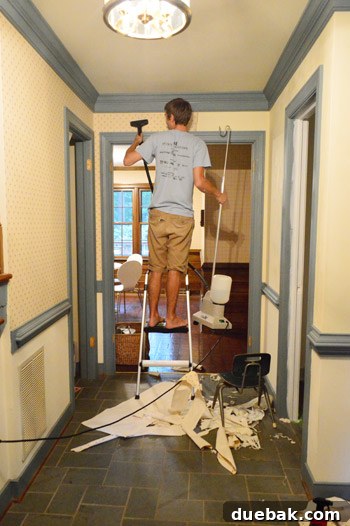
This experience underscored a vital lesson for anyone considering a steamer for wallpaper removal: if you plan to invest money, whether by purchasing or renting, opt for a dedicated wallpaper steamer. These purpose-built tools feature longer hoses, larger water tanks for extended operation, and more ergonomic designs suited for wall work, making the process significantly less physically demanding and much safer, especially when working on ladders. Always prioritize safety when working at heights, ensuring a stable ladder and proper footing.
Discovering Efficiency: The “Peel as You Go” Method
Roughly halfway through our foyer project, we decided to pivot our strategy. Instead of steaming a large section and then peeling, we experimented with a more integrated approach: simultaneously steaming and peeling. This meant I would actively peel the wallpaper immediately as John applied the steam to the adjacent area. The results were astounding.
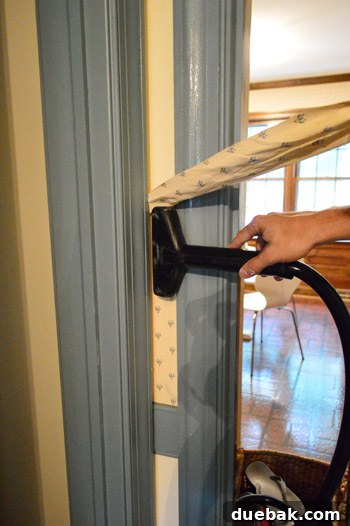
This “peel as you go” method proved to be immensely effective. In almost every instance, it removed both the wallpaper and its backing in a single, clean pass, leaving behind a pristine, bare wall surface. We attributed this success to the continuous application of heat precisely where the paper was being peeled. The adhesive remained warm and pliable, preventing it from cooling and re-adhering, which often occurred when peeling after the steamer had moved to another section.
Another significant advantage of this refined steamer technique is its adaptability for solo operation. While we worked as a team, one person could easily manage both the steaming and peeling simultaneously. This makes it an ideal method for those tackling a wallpaper removal project alone. The satisfaction of seeing entire sections come off cleanly, without the need for multiple passes, truly makes the effort feel rewarding. And yes, achieving such efficiency and seeing immediate, tangible results can make you feel quite accomplished, even “sexy” in your DIY prowess!
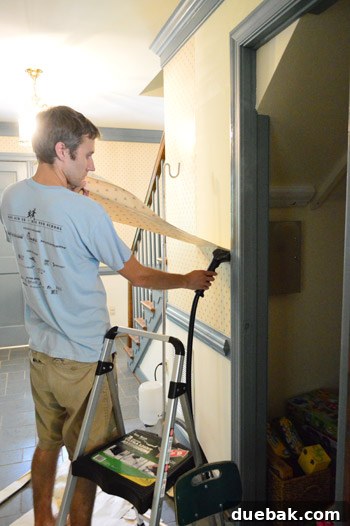
Overall, we’d rate this “peel as you go” steamer method as approximately 30% quicker and easier than our initial hot water and spray bottle technique. Given that we were dealing with a larger area like the foyer compared to a small bathroom, this efficiency gain translated into substantial time savings. Despite the faster method, the sheer scale of the foyer meant it was still a considerable undertaking, especially when we encountered an unexpected “Road Block” reminiscent of the challenges on The Amazing Race: layered wallpaper.
The Ultimate DIY Challenge: Battling Layered Wallpaper
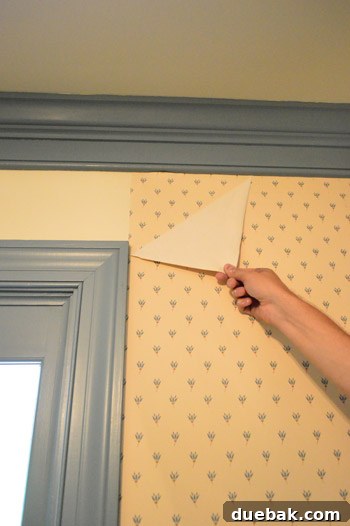
To our dismay, we discovered that the entire front door side of the foyer wall was adorned with not one, but two layers of wallpaper. What made this particularly perplexing was that the underlying paper wasn’t an older, different design; it was exactly the same pattern as the top layer. It felt like a scene straight out of Groundhog Day, where we were doomed to repeat the same task twice. This revelation effectively doubled our workload for that entire section, and I won’t sugarcoat it – there was a fair amount of complaining involved. Nevertheless, with persistent steaming and peeling, we eventually conquered both layers.
The mystery of the double-layered wallpaper remains unsolved. Our best guess is that the original application might have gone awry – perhaps a pattern mismatch, crooked alignment, or an unfortunate seam – prompting a quick fix by simply applying a second layer directly over the first. This unexpected hurdle serves as a reminder that DIY home improvement projects often come with unforeseen challenges, requiring patience, adaptability, and sometimes, a good sense of humor.
Addressing the “Incident”: Minor Drywall Damage and Repair
Despite our careful approach, one minor “incident” occurred. In a particular spot, the wallpaper adhesive proved exceptionally strong, leading to the unfortunate peeling of the top layer of our drywall. This is a common occurrence in wallpaper removal, often due to an overly aggressive adhesive application or pre-existing minor damage to the drywall paper itself. While certainly not ideal, it’s also not a catastrophic setback.
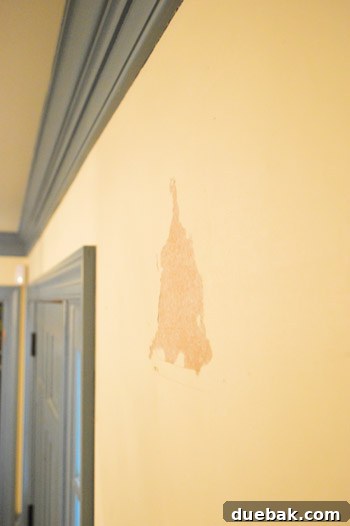
My plan for repairing this minor damage is straightforward and effective: a simple skim coat using spackle or joint compound. After ensuring the area is clean and free of loose debris, I’ll apply a thin layer of spackle, feathering the edges to blend seamlessly with the surrounding wall. Once dry, a light sanding will create a perfectly smooth surface, ready for primer and paint. This quick repair ensures that the integrity and aesthetics of the wall are fully restored, preventing any imperfections from showing through future paint or new wallpaper.
The Essential Final Step: Cleaning Off Glue Residue
With all the wallpaper stripped down, the battle wasn’t quite over. The next crucial step was to ensure every trace of glue residue was removed from the walls. This is vital for achieving a smooth, professional finish, whether you plan to paint or re-wallpaper. Even the smallest sticky patch can create an uneven surface or compromise the adhesion of new paint or paper.
For this task, I prepared a simple yet effective solution: a spray bottle filled with a 50/50 mixture of room-temperature vinegar and water. Vinegar is a fantastic natural solvent for wallpaper paste, effectively breaking down residual adhesives without harsh chemicals. Armed with this solution and the rougher, abrasive side of a sponge, I systematically went over every inch of the foyer walls. For the most part, the “peel as you go” steamer method had done an excellent job of lifting the backing along with the paper, leaving minimal glue behind. However, I did find a few tacky areas that became significantly smoother and cleaner after this vinegar scrub. This step, though seemingly minor, is absolutely worth the effort and time to ensure a flawless canvas for your next wall treatment.
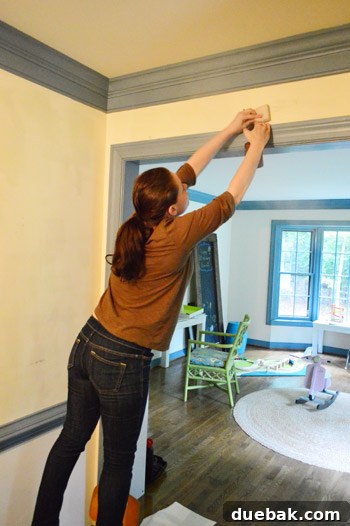
A Transformed Foyer: The Fruits of Our Labor
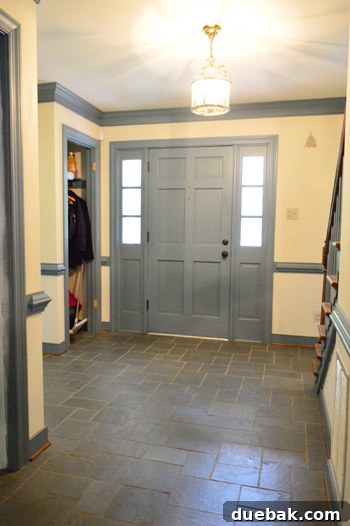
And so, after days of steaming, peeling, and scrubbing, our foyer stands proudly “deflowered.” The once busy, floral walls are now bare, clean, and ready for their next chapter. The transformation is significant, opening up the space and creating a much brighter, more modern feel. This extensive wallpaper removal project has been a true test of patience and perseverance, but the results make every effort worthwhile.
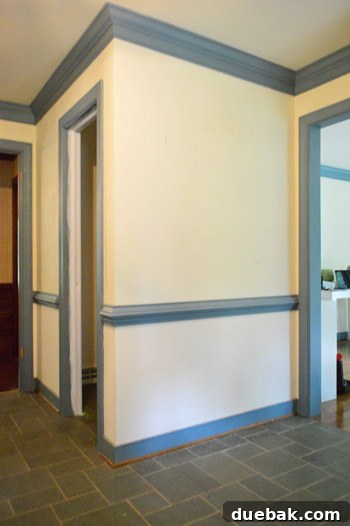
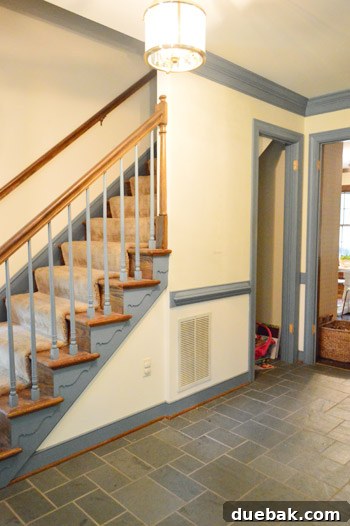
For context, here’s an obligatory “before” shot from our initial walk-through. It’s important to look back to truly appreciate the journey and the dramatic change achieved.
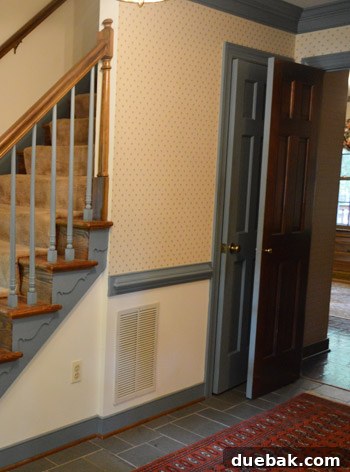
You might notice in the second-to-last shot that the closet and bathroom doors are currently removed. That’s because we’re actively engaged in painting them from their original blue to a crisp white, a project that will further brighten the foyer. We’re also about 20% into painting the existing blue trim, which, after four coats, feels like a monumental task! We can’t wait to complete these final touches and share the finished photos, hopefully sometime next week.
Your Turn: Share Your Steamer Experiences and Tips!
We’re eager to hear from our community! Have you used a steamer for wallpaper removal in your home? What was your preferred technique? Did you adopt the “peel as you go” approach, or did you stick to steaming an entire section before peeling? So far, we’ve been thrilled with the fact that we haven’t needed to score the wallpaper or even resort to a spackle knife; simple hand-yanking has largely done the trick. This definitely puts the steamer method, especially the “peel as you go” variation, in the “pro” column for us. When combined with the zero-dollar cost of borrowing a steamer, it’s been a surprisingly efficient and cost-effective method for transforming our foyer.
Share your insights, challenges, and successes in the comments below. Your experiences not only enrich our collective knowledge but also provide invaluable tips for fellow DIY enthusiasts embarking on their own home improvement journeys. Happy renovating!