
Unlock Imaginative Play: Crafting Your Own DIY Wooden Play Money
There’s a magical age when children become utterly captivated by the concept of money. Not necessarily for its practical use in transactions, but for the sheer joy of handling it – counting coins, stacking them into towering piles, and carefully stashing them away in pockets or a tiny purse. Our little Clara has recently entered this delightful phase, turning every stray quarter into a precious treasure. However, this newfound fascination often leads to a perplexing mystery: where do all those real coins disappear to? It seems our home harbors a peculiar vortex, adept at consuming not only single socks but also every piece of loose change. We often joke, wondering if our beloved pet, Burger, has a secret savings account for a jumbo jar of peanut butter. The constant vanishing act of real currency is a relatable puzzle for many parents.
This recurring phenomenon, which quickly depletes our spare change supply by fifteen dollars within a few weeks of enthusiastic play, prompted a creative solution. Instead of constantly replacing lost real money, I decided it was high time to embark on a little DIY project. And, if I’m being completely honest, the allure of playing with shiny metallic markers was a significant driving force behind this crafty endeavor. The idea was simple yet effective: create a durable, attractive, and easily replaceable alternative that would satisfy Clara’s monetary curiosity without the constant drain on our pockets.
The Problem with Real Money: Why DIY Play Coins are the Perfect Solution
Real coins, while authentic, present several challenges for children’s play. They are heavy, prone to rolling into inaccessible nooks and crannies (like under the sofa or deep within couch cushions – our top suspects for the missing real change), and can even pose hygiene concerns. Furthermore, for younger children, small coins can be a choking hazard. Creating lightweight, custom-made play money addresses all these issues. It offers a safe, clean, and easily retrievable alternative that fosters the same imaginative engagement without the inherent drawbacks of actual currency. This DIY approach not only saves money in the long run but also allows for a personalized touch that store-bought play money often lacks.
Benefits of Crafting Your Own Play Money
The advantages of making your own play money extend far beyond simply keeping track of lost change. This project taps into several key areas of child development and family life, making it a truly rewarding experience. From promoting imaginative play to fostering early financial literacy and offering a sustainable craft option, homemade play coins are a valuable addition to any child’s toy collection. They are also incredibly durable compared to paper money, standing up to countless hours of energetic play.
Sparking Imagination and Financial Literacy
Children thrive on pretend play, and having realistic yet safe play money significantly enhances these scenarios. Whether it’s running a bustling play kitchen, managing a vibrant dollhouse economy, or operating a pretend grocery store, play money provides a tangible element for children to engage with concepts of buying, selling, and saving. This hands-on interaction is crucial for developing early financial literacy, teaching children about different denominations, the concept of value, and basic arithmetic as they count and exchange their custom coins. It turns abstract financial ideas into concrete, fun learning experiences.
Moreover, the absence of real-world value means children can experiment freely without fear of “losing” anything important. This encourages more creative and expansive play narratives, allowing them to truly immerse themselves in their make-believe worlds. Clara, for instance, adores her play kitchen and her dollhouse, and the addition of pretend money instantly elevates her playtime, making it more dynamic and realistic. This homemade currency seamlessly integrates into existing play setups, adding depth and new possibilities for imaginative scenarios.
Gather Your Materials: The Quest for Perfect Play Coins
Embarking on this DIY adventure begins with selecting the right materials. The goal is to find components that are durable, easy to work with, and safe for children. My primary choice for the coins themselves was small wooden rounds, which reminded me of the classic “Pogs” from childhood (anyone else remember those?). These wooden discs offer a sturdy, smooth surface perfect for decoration and are ideal for handling by little hands. They provide a satisfying tactile experience, mimicking the feel of real coins without the weight.
Choosing Your Canvas: Wooden Discs and More
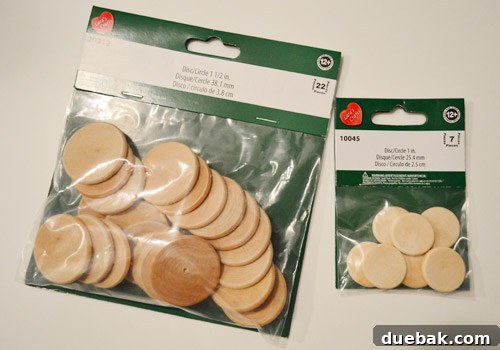
During my visit to the craft store, I specifically looked for wooden “pog-shaped” rounds. These come in various sizes, making it easy to differentiate between denominations. I picked up two smaller sets, roughly the size of nickels and dimes, each costing a mere dollar. Additionally, I grabbed a larger bag containing 22 quarter-sized discs. The variety in size is key to creating a diverse set of play money that accurately represents different values. If wooden discs aren’t readily available, alternative materials like thick cardstock cut into circles, or even recycled plastic lids, could work, though wooden discs offer superior durability and a more authentic coin-like feel.
The Magic of Metallic Markers
For decorating the wooden discs, metallic permanent markers are an absolute must. Their opaque, shimmery ink instantly transforms a plain wooden circle into a convincing coin. I was fortunate to already have two suitable markers on hand: a beautiful bronze shade perfect for pennies and a classic silvery tone for nickels, quarters, and dollar coins. If you don’t have these, they are easily found in the craft store alongside the wooden discs. These markers are designed for various surfaces, ensuring your designs will be vibrant and long-lasting, resisting smudging and fading even after extensive play. Their ease of use also makes the crafting process enjoyable and accessible, even for those who might not consider themselves expert artists.
The total cost for this project was incredibly budget-friendly. After utilizing a 40% off coupon, my craft store haul amounted to just $4.50. Considering this yielded enough materials for multiple sets of play money (approximately $2.25 per set, with 18 discs in each), it’s a remarkably economical way to create a high-value toy. This affordability means you can easily replenish lost coins or expand your collection without a significant financial outlay, making it a sustainable choice for ongoing playtime.
A Step-by-Step Guide to Crafting Your Play Money
The creative process for transforming simple wooden discs into charming play money is surprisingly straightforward and incredibly satisfying. No artistic masterpieces are required; simple sketches and bold numbers are all it takes to bring these coins to life. The beauty of this project lies in its simplicity and the joy of seeing each disc evolve into a unique piece of currency. It’s an activity that can even involve older children, allowing them to personalize their own play sets.
Designing Your Currency: Pennies to Silver Dollars
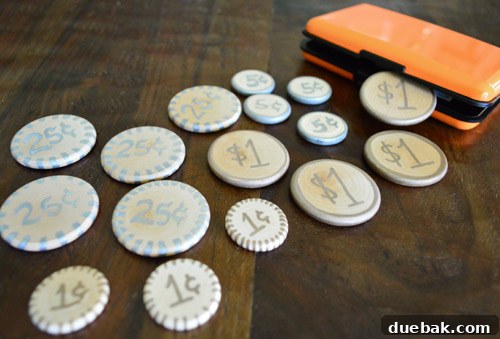
Once you have your wooden discs and metallic markers ready, it’s time to start designing! The key is to create distinct visual cues for each denomination, making it easy for children to recognize and differentiate between them. Here’s how I designed ours:
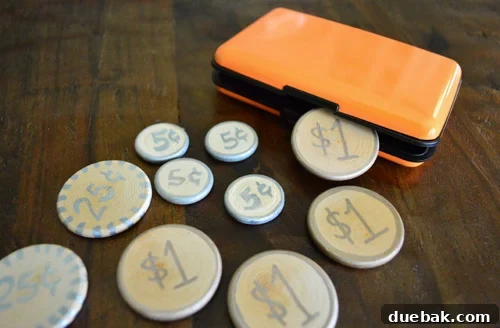
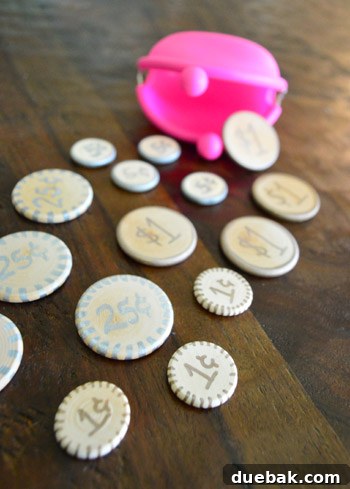
- Pennies (1¢): Using the bronze marker, I wrote “1¢” boldly in the center of the smaller discs. Around the edge, I added a series of small, coin-like lines to mimic the texture of real pennies.
- Nickels (5¢): For these slightly larger discs, I used the silvery marker. “5¢” was inscribed prominently in the middle, surrounded by a solid silver band around the outside edge, giving them a distinct look.
- Quarters (25¢): On the largest discs, also with the silvery marker, “25¢” took center stage. Like the pennies, these were adorned with more intricate coin-like lines around the perimeter to add to their authenticity.
- Silver Dollars ($1): To introduce a higher denomination, I created silver dollars. These also used the largest discs and the silvery marker, with a clear “$1” in the middle, framed by a thick, solid silver edge, signifying their greater value.
The process is quick and enjoyable. In a matter of moments, each blank disc is transformed into a recognizable piece of currency. The simple, clean designs ensure readability and make the coins easy for children to sort and count during their imaginative play. Don’t worry about perfection; the charm of homemade items often lies in their unique, hand-drawn character. You could even customize them further by adding simple imagery, like a star or a leaf, to make them even more special.
Beyond Playtime: Thoughtful Gifting and Lasting Memories
These handmade play coins aren’t just for your own children; they make incredibly thoughtful and personalized gifts. The effort and creativity put into a homemade present truly stand out and convey a special message to the recipient. We decided to create a set for our friend Will Bower as a birthday gift, proving that these simple crafts can bring joy to others. We paired the custom-made coins with a few store-bought goodies and even found a cool orange case, perfect for “loot-stashing,” which added to the fun of the present.
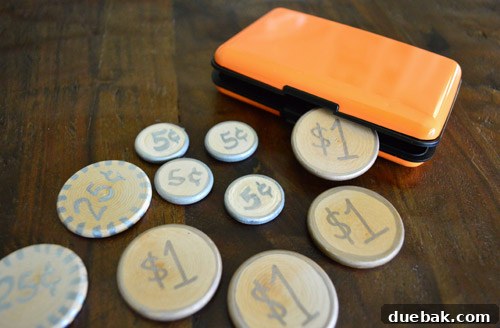
The best part was hearing back from Katie, Will’s mom, that he absolutely loves his new play money! There’s a special kind of satisfaction that comes from creating something with your own hands that brings happiness to a child. Handmade gifts are cherished not only for their utility but for the love and thought invested in their creation. These play coins could be wonderful gifts for birthdays, holidays, or even as party favors, offering a unique and educational alternative to conventional toys.
The Unseen Benefits: Engagement, Durability, and Peace of Mind
The entire project, from gathering materials to the final stroke of the marker, took me roughly an hour. It was a delightful hour, filled with the simple pleasure of crafting – perhaps more fun than an adult should admit to having with magic markers! But the real magic unfolded after the coins were complete. Clara has been playing with them non-stop, and miraculously, our faux currency has proven far more resilient to the “vortex” than real change. We lost only one nickel initially, which was later found, confirming our theory: real change mysteriously disappears, perhaps spirited away by mischievous fairies during the night, while fake loot holds its ground.
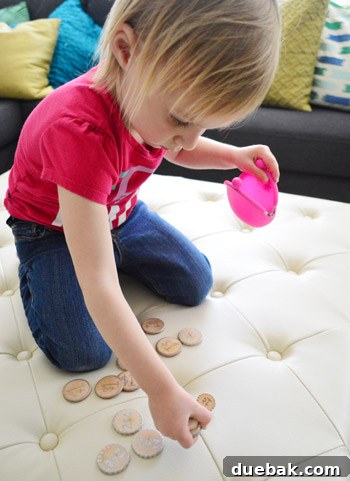
This project offers unparalleled peace of mind. No more worrying about lost money, potential choking hazards, or the cleanliness of coins that have traveled through countless hands. These wooden play coins are durable, easy to clean, and, most importantly, provide endless opportunities for imaginative, educational play. They are a testament to how simple, inexpensive crafts can yield some of the most cherished and frequently used toys in a child’s collection.
Join the Crafty Community: Your Turn to Create!
Are you feeling inspired to tap into your crafty side? Do you, too, suspect a mysterious vortex in your home that eagerly devours loose change and socks? Or perhaps you have coin-hungry fairies who, like ours, show no interest in a humble wooden nickel or four? We certainly do, and these homemade play coins have been our delightful workaround.
We encourage you to try this incredibly rewarding DIY project. It’s a simple, cost-effective way to enhance your child’s playtime, foster their imagination, and even introduce basic financial concepts in a fun, tangible way. Share your experiences, your designs, and your own theories about where all the real change disappears to in the comments below. Let’s embrace the joy of crafting and create some enduring, treasured play money for the little ones in our lives!