
Transform Your Bedroom: The Ultimate Guide to DIY Upholstered Headboards
Are you dreaming of a bedroom makeover that’s both stylish and budget-friendly? Look no further than the power of a DIY upholstered headboard. A custom headboard can be the focal point of any bedroom, adding a touch of luxury, comfort, and personalized style without breaking the bank. It’s an incredibly rewarding project that allows you to infuse your unique taste into your sleeping sanctuary. Forget generic store-bought options; with a little creativity and effort, you can craft a headboard that perfectly complements your decor and speaks volumes about your personal aesthetic.
We’re always thrilled to share inspiring success stories from our community, and today we’re shining a spotlight on Karen, who recently wowed us with her incredible DIY upholstered headboard. Karen, like many of you, was looking for a way to upgrade her bedroom, and she found the perfect solution by taking on this rewarding home improvement project. Her results are so fantastic, we couldn’t wait to share her journey and insights with you. Karen’s project is a brilliant example of how you can achieve high-end results with smart material choices and a can-do attitude.
Karen’s Stunning DIY Headboard: An Inspiration for Your Next Project
Karen’s headboard story began with a simple desire for a beautiful, custom piece that wouldn’t cost a fortune. She followed our detailed guide on how to upholster a headboard, making a few clever adjustments to suit her specific needs and budget. Her approach demonstrates that even with a tutorial, there’s always room to personalize and optimize for affordability and style. Here’s what Karen shared with us about her experience:
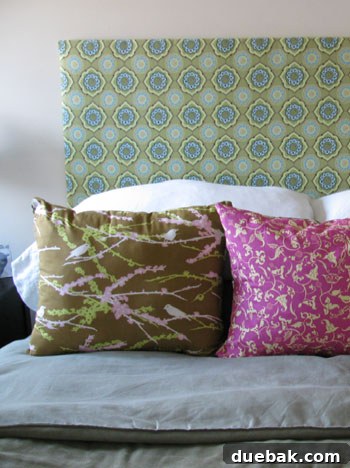
“I just wanted to show you how I used your tutorial to make a headboard for our bed. The only difference was that I used 1x2s cut to size from my local home improvement store. I attached them with L brackets, which only cost me about $5! I did use designer fabric by Patricia Bravo, but I managed to get a great deal on that on Etsy, so the whole project was really affordable. Thanks for the tips! As you can see, our Min Pin likes it too! -Karen”
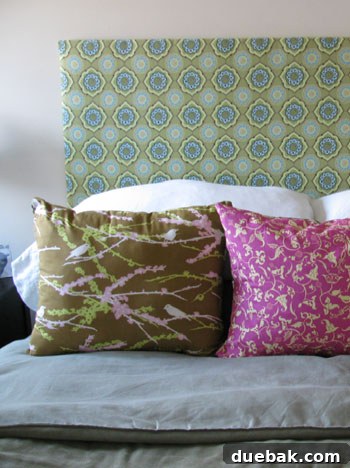
We absolutely adore Karen’s finished headboard! The choice of fabric by Patricia Bravo is simply exquisite. The vibrant pattern instantly adds a lively ambiance and significant visual interest to her bedroom, elevating it from ordinary to extraordinary. This designer touch, acquired affordably through Etsy, proves that you don’t have to compromise on quality or style when undertaking a DIY project. The smart use of readily available 1×2 lumber and inexpensive L brackets for the frame further underscores the incredible cost-effectiveness of her approach. It’s a testament to how creative sourcing and clever construction can lead to a stunning, custom piece that looks far more expensive than it actually was.
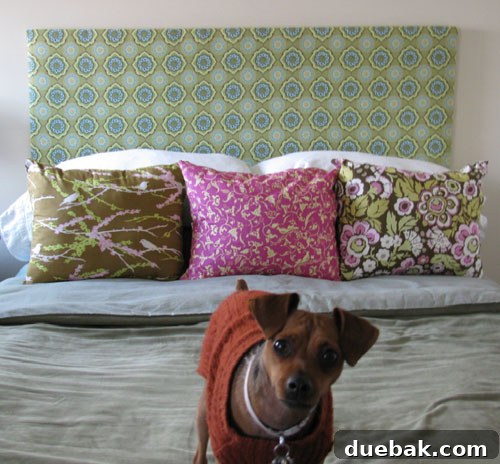
And let’s not forget the delightful styling! Karen’s choice to pair her new headboard with a collection of lively and lovely pillows, also sourced affordably through Etsy, truly is the icing on the cake. These thoughtful accents bring the whole look together, creating a cohesive and inviting atmosphere. It’s a masterclass in how to layer textures and patterns to achieve a professional, decorator-worthy finish. And while we’re on the subject of eye-pleasing arrangements, isn’t her adorable Min Pin the ultimate accessory? He really makes that DIY headboard pop, demonstrating that even our furry friends appreciate a good home improvement project!
Why Choose a DIY Upholstered Headboard? Unlocking Style and Savings
Karen’s success story highlights many of the compelling reasons why so many homeowners are turning to DIY for their headboard needs. Beyond the sheer satisfaction of creating something with your own hands, there are numerous practical benefits to crafting your own upholstered headboard:
1. Unbeatable Affordability
One of the primary drivers for embarking on a DIY headboard project is the significant cost savings. High-quality upholstered headboards from furniture retailers can come with hefty price tags. By building it yourself, you cut out labor costs and retail markups. You have complete control over material expenses, allowing you to opt for budget-friendly wood, foam, and even designer fabrics found at a discount, just like Karen did on Etsy. This allows you to achieve a luxurious look for a fraction of the cost, making stylish bedroom decor accessible to everyone.
2. Unlimited Customization and Personalization
When you DIY, the world is your oyster! You are not limited by what’s available in stores. You can choose the exact dimensions to perfectly fit your bed and space, whether you need a king-size, queen, full, or even a custom size. More importantly, you get to select the fabric, color, pattern, and texture that perfectly matches your existing bedroom decor and personal style. From bold geometric prints to subtle neutrals, luxurious velvet to durable linen, the possibilities are endless. This level of personalization ensures your headboard is a true reflection of you.
3. A Sense of Accomplishment and Pride
There’s an undeniable satisfaction that comes from stepping back and admiring something you’ve built yourself. A DIY upholstered headboard is a tangible representation of your creativity and effort. It transforms your bedroom into a space that truly feels like your own, infused with your unique touch. This sense of accomplishment can be incredibly empowering and might even inspire you to take on more home improvement projects!
4. Tailored Comfort and Functionality
Beyond aesthetics, an upholstered headboard offers practical benefits. The soft padding provides a comfortable backrest for reading in bed, watching movies, or enjoying breakfast in bed. When you DIY, you can even control the thickness and firmness of the padding to suit your comfort preferences. It also acts as an insulator, keeping your head warm against a cold wall, and can even help to absorb sound, contributing to a quieter, more serene sleeping environment.
Your Step-by-Step Guide to Crafting a Custom Upholstered Headboard
Inspired by Karen’s project and ready to dive in? Making an upholstered headboard is simpler than you might think. While individual tutorials may vary slightly, the core steps remain consistent. Our super simple tutorial (seriously, if you can wrap a present, you can upholster a headboard!) provides a comprehensive guide. Here’s a general overview of the process:
1. Planning and Measuring
Before you cut any wood or fabric, meticulous planning is key. Decide on the dimensions of your headboard. Consider its width (typically slightly wider than your bed) and height (accounting for your mattress, pillows, and desired visual impact). Sketch out your design, whether it’s a simple rectangle, a subtle arch, or a more intricate shape. Gather your inspiration and make a detailed list of materials.
2. Gathering Your Materials and Tools
You’ll need a few key items:
- Plywood or MDF: For the main headboard structure.
- Lumber (e.g., 1x2s or 2x4s): For the frame and legs, as Karen cleverly used.
- Foam Padding: For comfort and a plush look.
- Batting: To smooth out the foam and give a soft finish.
- Fabric: The star of the show! Choose something durable and visually appealing.
- Tools: Staple gun and staples, fabric scissors, utility knife, drill, screws, L brackets (if using a frame like Karen), measuring tape, ruler, marker.
3. Building the Frame and Base
Cut your plywood or MDF to your desired headboard shape. If you’re building a more robust frame like Karen’s with 1x2s, assemble these around the edges of your main board. This adds stability and depth. Attach the legs to the back of the headboard at this stage, ensuring they are sturdy and positioned correctly to attach to your bed frame or stand independently against the wall.
4. Adding the Padding
Carefully cut your foam to match the shape of your headboard. Use spray adhesive to secure it firmly to the front of the plywood. Once the foam is in place, drape the batting over the foam and around the edges of the headboard. Pull it taut and staple it securely to the back of the headboard. Trim any excess batting. This step is crucial for achieving a smooth, professional finish and adds an extra layer of softness.
5. Upholstering with Your Chosen Fabric
This is where your headboard truly comes to life! Lay your chosen fabric face down on a clean surface. Center your padded headboard on top of the fabric, ensuring you have enough excess fabric on all sides to wrap around to the back. Starting from the middle of one side, pull the fabric taut and staple it to the back of the headboard. Work your way around, pulling firmly and evenly to avoid wrinkles or bunching. Pay special attention to corners, folding them neatly like you would a present for a crisp, tailored look. Continue stapling until the entire front and edges are covered and smooth.
6. Finishing Touches and Installation
Once your fabric is fully secured, trim any remaining excess fabric from the back. You might opt to cover the raw edges on the back with a piece of muslin or felt for a cleaner finish, though this is optional as it won’t be seen. Finally, install your new headboard! Depending on your chosen method, you might attach the legs to your bed frame with bolts, or secure it directly to the wall using French cleats or sturdy wall anchors for a floating look. Step back and admire your beautiful, custom creation!
Tips for a Flawless DIY Upholstered Headboard
To ensure your project goes smoothly and yields results you’ll love, keep these expert tips in mind:
- Choose Your Fabric Wisely: Consider durability, stain resistance, and how it complements your existing decor. Test a swatch in your bedroom’s lighting. Velvets add luxury, linen offers a natural look, and performance fabrics are great for high-traffic areas or homes with pets (like Karen’s!).
- Invest in a Good Staple Gun: An electric or pneumatic staple gun will save your hands and make the process much faster and more efficient than a manual one.
- Measure Twice, Cut Once: This age-old adage is especially true for DIY projects. Precision in measuring wood, foam, and fabric will prevent costly mistakes.
- Don’t Rush the Corners: Corners are often the trickiest part. Take your time, experiment with different folds (like hospital corners for a crisp look), and don’t be afraid to remove staples and re-adjust until you’re happy.
- Embrace Imperfections: While striving for perfection is good, remember that DIY projects inherently carry a unique, handmade charm. A slight imperfection only adds to its character!
- Consider Additional Embellishments: Want to take your headboard to the next level? Think about adding tufting, decorative nailhead trim around the edges, or even a contrasting piping for a truly bespoke look.
Conclusion: Your Bedroom Awaits its Custom Masterpiece
As Karen’s inspiring project beautifully illustrates, creating your own upholstered headboard is an incredibly rewarding endeavor. It’s an opportunity to inject personal style, save money, and gain immense satisfaction from transforming your bedroom into a comfortable and elegant retreat. Whether you opt for a bold, patterned fabric like Karen or a subtle, serene texture, the result will be a unique statement piece that perfectly reflects your taste.
So, what are you waiting for? Gather your inspiration, choose your fabric, and get ready to craft a headboard that’s not just furniture, but a work of art. Your dream bedroom is just a DIY project away! If you’re looking to make your own homemade headboard, remember our super simple tutorial is there to guide you every step of the way. Happy crafting!