
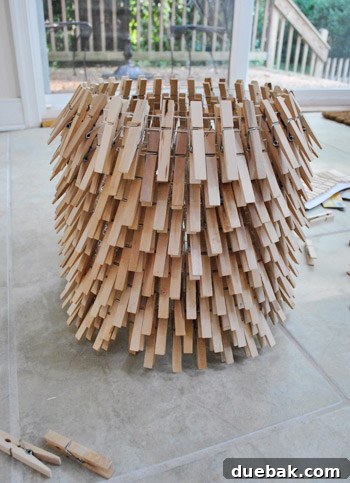
Crafting a Unique Clothespin Chandelier: Our DIY Pinterest Challenge Success Story
Welcome to our latest DIY adventure, where inspiration from Pinterest transforms into a tangible, charming reality! We proudly present the grand unveiling of our handmade clothespin chandelier, a project born out of our highly unofficial but incredibly motivating Pinterest Challenge. This isn’t sponsored by Pinterest or any other brand; it’s simply a brilliant concept dreamed up by Katie B to encourage us all to move beyond endless pinning and actually start creating. And create, we did! We set ourselves a challenging Tuesday morning deadline, and we’re thrilled to report that we not only met it but absolutely surpassed our own expectations with this distinctive piece.
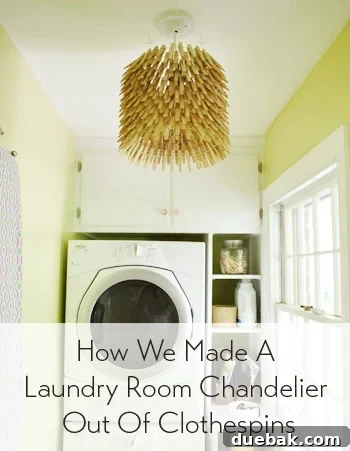
The Genesis of Our Clothespin Chandelier: From Pin to Practicality
The journey to our unique laundry room chandelier began with a simple desire: to tackle one of the many inspiring ideas we’d saved on Pinterest. We’ve previously touched upon the Pinterest Challenge details here, where we also gave you a sneak peek at our initial supply haul. Transforming a mundane household item like a clothespin into a dazzling light fixture seemed like the perfect blend of creativity and resourcefulness. This project offered the ideal opportunity to infuse personality and charm into a often-overlooked space – our laundry room – all while sticking to a budget-friendly approach.
Gathering Your Materials: The Foundation of Creativity
Every great DIY project starts with the right materials. While our initial plan included three 10-inch metal rings from Ben Franklin, we ultimately found them unnecessary as the project evolved. The rest of our carefully selected supplies, however, proved invaluable. For those looking to replicate this project, here’s a comprehensive breakdown of what you’ll need, along with some insights into our choices:
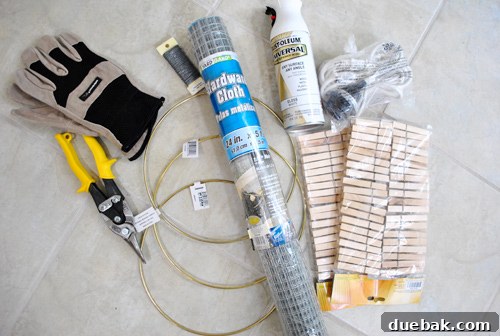
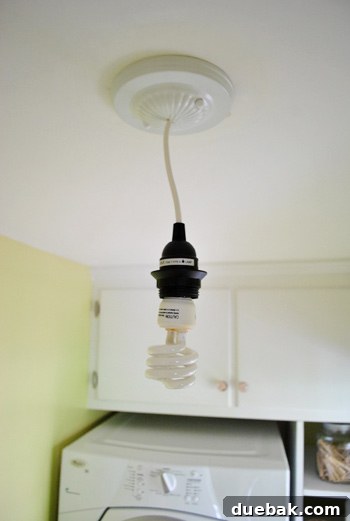
- Ikea Hemma Light Kit ($4): This incredibly affordable plug-in light kit is a DIY enthusiast’s dream. While designed to be swagged, a handy tip from an electrician friend revealed its potential for hardwiring. By simply clipping the plug and exposing the internal wires, it can be safely connected to an overhead junction box (always ensure the power is OFF!). This conversion is key to achieving a clean, built-in look for your chandelier.
- Hardware Cloth (aka Wire Fencing) from Lowe’s: We used a portion of a roll for the structural frame of our shade. Hardware cloth is fantastic for DIY projects because it’s sturdy yet malleable, allowing you to shape it into various forms. Its grid-like structure is also perfect for clipping on clothespins.
- White Gloss Spray Paint: Essential for both aesthetics and safety. We opted for a glossy finish to complement our ceiling canopy and give the frame a more polished appearance, moving away from a purely industrial look.
- Old Wire from Our Craft Drawer (22-gauge): Thinner than what was initially pictured, this 22-gauge wire proved ideal for binding the hardware cloth. Its flexibility made twisting easy, yet it was rigid enough to provide a secure hold, ensuring the frame maintained its desired shape.
- Gloves & Metal Snips: Non-negotiable for handling and cutting hardware cloth. Safety is paramount when working with sharp edges.
- Clothespins (Eight Bags!): Our initial estimate of two bags quickly escalated. We eventually needed eight bags of medium-sized wooden clothespins from Ben Franklin, each pack containing 40 pins. It’s always wise to overestimate when it comes to embellishments!
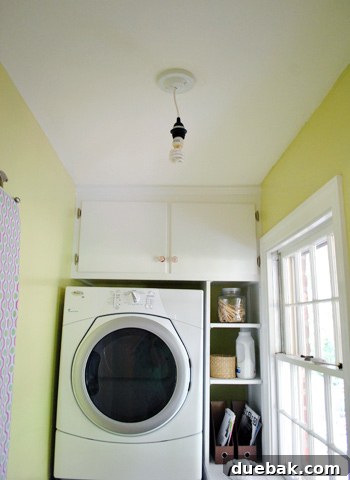
- Ceiling Canopy from Lowe’s ($5): This white medallion-like piece provides a clean, finished look where the light fixture meets the ceiling, neatly concealing the wiring connections.
Crafting the Core: Building the Chandelier Frame
With our materials gathered, it was time to construct the drum shade-like structure that would house our light kit and become the canvas for our clothespins. This step required precision and a keen eye for detail to ensure both stability and aesthetic appeal.
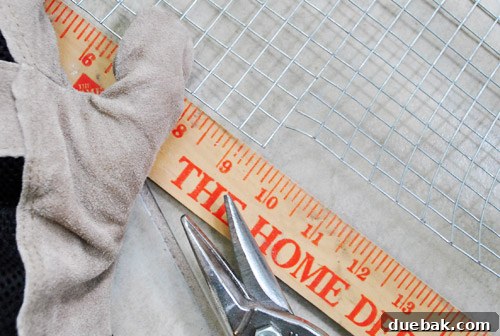
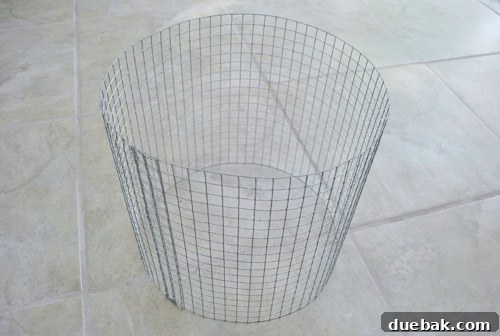
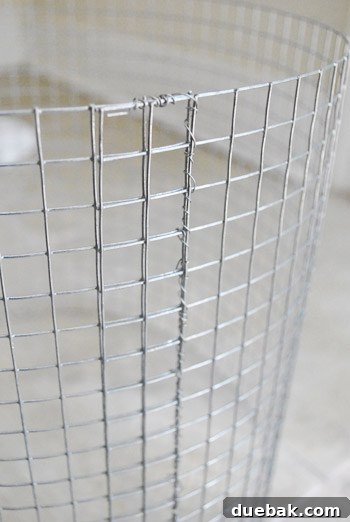
First things first, safety. Donning thick gloves, I carefully used metal snips to cut a strip of hardware cloth. We aimed for a shade that would be approximately 10-11 inches tall once completed, accounting for some dangling clothespins to extend its length. Therefore, our wire fencing strip was cut to about 9.5 inches in height. For the diameter, since we envisioned a 10-inch wide shade, we formed the strip into a loop with a 10-inch diameter. This is where our craft store wire came into play; we used it to securely bind the ends of the fencing together, creating a robust, self-supporting metal drum. It was at this point that we happily realized the 10-inch metal rings we’d purchased were entirely unnecessary – the hardware cloth held its shape remarkably well, banishing our worries of a flimsy or “wonky” fixture.
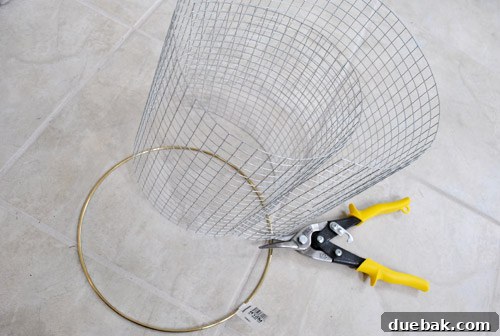
A note on the securing wire: we specifically found 22-gauge wire to be superior to thicker alternatives. Its thinner profile made it significantly easier to twist and manipulate through the tight mesh of the hardware cloth, yet it retained enough rigidity to provide a firm and lasting hold. Having a variety of spare wires on hand truly paid off here!
Integrating Illumination: The Light Kit Solution
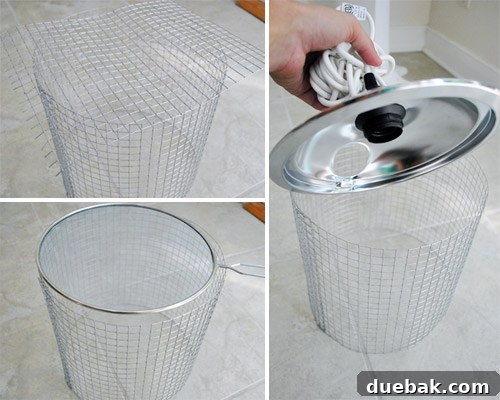
The next challenge was ingeniously attaching the hardwired light kit to our newly formed wire drum shade. We brainstormed several ideas, from cutting a circular piece of fencing to serve as a top plate (with a hole for the light) to repurposing kitchen items like a splatter guard or even a stove burner drip pan. The drip pan almost won, as its existing hole perfectly accommodated the light kit’s threaded pipe. However, we ultimately vetoed it because it would have significantly obstructed the light output and cast an odd shadow on the ceiling. Our final, elegant solution, which you’ll see in the “after” photos, involved a simple yet robust method of using additional craft wire to create a supportive internal structure that allowed the light kit to hang centrally and securely within the frame, ensuring maximum light dispersion without any unwanted shadows. The suspense was worth it!
Preparation and Protection: Painting the Frame
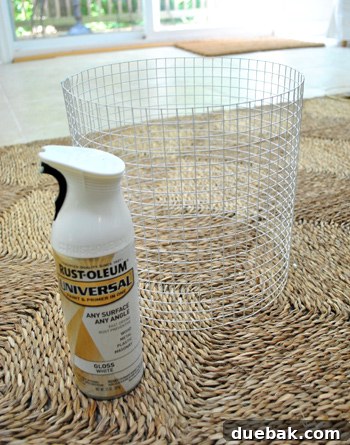
Before adding the clothespins, I gave the wire fencing frame a thorough coat of white gloss spray paint from our basement collection. This served two critical purposes. Firstly, we wanted the frame to seamlessly blend with the white ceiling canopy, providing a more polished and cohesive look, distinct from a raw industrial aesthetic. Secondly, and perhaps more importantly, was a safety consideration. Some metal fencing can contain traces of lead. While we weren’t certain if ours did, we took precautions by handling it exclusively with gloves and spraying it in a well-ventilated area (our sunroom, sealed off from the rest of the house and far from our daughter, Clara). Applying several thorough coats of spray paint acts as a sealant, similar to how old lead-painted walls are sealed with new, non-lead paint – a recommended method as long as the underlying paint isn’t flaking.
The Art of Adornment: Attaching the Clothespins
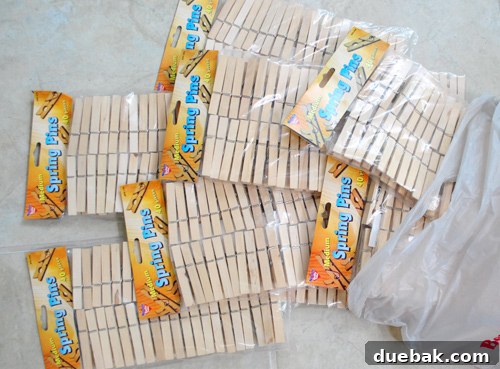
With the frame prepped and painted, it was finally time for the fun part: adding the clothespins! Finding the right size of clothespins that would clip securely onto our specific wire fencing proved to be a bit more challenging than anticipated, but perseverance paid off. We sourced eight bags of “medium” sized clothespins from Ben Franklin, each pack of 40 costing a mere $1.99 – an incredibly cost-effective way to add texture and visual interest.
This stage involved a lot of experimentation as we played around with various “patterns” to achieve the perfect look for our light fixture. Each design offered a different visual impact and altered the way light would filter through.
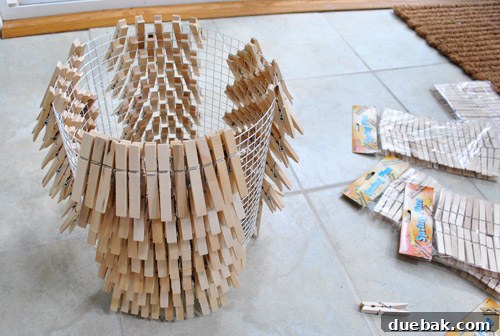
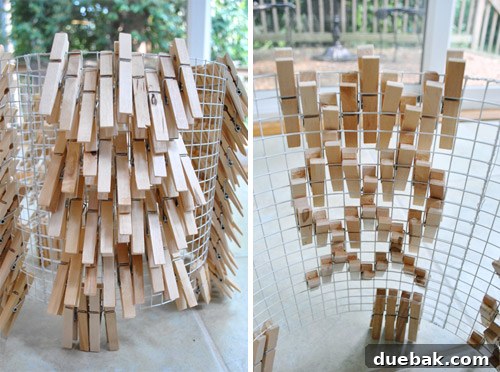
Our first attempt was a straightforward, row-by-row effect. We clipped pins in a horizontal line, then skipped two rows below before adding another row. This created a dense, structured appearance that was clean but felt a little heavy.
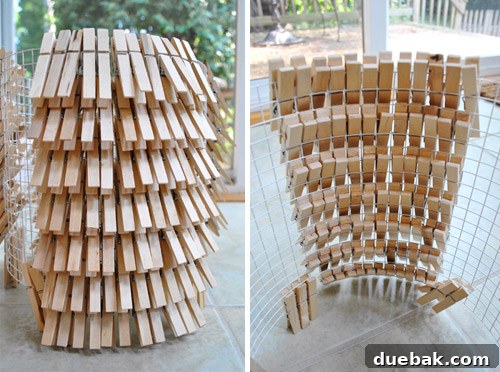
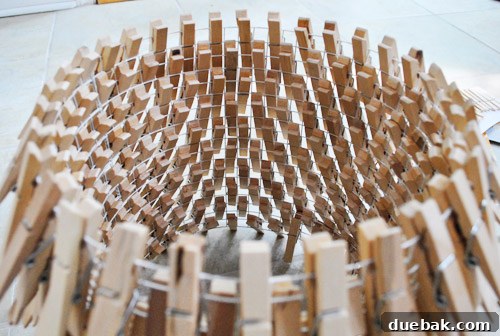
Next, we explored a more dynamic, random or zig-zag pattern. This involved alternating squares, creating a more open and airy feel, as you can see better from the inside view shown on the right.
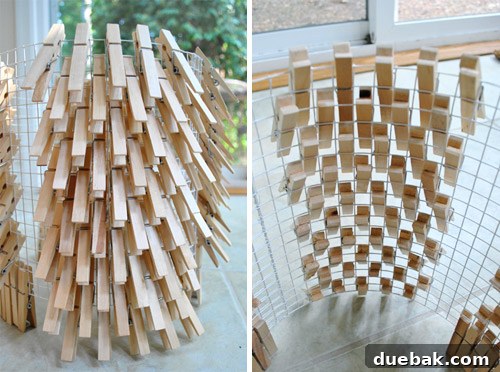
We even dabbled with a diagonal design. While visually interesting, it proved challenging, leaving many empty squares at the top and bottom of the shade that looked rather odd and incomplete.
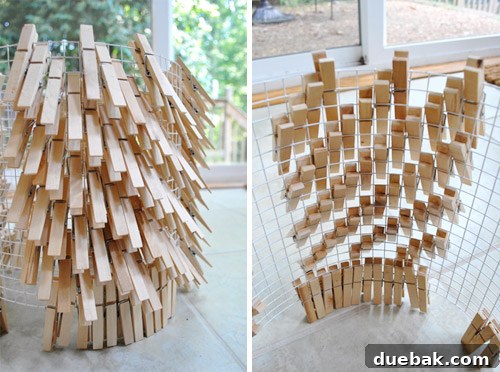
And then there was “The Space Invader” design – a playful nod to the classic video game. If you look closely at the shot on the right, you can clearly spot two Space Invader figures cleverly hidden within the pattern!
After much deliberation, we quickly narrowed our choices down to two favorites: the initial row-by-row pattern and the more dynamic zig-zag design. To make a final decision, John held the shade up with the light on, allowing us to photograph and compare both patterns side-by-side. Initially, I favored the row-by-row approach, while John leaned towards the zig-zag. However, seeing them illuminated, even for a moment, I immediately agreed with John: the row-by-row pattern blocked significantly more light than the zig-zag configuration. The zig-zag felt airier, less visually heavy, and allowed the light to shine through beautifully. We were both absolutely thrilled with this revelation, practically giddy with excitement (just look at John’s happy face above!). From that point on, our enthusiasm for the project soared. We meticulously removed the other clothespin patterns and clipped them all back onto the shade in our chosen zig-zag design.
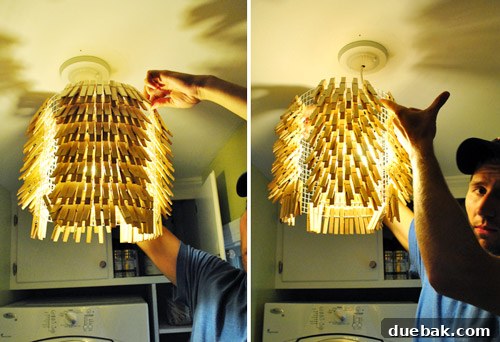
We were fortunate that the way we secured the wire fencing resulted in an even number of squares around the top perimeter. This meant our zig-zag pattern could seamlessly loop around the entire shade without any awkward gaps or visible seams. For anyone attempting this project at home, we highly recommend ensuring your wire frame has an even number of squares along its perimeter for a perfectly continuous pattern.
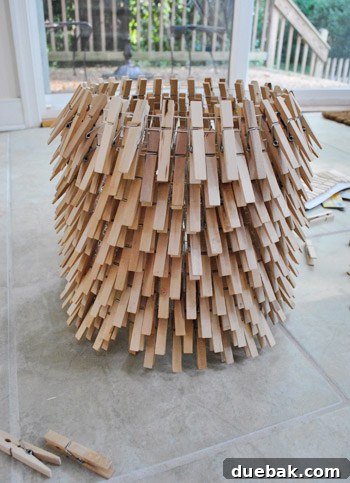
Installation and Illumination: Bringing Your Chandelier to Life
Once the clothespins were meticulously in place, the final step was to install our unique chandelier. Our hanging solution needed to be both secure and aesthetically pleasing.
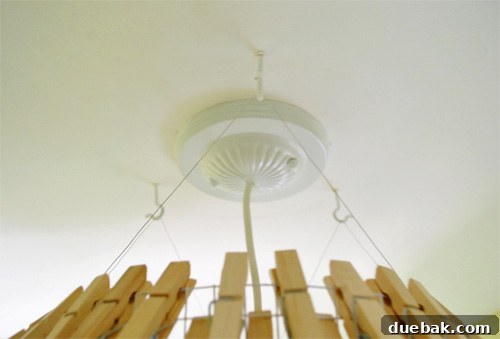
We used more of the same 22-gauge craft wire that had bound our wire fencing into a drum shape. This was then attached to three heavy-duty ceiling hooks, which we screwed securely into the ceiling using appropriate heavy-duty anchors. We certainly didn’t want our beautiful clothespin chandelier to come crashing down!
Stepping back to admire our handiwork, we high-fived for a full five minutes. We were absolutely in love with the result!
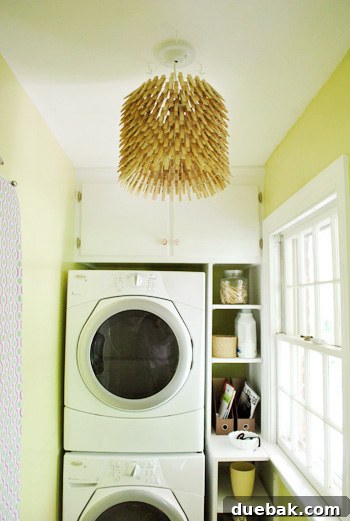
You might be surprised that we opted against spray painting the clothespins white or even staining them. We debated various finishes, but in the end, we genuinely loved the au naturale look for several compelling reasons:
- The natural wood tone beautifully ties into a few woven baskets we have in our built-ins, creating a cohesive design element within the room.
- Keeping the pins natural makes it immediately obvious that the light fixture is crafted from clothespins, which we feel is a significant part of its unique charm and playful appeal.
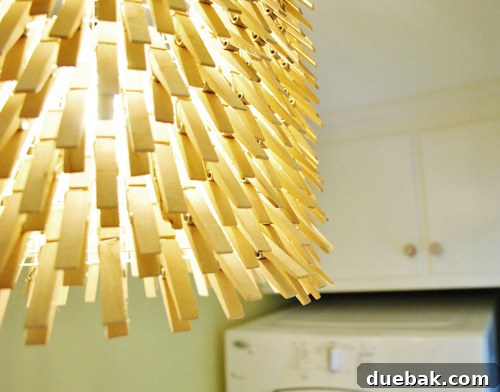
- When illuminated, the raw wood glows with a warm, sunny yellow-tan tone, casting a cozy and inviting ambiance that perfectly complements our “grellow” (grey-yellow) walls.
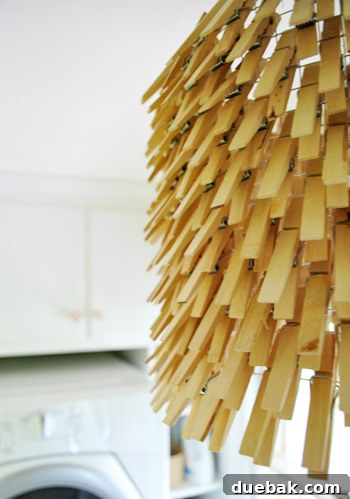
Isn’t it just a delightful addition?
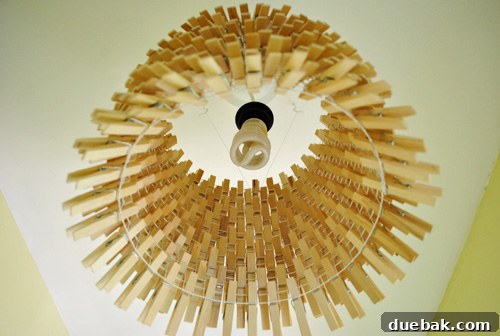
This shot, taken from directly below, gives off major sunburst mirror vibes – a completely unexpected and welcome bonus!
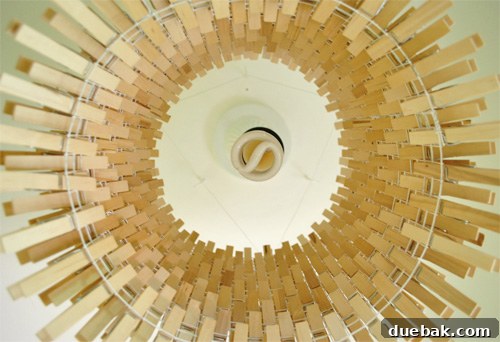
A crucial consideration for any DIY light fixture is safety. Many lampshades are made from potentially flammable materials like paper, fabric, or even dried wood. The key to safety lies in keeping these materials well away from the heat-generating light bulb. We also strongly recommend using cooler-burning bulbs such as CFLs (Compact Fluorescent Lamps) or LEDs (Light Emitting Diodes) to enhance safety further. Additionally, it’s vital to allow plenty of room for heat to escape, ideally from both the top and bottom of the shade. Our open zig-zag pattern and generous spacing around the bulb achieve this perfectly.
Here it is, all lit up and radiating warmth:
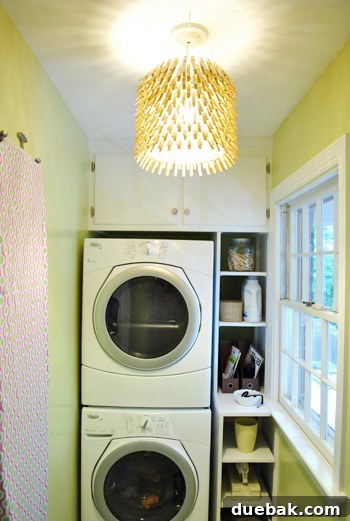
The End Result: A Unique Laundry Room Statement
We truly believe this is one of the coolest and most inventive things we’ve crafted to date. Its quirky, sculptural nature makes it a true conversation starter. This entire project came to life thanks to Katie Bower’s brilliant Pinterest Challenge idea and two specific pins that provided a wealth of inspiration on the “eye candy capital” that is Pinterest. Specifically, this project (originally from Remodelista) and this project gave us the foundational ideas that we then adapted and personalized.
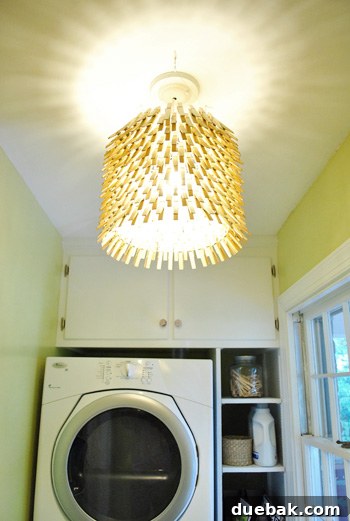
Take a look at the beautiful starburst pattern it casts on the ceiling – another delightful, unexpected bonus!
Budget Breakdown and Practicality
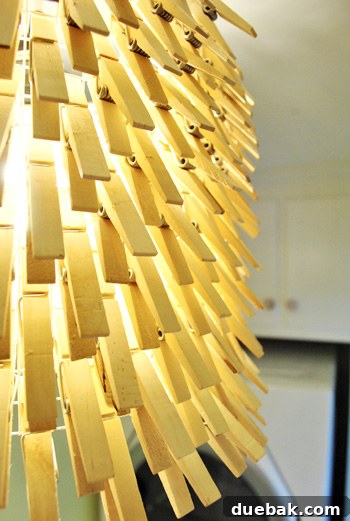
For those of you who appreciate the numbers (like our “mathy” selves!), here are the key stats for our clothespin masterpiece: we used exactly 320 clothespins, which translates to eight full packs. The finished clothespin shade weighs a manageable four pounds, making it easy to hang securely.
Now for the satisfying budget breakdown – proving that creativity doesn’t have to break the bank:
- 8 packs of 40 medium-sized clothespins (from Ben Franklin): $16
- Pack of heavy-duty hooks for the ceiling (from Home Depot): $1
- Roll of hardware cloth (aka, wire fencing) from Lowe’s: $8
- Hemma light kit (from Ikea): $4
- Ceiling canopy for light kit (from Lowe’s): $5
- Wire for securing/hanging wire frame (already owned): $0
- White spray paint (already owned): $0
- TOTAL PROJECT COST: $34
A common question arises: does it interfere with heads or flailing arms during laundry duties? We’re happy to report, absolutely not! As this picture illustrates, the chandelier is positioned quite high in the room. With our 8-foot ceilings, the bottom of the fixture hangs a comfortable 16 inches from the ceiling, placing it almost 7 feet from the ground. Furthermore, it’s centered in the room, a few feet behind the washer and dryer, rather than directly above them. Even John, who stands at 6 feet tall, has no issues. He even did a few loads of laundry and diapers to personally verify!
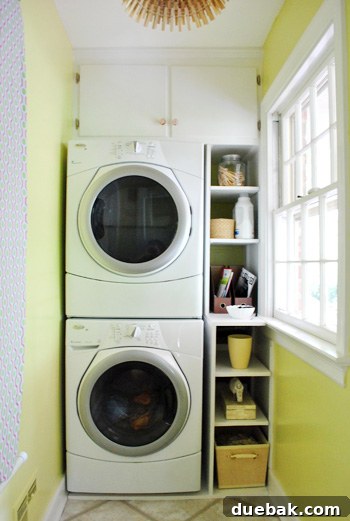
Oh, and can you tell we added our new shoe caddies after taking this photo? Oops! But there you have it – a comprehensive look at our Pinterest Challenge success, filled with countless photos and words about our beloved clothespin chandelier. And yes, a whole bunch of clothespins!

Join the DIY Community: Your Turn to Create!
Don’t forget to check out what other amazing projects were whipped up by our fellow Pinterest Challenge participants! See what Katie, Emily, and Lana created (they’ll be sharing their projects today as well)! A few tantalizing hints: one involves a mirror, and another, a fridge…
Now, it’s your turn! We invite you to share all the fun Pinterest Challenge projects you’ve tackled over the past week. If you’ve already blogged about your creation, simply follow these steps to link up:
- Click on the blue “Add Your Link” button with the quirky cartoon head located at the bottom of this post (you might need to scroll down a bit, depending on how many projects have already been added).
- In the URL field, add a direct link to your specific blog post about your project (not just your blog’s homepage).
- Where it asks for “name,” please use a descriptive name for your project (e.g., “DIY Clothespin Light Fixture”) rather than your actual name.
- We’d also be thrilled if you could quickly link back to our project posts within your own blog post. Here are the links for easy reference: Katie’s, Emily’s, Lana’s, and ours. It’s also a wonderful gesture to link to your original inspiration project on Pinterest, and even directly to the original project creator’s website, to ensure they receive some well-deserved recognition.
Alternatively, if you prefer, feel free to share a link to your project in the comment section below. If you don’t have a blog, you can even add a link to a free photo-sharing site like Flickr with your pictures (just remember to set your gallery to public so everyone can admire your work!). We are genuinely excited and utterly “geeked out” to see what amazing things you’ve been creating!