
Embarking on a home renovation journey, even one focused on a single room like a sunroom, can unleash a wave of transformative energy. After tackling our most ambitious painting project to date—refreshing the sunroom ceiling—we felt an unstoppable momentum to continue enhancing the space. Our next focus? The often-overlooked but crucially impactful world of electrical updates. What started as two seemingly minor projects soon revealed the dual nature of DIY home improvement: some tasks are remarkably straightforward and rewarding, while others present unforeseen challenges that test patience and resolve.
Transforming Your Sunroom: The Impact of Modern Electrical Updates
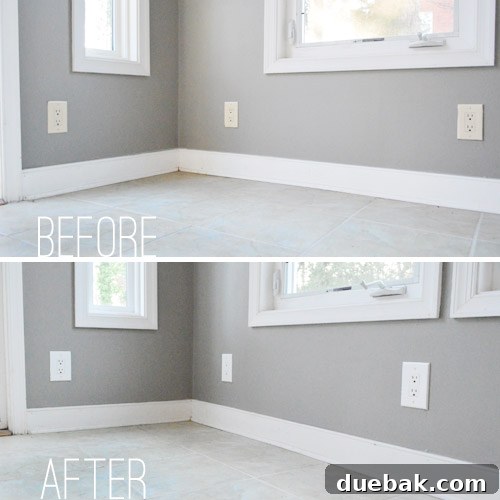
Our sunroom, a cherished space bathed in natural light, desperately needed a refresh that went beyond just paint. The old, discolored outlets, originally an off-white, now stood out unpleasantly against the newly painted crisp white trim, making the entire room feel dated and somewhat dingy. This subtle visual disconnect was a constant reminder that while paint offers a surface-level makeover, true revitalization often lies in addressing the underlying details.
Project 1: The Simple Yet Significant Upgrade – Replacing Outlets
Replacing outlets might seem like a trivial task, but its effect on a room’s aesthetic and perceived newness is profound. In our sunroom, with its nine existing outlets, this simple update promised a significant visual uplift. The beauty of this particular DIY project lies in its accessibility and affordability. A brand new, standard outlet and its corresponding cover plate can cost as little as $2-$3. Even for a room as ‘outlet-riddled’ as ours, the total investment was a mere $25 to replace all nine outlets and two switches. This budget-friendly aspect makes it an ideal project for anyone looking to make a big impact without breaking the bank.
Why Update Your Outlets? Beyond Just Looks
While aesthetics were our primary motivator, the benefits of updating electrical outlets extend far beyond just a cleaner appearance. Old outlets can often have loose connections internally, which can be a safety concern, potentially leading to arcing or even fire hazards. Modern outlets, on the other hand, are built to current safety standards and offer improved durability. Furthermore, this is an opportune moment to consider upgrading to specific types of outlets that enhance functionality and safety:
- Tamper-Resistant Receptacles (TRRs): These are now required by code in many areas and feature internal shutters that prevent foreign objects from being inserted, making them safer for homes with children.
- Ground Fault Circuit Interrupter (GFCI) Outlets: Essential for wet areas like bathrooms, kitchens, and outdoor spaces, GFCIs protect against electrical shock by cutting power almost instantly if a ground fault is detected.
- Arc Fault Circuit Interrupter (AFCI) Outlets: Often found in bedrooms and living areas, AFCIs protect against electrical fires caused by arc faults.
- USB Charging Outlets: A modern convenience, these outlets integrate USB ports directly, reducing the need for bulky adapters and freeing up standard receptacles.
For us, the immediate goal was a visual refresh, but understanding these additional benefits solidified our decision to proceed with the upgrade.
The Straightforward Process of Outlet Replacement
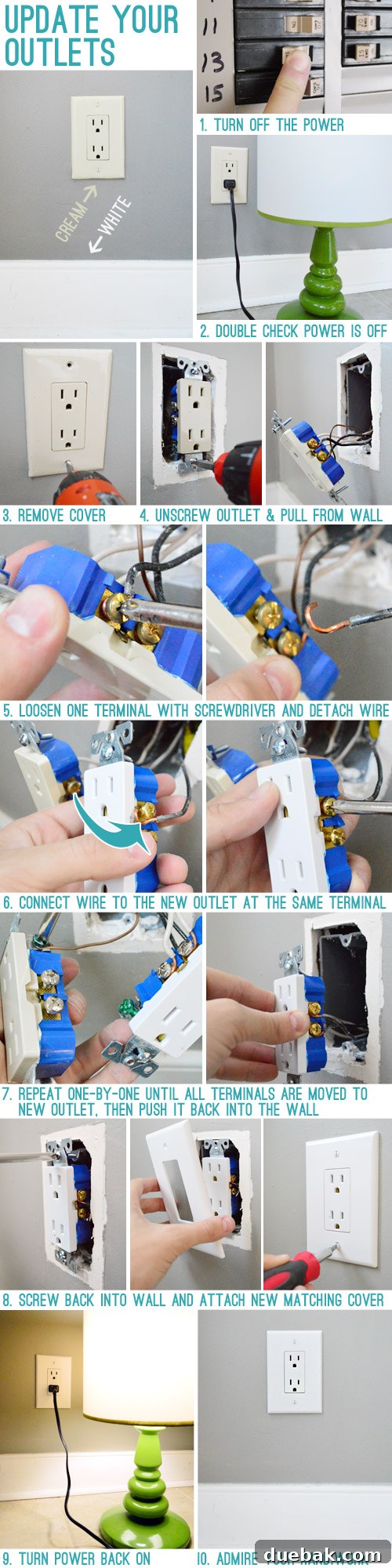
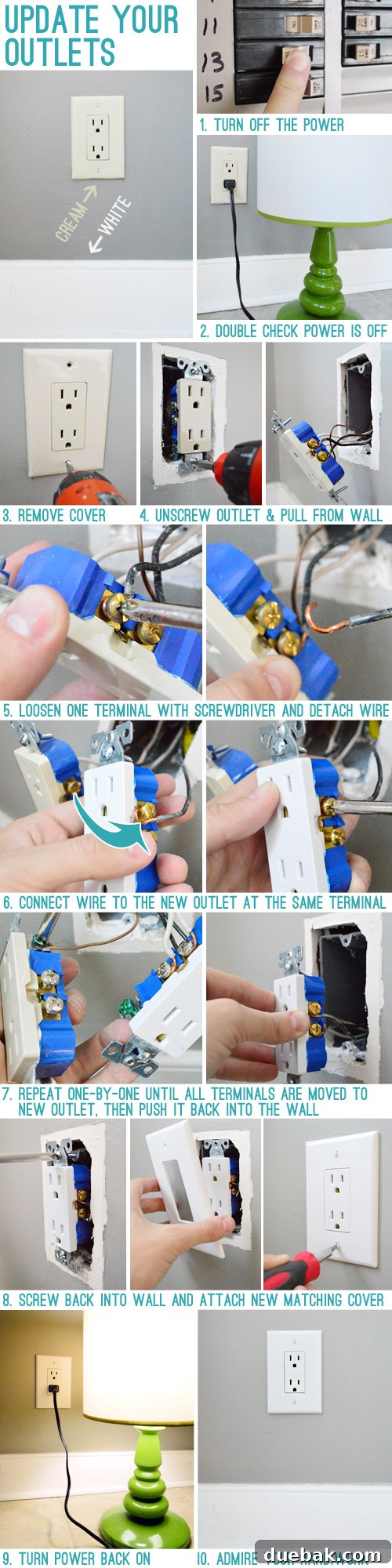
The actual task of replacing outlets is quite straightforward, making it an excellent beginner-friendly electrical DIY. While it can be a bit tedious due to the repetitive nature, it’s far from physically demanding. Crucially, before attempting any electrical work, always prioritize safety:
- Turn Off Power: Locate the circuit breaker panel and switch off the breaker controlling the specific outlet or room you’re working on. Label it clearly to prevent accidental reactivation.
- Test for Power: Use a non-contact voltage tester to confirm that the power is indeed off at the outlet. This step is non-negotiable for your safety and should be done on both slots of the outlet.
- Remove Old Outlet: Unscrew the faceplate and then the outlet itself from the electrical box. Carefully disconnect the wires (usually black for hot, white for neutral, and bare copper or green for ground). Observe how they are connected.
- Connect New Outlet: Following the manufacturer’s instructions and standard wiring practices, connect the corresponding wires to the new outlet. Ensure all connections are tight and secure, typically clockwise around the screw terminals.
- Install New Outlet & Faceplate: Gently push the new outlet into the electrical box, taking care not to pinch wires. Screw it firmly in place, then attach the new, clean cover plate.
- Restore Power & Test: Turn the circuit breaker back on and test the new outlet with a small appliance or a lamp. Confirm it functions correctly and securely holds plugs.
It’s important to note that while this guide offers a general overview, specific wiring configurations can vary. Always consult local codes and consider seeking professional help if you’re unsure or uncomfortable. I’m not a trained electrician like those you’d find in Perth, so this account serves as a personal experience rather than an expert how-to. However, for standard residential setups, these principles generally apply and have served us well in our own home.
A Boost for Resale Value
Beyond personal satisfaction, updating outlets offers a tangible benefit for homeowners looking to sell. Prospective buyers often notice small details that contribute to a home’s overall impression. Freshly painted walls paired with gleaming new outlets create an immediate sense of a well-maintained, updated, and crisp living space. This inexpensive upgrade can significantly enhance a room’s appeal, subtly adding to its perceived value and making it more attractive on the market. Our hour-long effort, costing just $25, instantly made the sunroom feel decades newer, a sentiment echoed by real estate professionals who often advise such minor but impactful updates. It’s a simple investment with a notable return on aesthetic value.
Project 2: The Ambiguous Endeavor – Adding a Light to Our Ceiling Fan
With the success of the outlet project still fresh, we moved on to our next electrical challenge: illuminating the sunroom after dark. Despite its bright and airy feel during the day, the room plunged into absolute darkness once the sun set. This lack of overhead lighting was a significant inconvenience, prompting us to seek a practical and aesthetically pleasing solution. The idea of adding a light kit to our existing ceiling fan, a suggestion sparked by my mom, seemed like the perfect answer – a cost-effective way to introduce much-needed ambient light without installing an entirely new fixture.

The Quest for Illumination: Selecting a Light Kit
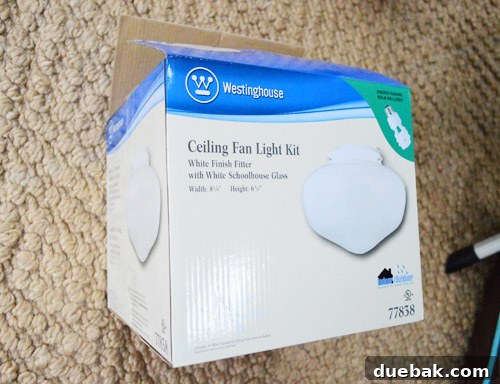
Our search led us to a “vintage-ish” Ceiling Fan Light Kit at Home Depot, priced at an appealing $20. The schoolhouse style of the fixture offered a classic charm that would complement the sunroom’s aesthetic without being overly modern or out of place. This seemed like an ideal solution: affordable, stylish, and promising to resolve our dark-room dilemma. Choosing the right light kit involves considering several factors, including compatibility with your existing fan, the desired style, and the type of bulb you plan to use. This particular kit ticked all our boxes. Little did I know, the journey to a lit sunroom would be anything but straightforward.
Initial Attempts and the Crucial Lesson: Read the Instructions!
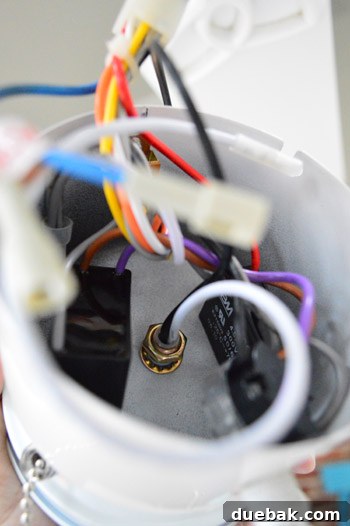
Buoyed by the success of the outlet replacements and the excitement of adding light, I made a classic DIY mistake: I bypassed the instructions. After safely turning off the power to the room, I eagerly began disassembling the fan, hoping to intuitively understand how the light kit connected. What I found was a confusing jumble of multicolored wires that bore little resemblance to the simple black and white wires provided with the light kit. This initial encounter with complex wiring was a stark reminder that enthusiasm, while valuable, is no substitute for proper guidance, especially when dealing with the intricacies of electrical systems.
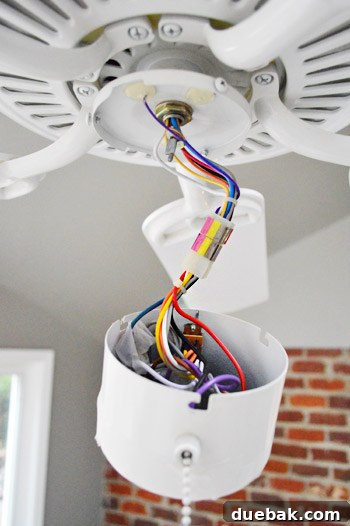
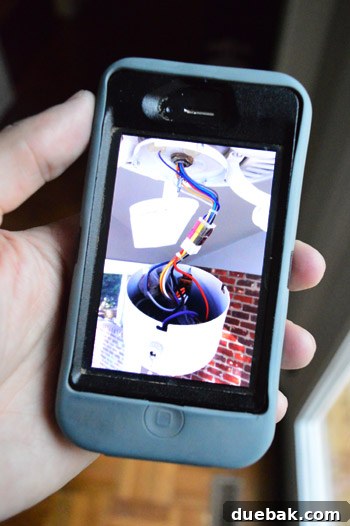
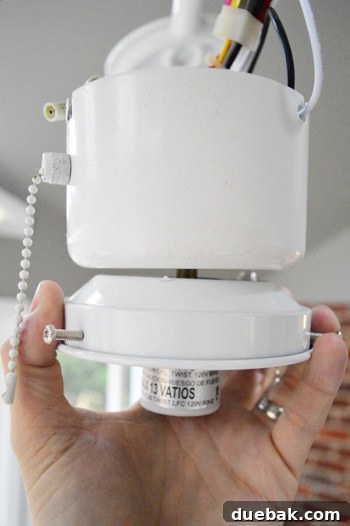
Convinced I had purchased the wrong kit, I made a trip back to the store. Armed with a picture of my fan’s intricate wiring, I sought the wisdom of the lighting specialist. After a rather enlightening (and slightly awkward, due to the repeated use of the term “nipple” in a technical context) discussion, she informed me that I actually had the correct kit all along. My error was fundamental: I simply hadn’t followed the instructions. The key, she explained, was to pop out a small cover on the bottom of the fan, revealing the designated light kit wiring specifically intended for accessory lights.
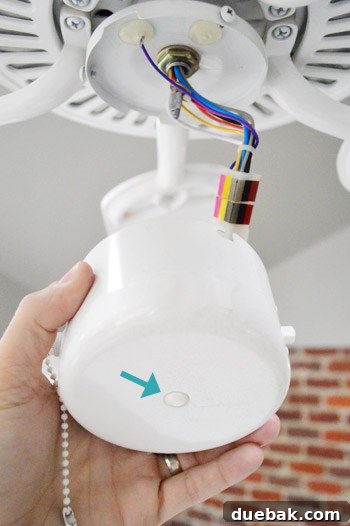
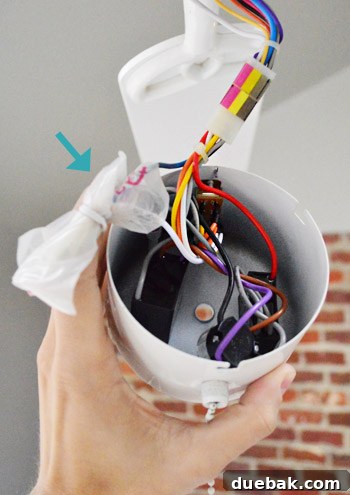
Sure enough, upon closer inspection, hidden within a plastic bag inside the fan’s housing were the specific wires labeled “for light” – the simple black and white connections the kit required. It was a classic “duh” moment, underscoring the importance of patience and thoroughness in any DIY project, especially when dealing with electricity. This often-overlooked detail can save hours of frustration and unnecessary trips to the store.
Second Attempt: Hope and Frustration
With newfound confidence and the actual instructions finally cracked open, I proceeded to connect the light. The process involved screwing the light fixture’s central threaded rod – the aforementioned “nipple” – into the fan cover and securing it with a nut. This mechanical attachment was straightforward and felt secure. The electrical connection promised to be equally simple: plug the light’s wires directly into the corresponding ones from the fan (blue into black, as per the instructions). This seemed almost too easy after my earlier struggles, suggesting that perhaps all my initial troubles were simply due to my oversight.
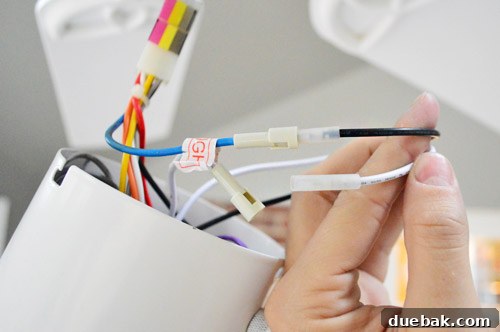
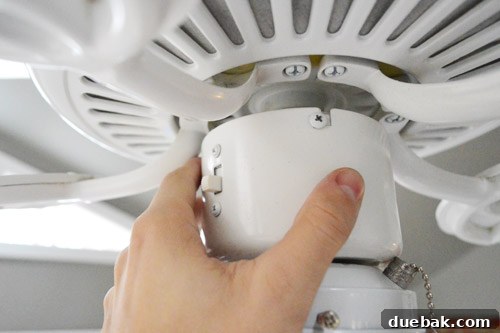
Confident in my now-informed approach, I twisted the fan cover back into place and eagerly restored power. The fan whirred to life, its blades rotating smoothly, but the light remained stubbornly dark. I pulled the chain repeatedly, ensuring the light was “on.” I toggled the wall switch back and forth. I even disconnected and reconnected the wires a couple of times, convinced I must have missed something simple, a loose connection, or a misaligned plug. Still, nothing. The light refused to illuminate, leaving me once again in the dark, both literally and figuratively.
Troubleshooting and the Ultimate Roadblock
The frustration mounted. My initial enthusiasm was replaced by a determined effort to troubleshoot every possible angle. Online forums and DIY guides became my companions in the late hours. I bought another identical light kit, suspecting a faulty unit – but that didn’t work either, ruling out a defective product. I even attempted hardwiring the light by cutting off the provided plugs and directly splicing the wires, a more permanent (and slightly riskier) solution, to eliminate any potential issues with the plug connectors. Still no light.
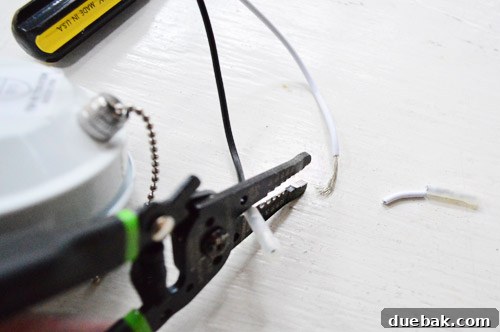
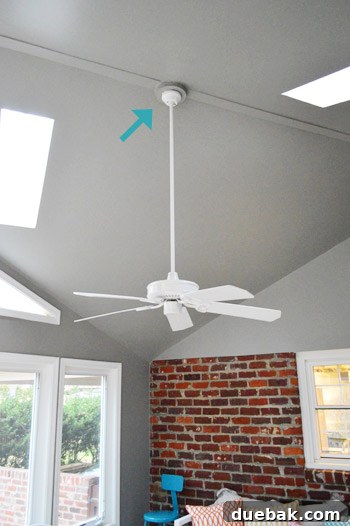
After multiple attempts, extra trips to the home improvement store, and considerable head-scratching, the grim reality dawned on me. The issue wasn’t with the light kit or the fan itself. The problem originated much higher up – at the ceiling. It appeared we were among the “lucky” homeowners whose original fan installer, perhaps assuming a light kit would never be added to the fan, had simply opted not to connect the necessary wiring for a light fixture within the ceiling box. These wires, crucial for providing power to the light, lay dormant and inaccessible, 12 feet above the floor, effectively turning this DIY into a much larger, more complex electrical project than anticipated.
Lessons Learned and a Temporary Solution
At this point, both Sherry and I agreed: the project had officially been busted. While theoretically, one could buy a significantly taller ladder, rent scaffolding, or even hire a professional electrician to re-wire the ceiling box and run new wiring, these options seemed extreme for what we had envisioned as a quick, easy, and inexpensive DIY. The cost, effort, and potential disruption of these solutions far outweighed the benefits for this particular project, especially given the existing fan was fully functional otherwise.
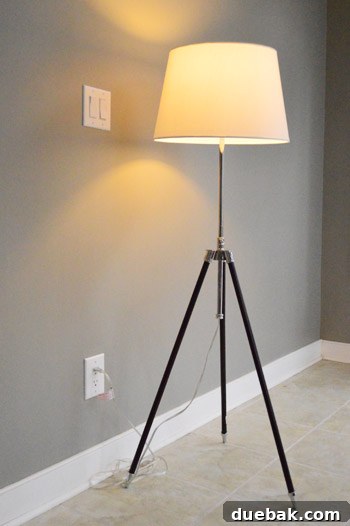
So, for now, our elegant overhead lighting solution takes the form of a floor lamp. Borrowed from the bedroom, where it was rarely used thanks to existing overhead lighting and bedside lamps, it now dutifully illuminates our sunroom at night. It’s not the seamless integration we initially hoped for, and it certainly lacks the architectural grace of a true ceiling light. However, it works. And sometimes, in the world of DIY, “it works” is a perfectly acceptable outcome, especially when faced with unexpected structural limitations or when a project simply isn’t worth escalating further. Perhaps down the line, we’ll revisit the idea of proper overhead lighting, but for now, the floor lamp provides the necessary glow.
Embracing the DIY Journey: Triumphs and Tribulations
Our recent sunroom electrical projects perfectly illustrate the spectrum of experiences that home improvement enthusiasts often encounter. On one hand, the simple act of updating old outlets proved to be a remarkably easy, cost-effective, and impactful upgrade, transforming the room’s entire feel in just over an hour. This project was a clear win, a testament to how small changes can yield significant aesthetic and practical improvements, even boosting potential resale value.
On the other hand, the attempt to add a light to the ceiling fan became a humbling saga of unexpected obstacles, troubleshooting, and ultimately, a temporary compromise. It highlighted the critical importance of reading instructions, the value of thorough pre-inspection of existing wiring, and the sometimes-necessary decision to know when a DIY project has reached its practical limits and might require professional intervention – or a creative workaround. Every home has its unique quirks, and sometimes those quirks reveal themselves only after you’ve started digging.
Every DIY adventure, whether a resounding success or a learning experience, adds to the story of our home. It’s about making spaces more comfortable, functional, and reflective of our style, one project at a time. What sort of electrical adventures have you been up to lately? Did anything go super easily, like a swift outlet swap? Or did a project turn out to be a tricky puzzle, leaving you with a newfound appreciation for the complexities of home wiring? Share your stories – the triumphs, the headaches, and the ingenious solutions you discovered along the way!