
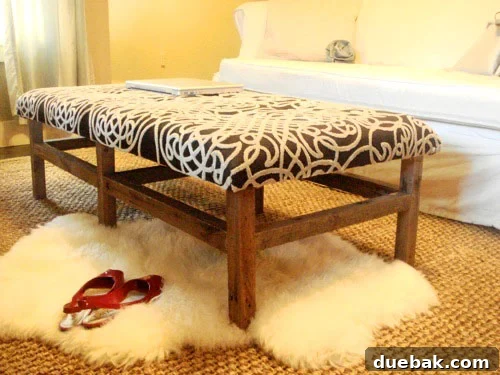
Craft Your Own Stunning Tufted Ottoman: A Detailed DIY Guide
Welcome to a truly inspiring DIY journey! Today, we’re thrilled to share an exclusive tutorial from the incredibly talented Kara Paslay of Kara Paslay Designs. Many of you might remember Kara from her captivating house crashing tour, where she showcased her knack for transforming spaces. Now, she’s back to guide us through creating a breathtaking tufted ottoman that’s not only gorgeous but also surprisingly achievable for any DIY enthusiast.
This project is a fantastic opportunity to add a touch of elegance and functionality to your home without breaking the bank. Kara’s approach emphasizes creativity and resourcefulness, making it perfect for those who love to upcycle and personalize their decor. Get ready to dive into a rewarding project that will leave you with a stunning, custom-made centerpiece for your living room.
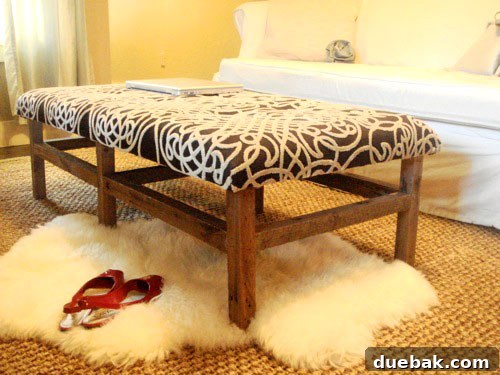
Why Build Your Own Tufted Ottoman?
A tufted ottoman is more than just a piece of furniture; it’s a versatile design element that can elevate any room. It can serve as a stylish coffee table, an extra seat for guests, a comfortable footrest, or even a chic storage solution (though this specific design focuses on a solid top). Building your own offers numerous benefits:
- Customization: You choose the exact size, fabric, tufting pattern, and leg style to perfectly match your interior design. No more settling for off-the-shelf options!
- Cost-Effectiveness: As you’ll see from Kara’s budget breakdown, DIYing can significantly reduce costs, especially when incorporating reclaimed or repurposed materials.
- Quality & Durability: By selecting your own materials and investing your time, you can ensure a robust and long-lasting piece of furniture that might surpass mass-produced alternatives.
- Personal Satisfaction: There’s immense pride in creating something beautiful and functional with your own hands. This ottoman will be a conversation starter and a testament to your crafting skills.
- Eco-Friendly: Utilizing reclaimed wood and existing furniture components reduces waste and promotes sustainable living.
Materials & Tools You’ll Need
Before embarking on your tufted ottoman project, gather all the necessary materials and tools. Having everything at hand will ensure a smooth and efficient building process.
Essential Materials:
- Wood or MDF Top: A sturdy piece of 3/4-inch plywood or MDF for the ottoman’s surface. Choosing 3/4″ thickness is crucial to prevent sagging over time, especially if your ottoman is large or will bear significant weight.
- Foam: 2-inch thick upholstery foam, cut to the same dimensions as your wood top. Look for medium-density foam for a comfortable yet supportive feel.
- Contact Cement: An adhesive suitable for bonding foam to wood.
- Extra-Loft Batting: Polyester batting adds a layer of softness and helps smooth out any imperfections before the fabric is applied.
- Upholstery Fabric: Your chosen fabric for the ottoman cover. Consider durability, pattern, and color. Upholstery-grade fabrics are recommended for longevity.
- Buttons and Button Cover Kits: Kits are available at craft stores to allow you to cover buttons with your chosen fabric, ensuring a perfect match.
- Heavy-Duty Upholstery Thread: Strong, durable thread is essential for tufting to withstand tension.
- Washers: Small metal washers to secure the tufting knots on the underside.
- Wood for Base/Legs: Reclaimed 2x2s or new lumber, cut to specifications for your ottoman’s base (measurements provided in Step 10).
- Liquid Nails (or similar construction adhesive): For a strong bond between wood components.
- Finish Nails or Wood Screws: For additional structural integrity of the base.
Tools You’ll Need:
- Measuring Tape: For accurate measurements.
- Saw: A circular saw, jigsaw, or hand saw for cutting wood/MDF.
- Drill: With small drill bits for pre-drilling tufting holes and pilot holes for screws.
- Staple Gun: An electric or pneumatic staple gun with upholstery staples for securing batting and fabric.
- Fabric Scissors: Sharp scissors specifically for cutting upholstery fabric.
- Large Upholstery Needle: A long, sturdy needle designed for tufting.
- Pliers: Helpful for pulling the needle through thick layers of foam and fabric.
- Hammer (if using finish nails): For driving nails.
- Optional: Kreg Jig: If you own one, it can create incredibly strong and clean joints for your wooden base.
Step-by-Step Ottoman Construction: A Detailed Guide
Step 1: Prepare the Ottoman Top – Wood Base and Foam
Begin by cutting your wood or MDF board to the desired dimensions for your ottoman top. If you’re repurposing an old coffee table, this step might be simplified. However, if building from scratch, use 3/4-inch plywood or MDF. This thickness is crucial for preventing the top from sagging over time, especially with the added weight of foam, fabric, and any items placed on the ottoman.
Next, plan the layout for your button tufts. Mark the spots where you want each button to be – typically a grid pattern of 6 or 8 buttons works well for a standard size, but feel free to customize. Using a drill, pre-drill small holes through the wood or MDF at each marked spot. These holes will guide your tufting needle later.
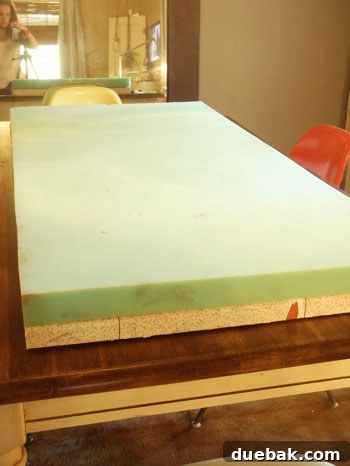
Apply an even layer of contact cement to the top surface of your wood base. Carefully place the 2-inch thick upholstery foam, cut to the exact same dimensions as your wood, on top of the contact cement. Press down firmly to ensure a strong bond. Allow the adhesive to cure according to the manufacturer’s instructions.
Step 2: Add the Batting Layer
With your foam securely attached, it’s time for the extra-loft batting. Lay the batting over the foam, ensuring it covers the entire top and extends several inches beyond the edges. This layer adds an extra soft cushion and helps to smooth out any subtle contours of the foam, giving your ottoman a plush, professional finish. Flip the ottoman top over, pull the batting taut, and secure it to the underside of the wood with a staple gun. Work your way around, pulling gently to maintain even tension, then trim any excess batting.
Step 3: Upholster with Your Chosen Fabric
Now for the main event – covering your ottoman with fabric. Lay your chosen upholstery fabric over the batting, ensuring any patterns are perfectly straight and centered. Fabric selection is key here; consider durability and stain resistance, especially for a high-traffic item like an ottoman. For a neat, taut finish on a square or rectangular top, start by placing a few staples in the center of one side on the underside of the wood. Then move directly to the opposite side, pull the fabric firmly but not excessively tight, and add a few staples there. Repeat this process for the remaining two sides. This method ensures even tension across the entire surface, preventing wrinkles, bulges, and an uneven appearance. Continue stapling around the perimeter, maintaining consistent tension, until all four sides are secured, leaving the corners open for the next step.
Step 4: Craft Crisp Corners
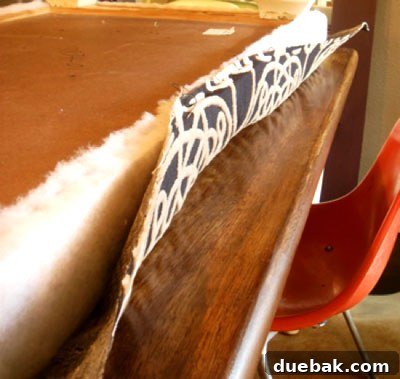
Finishing the corners neatly is crucial for a polished, professional look. Begin by carefully folding the fabric at each corner as shown in the initial photo below, aiming for minimal bulk.
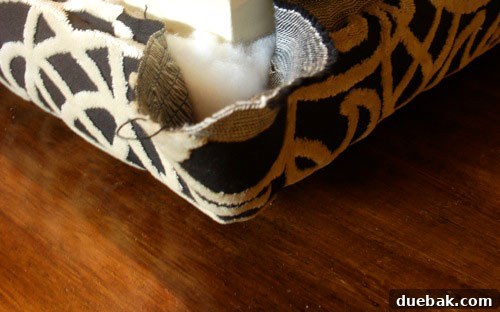
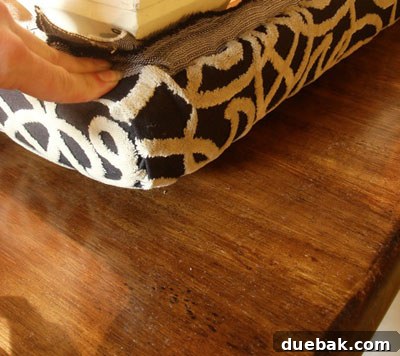
To achieve a clean fold, first pull the left flap of fabric towards the right and staple it securely. Next, take both remaining flaps of fabric (from the top and bottom) and pull them smoothly towards the left, stapling them down. The goal is to eliminate any lumps or humps. Take your time to smooth out any excess fabric, creating a sharp, tailored corner. This attention to detail will significantly enhance the overall aesthetic of your tufted ottoman. Here’s what your finished corner should resemble:
Step 5: Prepare Your Tufting Buttons
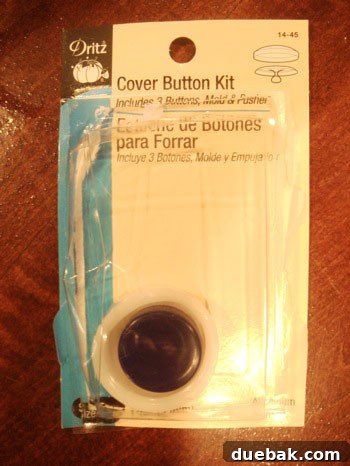
Tufting buttons add that distinctive, elegant touch to your ottoman. You can find button cover kits at most craft or fabric stores. These kits typically include button forms and instructions on how to easily cover them with your chosen upholstery fabric. Covering your buttons with the same fabric as your ottoman ensures a cohesive and professional appearance. Follow the kit’s instructions carefully to create all the buttons you’ll need for your tufting pattern.
Step 6: Thread Your Needle for Tufting
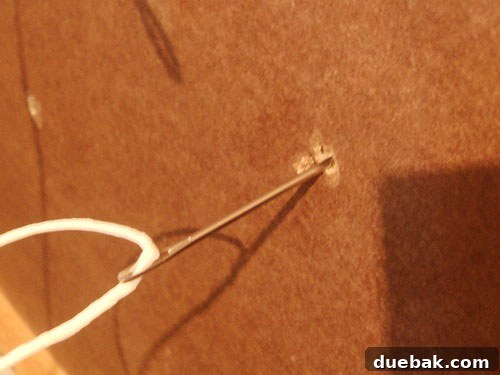
For tufting, you’ll need a very large, strong upholstery needle and heavy-duty upholstery thread. This thread needs to withstand significant tension, so do not use regular sewing thread. Cut a generous length of thread – it’s better to have too much than too little – and string it through the eye of your needle. Do not cut the thread from the spool yet; you’ll tie off each button individually.
Step 7: Push Thread Through the Ottoman Top
Locate one of the pre-drilled holes on the underside of your ottoman top. Carefully push the large needle, threaded from Step 6, through this hole from the back (wood side) to the front (fabric side). This might require considerable force, especially through the foam and fabric layers. Don’t hesitate to use a pair of pliers to firmly grasp the needle and pull it all the way through until the thread emerges on the fabric side.
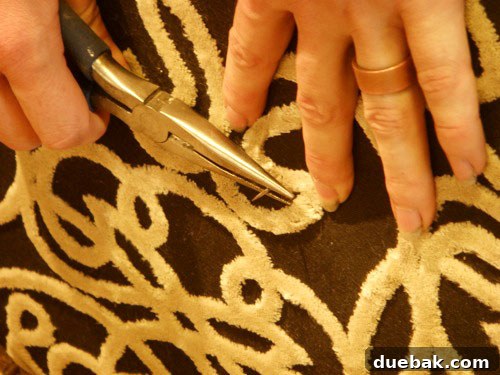
Step 8: Attach the Button and Re-thread
Once the thread is through to the front, string one of your fabric-covered buttons onto the thread. Then, carefully guide the needle back through the fabric, foam, and wood, aiming for the *same* pre-drilled hole. This step can be a bit tricky, and it might take a few attempts to locate the exact hole from the top side. Patience is key here; keep trying until you successfully guide the needle back through to the underside.
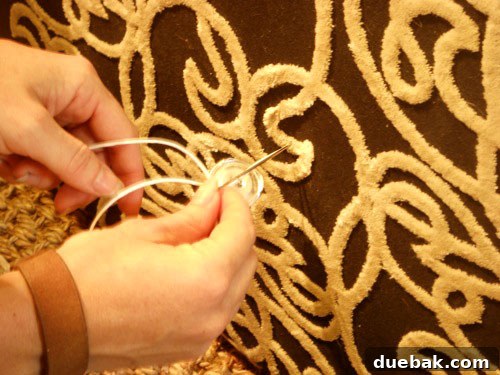
Step 9: Secure Your Tuft with a Washer and Knot
With both ends of the thread now on the underside of the ottoman, it’s time to create the tuft. Thread a small metal washer onto one end of the string. Then, firmly pull both ends of the thread to create the desired depth for your tuft. This is where having an extra set of hands comes in handy: ask a friend or spouse to push down on the button from the top side while you pull the thread tight and tie a secure knot on the underside. Ensure all your tufts are pulled to a similar depth for a consistent and professional appearance. Tie a strong double or triple knot to prevent it from coming loose over time.
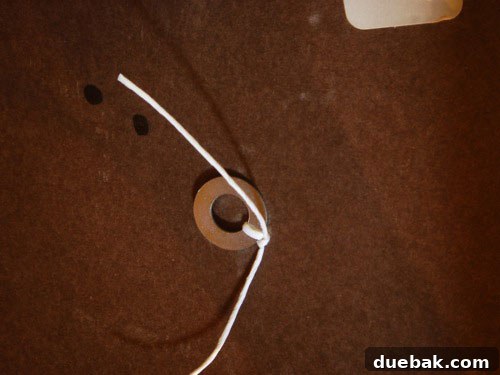
Once completed, your tufted button should look perfectly recessed and elegant:
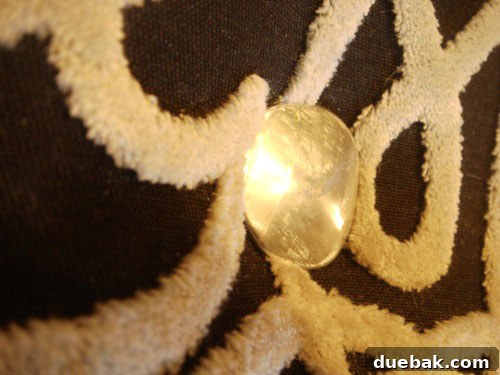
Repeat steps 6-9 for all remaining button locations. Once all buttons are tufted, you’ll have a beautifully upholstered top. This tufted panel could even serve as a stylish headboard if you decided to hang it!
Step 10: Design and Cut the Ottoman Base
Now, let’s construct the sturdy foundation for your tufted top. Kara and Tim repurposed old 2x2s from their house renovation, adding a unique history and character to the piece. This is a fantastic example of using reclaimed materials to save money and add charm. You can use new lumber or scout for similar reclaimed pieces at architectural salvage yards or Habitat for Humanity ReStores.
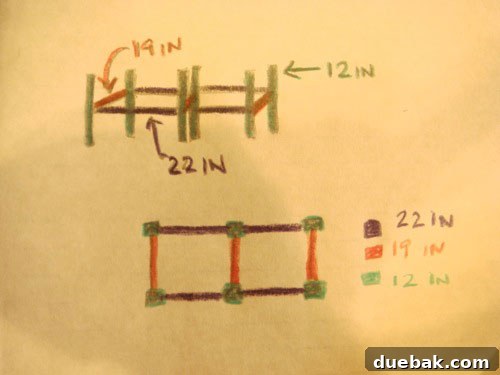
For this specific base design, you’ll need to cut your wood pieces to the following dimensions:
- Six 2x2s at 12 inches (for vertical supports)
- Three 2x2s at 19 inches (for horizontal supports)
- Four 2x2s at 22 inches (for horizontal supports)
The following diagram illustrates how these pieces fit together to form the base, with the first drawing showing a side view and the bottom drawing providing a bird’s eye perspective for clarity:
Step 11: Assemble the Ottoman Base
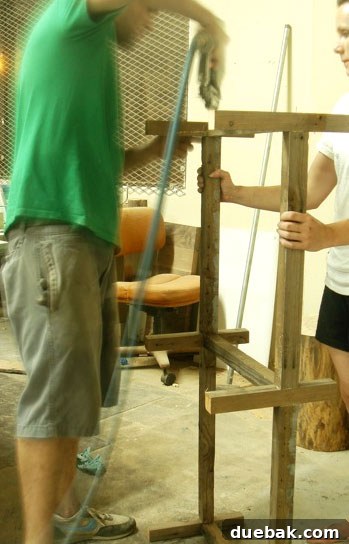
Bring your cut wood pieces together to form the robust base. While a Kreg Jig would be ideal for creating strong, hidden pocket-hole joints, it’s not strictly necessary. If you don’t have one, a combination of strong construction adhesive like Liquid Nails and finish nails (or wood screws) will create a remarkably sturdy structure. Apply Liquid Nails to all joining surfaces before securing them with nails or screws. This “one-two punch” ensures a lasting bond. Initially, the structure might feel a bit flexible, but once the adhesive cures fully, your base will be incredibly strong and rigid.
Step 12: Attach the Base to the Tufted Top
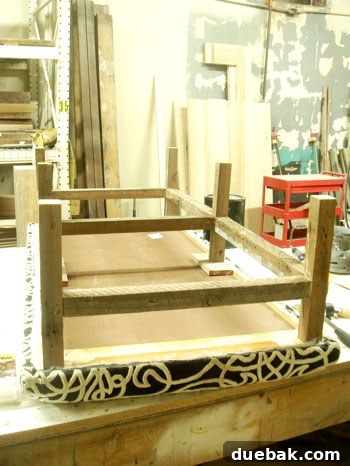
The final structural step is to securely attach the assembled wooden base to your beautifully tufted ottoman top. Again, use Liquid Nails (or a similar construction adhesive) along the top edges of your wooden base where it will meet the ottoman top. Carefully center the tufted top on the base. To create an exceptionally strong connection, “toe-nail” finish nails (or screws) through the base into the ottoman top. Toe-nailing involves driving nails or screws in at a diagonal angle, providing extra grip and preventing the base from shifting. If using screws, remember to pre-drill pilot holes to prevent the wood from splitting. This method creates a rock-solid piece of furniture ready for years of use.
Bringing Your Vision to Life: The Final Touches
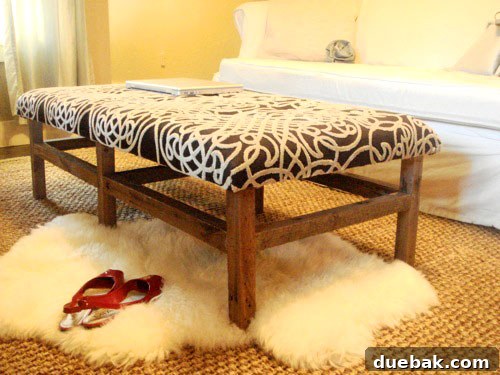
And there you have it! After all your hard work, step back and admire your brand new, handmade tufted ottoman. Kara and Tim’s creation looks absolutely stunning in their living room, demonstrating how a DIY project can seamlessly integrate into and enhance an existing decor scheme.
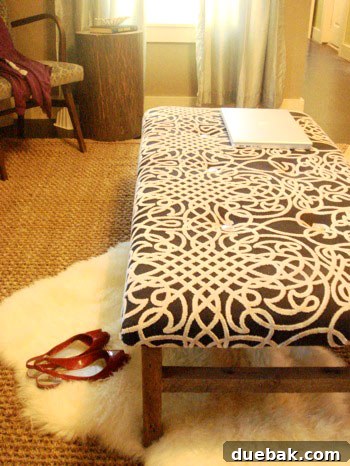
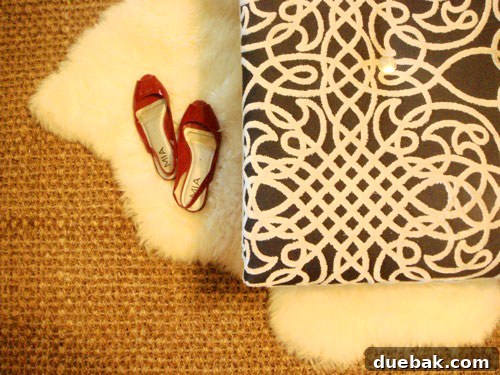
Budget Breakdown & Savvy Sourcing Tips
One of the most appealing aspects of this DIY ottoman project is its incredibly low cost. Kara and Tim were able to complete their magnificent piece for around $32! This is largely thanks to their clever use of reclaimed and repurposed materials. Here’s a detailed look at their budget and how you can achieve similar savings:
- Top from former coffee table: FREE (By repurposing an existing piece of furniture, you eliminate the need to purchase new wood, which can be a significant cost saver. Look for old tables at thrift stores or on online marketplaces.)
- 2″ thick foam: $27 (with 40% off coupon) (Upholstery foam can be costly. Always look for craft store coupons or check online fabric/upholstery supply retailers for sales. Sometimes, even old foam mattresses can be repurposed!)
- Contact cement: already owned, aka: FREE (If you don’t already own it, a small can of contact cement is a worthwhile investment for various DIY projects. Factor in about $10-$15.)
- Fabric (scrap piece): FREE (This is where creativity shines! Dig through your fabric stash, check remnant bins at fabric stores, or even repurpose old curtains, tablecloths, or blankets. A durable, appealing fabric transforms the entire piece.)
- Tufting buttons: $5 (Button cover kits are generally inexpensive. If you’re really on a budget, you might even find unique buttons at a thrift store.)
- Reclaimed wood legs: FREE (The biggest saving! Scout for reclaimed wood at demolition sites (with permission!), lumber yards, or even old furniture pieces destined for the curb. This not only saves money but also adds character and a story to your ottoman.)
- TOTAL COST: $32
Even if you don’t have all these items lying around, you can still achieve a budget-friendly outcome. Consider upholstering an existing coffee table that no longer fits your style, hunting for an old curtain panel or sturdy blanket for fabric, and frequenting your local thrift shop or Habitat For Humanity ReStore for wood scraps or pieces that can be reimagined into an ottoman base. The key is to think resourcefully and be open to unique finds.
Conclusion: Enjoy Your Handmade Masterpiece
What an incredible journey! This DIY tufted ottoman project is a testament to what can be achieved with a little creativity, effort, and a smart approach to materials. Kara Paslay has not only shown us how to build a beautiful, functional piece of furniture but also how to do it in an incredibly budget-conscious and sustainable way.
You’ll end up with a truly unique ottoman that:
- Is incredibly functional as a coffee table, footrest, or extra seating.
- Serves as a beautiful reminder of your personal renovation experiences or your commitment to repurposing.
- Was made from mostly reclaimed materials, reducing waste.
- Cost you a fraction of what a store-bought equivalent would.
We extend our sincerest gratitude to Kara and Tim for sharing their detailed instructions and amazing photographs. Their clear, step-by-step guide makes this ambitious project feel surprisingly doable. We hope this tutorial inspires you to roll up your sleeves and create your very own stunning tufted ottoman. The satisfaction of crafting a custom piece for your home is unparalleled!