
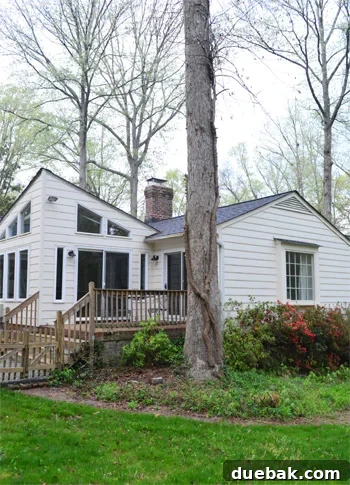
Reclaiming Our Oak: The Epic Battle Against an Invasive Backyard Vine
(Punny alternate post title: Heard It Through The Giant Non-Grape Vine)
Every homeowner dreams of a serene and well-maintained backyard oasis. For us, that dream was being slowly but surely overshadowed by a botanical menace: a colossal, tenacious vine that had decided to make our magnificent oak tree its permanent host. If you’ve been following our journey, you might remember our initial encounter with this “crazyvine” last fall, a scenario so dramatic it felt like a scene pulled straight from the adventurous world of Jumanji. This wasn’t just a quaint climbing plant; it was an aggressive, woody intruder, threatening the very life of our beloved oak and casting a perpetual shadow over our outdoor living space. The sheer scale of its growth and its relentless grip on the tree were not only an aesthetic blight but also a serious concern for the health and longevity of the ancient oak.
The Initial Encounter: A Jumanji-esque Problem
The first time we truly grasped the enormity of the problem, we knew we had to act. The vine had interwoven itself so thoroughly with the oak’s branches and trunk that it appeared as though the tree itself was undergoing some sort of monstrous transformation. Its thick tendrils, as robust as small tree limbs, were gradually tightening their hold, potentially restricting the oak’s growth and suffocating its vital circulation. We understood that a proactive approach was essential to prevent irreversible damage and preserve the beauty and structural integrity of our backyard.
The First Strike: Cutting the Base
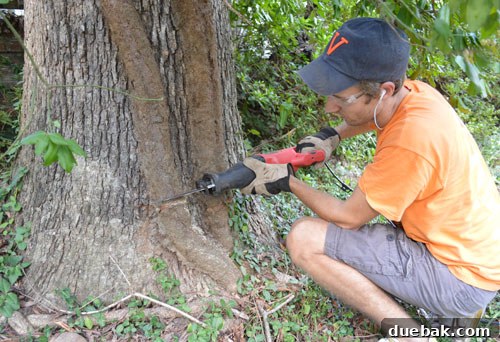
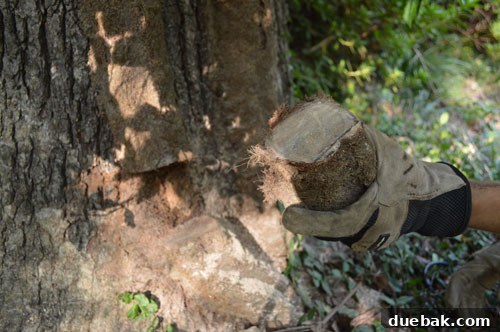
About half a year ago, driven by the urgency of the situation, we embarked on what we hoped would be the decisive first step in liberating our oak. Our strategy was simple: cut the base of the vine, effectively severing its lifeline to the ground and, we theorized, forcing it to wither and release its grip. We armed ourselves with sturdy cutting tools and went to work, carefully making a clean cut through the vine’s main stem near the base of the oak. It was a laborious task, requiring significant effort to penetrate the tough, fibrous material of the vine. This initial intervention, detailed in our previous post, felt like a victory, a declaration of intent in our ongoing battle.
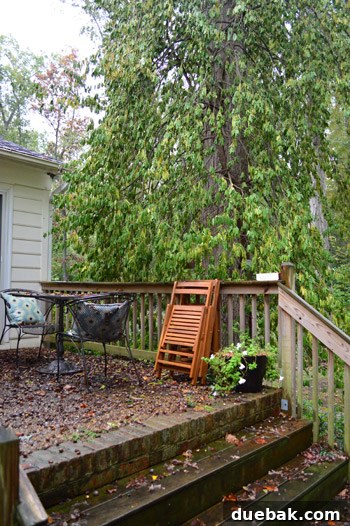
The image above captures the formidable presence of the vine before our attempt to cut its base. You can see its thick, woody structure asserting dominance over the lower trunk of the oak. Below, the immediate aftermath of our first intervention, showing the clean cut intended to starve the upper sections of the vine.
The Waiting Game: When Nature Doesn’t Cooperate
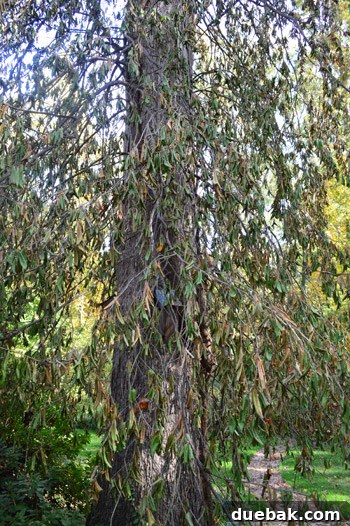
Following the base cut, we entered a period of hopeful anticipation. Our expectation was that, deprived of water and nutrients, the massive vine would gradually weaken, shrivel, and eventually detach itself, cascading harmlessly to the ground. We envisioned a dramatic, satisfying collapse, a natural resolution to our arboreal dilemma. However, nature, as it often does, had other plans. For six long months, the vine remained stubbornly affixed to the oak, an inert, skeletal structure refusing to relinquish its hold. It was an unsettling sight, akin to Rose in Titanic, frozen in time, never letting go of her grip. The green life had drained from its extensive network of branches, leaving behind a brittle, desiccated tangle of brown leaves and bare stems. What had once been a vibrant green intruder now stood as a grim testament to its own tenacity, an unsightly, dead weight clinging precariously to our healthy oak tree.
This image perfectly illustrates the vine’s stubborn refusal to fall. Even in death, its grip remained unyielding, posing a continued threat to the oak and an eyesore in our backyard. The dry, brittle appearance of its foliage hinted at the struggle it had endured, yet its physical presence endured.
Taking Matters into Our Own Hands: The Pruning Shears Approach
The prolonged wait and the vine’s defiant posture made it clear: hoping for a “vine-miracle” was futile. We realized that if our oak tree was to truly thrive and our backyard was to be restored, we had to intervene directly. The passive approach had failed, and it was time for a more active, hands-on solution. We decided it was time to wage war on the dead vine, branch by branch, with the help of some essential tools and a healthy dose of determination.
Essential Tools for Vine Removal
Before tackling this formidable task, gathering the right tools was crucial for both effectiveness and safety. Our arsenal included:
- Sturdy Ladder: Essential for reaching the higher sections of the vine. We opted for a stable, extendable ladder to ensure maximum reach and security.
- Long-Handled Branch Cutter (Pole Pruner): This tool was invaluable for accessing branches that were just out of arm’s reach while on the ladder, allowing us to cut without overextending or risking a fall.
- Heavy-Duty Pruning Shears: For the lower, more accessible sections, sharp, robust hand pruners were perfect for making clean cuts.
- Loppers: For thicker branches that were too much for hand pruners but not yet requiring the pole pruner.
- Safety Glasses: Non-negotiable to protect against falling debris and errant branches.
- Work Gloves: To protect hands from splinters, rough bark, and the vine’s potentially irritating sap or thorns (if present).
Having the right equipment not only made the job easier but also significantly safer, especially when working at heights and dealing with stubborn, woody material.
The Step-by-Step Process of Detachment
Our method was born out of necessity and a desire to protect the oak. The vine, even dead, was literally as firm as cement where it adhered to the tree’s bark. Attempting to pry it off directly would have undoubtedly caused severe damage to the oak, which was precisely what we wanted to avoid. Our strategy was methodical:
- Assess and Plan: We first surveyed the vine’s extensive reach, identifying the thickest sections and planning our attack route, starting from the lower branches and working our way up.
- Targeted Cuts: Our primary objective was to clip each dead branch of the vine off right at the base, where it met the main stem or another large section of the vine. This ensured that we were removing the vine material without cutting into the oak’s bark.
- Ladder Work: For the higher portions, the ladder became our best friend. We carefully positioned it for stability and systematically worked our way around the tree, making precise cuts. The long-handled branch cutter was a game-changer for those tricky, elevated spots, allowing us to snip branches safely from a slightly lower vantage point.
- Careful Extraction: As branches were cut, they often remained tangled within the oak’s canopy. We carefully pulled them down, sometimes requiring a gentle tug or a secondary cut, ensuring no damage was inflicted on the oak’s living branches.
- Repeat and Persist: This was not a quick task. It required patience and persistence, moving around the tree, adjusting the ladder, and meticulously clipping away until every last dead piece of the vine was detached.
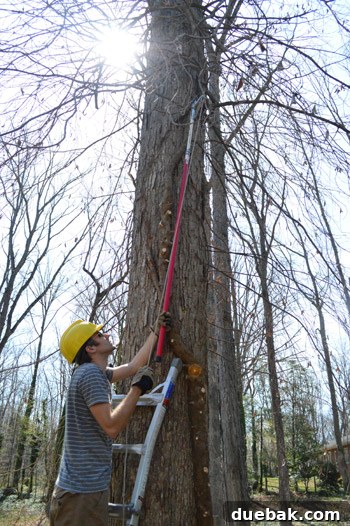
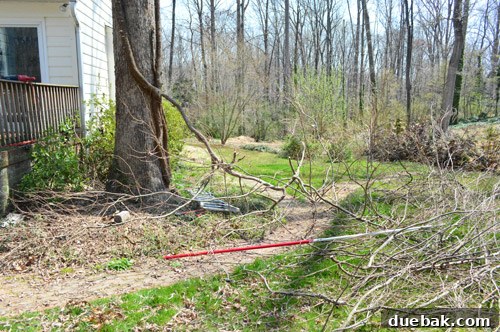
The image above highlights the hands-on approach we had to adopt. You can see the focused effort required to carefully remove each section of the vine. Miraculously, with a combination of the ladder and the pole pruner, we were able to reach almost every last branch, leaving no unsightly remnants behind.
Safety First: A Crucial Consideration
Working with ladders and sharp tools always comes with inherent risks. We made sure to prioritize safety throughout the entire process. This meant:
- Stable Ladder Placement: Always ensuring the ladder was on level, solid ground and securely propped against the tree.
- Three Points of Contact: Maintaining at least three points of contact with the ladder at all times to prevent falls.
- Awareness of Surroundings: Being mindful of falling branches and cleared debris, especially when others might be in the vicinity.
- Rest When Needed: This was a physically demanding task, so taking breaks to avoid fatigue was essential to prevent accidents.
The Transformation: Before and After
The satisfaction of seeing the oak tree emerge from the stranglehold of the dead vine was immense. The transformation was not just noticeable; it was dramatic and incredibly rewarding. The following before-and-after comparisons truly capture the extent of our efforts and the renewed health of our tree.
A Breath of Fresh Air for Our Backyard
Here’s a striking “before” shot from last year, showcasing the massive vine completely dominating the side of our house and the oak tree.
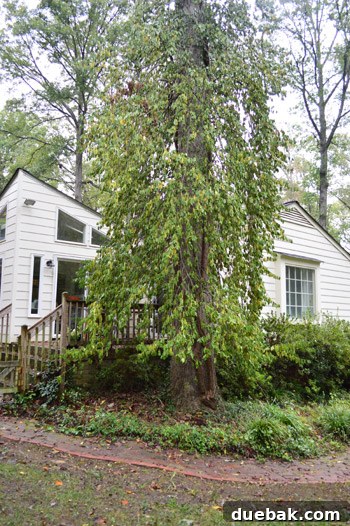
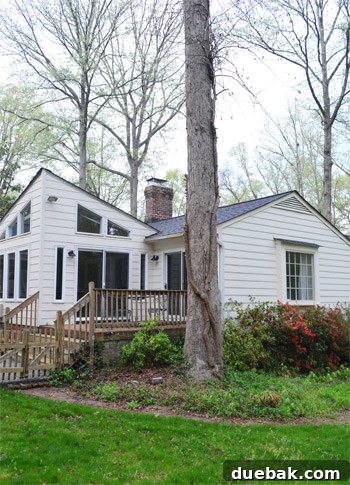
And an “after” that I just snapped this morning. The difference is night and day. It’s truly incredible to no longer have what appeared to be a monstrous tree trying to engulf our house. The clean lines and unobstructed view are a testament to the hard work.
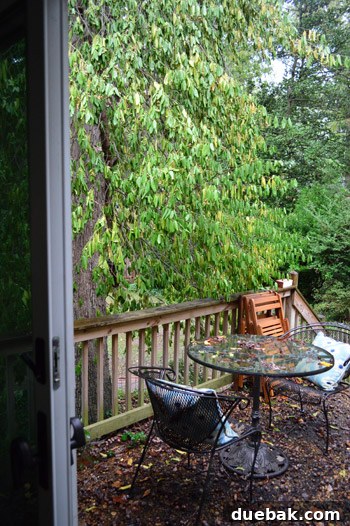
One more “before” from a different angle, emphasizing the dense, suffocating canopy created by the vine:
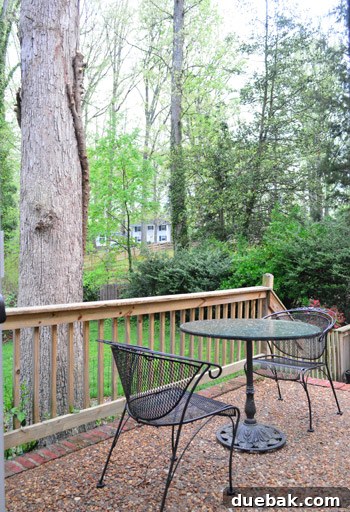
And an “after” from that angle now, revealing a wonderfully open and airy space:
Beyond Aesthetics: The Benefits of a Vine-Free Tree
The visual improvement is undeniable, but the benefits extend far beyond just aesthetics. I love that there’s not a giant vine weighting down the oak anymore, alleviating the stress on its branches and allowing it to grow more naturally and healthily. The new openness of the upper patio is truly awesome. It used to feel pretty closed in, perpetually shaded by the vine’s thick foliage. Furthermore, the vine produced en masse countless berries and pointy leaves, which used to fall all over our outdoor table and chairs, creating a constant mess. It’s so nice to be free of that constant dusting of organic junk and to finally enjoy our patio space without endless cleaning. The increased sunlight now reaching the patio makes it a much more inviting and usable area for relaxation and entertaining. This project has not only rescued our oak but has also significantly enhanced our entire backyard experience.
Long-Term Tree Health and Maintenance
Our experience with the “crazyvine” has been a powerful lesson in the importance of vigilant tree and garden maintenance. While the immediate danger has been removed, understanding how to prevent future invasions and maintain the long-term health of our oak tree is paramount. This goes beyond just removing existing threats; it involves cultivating an environment where our trees can thrive without constant struggle.
Preventing Future Vine Invasions
One of the most effective ways to prevent a repeat of our vine dilemma is regular inspection. Walk around your property periodically, paying close attention to trees, fences, and structures where vines might begin to establish themselves. Early detection is key. If you spot a nascent vine, deal with it immediately before it has a chance to develop a deep root system and climb extensively. Methods include:
- Manual Removal: For young vines, simply pulling them out by hand, ensuring you get as much of the root system as possible, is often sufficient.
- Creating a Barrier: For particularly aggressive ground-cover vines, a physical barrier or regular edging around garden beds can help prevent them from spreading to unwanted areas.
- Proper Planting: Be mindful of what you plant near your trees. Choose non-invasive species, and if you desire climbing plants, select those that are easily manageable and require support structures away from the tree trunk.
Recognizing Common Invasive Vines
Not all vines are created equal. Some are relatively harmless, while others can be incredibly destructive. Common invasive vines that can damage trees in many regions include:
- English Ivy (Hedera helix): Known for its dense evergreen foliage and ability to completely smother trees, blocking sunlight and adding significant weight.
- Virginia Creeper (Parthenocissus quinquefolia): While native, it can become aggressive, particularly when mature, competing for resources and shading tree foliage.
- Oriental Bittersweet (Celastrus orbiculatus): This vine can girdle trees, causing significant damage and even death by constricting their growth. Its heavy growth can also make trees top-heavy and vulnerable to wind damage.
- Kudzu (Pueraria montana): Often called “the vine that ate the South,” Kudzu grows incredibly fast, smothering everything in its path.
Learning to identify these and other problematic vines common to your area can empower you to act quickly when you see them appearing on your property.
When to Call the Professionals
While DIY projects like ours can be incredibly rewarding, there are times when professional help is not just beneficial but necessary. Consider calling an ISA-certified arborist if:
- The vine is exceptionally large or high: If removal requires specialized climbing gear or heavy machinery, it’s safer to leave it to experts.
- The tree itself appears diseased or damaged: Professionals can assess the tree’s health and suggest the best course of action without causing further harm.
- You are unsure of the vine type: Some vines can be toxic or require specific removal techniques.
- Proximity to power lines: Never attempt tree or vine removal near utility lines.
- Lack of confidence or proper tools: Safety should always be the top priority. If you’re not comfortable or don’t have the right equipment, don’t risk it.
Arborists have the knowledge, experience, and equipment to safely and effectively remove invasive vines while minimizing stress to your trees.
Conclusion
So, that’s our story of how you first ignore a vine for a few years, then bravely attack its base, then patiently (or impatiently) wait for it to surrender by some miraculous vine-fall, and finally, how you make things happen with the sheer force of some trusty shears, a ladder, and unwavering determination. It was a challenging but ultimately triumphant project that has brought new life and openness to our backyard space. We hope our journey encourages you to tackle your own outdoor challenges. Any pruning or yard stuff going on in your neck of the woods? We’d love to hear about your experiences and any tips you might have for maintaining a beautiful, healthy landscape!