
Welcome back, DIY enthusiasts! If you’ve been following along, you know we’re deep into transforming our fireplace from drab to fab. Last time, we proudly showcased the foundation of our fireplace makeover, complete with a beautifully tiled hearth and a portion of the surround in elegant marble subway tile. That stage, while detailed, felt like the straightforward part. Now, get ready for the real architectural challenge: constructing the robust frame that will bring our vision to life.
Our next assignment was significantly more involved, requiring a careful selection of materials and precise execution. We embarked on the journey of building out the remaining structure of our fireplace, an endeavor that truly tested our woodworking skills and creative problem-solving.
Choosing the Right Material: Why MDF for Your Fireplace Frame?
For this project, we ventured into new territory, opting to work with Medium-Density Fiberboard (MDF) for the very first time. This decision was driven by several compelling advantages: MDF is significantly lighter than traditional solid wood, making it easier to maneuver and install. It’s also more cost-effective, which is always a bonus for any home renovation project. Furthermore, its incredibly smooth surface provides an ideal base for painting, ensuring a flawless finish without the grain patterns inherent in wood. We were also pleased to discover that contemporary MDF options are now sold without formaldehyde and are FSC certified, aligning with our commitment to sustainable and healthy living spaces. A standard 4ft x 8ft panel cost us approximately $35, and remarkably, we managed to get all the pieces we needed from just one sheet, proving its efficiency.
Building the Core Structure: Side Panels and Initial Assembly
The first crucial components of our fireplace frame were the two side panels. These pieces would sit directly on the floor and extend vertically, reaching all the way up to where the mantel would eventually rest. Precision was paramount here, as these panels would define the overall width and depth of our new fireplace surround.
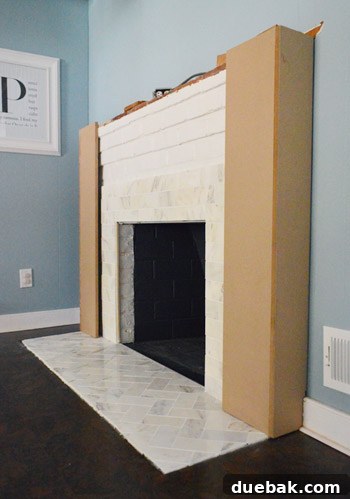
To construct these robust side sections, I carefully cut the two main MDF pieces to their exact required dimensions. Then, I attached them at a perfect right angle using our trusty Kreg Jig system. While pocket hole joinery from the Kreg Jig provides exceptional strength, I added a generous amount of wood glue as an extra measure of security. This combination ensures a bond that will stand the test of time, resisting any shifts or movements. For those new to DIY, the Kreg Jig is an invaluable tool for creating strong, concealed joints, especially when working with panels like MDF.
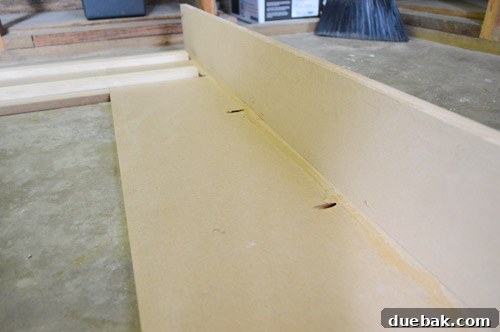
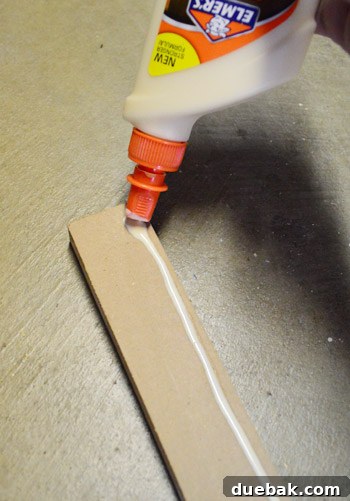
In fact, my bottle of wood glue became my best friend during this entire project. As the build progressed, I found myself leaning heavily on the speed and convenience of my nail gun for many of the smaller attachments. It’s significantly faster – one quick shot versus drilling a pilot hole and then meticulously screwing pieces together. However, knowing that nails alone don’t offer the same long-term holding power as screws, the wood glue provided that essential extra insurance, creating incredibly strong and durable joints that will keep our fireplace frame solid for years to come. This approach allows for both efficiency and lasting quality.
Connecting the Frame: Creating a Unified Structure
Once the side panels were assembled, the next step was to connect them to form a cohesive unit. I achieved this by cutting a central span piece using my table saw, ensuring a perfectly straight and accurate cut. This span would bridge the gap between the two side panels, creating the top portion of the fireplace opening. I then attached these three main pieces together using a couple of scrap 1 x 2-inch whitewood strips. These internal supports provide additional rigidity and act as sturdy anchor points, reinforcing the entire frame.
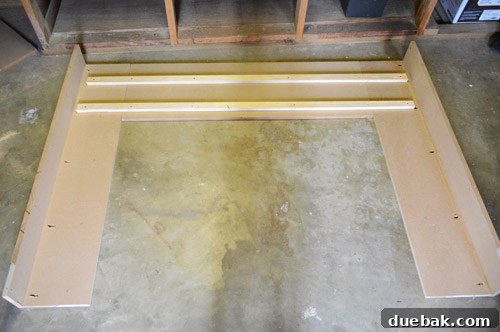
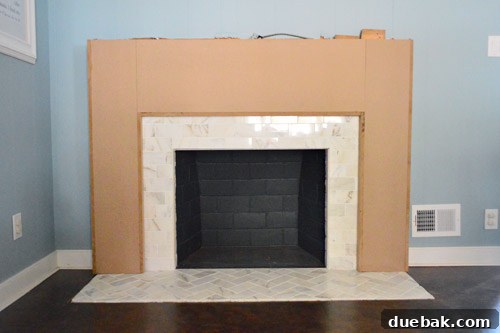
I realize that the previous picture might be a little abstract, so here’s a clearer view of the assembled frame positioned in front of the original fireplace opening. This perspective should help illustrate how all the pieces come together to form the foundational structure of our new fireplace surround. It’s truly exciting to see the shape emerge!
Addressing Imperfections: Customizing the Fit
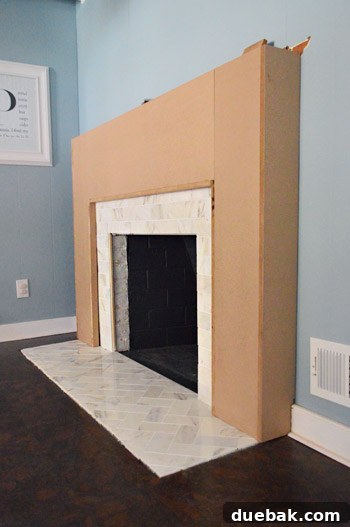
As you can observe from the overhead view, the MDF frame fits snugly around the original brick fireplace. This close fit was a pleasant surprise, especially considering the condition of the brickwork that lay hidden beneath the old mantel – it turned out to be quite “gross-looking” and uneven, a common discovery in older homes undergoing renovation. This revelation only reinforced our decision to build a completely new, clean surround.
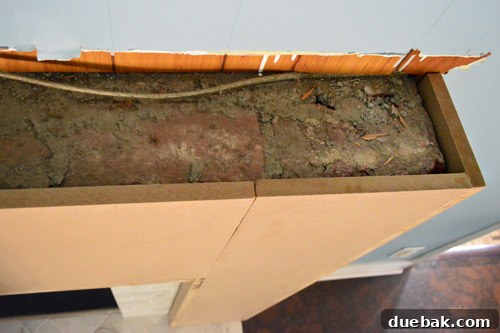
A minor but important hurdle we encountered was a small gap right where the MDF frame met the newly tiled hearth. This occurred because the original brick fireplace flared out slightly under the mantel and gradually became thinner towards the floor, giving it a somewhat top-heavy profile when viewed from the side. Although the MDF sat perfectly flush against the brick at the top, it ‘floated’ a couple of inches away from the brick and tile at the bottom. To correct this, we meticulously added thin strips of MDF behind the main frame, effectively shimming out the bottom portion until it was perfectly plumb and flush with the tile. This detail ensures that from the side, the entire structure now appears beautifully balanced and perfectly vertical, a testament to careful craftsmanship.
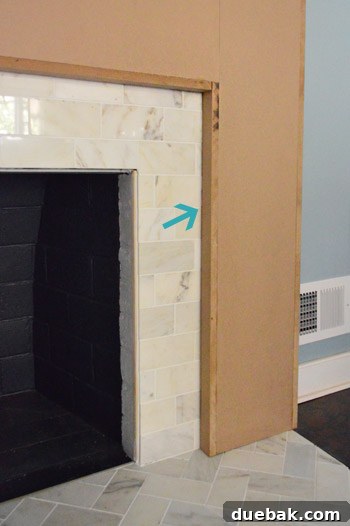
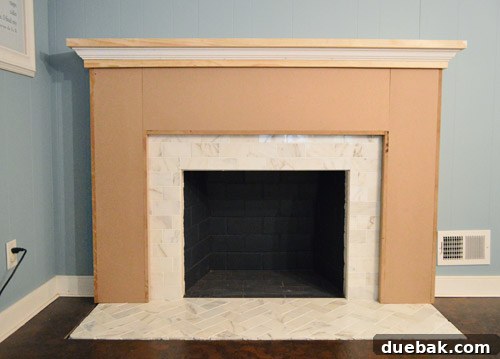
Here’s a front-on view of the MDF frame fully assembled and positioned. Hopefully, with these detailed explanations and visuals, the entire construction process is starting to make more sense and inspire your own DIY projects!
Securing the Frame: Ensuring Stability and Longevity
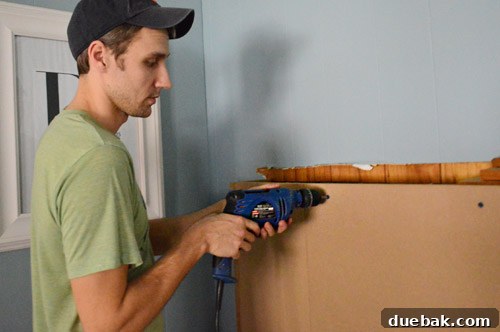
While the MDF frame felt surprisingly steady on its own, we weren’t about to rely solely on good balance. To ensure the fireplace surround was absolutely rock-solid and wouldn’t shift over time, we took several crucial steps to permanently secure it. We drove a few heavy-duty masonry screws through the top and along the sides of the MDF frame, anchoring it directly into the original brickwork. Additionally, a continuous bead of high-strength construction adhesive was applied where the MDF met the brick at the top. This combination of mechanical fasteners and powerful adhesive guarantees that this fireplace frame isn’t going anywhere, providing a secure and stable foundation for the rest of our decorative elements.
Crafting the Mantel: A New Focal Point
With the main frame solidly in place, our attention turned to the mantel – the crown jewel of any fireplace. The original mantel piece was too small and dated to be repurposed, and our initial plan to secure a new mantel directly to the existing brick (as the old one had been) hit a snag: the brick wasn’t level, sloping slightly away from the wall. This common issue in older homes meant we needed a new strategy. After some trial and error, we decided to cut more MDF (still from our single, versatile sheet!) to create a perfectly flat and level top surface for the new mantel to rest upon. This flat top was securely attached to the frame with a combination of wood glue and nails, providing a sturdy and even foundation. It was great to have my wife, the skilled project manager, lending a hand with this critical step!
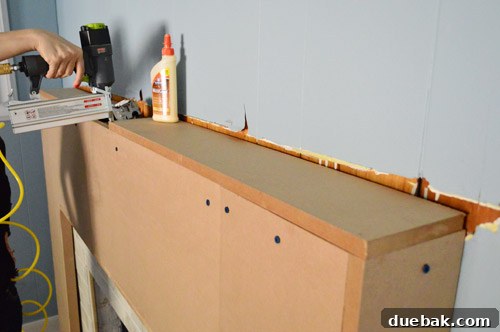
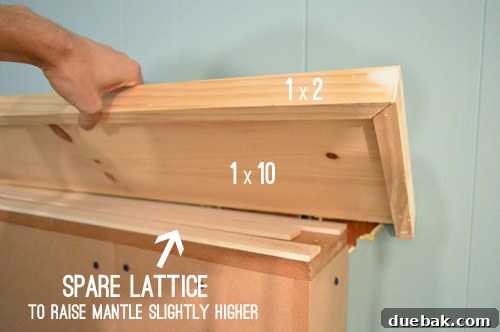
Next, we meticulously constructed the new mantel top itself. We started with a 1 x 10-inch piece of wood and framed it out on three sides with 1 x 2-inch pine strips. This technique is similar to how we built our floating shelves in the kitchen, and its primary purpose is to elegantly conceal all raw wood edges, giving the mantel a polished, custom-built appearance. To match the height of the old mantel – which we actually liked – and ensure it covered all the previously unpainted paneling behind it, we strategically added a few strips of lattice leftover from our board & batten project. This small adjustment was crucial for maintaining visual continuity and tying the new design into the existing room elements. The goal was always to fix the problematic smashed tile hearth and disproportionate side profile of the old fireplace, while retaining the overall height we appreciated.
Adding Architectural Detail: Crown Molding and Beyond
With the mantel securely nailed in place, we moved on to adding crown molding beneath it to enhance its visual presence and introduce a touch of classic elegance. However, we couldn’t simply place the crown molding directly against the MDF frame. Our design plan included adding decorative boxes (made from 1 x 2s) later on, and we wanted the crown molding to sit flush with the front of these future elements, creating a cohesive, layered look. This foresight required a clever solution: we had to attach a piece of wood behind the crown molding to bump it out to the exact desired position.
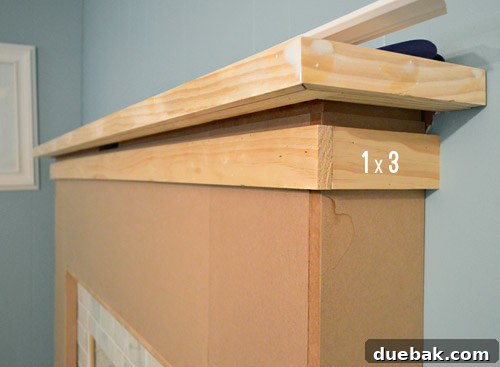
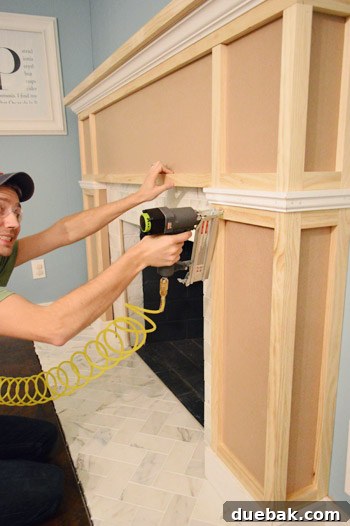
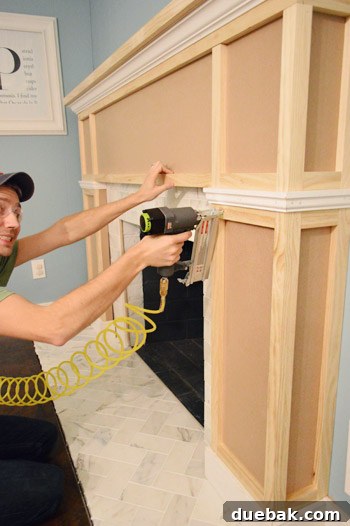
We strategically chose 1 x 3-inch boards for this purpose. One inch of the board would serve as a sturdy base for the crown molding to rest against, while the remaining inches would perfectly align as the top piece of our planned 1 x 2-inch decorative boxes. It’s all about planning ahead for that seamless, custom finish! And there’s my wife again, expertly handling the nail gun. Her precision and enthusiasm are always a huge asset to our projects. Update: For those interested in adding this indispensable tool to their DIY arsenal, here’s an affiliate link to the nail gun we used.
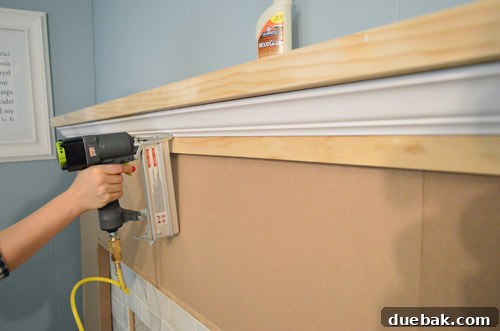
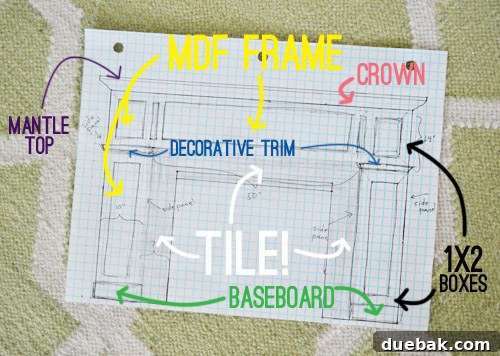
With the mantel and the initial crown molding prep complete, the fireplace is truly starting to take shape and look more finished, wouldn’t you agree? However, we felt that this flat-fronted look, while clean, was a bit too modern for the rest of our kitchen, where our cabinets boast a more traditional profile. To ensure our fireplace seamlessly integrated with the existing aesthetic, adding baseboard and intricate framing details to the wood surround became our next priority. This would infuse the character and depth we desired, transforming it into a cohesive element of our home’s design.
Layering Details: Baseboard and Decorative Boxes
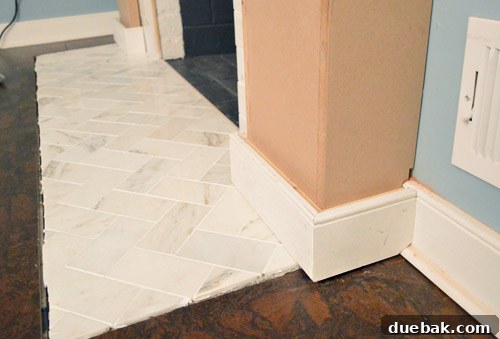
When it came to installing the baseboard, we again encountered a situation requiring strategic layering. To prevent the baseboard from sitting flush against the MDF, which would have created a flat, less dimensional look, we added scrap 1 x 2-inch boards behind it. This subtle offset allows the baseboard to protrude slightly, creating an attractive shadow line and adding crucial architectural depth. Trust us, these seemingly minor adjustments make a huge difference in the final, polished appearance of the entire piece. It’s these thoughtful layers that elevate a DIY project to a professional standard.
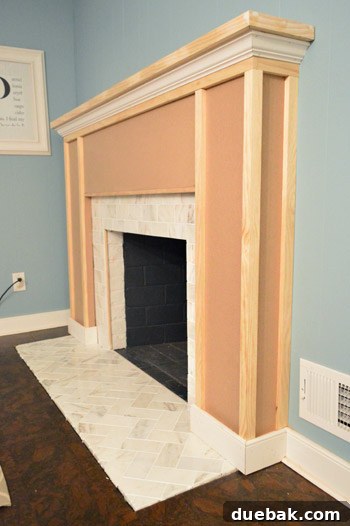
From there, we enthusiastically began adding the 1 x 2-inch boxes that would provide the elegant, simple detail we envisioned. We started by attaching several vertical strips of 1 x 2s, carefully measuring and positioning them to ensure symmetry and proper spacing. These vertical elements lay the groundwork for the grid pattern that defines the decorative boxes, immediately transforming the plain MDF into something far more visually interesting and aligned with a classic design aesthetic.
Next, we integrated the horizontal pieces between the vertical strips. With each piece precisely cut and nailed, the distinctive box patterns began to emerge. Can you start to see the elegant, paneled effect taking shape? This grid not only adds visual interest but also breaks up the large, flat surfaces of the MDF, giving the fireplace a more substantial and bespoke feel. The combination of these vertical and horizontal elements creates a timeless design that perfectly complements a traditional home interior.
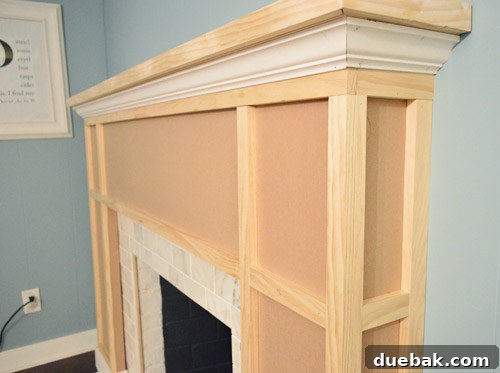
To further enhance the architectural appeal and subtly break up the box pattern, we added another piece of decorative trim precisely where the vertical “posts” of the fireplace frame met the middle “span” that stretched across the entire structure. This intentional detail served to prevent the creation of overly long and skinny boxes on either side, providing more balanced proportions and visual anchors. Oh, and here’s a candid shot of me, completely unaware that my wife was artfully cropping me out of the frame! Always smile for the camera, even when you don’t know it’s there.
The Home Stretch: Caulking and Final Preps
The entire trim installation process, surprisingly, went quite quickly! This efficiency meant we even had time to begin caulking some of the seams before our little one woke up from her nap and, true to form, asked us what new marvel we were constructing now. Caulking is an absolutely essential step, as it fills any tiny gaps and imperfections between the trim pieces and the MDF, creating a smooth, seamless surface that will look incredibly professional once painted. It truly transforms the raw wood into a finely crafted piece of furniture, concealing all the individual joints and edges.
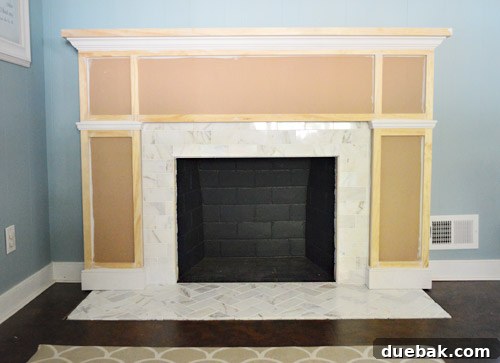
Of course, there are still a few crucial steps remaining before we can call this fireplace truly finished. We still need to thoroughly prime and paint the entire structure to achieve that pristine, finished look. Additionally, we have to complete the trimming along the very bottom, specifically where the tile meets our cork flooring, and add some quarter round molding where the baseboard meets the floor. These final touches, while small, are vital for tying up all the loose ends and ensuring a polished, professional result. They’re the details that make all the difference, transforming a construction project into a beautifully integrated part of our home.
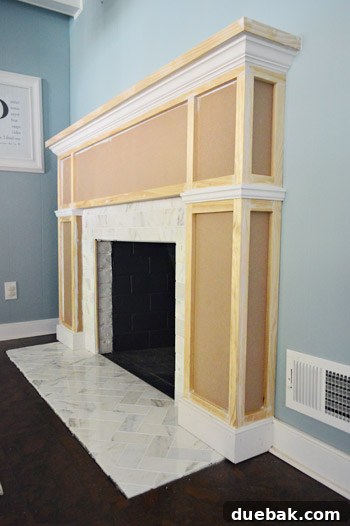
The Transformation So Far: A Glimpse of the Future
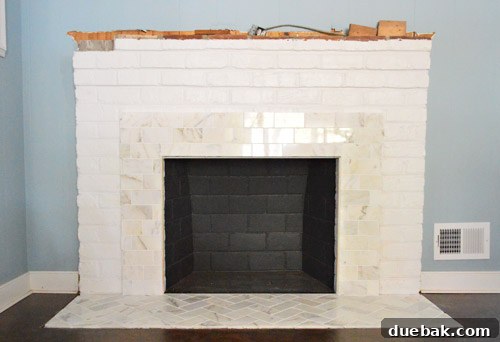
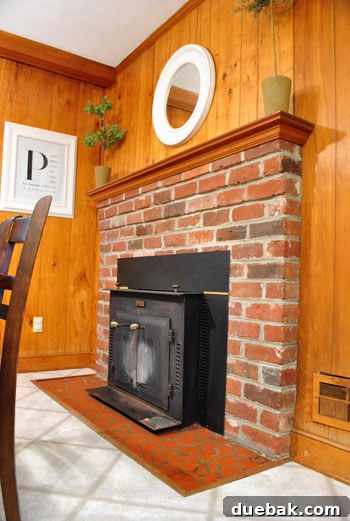
Even without a fresh coat of paint, we are absolutely thrilled with how this fireplace makeover is shaping up. The transformation is already dramatic, breathing new life into the heart of our home. As a powerful reminder of how far we’ve come, here’s where we originally started with this outdated, uninspired fireplace:
Give us just another day or two – perhaps by Wednesday – to wrap up all those exciting finishing touches. We’re eagerly anticipating sharing the fully completed product, a comprehensive budget breakdown of all our materials and efforts, and a junkload of inspiring photos in our next update. Stay tuned to witness the grand reveal of our beautiful, custom-built fireplace!