
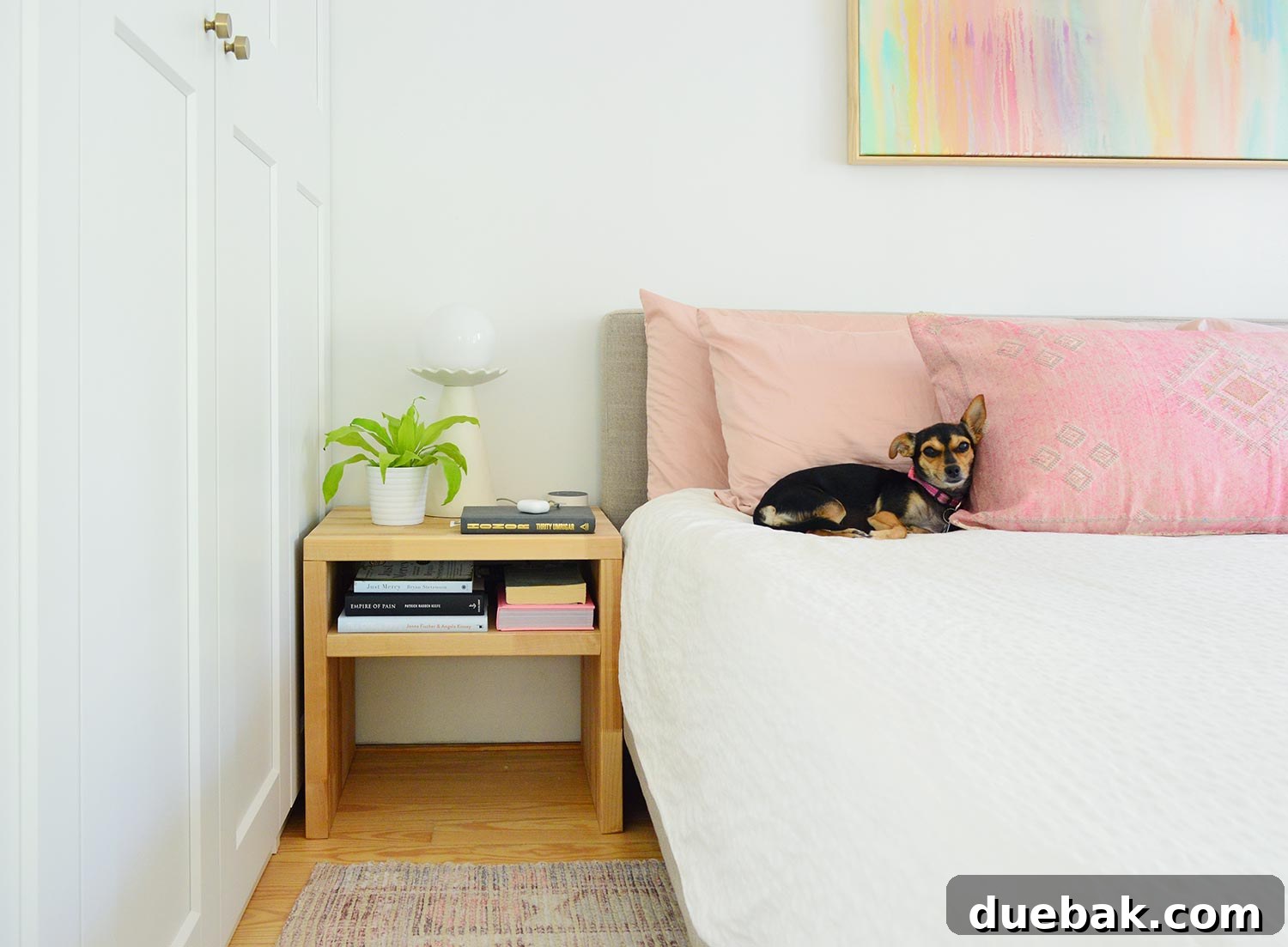
Embarking on a journey to furnish your home can be incredibly rewarding, especially when it involves crafting custom pieces that perfectly fit your unique space. When we decided to upgrade to a luxurious king-size bed, it became clear that our existing bulky bedside tables simply wouldn’t do. They consumed too much precious floor space, necessitating a switch to something more streamlined and proportionally appropriate. This challenge led us to an exciting DIY project: designing and building our own custom nightstands from robust butcher block counters. What makes this project truly special is its inherent simplicity, requiring minimal materials and straightforward cuts, making it an ideal endeavor for even novice builders looking to add a touch of modern elegance to their bedroom.
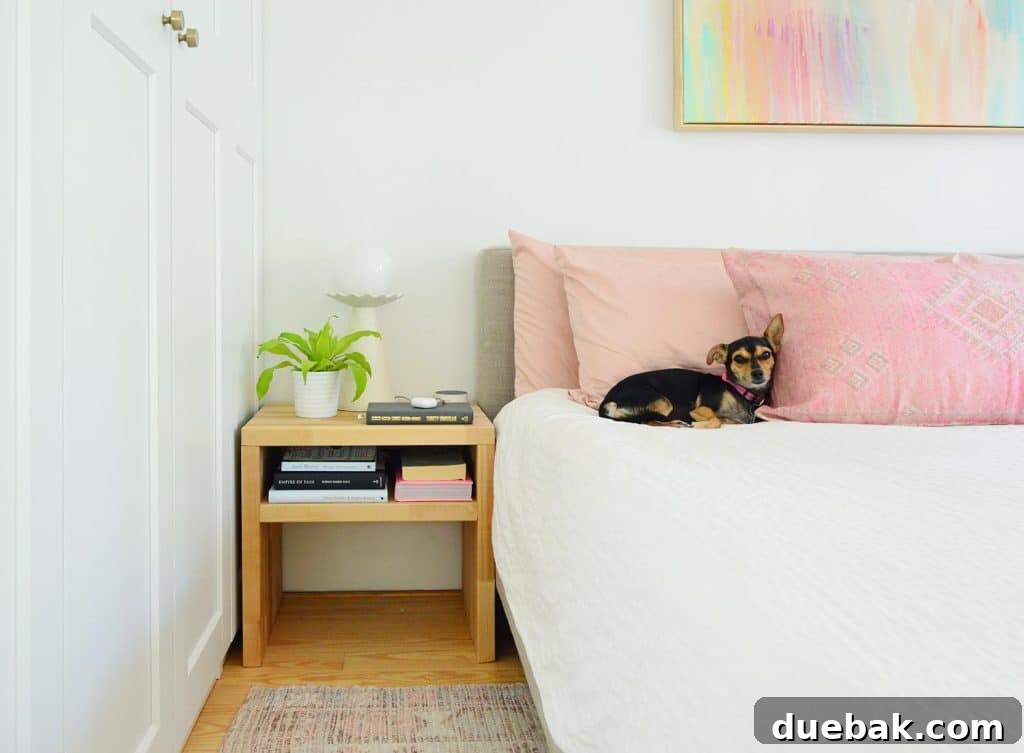
Opting for a substantial material like butcher block not only lends a contemporary, high-end aesthetic to these bedside tables but also guarantees exceptional durability and stability. The inherent thickness and weight of butcher block eliminate the need for complex construction techniques, such as intricate shelf supports or integrated sliding drawers. This simplified approach underscores the accessibility of this project, proving that you don’t need advanced woodworking skills to achieve a beautifully robust and stylish piece of furniture. It’s a testament to the power of thoughtful material selection in achieving both form and function with ease.
Why Custom DIY Nightstands Are a Game Changer for Your Bedroom
The decision to build custom nightstands wasn’t just about saving money; it was born out of a specific spatial challenge in our bedroom. Our new king-size bed, while incredibly comfortable, needed to be positioned slightly off-center on the wall. This minor adjustment, just a couple of inches, was crucial for maintaining unhindered access to our closets. While barely noticeable to the casual observer (especially given a clever bedroom secret we share later), it made finding off-the-shelf nightstands with the perfect dimensions virtually impossible.
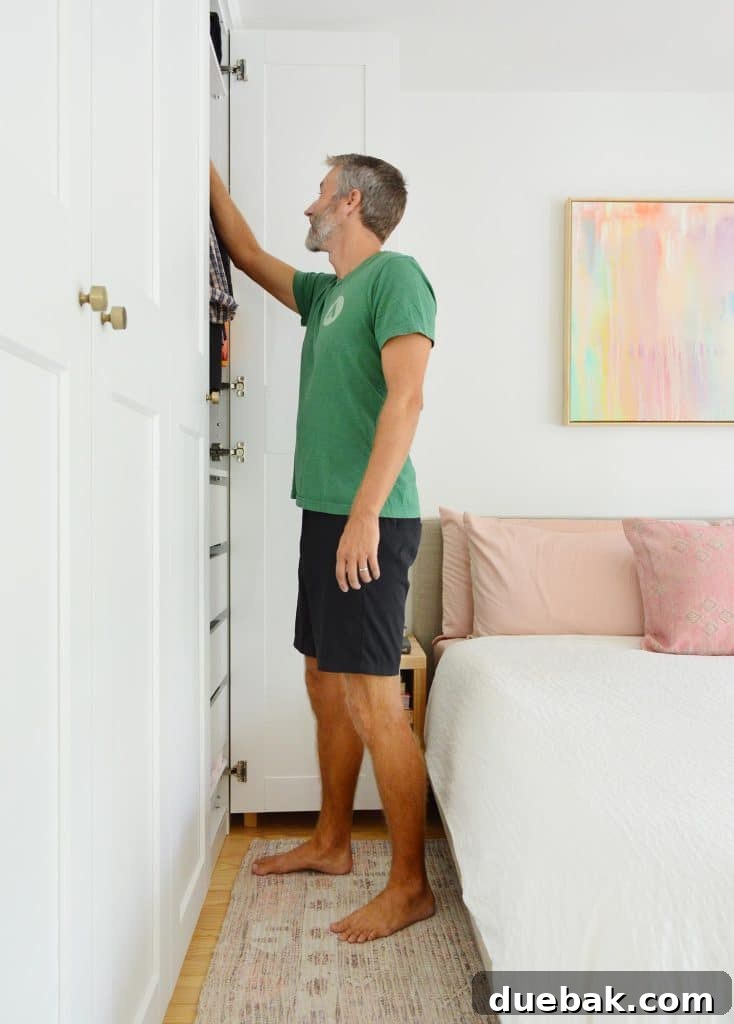
This subtle asymmetry presented us with a limited set of options for sourcing new bedside tables:
- Attempting the Impossible: Searching for a retail miracle – two perfectly matching nightstands that, against all odds, came in two slightly different, highly specific sizes. (Spoiler: This option was quickly dismissed as unrealistic.)
- Embracing Eclecticism: Deliberately choosing non-matching nightstands, a look that can be charming but wasn’t quite what we envisioned for our cohesive bedroom design.
- Compromising on Space: Acquiring two smaller, standard-sized nightstands, which would inevitably leave an awkward gap on one side, sacrificing both aesthetics and functionality.
- The Ultimate Solution: Taking matters into our own hands and building our own bespoke nightstands.
While some of these options had a glimmer of potential, the pursuit of truly specific measurements, combined with our desire for a particular aesthetic, solidified our decision to embark on a DIY journey. Building our own allowed us to create nightstands that not only fit the space flawlessly but also reflected our personal style and functional needs, turning a design challenge into an opportunity for personalized craftsmanship.
Visualize Your Dream Bedroom: Watch Our DIY Nightstands in Action
To truly grasp the ingenuity behind our custom nightstand design and how it elegantly resolves our bedroom’s unique layout challenges, we highly recommend watching our short video tour. This visual guide brings our explanations to life, offering invaluable insights and showcasing the practical application of our DIY solution. In the video, you’ll gain a deeper understanding of:
- The precise reasons why we needed two differently sized nightstands, a common dilemma in many bedrooms.
- Our strategic approach to maintaining full access to our closets, ensuring functionality isn’t sacrificed for aesthetics.
- A fascinating reveal about the “special” wall on Sherry’s side of the bed, which plays a pivotal role in our room’s layout.
- What hidden essentials we cleverly store behind the closet door that’s partially obscured by the nightstand.
- A practical, quick tip for maximizing the storage potential of your own DIY nightstands, offering even more organizational benefits.
Note: For a detailed visual guide and to truly appreciate the solutions we implemented, you can watch this insightful video on YouTube.
Unlocking Value: The Cost-Saving Benefits of DIY Nightstands
Beyond the undeniable advantage of a perfect custom fit, building our own bedside tables presented a significant opportunity for cost savings. As we explored various options online and in stores, we quickly discovered that modern, chunky, solid wood nightstands often came with surprisingly steep price tags. Our vision leaned towards a minimalist yet substantial aesthetic, but finding two such pieces within a reasonable budget proved challenging, especially when considering the premium associated with solid wood furniture.
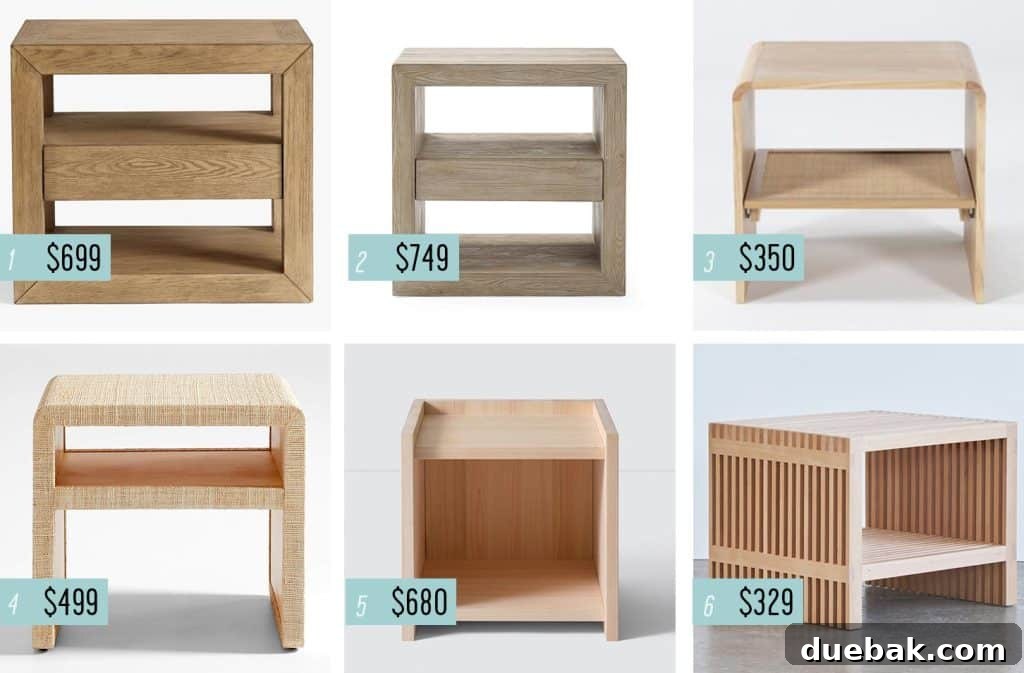
The excellent news is that the total expenditure for BOTH of our bespoke nightstands came to a mere $310. This cost exclusively covered the two primary materials: the butcher block wood and the finishing oil. Breaking it down, each substantial, solid wood nightstand cost approximately $155 – a remarkable value compared to the retail options we considered. This affordability, combined with the ability to create perfectly proportioned pieces, makes DIY an incredibly attractive option for anyone seeking high-quality, customized furniture without the exorbitant price tag.
Essential Tools and Materials for Your Butcher Block Nightstand Project
Our choice of butcher block countertops was deliberate. We’ve successfully incorporated this versatile material into several other areas of our home, including our utility closet and the custom built-in cabinets within this very bedroom. Its warm tone beautifully complements our flooring, and its substantial thickness adds a sense of solidity that can elevate even store-bought cubbies or IKEA cabinets. While we highly recommend butcher block for its modern appeal and sturdiness, this building plan is flexible enough to accommodate other wood types if you have a different aesthetic in mind.
Here’s what you’ll need to bring this project to life:
- Butcher Block Countertop: We used the “island” size (typically 72″ x 39″) to ensure enough material for both nightstands while minimizing waste.
- Circular Saw: Essential for making accurate, straight cuts through thick butcher block. A good quality blade will ensure clean edges.
- Kreg Pocket Hole Jig: This indispensable tool allows you to drill angled holes for strong, concealed screw joints, resulting in a clean, professional finish without visible fasteners.
- 2″ Pocket Hole Screws: Specifically designed for pocket hole joinery, these screws provide excellent clamping force and durability.
- Power Drill: Necessary for drilling pilot holes and driving screws quickly and efficiently.
- Clamps: Crucial for holding pieces securely in place during cutting, drilling, and assembly. We particularly recommend a Kreg clamp, designed to work seamlessly with pocket hole jigs.
- Power Sander and Medium/High-Grit Sandpaper: For smoothing all cut edges and surfaces, ensuring a safe and polished feel.
- Cutting Board Oil: Our preferred choice for sealing and enhancing the natural beauty of the butcher block, providing protection while deepening its color.
- Measuring Tape: For precise measurements, which are paramount for accurate cuts and a tight fit.
- Painter’s Tape: A simple yet effective trick for marking cut lines without damaging the wood and preventing splintering during sawing.
- Pen, Pencil, or Marker: For clearly marking your cuts and labels on the painter’s tape.
- Rag or Paper Towel: For applying oil and wiping away sanding dust.
Step 1: Strategic Planning for Maximum Efficiency and Design
Even though butcher block slabs offer excellent value compared to pre-made nightstands, they are still a significant investment. Our primary goal was to maximize this investment by crafting two nightstands from a single piece of butcher block. This required careful forethought and detailed planning. Sherry and I spent considerable time sketching various design options, meticulously crunching measurements, and debating different configurations. This iterative process led us to a design we were not only thrilled with aesthetically but also incredibly proud of for its material efficiency, ensuring minimal waste.
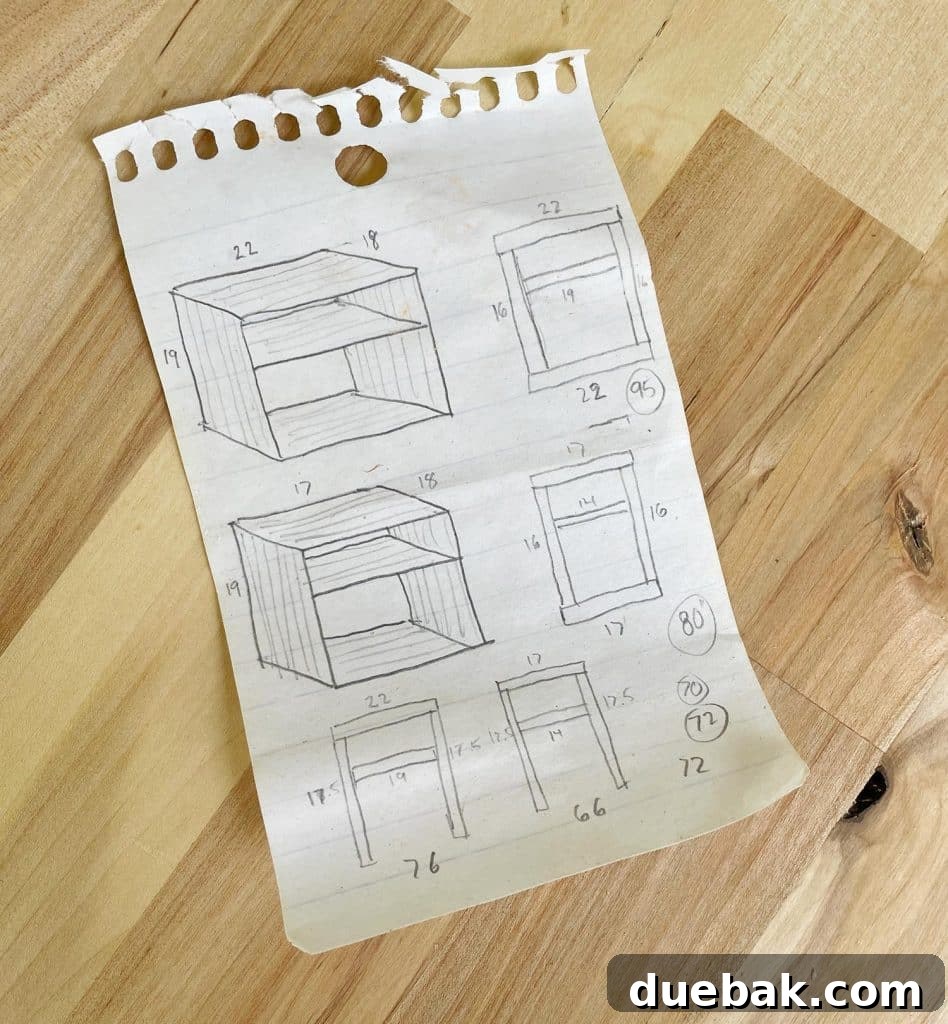
As you can discern from my initial rough drawings, we initially considered a version with three horizontal surfaces, including a lower shelf (a concept we delve into further in the video mentioned earlier). However, after careful deliberation, we ultimately decided to eliminate the bottom shelf. This design modification resulted in a sleeker, more blocky “A” profile rather than an “8.” Removing the lower shelf not only reduced the overall weight of the nightstand, making it easier to move, but also offered a practical benefit: it significantly simplifies cleaning underneath, making it a breeze for our robot vacuum to navigate and keep the floor tidy.
Step 2: Precision Cutting Your Butcher Block to Size
With our design finalized, the next crucial step was to precisely cut the large butcher block island. Using our reliable circular saw, we carefully made two cuts down the center area of the block. This yielded two 18-inch wide slabs, each destined to become one 18-inch deep nightstand. An alternative approach would be to cut the island exactly in half once, resulting in two 19.5-inch slabs. However, for our specific bedroom layout, 19.5 inches would have made the nightstands too deep, obstructing access to my closet door. This highlights the importance of precise planning and understanding your spatial constraints before making any cuts.
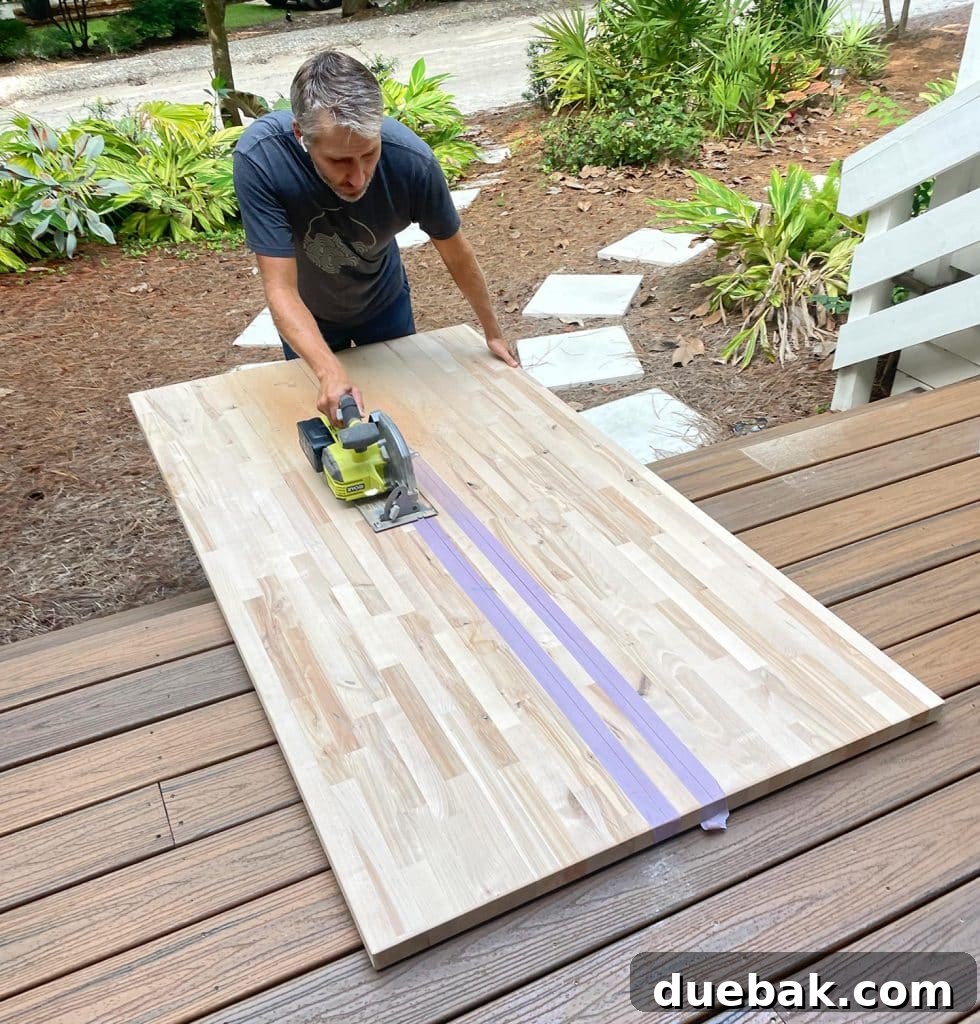
While my makeshift front porch “workshop” may not boast all the bells and whistles, it’s perfectly adequate for getting the job done safely and efficiently. Rest assured, I am always meticulous about safety; I ensure that the circular saw blade never comes into contact with the porch decking. We carefully rotate the butcher block piece to complete our cuts, positioning it so the blade always extends safely over the step below. And a critical safety reminder: always wear safety goggles! I made sure to put mine on immediately after the photo above was taken (as you’ll notice in the subsequent image).
Once the two 18-inch slabs were cut, I proceeded to measure and cut each into the four individual pieces required for each nightstand: one top piece, two side/leg pieces, and one shelf piece. It’s a useful tip to wait to cut the shelf pieces until the other three main components are assembled. This allows you to double-check your measurements for the shelf openings, guaranteeing a snug and accurate fit.
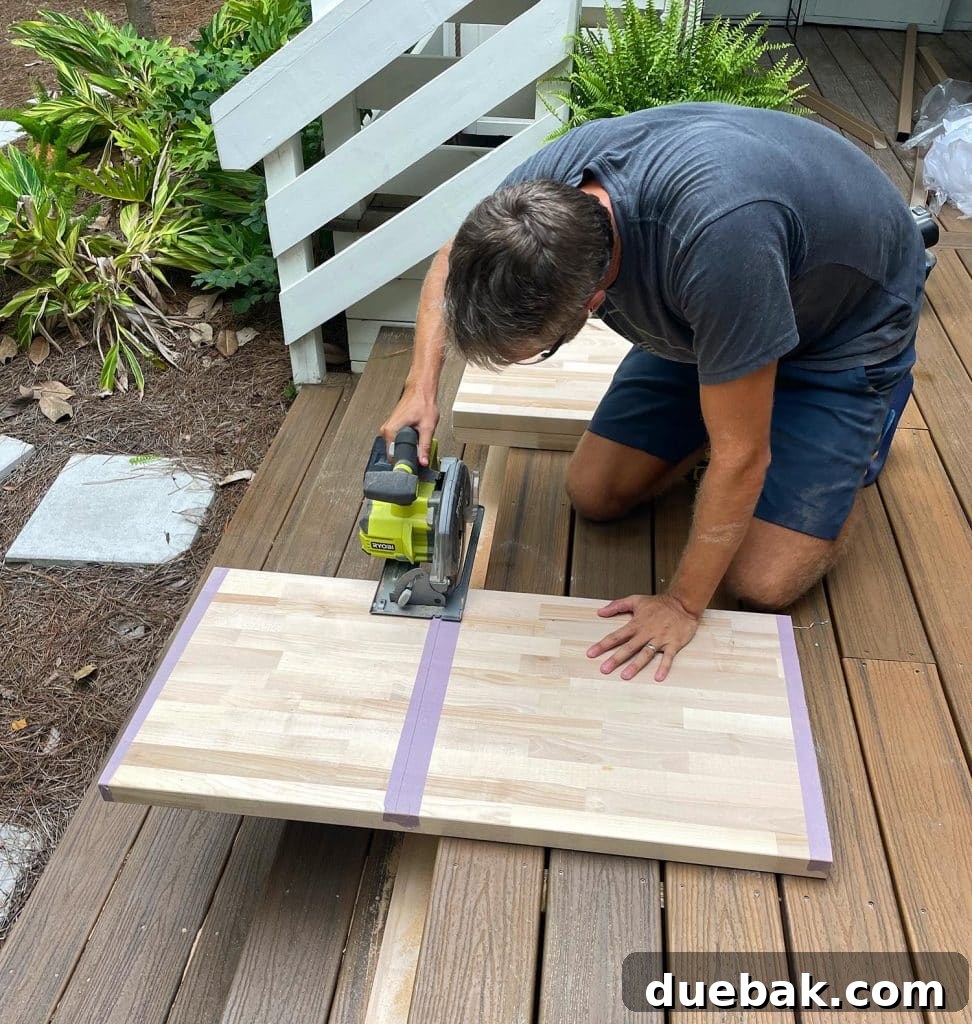
You’ll also observe our consistent use of painter’s tape on all our circular saw cuts. This technique serves a dual purpose: it provides a clean surface for drawing precise cut lines without marking the actual wood, and more importantly, it acts as a protective barrier, significantly reducing the likelihood of chipping and splintering along the cut edges, ensuring a much cleaner and professional finish.
Step 3: Organizing Your Build – Labeling Pieces for Seamless Assembly
After all the necessary cuts were completed, we performed a preliminary assembly by roughly balancing the top pieces on each set of legs. This allowed us to visualize the final shape and, crucially, to decide which sides and edges of each butcher block piece would be most prominently displayed. We carefully considered factors such as the presence of knots, the natural grain patterns, and any imperfections, selecting the most aesthetically pleasing surfaces for our nightstands.
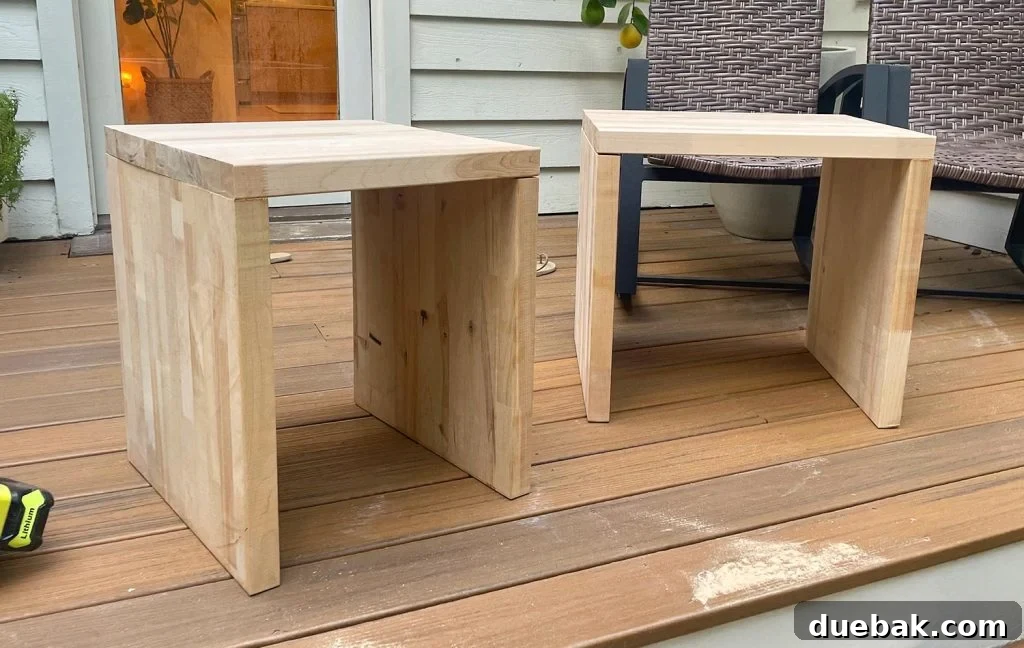
Once we had firmly established our preferred layout and orientation for each component, we used painter’s tape to clearly and loosely mark each piece. This simple yet highly effective labeling system served as a constant reminder of our chosen arrangement as we moved through the subsequent assembly steps, preventing any potential mix-ups or orientation errors.
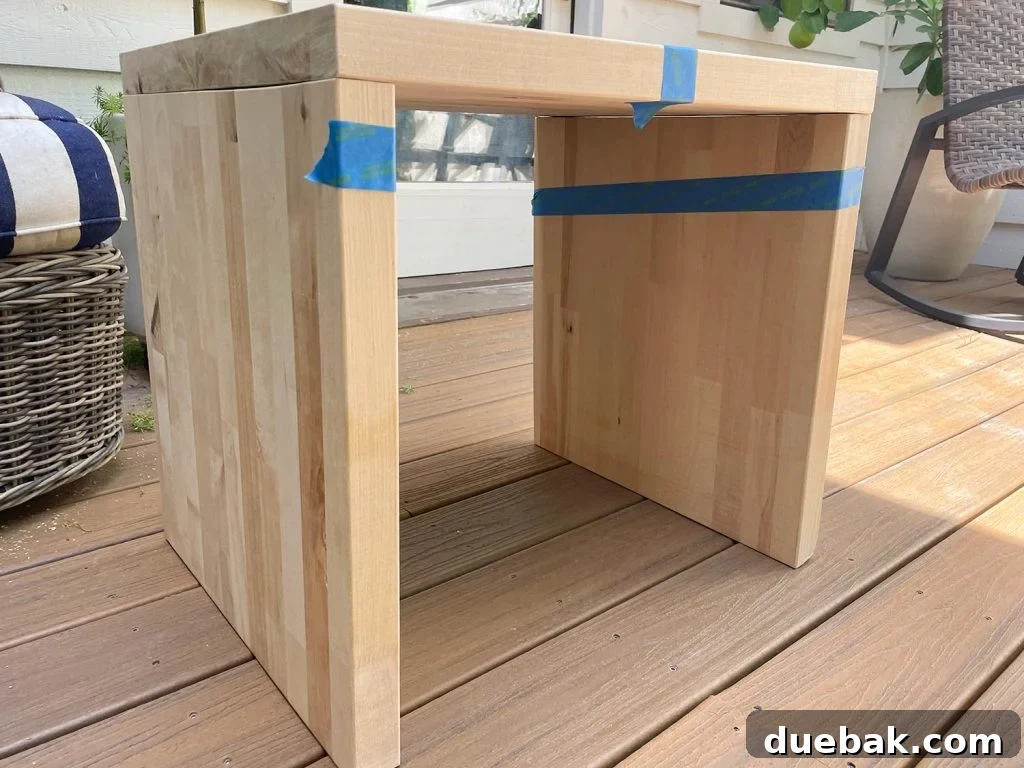
The long strips of tape applied along the inside edges of each side piece proved particularly helpful. These markings were indispensable for quickly identifying the correct drilling locations when we progressed to the next critical stage: creating our pocket holes, ensuring that all our concealed fasteners would be perfectly positioned for a strong and invisible joint.
Step 4: Drilling Concealed Pocket Holes in the Legs for a Clean Finish
To achieve a seamless and visually appealing finish for our nightstands, we opted for a joining method that conceals all fasteners. This meant attaching the side pieces (legs) to the top piece by screwing upwards from the inside of each leg into the tabletop. This technique ensures that there are absolutely no visible screw holes on the top surface of the nightstand, preserving the clean, modern aesthetic of the butcher block.
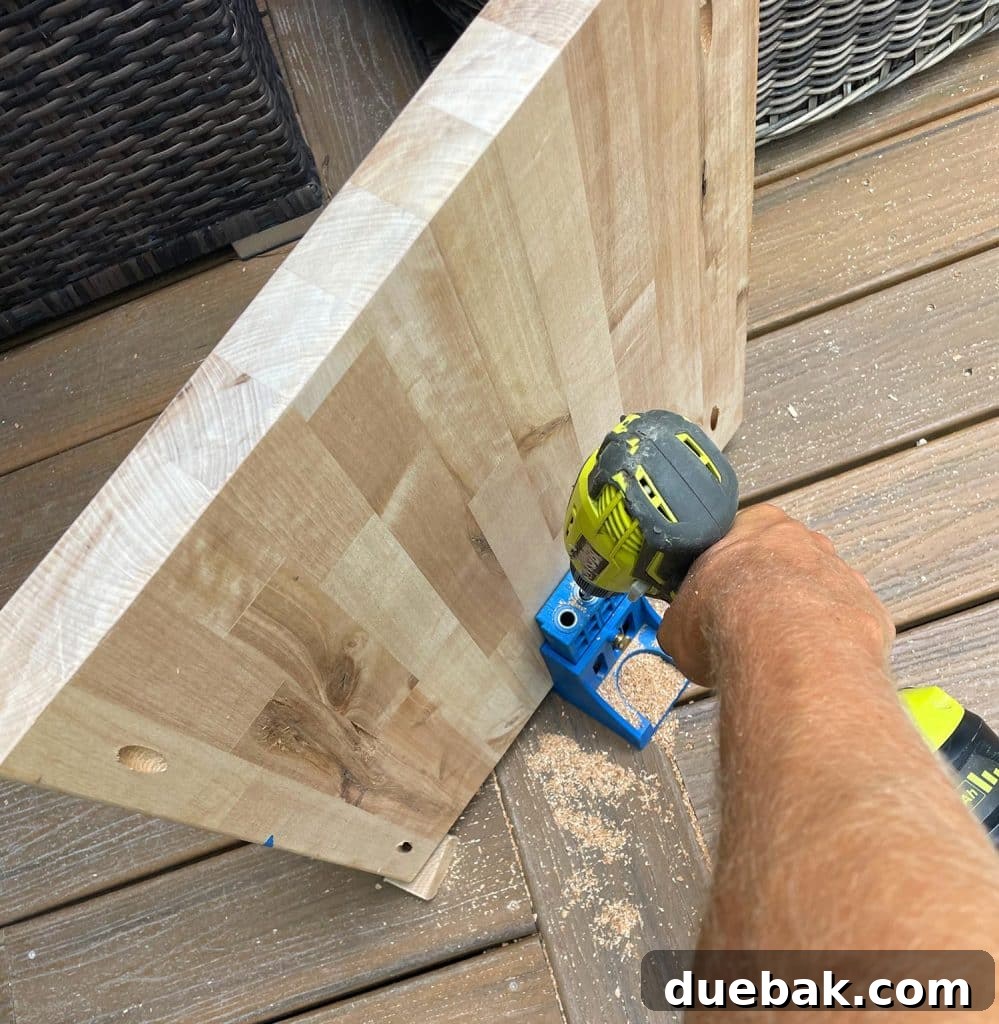
For this crucial step, we utilized our indispensable Kreg Jig. This remarkable tool is a favorite in our workshop, having been a trusted companion for over 12 years due to its reliability and effectiveness. We used it to drill three precisely angled pocket holes on the designated inside surface of each leg. This is where our earlier tape markings became incredibly useful, guiding us to the exact spots where each pocket hole needed to be drilled. For those unfamiliar, you can explore more about how to effectively use a Kreg Jig for various woodworking projects.
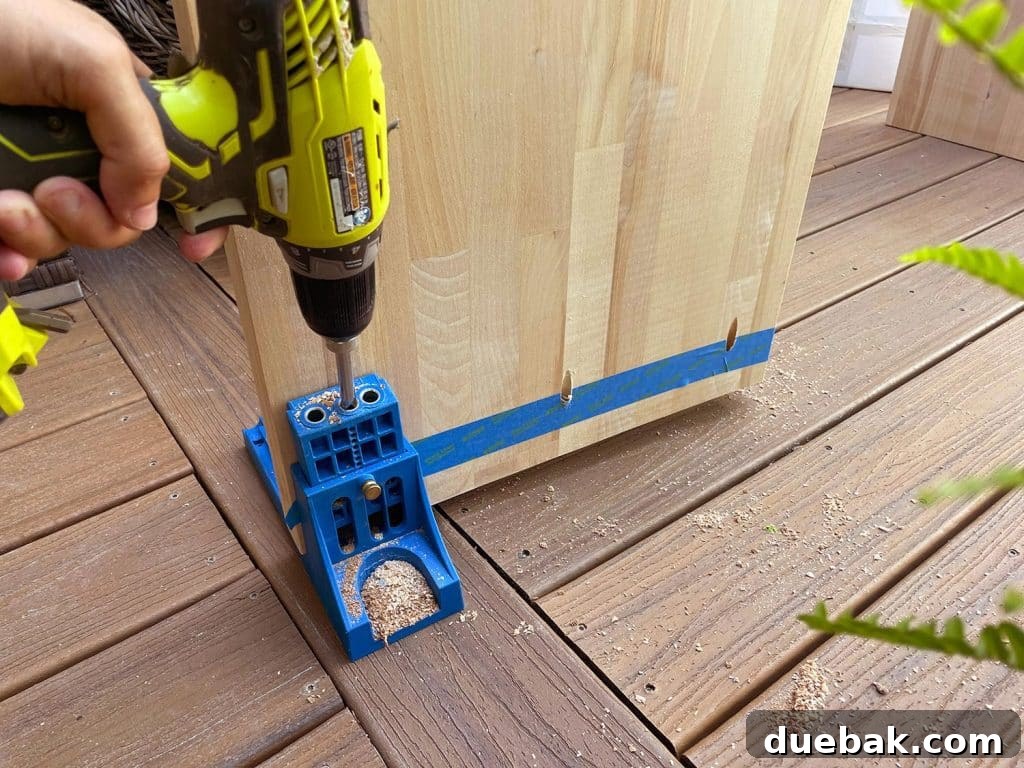
To optimize our workflow and save time, I drilled all the necessary pocket holes for both sets of legs in one continuous session. This approach eliminated the need to repeatedly switch out drill bits, streamlining the preparation phase and allowing for a smoother transition to the assembly stage.
Step 5: Securely Clamping and Screwing the Legs to the Top Piece
With all the pocket holes precisely drilled into the legs, the next step involved joining the main components. We began by turning the nightstand’s top piece upside down on a stable work surface. Then, we carefully positioned one of the legs into its designated place, ensuring it was perfectly aligned with the edge of the top. To prevent any movement or shifting during the fastening process, we securely clamped the leg in place using a specialized clamp designed specifically for pocket hole applications. This type of clamp is invaluable as it applies direct pressure, holding the joint tightly and accurately while you work.
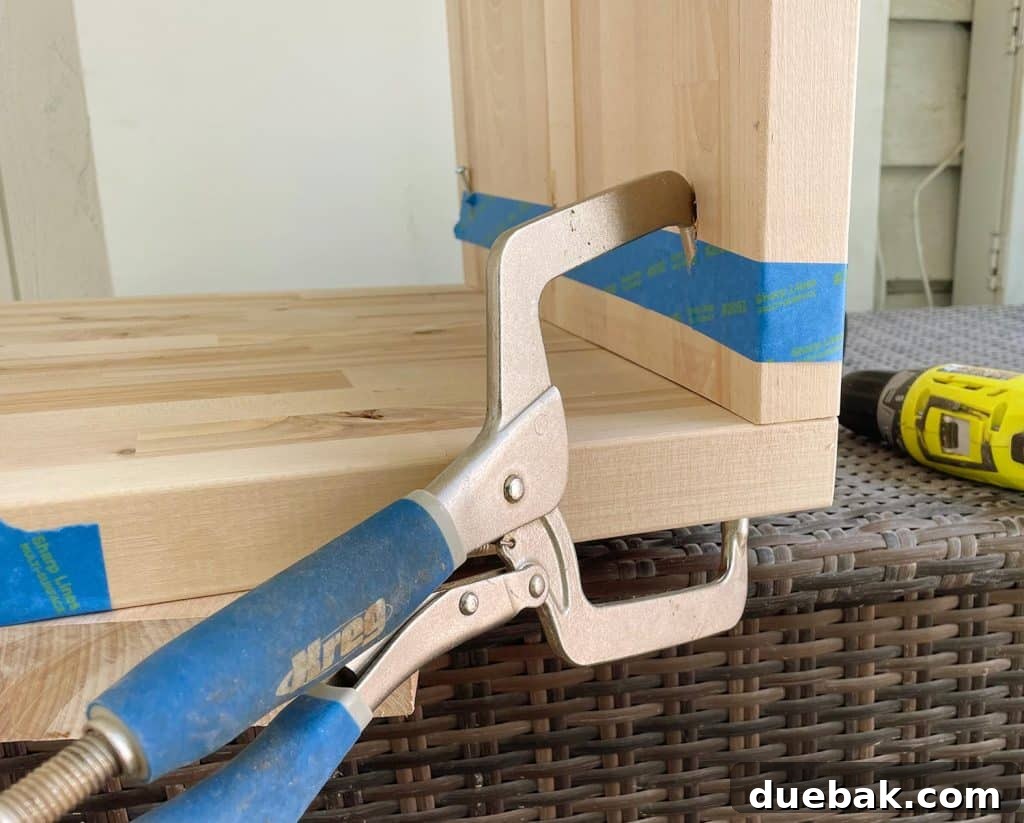
With one end firmly secured by the clamp, we proceeded to drive 2-inch pocket hole screws through the open, pre-drilled holes using our power drill. It’s crucial to apply steady, even pressure and ensure the screws are driven flush into the pocket holes. Once these initial screws were set, providing a secure hold, we carefully removed the clamp and then inserted the final screw through the remaining pocket hole. This staggered approach ensures maximum stability during the initial attachment.
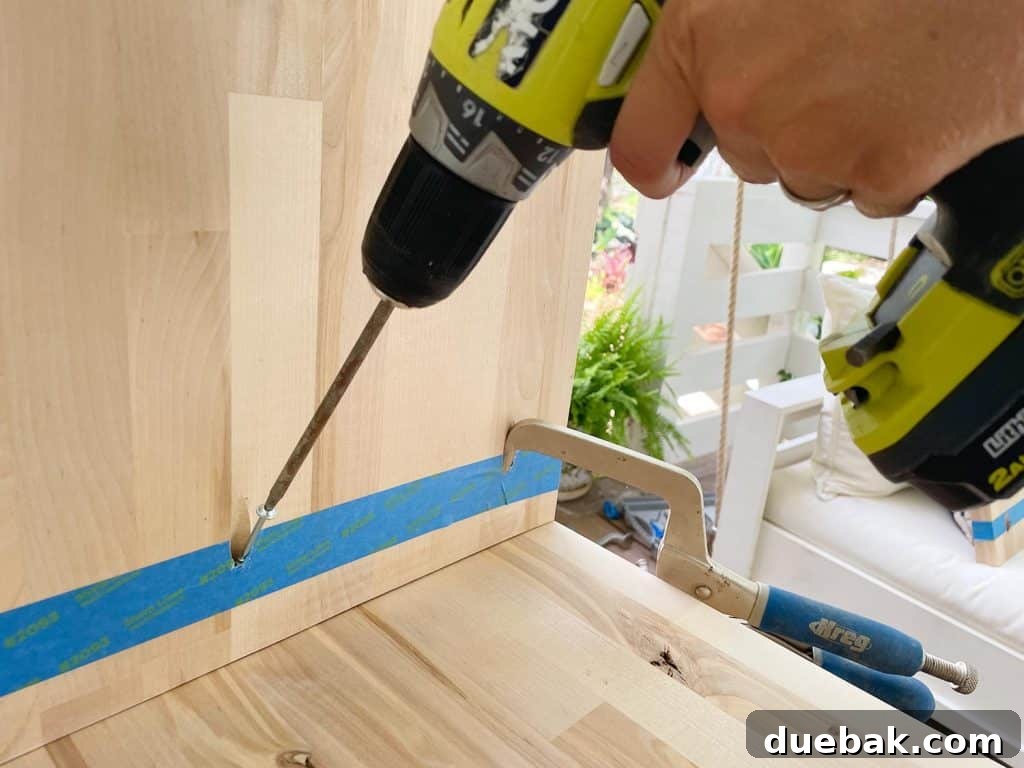
This entire process – clamping, screwing the initial holes, removing the clamp, and driving the final screw – was then repeated for the other leg of the first nightstand, and subsequently for both legs of the second nightstand. Consistency and careful alignment at each step are key to achieving a sturdy and professional-looking final product.
Step 6: Integrating Functional Shelves with Precision
With the main frame of the nightstands—the tops and legs—securely assembled, our focus shifted to adding the functional shelves. We began by meticulously measuring the precise length required for each shelf to ensure a perfect, snug fit between the legs. Once the measurements were confirmed, we made our final cuts using the circular saw, applying painter’s tape to prevent splintering, just as we did for the main components.
Next, we brought out our trusted Kreg Jig once again. For the shelves, we created three sets of pocket holes under BOTH ends of each shelf piece. It’s absolutely essential to drill these holes on the underside of the shelf so they remain completely hidden once installed, maintaining the clean aesthetic of our butcher block design.
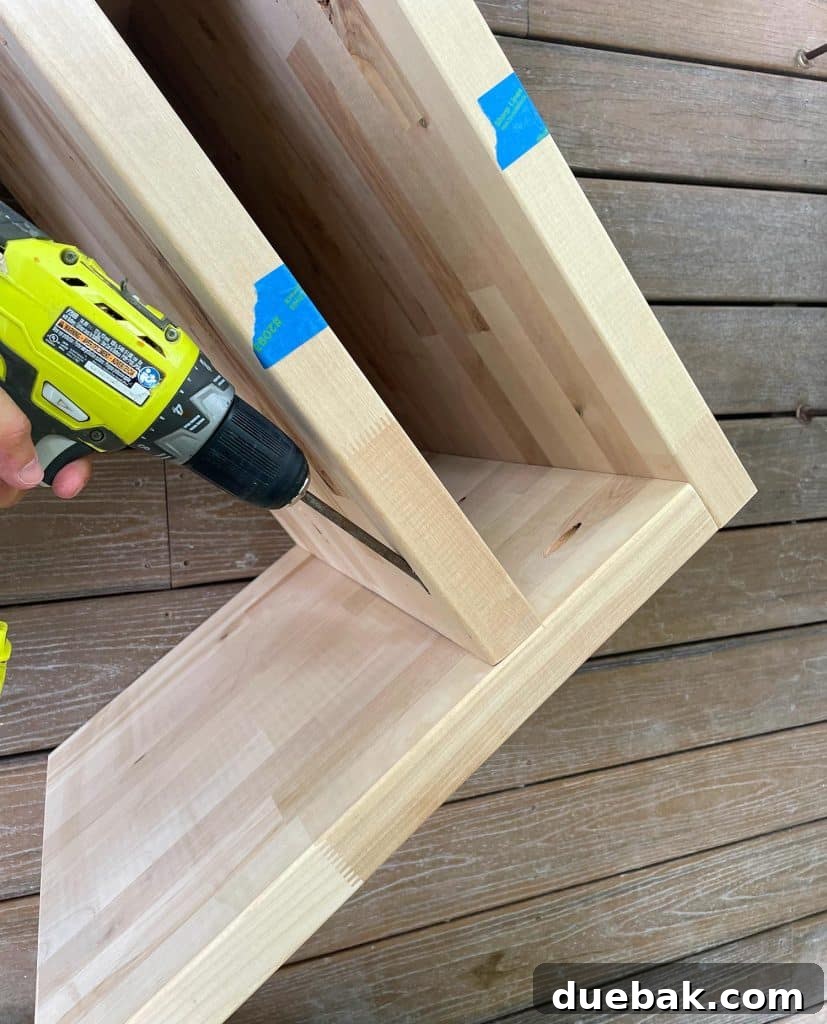
To attach each shelf, we carefully laid each nightstand on its back, providing a stable platform for assembly. The shelves, having been cut to such precise dimensions, fit quite snugly, almost holding themselves upright within the frame. Finally, using our power drill and pocket hole screws, we fastened the shelves to the legs, mirroring the same secure screwing technique we employed for the main legs.
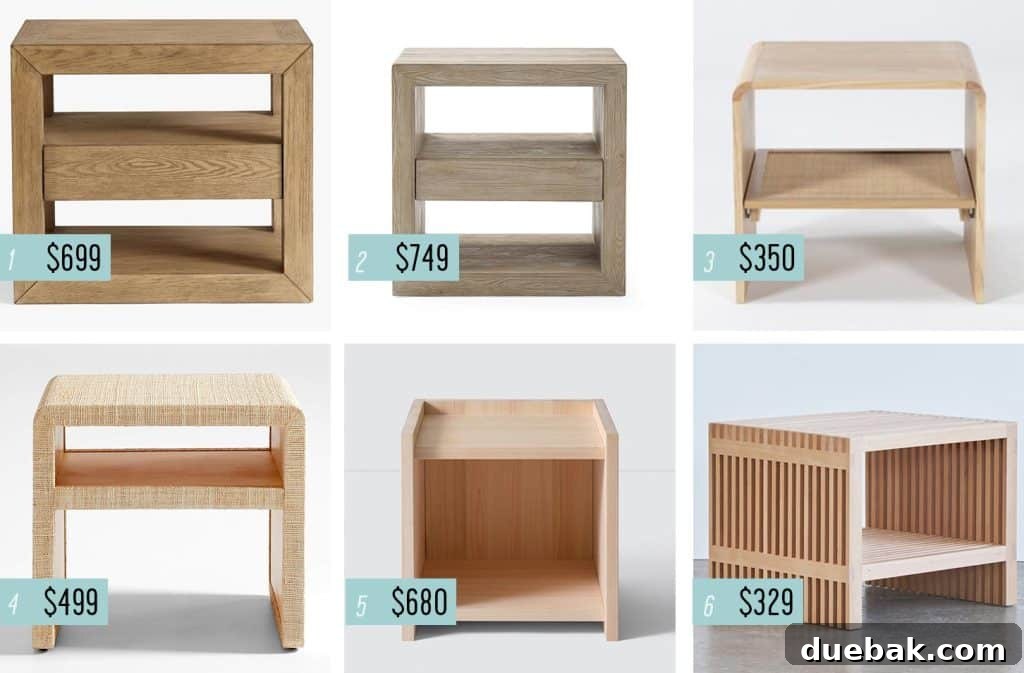
We opted for a 5-inch gap between the tabletop and the shelf. While shelf placement is ultimately a matter of personal preference and desired functionality, we initially experimented with a slightly larger gap, which, to our eye, appeared somewhat disproportionate, almost as if we had miscalculated the halfway mark. The smaller 5-inch spacing created a more deliberate and visually pleasing placement, echoing the modern design of nightstand #4 in our inspiration image below, where the shelf is intentionally positioned towards the upper portion of the table.
This particular shelf height has proven to be incredibly functional for our daily needs, offering convenient access to items we frequently use, as you’ll see in the “after” photos further down.
Step 7: Refining the Edges with Sanding for Safety and Smoothness
With the construction complete, the next critical step was to ensure that all edges, especially those created by the new cuts, were smooth and safe. Butcher block, while beautiful, can have sharp edges when freshly cut, posing a potential hazard. To address this, we meticulously went over all exposed corners and edges with a power sander, first using medium-grit sandpaper to effectively round off any sharp points, and then following up with high-grit sandpaper to achieve an exceptionally smooth finish. This subtle rounding not only enhances the tactile experience but also provides a crucial safety measure.
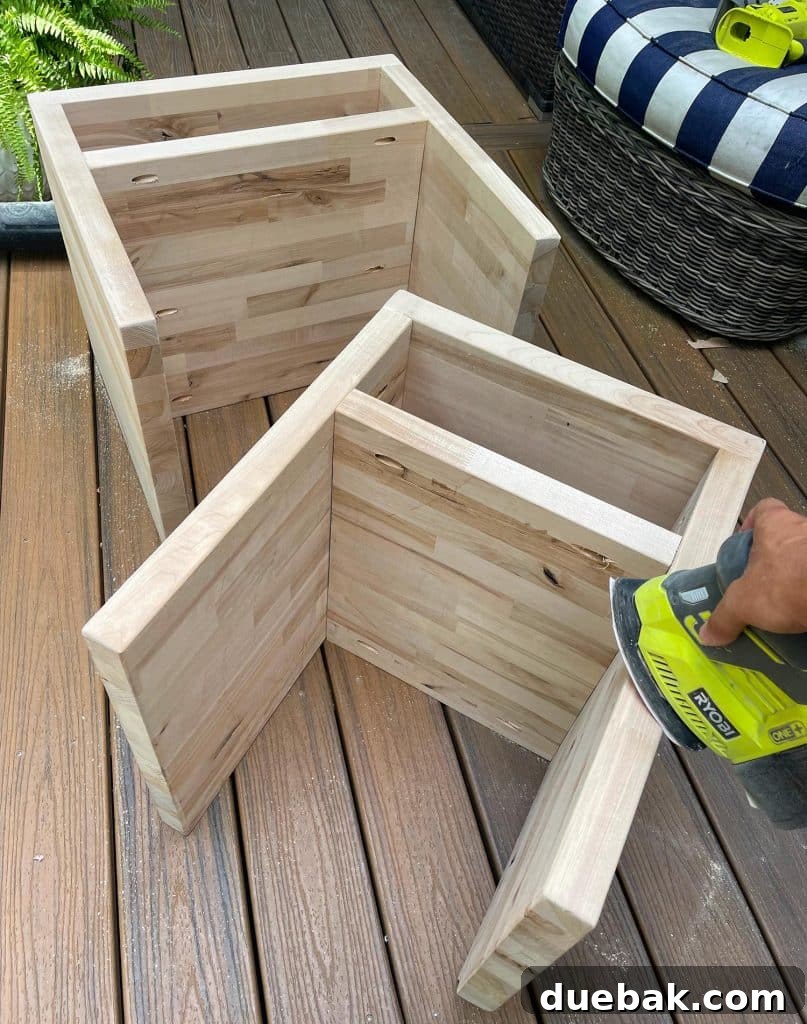
The goal here is to soften the edges just enough so that if you accidentally bump into the nightstand in the dark, or reach over haphazardly in the middle of the night, you won’t encounter a harsh, unforgiving edge. It’s a small detail that makes a big difference in the overall user experience and safety of your furniture. Before proceeding to the next step, it is absolutely essential to thoroughly wipe down or use a shop vacuum to remove all sanding dust from every surface. Any remaining dust can compromise the effectiveness and appearance of your chosen finish.
Step 8: Sealing the Butcher Block with Nourishing Oil
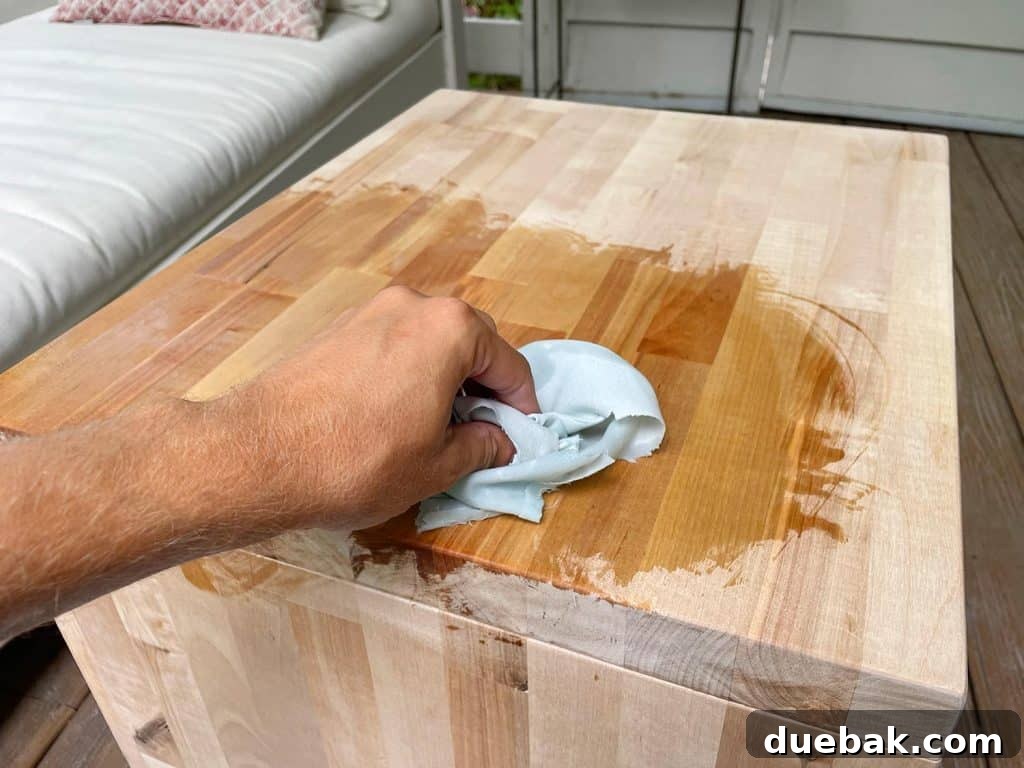
To protect and enhance the natural beauty of our butcher block nightstands, our preferred finishing method involves a single, generous coat of Cutting Board Oil. This particular oil is perfect for butcher block as it not only nourishes the wood but also beautifully darkens its tone and profoundly brings out the intricate grain patterns, adding depth and richness. Furthermore, it provides an excellent seal, protecting the wood from moisture and daily wear and tear. The application process itself is incredibly straightforward, even for beginners.
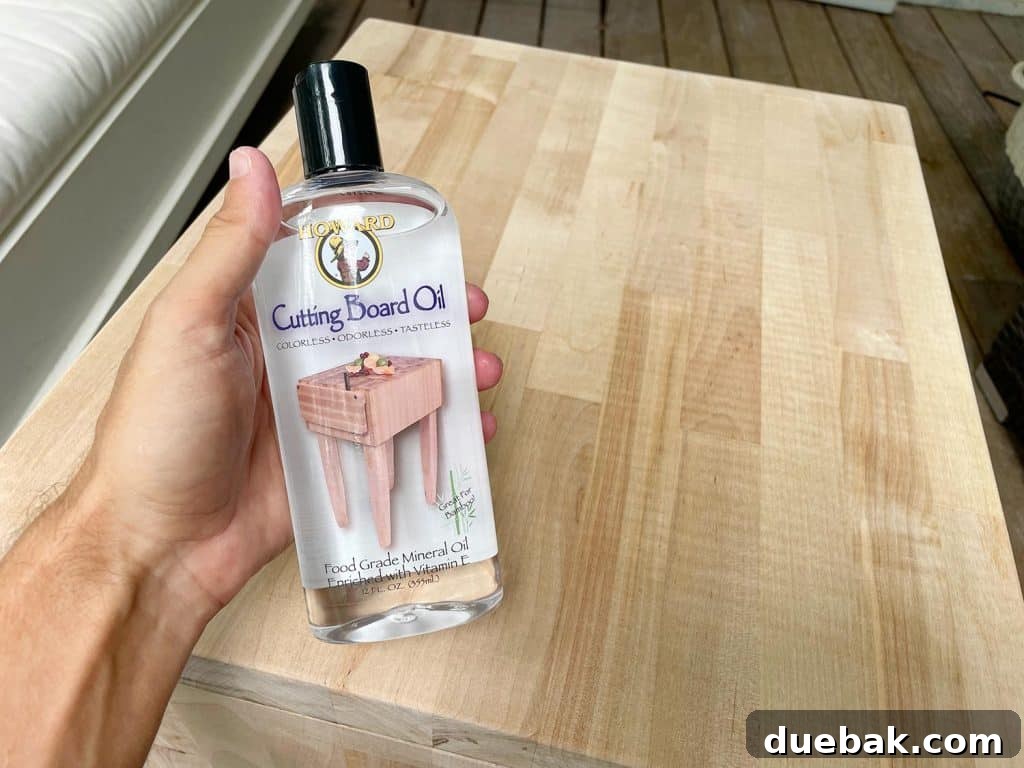
To apply, we typically pour a small puddle of the oil directly onto the butcher block surface. Then, using a clean rag or paper towel, we evenly spread the oil across the entire surface, working it into the wood until it has been fully absorbed. Don’t be alarmed if the wood appears significantly darker than its unfinished state immediately after application; the color will lighten slightly as the oil dries and cures, revealing a beautiful, natural luster.
Of course, if your desired aesthetic calls for a specific color or a more robust protective layer, you always have the option to apply a wood stain followed by a clear sealer, such as polyurethane, instead of just the oil. However, for a natural, rich finish that allows the wood’s inherent beauty to shine through, cutting board oil is an excellent and easy-to-use choice.
Step 9: Allow to Dry, Then Enjoy Your Custom Nightstands!
Once the cutting board oil was applied, we allowed our newly crafted DIY nightstands ample time to dry and cure, typically about a full day, to ensure the finish was completely set and durable. The anticipation during this waiting period was certainly worth it, as we are absolutely delighted with the final outcome. The nightstands not only meet but exceed our expectations, seamlessly integrating into our bedroom and providing both beauty and function.
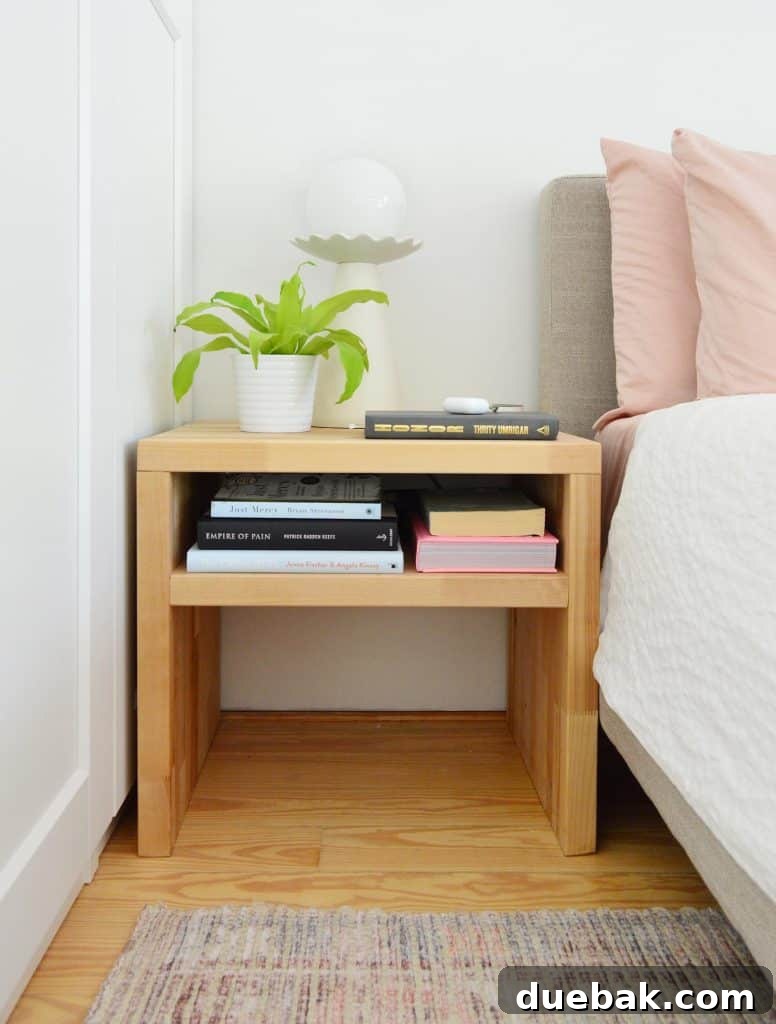
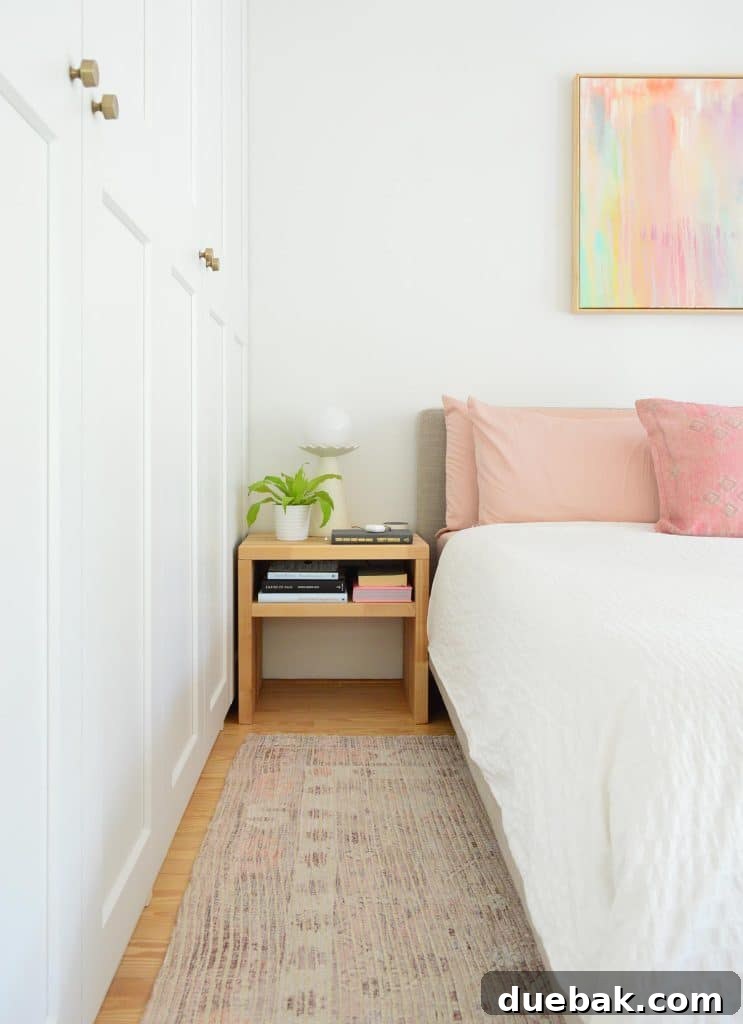
They fit precisely on each side of our king-size bed, just as our meticulous planning had envisioned. What’s more, they offer far more functionality and aesthetic appeal than we initially thought possible. At one point in our design process, Sherry had even considered settling for a simple garden stool as her bedside table – a testament to how challenging it can be to find the perfect piece when dealing with unique spatial constraints. These custom nightstands are a true testament to the power of DIY solutions.
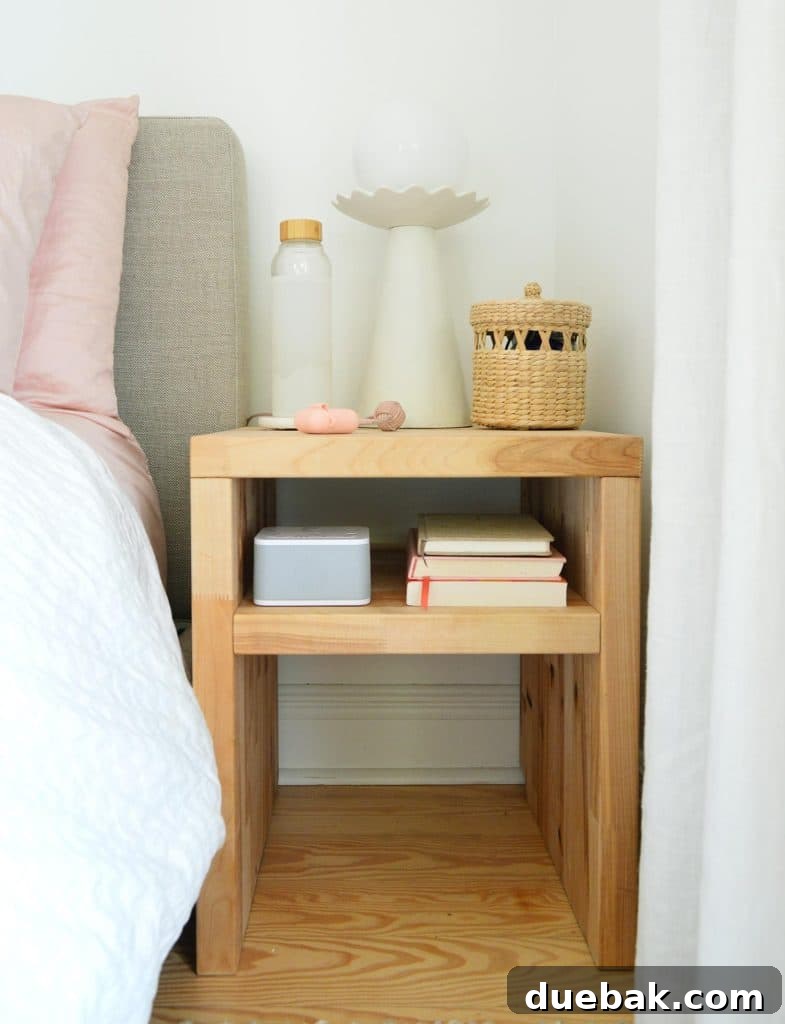
Optimized Storage and Everyday Functionality in Our DIY Nightstands
When designing these butcher block nightstands, we deliberately opted for an open shelf concept, giving us the flexibility to add storage beneath if needed. While we initially considered placing baskets or other containers in the open space, we’ve found that, for now, leaving it empty maintains a clean and uncluttered aesthetic. We simply don’t require the extra storage at this moment, and the minimalist look perfectly complements our bedroom’s serene atmosphere. Furthermore, a delightful unexpected benefit is the unhindered access it provides for our robot vacuum, which happily zips around, ensuring every corner beneath the nightstands is spotless.
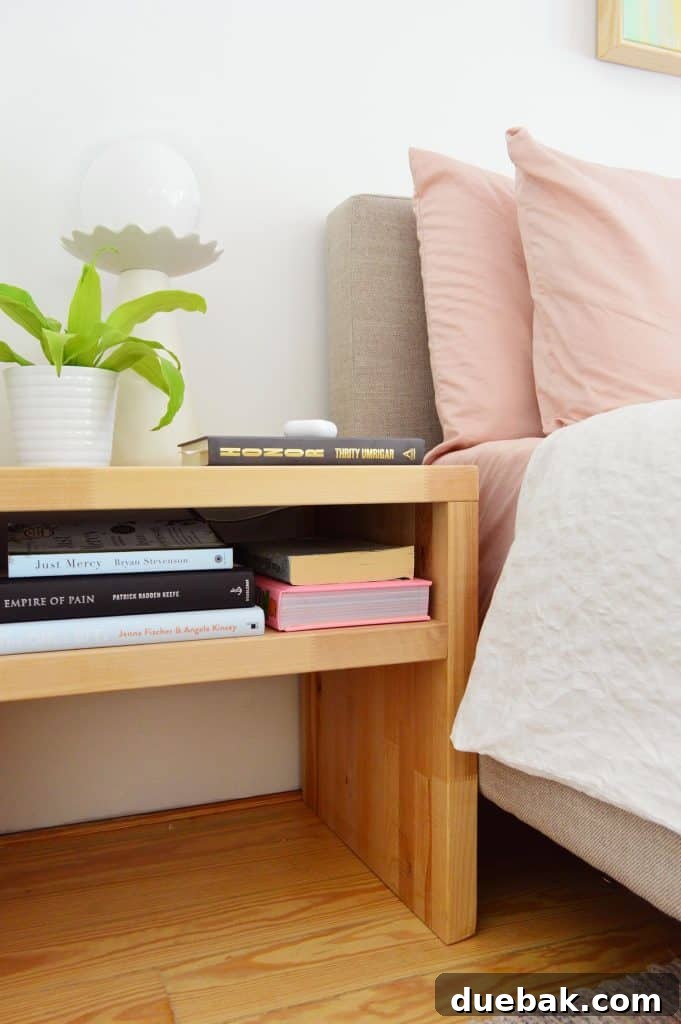
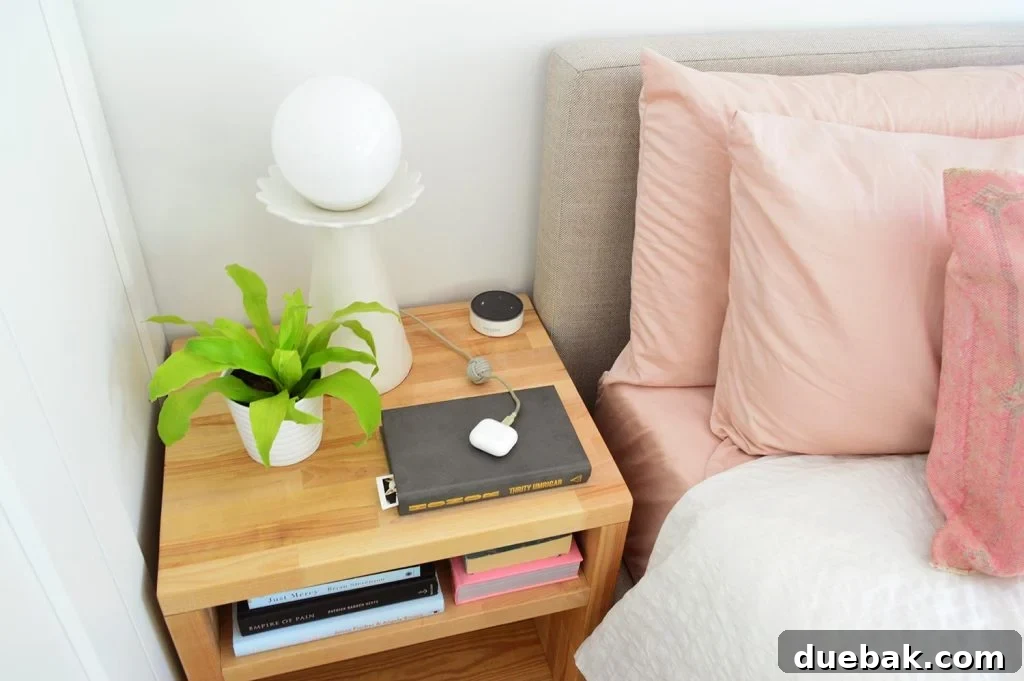
My nightstand, measuring a generous 22 inches wide, offers ample surface space. It comfortably accommodates my collection of books, essential chargers, a stylish lamp, our trusty Alexa device, and even a small plant, adding a touch of greenery. In its natural state, it often hosts a few more personal items—perhaps a water bottle, a favorite baseball cap, or even a rogue Skittles wrapper—but for these photos, I made an effort to present a tidier, more curated display.
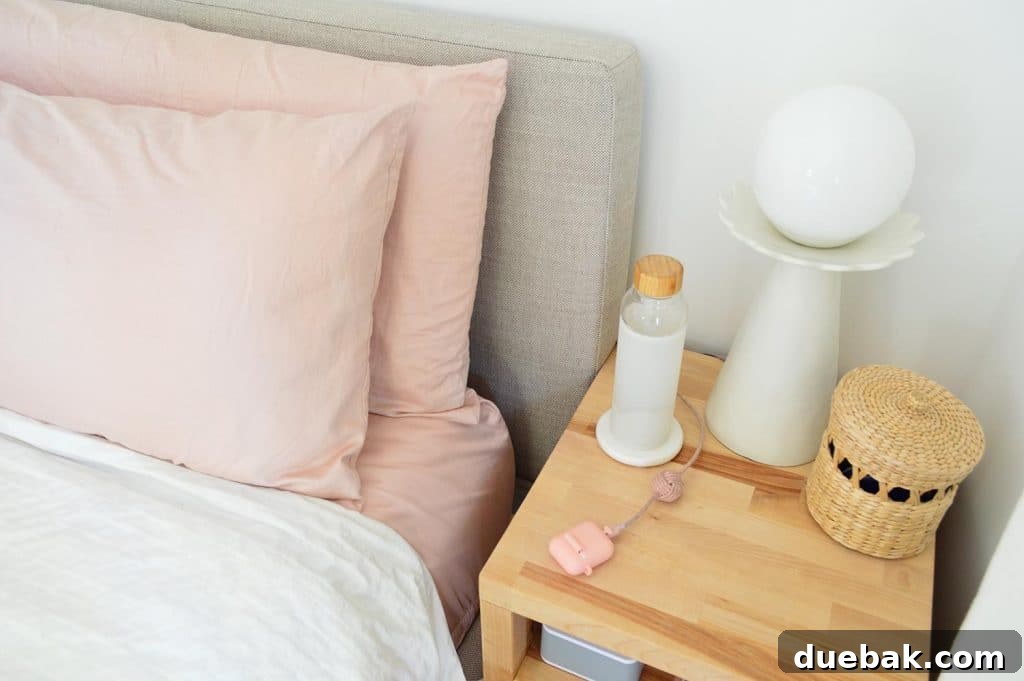
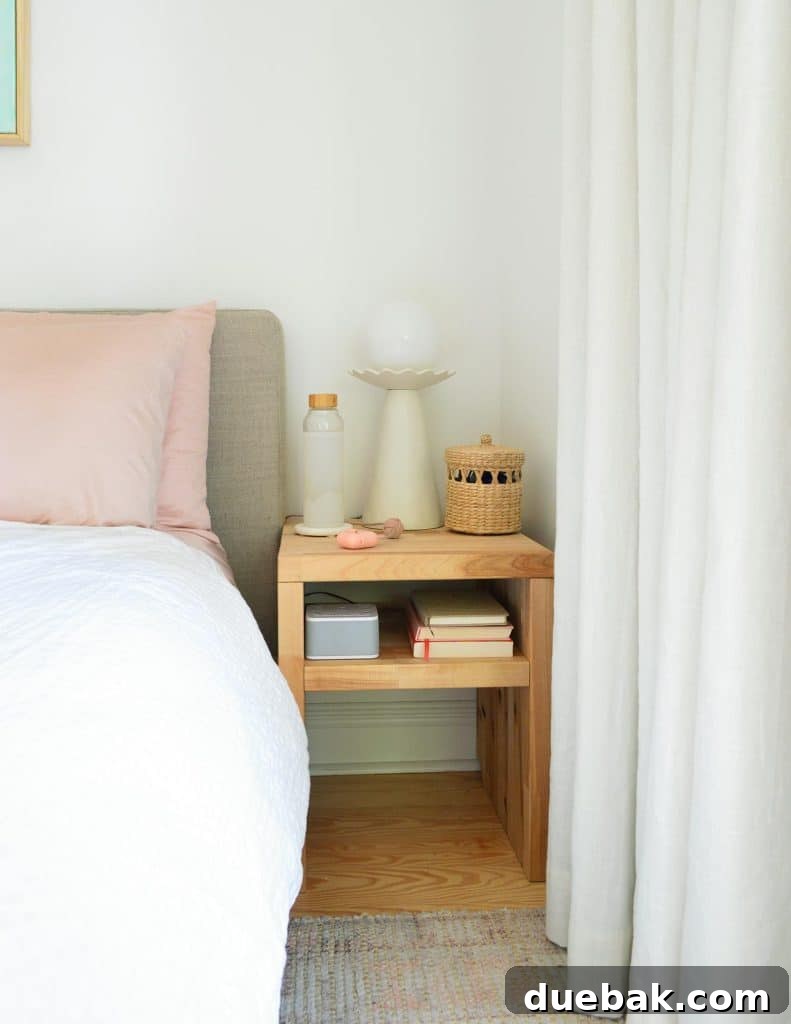
Sherry’s nightstand, at a slightly narrower 19 inches, is perfectly proportioned for her side of the bed. To keep her essentials organized, she found this charming small woven storage basket. It cleverly wrangles all her bedside necessities: contact lenses, chapstick, nail clippers, and what I fondly (and perhaps mistakenly) assume is a vast collection of poems professing her affection for me. (Upon closer inspection, I’m informed they are, in fact, her blue light glasses. Oh well, a man can dream!) While her side might appear snug in these static images, the video tour vividly demonstrates how her unique “special” wall actually provides ample clearance and comfortable movement space.
Explore More DIY Bedroom Transformations
Our journey to create a more functional and stylish bedroom didn’t stop with these custom nightstands. We’ve embarked on several other rewarding DIY projects designed to maximize storage, enhance aesthetics, and create a truly personalized sanctuary. If you’re inspired to take on more bedroom transformations, we invite you to delve into our other detailed guides. Discover how we ingeniously integrated hacked IKEA cabinets by our fireplace, adding both storage and architectural interest. Learn the secrets behind creating built-in closets that look professionally installed. And, for the complete backstory, revisit why we ultimately decided to upgrade to a king-size bed in the first place, setting the stage for all these subsequent projects.
Discover More Inspiring DIY Building Projects for Your Home
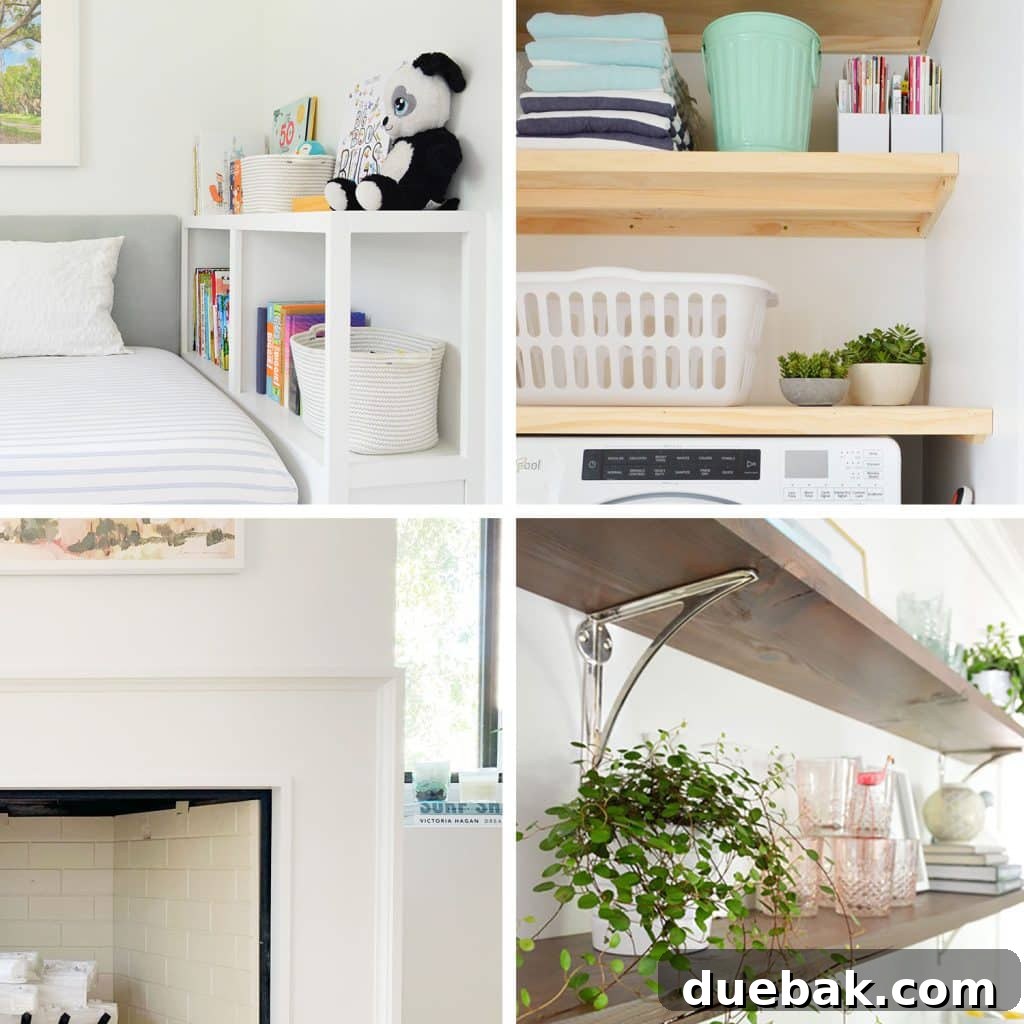
If you’ve enjoyed the process of creating these butcher block nightstands and are eager to tackle more hands-on home improvement, we have a wealth of other DIY furniture projects and straightforward builds waiting for you. These projects are perfect for adding character, functionality, and crucial storage solutions throughout your home, especially if you’re looking to incorporate more beautiful wood elements into your decor.
- Learn how we created a custom built-in bedside bookshelf for our son, maximizing space and encouraging reading.
- Discover the steps to making quick and easy plywood shelves in our laundry room, providing practical storage for everyday essentials.
- Follow our guide on how we built a stylish modern fireplace surround in our bedroom, transforming the focal point of the room.
- Uncover the secrets to creating beautiful reclaimed wood shelves that added rustic charm and storage to our old kitchen.
*This post contains affiliate links, meaning we may earn a small commission when you make a purchase through links on our site, at no additional cost to you. This helps support our content creation and allows us to continue sharing helpful DIY guides.