
Ultimate Guide to DIY Under Cabinet Lighting Installation: Brighten Your Kitchen & Laundry Room
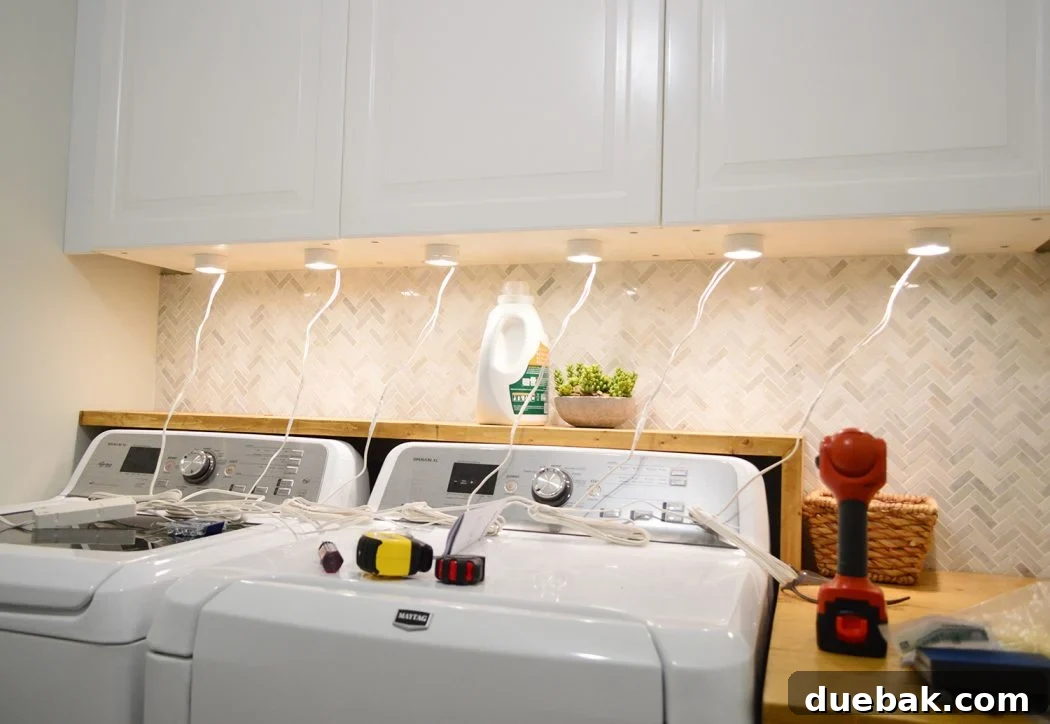
Under cabinet lighting is a remarkably effective home improvement that consistently delivers immense functional benefits and aesthetic appeal with surprising ease. Often underestimated, these versatile light fixtures have the power to utterly transform otherwise dimly lit countertops into vibrant, well-illuminated workspaces. We’ve personally experienced the profound positive impact of this straightforward upgrade, particularly in our laundry room, where we meticulously installed a series of under cabinet spotlights. It’s a process so remarkably simple and approachable that any DIY enthusiast can confidently tackle it, making it an ideal project if you’re looking to introduce enhanced task lighting or simply elevate the ambiance and style of your kitchen, laundry room, or any area graced with upper cabinetry.
Choosing the Perfect Under Cabinet Lighting System for Your Home
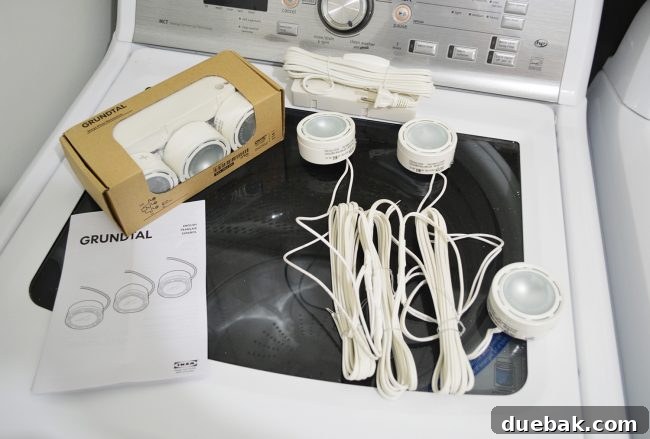
Before embarking on the physical installation, selecting the right lighting system is a pivotal first step that can significantly influence the outcome and longevity of your project. The market abounds with various options, including energy-efficient LED light strips, discreet puck lights, and streamlined bar lights, each presenting its own set of advantages for different applications. For our initial project, we opted for Ikea’s GRUNDTAL Spotlights, a popular choice a decade ago. While the GRUNDTAL line has since been retired, Ikea, a leader in home furnishings, continually refines its lighting solutions. Their current flagship offering, the OMLOPP spotlight series, represents a significant evolution and improvement.
These modern OMLOPP spotlights harness the power of advanced LED technology, guaranteeing superior energy efficiency and a longer lifespan. Furthermore, they feature a much lower profile, allowing for a more discreet and almost invisible installation. A welcome addition to the OMLOPP system is the inclusion of integrated cord management covers, a thoughtful detail that simplifies the often-tedious task of wire concealment, leading to a much cleaner and more professional finish. The inherent beauty of modular systems like Ikea’s lies in their adaptability and user-friendly design. Based on the easily accessible downloadable instruction sheets for the new OMLOPP lights, the fundamental installation principles and steps remain remarkably consistent with our earlier experience. This means the practical techniques and insightful tips we’re about to outline will be highly relevant and applicable to a wide array of contemporary under cabinet lighting systems, especially those meticulously designed for enthusiastic DIYers.
When making your selection, consider several key factors to ensure your chosen system perfectly matches your needs. Evaluate the desired brightness, often measured in lumens, to ensure adequate task illumination. Ponder the color temperature – warm white LEDs (around 2700K-3000K) create a cozy, inviting ambiance, ideal for living spaces, while cooler white light (around 4000K-5000K) offers a crisper, more focused light, perfect for detailed tasks in kitchens or workshops. Lastly, consider whether dimmable options are important for greater versatility and mood setting.
Strategic Planning: Determining the Ideal Number and Placement of Lights
While a common approach is to install a single spotlight directly beneath each cabinet section, our specific design goal was to achieve a uniform, continuous bar of light, rather than distinct, separate pools of illumination. To accomplish this seamless visual effect, we opted for a more generous installation of spotlights than the traditional “one-per-cabinet” rule. The GRUNDTAL lights, at the time, were conveniently packaged in sets of three, leading us to install a total of six units across our cabinet span. However, for most applications where a continuous, even glow is desired, four or five strategically placed lights would typically provide ample coverage, depending, of course, on the overall length of your cabinets. Meticulous planning of placement is paramount to realizing your desired lighting outcome, whether it’s a perfectly uniform brightness across the entire countertop or a focused illumination designed to accentuate specific areas, such as a coffee bar or a prep zone.
Step-by-Step DIY Installation Guide for Under Cabinet Lighting
Installing under cabinet lighting is a deeply gratifying home improvement project that will not only enhance your home’s functionality but also its overall aesthetic appeal. By following these comprehensive, detailed steps, you can ensure a smooth, efficient, and ultimately successful installation.
1. Prepare Your Workspace and Unpackage All Components
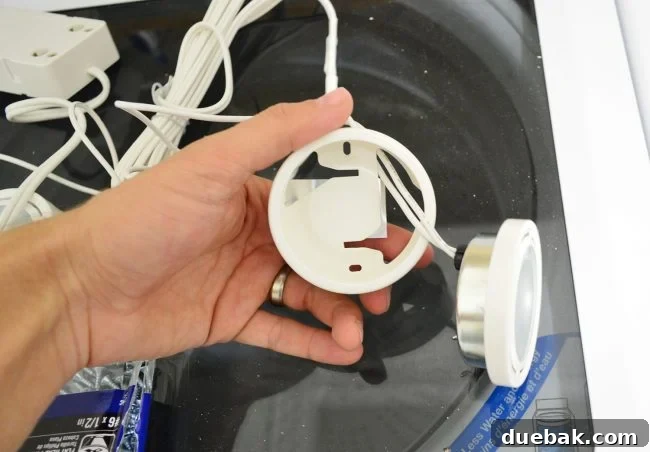
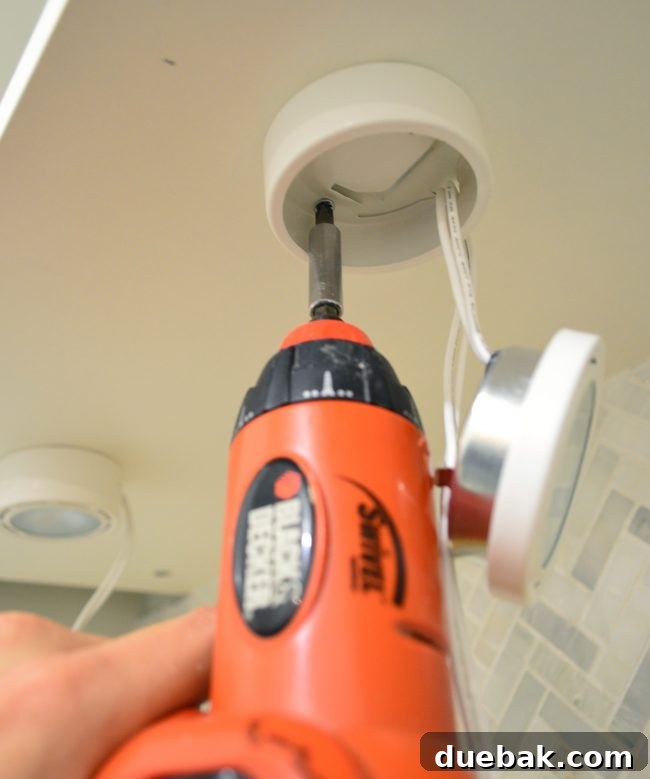
Begin by thoroughly clearing the entire countertop area directly beneath your upper cabinets to create an unobstructed workspace. Carefully unpackage all components of your lighting system, including the individual spotlights, the essential transformer, the power cord, and any accompanying mounting hardware. Take a moment to familiarize yourself with each piece and its function. For many puck-style lights, a clever design feature, as seen in our older GRUNDTALs, involves carefully detaching the actual lightbulb portion from its outer casing. This ingenious design exposes the necessary screw holes for secure mounting, all while keeping the delicate internal wiring safely protected and in place.
2. Meticulously Mark and Secure the Spotlight Casings
Precision in placement is absolutely vital for achieving an installation that looks professional and integrates seamlessly with your cabinetry. Before fastening any component, dedicate time to meticulously measure and mark the precise location for each spotlight on the underside of your cabinet. We discovered that centering each spotlight front-to-back on the cabinet provides the most uniform and pleasing light distribution. For lateral spacing, we aimed for approximately 10 inches between the centers of adjacent spotlights, a measurement that successfully delivered our desired continuous light effect. Utilize a pencil to clearly mark your pilot hole points.
Once marked, use a drill fitted with an appropriate bit to create small pilot holes for your screws. This crucial step prevents wood splitting, especially in harder cabinet materials, and significantly eases the process of securing the lights. It is absolutely critical to use screws of an appropriate length – typically 1/2 inch is sufficient – to guarantee they do not inadvertently penetrate through the interior floor of your cabinet, which would compromise its integrity and appearance. Secure each light casing firmly to the cabinet bottom. After all casings are mounted, carefully snap the lightbulb portions back into their respective housings, ensuring each one is securely seated.
3. Establish Connections to the Transformer Box
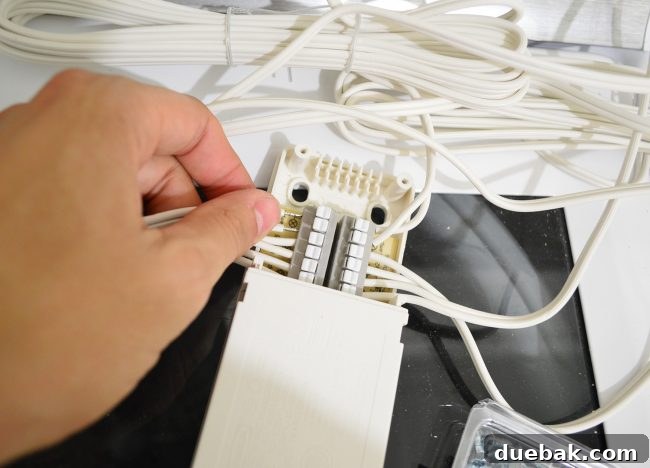
With all your spotlights securely mounted, the next essential step involves connecting them to the central transformer box. This component is arguably the heart of your low-voltage lighting system, as it precisely converts the standard household 120V AC power into the low-voltage DC power required by your LED lights. It’s important for homeowners to be aware that many contemporary under cabinet lighting systems, including the popular Ikea OMLOPP series, typically sell the transformer box and the power cord as separate, modular components from the spotlights themselves. This modular design offers excellent flexibility, allowing you to customize your setup precisely based on the number of lights you plan to install – commonly, a single transformer box can support up to 9 spotlights, and in many advanced systems, multiple transformer boxes can even be powered by a single power cord (some systems allow up to 10 boxes).
While our older GRUNDTAL system involved a slightly more hands-on and intricate wiring procedure, as partially depicted in the accompanying image, newer systems like OMLOPP have dramatically streamlined this process. Modern connections are often designed for unparalleled ease, frequently resembling the simplicity of plugging in a phone charger, utilizing simple, standardized connectors that click securely and satisfyingly into place. It’s imperative to ensure that each spotlight’s wire is firmly and correctly connected to an available port on the transformer. Always, without exception, consult your product’s specific instruction manual for detailed wiring diagrams and safety guidelines.
4. Conduct a Thorough Test of All Connections
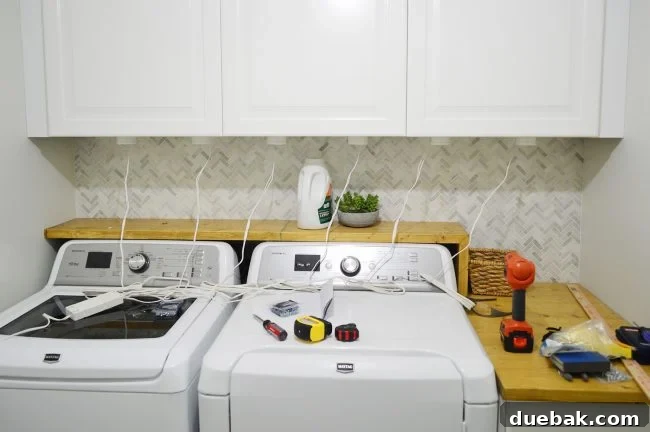
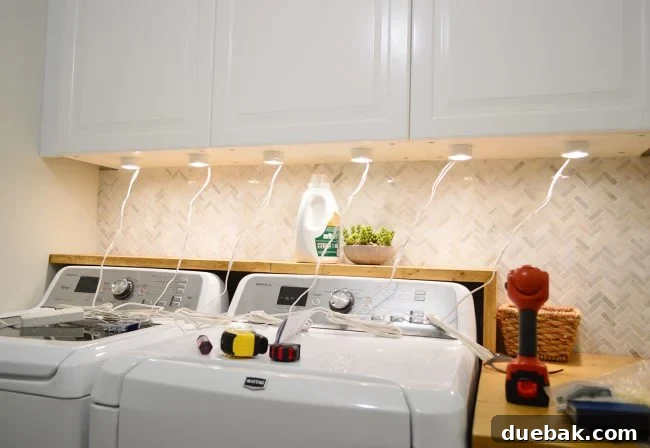
Before proceeding with any wire management or concealment, it is absolutely paramount to test your entire lighting setup. At this particular stage, it’s completely normal for your wiring to appear somewhat disorganized and untidy – this is an expected part of the temporary setup, so there’s no need for concern. The transformer box is designed for convenience; it typically plugs into any standard household electrical outlet and comes equipped with an integrated inline toggle switch directly on its power cord. This thoughtful feature allows you to effortlessly power up your system and immediately verify that all connections are functioning correctly, all without the need for a professional electrician. Within mere minutes, you should be able to flip the switch and observe your newly installed under cabinet lights illuminate, providing clear confirmation of a successful installation thus far. Should any light fail to turn on, systematically re-check its connection to the transformer and ensure the transformer’s power cord is securely plugged into a live electrical outlet.
Mastering Wire Management and Aesthetic Concealment
Once your under cabinet lights have been thoroughly tested and confirmed to be fully operational, the subsequent critical phase involves meticulous wire management. A truly clean, professional, and visually appealing finish is heavily reliant on effective wire concealment, which also inherently ensures safety and contributes to an uncluttered aesthetic. Newer spotlight systems, such as Ikea’s OMLOPP, often come thoughtfully equipped with dedicated cord covers specifically designed to neatly hide the wires directly against the underside of the cabinet. These integrated covers serve as an excellent foundation for achieving a tidy and almost invisible appearance.
However, it is highly probable that you will still encounter some excess wiring, particularly the longer runs between individual spotlights and the main transformer, as well as the power cord extending towards the electrical outlet. This is precisely where a blend of creative problem-solving and the right supplementary accessories become indispensable. We discovered that mounting ties (which are essentially robust zip ties ingeniously designed with a convenient screw hole for secure fastening) and wire staples proved to be incredibly effective tools in our arsenal. When utilizing wire staples, always exercise caution and double-check the length of the nails or screws provided; it may be necessary to substitute them with shorter alternatives to prevent any accidental piercing through the cabinet’s interior. The overarching objective is to keep all wiring snugly against the cabinet underside, meticulously out of sight, and safely away from any potential hazards or snag points.
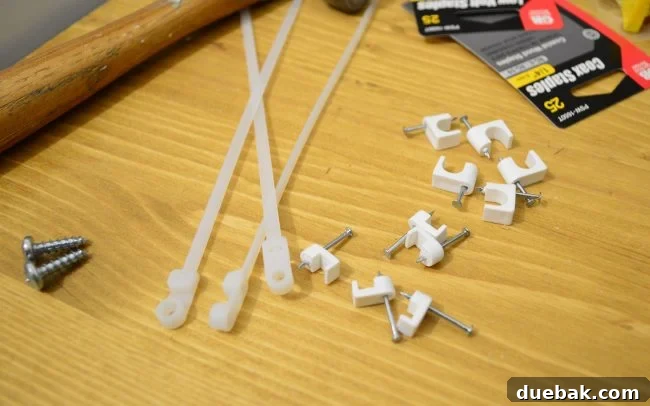
Even with our older, admittedly more cumbersome wiring system, diligent and thoughtful wire management techniques can still yield a remarkably clean and professional outcome. Our specific approach involved bundling the majority of the excess wire into a compact coil, which was then neatly secured with a zip tie. This bundled wire was subsequently screwed firmly into place on the cabinet bottom. The remaining segments of individual wires were then meticulously run tight against the underside of the cabinet, carefully held in position with wire staples. While the newer OMLOPP system undoubtedly promises a less chaotic initial setup thanks to its integrated covers, the fundamental principles of effectively bundling, routing, and securely fastening excess wiring remain absolutely essential for achieving a truly polished, long-lasting, and professional result.
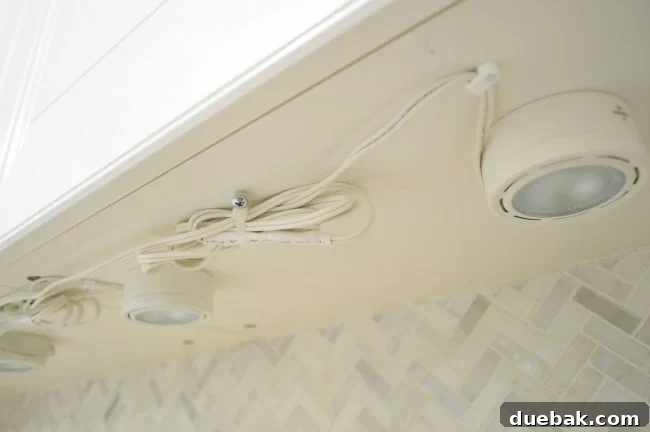
Ultimately, the paramount objective of this meticulous wire management is complete and utter invisibility. Once the final cover piece – which we will discuss in detail shortly – is installed, all of this intricate, behind-the-scenes wiring will simply vanish from view. One would literally need to recline on the floor and strain to peer directly up and under the cabinet to catch even a fleeting glimpse of the carefully hidden wiring. This superior level of concealment is absolutely critical for upholding the sleek, minimalist aesthetic that is highly sought after in contemporary kitchens, laundry rooms, and other modern utility spaces, ensuring that the lighting is admired for its effect, not its installation components.
Strategic and Discreet Placement of the Transformer Box
Beyond the meticulous management of individual wires, another crucial consideration is finding an appropriately discreet and accessible location for the transformer box. This central electrical component, while absolutely essential for the operation of your low-voltage lighting, is certainly not designed to be a visible feature of your carefully curated cabinetry. One highly effective and visually appealing solution is to mount it ingeniously behind a custom-fabricated gap on the side of a cabinet, a space that can then be entirely concealed by a decorative filler piece designed to seamlessly blend with your existing cabinetry. Our specific transformer box, for instance, came conveniently equipped with pre-drilled holes, making screw-mounting a straightforward task. This particular placement not only concealed the box with remarkable effectiveness but also permitted the power cord to gracefully follow the contour of the cabinet corner, guiding it neatly and unobtrusively down to the nearest available electrical outlet without drawing any undue attention.
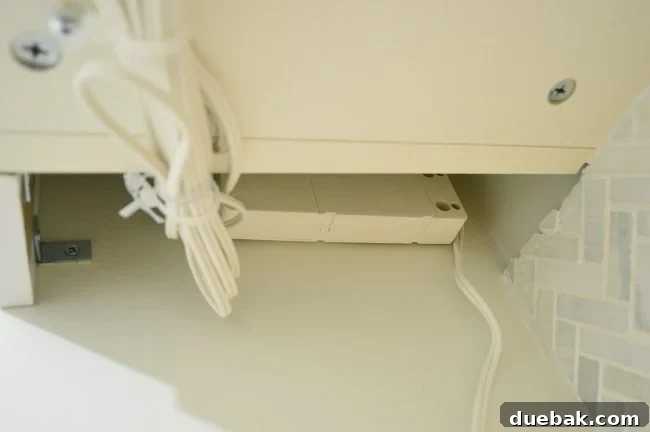
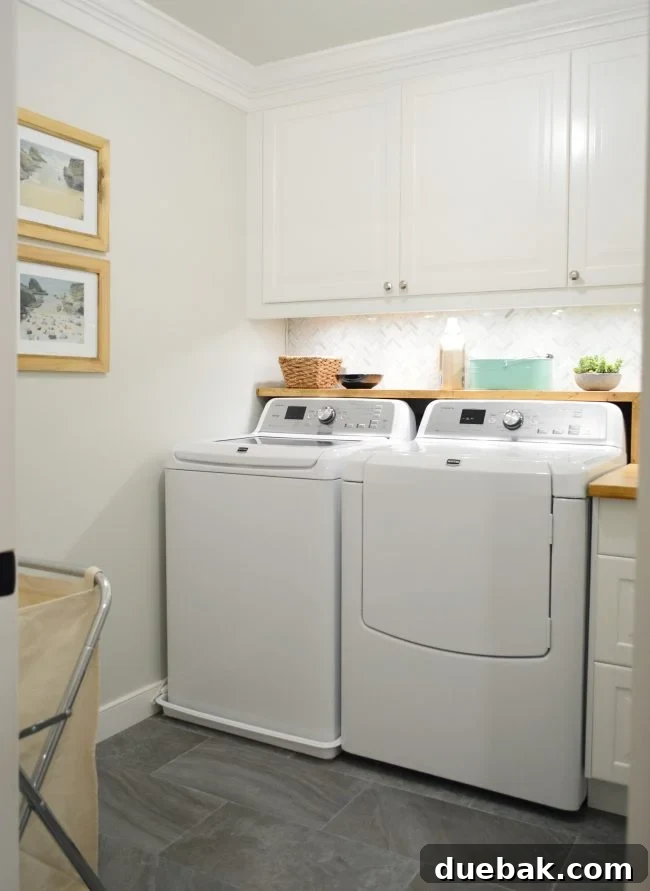
While a basic plug-in setup, complete with an inline toggle switch, is perfectly functional and convenient for an initial DIY installation, many homeowners eventually opt for a more integrated and permanent solution. Approximately two years after our original installation, we made the decision to engage a qualified electrician to hardwire the power cord directly to a dedicated wall switch. This upgrade offers unparalleled convenience, allowing you to effortlessly control the under cabinet lights with a simple flick of a switch, mirroring the operation of any other standard room light. Even prior to this hardwiring modification, when the cord was merely tucked neatly along the cabinet corner, its visual presence was remarkably minimal and barely noticeable, as clearly demonstrated in the accompanying photograph, highlighting the effectiveness of good initial placement.
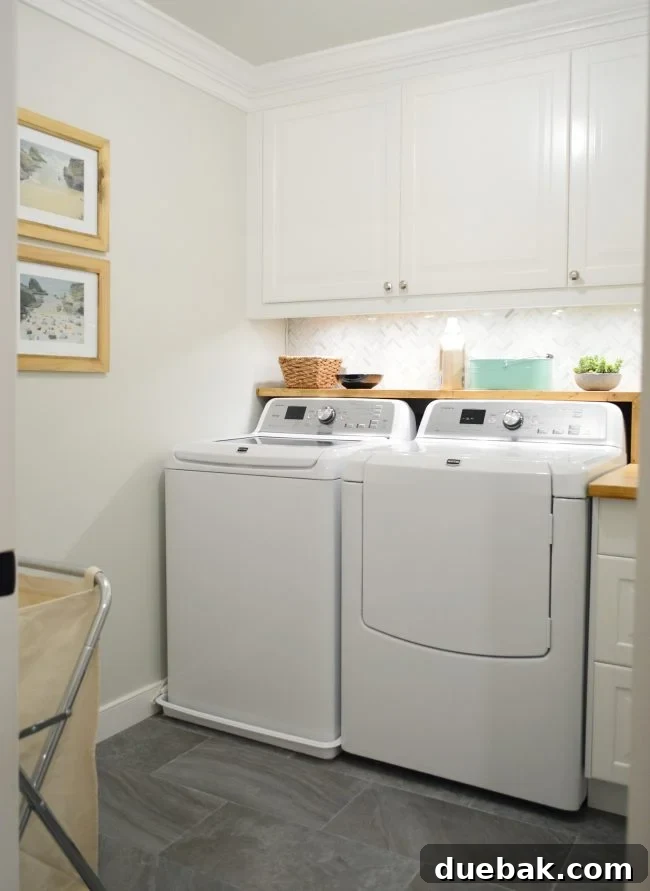
Another widely favored and frequently recommended location for the transformer box is atop your upper cabinets. This elevated position provides exceptional concealment, as the space above cabinets is typically out of direct line of sight. However, pursuing this option might necessitate the installation of a new electrical outlet in that elevated area, a task that would require the specialized expertise of a qualified electrician to ensure safety and compliance with electrical codes. For an added layer of modern convenience, Ikea thoughtfully offers a remote control accessory for their OMLOPP system. This allows you to wirelessly turn your under cabinet lights on and off, completely eliminating the need to physically access a power cord switch or a traditionally wall-mounted switch, offering ultimate flexibility in control.
Adding the Finishing Touches: The Crucial Cover Strip
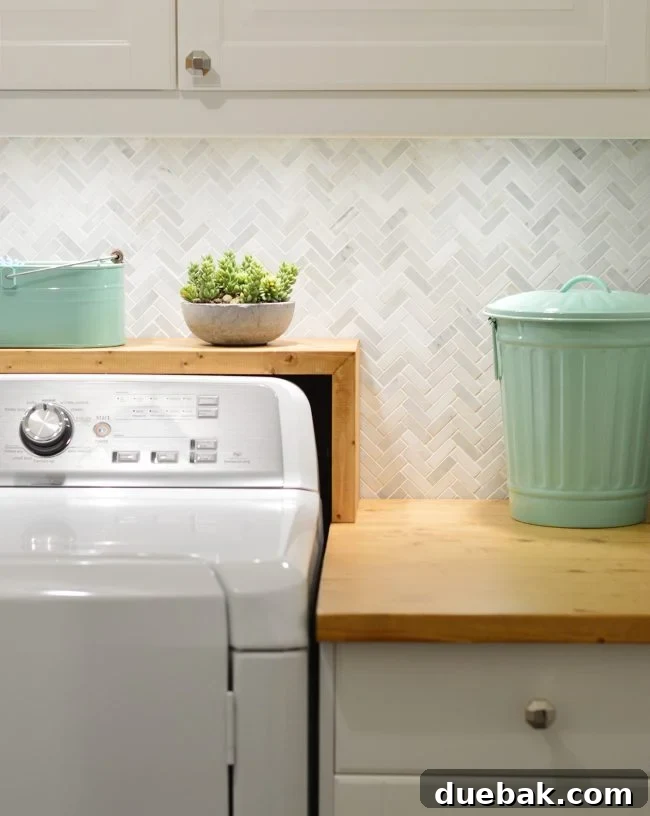
The final and arguably most impactful step in achieving a truly polished and professionally integrated under cabinet lighting installation is the addition of a specially designed cover strip along the bottom edge of your cabinetry. This seemingly minor detail plays an absolutely crucial dual role: it effectively diffuses the light emitted by the spotlights, resulting in a softer, more uniform, and aesthetically pleasing continuous glow, and perhaps even more importantly, it entirely conceals the spotlights themselves along with all the meticulously managed wiring beneath. For our specific project, we ingeniously repurposed a spare filler piece from Ikea, which coincidentally provided a perfect match for our existing cabinet finish. This strip was then securely mounted into place using small, discreet L-brackets, and all visible seams were neatly caulked, creating a flawless, built-in appearance that truly elevates the overall aesthetic.
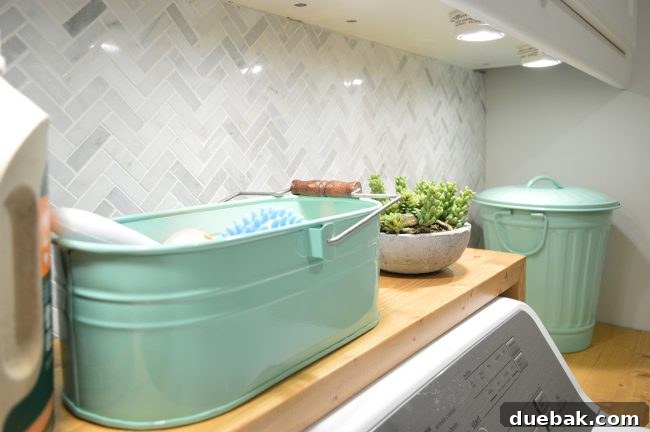
While we personally find the visual presence of this cover piece to be perfectly acceptable and even complementary, it’s worth highlighting a common design characteristic of Ikea cabinets: their undersides are typically designed with a completely flat profile. This contrasts with many other cabinet brands that often incorporate a slightly recessed area specifically engineered to discreetly tuck away lighting fixtures, thus obviating the need for an external cover strip. This particular design difference is very likely a key reason why Ikea has consistently invested in improving and refining its under cabinet lighting systems, developing slimmer profiles and integrating cord covers to minimize visibility and simplify the installation process, even for their flat-bottomed cabinet designs. The ultimate result, regardless of the cabinet type, is a sleek, elegant, and highly functional lighting solution that significantly enhances both the form and utility of your living spaces.
Cost-Effectiveness and Long-Term Value of Under Cabinet Lighting
Investing in under cabinet lighting stands out as an incredibly cost-effective home upgrade, delivering significant benefits for a relatively modest outlay. Although our original receipts from the GRUNDTAL installation are no longer available, we can confidently estimate the current cost for a comparable setup using Ikea’s sophisticated new OMLOPP system. A comprehensive installation, which typically includes the necessary spotlights, a compatible transformer, and a power cord, would generally range around $75. Should you decide to enhance your system with the added convenience of a remote control, the total investment might extend to approximately $90. For smaller projects, or if your needs are limited to just three lights, you can significantly reduce the overall cost to around $45 by opting for a smaller, more compact transformer specifically designed for fewer connections.
This surprisingly modest financial investment yields a multitude of substantial, long-term benefits. Beyond the immediate and tangible enhancement in task lighting and the delightful improvement in room ambiance, expertly installed under cabinet lights can subtly but effectively increase your home’s perceived value and overall appeal, making it a more attractive proposition for potential buyers in the future. Crucially, they dramatically improve the daily experience in high-traffic areas such as kitchens and laundry rooms, where focused illumination is invaluable. Furthermore, the inherent LED technology prevalent in modern systems translates directly into significantly lower energy consumption and an extended operational lifespan, thereby reducing both ongoing maintenance requirements and long-term operating costs.
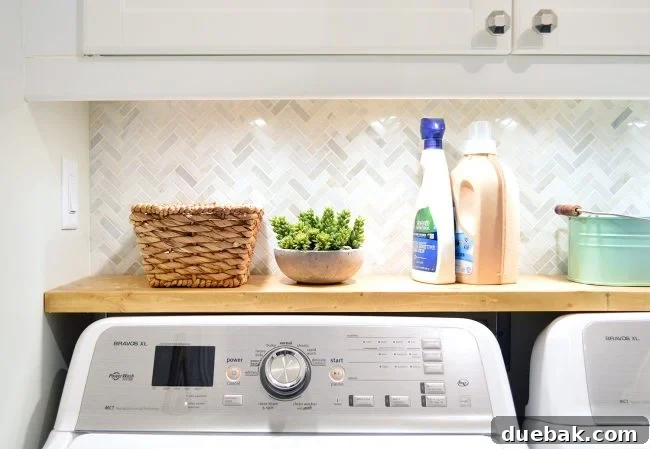
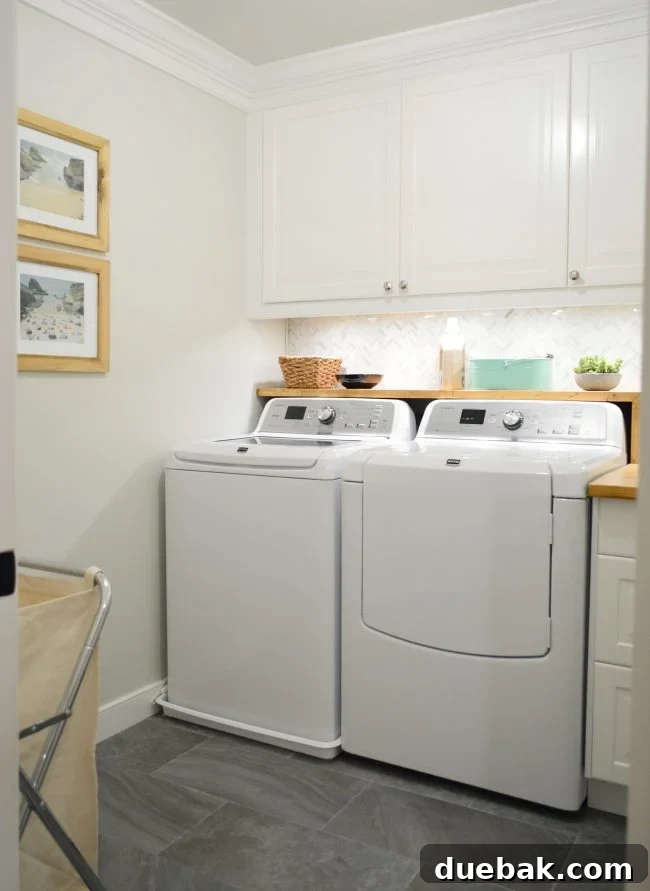
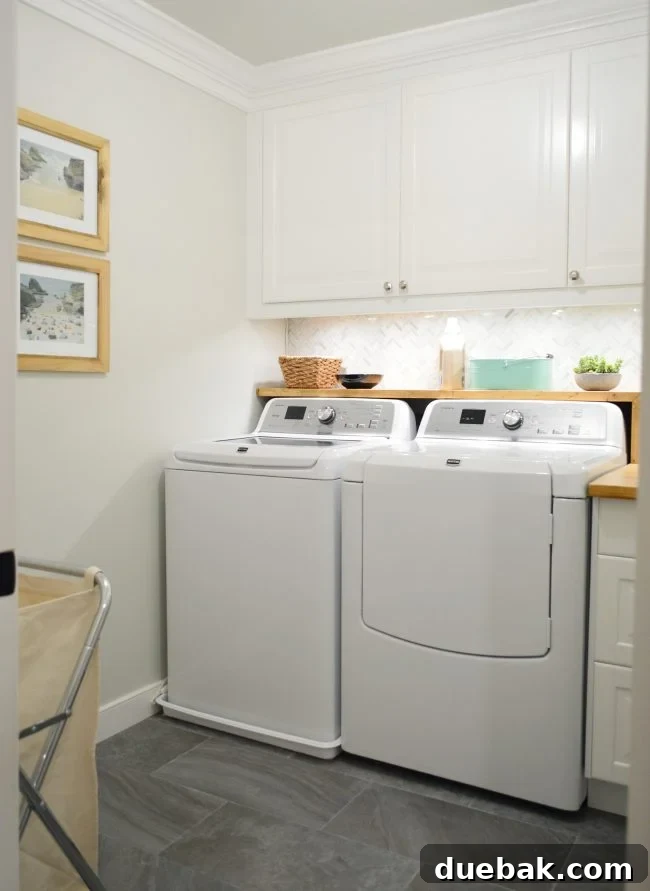
While our ceiling light provides perfectly adequate ambient illumination for our compact laundry room, we unequivocally consider the under cabinet lights to be an absolutely fantastic “nice-to-have” upgrade. We find ourselves reaching for them approximately 50% of the time, particularly when we require focused light for specific tasks or simply desire a softer, more inviting, and atmospheric glow. They truly excel in scenarios where you need that extra, targeted bit of focused light without the necessity of activating brighter, often harsher, overhead fixtures, providing flexible and mood-enhancing illumination.
Conclusion: An Illuminating DIY Project for Every Homeowner
If you’ve ever harbored thoughts of enhancing your home with under cabinet lighting, or perhaps found yourself wondering about the perceived complexity of the installation process, we sincerely hope this comprehensive guide has been genuinely illuminating – a pun, we assure you, that is entirely intended! It should now be abundantly clear that undertaking this transformative project is neither an overly daunting endeavor nor an excessively expensive undertaking. With readily available and user-friendly systems, such as Ikea’s continuously evolving OMLOPP series, and armed with just a few fundamental tools, even a novice DIYer can confidently achieve professional-looking and highly satisfying results.
Seize this fantastic opportunity to significantly enhance your living spaces with lighting that is both exquisitely functional and beautifully aesthetic. Whether your motivation is for improved meal preparation efficiency in the kitchen, better visibility for meticulous laundry tasks, or simply to infuse your rooms with a touch of sophisticated ambiance, under cabinet lighting stands as an upgrade that promises to deliver immense satisfaction and tangible benefits for countless years to come.
P.S. For those particularly eager to delve deeper into the entire journey of our complete laundry room transformation, including an exhaustive budget breakdown, you can discover all the intricate details here. Furthermore, if you’re curious about the specific source list for various elements within our home – ranging from exact paint colors to where you can find those charming green tins – that comprehensive information is conveniently available right here.
*This post contains affiliate links, which means we may earn a small commission if you make a purchase through them, at no extra cost to you. This helps support our content creation and keeps our guides free for you to enjoy.*