
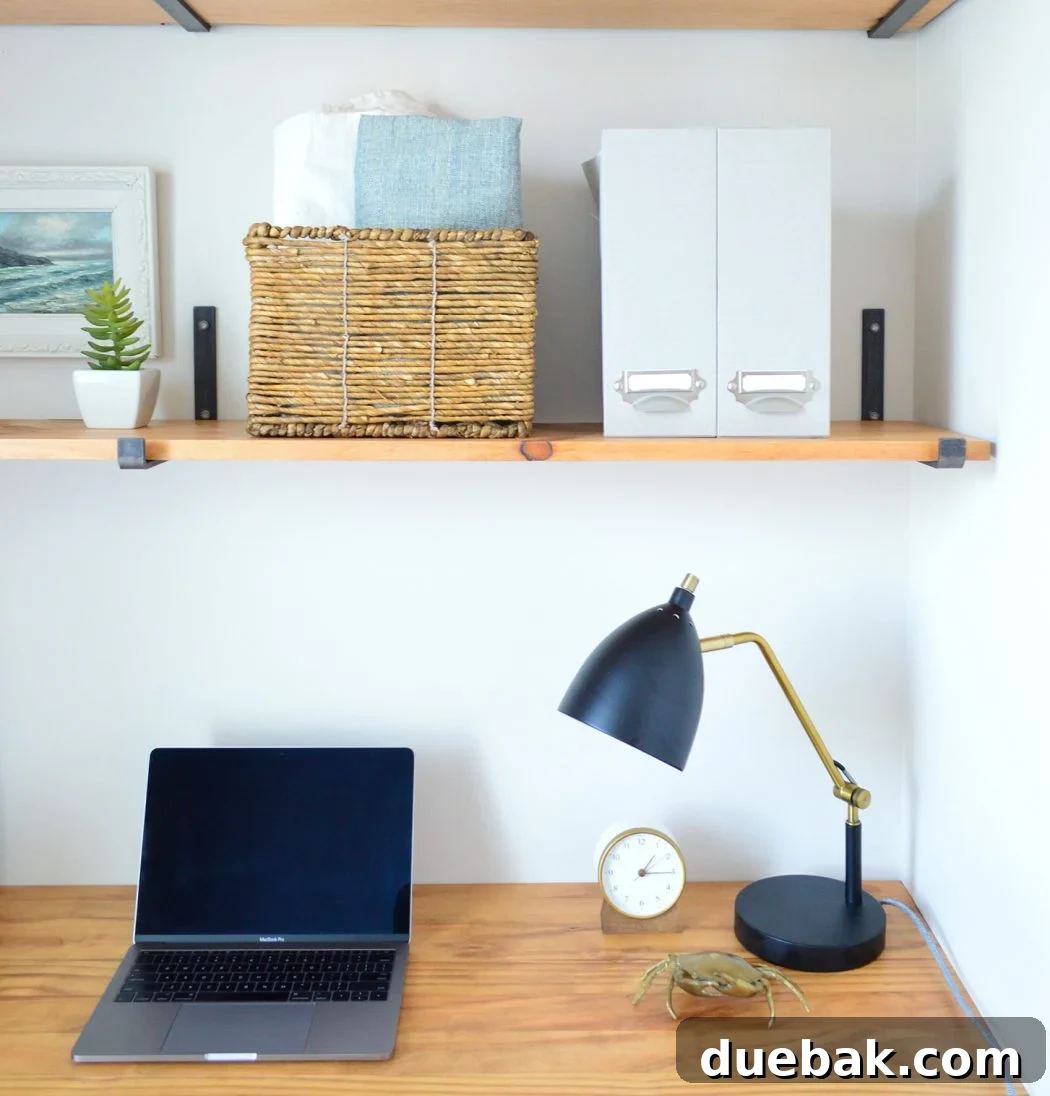
The concept of integrating a dedicated DIY office area into a vacation home might initially strike many as unconventional, perhaps even unnecessary. However, during our extensive discussions about optimizing the space adjacent to our pantry, numerous suggestions emerged for a compact desk nook. The idea was to create a quiet corner for checking emails, writing, or simply enjoying a book – a highly appealing feature for potential renters and even for ourselves. While we did weigh this option heavily, our immediate need for more comprehensive general storage ultimately led us to install additional cabinets in that specific spot (you can observe the outcome here). Yet, the brilliant notion of incorporating a small, functional desk area elsewhere never truly left our minds.
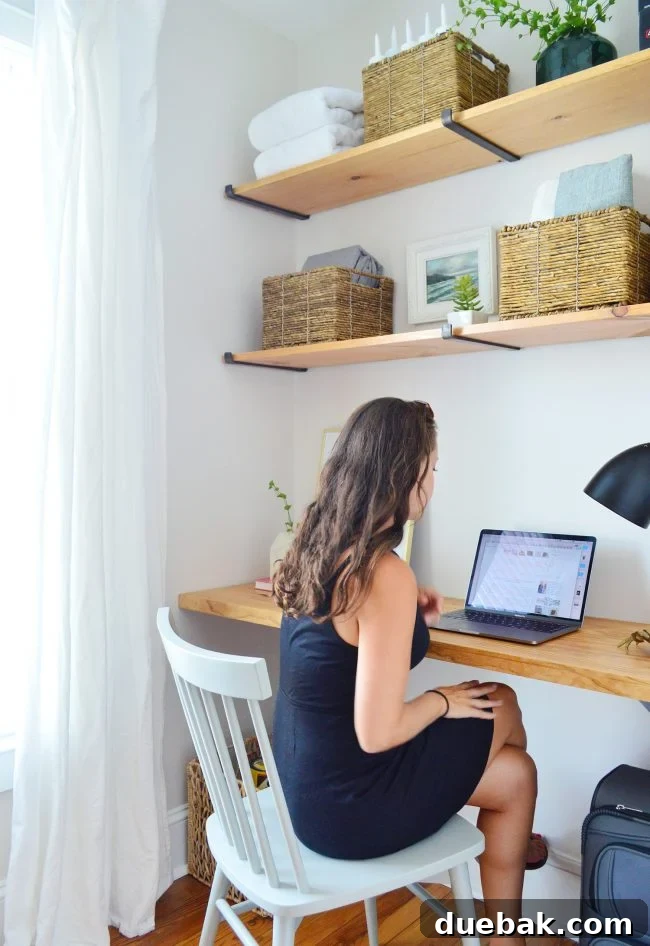
We are absolutely thrilled with the transformation and the remarkable functionality we’ve achieved in what was once an underutilized corner. This compact room, though modest in size, now boasts an impressive array of functions. We are excited to share the surprisingly straightforward process of how we installed this desk and shelving unit. This DIY project is genuinely accessible to anyone, regardless of their extensive building experience. You can effortlessly convert even the smallest, most overlooked wall space into a highly functional and aesthetically pleasing workspace that appears custom-built. The best part? It doesn’t demand a substantial financial investment, nor does it necessitate complex tools or advanced construction techniques.
For those eager to explore a broader range of creative shelving solutions and inspiring DIY endeavors, we invite you to consult this comprehensive post, which features 16 innovative DIY shelving ideas.
The room we focused on for this project is strategically located near the top of the stairs within our beloved beach house. Its diminutive dimensions, roughly equivalent to the footprint of a queen-sized mattress, immediately ruled it out as a viable conventional bedroom. While I regret not capturing proper “before” photographs, I can offer a glimpse into its original state. Here’s a raw, unedited view looking into the room shortly after we acquired the house in the autumn of 2016:
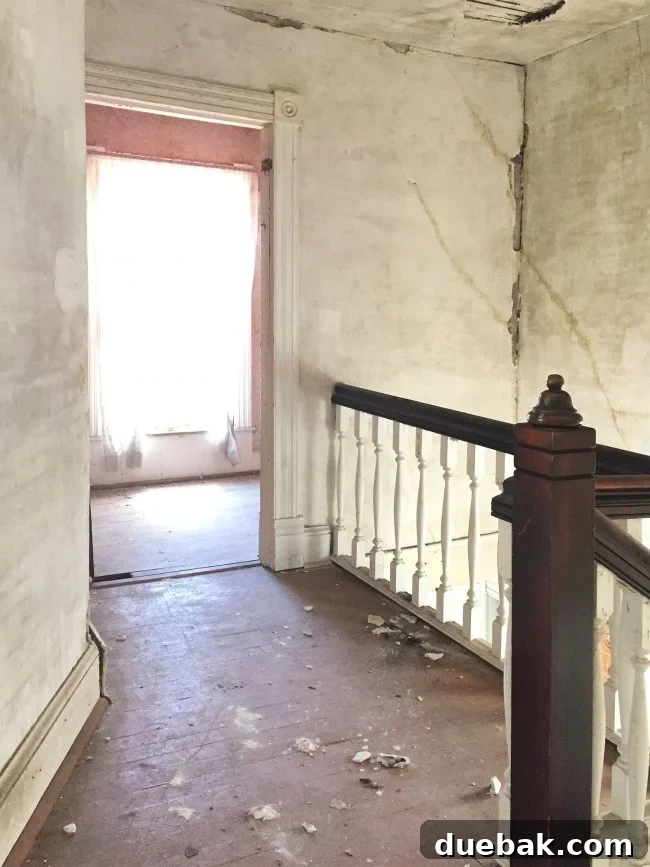
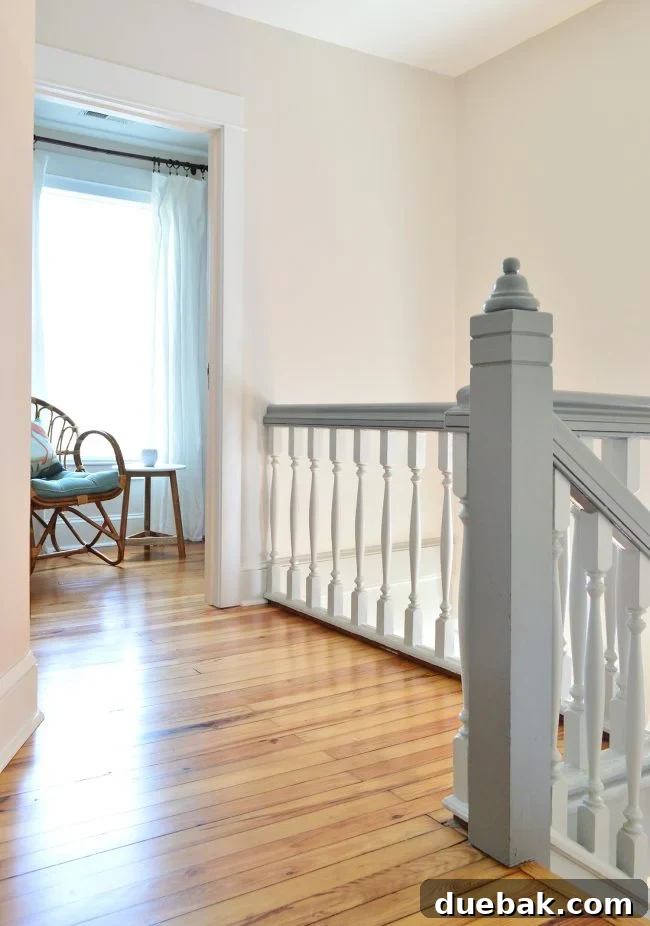
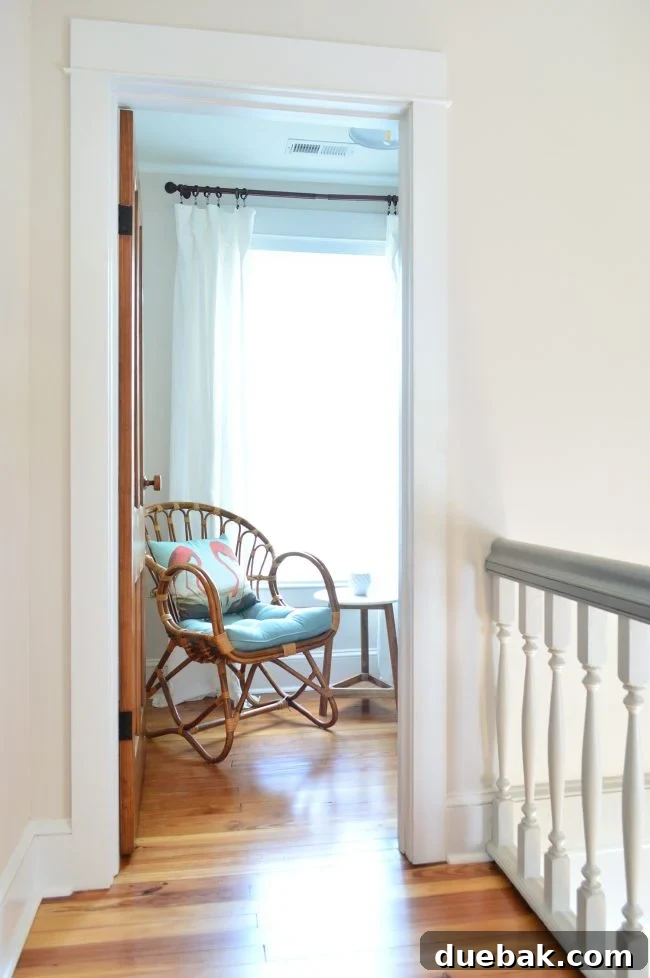
Fast forward to today, and the transformation is truly astounding. The image below showcases its current, much-improved appearance. We continue to be amazed by the dramatic impact of the refinished floors. Indeed, the floors you see now are precisely the same ones from the “before” picture – we simply invested the time and effort to sand them down thoroughly and apply a protective clear sealant. It also undoubtedly helps that the walls and ceiling are no longer exhibiting signs of crumbling decay, presenting a much more stable and inviting environment.
Over the years, we’ve pondered a myriad of possibilities for this small, versatile room. Initial considerations included transforming it into a cozy reading or game nook, or perhaps a dedicated spot to neatly tuck away a Pack & Play for a sleeping infant – options that were high on Sherry’s list. Conversely, I strongly advocated for a highly practical storage closet, maximizing its utility. However, until recently, the room had somewhat defaulted to a catch-all space for miscellaneous items and overlooked “junk.” The turning point arrived when Sherry’s brother visited in July. It unequivocally demonstrated its true potential as an ideal, compact sleeping area for a baby in a Pack & Play. The presence of room-darkening blinds played a crucial role in enhancing comfort, as did the perfectly adequate floor space available.
This temporary arrangement for the Pack & Play is quite simple: we relocate the existing accent chair and side table into the front bedroom, creating ample room for the Pack & Play. For a more detailed account and to view a photograph of this setup in action, you can refer to this past newsletter.
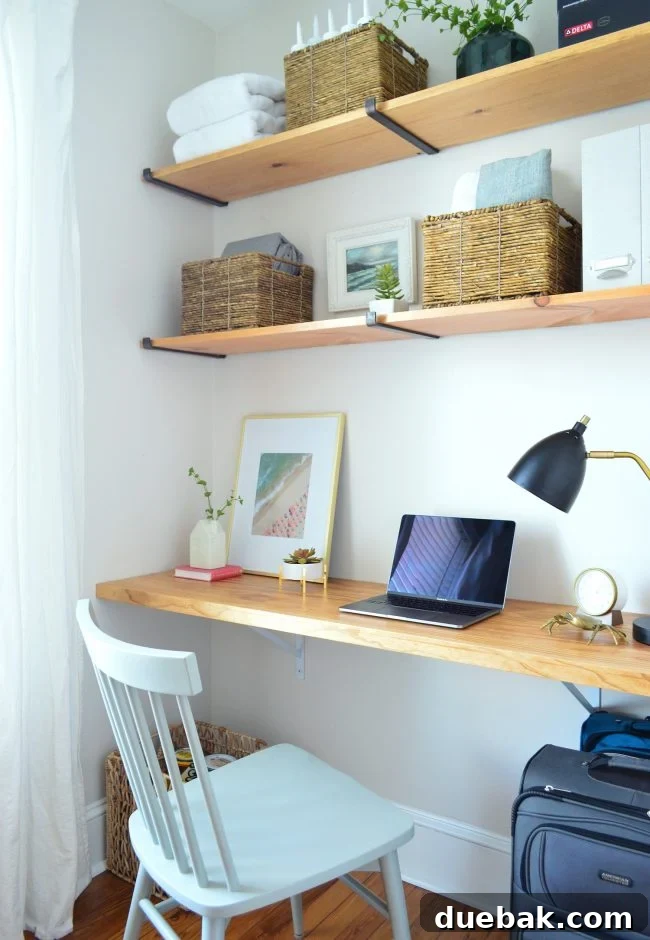
The experience of setting up the Pack & Play, even temporarily, provided a crucial realization: we still had an abundance of space on the inner wall. This revelation finally allowed us to reconcile our differing priorities for the room. My preference for substantial storage could be met, while also integrating a small desk. This meant we could finally bid farewell to the inconvenience of setting up our laptop in the middle of the dining table. And the most exciting part? This entire transformation was achieved for a mere $201. Allow us to walk you through the process:
DIY Home Office & Storage Nook: Materials & Budget Breakdown
Embarking on any home improvement project, especially one that aims to create a dedicated workspace, requires careful planning, particularly when it comes to materials and budget. Our goal was to create a functional and stylish built-in desk and shelving unit without breaking the bank. Here’s a detailed list of the materials we used and the associated costs, offering insights into how you can replicate this project affordably:
- Pine Shelving Planks (Desktop): We sourced two 1″ x 18″ x 72″ planks of pine shelving. These robust planks were ideal for crafting a deep and sturdy desktop. While they might be listed online for around $25 each, we found them for a steal at $19 per plank in-store, totaling $40.
- Common Boards (Shelves): For the upper shelves, we opted for two 1″ x 12″ x 72″ common boards. These provided ample depth for storing various items, from books to decorative baskets, costing us $30 in total.
- Select Pine Board (Desk Trim): A single 1″ x 2″ x 72″ select pine board was used to create a polished front edge for the desk, effectively concealing the seam where the two desktop planks met. This small detail made a huge difference in the finished look, and it only cost $4.
- Heavy-Duty White Shelf Brackets (Desk Support): For the desk itself, structural integrity was paramount. We utilized two 16″ heavy-duty white shelf brackets, accompanied by appropriate screws. These brackets were chosen for their strength and subtle profile, ensuring the desktop was well-supported. The cost for these essential components was $19.
- Decorative Iron Shelf Brackets (Shelf Support): To elevate the aesthetic appeal of the upper shelves, we chose six decorative 12″ iron shelf brackets. These brackets not only offered sturdy support but also added a touch of rustic charm that complemented the beach house décor. They were the single largest expense, totaling $108.
- Wall Anchors: Depending on your wall type and stud placement, wall anchors might be necessary to ensure maximum stability for your brackets.
- Wood Finishing Supplies: To achieve a cohesive and protected finish, we used wood stain, pre-stain wood conditioner, and a protective sealer. Fortunately, we already had these on hand from our previous bunk bed project. If purchased new, these would typically add around $24 to the total.
TOTAL SPENT: $201 (or $225 if all finishing supplies were bought new).
It’s worth noting that the decorative iron brackets constituted more than half of our total budget. If you’re looking to complete this project with a tighter budget, this is an excellent area to find significant savings. We consciously chose these specific brackets for their consistent style, as we’ve successfully used them in our laundry room and are thoroughly pleased with their aesthetic and durability. However, more budget-friendly alternatives are readily available. For instance, these similar brackets could save you approximately $30, while opting for these slightly smaller ones could reduce your cost by $45, without compromising much on the overall visual appeal or structural integrity.
Crafting Your DIY Built-In Desk: A Step-by-Step Guide
The foundation of our new functional workspace is the custom-built desk, which is surprisingly simple to construct. The desk itself is supported by basic heavy-duty white brackets, readily available at Home Depot. Our primary objective with these brackets was strength and ease of installation, not aesthetic appeal. We wanted them to visually recede, allowing the wood to be the star. The 16-inch depth of these brackets was perfectly suited for the 18-inch pine shelving boards we selected for the desktop. A quick note on wood dimensions: always remember that listed sizes are nominal. An 18-inch board, for example, often measures closer to 17.25 inches in actual width. This is a common industry standard, similar to how a “2×4” is actually 1.5 inches by 3.5 inches.
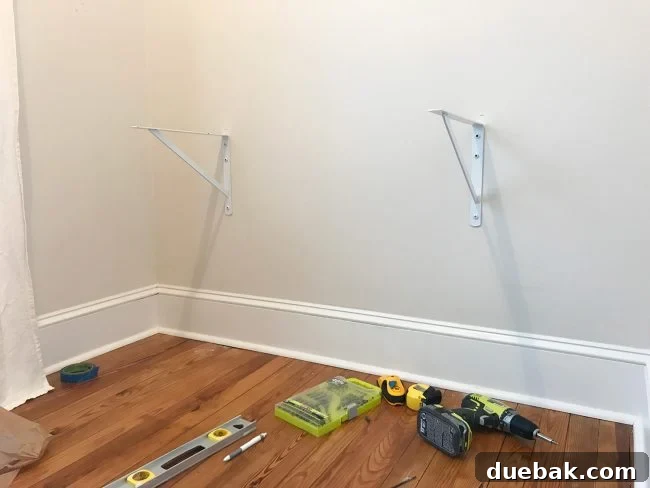
To ensure the strongest possible hold for the desk, I meticulously used my stud finder to locate the wall studs. Anchoring directly into studs provides unparalleled stability, which is crucial for a desk that will bear weight and be actively used. As a result, the brackets are not perfectly equidistant from the side walls, but they are only off by a few inches. In a room of this compact size, this slight asymmetry is entirely unnoticeable; you’ll never be far enough back or directly in front to perceive it. However, if precise bracket placement is a critical element for your specific project or if studs aren’t ideally located, high-quality wall anchors would be a perfectly suitable alternative.
I strategically installed the brackets so that the top edge of each bracket was precisely 29 inches from the finished floor. This measurement ensures that once the desktop boards are added, the final desk height will be just over 30 inches, which aligns perfectly with the ergonomic standards of most conventional desks. After carefully cutting both pine planks to the desired length for the desktop, I positioned them directly on top of the installed brackets.
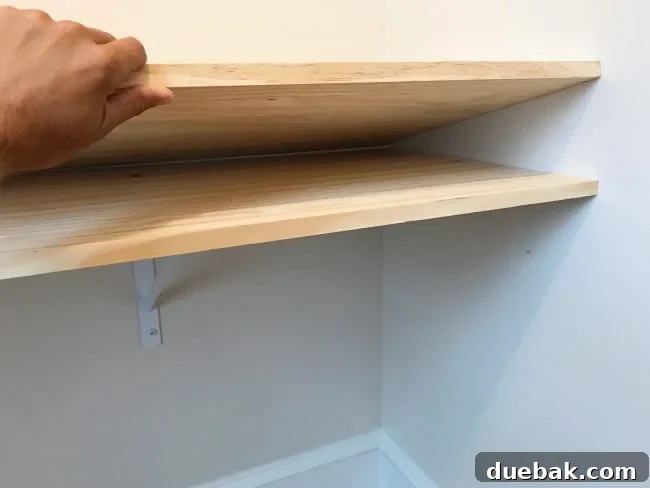
The decision to use two distinct pieces for the desktop served a dual purpose: it created the illusion of a much thicker, more substantial desk than a single 3/4-inch piece would offer. This layering technique adds considerable visual weight and a more robust feel. Once all components were stained to perfection (a process we’ll delve into shortly), I securely screwed the two desktop boards together from underneath. Following that, I attached the entire desktop assembly to the underlying heavy-duty brackets. To achieve a truly polished, built-in aesthetic and to seamlessly conceal the seam along the front edge, I nailed a 1×2 inch piece of pine, stained to precisely match the desktop, along the front. This trim piece not only provides a clean finish but also slightly increases the overall desk depth, a welcome bonus.
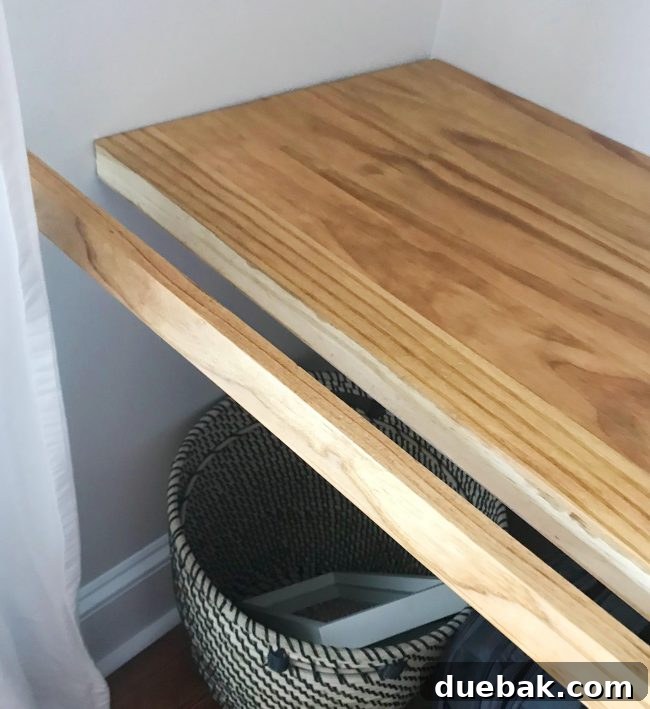
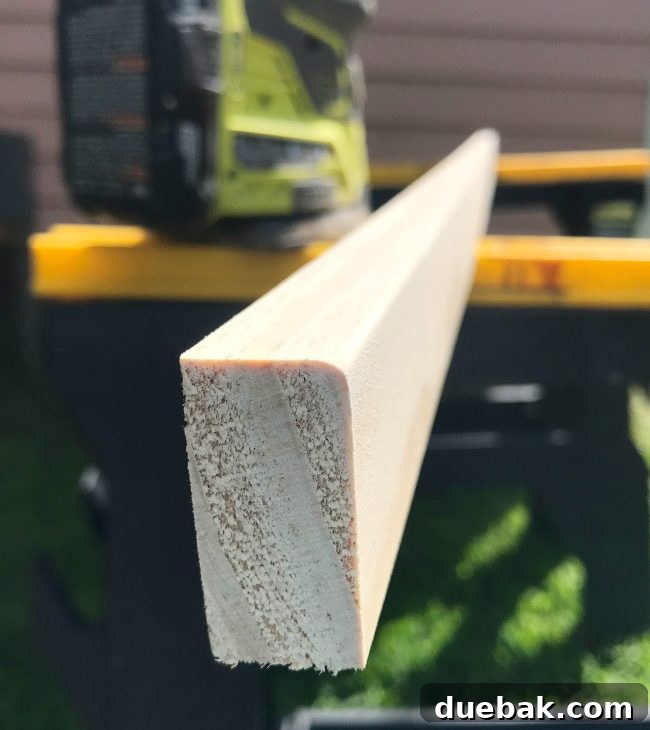
The beauty of this 1×2 front trim is how impeccably it blends with the rest of the desktop. The inherent grain and natural variations of the pine shelving already give the appearance of multiple smaller planks joined together, so the addition of this trim piece enhances that effect, contributing to a truly custom, cohesive, and finished look. A crucial tip for anyone replicating this: before you apply any stain, take the time to lightly sand the outside edges of this face piece. A subtly rounded edge will dramatically improve comfort for your wrists and forearms as you work, making long typing sessions, like the one I’m currently undertaking for this very post, far more pleasant and ergonomic.
Installing Functional and Stylish Shelving Above Your Desk
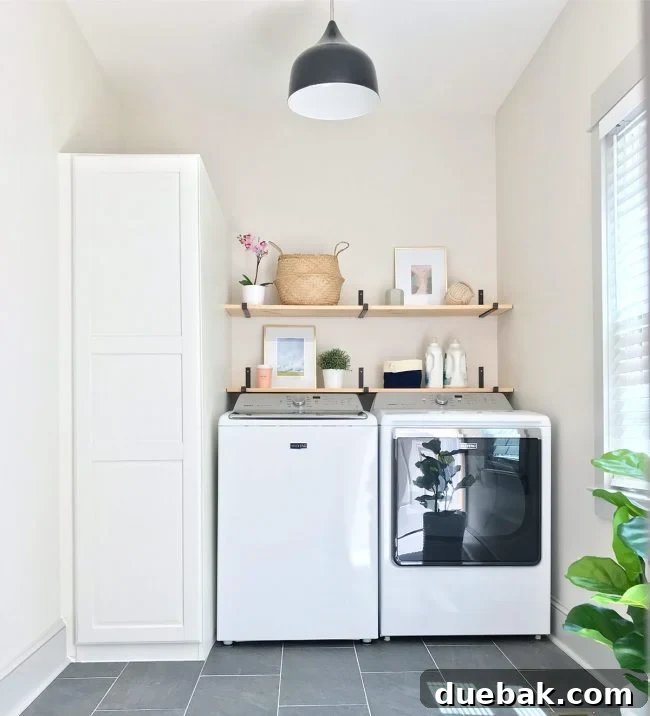
The decision to incorporate shelving above the desk area was driven by our persistent need for additional, organized storage. Even in a vacation home, there are always those “random junk” items that require a designated spot: extra bed linens and towels for guests, various repair supplies like spackle and caulk, a few spare faucets we’re temporarily storing for a duplex project, and the essential instruction manuals and warranties for all the beach house appliances. To address this, we specifically ordered more of the same distinctive iron shelf brackets that you might recall from our beach house laundry room makeover. For more details on that particular room update, you can find information here.
We began by hanging the first shelf approximately 26 inches above the desktop. This measurement was somewhat intuitive; it looked aesthetically pleasing and felt comfortably high enough to prevent any accidental head bumps when standing up from the desk. To ensure a robust installation, I once again meticulously located the wall studs. Fortunately, I found one directly in the exact middle of the room, which was incredibly convenient, and two more towards the outer edges. With the stud locations identified, I employed my trusty laser level to project a perfectly horizontal line, accurately marking the level points across all three stud locations.
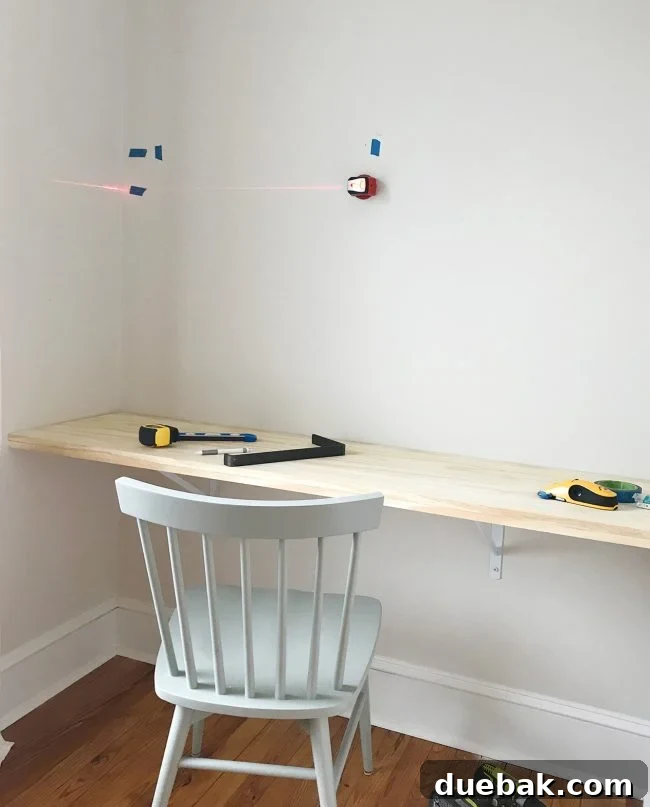
When installing any type of bracket, whether for shelves or even a simple robe hook in a bathroom, it’s paramount not to overlook the importance of leveling the bracket itself, not just the overall line. If you neglect to ensure that the individual screw points for the bracket are perfectly level, you risk ending up with hardware that appears subtly twisted or misaligned once fully installed. This small extra step guarantees a professional and aesthetically pleasing result.
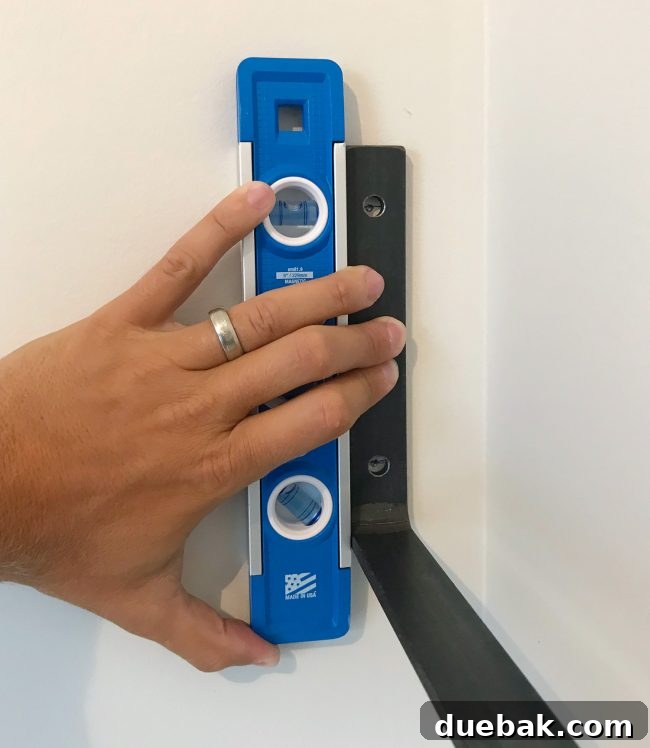
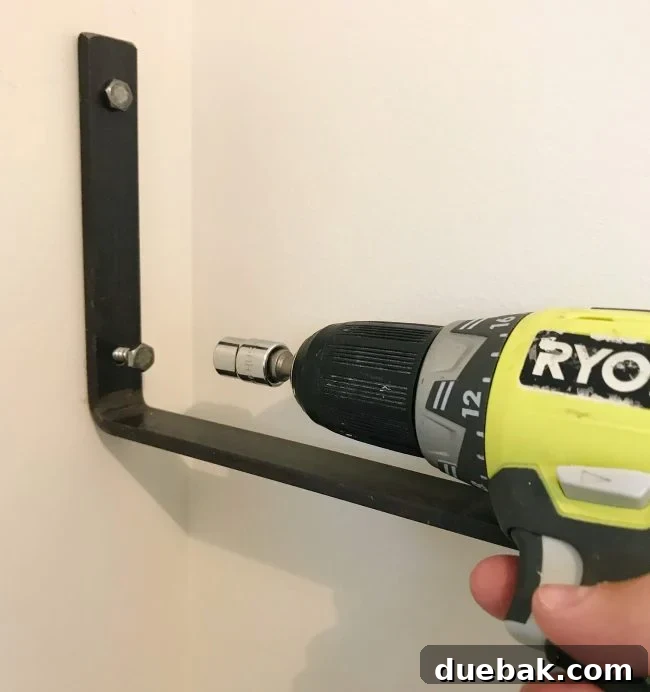
The Etsy seller from whom we purchased these beautiful brackets thoughtfully included the necessary screws, which was incredibly helpful and saved us a trip to the hardware store. You’ll need either a ratchet or a hex screw head to securely attach these robust screws. Before driving them in, always remember to create pilot holes first. Pilot holes are essential for preventing wood splitting, easing screw insertion, and, most importantly, ensuring that your screws go into the exact right spot, maintaining the integrity and precision of your installation.
Once the first shelf was securely in place, we proceeded to repeat the entire process for the second shelf. We positioned this upper shelf 18 inches above the first one. This particular spacing is quite standard and highly practical when you intend to display or store larger items such as decorative baskets, storage boxes, or various substantial decorative objects. However, if your primary intention is to store smaller items like paperback books or board games, a more compact spacing of 12-14 inches between shelves might be more efficient and visually appealing, maximizing the use of vertical space.
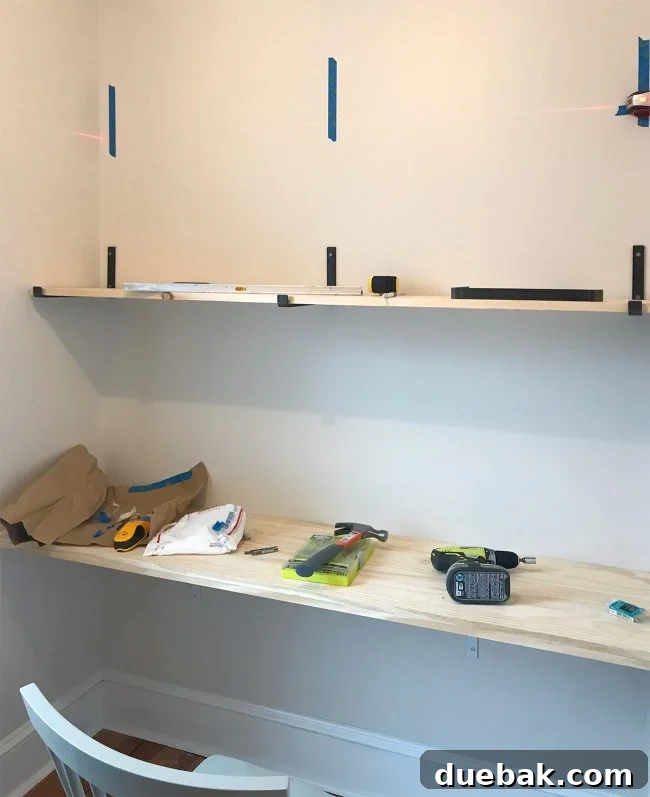
One of the aspects we particularly appreciate about these specific brackets is their ingenious design: the wooden shelves simply rest securely within them. There’s no requirement for permanent attachment or complicated fastening mechanisms. This makes the shelves incredibly easy to remove for cleaning, rearranging, or even refinishing if desired. After just a couple of focused hours of work, this is the stage we reached, and it’s the view some of you might have caught in our email newsletter, showcasing the bare bones of our new functional nook.
Achieving the Perfect Finish: Staining Your DIY Shelves and Desk
While we’ve likely covered the topic of wood staining countless times, there are a couple of crucial points worth reiterating, especially for a project like this. Firstly, we wholeheartedly endorse the use of a pre-stain wood conditioner before applying any stain. This step, which costs around $4 for enough product for a project of this size, is quick and effortless to apply. Its primary benefit is to prepare the wood to absorb the stain evenly, which is particularly important for softwoods like pine that can often appear blotchy. The conditioner helps to bring out the natural beauty of the wood grain, ensuring a smooth, consistent, and professional-looking finish. The tangible difference between conditioned wood (visible on the left) and raw, unconditioned wood is clearly evident in the photograph below, showcasing the importance of this preparatory step.
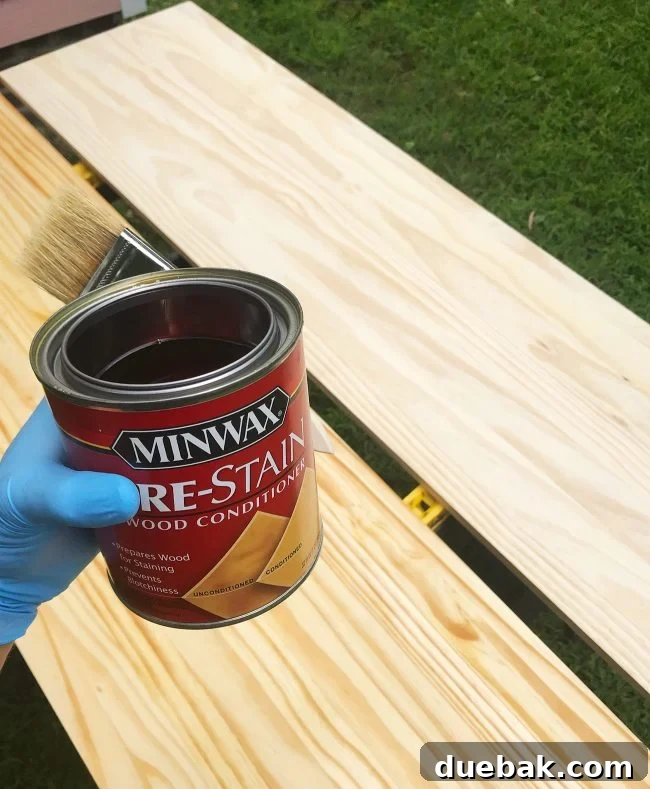
Applying the pre-stain conditioner is incredibly simple. You just need to liberally brush it onto the wood surface using a paintbrush or a clean rag. Allow it to soak in for approximately 5-10 minutes, giving the wood ample time to absorb the conditioning agents. After the recommended soaking period, simply wipe off any excess product with a paper towel or a clean rag. Once this quick conditioning step is complete, you are immediately ready to proceed with applying your chosen wood stain.
The second significant aspect of our finishing process for this project was to replicate the precise color treatment we applied to the wood railings of our beach house’s built-in bunk beds. During that extensive project, we dedicated a considerable amount of time to testing various stain samples. Our goal was to achieve the closest possible match to the beautiful, aged pine floors throughout the house. Since these new shelves and desk would also reside in a room featuring those same distinctive old pine floors, maintaining a cohesive aesthetic was paramount. We wanted the new wood elements to blend seamlessly and appear as though they had always been part of the home’s original character.
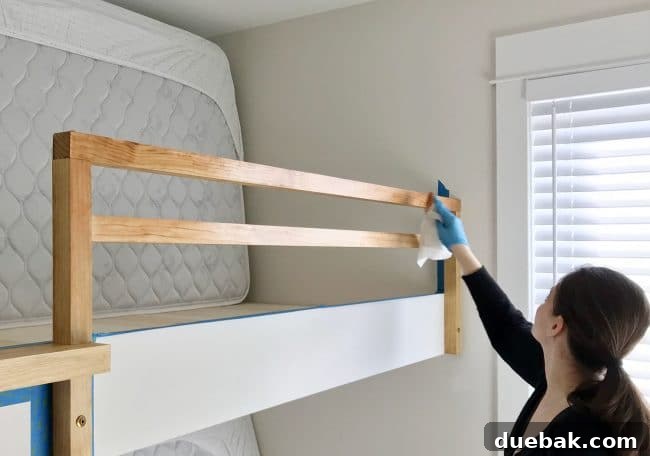
After much experimentation, we discovered the perfect “magic formula” for achieving that desired aged-pine look. It involves a two-step staining process. First, we apply a base coat of Minwax’s Puritan Pine stain. This provides a warm, natural pine hue. Following that, we apply a light, careful coat of Minwax’s Colonial Maple. This second layer is crucial as it imparts an extra subtle hint of red, which beautifully mimics the rich, reddish tones inherent in old heart pine floors. The combination creates a depth and character that a single stain color simply cannot achieve.
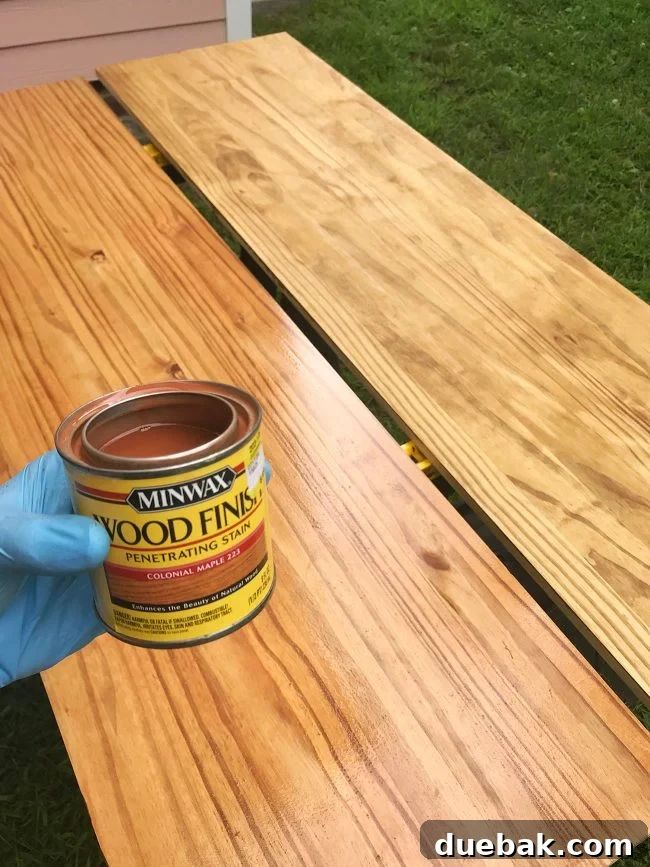
The image above captures the wood *before* I wiped off the excess Colonial Maple stain, but even at this stage, the distinct difference imparted by the second stain color is clearly visible. It’s truly transformative. Once all the stained pieces were completely dry and fully cured, we applied several protective coats of sealer to every surface. This crucial step provides long-lasting durability, protects the wood from wear and tear, and enhances the richness of the stain. Only after the sealer was thoroughly dry did we rehang the beautifully finished shelves and desk onto their respective brackets.
Optimizing Functionality: Storage & Finishing Touches for Your Small Home Office
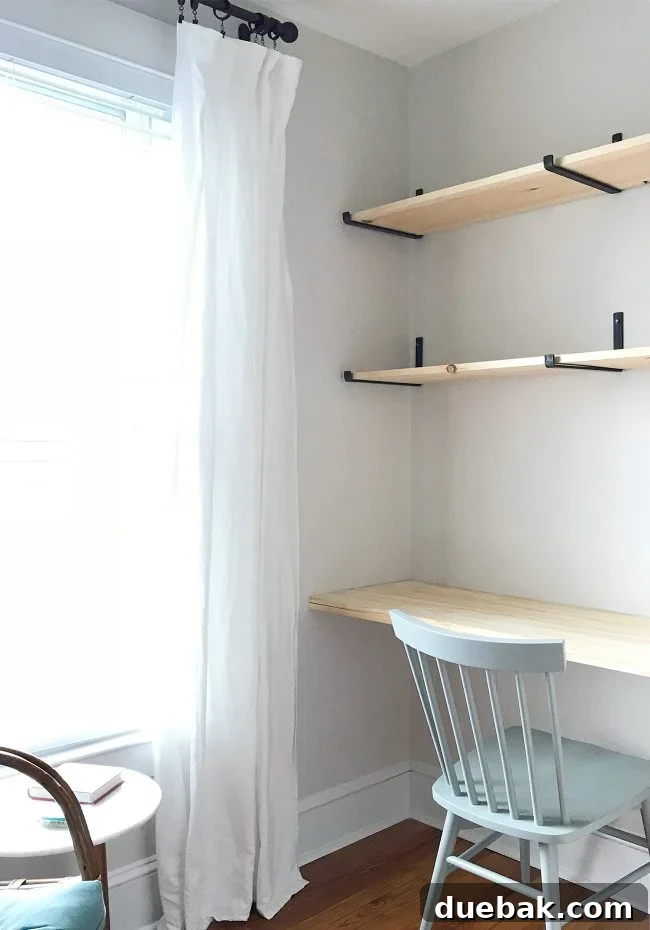
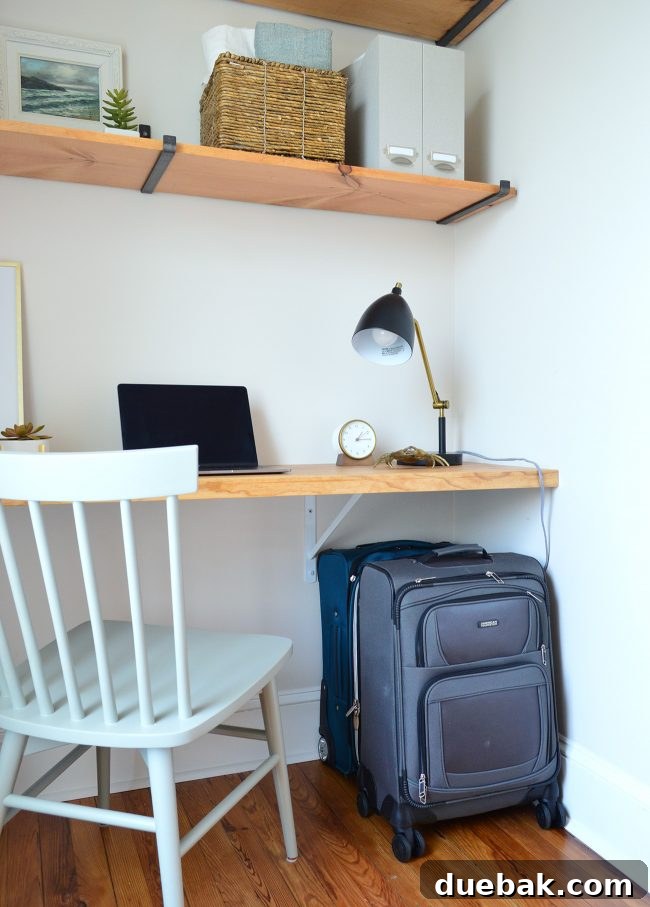
With the construction and finishing phases complete, a palpable excitement filled the air. Sherry was eager to begin loading up the newly installed shelves, while I was equally thrilled to witness the full extent of functionality we could extract from this once-neglected small space. As you can observe in the preceding photograph, the result is a delightful and highly effective blend of aesthetic appeal and practical utility. For instance, the thoughtful design creates a perfect, unobtrusive nook directly beneath the desk. This space is ideal for neatly stashing our suitcases once we’ve unpacked our clothes into the dressers for our stay. While not inherently “beautiful,” this solution offers unparalleled practicality, preventing luggage from cluttering the bedrooms and becoming tripping hazards.
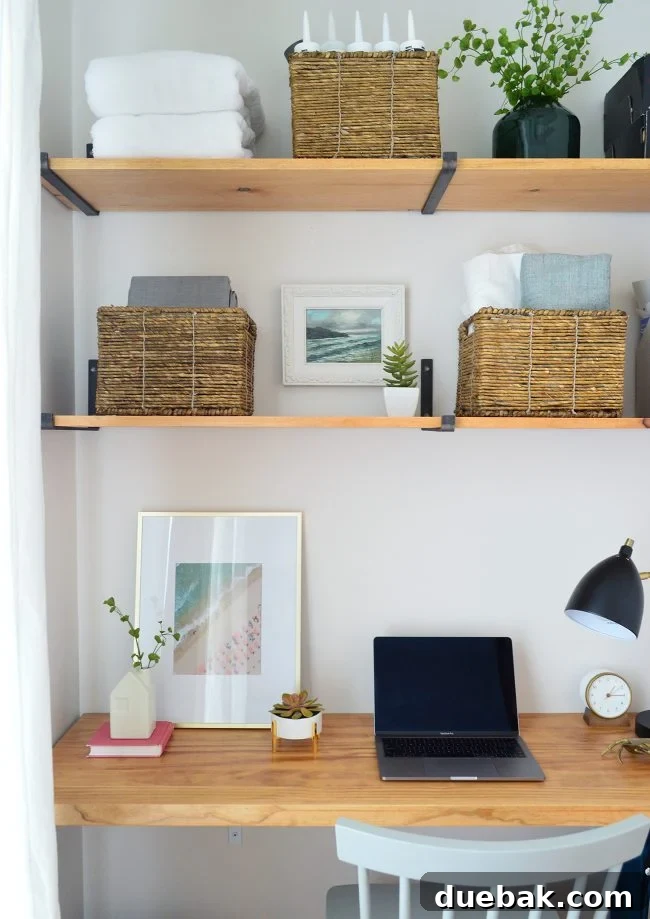
A significant portion of the decorative items you see adorning the shelves and desk were pieces we already possessed, embodying our commitment to repurposing and utilizing existing decor. This includes the elegant vase holding artificial greenery from Michael’s, the tasteful gold picture frame, the charming faux succulent, and the captivating painting Sherry discovered on Craigslist for a mere $7 some time ago, along with the trio of woven baskets sourced from Target last year. However, Sherry did acquire a few new items strategically chosen to enhance both organization and functionality. These essential additions include the sleek clock, the indispensable magazine files (which we promptly filled with all our appliance manuals and warranty sheets, keeping vital documents neatly categorized), and the practical desk lamp, essential for focused work.
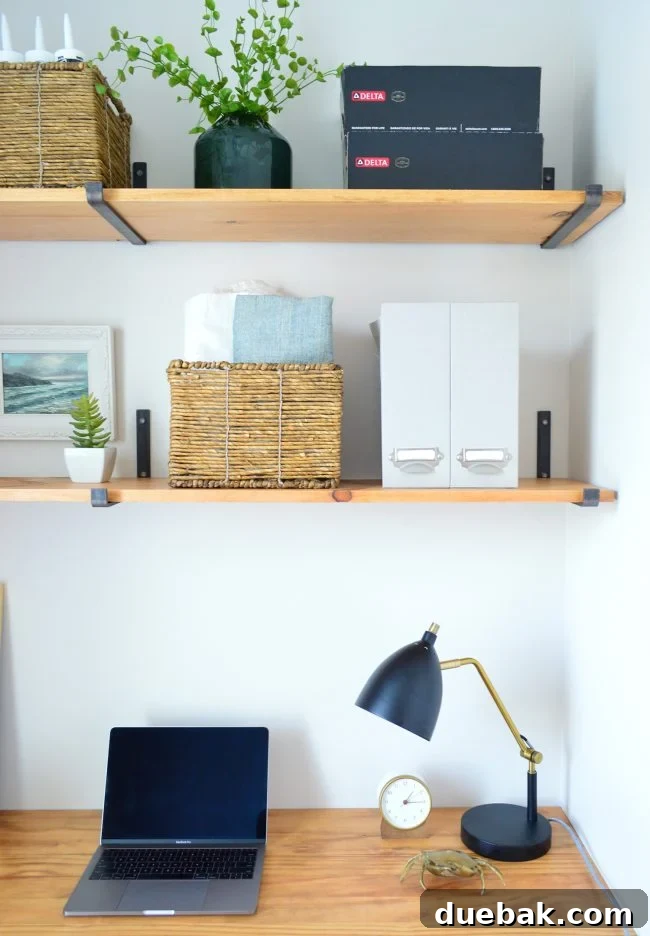
Among all the thoughtful touches, our absolute favorite item might just be the whimsical brass crab. This delightful piece was a heartwarming gift from a reader who spotted it at an unbelievably low price in a thrift store and immediately felt it belonged in our beach house. And now, it proudly does! I must, however, keep a vigilant eye on it, as I suspect our children might, at some point, attempt to “rescue” and claim it as their own. Its charm is undeniable, with movable claws and a top that ingeniously flips open to reveal the most minuscule amount of storage space – perhaps for an inkwell, a few paperclips, or a precious ring? Its character certainly adds a unique, personal touch to the new office area.
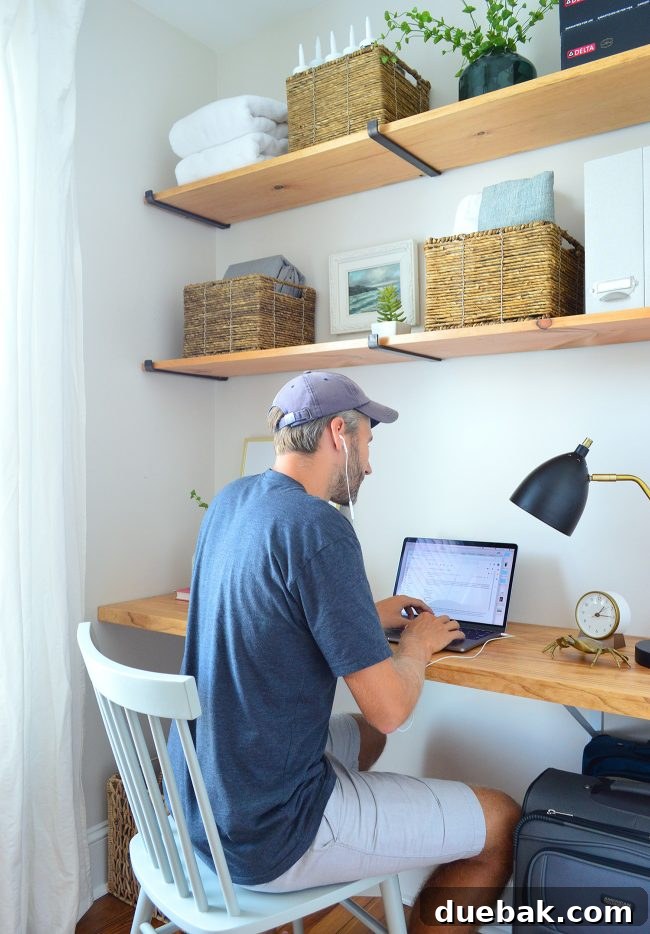
Oh, and speaking of seating, the stylish desk chair prominently featured in the photo above is a piece we already owned. It previously served its purpose at our beach house dining table before we updated that area with comfortable benches. So, that was another convenient item we had readily on hand (it’s specifically this model in “gray”). The cozy armchair positioned below the shelves is an older, cherished thrift store find that Sherry acquired years ago, which she enhanced with a vibrant new blue cushion for an extra layer of comfort and a pop of color, making it an inviting spot for relaxation.
In summation, we are absolutely elated to have conjured this incredibly functional and aesthetically pleasing nook seemingly out of thin air, all accomplished in just a few focused hours of dedicated work. Despite enduring months of varied opinions and enthusiastic debates regarding the optimal use of this particular room, we are both profoundly pleased that we ultimately settled on a solution that perfectly harmonizes our individual preferences. I, for one, gained much-needed, intelligent storage. Sherry, on the other hand, acquired a comfortable chair perfect for quiet reading *and* a discreet, convenient spot to tuck away the Pack & Play when not in use. And, as an added bonus, we both now have a dedicated, compact office area where we can comfortably sit down and diligently type up posts just like this one, sharing our DIY adventures with you.
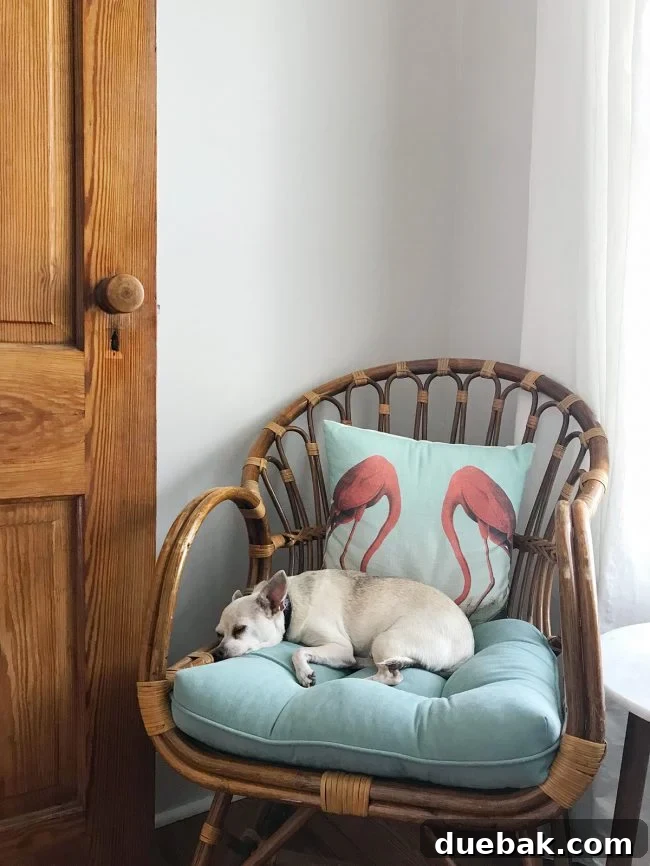
Though, truth be told, Burger, our beloved companion, might secretly be the most excited about this new addition. I’m quite certain he’ll share all about its newfound comforts and perfect napping spots once he awakens from his current peaceful slumber.
P.S. If you’re eager to gain exclusive early access to our latest project ideas, behind-the-scenes glimpses of our creative processes, and a plethora of other exciting DIY content that unfolds in our world—all BEFORE it officially hits the blog—we warmly invite you to sign up for our complimentary email newsletter. We extend our heartfelt thanks to everyone who has already subscribed; Sherry genuinely enjoys crafting these newsletters and hitting that “send” button, knowing they land directly in your inbox with fresh inspiration.
*This post contains affiliate links, meaning we may earn a small commission if you make a purchase through them, at no extra cost to you. We only recommend products we genuinely love and use.*