
Navigating Homeownership: Our Adventures in DIY, Garden Woes, and Unexpected Discoveries
Every journey of homeownership and DIY is punctuated by moments that are, shall we say, less than ideal. In our world, we believe in sharing the full spectrum of experiences – the triumphs, the small victories, and yes, the occasional epic fails. These “oops” moments are not just bumps in the road; they’re valuable lessons, often leading to better solutions and a deeper understanding of our homes. Today, we’re pulling back the curtain on three recent instances that reminded us that even with the best intentions, things don’t always go as planned. Join us as we recount these tales of creative missteps, natural challenges, and a rather startling safety revelation, all part of the unpredictable yet rewarding process of making a house truly a home.
DIY Décor Disasters: The Electrical Tape Frame Fiasco
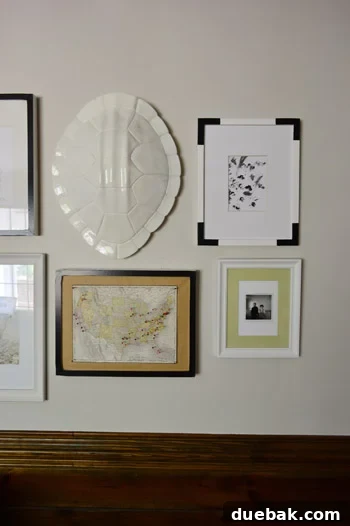
Our first “not ideal” moment stems from a desire for a quick and temporary aesthetic update. Inspiration struck while flipping through Domino magazine, where a beautifully curated gallery wall featuring a mix of black and white frames caught my eye. We have a growing collection of frames around our living room TV, and I envisioned integrating some stark black elements to add depth and contrast. Initially, I considered darker art pieces or perhaps some black mats, but the image sparked a more ambitious, albeit fleeting, idea: directly transforming some existing white frames.

The thought was simple yet seemingly brilliant at the time: why commit to paint when a temporary fix could achieve the desired look? My chosen tool for this ingenious hack was black electrical tape. The idea was to create the illusion of black frames without the mess or permanence of paint, providing an easy way to reverse the decision if the outcome wasn’t satisfactory. It felt like a clever shortcut, a testament to DIY ingenuity – or so I believed.
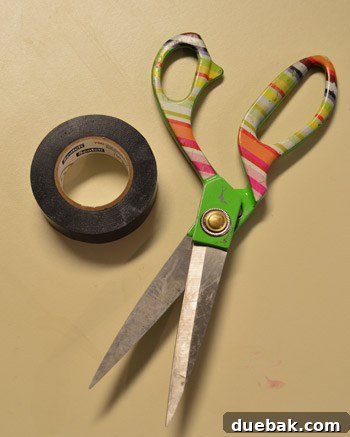
About thirty minutes into this project, I was quite pleased with my progress. I carefully applied the black electrical tape to the front surfaces of a few frames, even cutting precise 3-inch strips to mimic intricate corner details on one frame, echoing the magazine’s sophisticated aesthetic. The instant contrast of black against the original white sides of the frames was striking, and for a while, I genuinely admired my handiwork. The black accents perfectly complemented our dark television, tying the whole arrangement together with a renewed sense of cohesion and style. I felt a surge of pride in finding such an effortless and inexpensive way to update our living space.

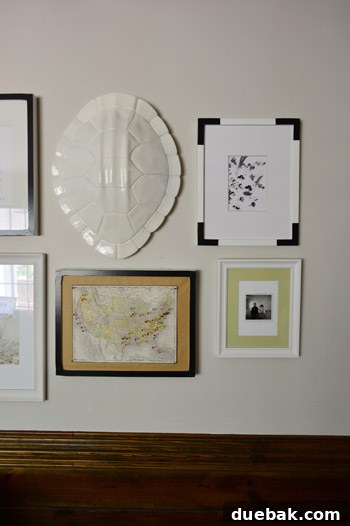
However, the euphoria was short-lived. Just a few days later, the cracks (or rather, the puckers and peels) began to show. The electrical tape, it turns out, is not designed for decorative, long-term applications. It started to pucker, shrink, and peel away from the frames, especially at the corners, eventually falling to the floor in unsightly jumbled messes. Within a week, some frames were completely stripped of their tape. But the true catastrophe wasn’t just the peeling; it was the residue. While some glossier frames surprisingly emerged unscathed, our chalkier white matte frames bore the brunt of the damage, left with stubborn black smudges from the adhesive. My initial attempt to remedy this with Goo Gone proved futile, leaving me contemplating a more aggressive approach with a Magic Eraser. If that fails, I anticipate a full repainting project to restore these “bad boys” from their smudged, grimy appearance. The lesson here is clear: for decorative projects, choose materials wisely. Washi tape, black paint, or even proper adhesive contact paper might have been successful, but electrical tape? Definitely “no bueno” for home decor.

Gardening & Wildlife Woes: Protecting Our Precious Maple Tree
Our second “oops” moment takes us outdoors to our beloved maple tree. This isn’t just any tree; it’s an offshoot from a magnificent maple at John’s childhood home, a cherished gift from his parents that has journeyed with us through three different houses. It’s a living testament to family history and our enduring love for nature. When we last wrote about it, our “Mapleville” resident was thriving, a picture of verdant health, looking something like this:

However, it seems our local deer population eventually decided our beautiful maple would make a delightful brunch. We never caught them in the act, but over the course of a few weeks, we noticed the tree looking progressively less full and distinctly “nibbled,” particularly on its lower branches. The sight was heartbreaking; we were determined not to lose this cherished “tree baby.” Our immediate response was a trip to Home Depot for some black netting, a method we’d observed our neighbors successfully using to deter deer. We’d gathered insights from several neighbors about what *didn’t* work for them – everything from human hair and Irish Spring soap to commercial deer sprays and even, unpleasantly, animal urine. Given the local success stories with black netting, it became our top, neighborhood-approved solution.
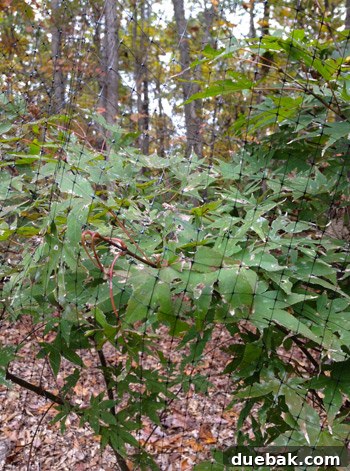
I’m delighted to report that this particular “oops” has a genuinely happy ending. The black netting proved incredibly effective; the deer have lost interest in our maple tree. What’s even better is how discreet the solution is – you’d have to be literally an inch away to even notice the netting. As you can see in the image below, it’s virtually invisible, allowing the tree to regain its natural beauty without any unsightly distractions. This success offers a great deal of relief and hope. Our neighborhood boasts numerous healthy, mature maple trees that deer leave entirely alone, as they only tend to nibble on branches they can easily reach. We’re optimistic that in just a few years, our tree will grow tall enough to proudly declare, “Haha, you can’t reach me!” to those hungry deer, at which point we can finally free it from its temporary netted enclosure. This experience underscores the importance of finding effective, humane ways to coexist with local wildlife while protecting our cherished landscape elements.

Home Safety & Hidden Hazards: The Alarming Discovery of Lead Paint
For our third and most significant “bad” moment, we delve into a serious home safety concern, particularly impactful for me as a pregnant person: lead. Call it mommy intuition, but something kept prompting me to “check the dining room doors for lead, especially those metal frames around each pane.” My suspicion was fueled by discovering a black powdery dust in the cabinets when we first moved in and wiped them down. This immediately raised a red flag, suggesting that if dust was originating from the metal frames, it warranted a test. While we don’t spend a lot of time in the dining room (perhaps once a month), and our daughter Clara doesn’t play there, nor do we store items in those cabinets yet, the thought of any potential hazard lurking in our home was unsettling. It’s simply not acceptable to dismiss a known danger just because an area isn’t frequently used. This realization prompted me to finally retrieve a lead test kit.

These lead test kits, readily available and inexpensive from places like Home Depot, are incredibly user-friendly. You simply snap, shake, and then gently rub the tip on the surface you wish to test. Being inherently cautious about potentially dangerous substances, I made sure not to directly touch the metal grates around the glass during the testing process, preventing any accidental contact with lead dust. Instead, I let the test stick do all the work, rubbing it gently for a quick but thorough assessment. Within a mere ten seconds, the results were unequivocally clear:
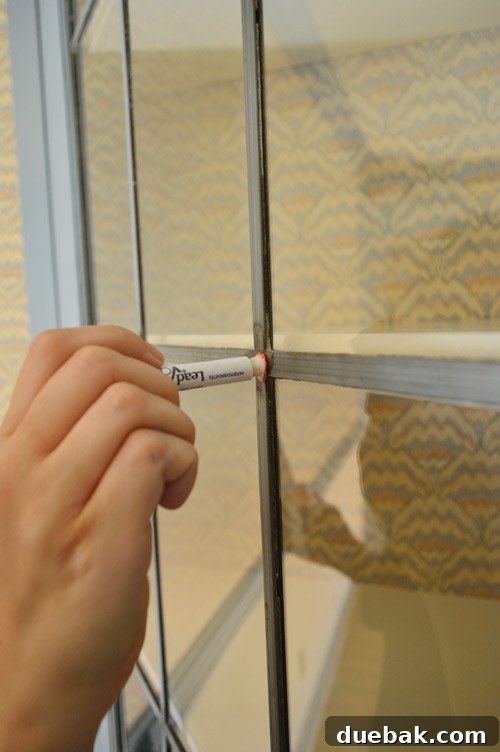
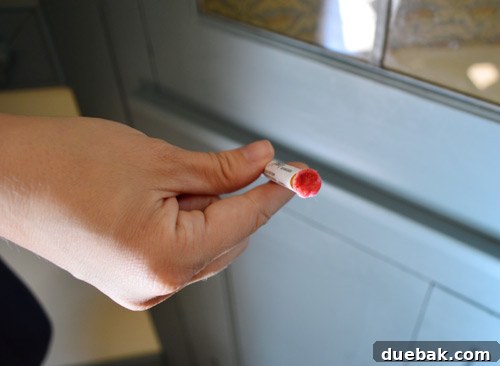
…they came up positive. A stark, neon red indicated the presence of lead, confirming my deepest fears. A white or slightly yellow stick means negative, but pink or red signals serious lead contamination. This discovery brought a strange mix of emotions: a compelling urge to wash my hands despite not having touched the surface directly, coupled with a powerful “I KNEW IT!” intuition. The immediate response was decisive. John promptly removed the doors and securely placed them in a corner of the garage, strategically blocked by other items to ensure neither Clara nor our dog, Burger, could possibly access them. Our priority shifted immediately to mitigating any risk.
Update: As for the future of these lead-contaminated doors, we are actively hoping to connect with an antiques vendor specializing in lead abatement. Our aim is to find someone who might be interested in safely acquiring them, perhaps to seal or rebuild them, rather than sending them directly to a hazardous waste facility. We believe in rescuing and repurposing where possible, especially if it can be done safely.
Another update: Typically, for lead paint in our previous homes, the recommendation was to paint over it to encapsulate the hazard. However, in this specific instance, our concern was the black powdery dust found in the cabinets, which we suspected was lead dust actively shedding from the frames. The thought of this dust falling onto our cabinets and floor, potentially to be inhaled or ingested – the two primary pathways for lead poisoning – was unacceptable. Furthermore, the possibility of lead dust contaminating serving dishes and platters, should we ever store them in those cabinets, presented a serious health risk. Therefore, simply painting over the doors was not a viable or safe solution.
To ensure complete safety, John meticulously wiped down all the shelves, the floor, and the walls around where the doors had been with TSP (trisodium phosphate), following recommended lead safety protocols. For more comprehensive information on lead safety, testing, and abatement procedures, the EPA website provides invaluable resources, which you can access here.
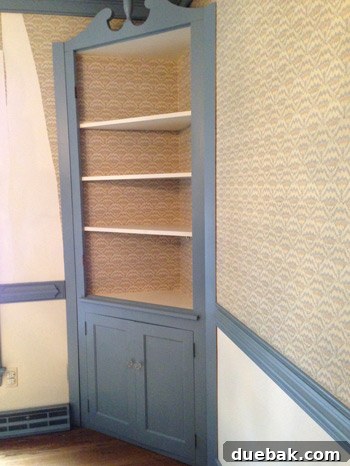
Thankfully, we’ve seen many beautiful examples of corner built-ins without doors, such as those featured on A Beautiful Mess. This gives us great hope for someday transforming these cabinets into charming, open shelving. In the interim, there’s immense peace of mind knowing that no hidden lead lurks in the corners of our dining room anymore. These unexpected challenges are an integral part of homeownership, but each “oops” moment brings with it a lesson learned and a path to a safer, more beautiful home. Do you have any recent “oops” moments at your house? Are you reaching for black netting or magic erasers to solve them? And do these memorable mishaps tend to happen in threes for you, too?