
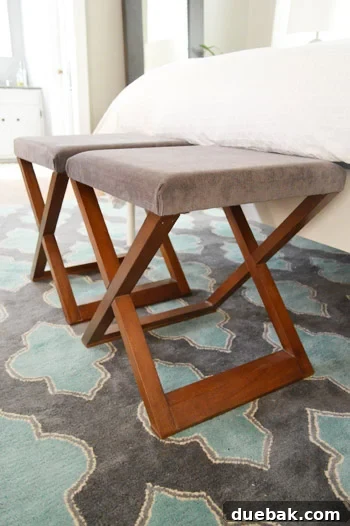
Transform Your Space: Upcycling Side Tables into Chic Padded Ottomans (The Ultimate Pet-Friendly DIY!)
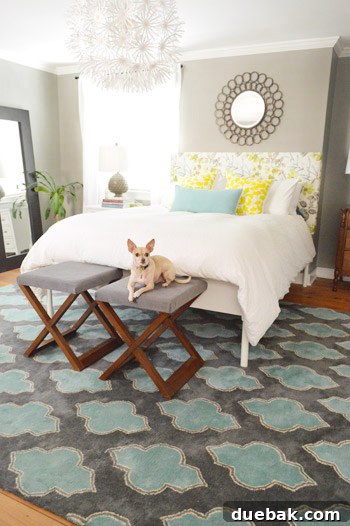
Are you looking for a creative, budget-friendly way to enhance your bedroom decor while also providing a helping hand (or paw!) to your furry friends? We’ve been bursting to share this transformation for over a year, and now that our vision has finally become a reality, we’re thrilled to spill the beans! What started as a mental blueprint for converting two neglected five-year-old Target side tables has culminated in the creation of much-needed, stylish padded ottomans at the foot of our bed. These aren’t just any ottomans; they’re our custom-made “doggy steps” for our beloved canine companion, Burger, who needed a little boost to reach our extra-tall bed.
Why DIY Your Ottomans? Unlocking Creativity and Savings
DIY projects offer a fantastic opportunity to inject personality into your home while saving a significant amount of money. Instead of splurging on new furniture, repurposing existing pieces like old side tables can breathe new life into forgotten items. This particular project highlights several key advantages:
- Cost-Effectiveness: By utilizing existing furniture and sourcing materials strategically, we kept costs remarkably low.
- Customization: You have complete control over the fabric, foam density, and overall aesthetic to perfectly match your home’s decor.
- Practicality: Beyond aesthetics, these ottomans serve a functional purpose, making life easier for pets (and potentially small children) accessing higher beds or sofas.
- Sustainability: Upcycling reduces waste and gives items a second life, contributing to a more sustainable lifestyle.
Join us as we walk you through the entire process, transforming simple side tables into functional and fashionable padded ottomans.
The Vision Takes Shape: Before & Initial Placement
Our journey began with a simple test: placing the two vintage Target side tables, which hadn’t seen much use since our days in our first house, in front of our bed. This initial placement was crucial to ensure they fit the space both functionally and aesthetically.
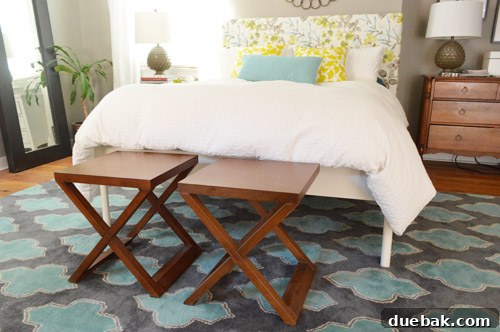
Our Initial Assessment: A Perfect Match!
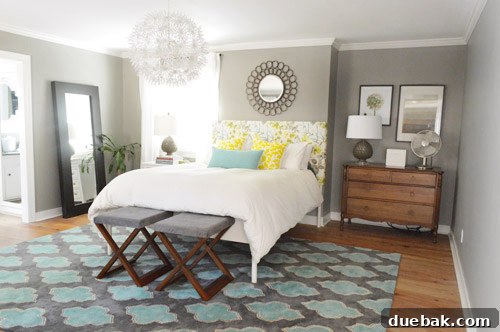
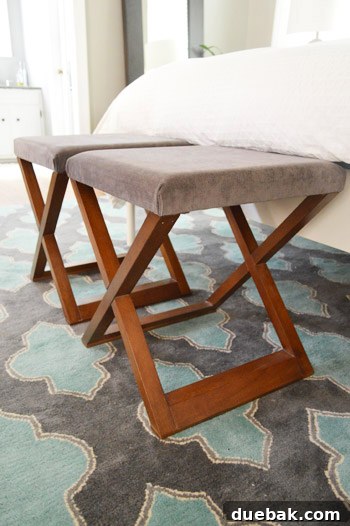
We were immediately sold! The existing color of the tables blended seamlessly with the hand-me-down dresser we inherited from John’s parents, creating a cohesive look. Plus, we’ve always been fans of furniture with an “X-based” design, so these tables were already off to a great start. While they didn’t quite integrate with the rug as perfectly as we’d hoped, we envisioned that a thick, charcoal-colored fabric coupled with plush foam cushions on top would tie everything together beautifully. (A quick scroll back to the first image clearly illustrates how effectively that gray cushion brought the whole look together!). With the initial placement confirmed, we were ready to dive into the transformation.
Materials You’ll Need for Your DIY Ottoman Project
Gathering your materials beforehand ensures a smooth and uninterrupted crafting experience. Here’s what you’ll need to create your own padded ottomans:
- Two existing side tables (e.g., Target X-based tables)
- 1-inch thick foam (enough to cover both table tops – check for coupons!)
- Spray adhesive (craft-grade or upholstery adhesive)
- Upholstery fabric (we used 1 yard of dark charcoal corduroy, about 4 inches wider than each tabletop on all sides)
- Wood filler or brown magic marker (for touching up sanded areas)
- 2-inch nails (at least 8 total for two ottomans) or small screws (depending on table weight/preference)
Essential Tools for the Job
Having the right tools makes all the difference in a DIY project, ensuring efficiency and safety. Here are the tools we utilized:
- Dremel Multi-Max with a flat cutting attachment (or a similar oscillating multi-tool, or even a handsaw if careful)
- Sharpie or marker
- Regular scissors
- Staple gun with staples (manual or electric)
- Sandpaper or sanding block
- Drill with small pilot bit
- Hammer (if using nails) or screwdriver (if using screws)
Step-by-Step: Crafting Your Custom Ottomans
Now, let’s get to the heart of the project – the actual transformation. Each step is designed to be straightforward, even for novice DIY enthusiasts.
Step 1: Detaching the Tabletop
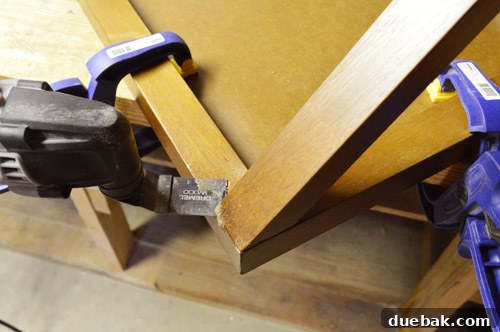
This might sound a bit unconventional, but our first crucial step was to separate the tabletops from their X-based legs. Since the tops were securely attached with nails and glue (rather than simple screws), they weren’t designed for easy removal. We opted for a Dremel Multi-Max fitted with a flat cutting attachment to carefully slice through the connection points. This method allowed us to cleanly free the tabletops, preparing them for their upholstered future. If your table tops are screwed in, simply unscrew them. Remember to always wear appropriate safety gear, such as eye protection, when using power tools. And yes, we might have been singing “Keep ‘Em Separated” by The Offspring during this phase – a little humor always helps!
Step 2: Preparing the Foam Cushions
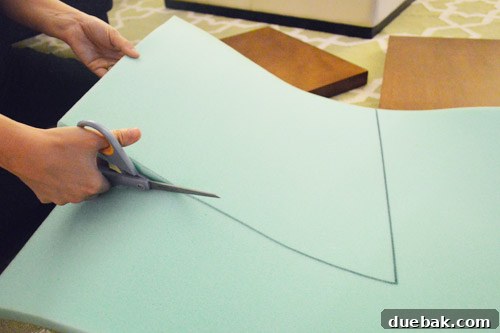
With the tabletops detached, it was time to create the plush cushions. We purchased 1-inch thick foam from JoAnn Fabrics, cleverly using a 50% off coupon to get enough foam for both tables for just $9 – a fantastic deal! To ensure a perfect fit, we placed each tabletop onto the foam, traced its exact outline with a Sharpie, and then carefully cut along the lines using a regular pair of scissors. This step is critical for a neat and professional finish, so take your time with your measurements and cuts.
Step 3: Securing the Foam
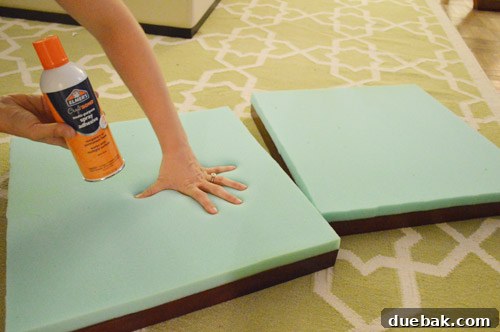
To adhere the foam to the tabletops, we used a spray adhesive from our craft drawer. It’s important to perform this step outdoors or in a very well-ventilated area, as spray adhesive residue can be incredibly sticky and difficult to clean if it settles indoors. After spraying the back of each foam square, we brought them inside and carefully pressed them onto the respective tabletops, ensuring they were centered and firmly attached. This creates the comfortable, padded surface for your ottomans.
Step 4: Cutting the Fabric
Our fabric of choice was a dark charcoal corduroy, snagged for a great price at U-Fab. We only needed one yard to cover both ottomans, which was incredibly cost-effective! When cutting your fabric, it’s crucial to leave enough excess for wrapping. We cut squares that were approximately 4 inches wider than the tabletop on all sides. This generous allowance ensures you have ample fabric to wrap around the foam and the wooden sides, providing enough material to securely staple it in place on the underside of the tabletop.
Step 5: Initial Upholstery & Tension Check
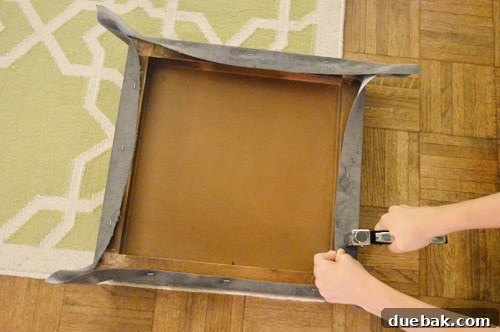
Upholstering requires a balance of tension and precision. We started by pulling the fabric taut and stapling it just a few times (about three staples) on each edge of the back of the table. This preliminary stapling allows for adjustments. After these initial staples, we flipped the tabletop over to check for adequate tightness and to ensure the fabric was perfectly centered, especially important with our corduroy fabric which has subtle lines. This step prevents wrinkles and ensures a professional-looking top surface before committing to all the staples.
Step 6: Fully Securing the Fabric
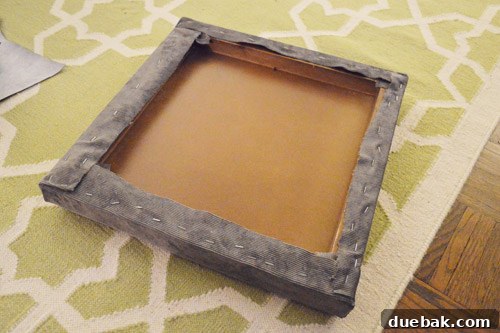
Once you’re satisfied with the tension and centering, it’s time to go “staple-crazy!” Continue adding staples along all the edges of the fabric on the underside of the tabletop, ensuring a firm and durable hold. Aim for staples every 1-2 inches for consistent tension. This fully secures the fabric in place, transforming your tabletop into a beautifully upholstered cushion. Remember to maintain an even pull on the fabric as you go, avoiding any slack or bunching.
Step 7: Mastering the Corners
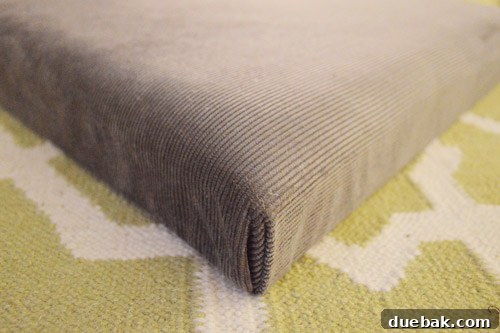
Corners can often be the trickiest part of upholstery, but with a simple technique, you can achieve a clean, tailored finish. We approached the corners much like wrapping a present: folding the fabric into neat triangles. One small triangle overlaps another, creating a crisp, clean edge that lies flat against the underside of the table. Practice on scrap fabric if you’re new to upholstery, and don’t be afraid to adjust until you get it just right. The goal is to minimize bulk and create smooth, angled folds.
Step 8: Refinishing the Legs
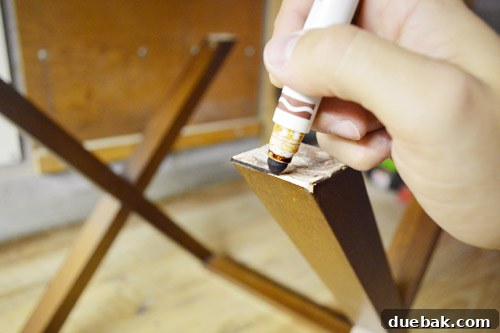
After detaching the tabletops, the edges of the X-based legs were understandably a bit sharp and unfinished. We took the legs down to the basement and carefully sanded these cut edges to smooth them out and prevent any snags or injuries. To make the sanded areas blend seamlessly with the existing finish, we used a regular brown magic marker to color in the unstained parts. This simple trick helps to conceal any imperfections and makes the legs look cohesive once more, ready to support their newly upholstered tops.
Step 9: Reattaching the Upholstered Tops
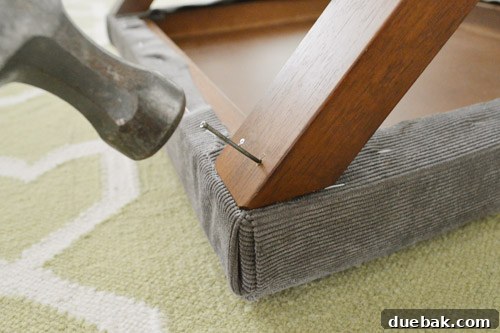
The final structural step involved reattaching the newly upholstered tops to the refinished legs. To ensure maximum stability, we pre-drilled very small pilot holes at an angle. This angle ensured that the nails would pass directly through the legs and securely into the wooden tabletop from underneath, creating a strong and lasting connection. We used two 2-inch nails on each leg, totaling eight nails per ottoman, to guarantee everything was robust and secure. If you have heavier tables or prefer extra reinforcement, small wood screws could also be used here, though we found nails to be a more subtle option for our lighter X-based tables.
The Grand Reveal: Functional & Fabulous Ottomans!
And just like that, boom, done! Our custom padded ottomans were complete. The total cost for this entire project came in at less than $12 per ottoman, making it an incredibly affordable home improvement. The time spent was roughly two hours, though it might have been slightly longer due to frequent pauses for “research” (read: watching reality TV and trying to decipher why everyone was fighting during the entire episode of NY Housewives!).
Cost Breakdown & Time Investment
Let’s recap the amazing value of this DIY project:
- Foam: Approximately $9 (with coupon for two ottomans)
- Fabric: Approximately $15 (for one yard, covering two ottomans)
- Adhesive, Nails, Marker: Existing supplies or minimal cost (a few dollars)
- Total Estimated Cost: Under $30 for two ottomans, or less than $12 per ottoman!
- Time Investment: Around 2 hours, depending on your experience and focus (less if you skip the reality TV breaks!).
Considering the cost of store-bought upholstered ottomans, this DIY offers incredible savings without compromising on style or functionality.
Beyond the Bedroom: Versatility & Durability
These new ottomans perfectly fulfill our primary objective of helping Burger get into bed. But beyond their pet-friendly function, their flexible design and neutral colors/materials mean they’re incredibly versatile. Should we ever find a super long bench to place at the foot of our bed, these ottomans could easily be relocated to another room or spot in the house. We love furniture pieces that offer such adaptability!
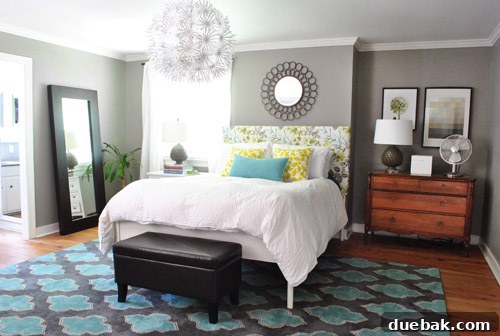
Just for fun, here’s a glimpse of what we had at the foot of the bed before – an old, leftover storage bench from our first house. While functional, it felt much heavier and clunkier, proving that sometimes less (or a lighter, more refined look) is truly more.
Durability & Pet-Friendliness: Tested and Approved!
Regarding their construction process, our original side tables were very light, so our combination of foam, fabric, and nails proved perfectly adequate. Burger has hopped on and off them countless times, and even “the bean” (our little one) has put them through some rigorous quality control tests. For heavier side tables, using small screws instead of nails for reattachment might offer extra peace of mind, as screws generally provide a stronger hold. We opted for nails because, given the configuration of our X-based legs, screw heads would have been much more obvious and potentially unsightly. We prioritized a subtle finish, and the nails worked wonderfully for our specific tables.
Real-World Use & Strength Considerations
And yes, for anyone wondering about human use, I’ve personally sat on each ottoman, and they certainly didn’t explode into kindling! They are decently strong for their intended purpose. While we have a dedicated chair in the corner of our room for “perching,” these ottomans are more than capable of supporting Burger’s weight and, if we’re being completely honest, the occasional pile of dirty clothes. As long as they comfortably assist our canine companion and withstand daily use, we’re absolutely delighted with the outcome.
Your Next DIY Project Awaits!
We hope this detailed guide inspires you to tackle your own furniture upcycling projects! There’s immense satisfaction in transforming something old into something new and functional. Have you been tweaking any furniture pieces with fabric, paint, foam, or hardware lately? Perhaps you’ve embarked on your own side-table-to-ottoman conversion? We’d love to hear about your creative endeavors in the comments below!
A Trip Down Memory Lane: The Victoria Hagan Collection
Does anyone else fondly remember that awesome Victoria Hagan collection from Target back in 2007? That’s where we originally snagged these stylish X-based side tables, if memory serves, for around $50 a pop. Her collection was truly the best, offering high-end design at accessible prices. We often wish she’d make an encore presentation. Who’s with us? Let’s bang on the table and slow-chant: “We want Hagan!” Anyone?