
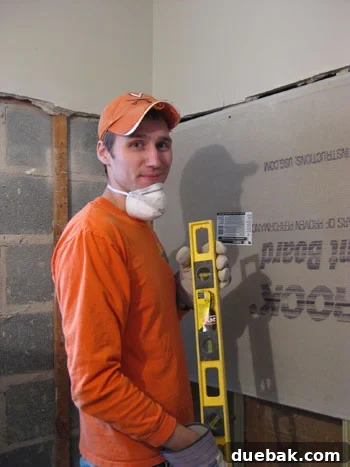
As our demo made painfully clear, putting an old bathroom back together is a lot of work and full of surprises. We handled them all, but the project definitely kept us on our toes.
My dad had recently completed two DIY bathroom remodels in his own home and generously volunteered his time, experience, and tools to help us (hooray for free labor, plus the obligatory feeding). I took two days off work so the three of us could tackle a four-day mega-weekend. The plan: install new drywall on the walls, install backerboard where tile would go, repair floor rot, and tile the shower/tub surround and floor. My dad is fast—he can hang drywall and tile quickly—so Sherry dreamed of having the room usable by Day Four. I just hoped to survive the weekend. Spoiler: only one of those goals was fully met.
***********************************************************
Day Zero / Shopping Day (Thursday night): Dad arrived after I got home and we headed out to shop with measurements and a list. Major items included enough cement board (hardibacker) for the shower surround and floor, greenboard (moisture-resistant drywall) for the non-tiled walls, 3/4″ plywood for a sturdy subfloor, and new 2x4s to repair any rotted joists. We also bought cedar shims, boxes of drywall screws, and a masonry blade for cutting the hardibacker and plywood.
Hitch #1: the greenboard and plywood were too large for my dad’s minivan. Home Depot rents a truck for $19, but it was nearly closing time so the oversized sheets had to stay at the store overnight while we brought the other supplies home.
***********************************************************
Day One (Friday): We rented the truck early to pick up the oversized materials and grabbed breakfast on the way. Along with the greenboard and plywood we picked up furring strips to build out the studs so new wall surfaces would align with the old thick mortar and plaster walls. The bathroom’s existing walls were unusually thick, and we needed the new backerboard to meet the edge of the tub, not sit several inches back. To achieve the proper thickness, we nailed two layers of furring strips to each stud and used long corrosion-resistant screws to secure the backerboard through both furring strips and into the studs—creating a solid, sandwich-like connection that wouldn’t work loose.
Furring took longer than anticipated. By early afternoon we’d attached our first board, blissfully unaware of Hitch #3: we’d planned to run subway tile all the way to the ceiling, but had not removed the top two feet of old plaster and mortar. Tiling over painted plaster is a bad idea unless you use special methods, so we ripped off the first piece of backerboard and demolished the remaining plaster, mortar, and metal lath at the top of the shower. After cleaning up, we managed to install most of the hardibacker around the shower that day. No shortcuts—this bathroom needs to last.
We finished the day with Chinese food and a fortune cookie—small rewards for a long day.
***********************************************************
Day Two (Saturday): After an early trip for more furring strips, screws, and miscellaneous items (renovations always seem to require extra runs), we finished the hardibacker installation in the shower and moved on to hanging greenboard on the remaining walls under the window and behind the sink and toilet. Greenboard was easier to cut—score and snap—though it required careful measuring to fit around vents and window openings. All the furring we’d added earlier was still necessary to keep surfaces flush.
While Sherry and I handled the walls, Dad addressed a rotten spot in the floor. The rot affected two planks and the tops of two joists. He reinforced the joists by attaching new 2x4s alongside the damaged ones, then installed fresh plywood planks. The result was a solid, level subfloor where the old diagonal planking used to be.
By day’s end we taped and mudded the shower surround so it would be dry for tiling, though one long wall still needed greenboard and the floor still needed a final plywood layer to bring it up to height. Tiling on Day Three suddenly seemed optimistic.
***********************************************************
Day Three (Sunday): Another supply run kicked off the day—paper towels, a metal corner fitting, extra mudding tools, more furring strips, and plastic drop cloths since heavy rain threatened our ability to move materials from the detached garage. We fastened corner fittings and installed a large greenboard panel, cutting precise openings for fixtures.
Hitch #4 arrived in the form of a small leak discovered in a pipe that ran up through the roof. Luckily the leak was minimal and we caught it before sealing the walls. The rain actually helped reveal it. I picked up silicone caulk for a temporary fix and climbed into a narrow portion of the attic to plug the leak from the interior; a permanent fix will require some work on the roof later.
Before installing the last greenboard behind the sink, Sherry left a note on the board: “John & Sherry (& Baby P) were here on Dec 13th, 2009. The question is: who will find this note? Someone else? Or us in 50 years when we’re renovating again?” A nice hidden time capsule for whoever opens the wall in the future.
We also measured, cut, and fitted the new 3/4″ plywood subfloor to match the tub’s curved edge. Using 3/4″ plywood instead of thinner material paid off—the floor was solid with less flex, which helps prevent tile cracking and eliminated a step down into the bathroom. By this point we’d made seven trips to the store in about 72 hours.
***********************************************************
Day Four (Monday): Things blurred as fatigue set in, but we were determined to start tiling. The main task remaining was cutting the hardibacker for the floor. We traced the plywood template onto the cement board and cut the pieces, but chose to set them aside rather than install immediately to avoid walking on them and damaging the surface before tiling.
At lunchtime on Day Four we finally began some tile work—bringing out the wet saw and thinset and starting to install subway tile on the walls. We’ll share a full tiling play-by-play later, but some tiling did get completed during this session. After four days of hard work, we finished the weekend exhausted but smiling, covered in dust and dirt but proud of the progress.
We owe a huge thanks to my dad for sharing his remodeling know-how and steady help through every curveball this old house threw at us. Those hiccups will only make the finished bathroom feel that much more rewarding.
Psst—If you want to read the first two chapters of this bathroom makeover, Chapter One and Chapter Two cover the initial demolition and earlier steps.