
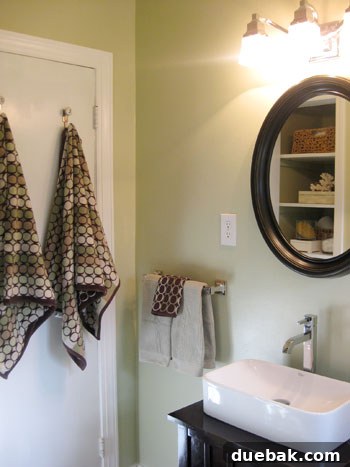
Have you ever been stuck in the bathroom? We have—more times than we care to count. Every spring and summer, higher humidity caused the door to swell slightly in the top left corner, making it difficult to open on the first pull. Or the second. Or the third. Usually it took some serious “door flapping”—grabbing the knob and rocking back and forth until it finally sprung free on the fifth or sixth tug—to get out. Guests who ducked in without warning often panicked after a minute, thinking they were locked in. That usually produced a mix of frantic knocking, raised voices, and sometimes colorful language.
It’s odd we tolerated that inconvenience for so long, especially since the fix is so simple. One day John had our Black & Decker hand sander out while working on a project for our new office, and I suggested he sand down the top left edge of the bathroom door so it wouldn’t stick anymore.
It worked immediately. In less than a minute of running the sander across the top edge, the door was slimmed just enough that it no longer caught on the frame during hot, humid days. If you don’t own a power sander, a sanding block or even a piece of sandpaper plus a few minutes of elbow grease will accomplish the same result. After sanding, painting the top edge—priming first for best results—helps prevent future swelling and keeps the door operating smoothly for longer.
If your bathroom door—or any interior door—is sticking, grab some sandpaper and take care of it. Or you can keep putting it off and chuckle later when visitors assume you’re trapped. Either way, the fix is quick, affordable, and permanent when you seal the sanded edge.
What small repair have you been delaying? It’s funny how the simplest tasks tend to sit at the bottom of the to-do list for weeks, months, or even years. Share what tiny project you’ve been ignoring and maybe tackle it this weekend—you’ll be glad you did.