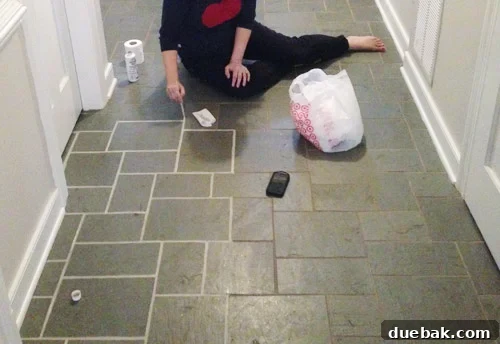
The discolored, dirt-stained grout in our foyer tile made the whole entry feel old and neglected. After nearly a dozen cleaners and experimental tricks, we were ready to give up—until we finally found a straightforward solution that restored the grout to a clean, white appearance.
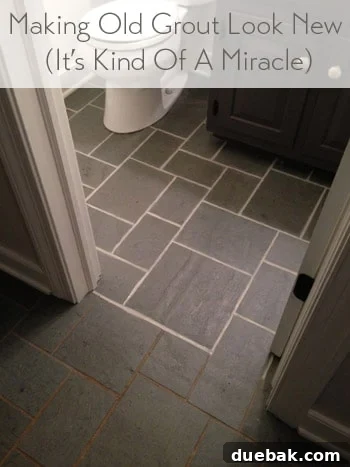
Once the grout was refreshed, the difference was immediate. The crisp lines complement the white trim and make the whole space look newer and brighter.
Surprisingly, the fix wasn’t just heavy-duty cleaning. If you’ve been frustrated by grout that stays discolored no matter how much you scrub, consider this: sometimes refinishing the grout is the best option. Scrubbing can remove surface dirt, but it won’t reverse deep discoloration or stain loss of the original grout pigment.
Cleaning Tricks That Didn’t Work
For months our grout looked tired and uneven. I tried almost every method I could think of, and while the grout became physically clean, the darker, stained areas remained. Here are some of the approaches I attempted without success:
- Various baking soda paste mixtures
- Different white vinegar solutions
- Magic erasers used extensively
- Specialty grout cleaning sprays and scrubs
- Bleach pens
- Oxygenating cleaners like OxiClean
- Powdered cleansers with a wire brush
- Barkeeper’s Friend with a wire brush
- A borrowed steam mop
- Stiff-bristle brush scrubbing
- Endless elbow grease and muttered frustrations
After all that effort I realized the grout was structurally clean but still visually stained. If grout is permanently discolored, you either need to remove and regrout or refresh the surface color with a grout-specific refinishing product.
The Solution to Getting White Grout Again
After considering regrouting—which is messy and disruptive—I learned about a grout refinisher called Polyblend Grout Renew. It’s a grout paint formulated to restore or change grout color. I tried it and it worked; it saved us from a much larger renovation and produced consistently improved results.
The cost was modest compared to the time and effort I’d already spent. The product comes in many shades, including several whites and off-whites, so you can match or brighten your grout to suit the tile and lighting in your space.
Choose Your Grout Paint Color
Grout Renew is available in dozens of colors. The brightest white might seem tempting for a fresh, clean look, but the purest white isn’t always the best choice for every space. Consider your tile color and the room’s lighting before deciding. We debated Natural Gray and Oyster Gray and ultimately chose Oyster Gray—a mid-tone ivory that looked natural with our dark slate tile and avoided an overly stark, artificial white.
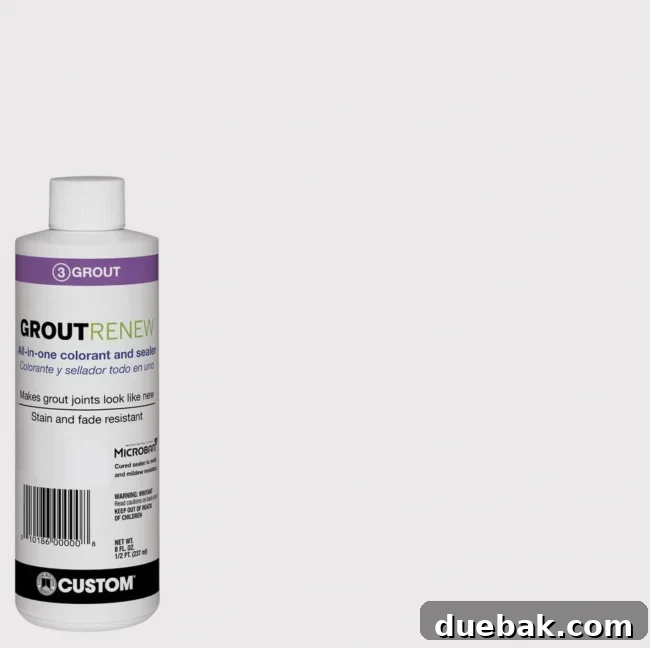
The product is low-odor and low-VOC, which was important for us. I still used a respirator and kept windows open for ventilation while working.
GroutRenew Alternatives
If you can’t find this exact product, there are similar grout-paint options from other brands sold in stores. Some are packaged in small bottles or pens designed for touch-ups or complete coverage. These alternatives can work well if the primary product is out of stock.
How to Apply Grout Paint
Applying grout paint is more time-consuming than cleaning, but it’s straightforward. For our foyer it took nearly eight hours of application spread across several days. Given the dozens of hours I had spent previously trying to lift stains, the time investment was worth it.
Step 1: Clean Your Tile & Grout
Even though cleaning alone didn’t fix the discoloration, you should remove surface dirt and dust before applying any paint. A light wash is sufficient—no need for intense scrubbing beyond removing grime and residue.
Step 2: Pick Your Brush or Application Tool
Instructions often suggest a toothbrush, but I found a thin craft brush gave me better control and less mess on the tile. The narrow brush fit easily into the bottle when I needed to reload and helped keep grout lines neat.
Step 3: Plan Your Starting Point & Exit Route
When painting a floor, plan so you don’t trap yourself in a finished area. I started in a small half-bath, worked my way out of the room, and closed the door behind me to let sections dry. Moving slowly and planning an exit route avoids smudging wet areas.
Step 4: Be Ready for Mistakes
Even with a careful brush, some paint will land on tile surfaces. There is a short window to wipe it off before it sets. I worked in small sections, painting one or two grout lines and then quickly wiping adjacent tile with a small piece of toilet paper to remove stray paint and smooth the edges. A paper towel or clean cloth works too.
Step 5: Be Patient & Pace Yourself
Break the job into manageable chunks. I spread the application over several days, doing the bathroom first, then half the foyer so we could still walk on the other half, and finishing the rest later. The repeated short sessions made the task less exhausting and allowed for steady progress without overexertion.
Step 6: Let It Dry
Allow each painted section to dry for 24 hours and avoid getting it wet for at least 72 hours, as the product instructions recommend. After drying, the grout looked noticeably lighter and cleaner. We had about a quarter of a bottle left for future touch-ups.
So far the refinished grout has held up well. After months of regular foot traffic and routine cleaning, the color remained consistent and the finish stayed intact.
Originally published in 2014

*This post mentions products we have used and found helpful*