
Transforming Tile: A Comprehensive Guide to Grouting Penny Rounds
Once your beautiful penny round tiles are meticulously laid, the journey to a truly stunning finish isn’t quite complete. There’s one pivotal step that elevates a tiled surface from an in-progress project to a professionally polished masterpiece: grouting. Grout isn’t just a filler; it’s the element that unifies your tilework, enhancing its visual appeal, protecting its integrity, and adding that crucial layer of sophistication. Join us as we delve into the art of grouting, detailing every step we took to transform our freshly installed penny round tiles into a cohesive, eye-catching feature in our home.
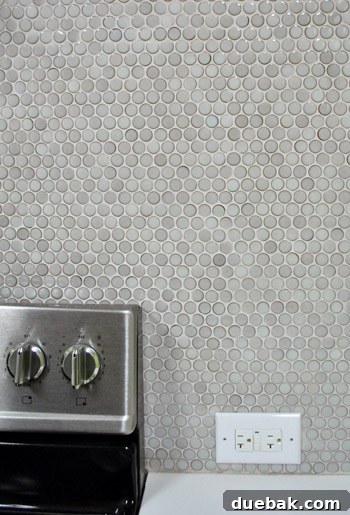
The transformation is truly remarkable. Observe how the application of grout instantly creates a sense of completion and elegance, bringing the entire tile installation to life. It’s the difference between a collection of individual pieces and a seamlessly integrated design.
Essential Tools and Materials for a Perfect Grout Job
Before you begin, gathering the right tools and materials is paramount. Just like baking, having everything prepped ensures a smoother process and a superior outcome. Here’s a comprehensive list of what you’ll need, along with why each item is crucial for achieving professional-grade results.
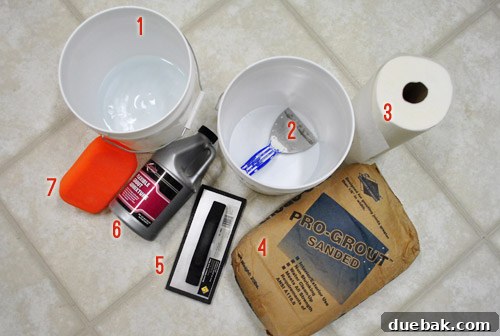
- Two Buckets of Clean Water: One for mixing and one for rinsing your sponge. Having two dedicated buckets prevents you from constantly needing to refill and helps maintain a clean working environment. Ensure you have access to a fresh water source nearby for repeated rinses.
- Putty Knife & Another Mixing Bucket: The putty knife is essential for thorough mixing, ensuring your grout reaches the perfect, lump-free consistency. A separate, sturdy bucket is necessary for preparing small batches of grout.
- Paper Towels or Rags: Grouting can be a messy job. Keeping a roll of paper towels or a stack of old rags handy allows for quick clean-ups of spills and drips, preventing dried grout from becoming a stubborn problem.
- Sanded Grout (e.g., Mobe Pearl Color from The Tile Shop): The choice between sanded and unsanded grout depends on your tile’s joint width. Sanded grout, containing fine sand particles, is typically recommended for grout lines wider than 1/8 inch, providing added strength and preventing shrinkage. Our Mobe Pearl color offers a subtle, sophisticated complement to our penny rounds. Always check manufacturer recommendations for your specific tile and joint size.
- Rubber Float (e.g., from Home Depot): This specialized tool is indispensable for pressing grout into the tile joints efficiently and evenly. Its rubber base ensures that grout is applied without scratching the tile surface, making it easier to achieve consistent coverage.
- Flexible Grout Admixture (e.g., from The Tile Shop): This additive is a game-changer. It replaces some or all of the water typically used in mixing, significantly enhancing the grout’s flexibility, reducing porosity, and improving bond strength. This directly translates to less shrinking, cracking, and staining over time, making your grout job more durable and long-lasting.
- Large Grout Sponge: A high-quality, dense grout sponge is vital for the clean-up phase. It effectively removes excess grout from the tile surface and smooths the grout lines, preparing them for the final buffing.
- Protective Gear: While not listed in the original, for any DIY project, especially one involving chemicals and dust, safety glasses and gloves (nitrile or rubber) are highly recommended to protect your eyes and hands.
Preparing Your Workspace: Contain the Mess
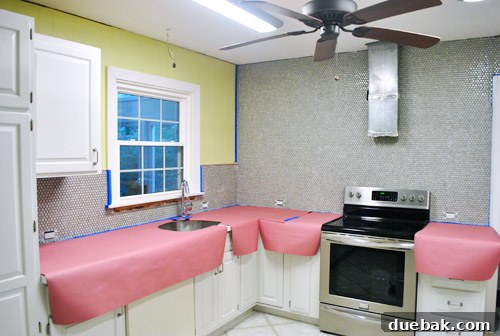
Just as important as having the right tools is preparing your workspace. Grout can be messy, and preventing it from splattering onto unprotected surfaces will save you a lot of clean-up time. We utilized leftover rosin paper from Home Depot to cover our counters and surrounding areas, effectively creating a barrier against spills and drips. This simple step can make a huge difference in keeping your kitchen or bathroom clean during the grouting process.
Mixing Grout: Achieving the Perfect Consistency
Grout, much like thinset mortar, has a limited working time once mixed. It begins to set relatively quickly—typically within 20-30 minutes, depending on ambient temperature and humidity. Therefore, the golden rule is to always mix in small batches. This ensures you can work with fresh, pliable grout throughout your project without waste.
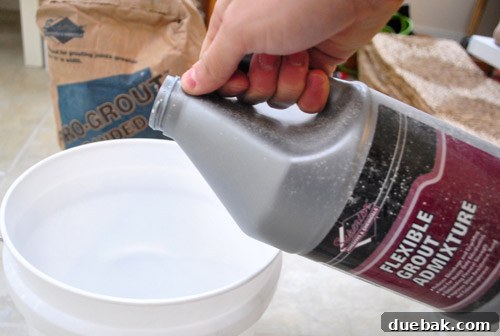
To begin, I followed the manufacturer’s instructions carefully. This usually involves pouring the specified amount of flexible grout admixture into the mixing bucket first, followed by gradually adding the sanded grout powder. This method helps to prevent lumps and ensures a smoother, more consistent mix.
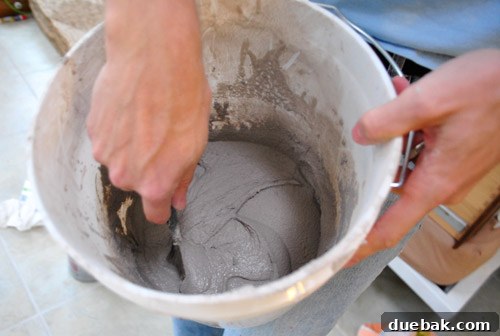
Using my putty knife, I thoroughly mixed the powder and liquid until it reached a thick, toothpaste-like consistency. This specific texture is ideal because it’s firm enough to stay in the joints without slumping, yet pliable enough to spread easily. Avoid making it too watery, as this can weaken the grout and lead to cracking, or too stiff, which makes it difficult to work with and properly fill the joints.
Applying Grout: The Satisfying Spread
After the meticulous work of installing the tile, the grouting stage can feel surprisingly therapeutic. It’s less about precise placement and more about broad, sweeping motions, which can be a welcome change of pace. I found a distinct enjoyment in this part of the process, a sentiment perhaps not entirely shared by my partner, Sherry, but a sentiment nonetheless! The main goal here is to thoroughly pack the grout into every single gap and crack between the tiles.
Using the rubber float, scoop a manageable amount of grout and spread it diagonally across the tile surface. Apply firm, consistent pressure to force the grout deep into the joints. This diagonal motion is key, as it helps prevent the float from digging out grout from previously filled lines. Work in sections that you can comfortably manage within the grout’s working time, ensuring that all spaces are generously filled. Don’t worry about being perfectly neat at this stage; the primary objective is comprehensive coverage.
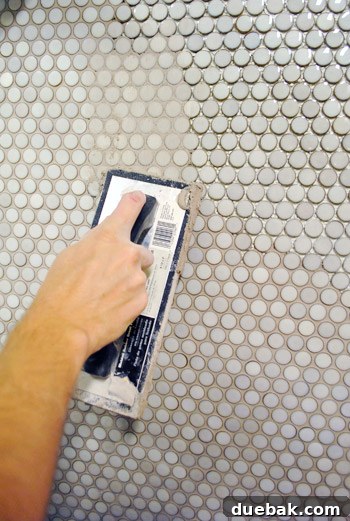
Once you’ve ensured every space is thoroughly packed with grout, it’s time to remove the excess. Hold the rubber float at a sharp angle (around 45 degrees) to the tile surface and scrape off the majority of the surplus grout. Use gentle but firm pressure, pulling the float across the tiles in long, clean strokes. This step is crucial for minimizing the amount of clean-up required later and helps to shape the grout lines.
Initial Clean-Up: The Sponge and Water Method
After scraping off the bulk of the excess, the next crucial step is the sponge-and-water action. This isn’t just about cleaning the tiles; it’s also about refining and smoothing the grout lines. It’s a surprisingly simple yet incredibly effective technique that brings the entire surface together.
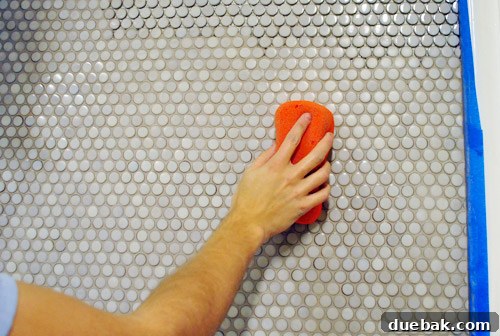
Dampen your grout sponge (not soaking wet) and gently wipe across the tiled surface in a circular motion. This will remove the remaining grout residue from the face of the tiles while simultaneously smoothing the grout in the joints. The key here is to rinse your sponge frequently in a separate bucket of clean water, wringing it out thoroughly after each rinse. A dirty sponge will only smear grout around, making more work for you. You’ll likely need to make several passes, changing the water in your bucket as it becomes cloudy, until the tiles are visibly clean and the grout lines are uniform and smooth.
See It In Action: Our Grouting Video
Sometimes, seeing a process unfold visually is the best way to grasp it. We captured a brief, one-take video of our grouting process, offering a glimpse into these steps. Despite a short interruption for our daughter Clara’s cream-cheese cravings, it demonstrates the technique effectively. Watch it here to get a clearer understanding of the application and clean-up:
While the task is undeniably a bit tedious and can be taxing on your wrists and knees, the satisfaction of seeing it come together is immense. We managed to complete our entire grouting project in a single afternoon, a testament to focused effort and efficient technique.
The Dramatic Reveal: Ungrouted vs. Grouted Tiles
The difference between an ungrouted and a grouted tile installation is consistently astonishing. It’s the moment when individual tiles cease to be just separate pieces and become a unified, artistic surface. We thought we couldn’t love our penny rounds more, but the grout proved us delightfully wrong.
In the comparison above, you can clearly see the transformation: the left side showcases the dried, grouted tiles, while the right remains ungrouted. Notice how the grout initially appears darker when wet and significantly lightens as it dries, achieving its final Mobe Pearl hue. There’s also a subtle haze on the grouted tiles on the left, a common occurrence that will be addressed with a final buffing to bring out their true gleam.
The Finishing Touches: Caulking and Seams
Beyond the main tile field, proper finishing around corners and where the tile meets other surfaces is crucial for both aesthetics and durability. This is where caulk comes into play, creating flexible, waterproof seals that complement your grout.
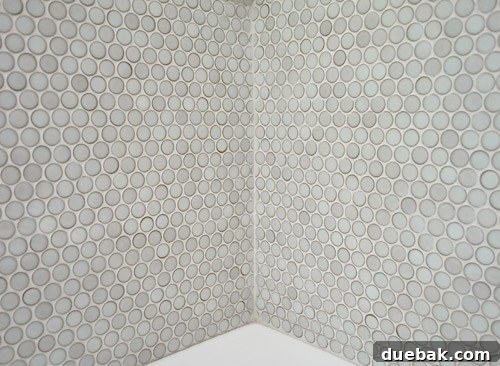
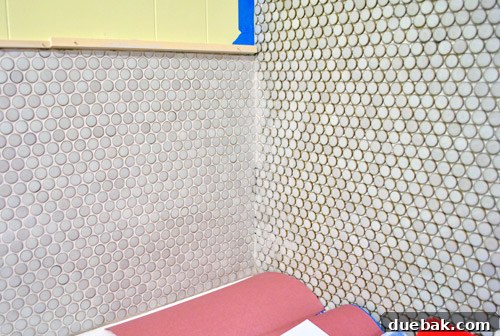
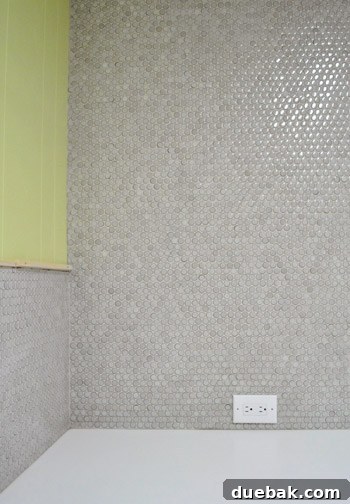
As many inquired, here’s a close-up of the corner seam after being meticulously filled with caulk that precisely matches our Mobe Pearl grout. We also applied caulk to the seam where the tile meets the countertop. In this particular picture, the caulk along the bottom edge is still drying, which gives it a slightly darker appearance. Similarly, the tile hasn’t yet received its final buffing, resulting in a somewhat chalky finish. However, these small details collectively contribute to a truly professional and clean installation, preventing moisture ingress and allowing for minor structural movement without cracking the rigid grout.
A Closer Look at the Penny Round Beauty
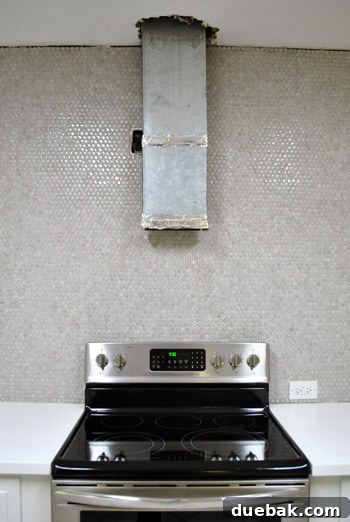
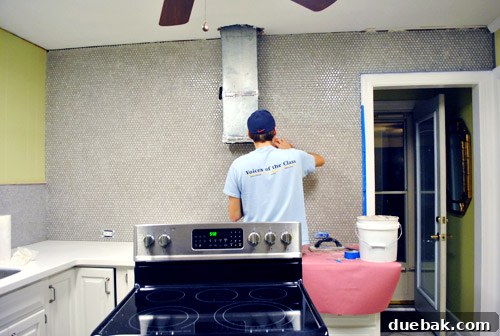
Stepping back to admire the entire room, the effect of the penny rounds is truly captivating. While a wide shot might make it appear like a simple gray wall on a small screen, in person, the texture and detail come alive. The gleaming penny rounds create an inviting and sophisticated backdrop for our kitchen.
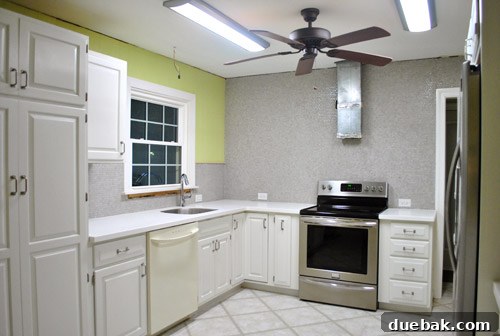
To fully appreciate the intricacy, close-up shots are essential. Thankfully, even from a distance – such as when entering the room from the hallway – you can distinctly make out each individual penny tile. This was a significant relief, as spending 14 hours on a tile installation only for it to look like flat gray paint from afar would have been a major disappointment. Even from our front door, the charming round tiles under the microwave are clearly visible, confirming the success of our detailed effort.
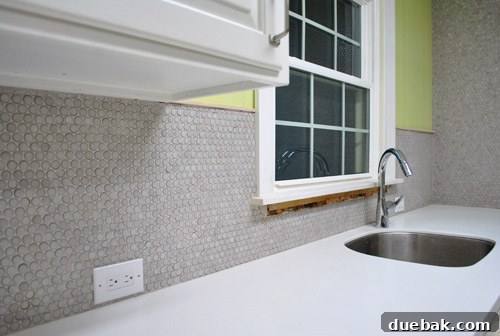
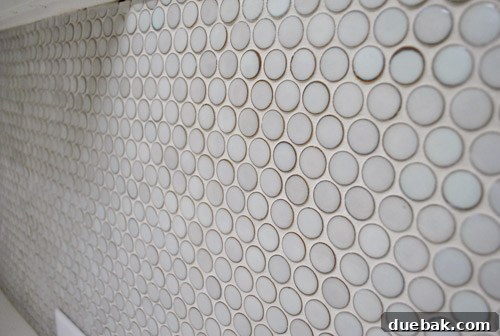
This particular shot beautifully captures the varying tones inherent in the tile. The awesomely random distribution of shades, where some tiles are slightly darker and others feature a distinct dark ring or semi-ring, adds incredible charm and dimension to the surface. Notice the polished shine visible in the top right corner of this image; while some areas appear hazy due to lighting, the corner clearly demonstrates the real-life gleam. It’s a truly “marble-ish” look that we achieved without the significant expense typically associated with natural marble, offering an elegant solution for an upscale aesthetic on a budget.
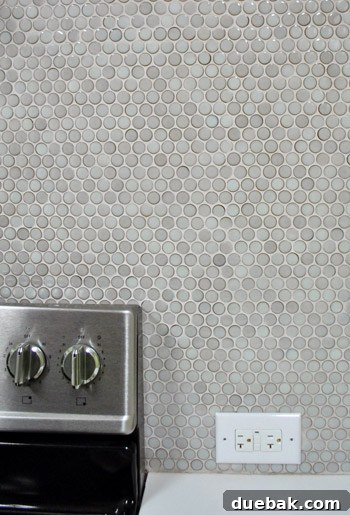
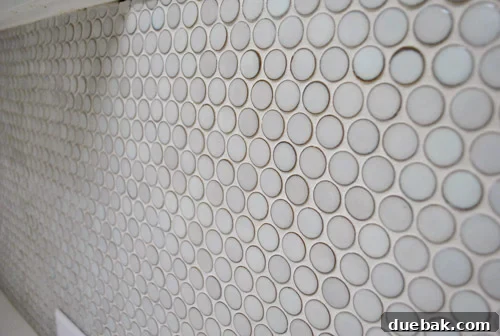
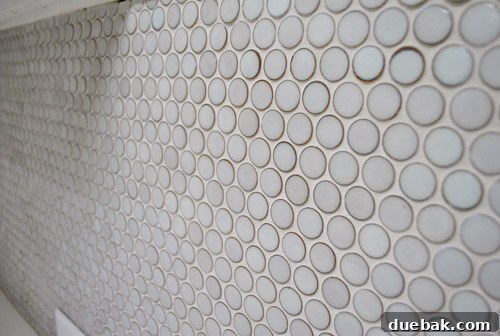
Here’s another close-up, further illustrating the delightful variations in coloring and the subtle dark rings on some tiles. This image also powerfully demonstrates how the grout meticulously cleans up the visual, replacing the stark contrast of dark holes and mesh with a harmonious tone-on-tone effect that enhances the overall appeal and unity of the installation.
The Power of Grout: Disguising Imperfections
We approached the grouting step with a hint of trepidation, having heard anecdotes that it could accentuate any seams or inconsistencies from the tile laying process. Our experience, however, was quite the opposite. We found that the grout actually seemed to disguise those minor mistakes and create a more seamless look.
This positive outcome is likely attributable to our choice of a low-contrast tile and grout color combination. When the grout color closely matches the tile, it acts as a visual bridge, blending small misalignments or uneven gaps into a more cohesive surface. In contrast, using a high-contrast grout color (e.g., dark grout with light tiles) can highlight every single flaw, drawing attention to imperfections instead of smoothing them over. This isn’t to suggest that grout can salvage a truly poor tile job – unfortunately, nothing can completely fix fundamental tiling errors – but for tiny inconsistencies, a similarly toned grout can indeed be your best ally.
Furthermore, investing in a high-quality grout sealer will ensure that your beautiful tilework remains easy to clean and maintain for years to come. We previously used an excellent sealer on a tiled shower in our first home and never had to rigorously scrub it again; even a year later, during open houses, it looked as pristine as the day it was grouted. This simple step provides long-term protection against stains and moisture, preserving the fresh look of your grout.
Future Plans: Completing Our Dream Kitchen
While the grouting significantly advances our kitchen renovation, there are still exciting projects on the horizon. This includes upgrading our lighting, which, as the current lighting conditions (or lack thereof) might suggest, is desperately needed. A better shot showing the tile’s true shine, particularly on the portions flanking the range hood, awaits our electrician’s upcoming visit!
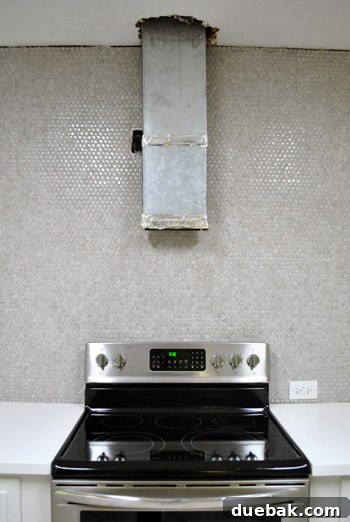
In addition to improved lighting, our renovation roadmap includes installing a new range hood and elegant open shelving. We envision our newly grouted penny tile backsplash serving as a stunning and sophisticated backdrop for our dishware, culinary essentials, and all the charming “and such” items Sherry is undoubtedly planning to display.
The Final Steps: Haze Removal and Sealing
Although the bulk of the grouting is complete, our tile journey isn’t quite 100% finished. The final stage involves a bit more clean-up – specifically, addressing any residual grout haze that might be present in certain areas. Grout haze is a common occurrence after grouting, leaving a faint, powdery film on the tile surface.
While The Tile Shop, and many other retailers, sell specialized haze removers, we’ve often found that good old-fashioned elbow grease combined with a dry, clean dishtowel can also do the trick. A thorough buffing motion helps to remove these stubborn traces, revealing the full gleam and vibrancy of the tiles underneath. We plan to try this method first, giving our wrists a much-needed recovery period before diving into the final buffing session.
The very last, and arguably most crucial, step for long-term durability and ease of maintenance is to seal the grout. Sealing creates a protective barrier that repels water, stains, and mildew, significantly extending the life and beauty of your tilework. We will be back to share all the details of applying our sealer, along with updates on our lighting replacements, range hood installation, open shelving, and our plans for new cork floors.
Share Your Grouting Stories!
The sense of accomplishment upon completing a grouting project is truly rewarding. Both of us agreed that despite the occasional hassle and physical effort, the end result was unequivocally worth it. It’s immensely satisfying to check this major milestone off our renovation list.
Have you tackled a grouting project before? Did you, like me, find a strange satisfaction in the process, or were you more aligned with Sherry’s perspective of it being a necessary evil? Share your experiences and any tips you might have in the comments below! We love hearing from our fellow DIY enthusiasts.