
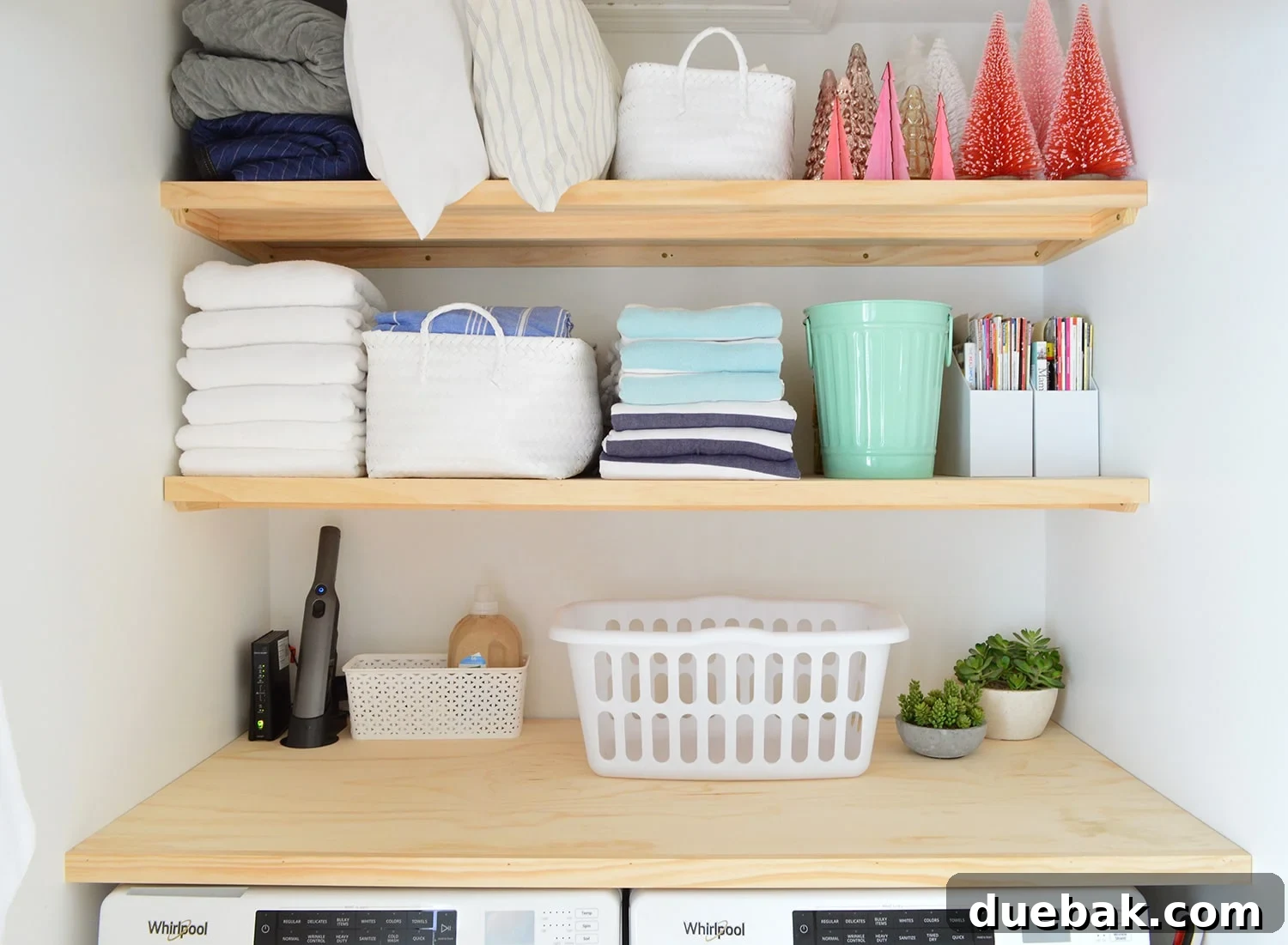
Unlock the full potential of even the most compact spaces with smart, custom storage solutions. In a laundry closet, where every inch counts, effective organization can transform a chaotic corner into a highly functional hub. That’s precisely why we embarked on a journey to construct incredibly simple yet robust DIY closet shelves, combined with a practical, removable laundry counter, shortly after moving into our home. This isn’t just a project for seasoned DIY enthusiasts; it’s an accessible endeavor for anyone looking to enhance their home’s functionality. Requiring minimal materials and just a few hours of dedicated work, these custom shelves can be precisely tailored to fit your unique closet dimensions and specific storage demands.
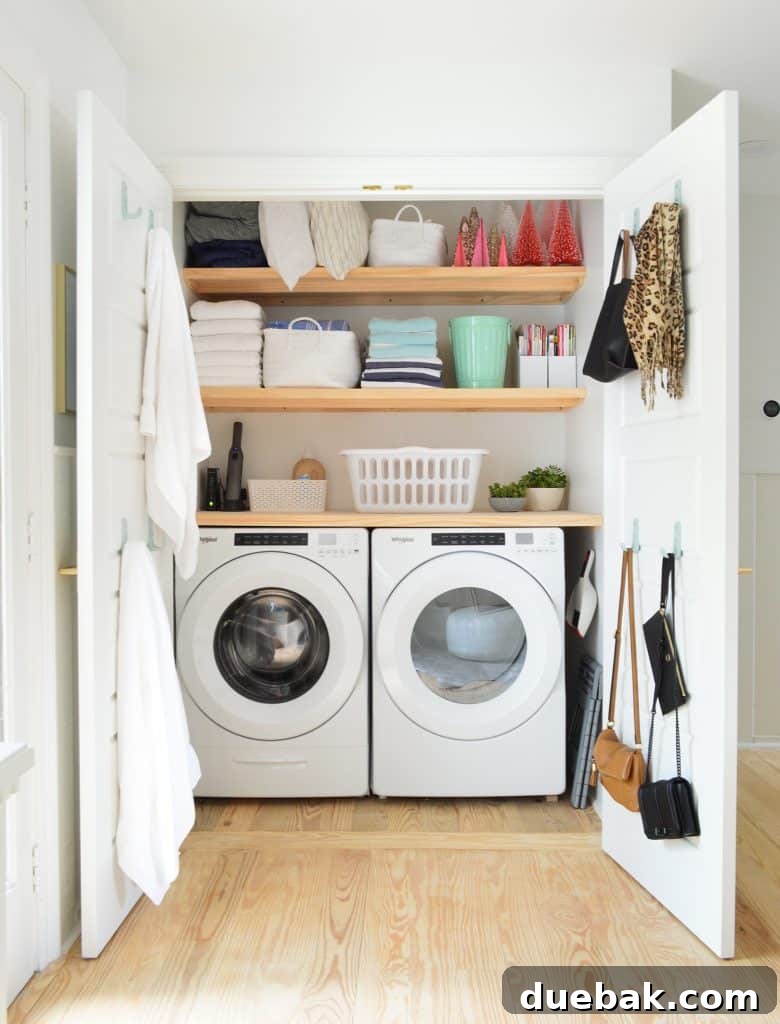
As an added bonus, we’ll guide you through the process of building a removable laundry counter that perfectly complements your new shelving. This innovative counter design allows for effortless access to your washer and dryer whenever maintenance or servicing is required, ensuring practicality without sacrificing aesthetics. This comprehensive guide will empower you to create a laundry space that is not only organized and efficient but also surprisingly stylish. Our DIY shelves and counter have proven their worth over nearly four years, maintaining their pristine appearance and exceptional functionality as reliably as the day they were installed. Say goodbye to clutter and hello to a beautifully organized laundry closet!
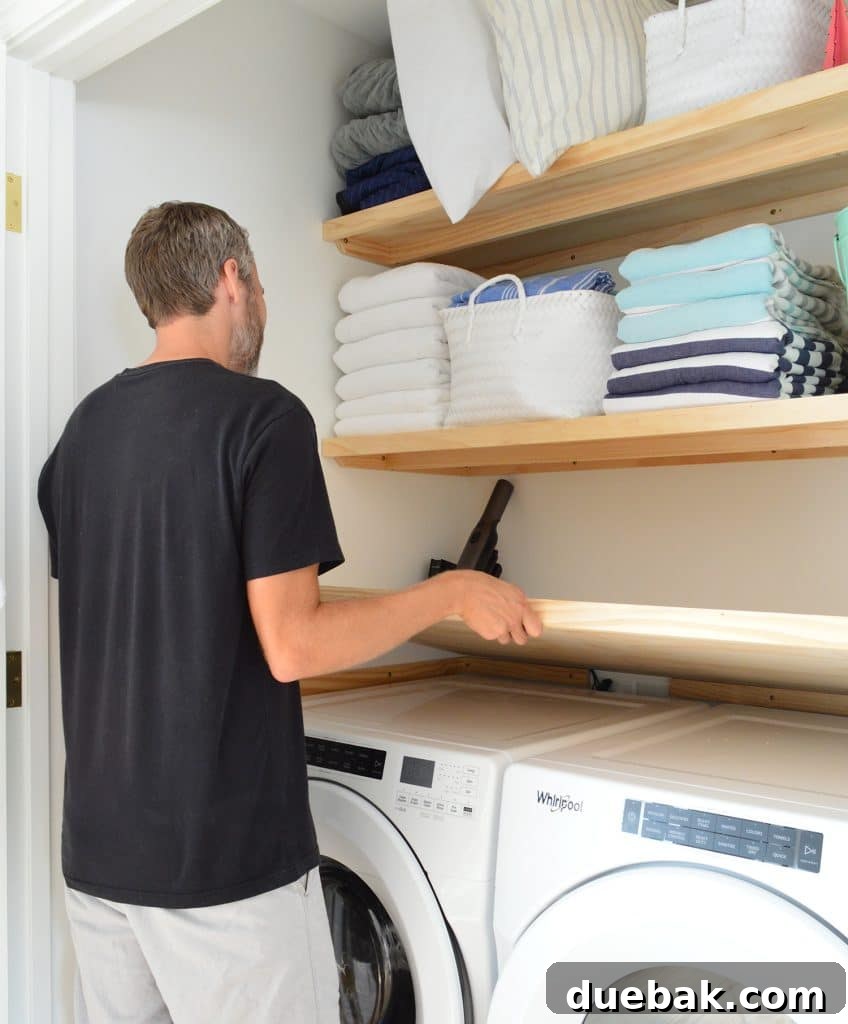
Maximizing storage in small spaces, especially in a laundry room or closet, is a game-changer for home organization. DIY solutions offer unparalleled benefits over off-the-shelf options. Firstly, cost-effectiveness is a major draw; building your own shelves often requires a fraction of the budget needed for custom-built or pre-made units. Secondly, customization is key. You dictate the exact dimensions, number of shelves, and finishing touches, ensuring every nook and cranny of your laundry closet is utilized to its fullest potential. This level of personalization means your storage fits your specific items, from detergents and fabric softeners to linens and cleaning tools, creating a truly optimized and clutter-free environment. Moreover, the sense of accomplishment from a successful DIY project adds immense value and satisfaction to your home improvement journey. These durable, stylish shelves stand as a testament to efficient design and smart living.
Simplified Steps for Building Durable DIY Closet Shelves
The method for constructing these DIY closet shelves is exceptionally straightforward, making it an ideal project for beginners and experienced DIYers alike. The core principle involves a robust plywood or MDF shelf top resting securely on wood support pieces, which are firmly anchored to the wall in three strategic locations: along both side walls and the back wall. This tried-and-true system has been successfully implemented in numerous projects, including our popular DIY pantry shelving and our impressive built-in bookcases. Its popularity stems from its ease of execution and the remarkably strong, stable results it consistently delivers. Let’s delve into the detailed steps to help you achieve a perfectly organized laundry closet.
We’ll explore each step in comprehensive detail, but here’s a concise overview of the process:
- Step 1: Precise Planning, Measuring & Marking Your Closet
- Step 2: Gathering Essential Materials & Tools
- Step 3: Securely Installing Shelf Supports
- Step 4: Placing and Attaching Shelf Tops
- Step 5: Adding a Decorative and Structural Face Piece
- Step 6: Incorporating Optional Cross Supports for Enhanced Strength
- Step 7: Applying the Final Seal, Stain, or Paint Finish
Following these steps will result in super sturdy and aesthetically pleasing shelves that dramatically improve your laundry closet’s functionality and appearance.
Essential Materials & Tools for Your DIY Shelving Project
To construct these durable and attractive closet shelves, you’ll primarily need two types of wood: 1×2-inch pieces for the supports and 3/4-inch plywood (or MDF) for the shelf tops. Beyond the lumber, a selection of basic DIY tools and fasteners will be essential to ensure a smooth and successful build. Investing in good quality tools not only makes the job easier but also contributes to a professional-looking finish and safer working conditions.
- 1×2″ Pine for Shelf Supports: Opt for standard pine if you plan to stain or seal for a natural wood look. If painting, consider pre-primed wood for a smoother finish and reduced prep time.
- 3/4″ Plywood for Shelf Tops: Plywood offers excellent strength and stability. Alternatively, MDF (Medium-Density Fiberboard) is a great, cost-effective choice if you intend to paint your shelves, as it provides a very smooth surface.
- Miter Saw: Indispensable for making precise, clean cross-cuts on your 1×2 support pieces. This ensures your supports fit perfectly against the walls.
- Circular Saw: Essential for cutting your plywood or MDF sheets to the exact dimensions of your shelf tops. A straight edge guide can significantly improve accuracy.
- Stud Finder: A critical safety and structural tool for locating wall studs, ensuring your shelf supports are securely anchored into solid wood for maximum load-bearing capacity.
- Long Level: Absolutely necessary for marking perfectly level lines on your walls, guaranteeing your shelves are straight and true.
- Measuring Tape: For all your precise length, width, and depth measurements, ensuring accuracy at every stage of the project.
- Nail Gun (and nails): Speeds up the process of attaching shelf tops and face pieces. Finish nails provide a strong hold with minimal visual impact.
- Electric Drill (and drill bits): For pre-drilling pilot holes (to prevent wood splitting) and driving screws securely into wall studs.
- Cabinet Screws: These heavy-duty screws are excellent for firmly attaching the wood supports to the wall studs, providing superior strength compared to nails alone.
- Wood Glue: For an extra-strong bond when attaching the face pieces and, optionally, the shelf tops to the supports.
- Sealant, Stain, or Primer/Paint: To protect the wood, enhance its appearance, and match your home’s aesthetic.
- Brush or Rag to Apply: For applying your chosen finish smoothly and evenly.
Before you rush to the hardware store, we highly recommend completing the initial planning and measurement steps outlined below. This will allow you to generate an accurate cut list and ensure you purchase exactly the right amount of materials, preventing costly errors and unnecessary trips.
Exploring Versatile Closet Shelf Ideas: Tailoring Storage to Your Space
Over the years, our approach to shelving has evolved significantly, leading us to implement a diverse range of shelf solutions across various spaces. The crucial first step in any shelving project, especially in a laundry closet, is to thoroughly evaluate your specific needs and the unique characteristics of your space. To inspire your imagination and help you determine the best solution for your laundry area, let’s explore some of our previous laundry storage transformations, showcasing a spectrum of creative and functional ideas.
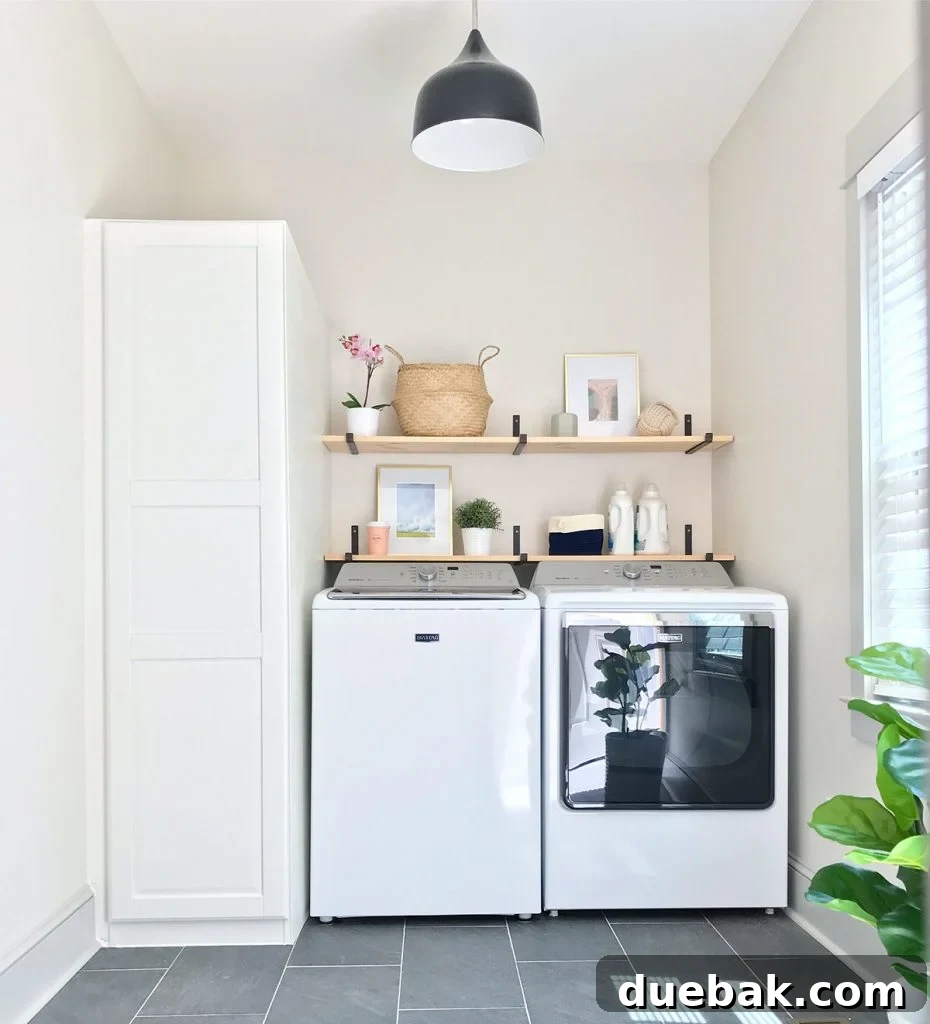
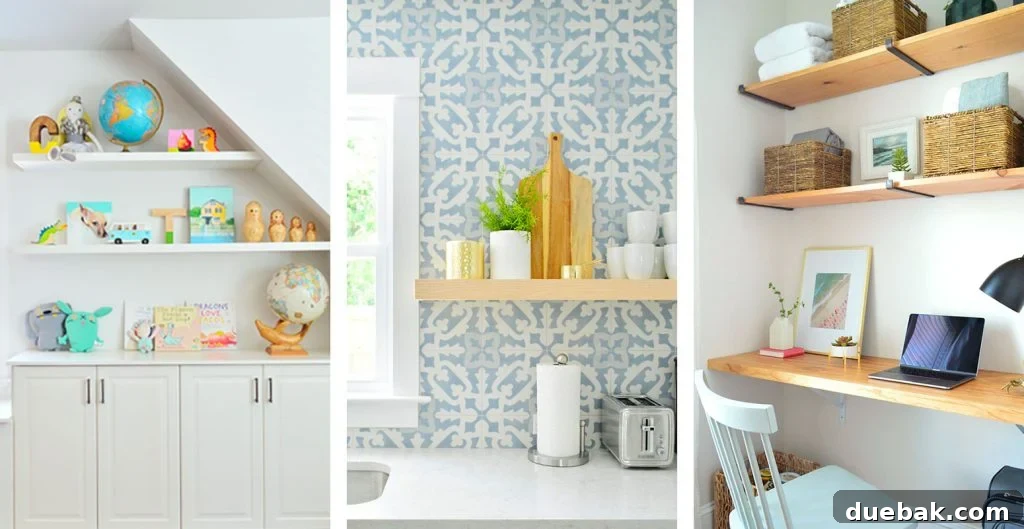
Sometimes you’re presented with a pristine, blank canvas, much like the mudroom in our beach house. In that instance, we opted for decorative floating shelves, securely mounted with heavy-duty brackets to provide both aesthetic appeal and practical storage. Adjacent to the washer, we integrated an Ikea PAX closet, which offered generous concealed storage and cleverly disguised the water heater, maximizing both space and discretion.
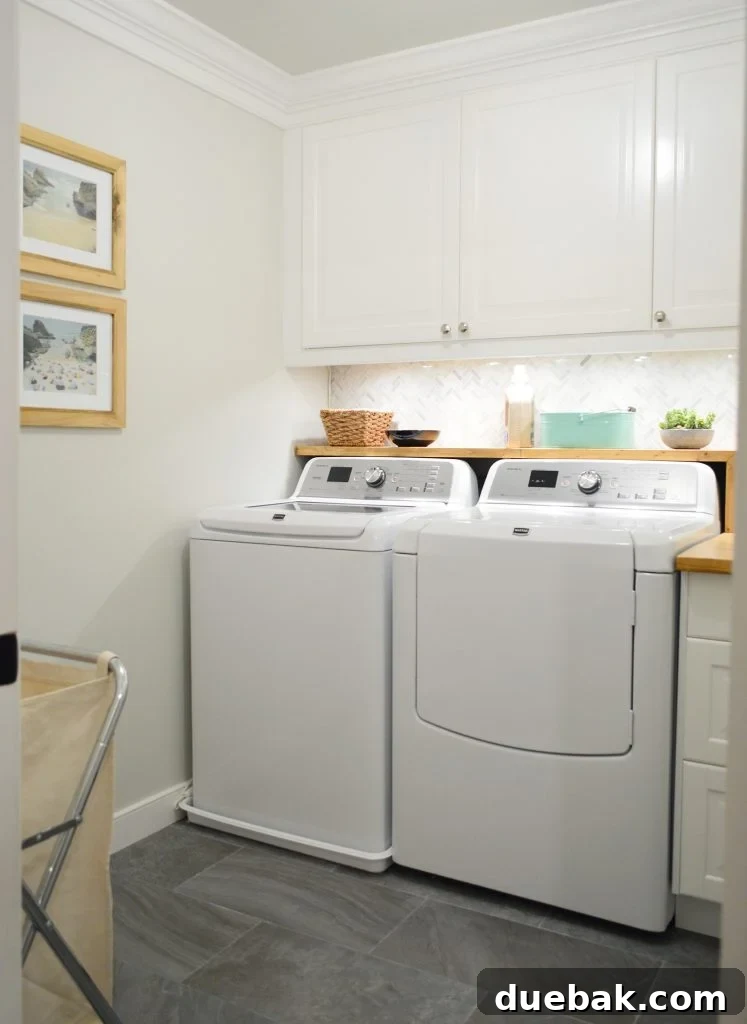
For the extensive laundry room makeover in our previous home, the strategy shifted towards installing upper cabinets, prioritizing concealed storage for a clean, streamlined look. Despite this, we ingeniously incorporated a single, minimalist shelf directly behind the washer and dryer. This shelf not only provided a convenient surface but also cleverly connected to the butcher block counter nearby, creating a cohesive and highly functional workspace.
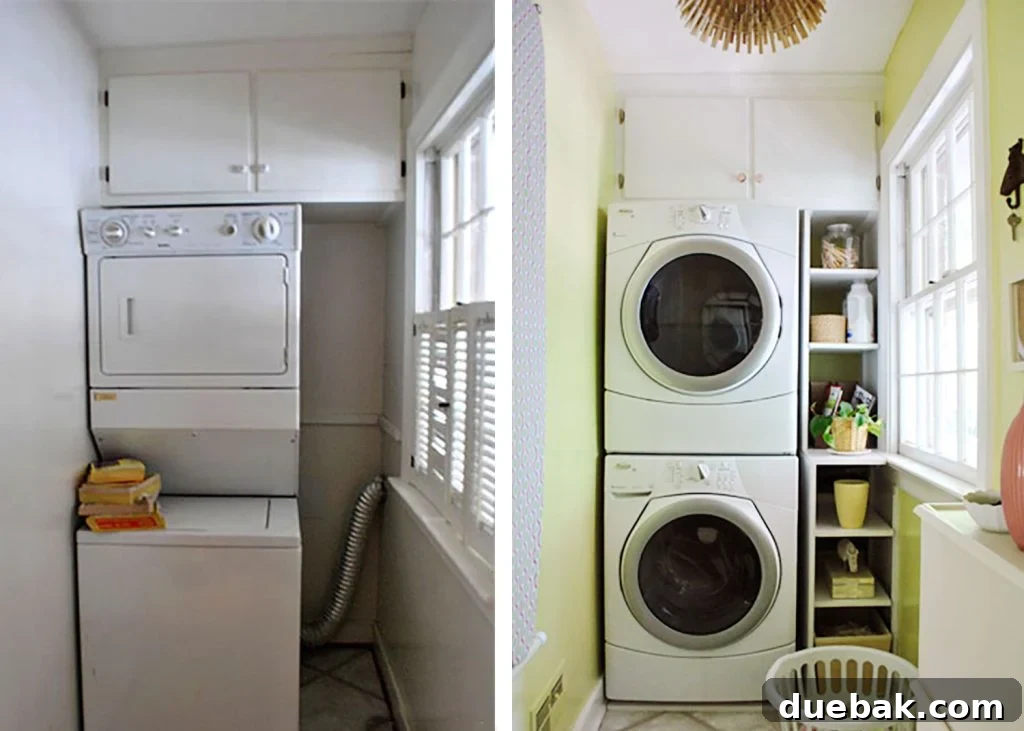
In the home prior to that, faced with a narrow but valuable space next to our stacked washer and dryer, we opted to build some skinny shelves. This demonstrated our commitment to ensuring no space went to waste, proving that even the most confined areas can be transformed into practical storage zones.
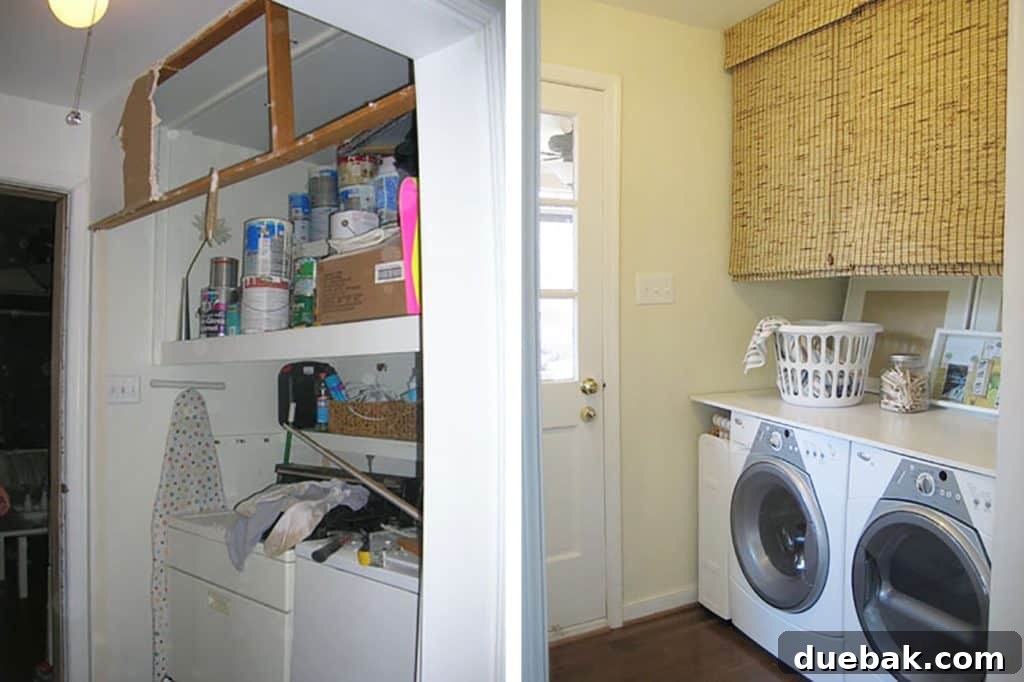
Lastly, in our very first home, we tackled a cramped hallway by the back door by removing the unattractive bifold doors. This exposed the existing shelving above our laundry appliances. To maintain a tidy appearance, we ingeniously utilized bamboo blinds to elegantly conceal all the stored items. While unconventional, this solution was remarkably effective and visually appealing.
Beyond the laundry room, our extensive portfolio includes dozens of other DIY shelf projects, showcasing the versatility of simple construction techniques. If you’re seeking further inspiration, we’ve curated 17 of our best DIY shelving ideas, all conveniently located in one spot, including the specific laundry shelves highlighted in this post. This collection demonstrates how a basic shelf system can be adapted for any room and any purpose.
A particularly outstanding example of a versatile DIY closet shelving solution is the custom pantry we crafted for our beach house. This system, built on the same straightforward principles of secured supports and robust tops, is perfectly adaptable for creating shoe shelving, cubbies for neatly folded sweaters and pants, large compartments for storage boxes, and even integrated bars for hanging clothes. The possibilities for customization are truly endless with this foundational approach.
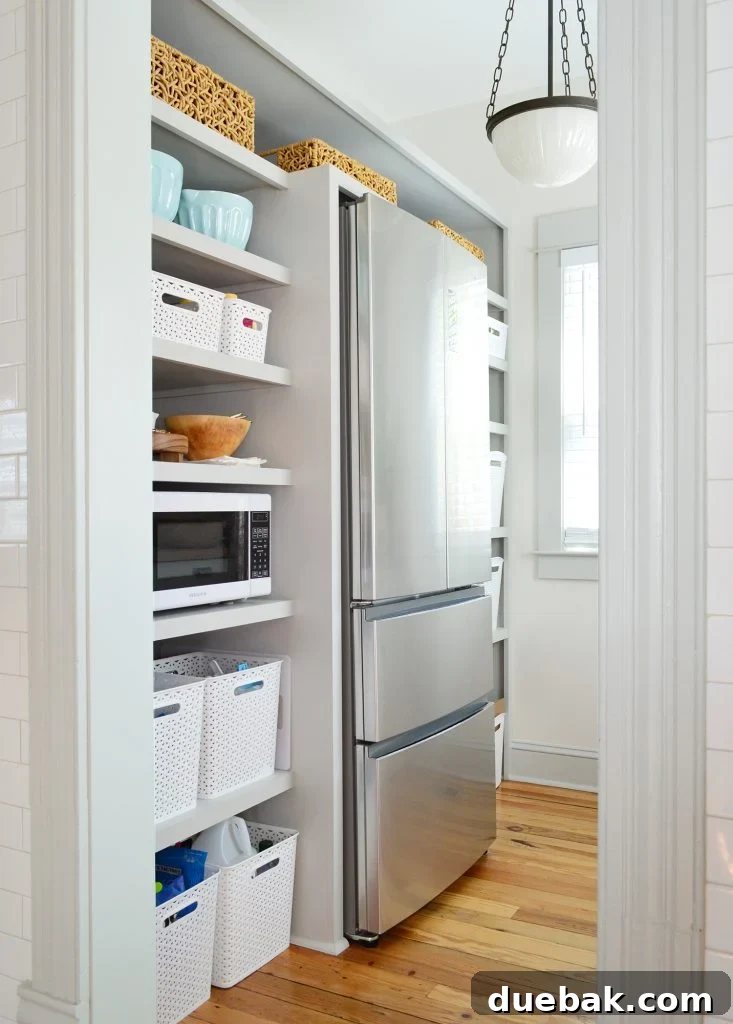
As these varied examples illustrate, sometimes the inherent characteristics of your space will dictate your design decisions, while other times, you’ll have the creative freedom to build almost any laundry shelves you envision. Our current home presented a situation somewhere in the middle. We had a pristine, blank wall to work with, but the overall dimensions and layout of the closet clearly defined the boundaries and opportunities for our shelving design, requiring thoughtful planning to ensure both functionality and aesthetics.
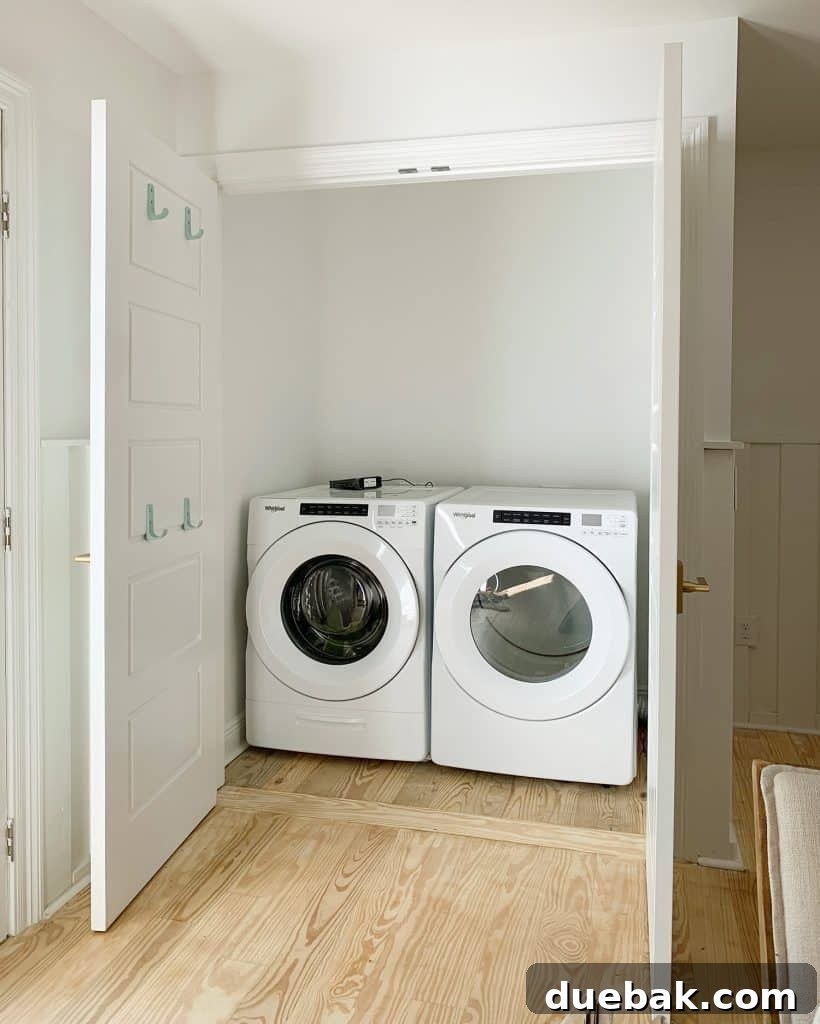
A significant planning consideration for our project was the attic access point, which was (rather inconveniently) situated right in the center of the closet ceiling. This meant we had to carefully design our shelves to avoid obstructing this access, ensuring that a person could still comfortably climb into the attic when necessary. This highlights the importance of accounting for all permanent fixtures and access points during the initial measurement and design phase of any custom shelving project.
Step 1: Precise Planning, Measuring & Marking Your Closet
The success of any DIY project hinges on meticulous planning, and building custom shelves is no exception. Begin by thoroughly measuring your closet’s dimensions. This critical step will not only determine the exact size and number of shelves you can integrate but also provide the foundation for your material shopping list. You’ll need to account for:
- Plywood or MDF for Shelf Tops: Ensure you have enough 3/4-inch material to create each shelf top without needing additional cuts or unsightly seams across the main surface. Carefully plan how you can optimize cuts from standard 4×8-foot sheets to minimize waste.
- 1×2″ Pine for Supports: Calculate enough 1×2-inch pine to run along all three supporting walls for each shelf (both sides and the back). Additionally, factor in an extra piece for each shelf to serve as a lengthwise cross-support in the middle, especially for longer spans or heavier items.
For instance, each of our laundry closet shelves measured approximately 5 feet in length by 1.5 feet in depth. Based on these dimensions, the material requirements were:
- One 5′ x 1.5′ piece of plywood per shelf. We efficiently managed to cut two of these shelf tops from a single standard 4′ x 8′ sheet of plywood, showcasing how strategic planning can reduce material costs.
- Three 5′ sections and two 1.5′ sections of 1×2″ pine for each shelf. This was easily obtained from three 8′ pieces of 1×2″ pine, again demonstrating efficient material usage.
During the measurement phase, it’s also crucial to mark the locations of your wall studs. We rely on this magnetic stud finder for quick and accurate results. Knowing precisely where your studs are is paramount; these solid wood members provide the essential anchorage for your shelf supports, ensuring your shelves are incredibly strong and secure once installed. Mark these stud locations clearly with a pencil, extending the marks vertically to cover the entire area where shelves will be placed.
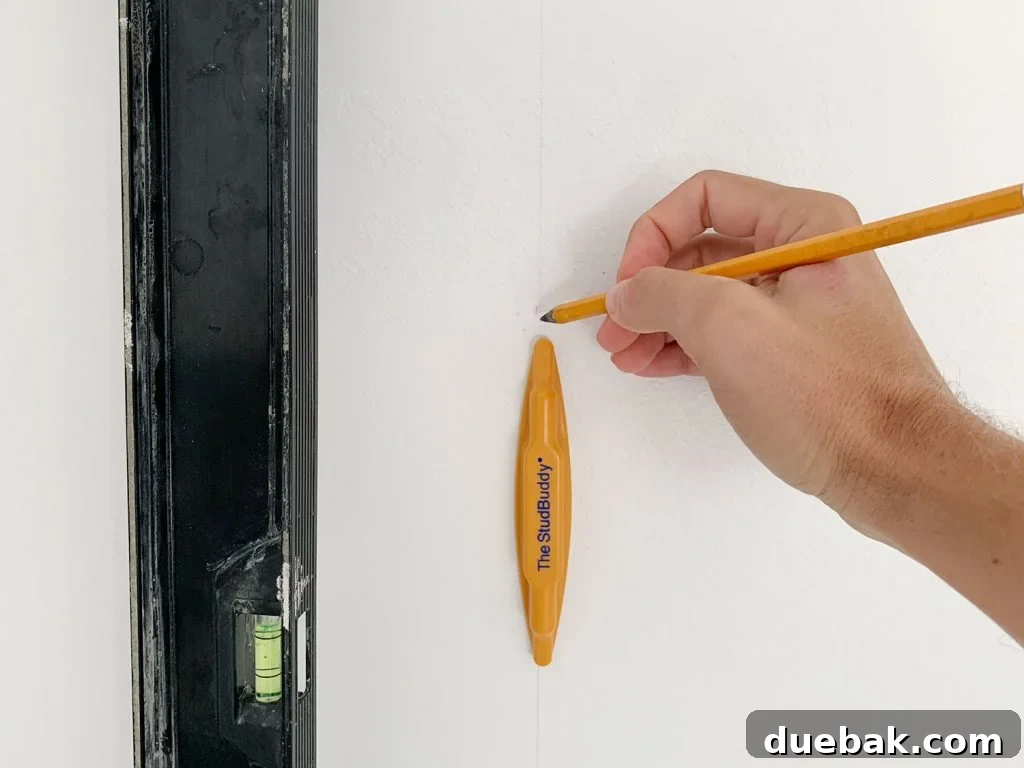
Step 3: Securely Installing Shelf Supports
With your materials ready and stud locations marked, the next critical step is to install the foundational support pieces for your shelves. You’ll begin by attaching one long support piece along the back wall of your closet and two shorter pieces along each side wall. These supports are crafted from 1×2-inch pine, cut to precisely match the length and depth of your desired shelf using a miter saw for clean, accurate cuts. As an example, observe how our counter shelf supports were configured in the image below. While we had to make deliberate breaks in the supports to accommodate existing laundry plugs, aim to use full, continuous pieces wherever possible for maximum strength and ease of installation.
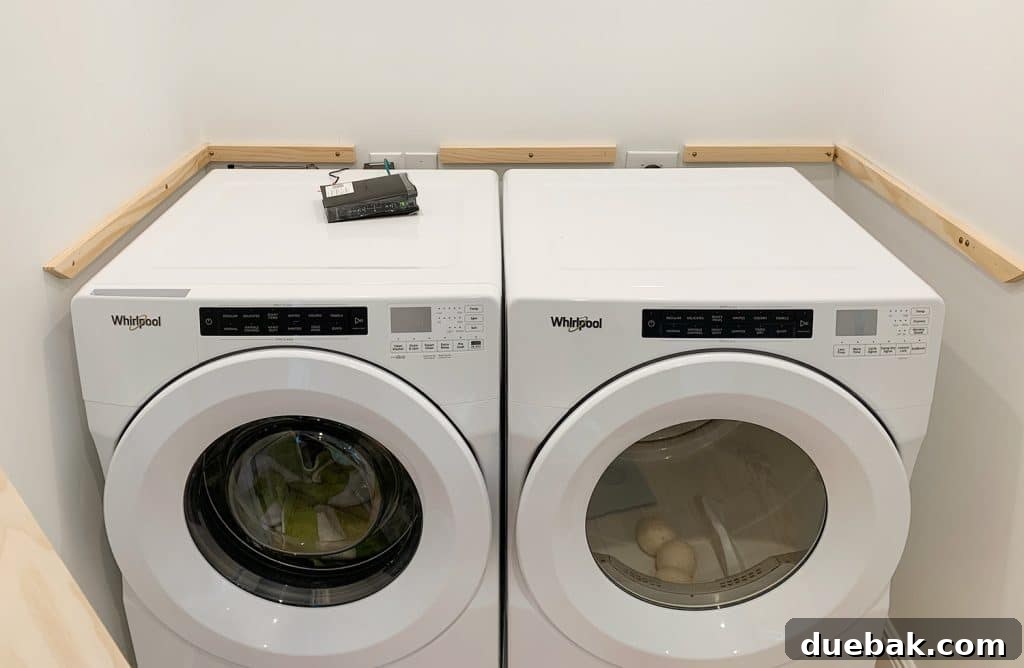
Using a long level, meticulously mark the placement for each support piece. Remember to factor in the 3/4-inch thickness of the plywood or MDF that will ultimately rest on top of these supports to ensure your final shelf height is accurate. Once marked, we securely fastened these supports to the wall using our electric drill and heavy-duty cabinet screws. These screws are ideal for this application due to their ease of driving and robust holding power. We intentionally drove them directly into the pre-marked stud locations, ensuring each support is anchored into solid framing. We personally appreciate the subtle industrial aesthetic of the visible brass screw heads, but if you prefer a concealed look, you can certainly opt for countersinking screws and filling the holes before finishing. The key is a secure, level installation into the studs for unparalleled stability.
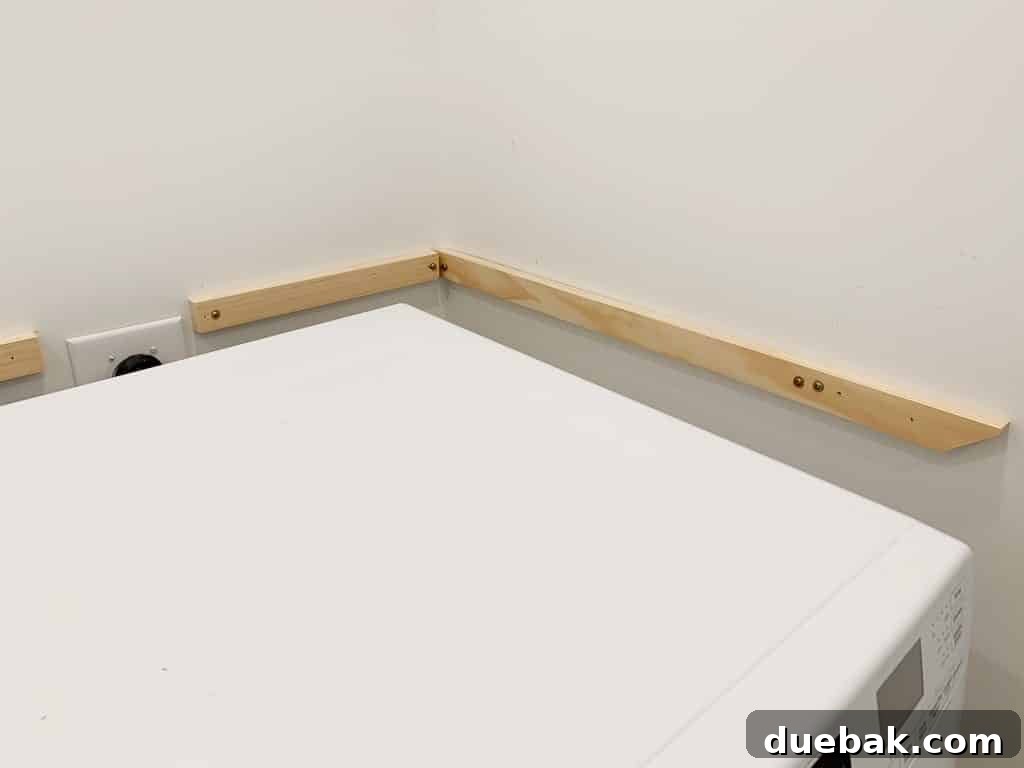
You may notice that we deliberately cut the ends of our side support pieces at an angle. This seemingly minor detail serves a specific aesthetic purpose that will become clear in a subsequent step, contributing to a more finished and seamless appearance for your DIY shelves.
Step 4: Placing and Attaching Shelf Tops
Once all your 1×2 support pieces are firmly secured to the three walls, the exciting part begins: adding your shelf tops! If you haven’t already had your plywood or MDF cut to size at the home improvement store (which many stores offer as a service), you can easily cut it to your precise dimensions at home using a circular saw. For best results, use a straight-edge guide to ensure perfectly straight cuts, as this will significantly impact the final look and fit of your shelves.
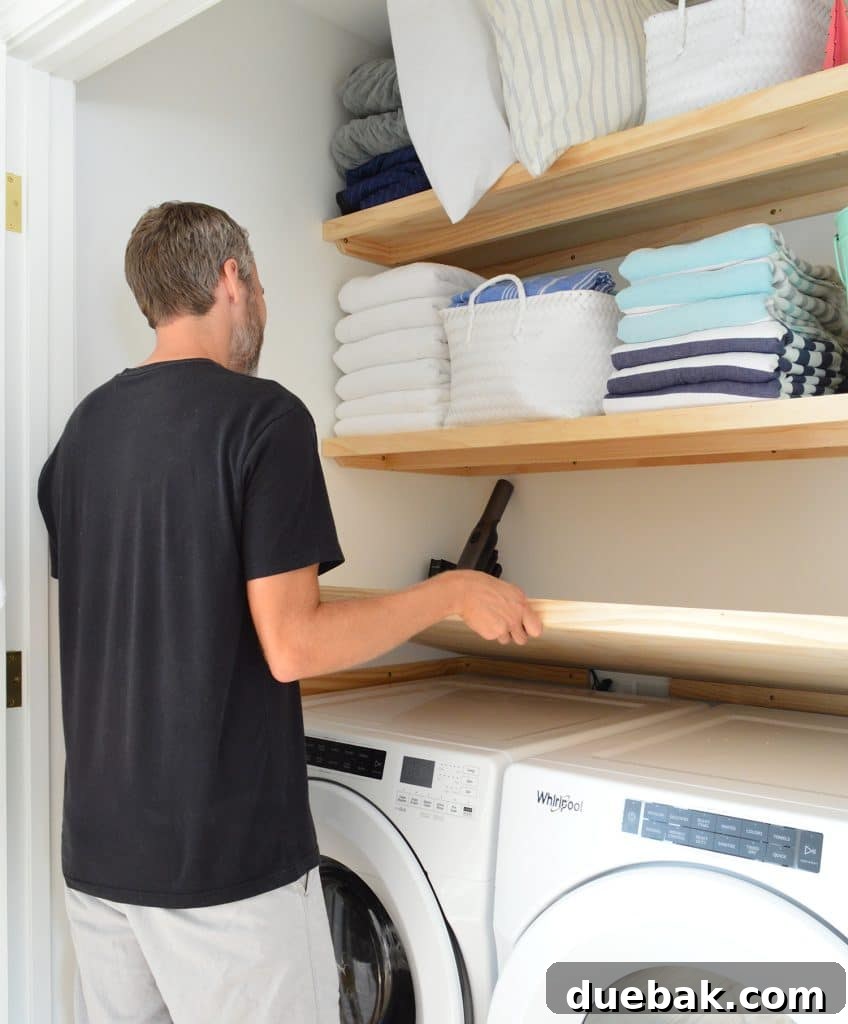
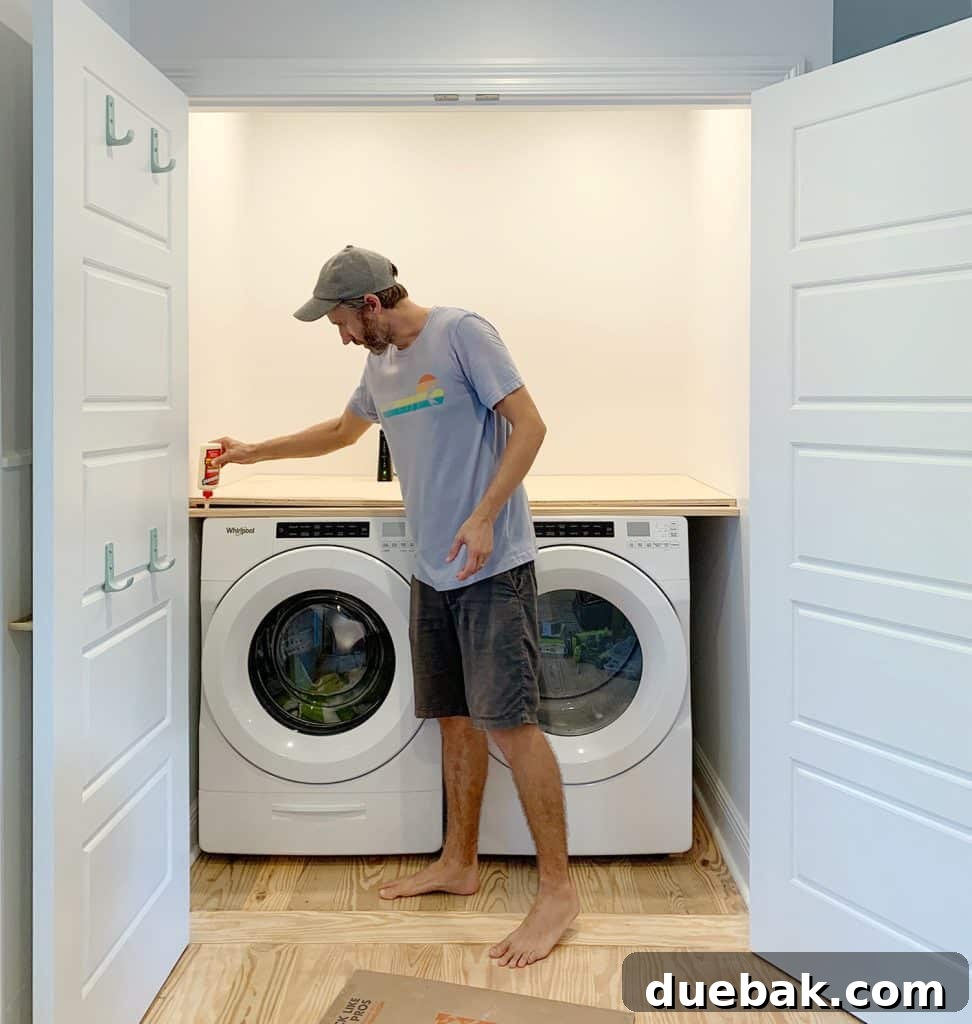
For the laundry counter directly above the appliances, we made a strategic decision to leave the plywood top loose. This allows it to be easily removed whenever we need to access the appliance plugs or perform any maintenance, offering unparalleled convenience without compromising functionality. For the upper shelves, however, a more permanent attachment is desirable for stability. We utilized our airless nail gun to attach the shelf tops to the underlying brace pieces using 1.5-inch finish nails. This method provides a strong, quick bond with minimal visual impact from the fasteners. As an alternative, you could also screw the shelf tops in place for maximum strength, or apply wood glue along the top edges of the supports for a permanent, robust adhesion, often combined with nails or screws for initial clamping while the glue dries.
Step 5: Adding a Decorative and Structural Face Piece to Each Shelf
At this stage, with your shelf tops in place, you’ll likely notice the raw, unfinished edge of the plywood or MDF. This is where the face piece comes into play, serving both an aesthetic and a subtle structural purpose. We cut another piece of 1×2-inch pine to the exact width of each shelf and securely attach it across the front edge. This piece is typically installed using both wood glue for a strong, long-lasting bond and finish nails (applied with a nail gun) to hold it firmly in place while the glue cures. The primary function of this face piece is to conceal the raw edge of the shelf top, instantly giving your DIY closet shelves a much more refined and professional appearance. An added benefit is that it visually doubles the perceived thickness of your shelves, making them appear more substantial and custom-built than they actually are, elevating the overall design of your laundry closet.
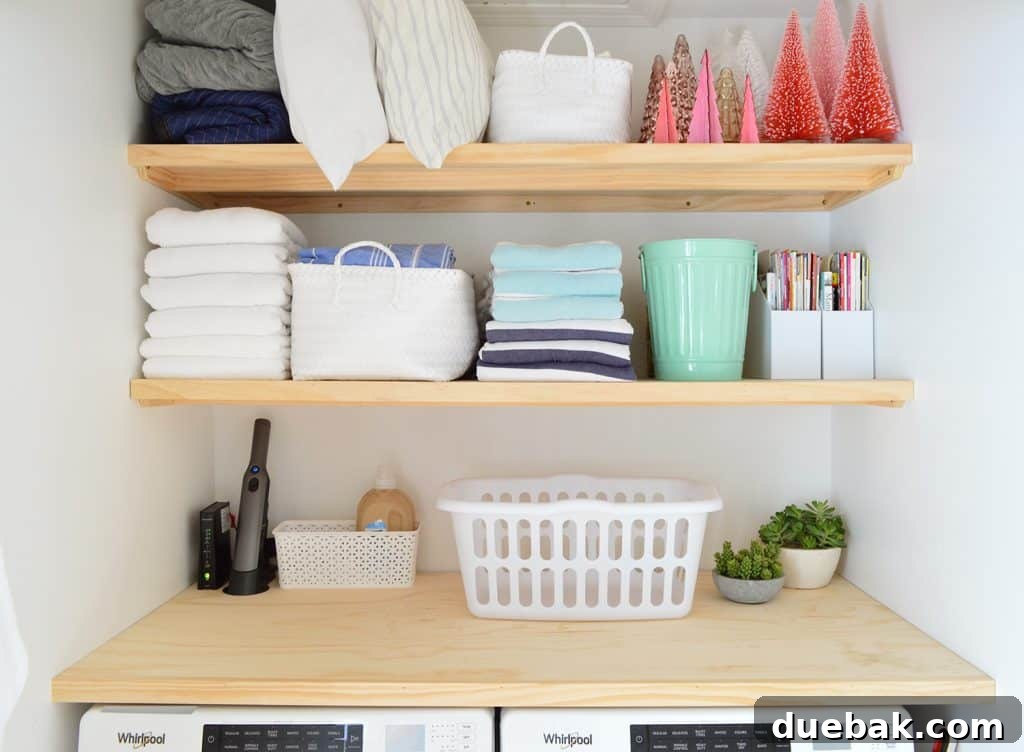
Observe the transformation in the images below after the face pieces have been successfully added. They significantly contribute to the shelves’ finished look, providing a chunky, built-in aesthetic. This small detail truly makes a huge difference in the overall perception of quality and craftsmanship. It’s also at this point that the angled cuts we made on the front ends of the side support pieces become meaningful. By angling these cuts, the support pieces are more effectively hidden behind the new face piece, preventing the unsightly exposed end grain of the 1×2 support from being visible when viewed from the front or sides. This careful attention to detail ensures a clean, seamless finish that mimics high-end custom cabinetry.
Step 5: Incorporating Optional Cross Supports for Enhanced Strength
This particular step is entirely optional, and its necessity largely depends on the span (length) of your shelves and the anticipated weight of the items you plan to store. For larger shelves or those intended to hold heavy objects, like gallons of paint or bulk cleaning supplies, adding an extra cross brace under the middle of each shelf can significantly enhance their load-bearing capacity and prevent sagging over time. We considered storing various heavy items on ours, so we decided that an additional cross support couldn’t hurt, providing an extra layer of reassurance for long-term durability. You can subtly see these additional cross braces on the underside of our shelves in the provided photos.
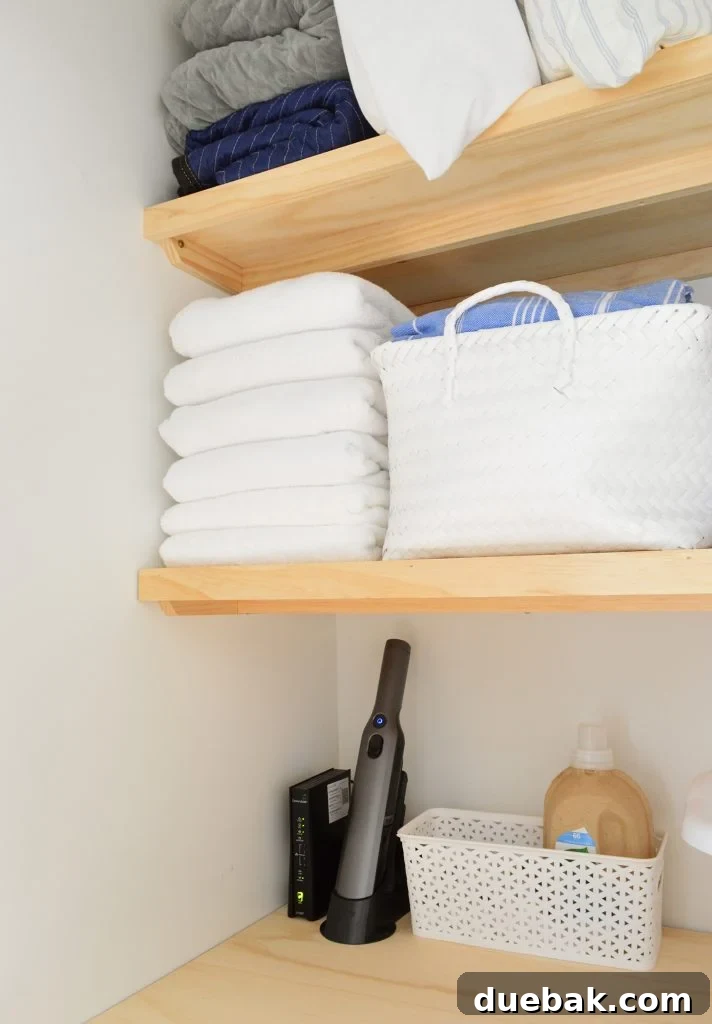
To implement this, we simply cut another piece of 1×2-inch pine to fit snugly between the front and back support pieces (or between the front face piece and the back support). This cross support is then securely attached to the side supports using screws driven in at an angle. It is absolutely crucial to drill a pilot hole before driving the screw at an angle to prevent the wood from splitting, which is a common issue when fastening close to the end grain. Alternatively, if you desire even greater strength and don’t mind a different aesthetic, you could install small metal brackets directly under these shelves. However, our personal preference was to maintain the clean, “floating shelf” appearance, which the hidden cross support helps preserve while still offering excellent reinforcement. This optional step truly customizes your shelves for optimal performance based on your specific storage needs.
Step 6: Applying the Final Seal, Stain, or Paint Finish to Your Shelves
The final step in your DIY closet shelving project is to apply the finishing touches that will protect your wood, enhance its beauty, and integrate it seamlessly with your home’s aesthetic. We opted for a simple, clear water-based sealer for our laundry closet shelves, applied easily with a brush. This choice allowed the natural beauty and light tone of the plywood to shine through, harmonizing beautifully with other wood elements in our home. However, the possibilities for finishing are vast: you could choose to stain your shelves a rich, warm color to complement existing decor, or paint them to match your wall color for a sleek, built-in look.
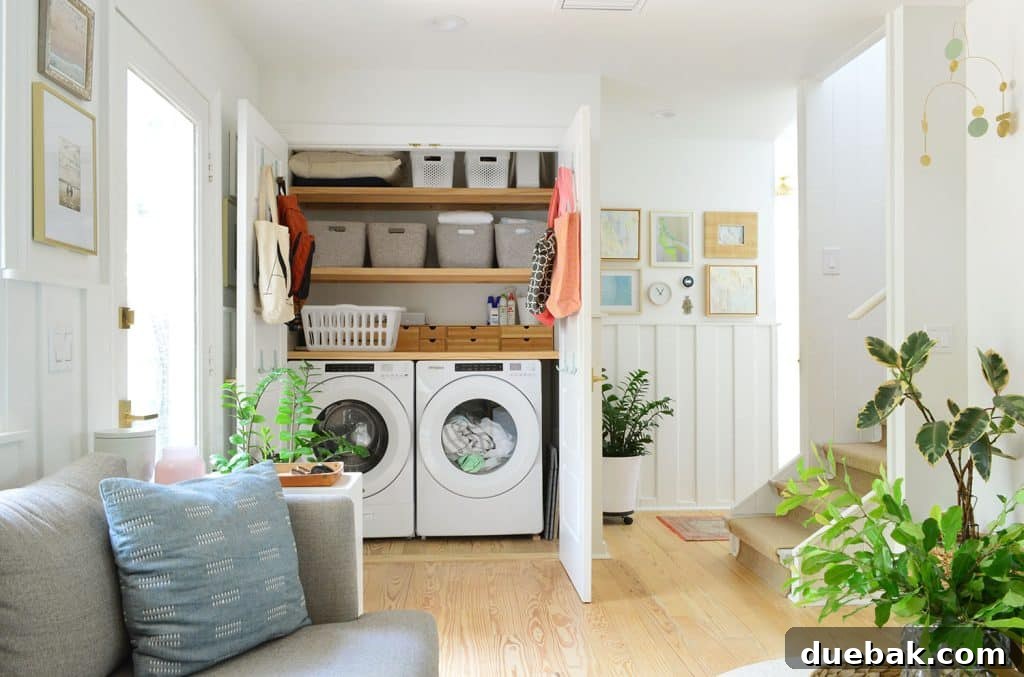
Regardless of your chosen finish, proper preparation is key. Before applying any sealer, stain, or paint, ensure your shelves are clean, dust-free, and lightly sanded for optimal adhesion. And a crucial tip: don’t forget to fill any visible nail holes (from attaching the shelf tops or face pieces) with wood filler before you prime or paint. This small step ensures a flawless, professional-looking surface. After application, be sure to allow ample time for your chosen finish to fully dry and cure according to the manufacturer’s instructions. Rushing this process can lead to sticky surfaces or damage when items are placed on the shelves. Once fully cured, your custom DIY laundry shelves will be ready to be loaded up with all your laundry essentials, transforming your closet into an organized and visually appealing space.
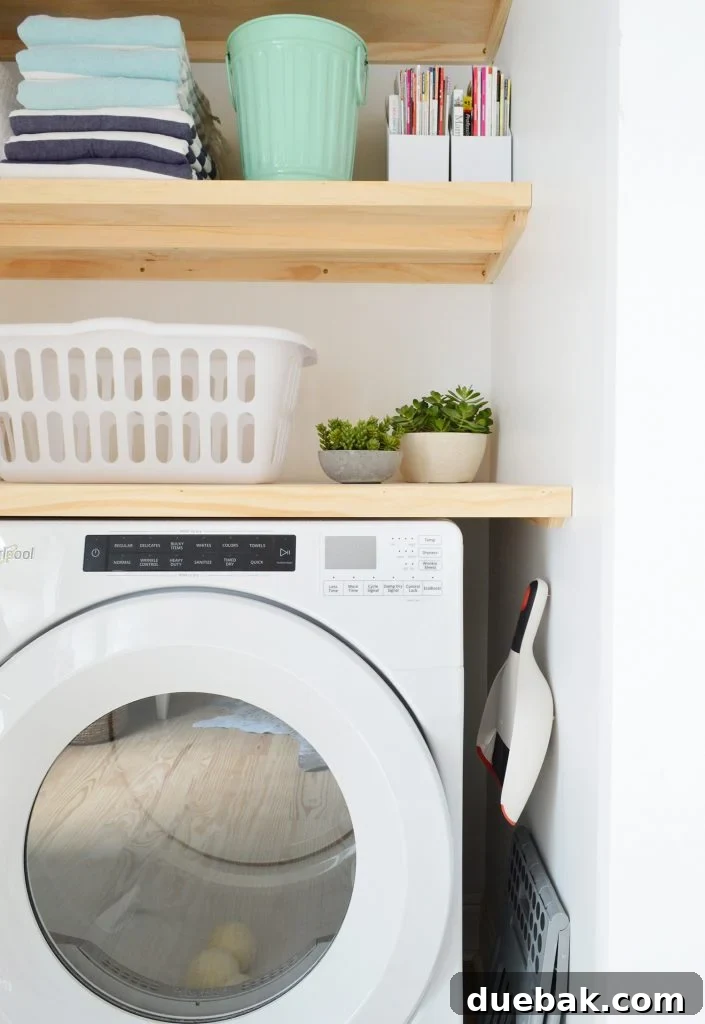
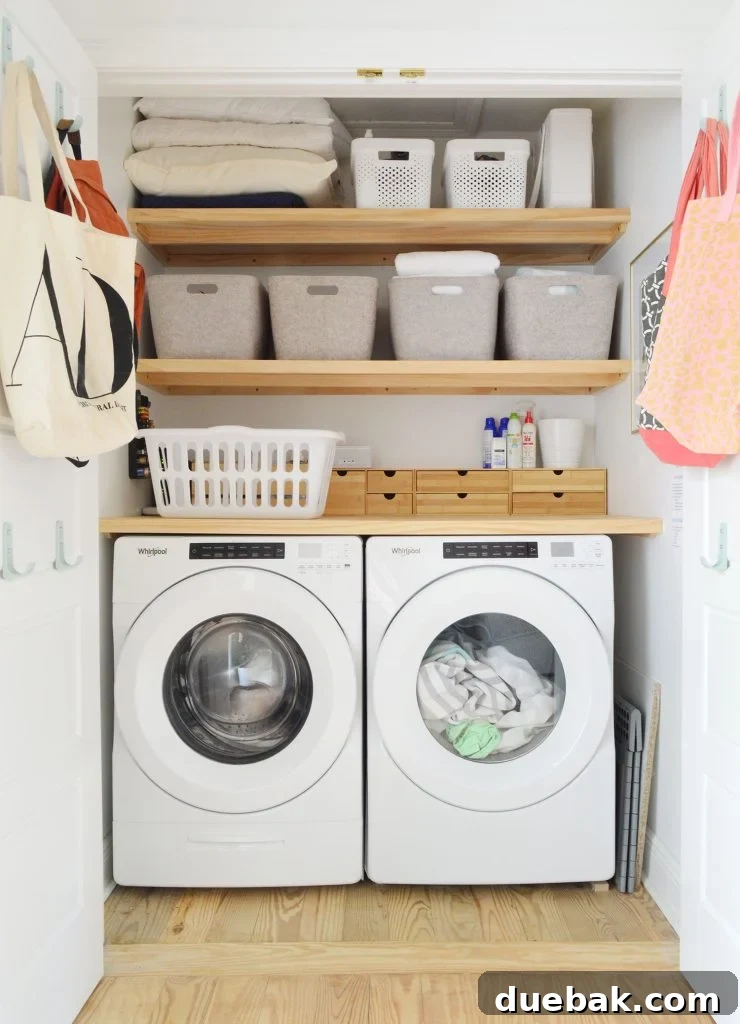
Our DIY laundry closet shelves have gracefully hosted a rotation of items over the past four years, from everyday linens to seasonal Christmas decorations, proving their versatility and enduring strength. This ability to adapt to changing storage needs is a testament to their robust construction and thoughtful design.
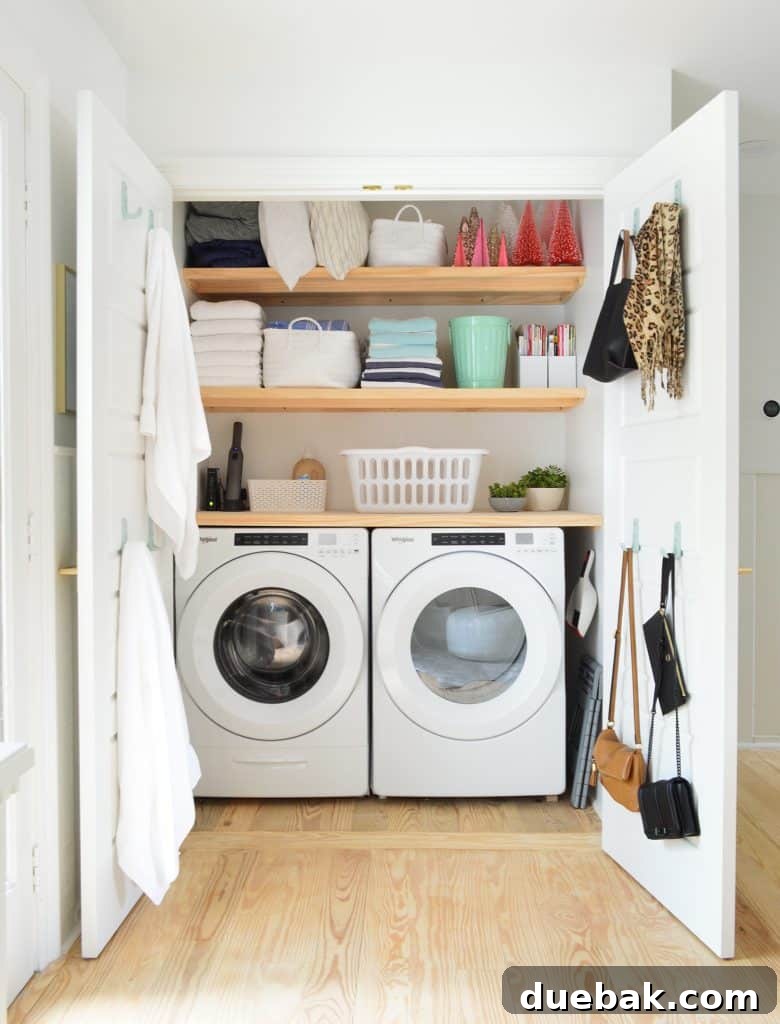
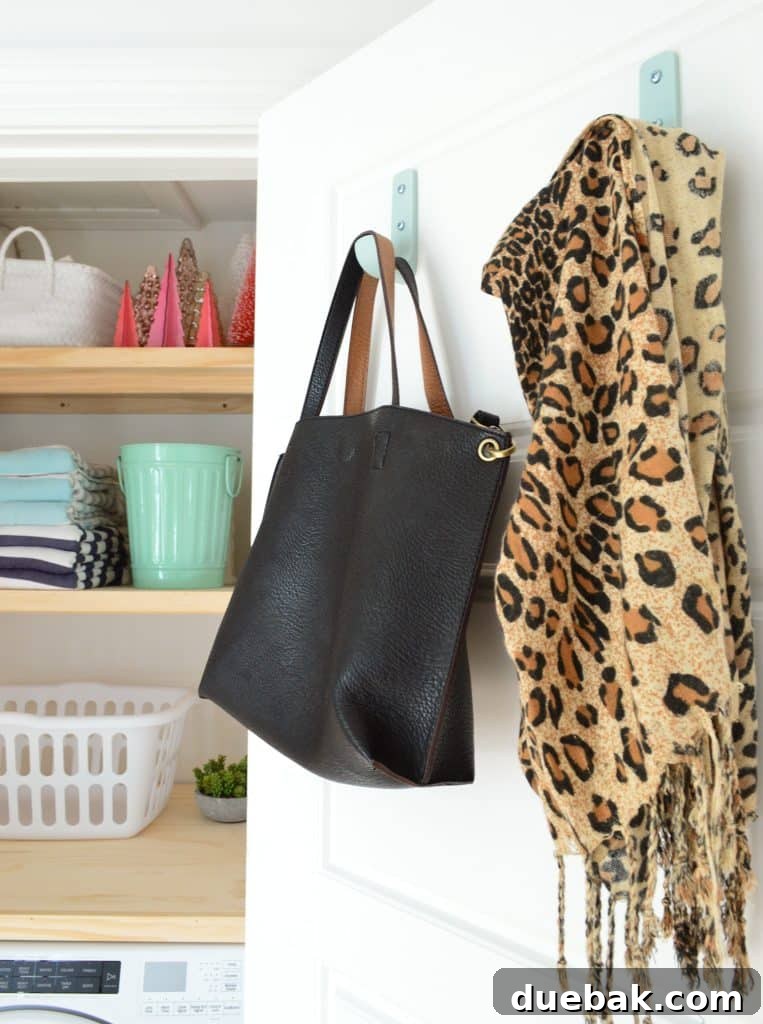
After nearly four years of continuous use, we can unequivocally state that these DIY shelves have been the ideal storage solution for our small laundry closet. They efficiently accommodate a wide array of items, from neatly folded linens and fresh towels to essential tools and spare light bulbs. Furthermore, by adding these inexpensive plastic hooks to the inside of the closet doors, we’ve cleverly transformed a portion of the space into a functional mini-mudroom, perfect for hanging backpacks, coats, and various bags, keeping our main living areas clutter-free.
Complementing the custom shelves, two other organizational heroes in this space have been the spacious felt bins, perfect for bulky items, and the smart bamboo wood desk organizers, which we repurposed to neatly arrange smaller cleaning supplies and sundries along the back of the shelves. These additions demonstrate how thoughtful accessories can further elevate the functionality of your DIY storage, making your laundry closet not just organized, but a truly efficient and enjoyable part of your home.
*This post contains affiliate links, so we may earn a small commission when you make a purchase through links on our site at no additional cost to you.