
Transforming Pinterest Dreams into Reality: My DIY Abstract Art Journey
It’s that exciting time of year again for the completely unofficial, yet incredibly inspiring, Pinterest Challenge! This wonderful initiative, dreamed up by Katie, is designed to shake us out of our pinning stupors and into active creation. It’s about moving beyond endless scrolling and finally bringing those saved ideas to life, transforming digital inspiration into tangible projects. This season, my creative compass pointed directly towards rediscovering the joy of painting.

Rediscovering the Artist Within: A Decade in the Making
For the past decade, my painting endeavors largely consisted of refreshing wall colors, adding character to furniture, or updating small home accessories. The last time I truly dabbled in creating art on canvas was with this particular piece a while back. So, for this Pinterest Challenge, I decided it was high time to pick up a brush and dive back into the world of fine art painting. My aim wasn’t to produce museum-worthy masterpieces or secure an art exhibition anytime soon. Instead, it was purely about the process – about having fun, experimenting with colors, and enjoying the therapeutic rhythm of creation.
The experience was incredibly rewarding. I dedicated two wonderful evenings to messing around with a set of Christmas art supplies from John that had patiently waited in my closet for over six months. It felt liberating to simply play with paint, without pressure or expectation. The resulting pieces, though humble, brought an immediate smile to my face, and I quickly found perfect spots for them all over the house. My hope is to stick with this newfound passion because, as it turns out, painting truly is my idea of a good time and a perfect creative outlet.
Finding Your Muse: Diverse Art Inspirations for DIY Projects
As per the rules of the Pinterest Challenge, my projects were born from the “Pintspiration” I linked up with in last Tuesday’s post. This challenge is fantastic for encouraging us to put our unique spin on existing ideas, making them truly our own. Here’s a recap of the diverse inspirations that fueled my abstract art journey:
- Geometric Fabric Patterns by John Robshaw: The intricate yet simple geometric doodles my dad used to make always fascinated me. John Robshaw’s fabrics, with their bold patterns and captivating designs, immediately brought those memories to life and inspired me to explore geometric forms in my own painting.
- Clara’s Fearless Brushstrokes: There’s something incredibly captivating about art created with “reckless abandon.” Clara’s painting, which I’ve always admired (and you can read more about here), perfectly embodied this free-spirited approach. It reminded me to let go of perfectionism and embrace spontaneity.
- Innovative DIY Art with Everyday Objects: I stumbled upon a truly cool DIY art project on Pinterest where the artist ingeniously used a toothpaste lid to create unique stamps. The creativity behind repurposing everyday items for art, much like the wine cork stamps featured here, resonated deeply. It pushed me to think outside the traditional art supply box.
- Kristen at KFD Designs – A Commissioned Muse: Kristen’s commissioned art at KFD Designs captivated me with its distinctive style and vibrant energy. Before using her work as a muse, I made sure to get her blessing, and thankfully, she didn’t mind at all. Her aesthetic encouraged me to experiment with color combinations and dynamic compositions.
- Challenge Inspiring Challenge: One of the inspirations was a DIY art project originally created for a previous Pinterest Challenge. It was incredibly heartwarming to see how our little community challenge inspired someone to create, and in turn, their creation inspired me. This cyclical nature of inspiration is truly powerful.
- Charming Watercolor Cards: A watercolor card project, with its happy colors and beautifully imperfect strokes, showcased the charm of loose and expressive art. The unpolished look of these cards encouraged me to appreciate the beauty in asymmetry and the unexpected textures watercolor can create.
Beyond these direct inspirations, I’ve always admired the work of Michelle Armas, whose abstract pieces are truly unparalleled and a constant source of “girl crush” inspiration. Additionally, this detailed post on making abstract art over on Oh Happy Day had me absolutely pumped and ready to get my hands dirty with paint. With my well of inspiration overflowing, it was time to dive into the painting play-by-play.
Diving into the Canvas: My First Abstract Creations
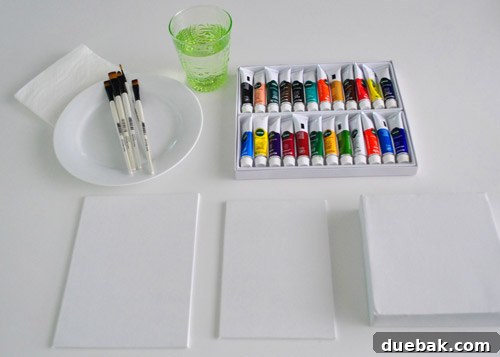
My first painting adventure began one evening after Clara was tucked into bed. I gathered my modest set of Reeves acrylics and a stack of small canvases, which I had purchased for a dollar each using a Christmas gift card to Main Art Supply here in Richmond. The affordability of the supplies made the process feel even more approachable and low-pressure.
Painting 1: The Unexpected Favorite
After about twenty minutes of focused yet playful creation, this was the result:
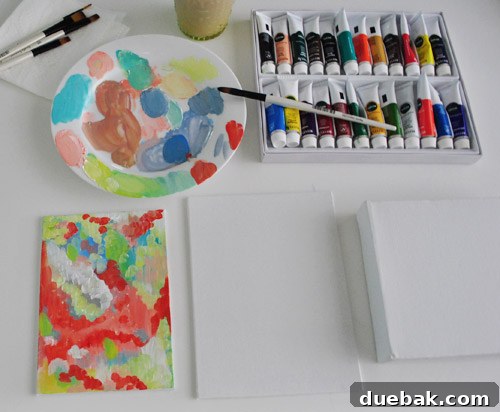
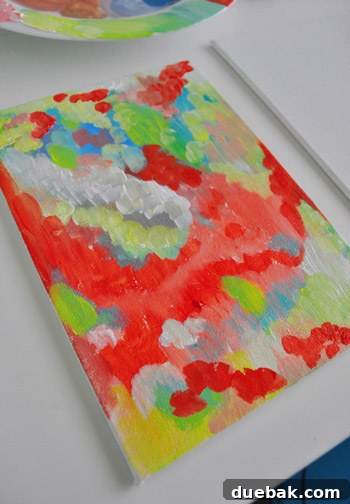
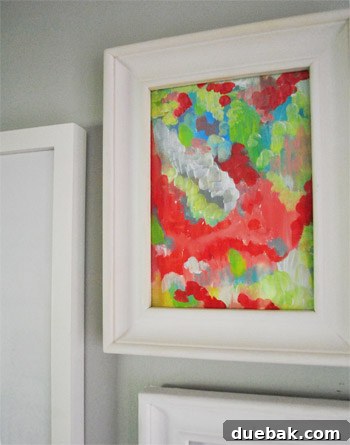
I put a fair amount of thought into the color palette, deliberately choosing combinations like red and coral paired with green, yellow, and blue. The synergy between these hues truly captivated me. However, when it came to application, I tried not to overthink it. My technique was quite intuitive: a literal dab here, a swipe there, moving from one color to the next, repeating the process. Sometimes I dragged the brush to create smoother, blended transitions, while other times I opted for a more textured “dab-dab-dab” application. The outcome pleasantly surprised me; I immediately loved it and wished it were ten times larger. Still, starting small was a fantastic way to overcome any initial intimidation, and I can always have it enlarged professionally, framed with a thick mat for a grander presentation.
Painting 2: A Lesson in Patience and Color
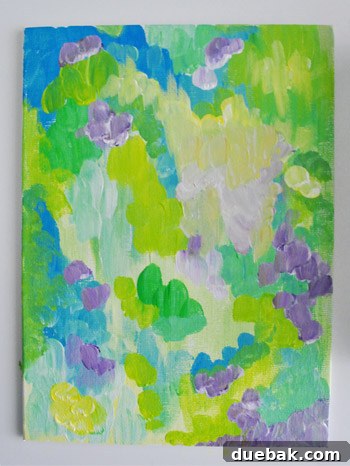
The next painting didn’t quite capture my heart as much as the first, perhaps it was beginner’s luck the first time around! While I didn’t dislike it, I felt a stronger connection to the color palette I used in the initial piece. This experience served as a valuable lesson: take your time with color selection and resist the urge to rush into filling the canvas. Painting, much like life, is often a marathon, not a sprint, requiring patience and thoughtful consideration.
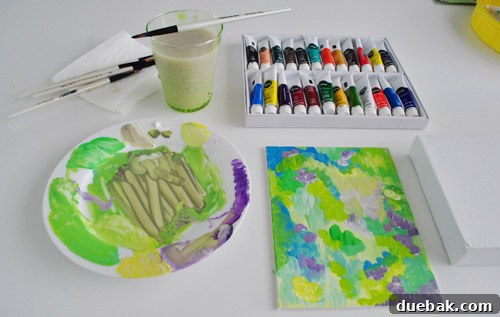
Ultimately, it found its own charm and sweet spot. At only 4×6 inches, it was hardly a giant commitment, making it a perfect piece for experimentation and learning.
Painting 3: Embracing Loose and Fluid Strokes
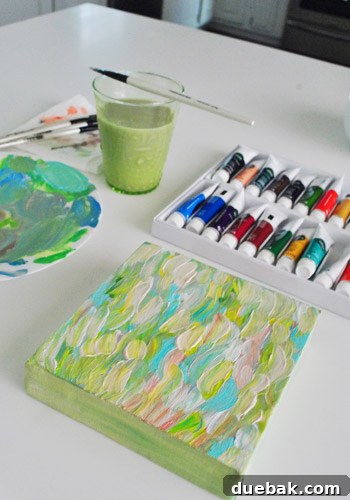
After these initial attempts, I transitioned from my canvas-wrapped boards to a more substantial 5×5 inch canvas, which offered a chunkier, more robust feel. This time, I decided to go completely “loosey-goosey” with my approach, letting instinct guide my brush.
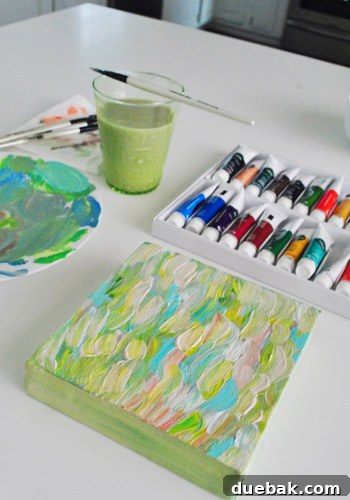
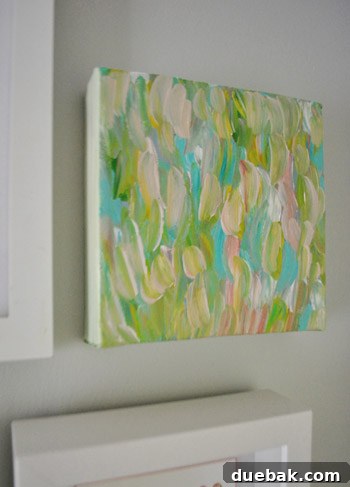
My entire technique for this piece was a consistent “dab-dab-dab.” The resulting texture and color interplay reminded me somewhat of water lilies, a connection I found delightful, given my admiration for artists like Monet. The small streaks of coral and bright pops of turquoise brought me immense joy. This painting further solidified my understanding that color choice is absolutely paramount – it can truly make or break a piece in my artistic vision.
Seamlessly Integrating Art into Home Decor
Once all the paintings had dried overnight, I embarked on the satisfying task of finding them new homes. I carefully studied the hallway frame wall, a dynamic display where we frequently rotate pieces to keep our decor fresh. The two thinner canvas-wrapped boards found their perfect fit within existing frames, replacing an old Ikea print and a cherished postcard. You can spot them nestled in the top left corner, adding a fresh burst of color to the curated gallery.
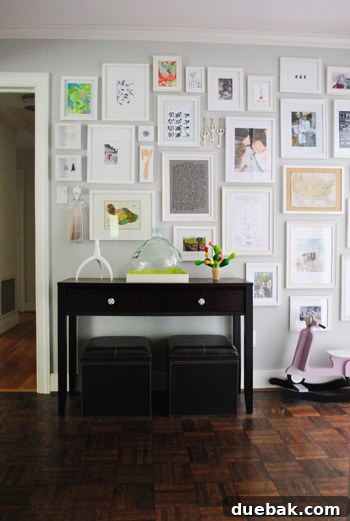
I still have a strong preference for my very first piece; it truly felt like a stroke of beginner’s luck. For this painting, I removed the glass from its frame as the canvas was too thick to accommodate it. However, the second, green-toned painting fit perfectly behind the glass, so I chose to leave it in place, offering an additional layer of protection and a subtle sheen.
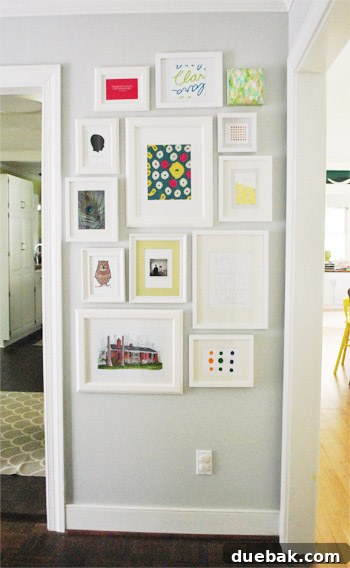
The chunkier 5×5 inch canvas found a lovely spot on another frame wall, integrating beautifully into the existing collection of art and photographs, specifically in the top right corner.
Those subtle turquoise smears truly pop against the backdrop, adding a vibrant, cheerful touch to the space. It’s amazing how a small piece of art can inject so much personality into a room.
The Creative Process: Embracing Imperfection and Evolution
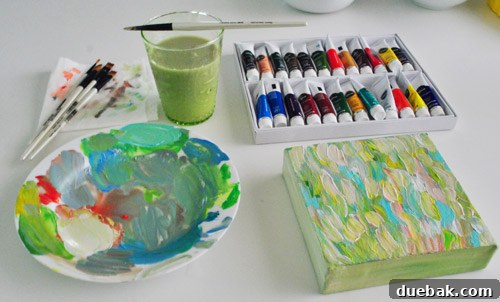
Now, brace yourselves, because I’m about to reveal the unvarnished truth of the creative process! I decided to tackle two larger canvas boards, each measuring 8×11 inches and costing a mere $2. What followed was an enlightening exercise in documenting every “phase” these paintings went through. As any artist knows, things often start out looking, well, really ugly. Exhibit A:
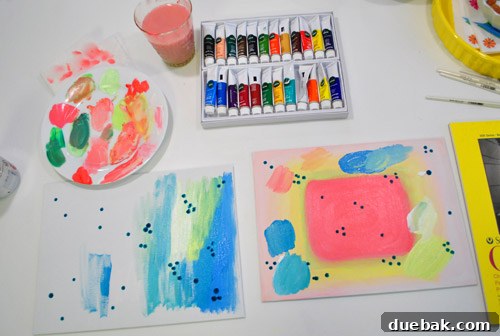
My typical approach involves building layer upon layer, allowing the piece to evolve into something entirely different from its inception. Looking back at these initial photographs, I sometimes wonder if I should have stopped here. At the time, they felt incredibly unfinished and raw, but now, I find a certain charm in their early stages. It’s fascinating how perception changes over time.
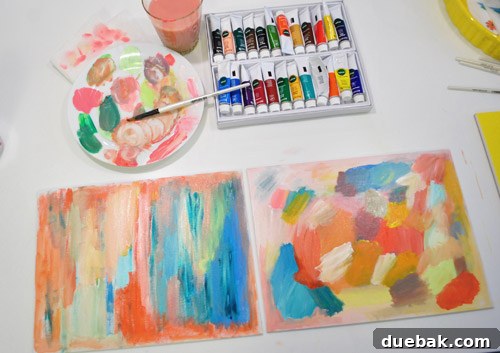
I continued by adding a generous amount of white paint, dabbing and streaking it across the canvases, which led me to this stage. In hindsight, I truly should have stopped here. I adore the little bright red heart that seems to be hiding within the canvas on the right, peeking through from behind the white in the bottom-left corner. It’s these small, serendipitous details that often make a piece truly special.
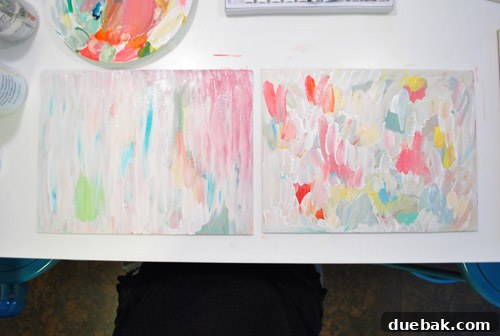
These larger paintings, and the act of photographing their various stages, imparted a crucial lesson: the importance of knowing when to stop! It’s easy to keep “noodling” with a piece, sometimes to its detriment. While I have a strong preference for the paintings as they appeared in the images above this section compared to their final state, this journey taught me invaluable insight. It’s essential to take a breath, step back, and evaluate whether your continued efforts are genuinely improving the piece or merely a result of the pure enjoyment of painting. Lesson learned, and a vital one for any creative endeavor.
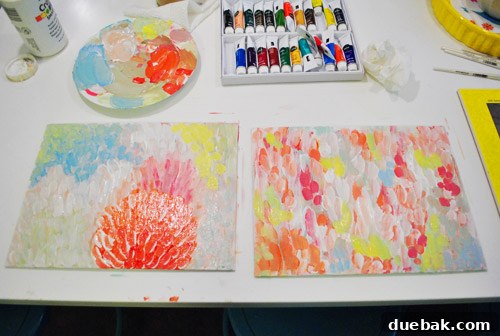
Thankfully, despite the overworking, I don’t entirely dislike the final outcome. In person, they possess a really fun neon greenish-yellow hue that lends them a modern, cheerful vibe. And the beauty of paint, especially on inexpensive $2 canvas boards, is the zero-commitment factor: I can always paint over them and start anew if I ever decide to change things up. This creative freedom is truly liberating.
DIY Framing & Practical Solutions for Your Art
I knew these larger pieces would look much more polished and complete once framed. So, John and I embarked on a DIY project to create two chunky wood frames. John will be sharing all the detailed instructions for this process later this afternoon, and the best part is that you can achieve this look without needing a Kreg Jig or any other major specialized tools – a true win for accessible DIY! Initially, I envisioned these frames gracing the walls of our office, but the existing stenciled walls created a bit of a visual competition. After some consideration, we found they looked absolutely best in the kitchen, where their modern flair truly shines. The even greater news? No new holes in the wall! We simply used 3M picture hanging Velcro strips for the painting positioned above the stove, making them incredibly easy to install and, more importantly, to undo if we ever decide to redecorate.
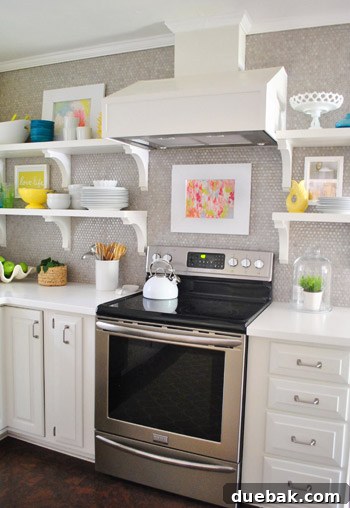
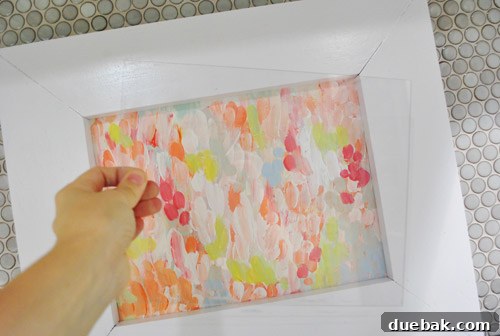
Speaking of the painting above the stove, I’m sure some of you are wondering about potential splatters. Rest assured, I had that covered! I made a quick trip to Lowe’s and purchased a $3 piece of acrylic sheet. I simply slipped this transparent barrier in front of the painting, making it completely wipeable and protected from any rogue spaghetti sauce explosions or cooking mishaps. It’s a simple yet highly effective solution for keeping kitchen art pristine.
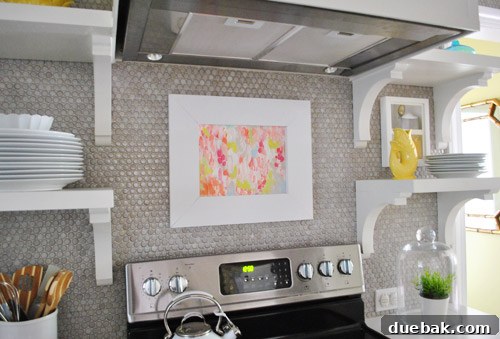
It’s quite amusing how many different items I’ve tried to hang above the stove, only to decide they didn’t quite work. Yet, this homemade painting nestled in its equally homemade frame seemed to slip effortlessly into place, as if it were always meant to be there. Perhaps it was destiny, at least for now, until I get a wild hair and decide to paint over them again – because that’s the beauty of DIY art! I’ll definitely keep you all posted on any future artistic adventures.
Art on a Budget: Making Creativity Accessible
So, that’s the full story of my Pinterest Challenge painting escapade. For those curious about the financial aspect of this creative endeavor, here’s a transparent budget breakdown that highlights how accessible art can truly be:
- $11 – For the five canvases and the paint brush I used, all purchased from our local art shop, Main Street Art Supply.
- $16 – For a fantastic set of 24-pack Reeves acrylic paints, also acquired from Main Street Art Supply.
- $0 – For the two chunky homemade frames. These were crafted from scrap wood we already had on hand, utilizing supplies that were readily available. John will share more details on this thrifty framing process this afternoon!
- $0 – For the two additional frames used for the smaller flat canvases in the hallway. These were frames we already owned and repurposed.
- $3 – For the piece of acrylic from Lowe’s, ingeniously used to protect the canvas above the stove from any unexpected kitchen splatters.
- Total: $30 – This grand total covers five painted canvases, four of which are beautifully framed, averaging out to an incredibly budget-friendly $6 per piece of original art!
And here’s a little secret for the truly budget-conscious: if you consider the initial art supplies as a holiday present (since they were purchased six months ago with a Christmas gift card), my actual out-of-pocket expense for this entire Pinterest Challenge was effectively zero, aside from the $3 acrylic protector. This approach, focusing on utilizing existing resources like scrap wood, inexpensive canvases, and gifted paints, is often how people like me love to look at things – making creativity both fulfilling and incredibly affordable. This challenge truly embodied the spirit of DIY and smart resourcefulness.
Join the Creative Community: Share Your Pinterest Challenge Journey!
Now that you’ve seen my journey, don’t forget to head over and check in with my fellow Pinterest Challenge participants: Katie, Kate, and Michelle. They’ll be sharing their own amazing projects sometime today, and I can’t wait to see what incredible things they’ve whipped up!

And now, it’s your turn! This is the exciting part where we invite all of you to share the fun Pinterest Challenge projects you’ve tackled over the past week. We’d love for you to join us, even if only virtually! If you’ve already blogged about your project, simply follow these steps to link up and share your creation with our vibrant community:
- Click on the blue “Add Your Link” button, typically found at the bottom of this post. (You might need to scroll down a bit, depending on how many inspiring projects have already been added.)
- In the URL field, please add a direct link to your specific blog post about your project, rather than just your blog’s homepage. This ensures everyone can easily find your unique creation.
- Where it asks for a “name,” please write a descriptive title for your project (e.g., “Painted Canvases” or “DIY Framed Art”) instead of your actual name. This helps categorize the wonderful array of projects.
- We would also be incredibly grateful if you could include a quick link back to our project posts within your own blog post. Here are the links to our collaborators: Katie’s, Kate’s, Michelle’s, and ours. Additionally, it’s always a thoughtful gesture to link to your inspiration project on Pinterest, as well as directly to the original project or site that sparked your creativity, giving them some well-deserved love and credit.
If you prefer not to use the link-up tool, feel free to share a link to your project in the comment section below. Or, if you don’t have a blog, you can even add a link to a free photo-sharing site like Flickr with your pictures (just remember to set your gallery to public so we can all admire your work!). We absolutely cannot wait to see what incredible things you’ve been up to and how you’ve brought your Pinterest dreams to life!