

Deck Renovation: Seamlessly Repairing a Tree-Removed Hole for Enhanced Outdoor Living
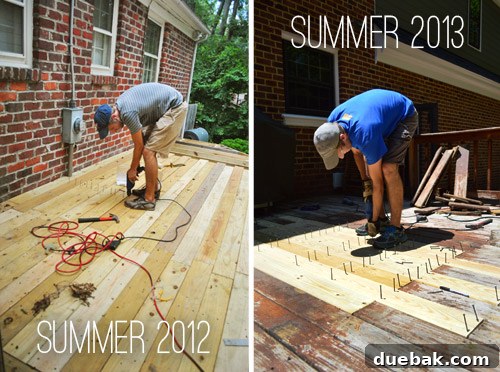
Just ten short months ago, if someone had suggested I’d be embarking on another deck construction project, I might have given them a look that could curdle milk. Not literally, of course; I’m not one for physical altercations. But the sentiment would have been clear: “Are you serious? Again?” Having just completed a significant deck build, the thought of diving back into deck-related tasks so soon wasn’t exactly at the top of my wish list. However, this wasn’t an entirely new deck. This was a crucial patch job, a necessity born from a previous, much larger undertaking. Our beloved outdoor space had a rather conspicuous void, a gaping hole left in the wake of a necessary tree removal. It was time to transform this eyesore into a functional, inviting part of our home.
The Unforeseen Challenge: A Tree’s Legacy on Our Deck
Our journey to a more functional deck began with the removal of a large, mature tree that once stood proudly within the deck’s perimeter. This wasn’t a choice we made lightly, but it was essential for the safety and long-term health of our property. The tree had been encircled by a custom-built bench, which, while charming, had to be disassembled – or rather, demolished – to allow the tree removal experts to do their work. While they did an excellent job taking down the tree, they left us with a rather formidable hole in our deck and a not-so-charming pile of reclaimed bench lumber.

This substantial void, a constant reminder of the tree that once was, presented both a challenge and an opportunity. Instead of simply rebuilding the old bench, which would have perpetually dictated our outdoor furniture layout, we envisioned a more versatile space. Covering the hole entirely would open up possibilities for centered dining areas, comfortable seating arrangements, and overall better flow for entertaining. The immediate concern, however, was finding deck boards that would seamlessly integrate with the existing, age-old decking. Would I be able to match the width? Would the repair stick out like a sore thumb? These questions loomed large as I surveyed the pile of salvaged wood, hoping to find enough suitable pieces. Unfortunately, I fell short by three crucial boards.

Gathering Your Tools & Materials: The Foundation of Any Successful DIY Project
With a clear vision in mind and a list of necessary supplies, my next stop was Lowe’s. Armed with an old scrap piece of our existing deck board, I quickly discovered that the width was a standard size, readily available right off the shelf. This was a huge relief and a small victory that set a positive tone for the project. Score! The simplicity of finding suitable materials significantly reduced the complexity of the repair. Here’s what made it into my cart, demonstrating that even a significant repair doesn’t have to break the bank:

- Seven 8-foot long deck boards: Carefully selected for their quality and consistent width. These were the primary components for filling the gap. – $42
- One 8-foot long 2×8 inch board: This robust piece of lumber was essential for creating the new structural support, or joists, beneath the new decking. It was cut in half to create two strong supports. – $9
- Four metal hangers: These crucial connectors would securely hold the new joists in place, ensuring the stability and longevity of the repair. – $4.50
- TOTAL: $55.50 – An incredibly cost-effective solution for a major deck enhancement!
Beyond these primary purchases, I also relied on a few essential tools: a circular saw for precise cuts, a Dremel Sawmax for scoring existing boards, a pry bar for careful board removal, a drill/driver for fastening, and a trusty measuring tape (though sometimes, as you’ll see, improvisation is key!). Having these tools ready saves countless trips back and forth, making the process smoother and more efficient.
Building a Solid Foundation: Crafting New Joists for Deck Stability
The first critical step was to establish a sturdy foundation for the new deck boards. This involved creating and installing new joists. I cut my 2×8 inch boards to the precise width of the hole, ensuring a snug fit. Then, using some decking nails salvaged from last summer’s main deck project – a testament to the value of keeping leftover supplies – I secured the metal hangers. These hangers would cradle the new joists, creating a robust framework.
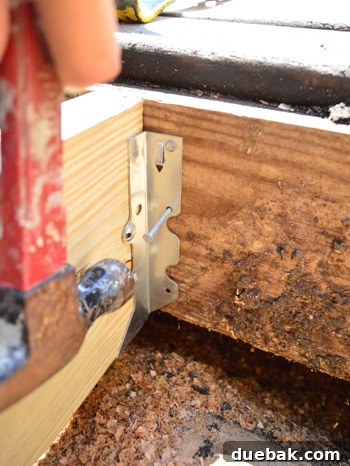
While a single joist might have sufficed for the relatively narrow three-foot span, the tree removal team had left a peculiar angled cut on the remaining stump. This made a perfectly centered joist placement impractical. Adapting to the situation, I opted for a slightly unconventional spacing, adding an extra joist for good measure. My primary goal was clear: ensure the new deck boards had ample support and wouldn’t flex or sag underfoot. As long as it provides stability, the exact spacing can sometimes be flexible in a patch job like this. This step is crucial for the structural integrity of your repair, guaranteeing a safe and durable surface for years to come.
Integrating New Decking: A Seamless Patchwork Approach
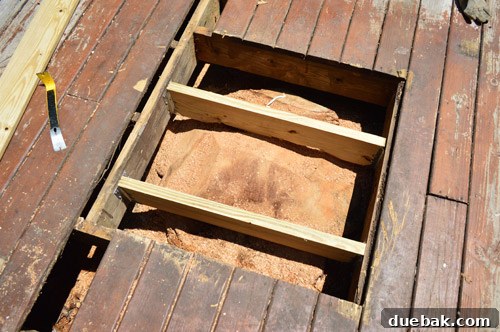
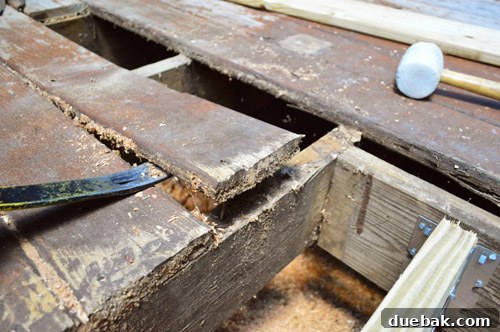
To achieve a natural, less “patched-up” appearance, I decided that the new boards shouldn’t just fit within the confines of the hole. Instead, they would extend slightly beyond it, resting on existing joists at either end. This strategy offered dual benefits: enhanced stability for the new boards and a much more visually integrated repair. This decision meant carefully cutting back some of the original, adjacent deck planks to make room for the fresh lumber and seamlessly camouflage the transition.

Precision Cutting and Strategic Removal
For this task, I brought out my Dremel Sawmax. This versatile tool allowed me to make a deep, controlled score along the existing boards, precisely where I wanted them to break. While it didn’t cut all the way through, it weakened the wood enough for me to cleanly snap the boards, minimizing the effort of full-length cuts and reducing waste. This technique resulted in a slightly rougher edge, which I knew would be hidden once the new boards were in place, but it drastically simplified the removal process.
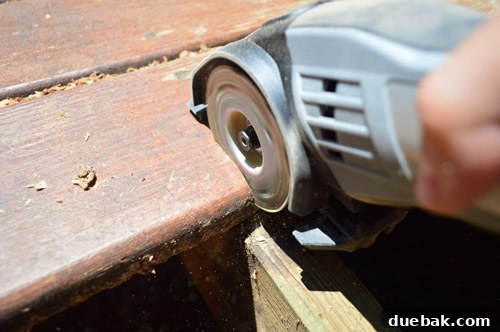
This clever approach saved me from the arduous task of prying up the entire length of each board. Instead, I only needed to remove the sections that interfered with the new installation. A sturdy crowbar became my best friend here, making quick work of extracting the cut sections. Efficiency is key in any DIY project, and this method certainly delivered.
Fitting the New Boards: Simplicity in Design
When it came time to fit the new boards, I opted for a simple, direct approach over precise measurements. I laid each new board across the space, marked it with a pen exactly where it needed to be cut, and then carefully trimmed it to size. This eliminates potential errors from measuring tape mishaps and ensures a perfect fit every time.
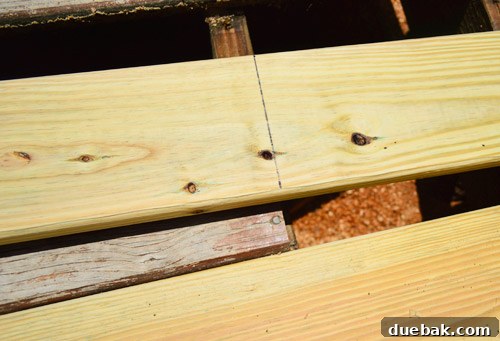
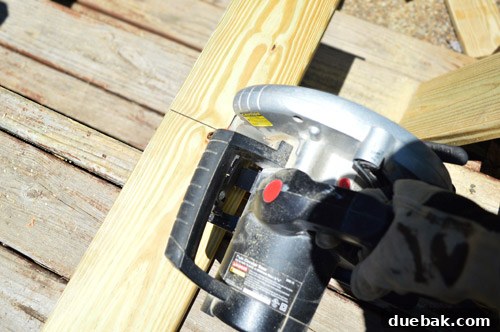
To make my cuts, I utilized the sturdy deck stairs as a makeshift sawhorse – another example of adaptable DIY problem-solving. My circular saw made quick, clean cuts, preparing each board for its new home.
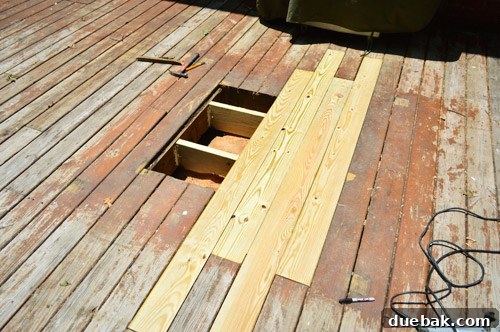
Then, it was simply a matter of piecing the puzzle together. Each board fit snugly into its designated spot, gradually transforming the gaping hole into a solid, usable surface. The satisfaction of seeing the deck take shape with each board laid down was immense.
Securing Your Investment: Fastening for Longevity
Once the boards were in place, the final structural step was to securely screw them down. I was incredibly grateful to have kept all my leftover deck screws from the previous summer’s project. This not only saved me a few dollars but, more importantly, prevented an annoying extra trip to the hardware store for forgotten supplies – a common pitfall in DIY endeavors! Properly fastening each board ensures the deck remains stable, safe, and durable for years to come. It’s a small detail that makes a big difference in the lifespan of your repair.
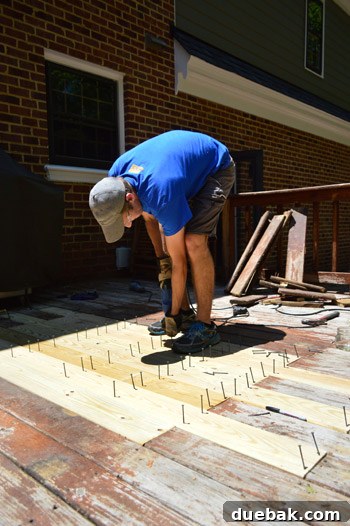
The Finished Patch: Bridging the Gap to a Functional Deck
And here it is! The completed deck patch. While the mismatched boards aren’t exactly a picture of seamless beauty *yet*, they are a monumental improvement over the dangerous, gaping hole that once existed. You might notice a slightly longer, somewhat odd-looking board on the bottom left. That’s a result of one of the old boards cracking unexpectedly during the prying process, necessitating a slightly larger patch than originally planned. Such are the joys and unpredictable nature of home improvement projects!
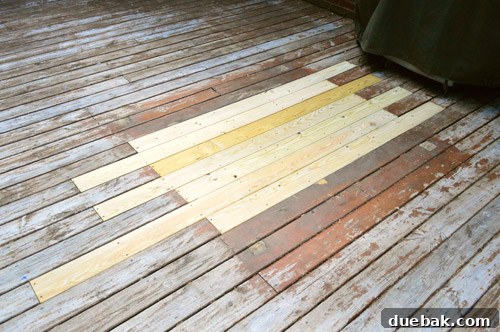
Our hope is that once the entire deck undergoes a thorough cleaning, stripping, and restaining, these new boards will blend beautifully with the older ones. Or, perhaps more accurately, the old boards will look revitalized, allowing everything to appear cohesive and new. It’s a testament to the power of proper maintenance and finishing to transform the entire look of an outdoor space.
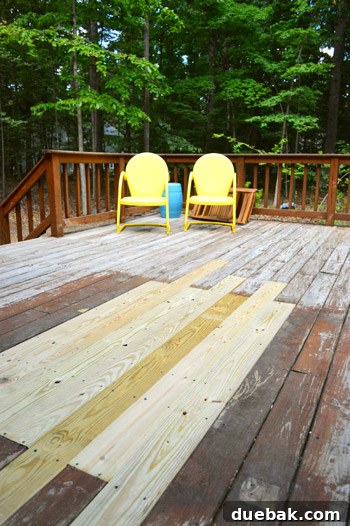
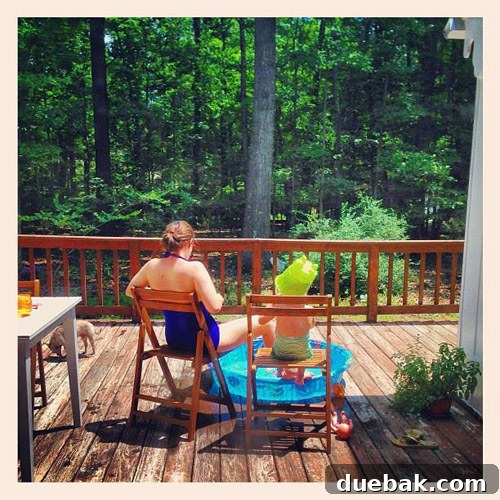
For now, we’re simply reveling in the ability to host friends and family without the constant worry of someone accidentally stepping into a hole. It’s truly liberating to have a fully functional and safe outdoor living area. Just look at Sherry’s chair, confidently positioned right where the old hole used to be (she’s behind the camera, capturing this victorious moment!). This repair has fundamentally improved the usability and safety of our deck, proving that even small, focused projects can have a huge impact on your home’s functionality.
Looking Ahead: Future Deck Enhancements and Long-Term Vision
With this crucial repair behind us, our deck to-do list now shifts focus to aesthetic improvements and further functional upgrades. The next big project involves a deep cleaning and stripping of the entire deck surface, followed by a fresh stain and seal. This comprehensive treatment will not only protect the wood but also unify the appearance of the old and new boards, hopefully restoring some of its like-new glory. We envision a vibrant, inviting surface that enhances our outdoor living experience significantly.
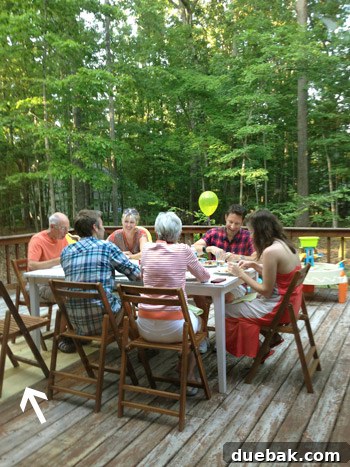
Beyond the immediate refinishing, we have exciting plans for “Phase Two.” We dream of opening up the back of the deck by adding extra-wide, grand stairs leading down to the backyard. Imagine a sweeping staircase, perhaps extending from the thick post currently in front of Sherry’s left elbow all the way to the post near the pot of herbs in the photo below. This architectural change would dramatically improve access to the yard, creating a more cohesive indoor-outdoor flow and truly integrating our deck with the surrounding landscape. It’s a vision that promises to elevate our outdoor space from merely functional to truly extraordinary.
Speaking of functionality and safety, we also later added two gates to the deck, a practical necessity to keep our adventurous dog safely contained within our property. These thoughtful additions ensure that our deck remains a secure and enjoyable space for all members of our family, two-legged and four-legged alike.
Embracing the Unexpected DIY Journey
Has anyone else recently tackled a home improvement project that wasn’t on their radar? Something that arrived as a “surprise” – whether pleasant or a little challenging? As much as I initially grumbled about adding “deck repair” back to my list of tasks, I must admit, there’s immense satisfaction in seeing it completed. The fact that this particular project only took one afternoon to achieve makes the effort even more rewarding. It’s a powerful reminder that sometimes, the most unexpected projects can be the most fulfilling, transforming a potential headache into a tangible improvement that enhances your home and your quality of life. Don’t shy away from these challenges; embrace them as opportunities to build skills, save money, and create a space you truly love.