
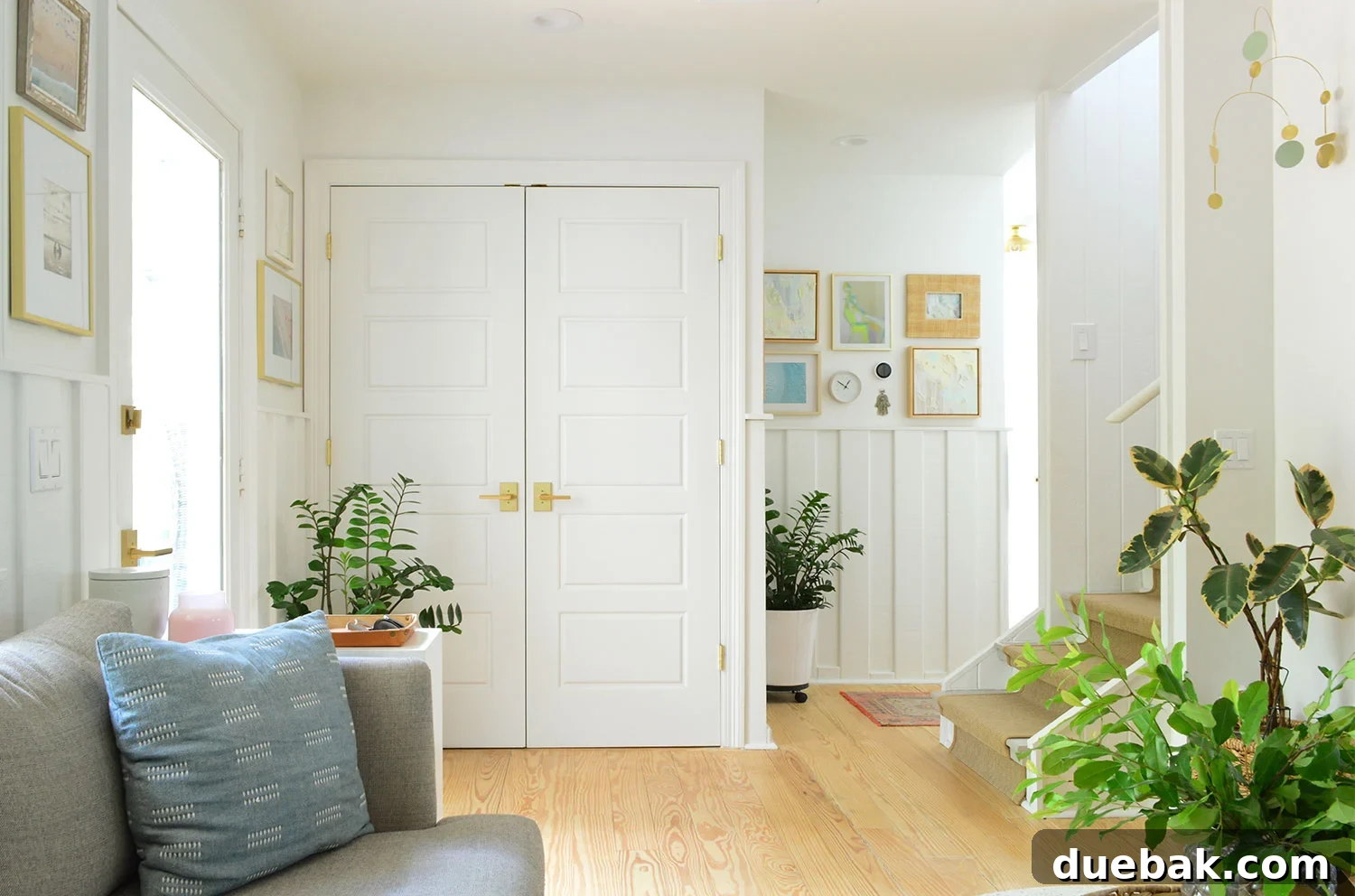
Choosing the perfect white paint can feel like an overwhelming task, with countless shades vying for attention and often falling short of expectations. After extensive experimentation and countless brushstrokes, our ultimate favorite has emerged: Sherwin-Williams Pure White (SW 7005). This exceptional shade embodies everything homeowners and designers seek in a crisp, clean white, skillfully avoiding the common pitfalls of other popular choices. Forget whites that are too bright, lean too gray, or have an unfortunate yellow cast; Pure White strikes an ideal balance. Its incredible versatility makes it suitable for virtually every surface in your home, from walls, doors, and trim to ceilings, cabinets, and beyond. Let’s delve into why Sherwin-Williams Pure White stands out as the ultimate white paint for creating inviting and stylish interiors.
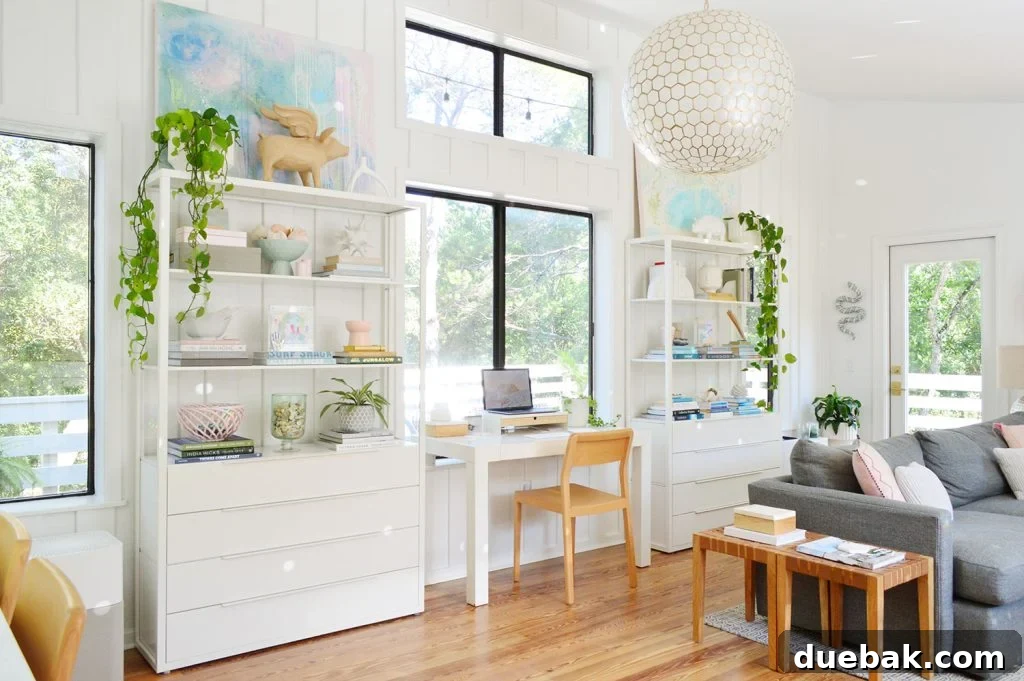
Table of Contents
Is Sherwin-Williams Pure White the Best White Paint Color?
Anyone who has embarked on the quest for white paint understands the elusive nature of a “true white.” White paint colors are incredibly nuanced, with their character heavily influenced by subtle undertones. These undertones can cause whites to lean unexpectedly yellow, pink, violet, or even green, making the selection process a daunting challenge. Furthermore, whites devoid of any significant undertone often appear stark, sterile, or blinding once applied to walls or cabinets, creating an unwelcoming atmosphere rather than a serene one.
With Sherwin-Williams Pure White (SW 7005), Sherwin-Williams has achieved an exceptional balance. This shade masterfully combines brightness with just the right touch of undertone, resulting in a paint color that is as close to a perfect white as you can get. It lives up to its name, projecting the image of a crisp, pure white without actually being an overpowering, unadulterated pure white. Its refined formulation ensures it never feels cold or clinical, but always inviting and fresh. Our trust in this color is so profound that it graces nearly every painted surface within our own home, proving its superior adaptability and enduring appeal.
Is Sherwin-Williams Pure White Too White for Walls?
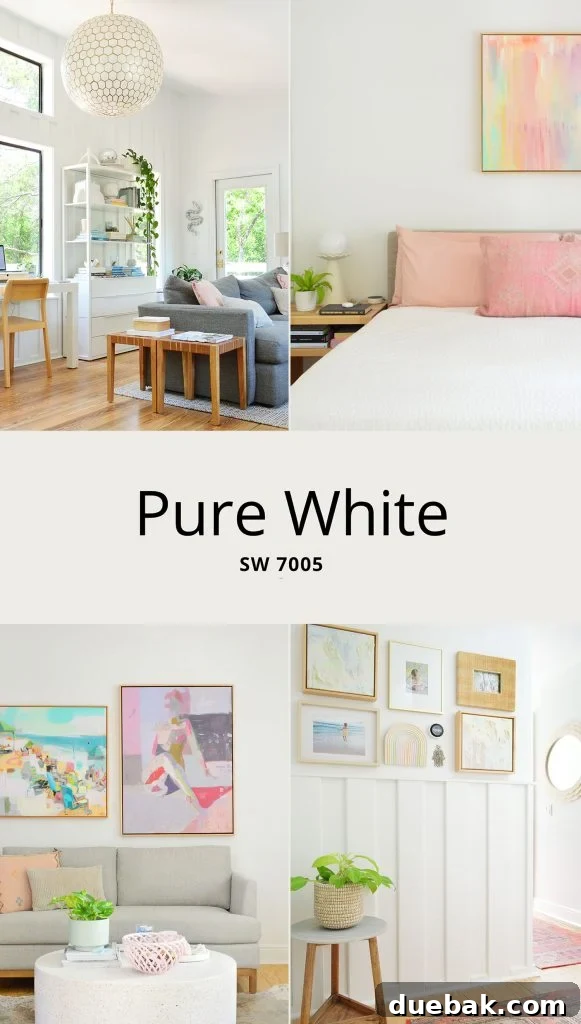
Far from being too white, Sherwin-Williams Pure White is an outstanding choice for walls! It consistently ranks among the most popular white paint shades for interior walls, and for excellent reasons. We’ve personally leveraged this color to cultivate that sought-after “gallery white” aesthetic throughout our home, achieving a look that feels both sophisticated and approachable, never stark or overly cold. This desirable effect is directly attributed to the very subtle warm undertones present in the paint. These undertones infuse just the perfect amount of warmth, transforming what could otherwise be a sterile white into a welcoming backdrop. The result is an interior that feels remarkably bright and open, yet simultaneously cozy, comfortable, and utterly livable.
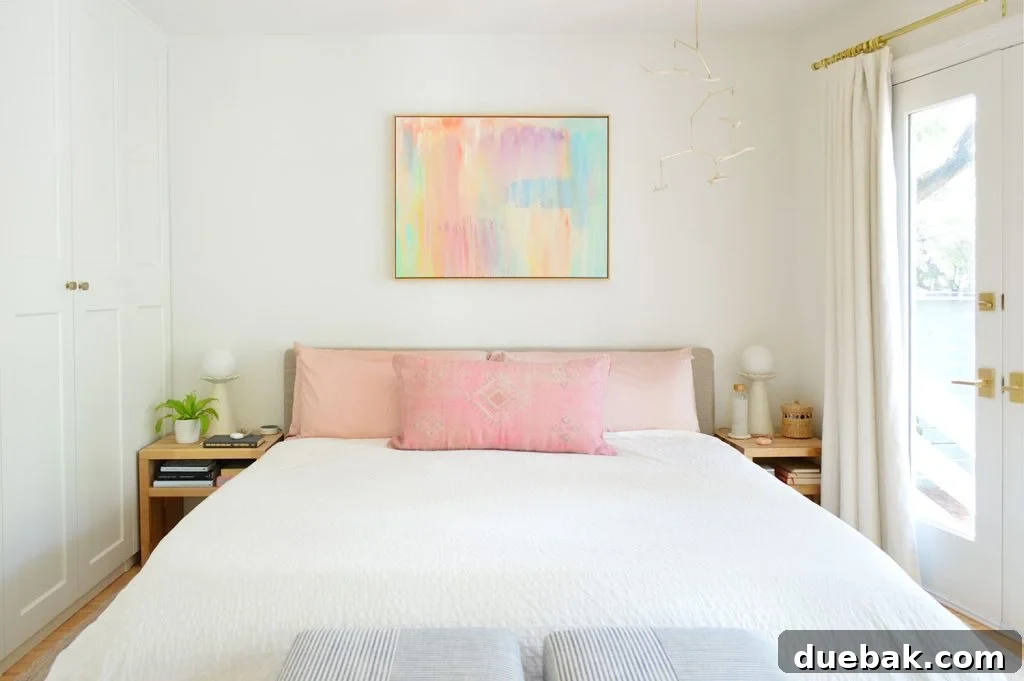
Beyond its inherent warmth, we’ve observed that Sherwin-Williams Pure White performs beautifully across a spectrum of lighting conditions. Whether illuminating a south-facing room bathed in abundant natural light, providing soft illumination in a north-facing room with limited daylight, or appearing pristine under soft white artificial lighting at night, its integrity remains consistent. This remarkable adaptability makes it, for us, truly the perfect whole-house paint color, effortlessly transitioning from one space to the next while maintaining a harmonious flow.
Is Sherwin-Williams Pure White Warm or Cool?
One of the most defining and beloved characteristics of Sherwin-Williams Pure White is its classification as a subtly warm white. This means it carries the faintest suggestion of a creamy yellow hue. However, it’s crucial to understand that this warmth is incredibly delicate and understated – so much so that many observers might not even consciously detect its presence. It contributes to the color’s softness without ever venturing into yellow territory.
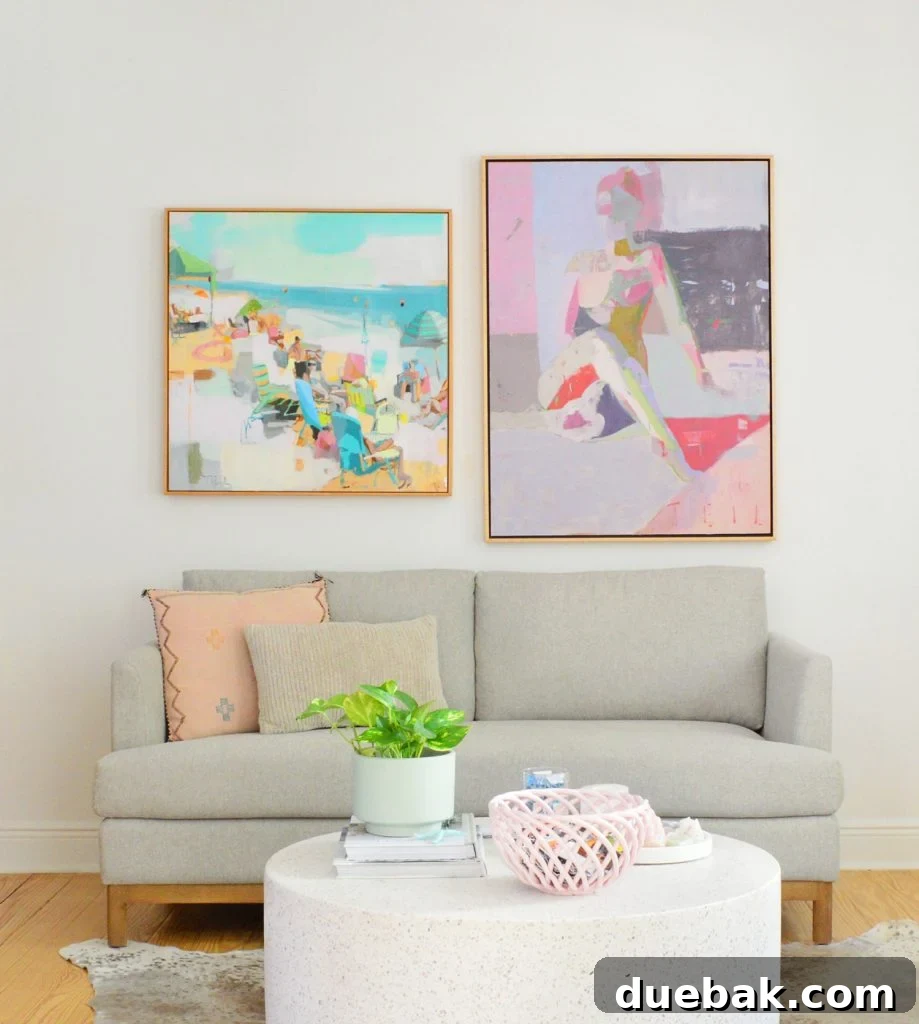
Generally, warm whites are highly preferred for interior spaces because cool whites, with their blue or gray undertones, often create an impression of coldness, starkness, or excessive brightness when applied to expansive wall surfaces. On the other hand, a paint color that leans too heavily into warmth risks appearing off-white, cream, or even beige, losing that desirable crisp white aesthetic. Sherwin-Williams Pure White masterfully navigates this delicate balance, offering the best of both worlds. It presents as a genuinely clean, unmistakably white white to the eye, yet without any of the sterile or harsh qualities that can accompany purer, cooler whites. Its gentle warmth ensures a welcoming and comfortable ambiance in any room. To gain a better visual understanding of its appearance, you can observe its characteristics in the video below.
For a visual guide, you can watch this video on YouTube to see Sherwin-Williams Pure White in action.
What is Pure White’s Undertone?
The subtle warmth that makes Sherwin-Williams Pure White so appealing stems from its very slight yellow undertones. These undertones are the secret ingredient that professional designers often seek for an ideal interior white paint color. If you were to observe the mixing process at the paint counter, you’d notice the addition of minuscule amounts of yellow, red, and black pigments to the white base. While these specific hues are incredibly challenging to discern individually in the final mixed paint, it is precisely their nuanced inclusion that prevents Pure White from appearing blindingly stark. Instead, they provide just enough depth to make it feel slightly softer and warmer than a standard, un-tinted white, ensuring it enhances, rather than overwhelms, a space.
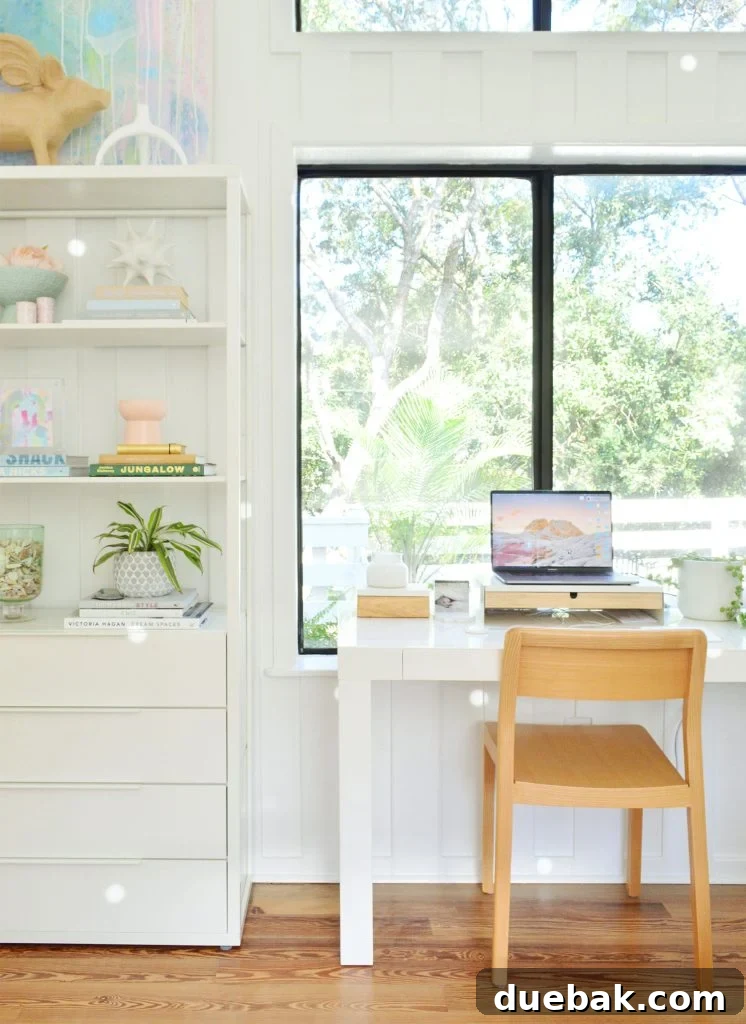
What is Pure White’s LRV?
Understanding a paint color’s Light Reflectance Value (LRV) is crucial for predicting how it will behave in a given space. Sherwin-Williams Pure White boasts an LRV of 84. This value is a strong indicator that Pure White is indeed a very light color, yet its position at 84 (rather than closer to 100) confirms it possesses enough depth to avoid being overly intense or glaring. LRV is a standardized measurement of how much light a paint color reflects, with an absolute black having an LRV of 0 and the purest, brightest white registering at 100. An LRV of 84 signifies that Pure White reflects a substantial amount of light, contributing to a bright and airy feel, but it holds back just enough to prevent any feeling of harshness or discomfort to the eyes.
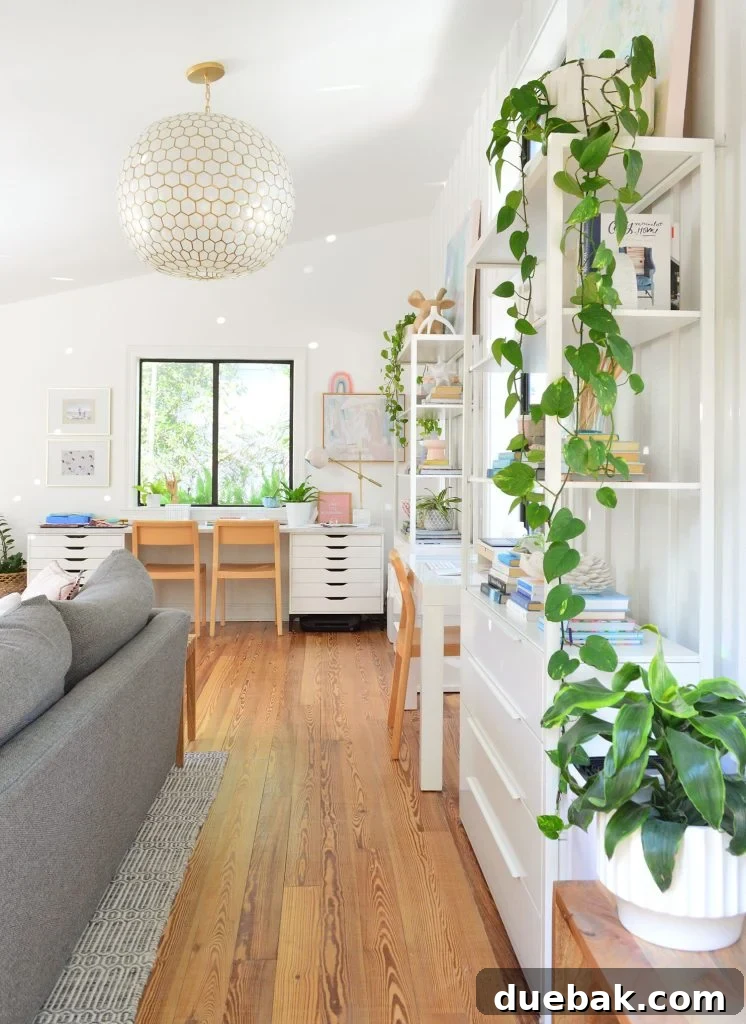
To put Pure White’s LRV into perspective, consider other prominent bright white paint colors. For instance, Sherwin-Williams High Reflective White (SW 7757) and Benjamin Moore Chantilly Lace (OC-65) are known for being exceptionally bright, boasting higher LRVs of 93 and 90 respectively. These comparisons highlight that while Pure White is undoubtedly a radiant white, its slightly lower LRV contributes to its balanced and gentle character, making it bright without being overwhelming. This sweet spot in LRV is a key reason why it’s so widely adaptable and loved for various interior applications.
Where Can You Use Sherwin-Williams Pure White?
Sherwin-Williams Pure White (SW 7005) is revered as an all-around classic white, distinguished by its remarkable versatility, allowing it to be used successfully in nearly any application within your home. Its balanced undertones and ideal brightness make it a fantastic choice for walls, trim, ceilings, cabinets, doors, and much more. In our own residence, we have embraced Pure White for virtually every painted surface – adorning every wall, ceiling, and door, and gracing all our trim and wainscoting. Literally, every painted surface visible in the photograph below, including the handrail on the stairs, is painted in this magnificent hue. The inherent flexibility of this color ensures it is a superb choice for any room, from tranquil bedrooms and vibrant living rooms to bustling kitchens, serene bathrooms, and even high-traffic hallways or discreet closets.
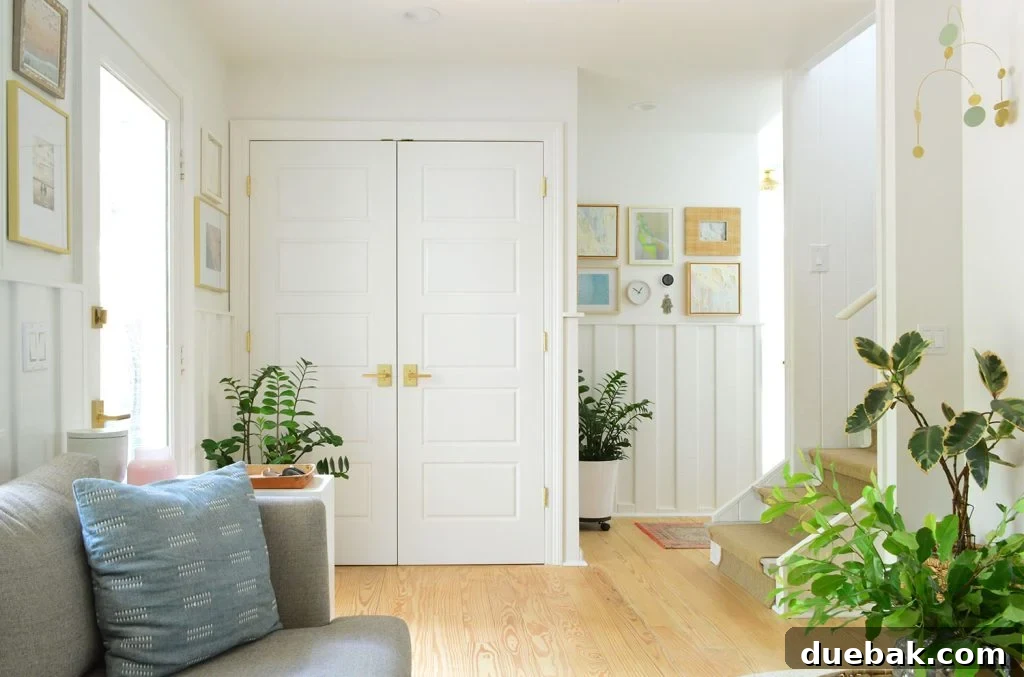
Regarding paint finishes, we typically recommend using an eggshell sheen for walls, which provides a subtle, soft glow and is durable for everyday life. For all trim, doors, railings, and wall moldings, a semi-gloss paint is ideal; its slightly higher sheen offers both contrast and enhanced durability against wear and tear. Ceilings are best painted with a flat finish, which helps to hide imperfections and prevent glare. We have found that layering the same white paint color across various surfaces, differentiated only by sheen, imparts a cohesive, expansive feel to our home. This strategy has made our smaller home appear noticeably larger, brighter, and imbued with a sense of relaxed sophistication. Pure White’s crisp and clean tone makes it an excellent fit for modern and contemporary homes, while its underlying warm undertones also harmonize beautifully with traditional and farmhouse-style interiors, proving its universal appeal.
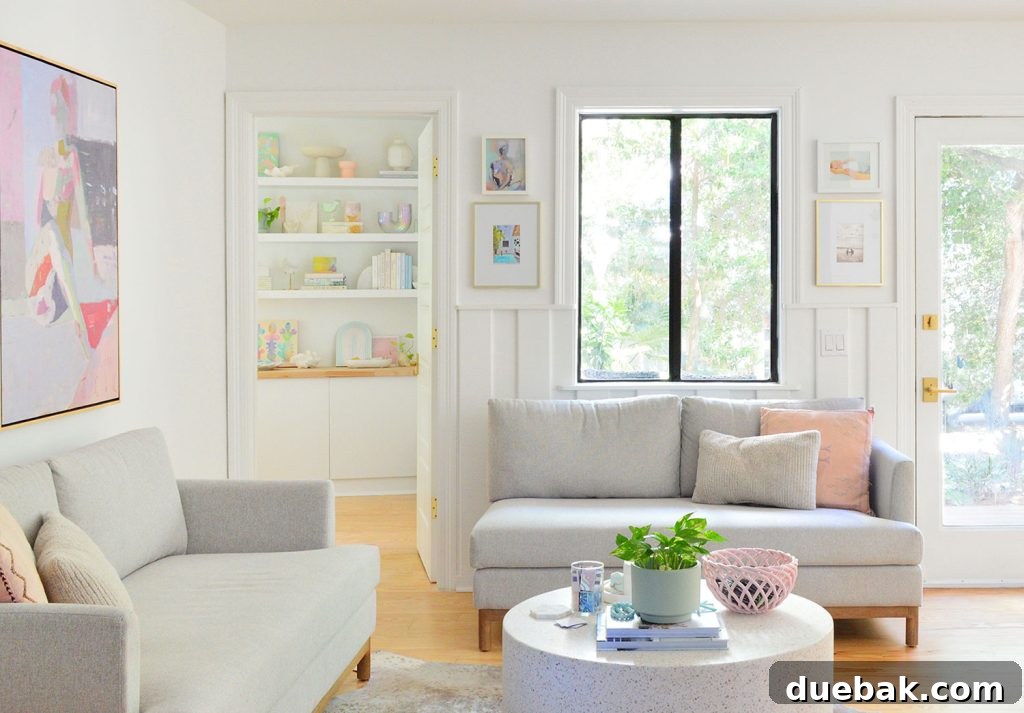
The beauty of crisp white walls, particularly Sherwin-Williams Pure White, lies in their boundless flexibility. They serve as a perfect neutral canvas, allowing for limitless pairings with diverse colors, decorative styles, wood tones, and metal finishes. It acts as an impeccable backdrop for showcasing colorful furnishings and vibrant artwork, simultaneously providing a superb neutral complement to bold accent walls or creatively painted ceilings. This adaptability ensures that your home can evolve and change with your tastes without requiring a complete paint overhaul.
Where Should You NOT Use Sherwin-Williams Pure White?
While Sherwin-Williams Pure White is exceptionally versatile for interiors, many find it too bright for expansive exterior applications. The intense direct sunlight outdoors has a tendency to magnify any paint color, causing even subtle whites like Pure White to appear overwhelmingly bright or even glaring. This can result in a harsh, almost blinding effect that detracts from a home’s curb appeal. Therefore, it is best utilized outdoors as an accent or trim color, where its crispness can truly shine. It’s particularly effective as a trim color to make your siding pop, as we expertly demonstrated at our beach house shown below, where it elegantly frames the historic front door.
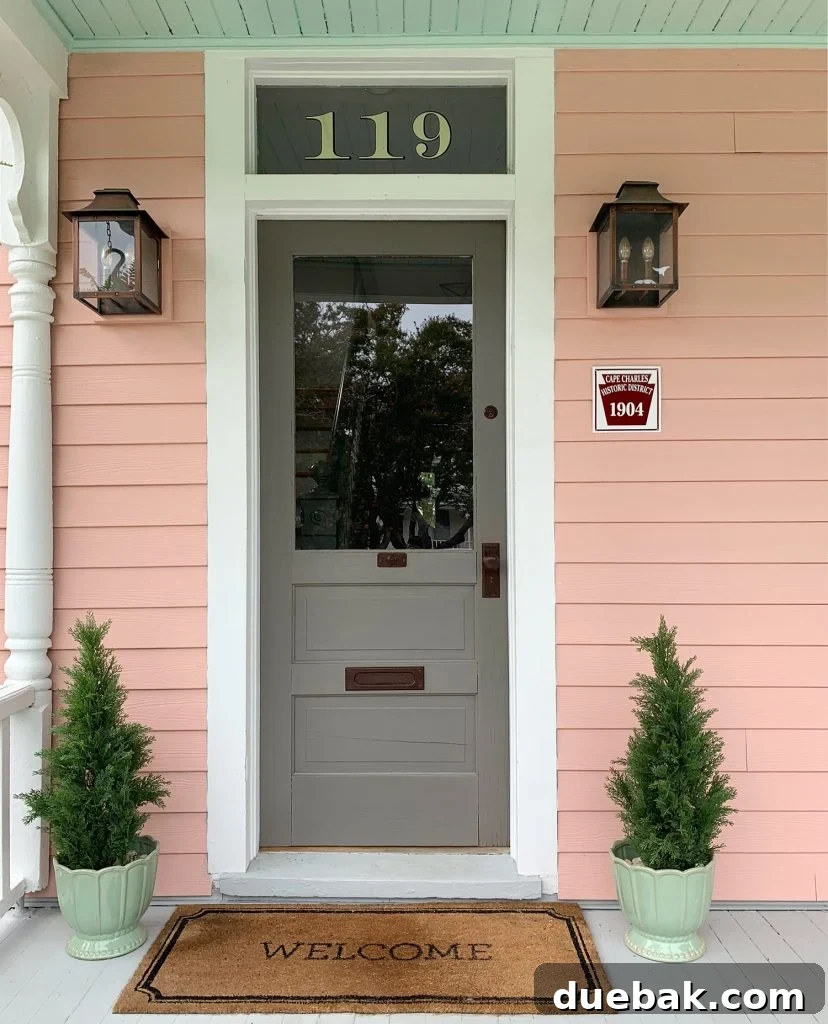
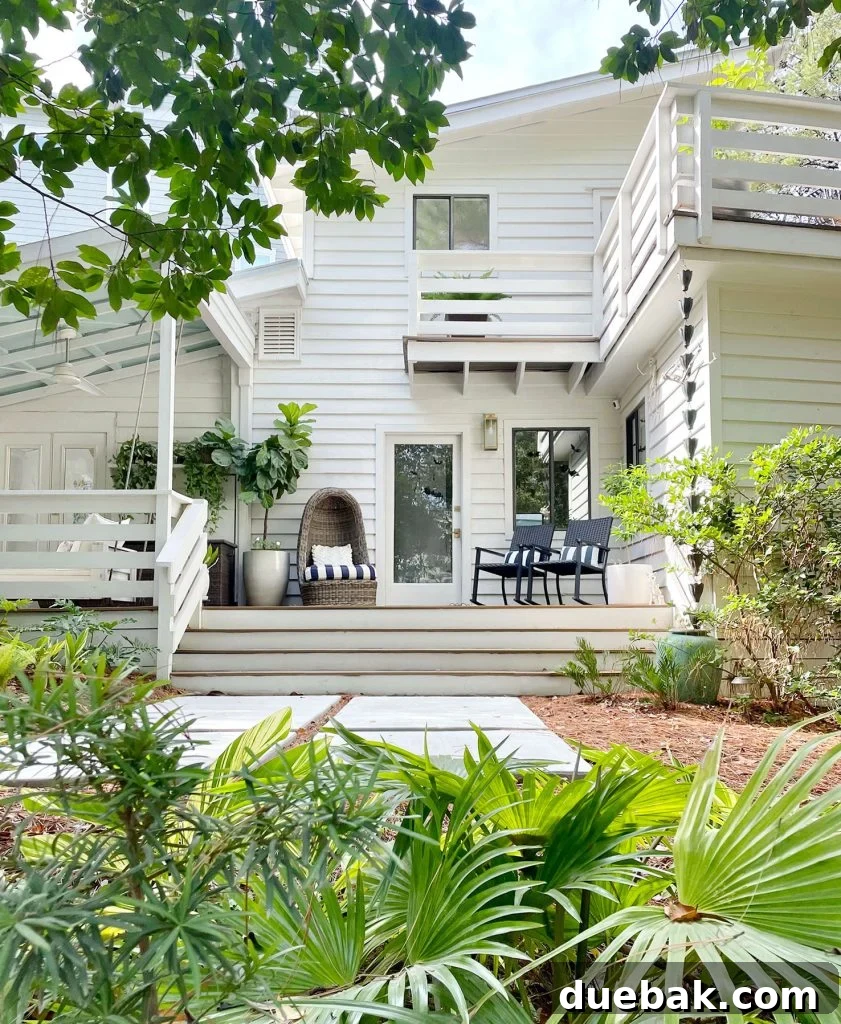
For larger exterior surfaces such as siding, painted brick, or garage doors, we highly recommend opting for a darker or creamier white. These alternatives possess a lower LRV (Light Reflectance Value), meaning they absorb more light and appear softer and less stark under direct sun. For the exterior of our own home, we chose Sherwin-Williams Moderne White (SW 6168). With an LRV of 74, significantly lower than Pure White’s 84, Moderne White ensures the house exterior presents as beautifully white without being “blindingly” so, creating a much more inviting and harmonious facade.
Another important consideration for interior use is that white walls naturally act as a canvas, reflecting other dominant colors present in a room. Consequently, Sherwin-Williams Pure White may not be the ideal choice if your space features an abundance of extremely brightly colored accents, such as a colossal pink rug or numerous vibrant blue cabinets. The reflective quality of white paint could cause the entire space to adopt a warmer or cooler pallor, subtly picking up and intensifying those strong hues, potentially resulting in an effect different from what you had originally envisioned. It’s always wise to test samples in such environments to observe how the colors interact.
What Trim Color Looks Best with Sherwin-Williams Pure White?
When it comes to selecting the optimal trim color to complement Sherwin-Williams Pure White on your walls, the answer is refreshingly simple: Sherwin-Williams Pure White itself. Painting your walls, trim, and even your ceiling in the exact same white color – a strategy we’ve successfully implemented throughout our home – is the most effective way to maintain the neutral, crisp, and cohesive aesthetic that Pure White offers. To introduce subtle yet sophisticated contrast between these surfaces, we highly recommend utilizing different paint finishes. An eggshell finish for walls provides a soft, warm glow, while a flat finish on ceilings helps to minimize imperfections and eliminate glare. For trim and doors, a satin or semi-gloss finish will provide a slight sheen that subtly differentiates them from the walls, adding a touch of elegance and durability.
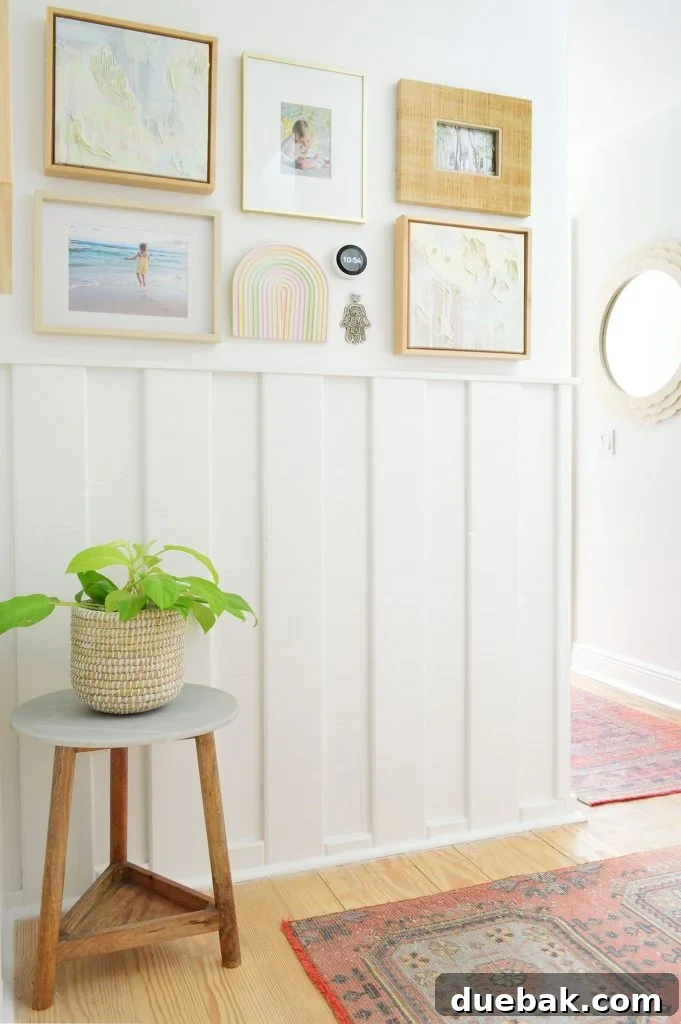
While it is possible to pair Pure White walls with trim painted in a different white shade, this approach carries certain risks. Differences in brightness and undertone between various white paints can lead to unexpected visual results. Your “Pure White” walls might inadvertently appear darker or brighter, warmer or cooler, or even take on an unintended yellow or blue cast when juxtaposed with a contrasting white trim. The subtle nuances of white paints are often magnified when placed side-by-side. The graphics in the subsequent section offer a visual representation of this phenomenon. If you are determined to introduce a contrasting white for your trim, we suggest considering Sherwin-Williams High Reflective White (SW 7757). Its exceptionally clean and bright nature can provide a stark contrast that some homeowners desire, though always remember to test thoroughly first.
Comparing Sherwin-Williams Pure White to Other Popular White Paint Colors
As much as we wholeheartedly champion Sherwin-Williams Pure White, we recognize it’s not the only white paint color commanding a dedicated following. The world of white paints is vast and varied, with many excellent options tailored to different preferences and spaces. In fact, we’ve curated a comprehensive guide to the 12 most popular white paint colors, each with its own unique characteristics. To help you navigate this landscape and confidently select the white paint that is truly best suited for your specific space, let’s take a closer look at how Sherwin-Williams Pure White compares to several other prominent contenders you might be considering.
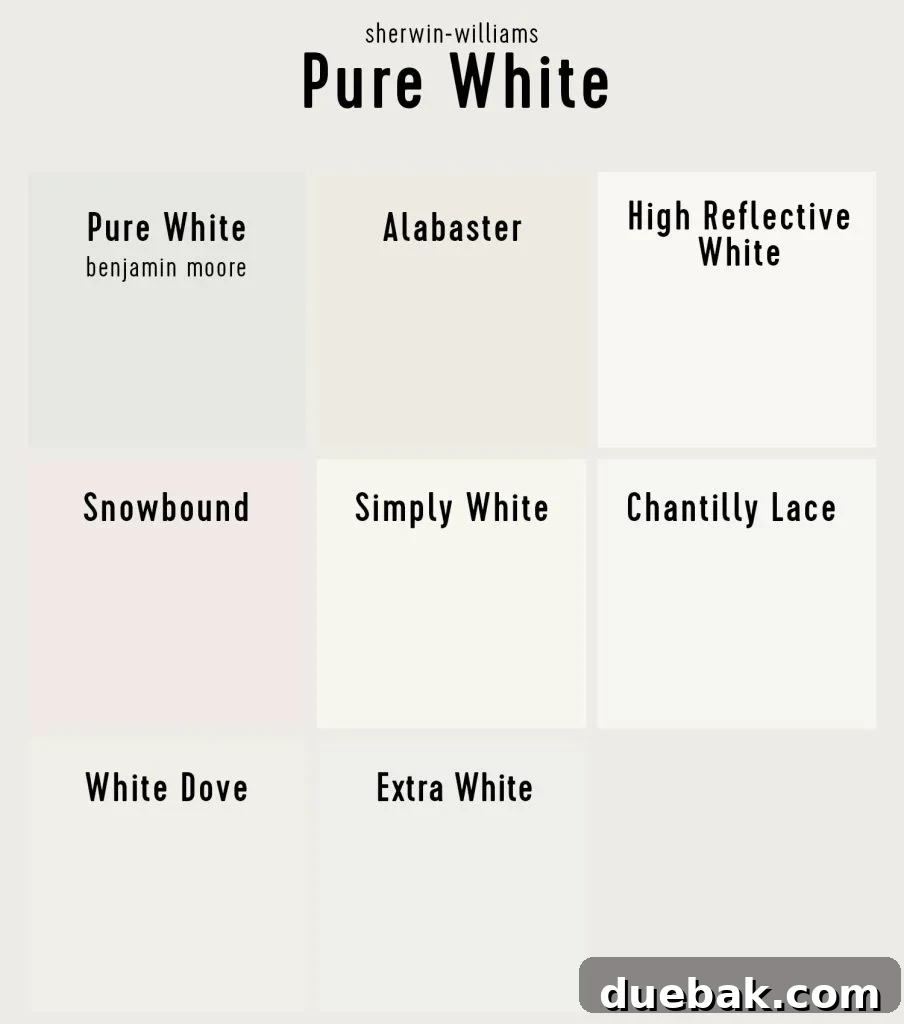
Important Note: We utilize the paint manufacturers’ official website colors for these comparisons to provide a helpful, consistent “apple-to-apples” contrast. However, it is absolutely essential to view each color in person, ideally with large swatches, to gain an accurate understanding of how they interact with each other and your specific lighting conditions. As always, we strongly recommend testing any new paint color directly on your wall or a large board before committing to painting your entire space. For a quick, easy, and affordable way to test these popular whites, consider ordering pre-printed paint sample stickers:
- Pure White (SW) paint sample
- Pure White (BM) paint sample
- Alabaster paint sample
- High Reflective White paint sample
- Snowbound paint sample
- Simply White paint sample
- Chantilly Lace paint sample
- White Dove paint sample
- Extra White paint sample
SW Pure White vs. BM Pure White
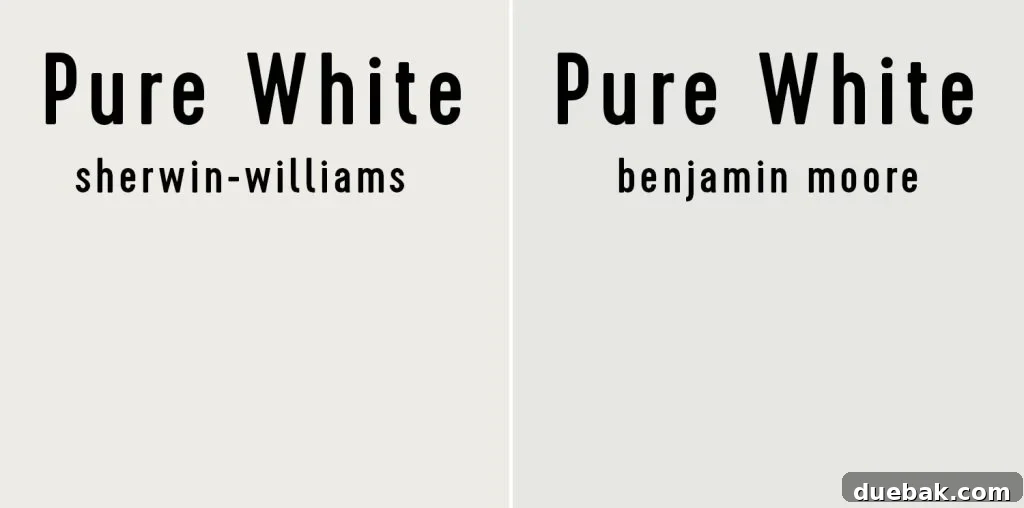
It may come as a surprise, but Benjamin Moore also offers a paint color named “Pure White.” This common naming convention is precisely why we’ve meticulously included “Sherwin-Williams” countless times throughout this article, to eliminate any potential confusion. Despite sharing a name, these two colors are distinctly different. Benjamin Moore’s Pure White (OC-64) is both cooler and slightly darker than its Sherwin-Williams counterpart. It features noticeable blue-gray undertones and a lower LRV of 78. This combination means that BM Pure White can often present more like a very light gray rather than the crisp, warm white that Sherwin-Williams Pure White achieves. If you’re seeking a genuinely pristine and versatile white for walls that avoids any cool leanings, SW Pure White remains the superior choice.
SW Pure White vs. SW Alabaster
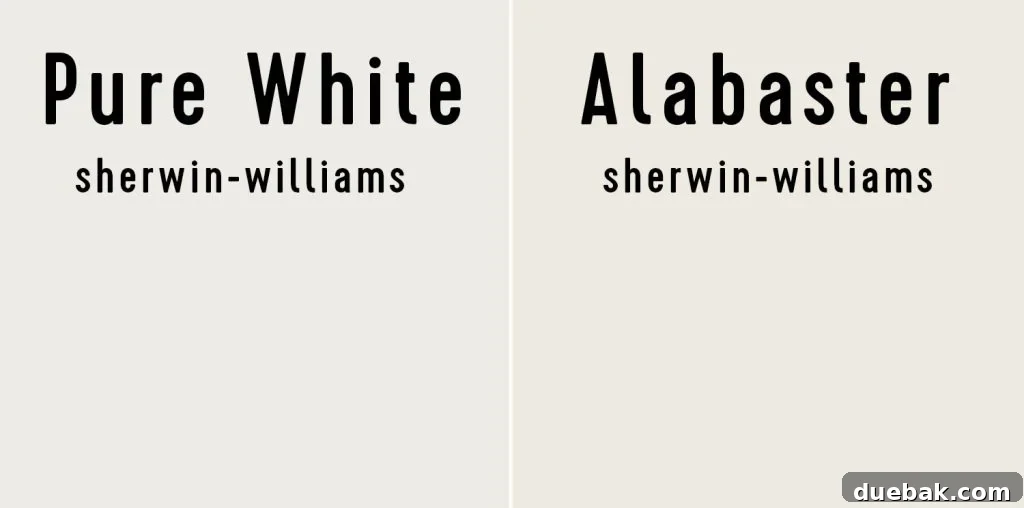
Sherwin-Williams Alabaster (SW 7008) is notably warmer and creamier than SW Pure White. While it retains a bright and crisp quality, making it a viable alternative for north-facing rooms or spaces that receive minimal natural light where Pure White might appear cooler, Alabaster’s warmth is more pronounced. In rooms abundant with natural light, particularly south-facing rooms that naturally tend to feel warmer, Alabaster can lean towards an antique white or even a subtle off-white, losing some of that desired “pure white” freshness. If your goal is a distinctively warm white that still feels very light, Alabaster might fit. However, if you’re aiming for a cleaner white that simply avoids starkness, Pure White offers a more balanced approach without appearing too creamy.
SW Pure White vs. SW High Reflective White
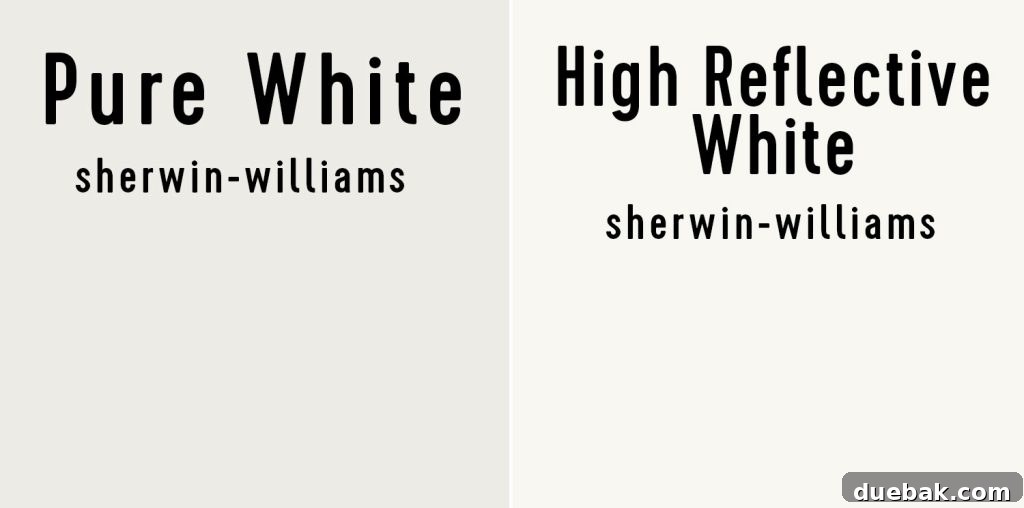
As its name boldly suggests, Sherwin-Williams High Reflective White (SW 7757) stands out as one of the brightest and cleanest white paints available on the market. With an impressive LRV of 93, it is designed for maximum light reflection and minimal color. For many, its intense brightness can be too stark for expansive wall surfaces, leading to an almost clinical feel that lacks warmth and depth. However, for those who seek an absolutely crisp, colorless white, High Reflective White can be the perfect solution, especially in utility spaces like pantries, closets, or laundry rooms where a super-clean, bright appearance is desired. It also serves as an excellent trim color when paired with other whites, including Sherwin-Williams Pure White, providing a striking, clean contrast without introducing conflicting undertones.
SW Pure White vs. SW Snowbound

Sherwin Williams Snowbound (SW 7004) is another widely appreciated warm white, but it distinguishes itself from Pure White due to its subtle red undertones. These undertones give Snowbound a tendency to appear slightly pinker or rosier compared to the more neutral, slightly yellow warmth of Pure White. We successfully utilized Snowbound for the exterior trim of our previous home, specifically because its red undertones beautifully complemented the existing red brickwork, creating a harmonious facade. While it can pair exceptionally well with reddish wood flooring or cabinets, enhancing their natural tones, Sherwin-Williams Pure White generally remains the superior choice for achieving a universally clean and truly classic white aesthetic across various design elements. Consider Snowbound if you deliberately wish to introduce a very subtle blush of warmth that aligns with other reddish elements in your decor.
SW Pure White vs. BM Simply White
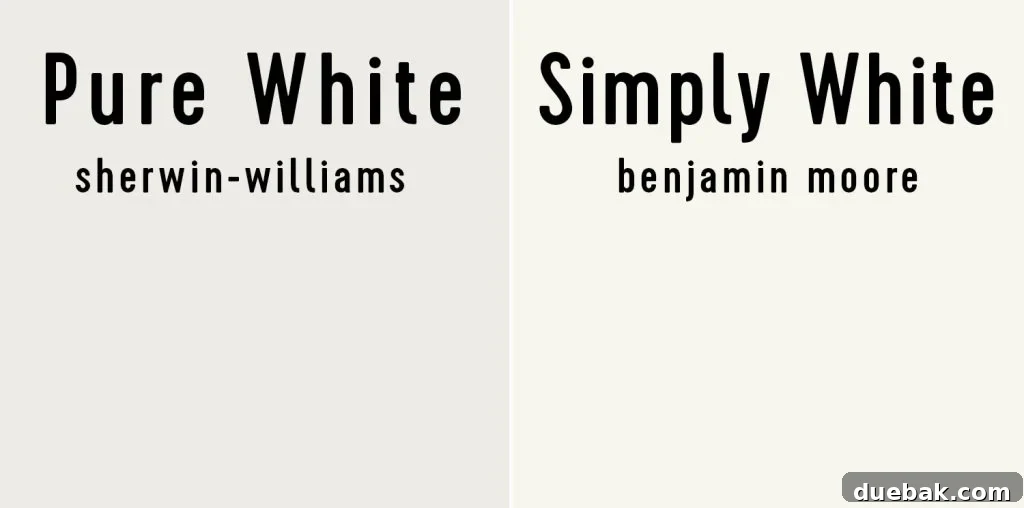
Benjamin Moore Simply White (OC-117) was once our go-to “starter white paint” for many years. We frequently applied it to trim and cabinets, trusting its name to deliver a pure, fundamental white. However, our long-term experience revealed that its yellow undertones became progressively more pronounced over time; we actually observed the color yellowing on the walls of our previous house over a period of seven years. This experience ultimately led us to transition to Sherwin-Williams Pure White, which has shown zero yellowing in the four years we’ve had it in our current home. Despite this, Simply White remains a commendable warm white, particularly effective when contrasted against popular greige wall colors, such as Edgecomb Gray. It provides a softer, warmer touch than a stark white, which can be lovely in certain palettes. However, for a reliable, consistently clean white that stands the test of time without noticeable yellowing, Sherwin-Williams Pure White has proven itself to be the more enduring choice.
SW Pure White vs. BM Chantilly Lace
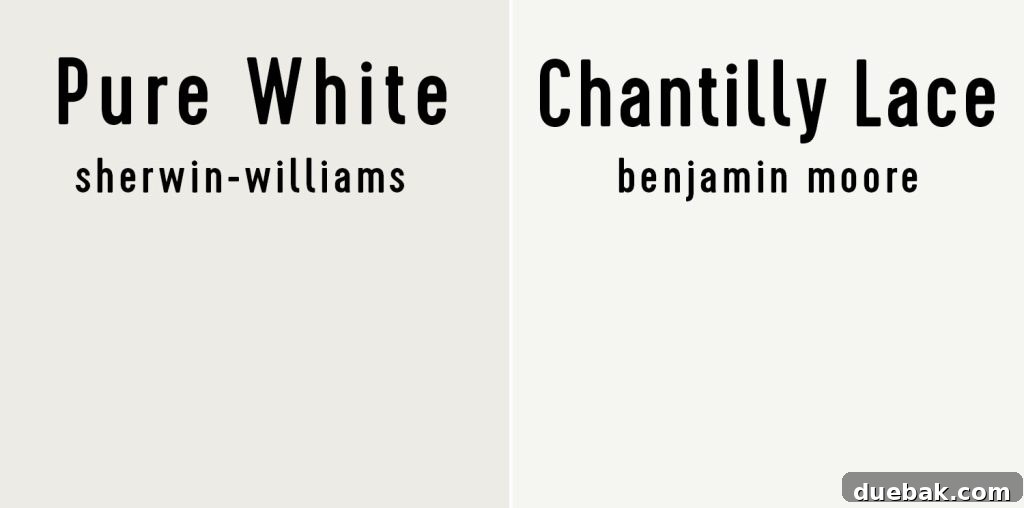
Benjamin Moore Chantilly Lace (OC-65) is another widely celebrated crisp white paint color, often lauded for its bright and clean appearance. However, it is distinctly brighter and notably cooler than Sherwin-Williams Pure White, primarily due to its more discernible blue undertones. With an LRV of 90, it reflects a significant amount of light, giving it a very pure and almost icy quality. While not as intensely bright as High Reflective White, its coolness can still feel too stark or cold for some individuals, particularly when used on expansive wall surfaces. This makes Chantilly Lace a safer and often preferred choice for trim and cabinets, where its brightness can provide a sharp, clean contrast without overwhelming a room. For a white that offers warmth and softness without any hint of coolness, Pure White remains the more balanced option for general wall applications.
SW Pure White vs. BM White Dove
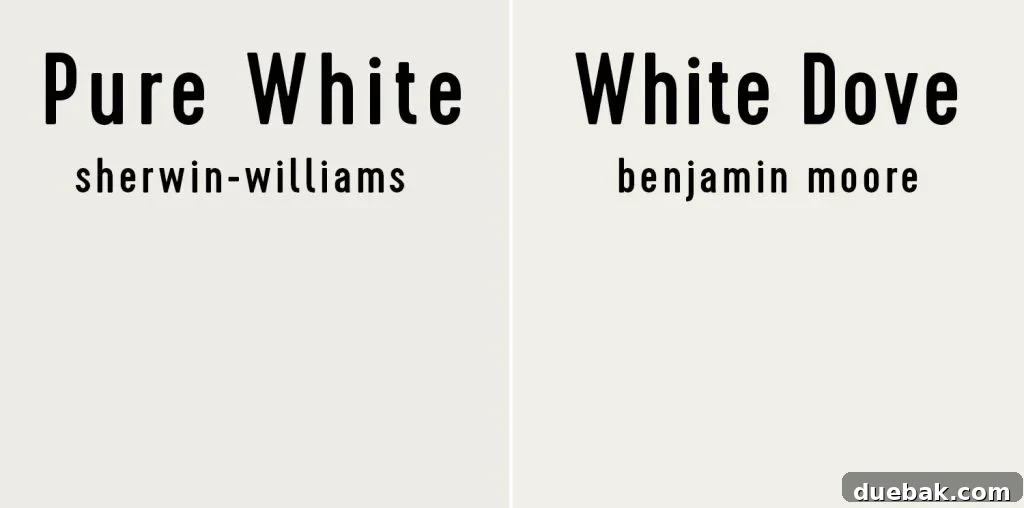
Benjamin Moore White Dove (OC-17) possesses an LRV that is remarkably similar to Sherwin-Williams Pure White, making them exceptionally close matches if your preference lies with a Benjamin Moore paint. This shared LRV means they both reflect light in a very comparable manner, contributing to a bright yet soft feel. However, White Dove tends to lean a bit more towards yellow than Pure White, which imparts a slightly creamier and more pronounced warmth. This additional touch of warmth makes White Dove a solid and beloved choice for a whole-house white paint, especially if you desire a white that feels distinctly warm and cozy without venturing into beige. It’s an excellent option for creating a soft, inviting atmosphere, offering a gentle alternative to the slightly crisper warmth of Pure White.
SW Pure White vs. SW Extra White
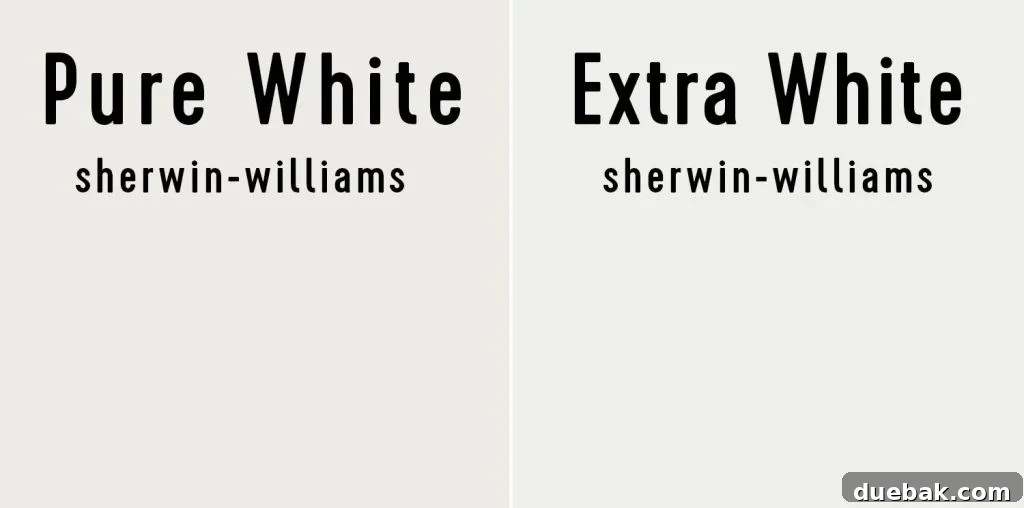
We have successfully used Sherwin-Williams Extra White (SW 7006) as a whole-house trim color, yielding excellent results. Like Sherwin-Williams Pure White, Extra White is recognized as one of Sherwin-Williams’ “Expert Picks,” signifying its popularity and reliability. Extra White is characterized by being a tiny bit brighter and cooler than Pure White, possessing more subtle blue-gray undertones compared to Pure White’s hint of warmth. This subtle difference is precisely why we ultimately chose not to use it as a whole-house wall color. While we likely would have been perfectly content with it, the name “Extra White” itself instilled a slight apprehension, suggesting it might be just a touch too stark and potentially blinding for expansive wall applications. However, as a crisp trim color, it works beautifully to delineate architectural features and provide a clean contrast against wall colors, including Pure White itself.
What Benjamin Moore Color is a Good Match for SW Pure White?
While achieving an exact, identical match between different paint brands is inherently challenging due to proprietary formulations, you can certainly find Benjamin Moore paint colors that offer a remarkably similar aesthetic and feel to Sherwin-Williams Pure White. These options will allow you to capture that desirable balance of brightness and subtle warmth. Consider the following Benjamin Moore paint colors for a comparable look:
- BM Super White (OC-152)
- BM Chantilly Lace (OC-65)
- BM Oxford White (CC-30)
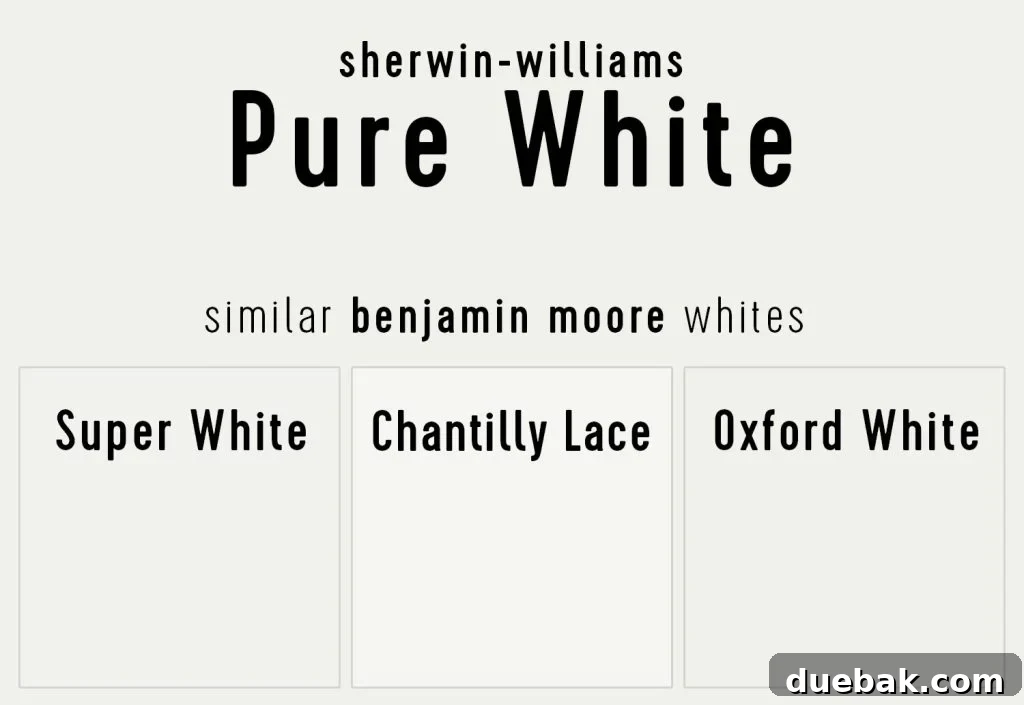
Benjamin Moore often identifies Super White and Chantilly Lace as their “purest” white paints, characterized by having the fewest and most subtle undertones. Both of these options tend to be a bit brighter and lean slightly cooler than Sherwin-Williams Pure White. Therefore, for a Benjamin Moore alternative that more closely mirrors the gentle warmth and balanced brightness of SW Pure White, we strongly suggest also considering Oxford White (CC-30). Its nuanced character offers a beautiful compromise, providing a crisp white that maintains a welcoming feel without leaning too cool or stark.
Final Considerations for Your Perfect White Paint
It’s perfectly natural to have reservations about committing to white walls. For a long time, even we harbored concerns that they might appear too stark, overly modern, or even bland. This is why our current home marks the very first time we decided to go “all in” on white walls, and we can confidently say we have absolutely zero regrets – a sentiment largely owed to the exceptional qualities of Sherwin-Williams Pure White. Its inherent warmth is precisely what prevents it from ever feeling overly bright or acquiring an undesirable blue tint, delivering that sought-after clean white without any harshness. The incredible versatility of Pure White has provided us with a flawless backdrop, enabling us to effortlessly incorporate a wide array of accent colors, vibrant artwork, rich warm woods, and elegant brass metal tones. The freedom and beauty it brings to our interiors have truly exceeded our expectations, and we couldn’t be happier with the results.
We sincerely hope this deep dive into our absolute favorite white paint, Sherwin-Williams Pure White, has provided you with valuable insights and the confidence to explore it for your next painting project. May it be the “perfect white paint color” you’ve been searching for, transforming your home into a brighter, more inviting, and beautifully cohesive space.
More Paint Colors We Love
If you’re eager to discover more of our cherished, go-to paint colors and see them in real-life applications, we invite you to explore our homes through the menu above (you can find the home featured in this post here). Additionally, our Painting Projects section is brimming with inspiration and practical advice. We’ve also crafted detailed deep-dives into some of our other top-rated paint colors:
- Benjamin Moore Edgecomb Gray
- Benjamin Moore Simply White
- Sherwin-Williams Extra White
- The Best “Haint Blue” Paint Colors
- The 12 Best White Paint Colors
- The 9 Best Greige Paint Colors
- Every 2024 Color of the Year in One Place
*This post contains affiliate links, so we may earn a small commission when you make a purchase through links on our site at no additional cost to you.