
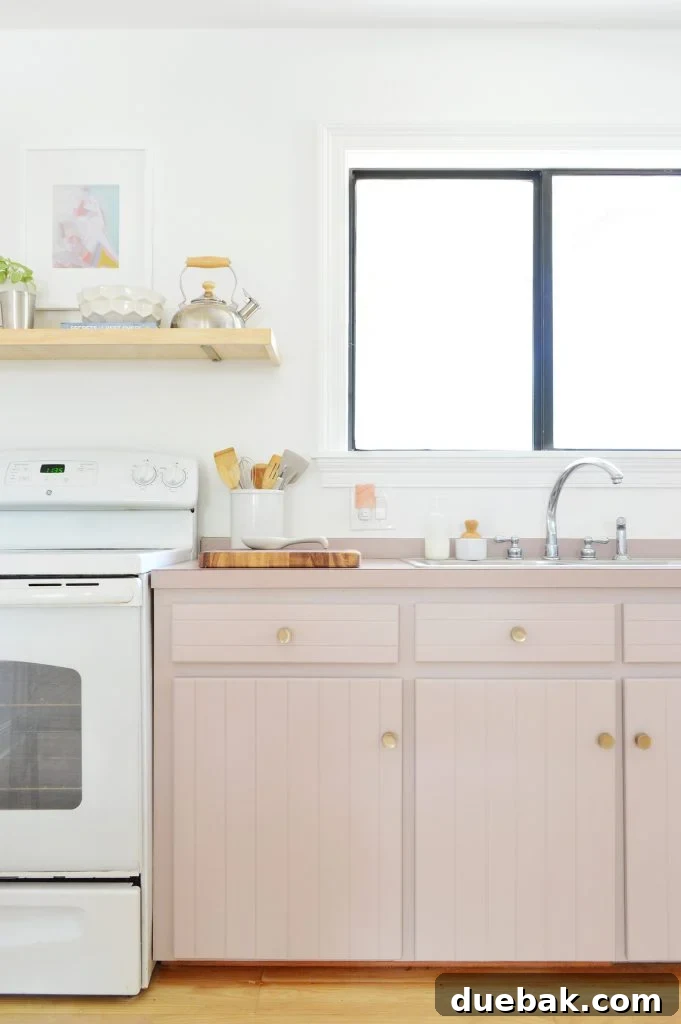
Last week, we delved into the exciting transformation of our kitchen, revealing how we meticulously painted our cabinets to achieve a fresh, modern look. Today, we’re pulling back the curtain to give you an exclusive tour of their highly efficient organization. Stepping into this new home meant embracing a significantly smaller kitchen – roughly 25% of the cabinetry and storage space we enjoyed in our previous residence. We admit, the prospect of adapting to substantially less countertop and storage felt a bit daunting at first. However, we’re thrilled to share a spoiler alert: it has been an absolute success! We’ve managed to comfortably store every essential item we need and use, with everything conveniently accessible. No more rummaging through cluttered shelves or digging behind stacks of forgotten items. So, if you’re contemplating downsizing, curious about minimalist living, or simply enjoy a sneak peek into cleverly organized spaces, this detailed guide to our compact kitchen is crafted just for you.
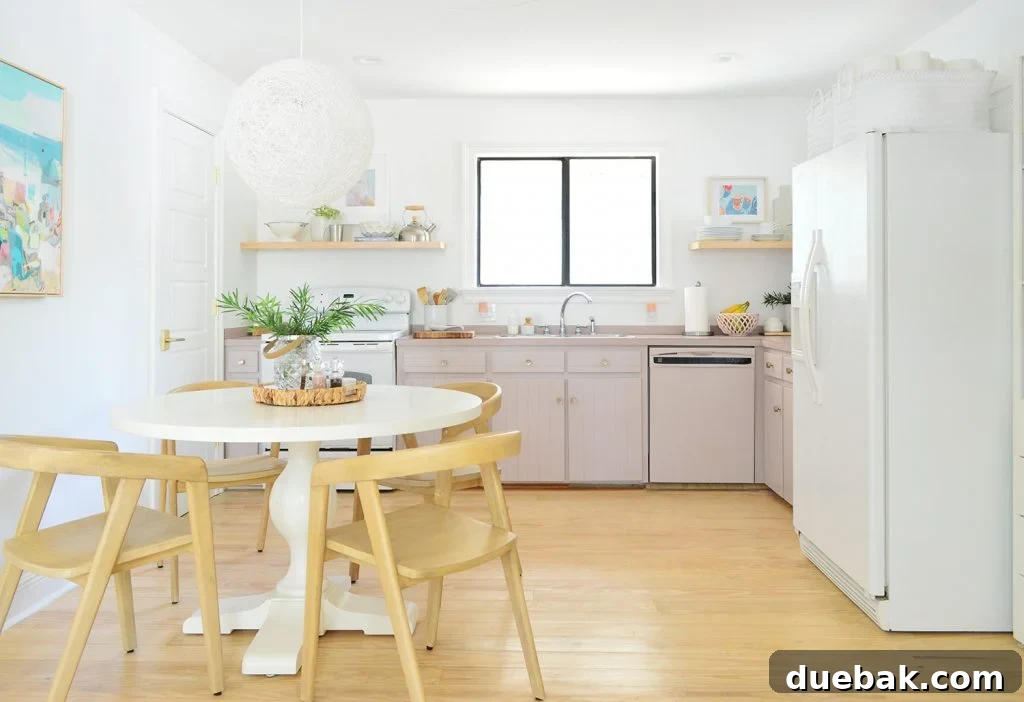
To truly grasp the scale of our current kitchen, it helps to recall our previous one, which we affectionately (and accurately) described as gargantuan. That kitchen boasted a magnificent ten-foot island, offering storage on three sides, complemented by perimeter cabinets lining all four walls. If memory serves, it featured an impressive 36 cabinet doors and 15 drawers. In stark contrast, our current kitchen operates with just 7 cabinet doors and 5 drawers (in both kitchens, the two under the sink are decorative false fronts). For a rough, yet striking, comparison, that’s a dramatic reduction from 51 storage points to a mere 12! Furthermore, most of our new cabinets and drawers are considerably less spacious than their counterparts in the old kitchen, presenting a unique challenge in organization. You’ll witness just how compact some areas are, especially the drawer to the left of our stove.
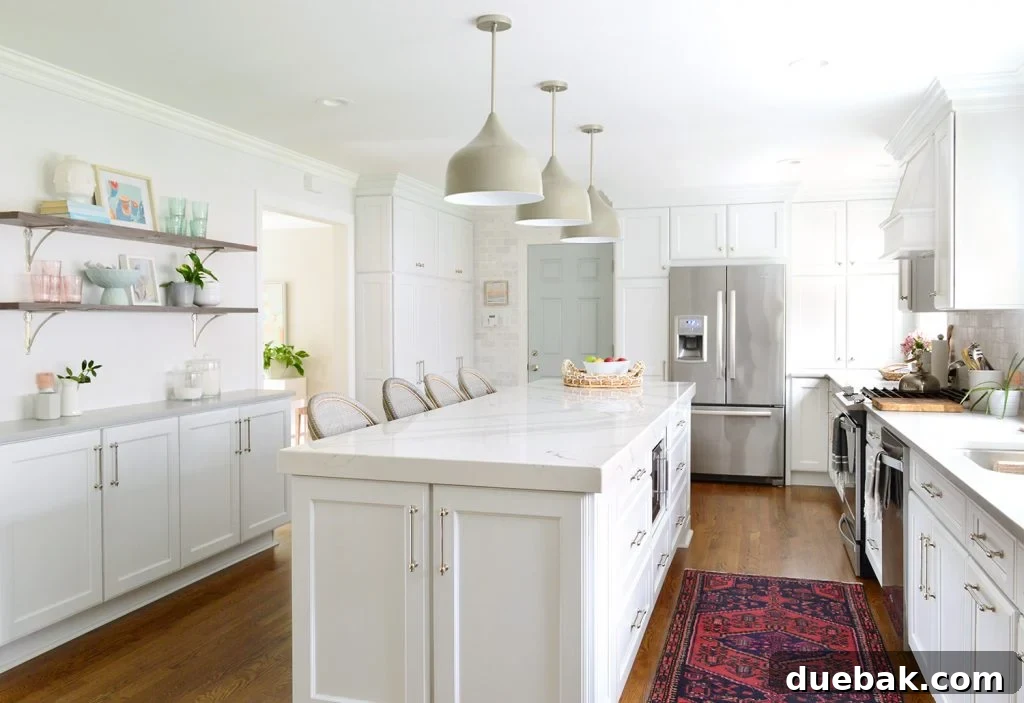
In fairness, our previous kitchen undeniably offered more storage capacity than we genuinely required. Neither of us harbors a passionate devotion to elaborate cooking, extensive baking, or any other hobby that necessitates a plethora of specialized gadgets and gear. Consequently, we’ve always maintained a fairly streamlined approach to our kitchen essentials. In fact, a significant portion of that old kitchen’s storage was dedicated to non-kitchen items – tools, backpacks, extra accessories, and even seasonal holiday decor. If you’re curious to see how we managed such a large space, you can revisit our old kitchen organization strategies in a dedicated post.
The encouraging news is that we are thriving in this more compact environment. Our extensive decluttering efforts prior to the move certainly laid a strong foundation. However, once we arrived, it still necessitated an even more strategic approach to downsizing, coupled with thoughtful and precise organization. This kitchen, despite its smaller footprint, now comfortably accommodates everything we truly want and regularly use. We emphasize the “we” in that statement because we know some viewers might look at these photos and wonder, “But where do you keep your crockpot? Your blender?! Your stand mixer?!? Your COFFEEMAKER!?!!” It’s important to clarify that some of those items we’ve simply never owned in our 14 years as homeowners. Others, like our rarely-used crockpot, were consciously donated before we relocated, recognizing they no longer served a vital purpose in our daily lives.
For some, this level of decluttering might seem radical, but downsizing is fundamentally about an honest assessment of what *you* genuinely need and frequently use. Again, the emphasis remains on “you,” as these needs will undoubtedly vary significantly for every individual or family. Rest assured, these past few months have served as the ultimate test for this kitchen. With almost every meal prepared and consumed at home, our streamlined setup has exceeded our expectations, proving to be even more functional and efficient than we had initially hoped.
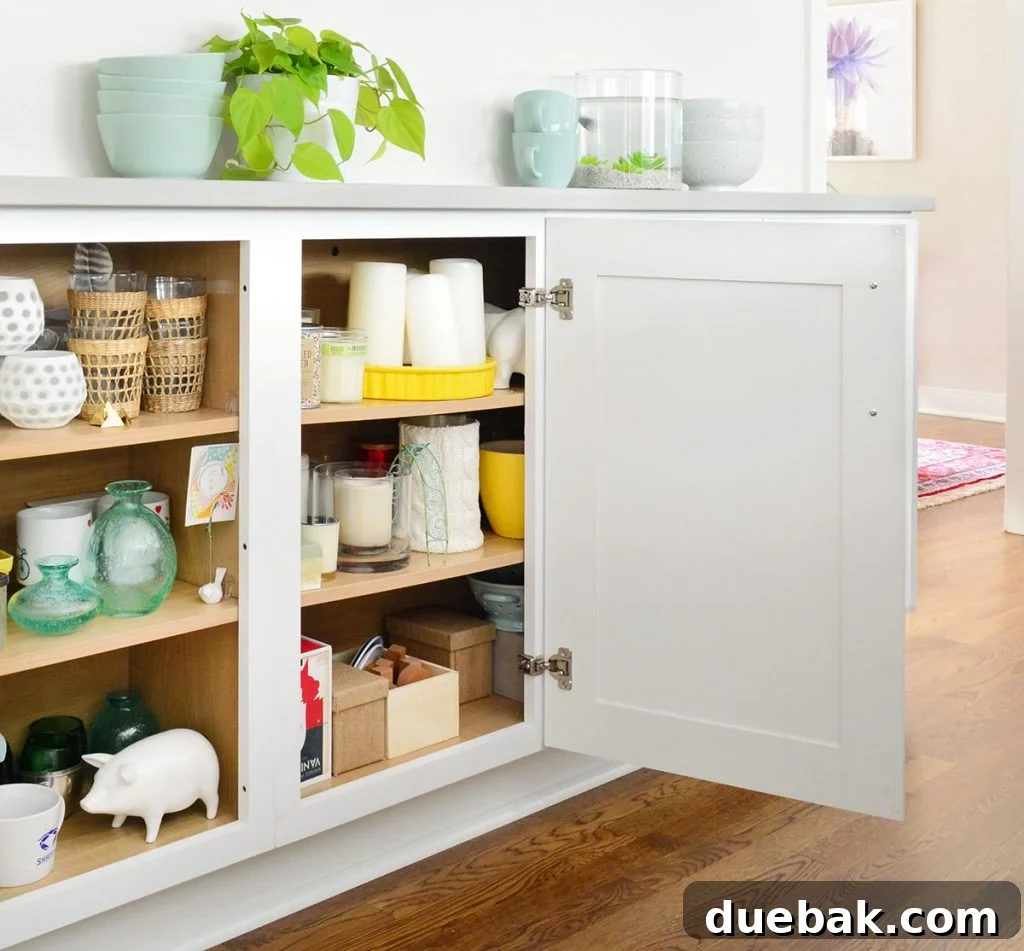
A pivotal decision that significantly enhanced our kitchen’s storage capacity was the strategic addition of two shelving systems adjacent to the refrigerator. You might recall these units from our initial post about the new kitchen; they previously served a purpose in our old office space. Their integration immediately provided eight substantial drawers, alongside valuable open shelving. This open shelving has proven to strike an ideal balance between functional storage for everyday items like plates, glasses, mugs, and bowls, and decorative display space for Sherry’s beloved plants, vases, and hardcover books. Crucially, the four drawers on the left have been repurposed to serve as our primary pantry area. (We bolded this point as many readers inquired about our food storage. You can find more details and even a video tour in this post.) The remaining four drawers to their right are, for the most part, dedicated to tools, a habit that has carried over from our last house’s kitchen. It seems old habits, particularly useful ones, are hard to break!
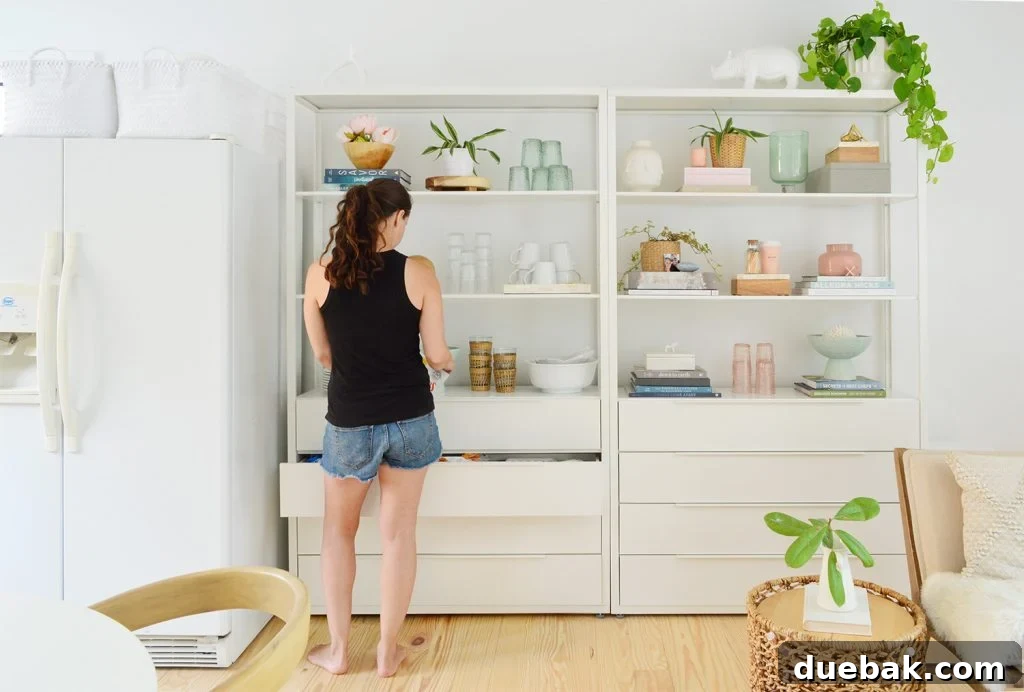
Having those four drawers brimming with tools actually feels like a comforting sign of adaptability within our small kitchen layout. Should the need arise, and we suddenly find ourselves requiring additional storage for an indispensable new kitchen gadget, these tools could easily be relocated to another area. For instance, we’re planning to install built-in cabinets on both sides of our fireplace in the bedroom, offering a perfect alternative home for them. This flexibility ensures we have a readily available overflow space, dedicated to more kitchen-centric items, whenever that necessity might arise. This proactive approach to storage demonstrates a key principle of successful small kitchen organization: anticipating future needs and building in room for growth.
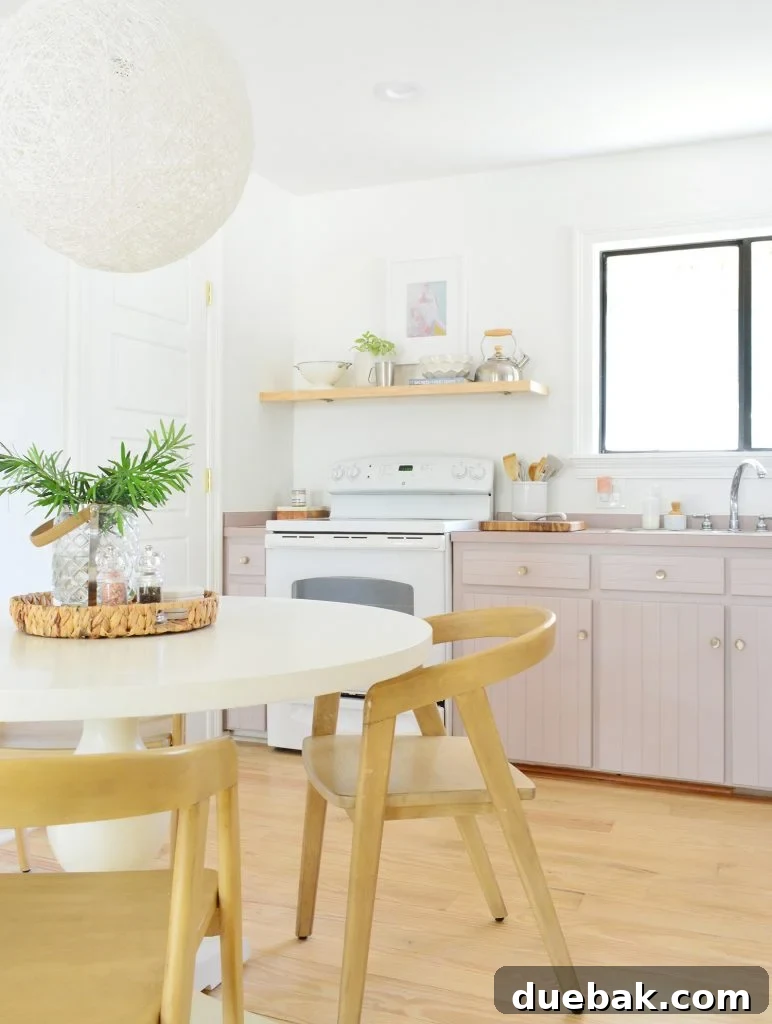
Beyond these two strategically placed bookshelves and the two elegant floating shelves we installed on the back wall (you can find more details on their creation here), every other item is neatly contained within our main 7 cabinets and 5 drawers. Our detailed tour of these spaces will begin with the small, often-overlooked corner cabinet situated between our stove and the utility closet. This utility closet, by the way, not only discreetly houses our HVAC system but also cleverly stores seasonal holiday decor, various paint cans, and other household essentials like brooms and our vacuum cleaner – a testament to maximizing every inch of space in a smaller home.
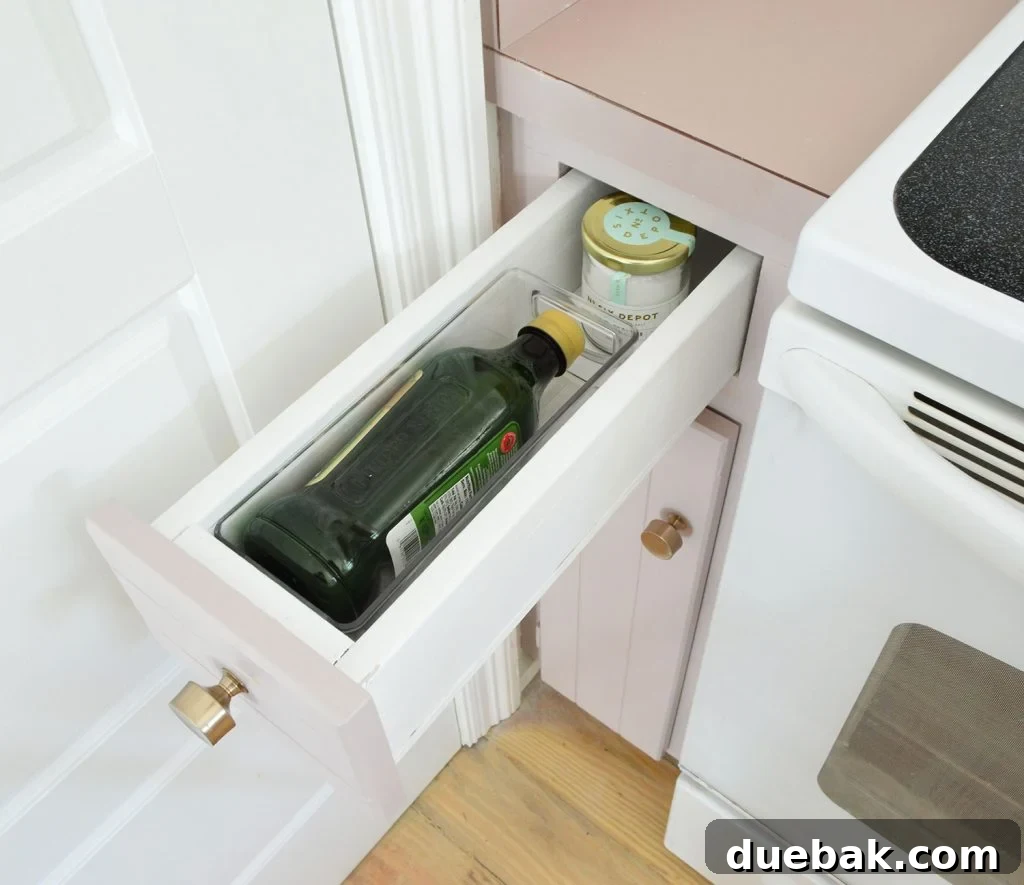
I confessed to Sherry that it felt slightly peculiar to kick off our cabinet tour with what might be considered our smallest, most “anticlimactic” drawer – not that any of our drawers are truly dramatic, of course! However, my innate preference for order dictates a left-to-right progression, and it simply feels right. So, here we are: our dedicated olive oil drawer. Yes, it literally contains a single bottle of extra virgin olive oil and a small jar of salt. Given that all our spatulas and primary cooking utensils are conveniently kept on the counter for quick access, this particular drawer didn’t offer much additional space; even our rolls of foil and plastic wrap couldn’t comfortably fit. Despite its minimal contents, having our cooking oil precisely where we need it, near the stove, and stored in a cool, dark place, is surprisingly practical. By a stroke of luck, Sherry even had a plastic bin that perfectly cradled the olive oil bottle within the drawer, preventing any errant drips from potentially marring our fresh cabinet paint job. This small detail highlights the meticulous planning involved in efficient small kitchen organization.
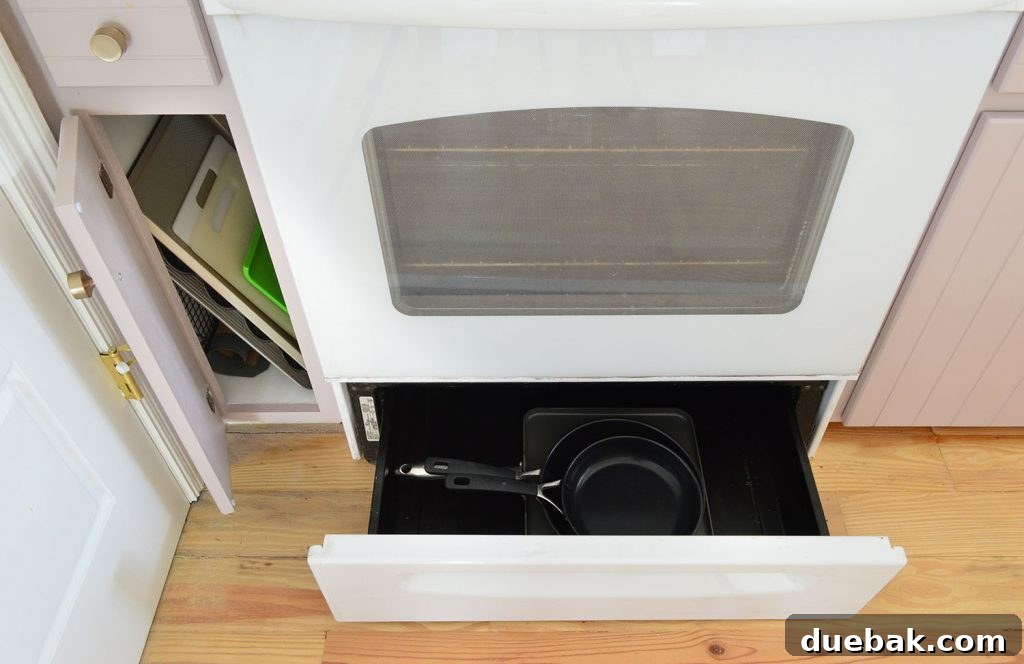
Directly beneath the olive oil drawer, we encounter another uniquely skinny cabinet. While its dimensions are somewhat awkward, it has proven remarkably useful for upright storage. This is where we neatly keep our plastic cutting boards, a single cookie sheet, a lone muffin tin, and our wire cooling racks. Yes, you read that correctly – a cookie sheet and a muffin tin in the singular. This was a deliberate decision made during our pre-move downsizing phase. We *rarely* venture into muffin or cupcake baking, yet our previous kitchen housed multiple tins and even a dedicated cupcake carrying case, which, to be honest, was never once used. This realization prompted us to pare down to just the essentials, freeing up valuable space. Additionally, we’ve ingeniously repurposed the warming drawer located directly under the stove to house our shallow pans and griddle pan, further maximizing the utility of every available space.
The majority of our pots and pans reside in the larger cabinet positioned on the opposite side of the stove. To enhance accessibility and streamline our kitchen storage, we incorporated a few clever solutions. We already owned a wire shelf rack, which we strategically placed at the back of the cabinet to make retrieving frequently used saucepans significantly easier. A crucial addition was the $15 back-of-door lid holder, an inexpensive yet incredibly effective tool that transformed what was once a chaotic jumble into an orderly system. Previously, everything was stacked and nested in a way that made retrieving a single pot an alarmingly loud and cumbersome task. Now, thanks to the door rack for pot lids and the wire shelf, grabbing exactly what we need is effortless, without the need to rearrange numerous items or inadvertently create a cacophony of clanging metal. This thoughtful organization not only saves time but also maintains a sense of calm in our small kitchen.
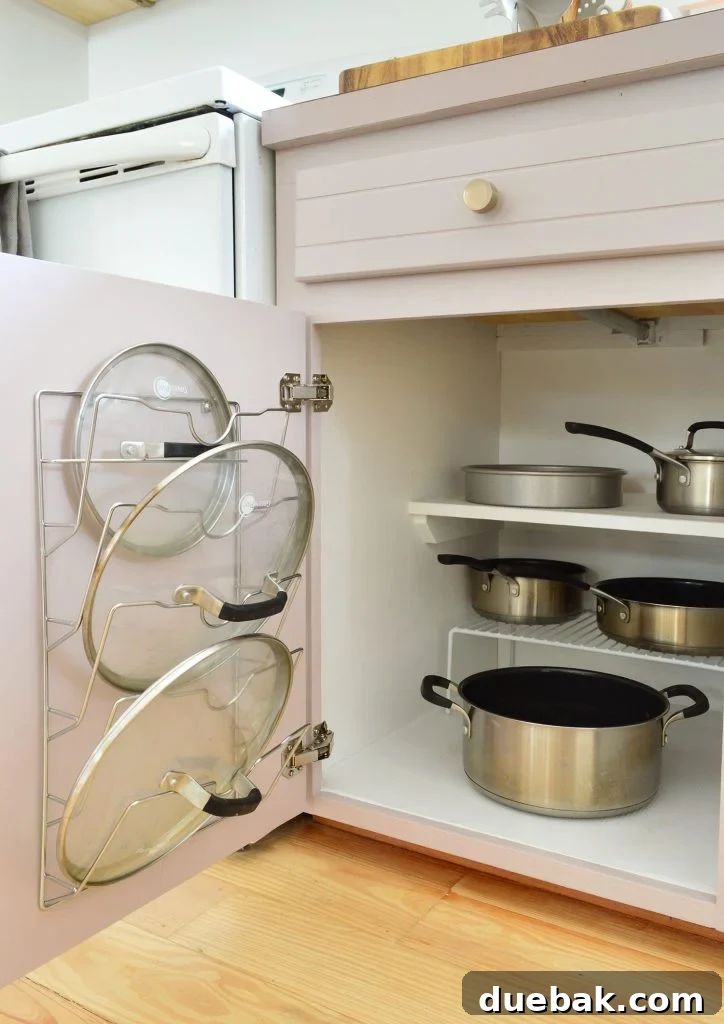
Our collection of pots and pans is deliberately streamlined, but it perfectly caters to our cooking needs. Interestingly, we didn’t significantly pare down in this department, as we’ve consistently owned a set of this size for many years, a testament to its enduring functionality. We are particularly fond of Greenpans for their performance and durability. To ensure our newly painted white cabinet interiors remain pristine and easy to clean, we meticulously lined the bottoms of all cabinets and shelves with this clear non-sticky drawer liner. While it might not be immediately visible in the photographs, this liner is a quiet hero in our kitchen, protecting surfaces and contributing to the overall cleanliness and longevity of our beautiful cabinets.
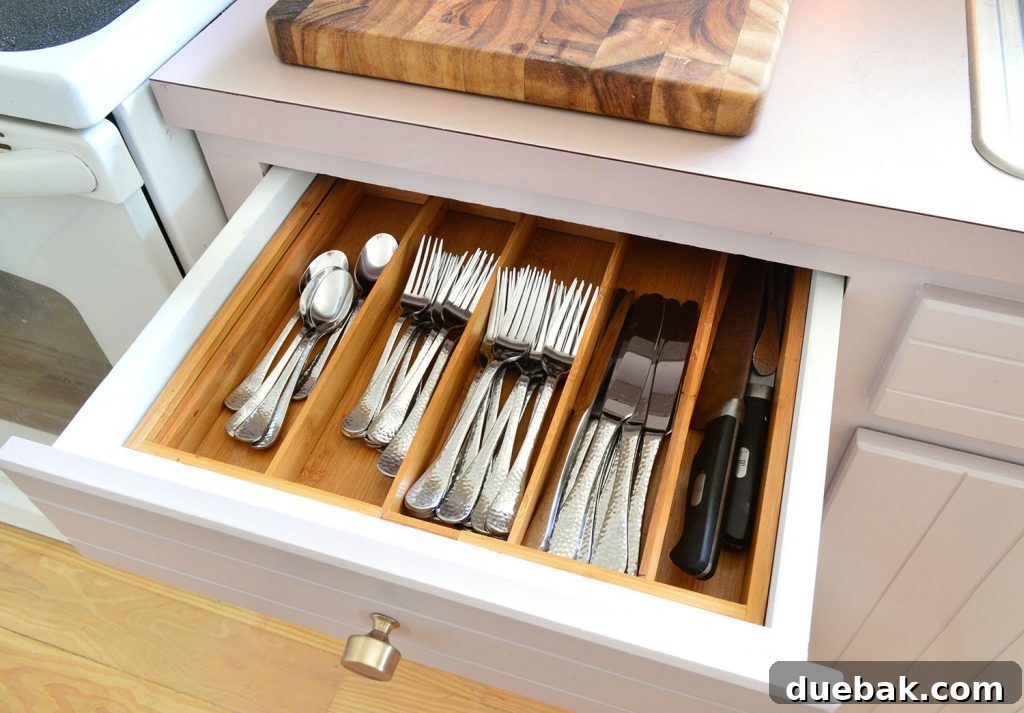
Above this cabinet lies our largest drawer, making it the ideal spot for our flatware and a selection of our larger cutting knives. Here, we’ve seamlessly integrated the same expandable bamboo utensil organizer we utilized in our previous home. Its adjustable design proves incredibly versatile, allowing it to adapt to various drawer sizes. In this narrower space, its compartments are configured more snugly, yet it continues to function flawlessly, keeping our utensils neatly separated and readily accessible. This demonstrates the value of investing in flexible organizational tools that can transition with you, even as your kitchen dimensions change.
The expansive cabinet beneath our sink is dedicated to wrangling the assortment of items typically found in this often-challenging space: cleaning supplies, spare sponges, dishcloths, trash bags, and various other household necessities. To prevent these items from devolving into one colossal, disorganized mess, we employed a cost-effective and sanity-saving strategy: utilizing a diverse collection of mismatched existing bins. This “smorgasbord” of containers cost us precisely zero dollars to implement, proving that effective organization doesn’t always require new purchases. Sherry almost always has a few freestanding wire shelves, a clear divided lazy susan, and various bins and boxes on hand. Together, these elements dramatically enhance the ease with which we can grab what we need, transforming a potentially cluttered space into one that feels orderly and functional.
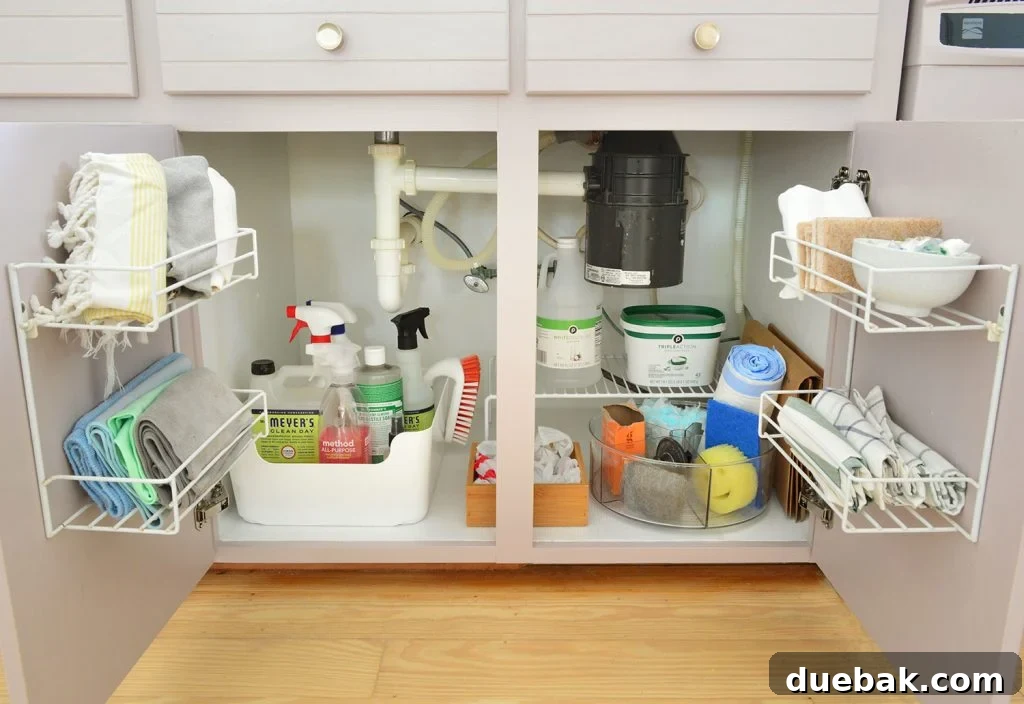
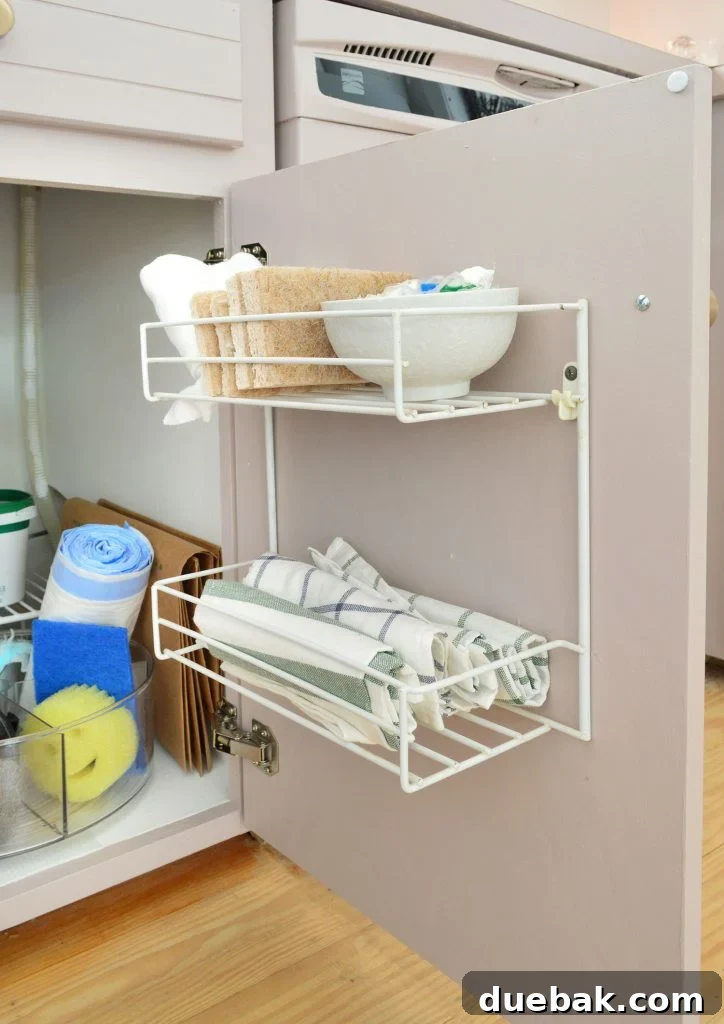
In a delightful stroke of luck, two extremely helpful back-of-the-door wire organizers were already installed when we moved in. These have proven to be invaluable for maximizing vertical storage. We simply removed them during our cabinet repainting project and rehung them afterwards. If you’re seeking a similar solution that, unlike many alternatives, doesn’t inconveniently hang over the top of the door and remain visible from the front, here’s a comparable option. This discreet yet highly functional storage ensures that frequently used items are easily accessible without encroaching on precious counter or cabinet space, a critical consideration for efficient small kitchen organization.
You’ve now reached the halfway point of our kitchen organization tour! On this back wall, the remaining features include the two false drawers under the sink (a common design element), the dishwasher, and the stylish floating shelves we meticulously built. Each shelf extends approximately three feet in length, providing a modest but perfectly adequate surface for essential items. These shelves conveniently hold our strainer, measuring cups, and tea kettle, all strategically positioned directly above the stove for optimal workflow and accessibility. This thoughtful placement ensures that frequently used cooking tools are always within arm’s reach, minimizing unnecessary movement and enhancing the efficiency of our small kitchen layout.
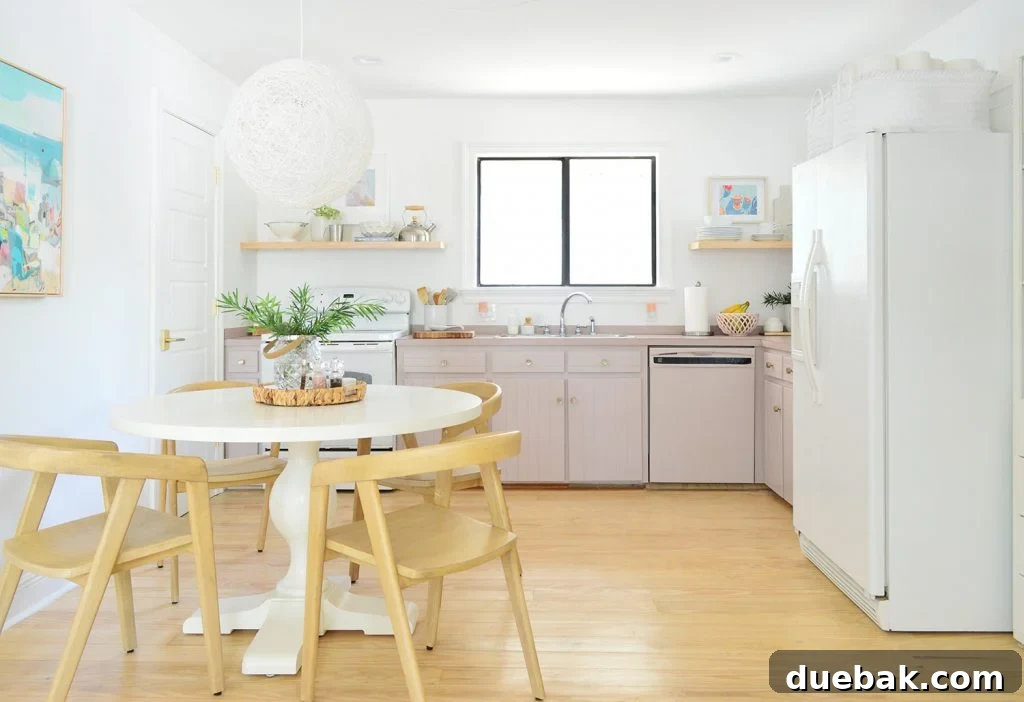
On the opposite side of these versatile floating shelves, you’ll find our everyday plates and durable glass mixing bowls. Previously, some of these items were housed on our “pantry shelves” near the fridge. However, once the floating shelves were installed, we strategically relocated them closer to the main work triangle of the kitchen. This deliberate shift ensures that our most frequently accessed dishes and mixing bowls are now just steps away from the dishwasher and prep areas, further optimizing our kitchen’s functionality and maintaining a seamless flow during cooking and cleanup. This small but significant adjustment highlights our commitment to practical, user-centric small kitchen organization.
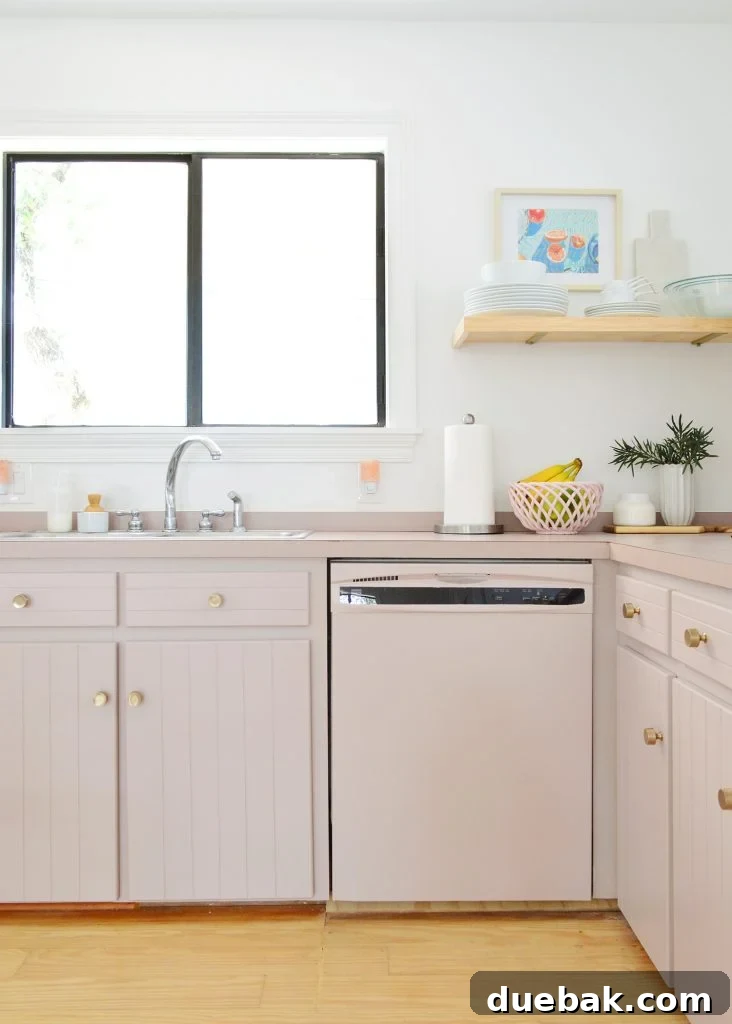
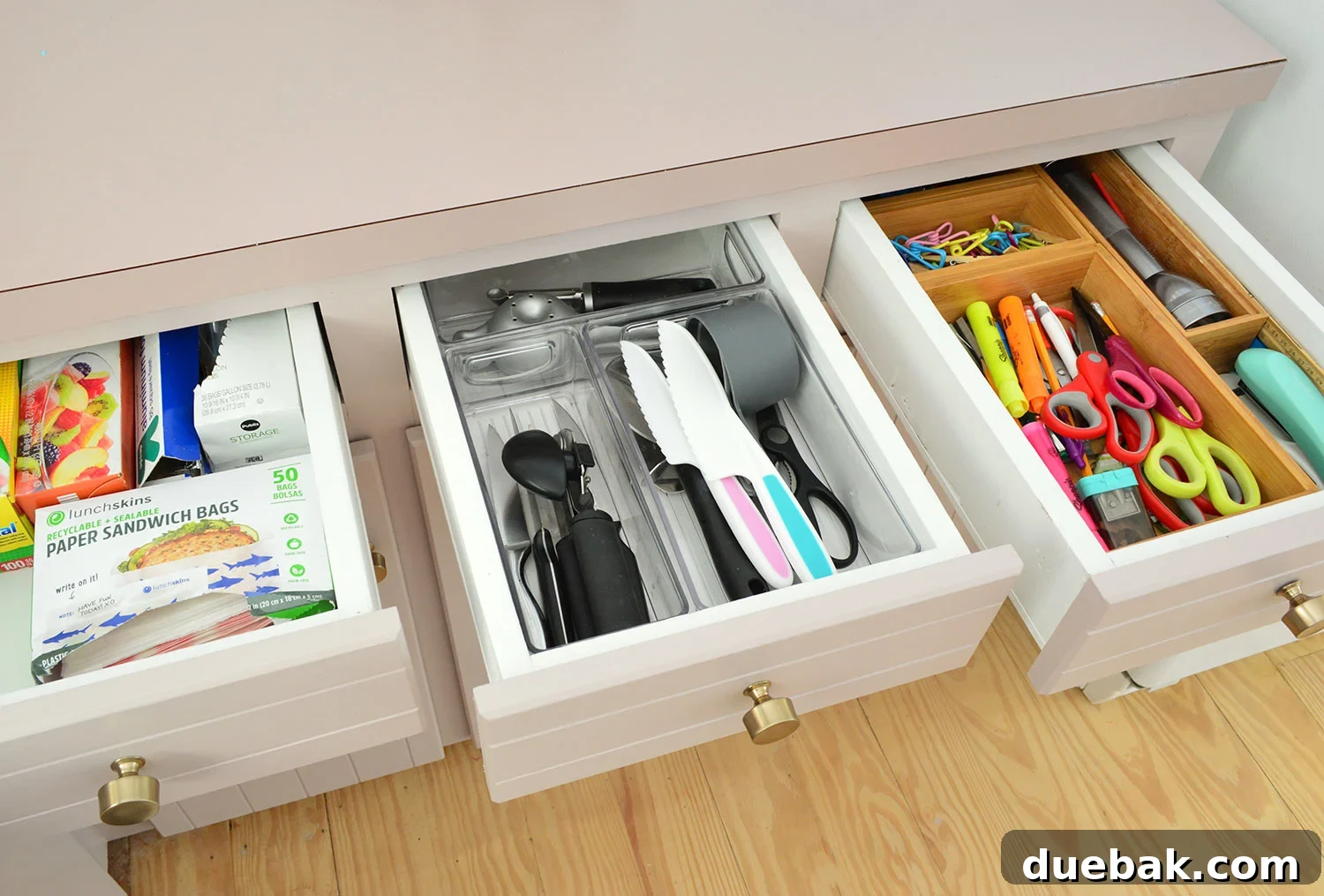
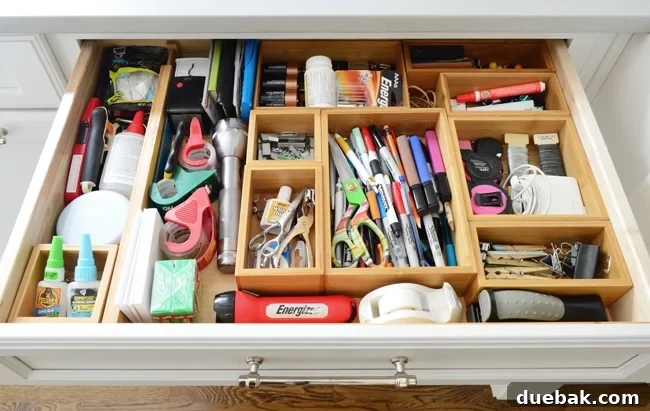
Turning 90 degrees to the right, we encounter a shorter run of cabinetry, which is actually one large cabinet cleverly disguised by three separate doors. This design presents a unique organizational puzzle. Ideally, we’d snap our fingers and transform the three narrow drawers into two larger, more efficient ones, as there’s a certain amount of wasted space between these individual compartments. However, working with the existing structure, we’ve maximized their utility through a consistent theme: a series of well-placed bins and boxes. In the leftmost drawer, we’ve organized items like foil, wax paper, and sandwich bags. The middle drawer is home to our essential small kitchen tools, including knives, measuring spoons, a can opener, and a peeler, all neatly contained within these plastic bins we’ve owned for years. And, on the right, we have our “junk drawer,” organized with these bamboo boxes, which we also used in our previous junk drawer. We consistently find these types of organizers universally helpful, whether you’re managing a spacious kitchen with abundant storage or a smaller one with narrower drawers and cabinets, demonstrating their adaptability for diverse kitchen storage solutions.
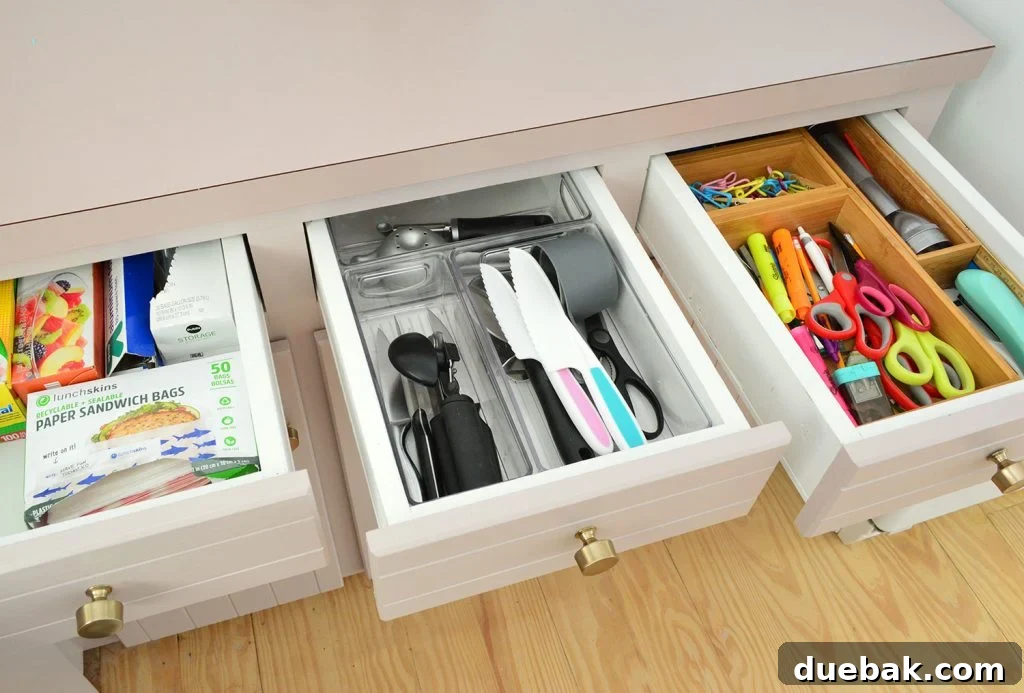
If you recall our old, much larger junk drawer (pictured below), you’ll notice a dramatic compression in our current version. But before you credit us with some heroic feat of complete de-junking, it’s worth noting that we strategically relocated several functions to other areas of the house. For instance, our batteries and crazy glue now reside in those aforementioned tool drawers next to the fridge. Our stamps and address book, along with related correspondence items, have found a new home in the dresser by our front door (you can catch a glimpse of that setup here). While we certainly undertook a significant amount of paring down, rest assured, we’re realistic – we still possess plenty of “junk,” but it’s now far more thoughtfully contained and distributed, ensuring our kitchen drawers remain functional and uncluttered.
Returning to our current lower cabinets, these are the three units prominently featured in our recently painted cabinet post from last week. The beauty of these particular cabinets lies in their depth and the clever use of organizational inserts. White plastic Ikea bins fit nearly perfectly into each opening, effectively creating distinct and manageable organization zones. In one, we store overflow snacks, keeping them tidy and accessible. Another is dedicated to glass food storage containers (though most are typically in use in the fridge, given our strong leftover game these days!). The final bin holds our collection of spices, other cooking oils, and vinegars, ensuring they are upright and easy to locate. This systematic approach transforms deep cabinet spaces, which can often become black holes of clutter, into highly functional and organized areas.
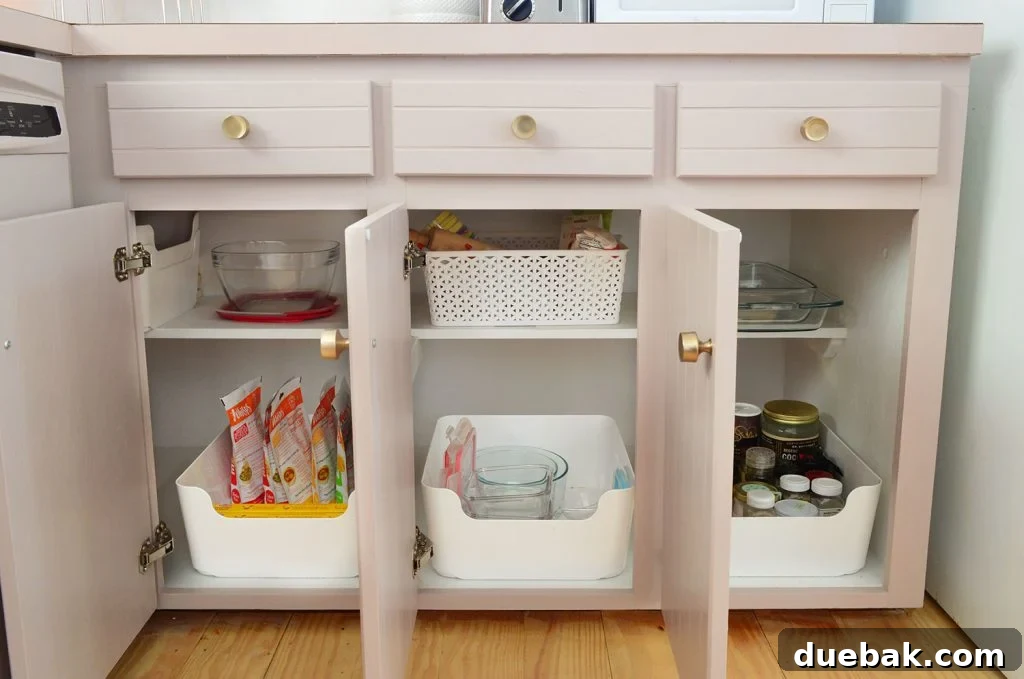
On the upper shelf within this same cabinet, we’ve arranged more glass cookware and food storage items, alongside another plastic bin specifically designated for our baking essentials. It’s worth noting that this cabinet does extend back into the corner behind the dishwasher. However, accessing items in that deepest, most awkward section proves to be quite challenging. Consequently, it currently serves as a storage spot for some spare, empty bins, always at the ready for future organizational needs. As you’ve likely gathered by now, Sherry maintains nothing short of a formidable storage arsenal, ensuring every item has its place and every space is optimized.
Speaking of expanding our organizational insights, we’ve received numerous requests to showcase how we’ve tackled other challenging spaces in our home. These include the bathroom sink cabinet, our linen closet situated just outside the bathroom, and even the HVAC closet located to the left of the stove. We are certainly planning to put together a future post detailing these organizational triumphs. One thing is for certain: when we do, THERE WILL BE BINS! Our journey through downsizing and strategic organization continues to prove that with thoughtful planning and the right tools, any space, no matter its size, can be transformed into an efficient and aesthetically pleasing environment.
P.S. You can catch up on our entire Florida house renovation journey right here. From our tranquil bedroom to the vibrant kids’ rooms, our versatile family room/office, the updated bathroom, and some pretty significant outdoor enhancements, it covers a lot of ground, offering inspiration for every corner of your home.
*This post contains affiliate links, so we may earn a small commission when you make a purchase through links on our site at no additional cost to you.