
There’s a special kind of triumph that comes with conquering a household nemesis all by yourself, especially when it saves you money and spares you the hassle of calling a professional. For me, that moment arrived precisely at 5:41 pm yesterday when I successfully declared war on our stubborn, clogged bathtub drain – and won! The satisfaction of doing it independently, without expensive chemical drain cleaners or a plumber’s hefty fee, was immense. This isn’t just about clearing a blockage; it’s about reclaiming your bathroom and your sense of accomplishment. So, let’s dive into every method we attempted, from the seemingly simple to the ultimately victorious, ensuring you have all the knowledge to tackle your own drainage dilemmas.
Dealing with a clogged drain is a common household frustration. Whether it’s a slow-draining tub or a completely stagnant pool of water, the inconvenience is undeniable. Before we discovered the ultimate solution, we reached out for advice and received an overwhelming response. We gathered nearly 200 crowd-sourced techniques from our readers (a true testament to the shared experience of drain woes!). Even professional plumbers chimed in with invaluable expert insights, highlighting the diverse approaches to this persistent problem. This collective wisdom forms the foundation of our comprehensive guide to tackling stubborn bathtub clogs, drawing from both our personal trials and the experiences of many others.
Understanding Why Bathtub Drains Clog
Before attempting to clear a clog, it’s helpful to understand what usually causes them. Most bathtub clogs are a result of a combination of hair and soap scum. Hair, especially long strands, easily gets tangled and forms a net that catches other debris. Soap, particularly bar soap, contains fats and waxes that combine with minerals in water to create a sticky, insoluble film known as soap scum. This scum adheres to pipe walls, accumulating over time and acting as a glue that traps hair and other particles. Over time, this combination creates a formidable blockage that can be incredibly difficult to dislodge. Other less common culprits include small foreign objects accidentally dropped down the drain or mineral buildup in hard water areas. Identifying the likely cause can sometimes guide your choice of unclogging method.
Initial Unclogging Techniques We Tried (And Why They Didn’t Work For Us)
Our journey to a clear drain wasn’t without its detours. Before we turned to the collective wisdom of our readers, we diligently attempted several common DIY tricks. While these methods are often effective for minor clogs in various drains—including kitchen sinks, bathroom sinks, and shower drains—they proved insufficient for the particularly stubborn blockage in our bathtub. Each attempt, though ultimately unsuccessful for us, taught us valuable lessons about the nature of drain clogs and the limitations of certain tools.

- Manual Hair Removal: Our first instinct was to simply reach in and pull out any visible hair. Fishing around with our fingers did indeed dislodge a decent-sized hairball – what my husband affectionately nicknamed a “Sherr-ball” – giving us a fleeting sense of progress. However, while some surface-level debris was removed, it didn’t open the floodgates. This method is great for superficial clogs but rarely reaches the main obstruction deep within the pipe.
- Standard Plunging: Next, we grabbed a standard cup plunger. Applying vigorous plunging action released a few more items we’d rather not have seen again, confirming there was indeed material to dislodge. Despite our efforts, the water level remained stubbornly high. Plunging creates pressure to push or pull a clog, but its effectiveness depends heavily on having a good seal and the nature of the blockage. For deep, consolidated clogs, a standard plunge often isn’t enough.
- Drain Snake (Auger): We even deployed our 25-foot-long drain snake, also known as an auger or plumber’s snake. We had low expectations for this particular snake, as it’s designed more for main sewer lines than smaller, localized clogs in a bathtub. As anticipated, it proved to be a waste of time. While drain snakes are invaluable for reaching deep into pipes and breaking up tough clogs, the type of snake and the skill in using it are crucial. Ours simply didn’t engage with the specific blockage effectively.
- Boiling Hot Water: Remembering the success we had saving our kitchen sink last year with a pot of boiling hot water, we had high hopes. The idea is that the intense heat can dissolve grease and loosen soap scum. We poured five attempts worth of boiling water down the drain. Each time, our only success was adding more water to our already standing tub, frustratingly bringing us no closer to a clear drain. This method is often great for grease-based kitchen clogs but less effective for the dense hair and soap scum combination common in bathtubs.
- Natural Clog Remover (Baking Soda & Vinegar): Embracing a more eco-friendly approach, we tried the popular natural solution: a half-cup of baking soda followed by a cup of white vinegar. We watched with keen interest as our little drain volcano foamed and fizzed – a classic science project flashback. We let it sit for five minutes, then flushed it with a gallon of boiling water. Still no luck. Even a second attempt provided no relief, just more fizzing and a lingering smell of vinegar. While this method is excellent for maintenance and minor clogs due to its gentle dissolving action, it often lacks the power to break through a heavily compacted blockage.
- Zip-It Tool: Finally, I tried a $3 “As Seen On TV” quality Zip-It tool, recommended by a friend on Facebook. This thin, barbed plastic strip is designed to grab hair and debris. While it promises disgusting results (as shown in this video), we were half grateful and half frustrated that it didn’t yield anywhere close to that level of grim success. It likely pulled some additional material but didn’t make a significant impact on the overall drainage.
The Winning Strategy: How We Finally Unclogged Our Bathtub Drain
After a series of disappointing attempts, we pivoted to a strategy that proved to be the ultimate game-changer. While we believe the preceding efforts helped to loosen some of the obstruction, this step-by-step process was what finally got our water draining quickly and freely again. This method focuses on maximizing the force of a plunger by creating a completely sealed system, an often-overlooked but critical detail.
Step 1: Remove All Standing Water
Before you can effectively work on the drain, it’s crucial to remove any standing water from the tub. A tub full of stagnant water will dilute your efforts and make it harder to create the necessary suction with a plunger. Use a bucket, old towels, or a large sponge to empty the tub as much as possible. I found it easiest to dump the collected water into the nearby toilet, which conveniently flushed itself periodically – making the unpleasant task slightly more bearable. The goal is to get the tub as dry as possible around the drain area.
Step 2: Unscrew the Overflow Cover for Inspection
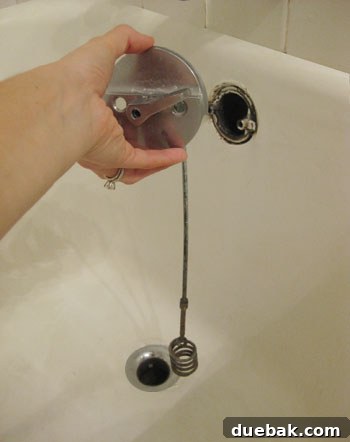
The overflow cover, typically located just below the faucet, serves as a safety mechanism to prevent the tub from overflowing. It’s often secured with one or two screws. Using a screwdriver, carefully remove this cover. Behind it, you’ll usually find a metal coil or linkage that connects to the tub stopper. Gently pull this coil out and inspect it thoroughly for any accumulated hair, soap scum, or other debris. These components are notorious for catching hair, contributing to clogs. Remove any and all debris you find. If, like ours, the coil is surprisingly clean, don’t fret; the main obstruction is likely further down. If your tub doesn’t have an overflow valve, you can safely skip ahead to Step 4.
Step 3: Create a Seal by Plugging the Overflow Opening
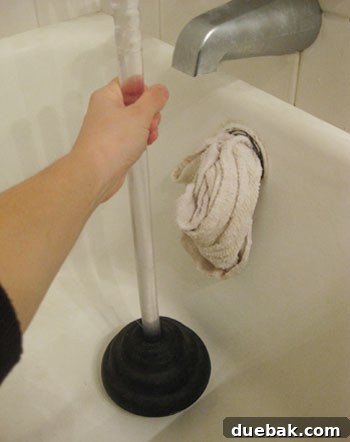
This step is absolutely critical for the success of this method. The overflow drain opening, now exposed after removing its cover, acts as a bypass. If it’s left open during plunging, the pressure you’re trying to build in the main drain will simply escape through this opening, rendering your plunging efforts largely ineffective. To prevent this, take a wet washcloth and firmly shove it into the overflow drain opening under the faucet. The goal is to create a tight, airtight seal. This ensures that when you plunge, all the hydraulic pressure is directed solely at the clog in the main drainpipe, maximizing its impact.
Step 4: Execute a Powerful Plunge
With the overflow opening securely plugged, it’s time to plunge the main drain. For bathtub drains, a standard cup plunger often works, but a toilet plunger (which typically has a flange that creates a better seal on irregular surfaces) can also be highly effective. Position the plunger squarely over the drain opening, ensuring a complete seal around the edges. Then, plunge the drain with strong, deliberate strokes, just like it’s your full-time job. The key here is to maintain that crucial seal. If your washcloth in the overflow opening comes loose due to the pressure, immediately stop plunging and shove it tightly back into the hole. A completely sealed system is paramount for generating enough force to dislodge a stubborn clog. If you have another person available, their assistance in holding the washcloth firmly in place can be incredibly helpful in maintaining that nice, tight seal throughout the plunging process.
Step 5: Persistence Pays Off – Keep Plunging!
This is where dedication truly matters. After about 40 plunges with seemingly no progress, I confess I was on the verge of giving up. The thought of enduring showers in 5 inches of stagnant, murky water, however, was a powerful motivator to keep going. Renewing my resolve, I committed to a dozen or so more strong, determined plunges. And then, it happened: I heard the glorious, unmistakable sound of the drain gurgling and water beginning to swirl rapidly down the pipe. It was a moment of pure relief and triumph. I may or may not have gotten misty-eyed at the sight of the water finally draining freely. This step proves that sometimes, the only difference between failure and success is just a few more pushes.
Step 6: Reassemble the Overflow Cover
Once your bathtub is draining perfectly, the hard part is over! Carefully screw the overflow cover back into its original position, ensuring it’s secure. Take a moment to appreciate your newfound plumbing prowess. You’ve successfully tackled a challenging household problem using your own ingenuity and effort. Feel free to call all your friends and family to brag about your incredible DIY plumbing skills – you’ve earned it!
Bonus Step: The Final Flush with Baking Soda & Vinegar
While the primary clog is now gone, it’s a good idea to perform a precautionary cleanup to clear any remaining gunk or residue that might still be clinging to the pipes. For this, we repeated our earlier baking soda and vinegar trick. Pour half a cup of baking soda down the now-clear drain, followed by a cup of white vinegar. (Don’t worry if you only have apple cider vinegar, as we did; it worked like a charm!). Allow the mixture to foam and fizz in the drain for about five minutes, giving it time to gently scrub the pipe walls. Finally, flush everything down with a gallon of boiling water. This time, with the main obstruction removed, the mixture and hot water should be whisked right down the drain like a thrilling flume ride at an amusement park. Witnessing the quick, unimpeded flow might just be one of the most satisfying moments of your day!
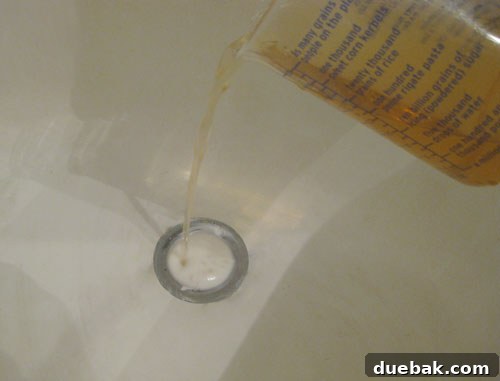
And that’s all it took to conquer the stubborn bathtub clog: zero dollars spent on plumbers or harsh chemicals, and zero reliance on external manpower (it was all lady power, every step of the way!). We genuinely hope you experience similar success with these tried-and-true methods. However, it’s crucial to acknowledge that not all clogs are created equal. While DIY solutions are incredibly empowering, there are times when professional expertise is essential. For instance, we faced a more complicated bathtub drain issue in one of our other homes that involved underlying plumbing problems, and we simply couldn’t have resolved it without the help of a licensed plumber. Knowing when to call in the experts is just as important as knowing how to tackle it yourself.
Proactive Measures: How To Prevent Future Bathtub Clogs

As incredibly accomplished as successfully clearing this clog made me feel, I’m in absolutely no rush to repeat the experience. Prevention is always better than cure, especially when it comes to plumbing. Implementing a few simple habits and tools can significantly reduce your chances of encountering another frustrating bathtub clog. Here are some effective precautions we’ve integrated into our routine to ensure our drains remain free-flowing:
- Install a High-Quality Mesh Drain Trap: Our current metal plug allowed far too much hair to slip through. We will be upgrading to a fine mesh drain trap designed specifically to catch hair and other small debris before it has a chance to enter the drainpipe. These inexpensive devices sit directly over the drain and are incredibly effective at preventing clogs, requiring only regular emptying into the trash.
- Brush Hair Before Showering: A significant portion of hair loss happens before or during a shower. By brushing my hair thoroughly before stepping into the tub or shower, I can remove a large amount of loose hair that would otherwise end up swirling down the drain. This simple habit drastically reduces the amount of hair entering the plumbing system.
- Regular Baking Soda & Vinegar Maintenance: The baking soda and vinegar “science project” isn’t just for clearing minor clogs; it’s also an excellent preventative measure. From here on out, we’ll be using this gentle, eco-friendly solution as monthly maintenance. The fizzing action helps to break down minor accumulations of soap scum and grease, keeping the pipes cleaner and preventing small issues from escalating into major blockages.
- Avoid Pouring Grease Down Drains: While this is more common in kitchen sinks, it’s a good general plumbing practice. Grease solidifies in pipes, creating sticky obstructions that catch hair and other debris. Always dispose of grease in the trash.
- Flush Drains with Hot Water: After each shower, allow hot water to run for an extra minute or two. This helps to flush down any remaining soap scum or hair particles before they have a chance to settle and solidify in the pipes.
Alternative Clog Removal Ideas from Our Community
Our call for help yielded a treasure trove of additional ideas from our readers, demonstrating the wide array of methods people employ to tackle clogs. If the techniques we’ve outlined above don’t work for your particular situation, these suggestions might offer an alternative path. Please note that we haven’t personally tried these methods, so we cannot directly vouch for their effectiveness or safety. Always exercise caution and follow product instructions carefully.
- Dawn Dish Detergent: Some readers suggest pouring an entire bottle of Dawn dish detergent down the drain and letting it sit for several hours or overnight. The idea is that the detergent’s grease-cutting properties can help break up fatty deposits and lubricate the clog, allowing it to move.
- Wire Hanger Probe: For a quick and dirty approach, straightening out a wire hanger and bending a small hook at one end can create a makeshift tool to fish around for hair and debris just below the drain opening.
- CLR Plumber (Pressurized Air): This product, often found in a can, releases a powerful blast of pressurized air or gas directly into the drain. It’s designed to dislodge clogs by force.
- Chemical Drain Cleaners: Various chemical solutions like Drain-O, Thrift, Liquid Plumr, Paqua, or Instant Power Hair Relief are commercially available. These products contain strong chemicals (e.g., lye, sulfuric acid) designed to dissolve organic matter like hair and soap scum. Always read and strictly follow the manufacturer’s instructions, and be aware of the potential risks.
- Nair Hair Remover: A less conventional suggestion involves pouring Nair (a chemical hair removal cream) down the drain. The logic is that if it dissolves hair on skin, it might dissolve a hairball clog. This should be approached with extreme caution due to its chemical nature and potential interaction with pipes.
- Coca-Cola: Some believe that the phosphoric acid in a two-liter bottle of Coke can slowly erode certain types of clogs if left to sit for a prolonged period. This is considered a very gentle and slow method, if effective at all.
- Kleer Drain from Home Depot: Similar to CLR Plumber, this is another commercial product designed to blast out blockages using force or chemical action, depending on the specific product.
- Drain Balloon with Garden Hose: A drain balloon (or bladder) attaches to a garden hose. It inflates inside the pipe, creating a seal, and then high-pressure water is released, pushing the clog through the pipe. This method can be very effective but requires careful handling.
- Drain Claw Tool: A flexible, long tool with claws at the end, specifically designed to grab and pull out hair and other debris from drains. More robust than a Zip-It tool.
- Accessing the P-Trap or Cleanout: For more severe clogs, especially if they are further down the line, some recommend removing the P-trap directly under the tub (if accessible) or accessing a cleanout in the basement or crawl space. From this angle, a drain snake can be used more effectively. This typically requires some plumbing know-how.
- Check the Vent Pipe on the Roof: While less common for localized tub clogs, a clogged vent pipe on the roof can restrict airflow, leading to slow drainage throughout the house. Ensuring clear air circulation is vital for proper water flow in the plumbing system.
- Inspect the Stopper Valve: Sometimes, the tub stopper mechanism can malfunction, with the stopper valve falling closed deep inside the pipe, thereby physically blocking water from draining, even if there isn’t a traditional clog.
- Clean Overflow Spring/Linkage (Advanced): This is an elaboration of our Step 2. If the initial inspection of the overflow cover and coil doesn’t reveal much, some suggest a more thorough cleaning of the entire spring or linkage mechanism within the overflow pipe.
Important Warnings and Disclaimers
Please Read Carefully: We are enthusiastic DIYers, not licensed plumbers. The techniques described in this article are based on our personal experiences and crowd-sourced advice. They are offered as potential solutions and may warrant additional research or professional input before you attempt them in your own home. Always prioritize your safety and the integrity of your plumbing system.
You should also carefully consider the age and overall condition of your plumbing system before trying any aggressive unclogging methods, especially those involving chemicals or high pressure. We’ve heard anecdotal reports and professional warnings that harsh chemicals and solvents can potentially damage certain types of pipes, particularly older or newer PVC pipes. Always err on the side of caution.
Crucial Chemical Safety Note: If you have already attempted to use one of the more chemical-based fixes mentioned above (such as Drain-O, Nair, Liquid Plumr, or similar products) and find that you eventually need to call in a professional plumber, it is absolutely vital that you inform them exactly which chemicals you have used. Different chemicals can react dangerously when mixed, producing toxic fumes or causing corrosive reactions that can lead to severe chemical burns for the plumber. Transparency about prior chemical use is essential for their safety and allows them to take appropriate precautions.
When in doubt, or if a clog persists despite your best efforts, contacting a qualified and licensed plumber is always the safest and most reliable course of action. They have the expertise, tools, and experience to diagnose and fix even the most challenging plumbing issues without risking damage to your home or your health.
Originally posted: October 29, 2009
Update – Interested in knowing where we found specific items in our home or curious about the paint colors we chose? Simply click the button below to explore our curated selections and design choices.