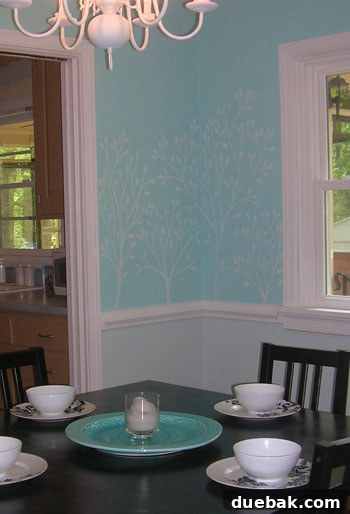
For years, a particular image from our home archives has sparked curiosity among friends and followers: a glimpse into our former dining room, now a cherished third bedroom. The question echoed repeatedly, “What exactly adorned those walls?” Today, we are thrilled to demystify this enduring puzzle. And for those who might have guessed from the title, you’re absolutely right.
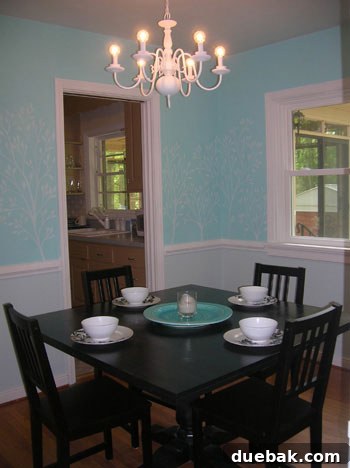
Indeed, the secret ingredient was simple chalk. A medium often relegated to blackboards and sidewalks, it brought an unexpected touch of ephemeral beauty to our interior. Let’s delve deeper into this charming, yet surprisingly durable, wall art solution.
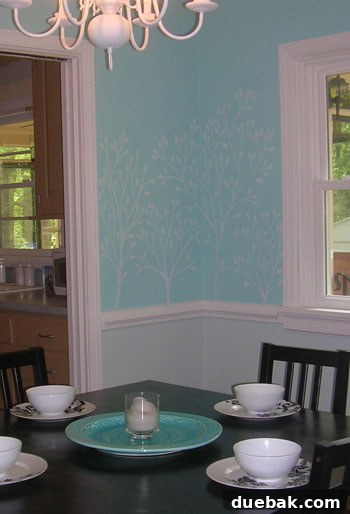
Unveiling the Secret: The Art of Chalk Wall Decor
The journey to our unique dining room aesthetic began with a familiar renovation chore: wallpaper removal. This often tedious task, once completed, left behind a pristine canvas ready for transformation. We opted for a bright and inviting base coat, specifically Glidden’s “Sea Spray” in a flat latex finish. This soft, muted tone provided the perfect backdrop for what was to come. Despite the fresh paint, the room felt a touch bare, lacking that personal touch we craved. That’s when inspiration struck, leading me to a forgotten box of chalk in the junk drawer – a simple tool that would unlock a world of creative possibilities.
From Drab to Fab: The Chalk Art Transformation Process
The decision to use chalk was spontaneous, driven by a desire for an immediate, impactful change without the commitment of traditional paint. Armed with a few sticks of ordinary chalk, I began freehanding delicate, leafy branches directly onto the freshly painted walls. The flat latex paint proved to be an excellent surface, offering just enough tooth for the chalk to adhere beautifully. This method allowed for an organic, flowing design that felt both natural and elegant, embracing imperfections as part of its charm. The beauty of chalk art lies in its forgiving nature; mistakes can be easily wiped away and redrawn, encouraging a relaxed and confident approach to design, even for those who might not consider themselves professional artists.
The Magic of Freehand Chalk Art
For anyone intimidated by the thought of drawing directly onto a wall, freehand chalk art is an incredibly liberating experience. Unlike precise painting, chalk invites a looser, more artistic expression. We chose a botanical theme, allowing leafy branches to weave gracefully across the room, adding depth and visual interest without overwhelming the space. The light touch of chalk against the soft “Sea Spray” created a subtle yet captivating mural. This technique can be adapted to endless motifs – geometric patterns, abstract swirls, or even whimsical illustrations – making it a versatile option for personalizing any room. The ephemeral quality of chalk, knowing it could be easily changed or removed, removed any pressure of perfection and fostered pure creative joy.
The Secret Weapon: Chalk Fixative for Lasting Beauty
Initially, my plan was to meticulously trace over the chalk branches with a small brush and white paint, effectively turning the temporary chalk into a permanent painted mural. However, as often happens with DIY projects, a touch of “creative laziness” (or perhaps serendipitous discovery) led to a different, much simpler solution. A trip to a local craft store unveiled an old art-school secret: spray-on chalk fixative. This product is a game-changer for anyone looking to preserve chalk art without compromising its delicate appearance. With just a few thin, even sprays, the fixative “sealed” the chalk design directly onto the wall. We were delighted to find that the application was incredibly smooth, leaving no unsightly drips, wet spots, or residue, preserving the integrity of the chalk’s soft texture. This simple step transformed a temporary drawing into a surprisingly durable piece of wall art, ready to withstand the gentle wear and tear of a dining room.
Durability and Longevity: Making Your Chalk Art Last
While the fixative did an excellent job of sealing the chalk, it’s important to manage expectations regarding ultimate durability. Our chalk art, though sealed, was not quite as robust as if it had been painted over. For instance, applying significant pressure, akin to sanding the wall, might still result in a small amount of chalk dust transferring to your hand. This level of durability was perfectly adequate for a low-traffic area like our dining room, where casual contact was minimal. For us, the combination of chalk and fixative achieved a beautiful, unique effect that perfectly balanced aesthetics with practicality.
When to Paint Over vs. When to Fixate
When considering chalk art for your home, the intended location and level of traffic are crucial factors. If you’re envisioning a chalk art project for a child’s room, or any area prone to frequent touching, rubbing, or accidental bumps, we would strongly recommend taking the extra step of tracing over your chalk designs with a small paintbrush and a permanent paint. This will ensure maximum durability and longevity, making the artwork resistant to smudges and wear. However, for spaces like a formal dining room, a guest bedroom, or a less-frequented hallway, where the wall art is admired rather than constantly interacted with, the chalk-and-fixative method offers an effortless and elegant solution. It preserves the unique matte finish and soft aesthetic of chalk, providing a sophisticated decorative element without the permanence and effort of traditional painting. Ultimately, choosing between paint-over or fixative depends on your specific needs for resilience and the desired aesthetic outcome.
A Blast from the Past: The Dining Room’s Evolution
Everyone appreciates a compelling “before & after” story, especially when it involves transforming a living space. Our dining room, which now serves a new purpose as a vibrant third bedroom, holds many memories of its previous life. Looking back at its original state when we first purchased our house truly highlights the power of vision and DIY effort. These archival photos serve as a wonderful reminder of how far a space can come with a little creativity and elbow grease, and how a home continually evolves to meet the changing needs of its inhabitants. It’s a testament to the fact that every corner of your home tells a story, and sometimes, those stories begin with a little bit of chalk and a can of spray paint.
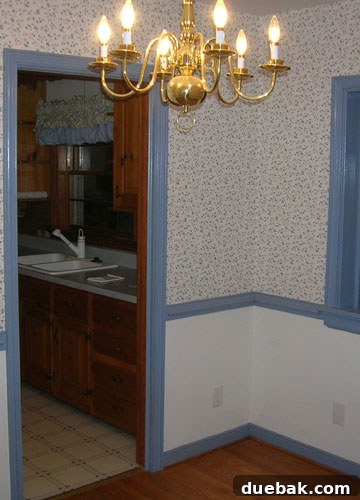
Isn’t she a beauty in her original form? It’s fascinating to observe the subtle changes that can completely alter a room’s character. You might also notice that the brass chandelier in the earlier “after” photos appears significantly sleeker and more contemporary. This wasn’t a replacement, but another one of our quick and easy dining room projects from years past: a simple spray paint makeover for the classic brass fixture. It’s proof that even small, often overlooked elements can contribute significantly to the overall aesthetic of a room’s transformation.
Beyond Chalk: The Chandelier Makeover That Shines
Complementing our chalk wall art, the transformation of our old brass chandelier was another impactful, budget-friendly DIY. That once dated, ornate fixture, now gleaming and modernized in the “after” shots, underwent a surprisingly simple yet incredibly effective facelift. This project demonstrates how a tired fixture can be revitalized to perfectly match a refreshed interior without the expense of buying new. It’s a powerful example of how a bit of paint can completely alter the perception of an existing piece, integrating it seamlessly into a new design scheme.
Revitalizing Brass: A Step-by-Step Guide
The process of spray painting the chandelier was remarkably straightforward, making it an accessible project for any DIY enthusiast. First, we carefully removed the chandelier from the ceiling, ensuring all electrical connections were safely disconnected. We then took it to a well-ventilated area, like our garage, to prepare it for painting. The key to successful spray painting is proper preparation: we began by thoroughly cleaning the fixture to remove any dust or grime. Next, we applied a coat of high-quality spray primer, such as Kilz. Primer is crucial as it ensures excellent adhesion for the subsequent paint layers and provides a uniform base, preventing the original brass from showing through. We meticulously taped off all electrical components and bulb holders to protect them from paint. After the primer dried, we applied two thin, even coats of regular latex spray paint in our chosen color. The beauty of this step is the freedom of choice – imagine it in a sophisticated matte black, a soft sage green, or even a daring sultry red; the possibilities are endless and yield equally fabulous results. Once the paint was dry, we rehung the chandelier and, for an added touch of modern elegance, replaced the traditional flame-shaped bulbs with clear, round, Domino-esque ones. This simple, affordable, and highly effective transformation breathed new life into an otherwise dated fixture, proving that significant style upgrades don’t always require a significant investment.
Embracing DIY Home Decor: Your Next Project Awaits
These two projects – the chalk wall art and the chandelier makeover – underscore a fundamental principle of home decor: transformative changes don’t always demand extensive renovations or exorbitant budgets. With a little creativity, common materials, and a willingness to try something new, you can imbue your living spaces with character, charm, and a deeply personal touch. Whether it’s the freehand artistry of chalk on a newly painted wall or the dramatic update of an old light fixture, each DIY effort contributes to a home that truly reflects who you are. So, gather your supplies, embrace your inner artist, and prepare to be amazed by what you can achieve. Happy chalking and spray painting, everyone! May your next home project bring you immense joy and satisfaction.