

In the modern smart home era, certain upgrades transcend mere convenience to become truly transformative. Among these, motorized blinds – or as I affectionately (and technically inaccurately) call them, “smart blinds” – stand out as a personal favorite. They’re not just window coverings; they’re an integral part of our daily routines, offering unparalleled ease and sophistication. Having previously highlighted some of our essential smart home devices, I’m excited to delve deeper into the world of automated window treatments. This comprehensive guide will cover everything from our selection process and power choices to installation insights, cost considerations, and the myriad benefits that have turned even skeptics into avid fans.

Embracing Modern Living: The Irresistible Appeal of Smart Blinds and Shades
For years, automated window coverings were my white whale of smart home technology. Even in our previous residence, where we enthusiastically embraced various smart devices (as detailed in our 2018 post on 10 ways we use smart devices), the sheer effort of manually adjusting blinds across six windows in three bedrooms each morning and evening was a persistent, albeit minor, chore. While certainly not a back-breaking task, it represented a tangible friction point in our daily routine.
As our family’s morning and bedtime routines became increasingly automated – from lighting to temperature control – the manual operation of blinds felt increasingly anachronistic. Friends who had already adopted motorized blinds consistently raved about the convenience and comfort they provided, further fueling my desire for this upgrade. The concept of effortless light control and enhanced privacy, all at the touch of a button or a simple voice command, became an undeniable draw.

Our previous home presented a significant hurdle to this dream: we already owned fifteen traditional blinds across the upstairs. Replacing or retrofitting them would have been prohibitively expensive. Even exploring adapter kits, such as this one from Tilt, which cost around $200 per window, would have quickly accumulated into thousands of dollars for blinds we already possessed. The cost-benefit analysis simply didn’t align with our budget, demonstrating that even my passion for smart tech has its practical limits.
However, the narrative shifted dramatically when we moved into our current home. This new canvas offered a unique opportunity: (1) we started with zero existing blinds or window coverings, and (2) critically, only five windows actually required coverings. We made a conscious decision to keep the windows in our main living areas bare, embracing an open, airy, and contemporary aesthetic that maximizes natural light. This left just three windows in our primary bedroom and one in each of the kids’ rooms needing attention. Even the bathroom featured a frosted window, eliminating the need for any covering there.

For these five windows, we opted for roller shades instead of traditional horizontal blinds. Our reasoning was twofold: roller shades, when fully open, retract neatly and “disappear” into the window frame, preserving the bright, clean, and modern ambiance we cherish in this home. Aesthetically, from the street, this choice also creates a cohesive look, making all our windows appear uniformly treated with expansive panes of glass, subtle enough that the presence of shades in bedrooms and their absence in common areas is not overtly apparent.

Moreover, roller shades, in particular, seem to be ideally suited for automation. Perhaps it’s a lingering trauma from the flimsy, difficult-to-operate vinyl roller shades of my childhood, but manual roller shades often conjure images of repeated tugs to ensure a neat roll-up, or the dreaded, violent snap-back to the top if not locked perfectly into place. The prospect of a roller shade that I would never need to touch with my hands – one that would operate smoothly and silently with precision – was incredibly appealing and a significant motivator in our decision-making process.
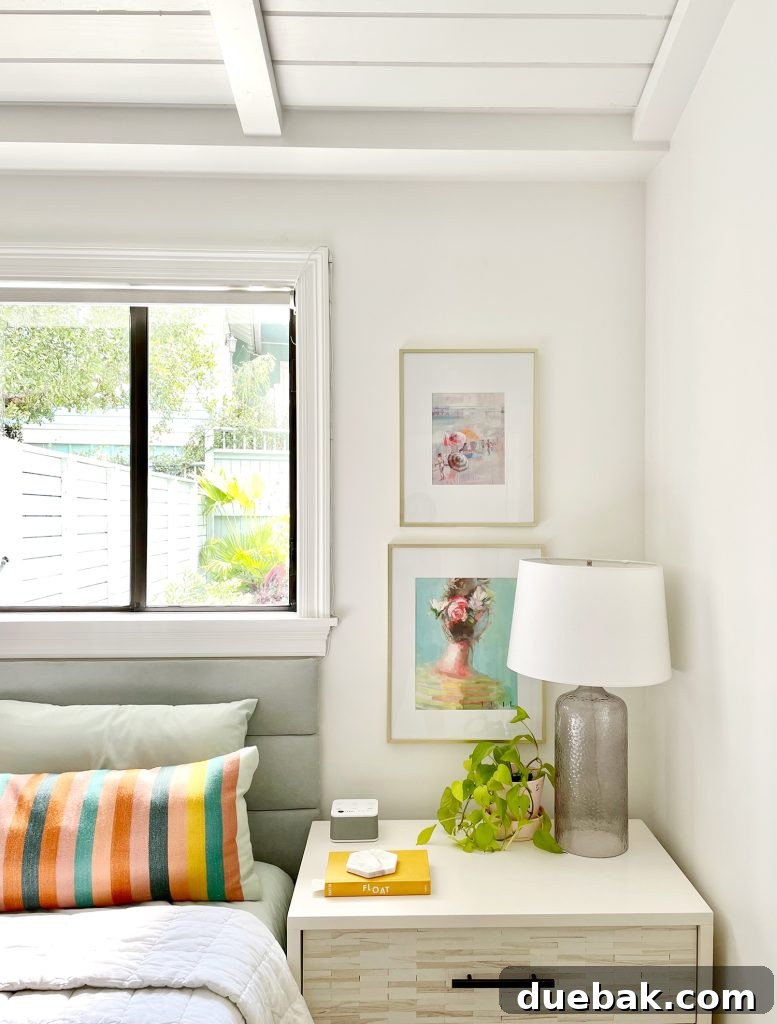
Ultimately, I presented a compelling case to my partner, Sherry, that the time was ripe for smart window treatments. Despite her initial hesitation, she agreed to explore the pricing. While the initial quote still required some persuasion, my unwavering commitment to my #smartblindgoals, combined with the manageable number of just five windows, won her over. Today, she is a vocal and enthusiastic advocate for our smart blinds, a testament to their transformative impact.
Selecting the Perfect Smart Shades: Our Journey to Bali Blackout Rollers
Our search for the ideal smart shades led us to Bali Blackout Roller Shades, which we ordered with integrated smart motorization through Blinds.com. This decision was informed by a positive prior experience: we had previously purchased a blackout accordion blind from Blinds.com for our beach house bunk room, and were thoroughly satisfied with their product quality and outstanding customer service – they even replaced a shade free of charge when it didn’t fit quite as expected. Therefore, returning to Blinds.com for our new home’s window treatments was an easy choice.

Blinds.com offers an extensive array of window covering options that can be motorized, including Roman shades, cellular shades, sheers, and light-filtering varieties. However, our specific criteria quickly narrowed the field: we needed blackout shades for optimal light control, preferred the sleek profile of roller shades, and, crucially, required “Smart Home Compatible” motorization. This distilled our choices down to two main options: Blinds.com’s proprietary line or shades from the Bali brand. We ultimately selected the Bali shades, largely influenced by the positive experiences of our friends, the Vargos, who had expressed great satisfaction with their Bali motorized shades, and the slightly higher customer reviews Bali received.

Once the base product was chosen, a wealth of customization options awaited. The first critical decision was fabric color. Due to the challenges of May 2020 (early pandemic days), ordering physical samples was not feasible. Fortunately, our local Home Depot had a swatch book available for browsing, which proved invaluable. We settled on a shade called “Acadia Vintage Veil,” a beautiful light neutral sand color. This fabric boasts a subtle natural texture, elevating the shades beyond typical vinyl roller blinds. It evokes the tactile quality of seagrass wallpaper, adding a touch of understated elegance and sophistication that complements our home’s modern aesthetic.
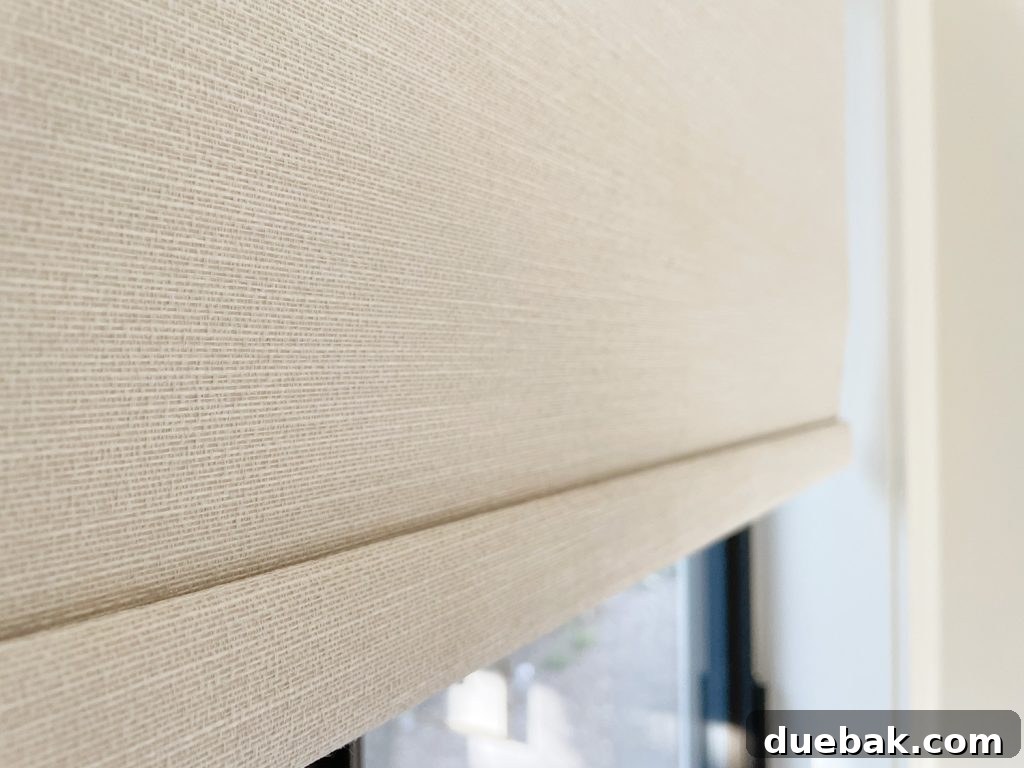
Beyond fabric, you can tailor various aspects of your shade style to your preference, from valance types to bottom rail finishes. However, the most critical selection for smart home integration is choosing “Z-Wave Motorization” as your Lift option. This is the key to unlocking the intelligent control features that will bring your windows into the smart-blind realm, whether you envision a dark, cozy retreat or a bright, energizing space with effortless automation.
Powering Your Smart Shades: A Crucial Consideration for Seamless Automation
The operational heartbeat of any motorized shade lies in its power source. Typically, smart shades draw power from one of three primary methods: solar panels, integrated batteries, or a direct electrical plug-in connection. Each option presents a unique set of advantages and disadvantages, making the choice dependent on your home’s specific layout, aesthetic preferences, and tolerance for maintenance. (It’s worth noting that solar power was not an available option for the specific Bali shades we selected).
Solar Powered Blinds Pros & Cons
- PRO: Offers a completely cord-free installation, enhancing aesthetics and safety.
- PRO: Environmentally friendly, utilizing renewable energy for operation.
- PRO: Automatically recharges throughout the day, eliminating the need for manual intervention.
- CON: Performance is contingent on direct sunlight exposure; windows in shaded areas may not be suitable.
- CON: The solar panel strip is typically visible from the exterior, which might impact curb appeal for some homeowners.
Battery Powered Blinds Pros & Cons
- PRO: Provides a cord-free solution without needing a nearby electrical outlet.
- PRO: Rechargeable battery versions offer long-term cost savings compared to disposable batteries.
- CON: Battery packs can sometimes be bulky, potentially interfering with narrow window frames or a streamlined look.
- CON: Requires periodic recharging or replacement of batteries, adding a maintenance task to your routine.
Plug-in Blinds Pros & Cons
- PRO: Offers the most reliable and consistent power source, requiring no recharging or battery replacement.
- PRO: Avoids bulky battery packs or visible solar panels, maintaining a cleaner window aesthetic.
- CON: Necessitates an accessible electrical outlet in close proximity to the window.
- CON: The power cords, though often thin, may be visible near the window, which requires thoughtful cord management.

As illustrated above, we ultimately selected the plug-in option for our smart shades. Our primary rationale was the desire for a truly “set-it-and-forget-it” system, eliminating any concerns about recharging or replacing batteries for the foreseeable future. While the power cord appears prominent in the close-up photo, taken just inches away, its visibility diminishes significantly from a typical viewing distance. When you’re not directly scrutinizing the side of the window trim, the cord is remarkably discreet.

Indeed, a common observation from visitors is their assumption that our blinds are battery-powered, precisely because they fail to notice the thin cord gracefully running down the side of the window trim. This anecdotal evidence strongly supports our choice and the effectiveness of our cord management strategy.

For context, our window trim extends approximately 3/4 inch from the wall, and the cord itself is only about 1/8 inch thick – underscoring just how minimal its presence is when properly routed.
Essential Equipment: Bridging Your Smart Shades to Your Smart Home
Integrating motorized blinds into a functional smart home ecosystem typically requires additional hardware to enable app control, voice commands, and automation. While the specific technologies and offerings have evolved since our purchase a couple of years ago, the fundamental principle remains: a central hub or gateway is needed to communicate with your shades. For Bali blinds, if you intend to control them via a smartphone app or a voice assistant like Alexa, you will likely need to acquire a Bali gateway device. One gateway typically manages up to 15 motorized shades, so calculate your needs accordingly. At the time of writing, this gateway is listed as an approximate $135 add-on when ordering from Blinds.com.

However, an important point for those already invested in smart home technology is that these particular Bali blinds operate using Z-Wave technology. Z-Wave is a low-power, wireless communication protocol specifically designed for smart home devices, allowing them to form a mesh network and communicate with a central hub, often controllable through a single, unified app. If you already own a compatible Z-Wave gateway or hub, you may not need to purchase the Bali-specific gateway. We, for instance, used a Samsung SmartThings hub, which we acquired for about $75. Although that specific model appears to be discontinued, similar compatible options like the Aeotec Smart Home Hub are readily available and should perform the same function.
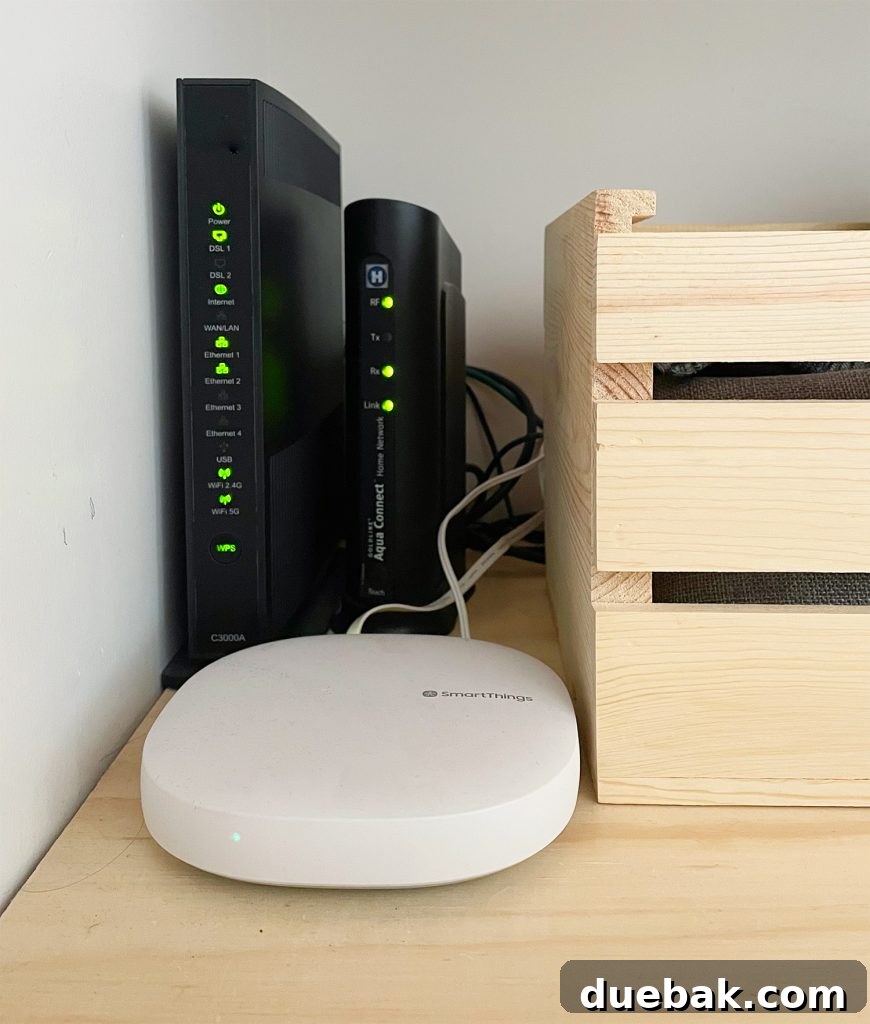
Once your shades are installed and connected to a Z-Wave hub, the next step is to download a free companion app. Bali now offers its dedicated Bali Motorization app. However, we configured and control our shades using the Samsung SmartThings app (pictured below). This intuitive application provides comprehensive control, allowing us to precisely adjust the height of the blinds, set customized schedules for automatic operation, create pre-set positions, and monitor their status.

To truly unlock the full potential of your smart shades and elevate the convenience factor, we highly recommend integrating them with a voice assistant device. Popular options include an Amazon Echo (Alexa) or a Google Home device. This integration allows for hands-free operation, meaning you can raise or lower your window treatments with a simple verbal command, eliminating the need to reach for your phone. We’ve programmed a variety of commands within our Alexa app, enabling us to control individual shades, entire rooms, or all shades simultaneously. Furthermore, we’ve seamlessly incorporated them into our morning and nighttime routines, making our home respond intuitively to our daily rhythms.
The Investment: Understanding the Cost of Smart Window Shades
When considering smart home upgrades, cost is often a primary factor. Our five motorized roller shades represented an investment of approximately $300 per window, totaling around $1,450. I understand this might elicit a “wut” emoji reaction, as it certainly did from Sherry! However, it’s crucial to put this cost into perspective. In our previous home, we actually spent more on non-motorized window coverings, which included 16 woven blinds downstairs (rarely lowered) and 15 white faux wood blinds upstairs, covering a grand total of 29 windows.
While $300 per single window covering undeniably marks our highest expenditure in this category, it was actually less than I had anticipated for smart blinds. Friends who adopted them earlier often paid around $400 per window, but prices have steadily become more accessible as the technology gains mainstream adoption. We also strategically waited for a Blinds.com sale when we placed our order in 2020, which helped manage the overall cost. Our windows are also not exceptionally tall, contributing to a slightly lower price point, although we opted for a blackout liner, which was a non-negotiable prerequisite and added to the cost. Based on current pricing, the smart motorization feature itself typically adds an estimated $145 to $190 to the cost of each shade, depending on the chosen power source and other customizations.

Installation and Setup: A Surprisingly Straightforward Process
One might assume that the integration of smart technology would complicate the installation of window treatments, but this was pleasantly not the case with our motorized shades. The physical installation proved to be as straightforward as installing any traditional blind. It primarily involves mounting a couple of brackets securely to your window frame and then simply snapping the shade into place. The only minor addition for our plug-in shades was the need to route a thin power cord to an outlet. The overall process was remarkably quick and intuitive, largely a “bingo, bango, done” affair.

The “smart” aspect of the setup involves connecting the shades to your home’s Wi-Fi network (via your Z-Wave hub) and then configuring your desired commands and routines within the control app. While the precise steps may vary depending on your specific Z-Wave device and controller application, our experience was incredibly user-friendly and logical. I won’t detail every step here, but resources like Bali’s how-to video can provide a helpful overview. Rest assured, the digital setup was no more challenging than configuring any other Wi-Fi-connected smart device we’ve introduced into our home.
Mastering Discretion: Effective Cord Management for Plug-in Smart Shades
A common concern with plug-in motorized shades is the visibility of power cords, potentially disrupting the clean aesthetic of your windows. Allow me to circle back to our previous discussion on the “small but present” cord. Our primary solution for concealment was simple yet highly effective: we strategically ran the thin cord diagonally along the top corner of the window trim, where a natural seam often exists, and then continued it neatly down the side of the window trim. We secured it using tiny finish nails, which practically disappear into the trim (notice the one in the top corner of the window trim in the image below).

Consider how often you actually focus intently on the side of your window trim – for most people, it’s rarely. This is precisely why the cords are largely unnoticeable in our rooms. For instance, in the image below, the cord runs discreetly down the right side of the window trim, slips behind the headboard (its slim profile makes this easy), and plugs into an outlet beneath the bed. In fact, countless room photos we’ve shared on our blog, featuring these windows (excluding extreme close-ups), have never once prompted an eagle-eyed reader to ask about a visible cord. It truly blends into the background unless you are actively searching for it.

An even simpler solution exists if you intend to pair your motorized blinds with curtains. In our previous, more traditional homes (like our Richmond house and the pink house), we always combined blinds with curtains. In such scenarios, the power cords would be completely obscured behind the curtain panels, allowing them to snake down to a nearby outlet without any detection whatsoever. This offers a seamless and aesthetically pleasing cord management solution.

However, since we opted for a curtain-free approach in our current home (except for blackout curtains on glass bedroom doors), we relied on routing the cords directly down the side of the window molding.

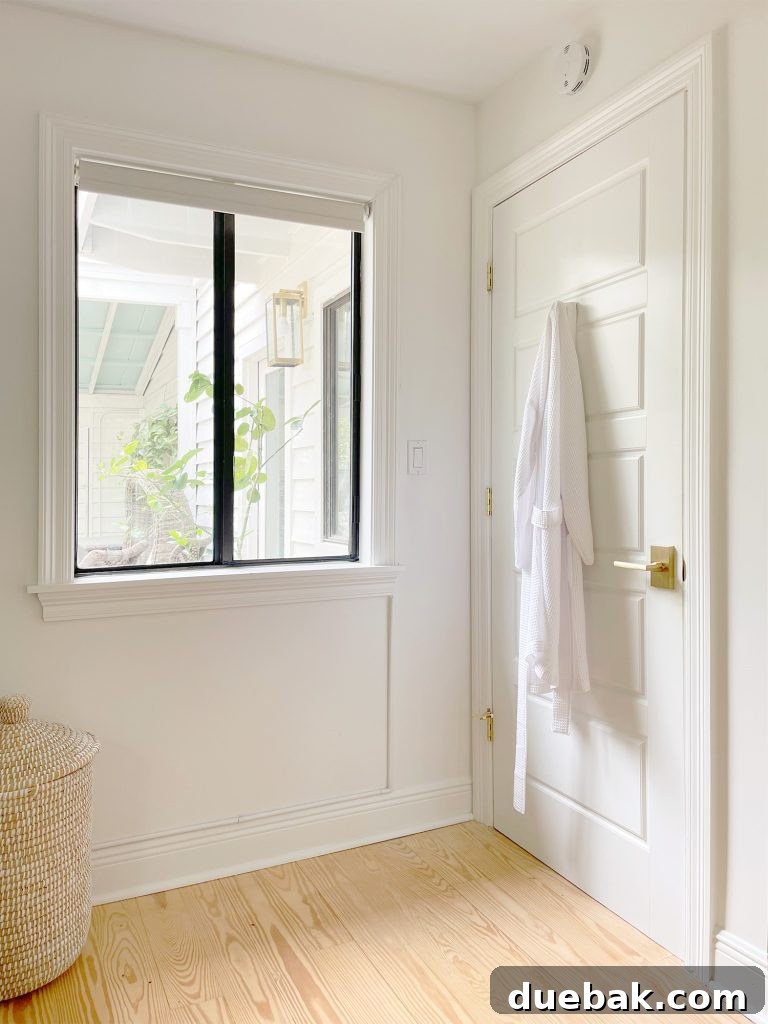
The only exception to this subtle method was near our bedroom door, where the cord required a slightly longer path to reach its designated outlet. In this particular instance, we utilized a cord cover kit to help it blend with the baseboard. In hindsight, this specific kit added a bit more bulk than desired, so a simpler approach of securing the cord with small finish nails and painting it to match the wall might have been even more discreet. Fortunately, this minor visual is hidden behind the open door for most of the day, and when the door is closed at night, there are no lights on to draw attention to it.

Beyond Convenience: The Transformative Benefits of Smart Shades
The unequivocal answer is yes, they were absolutely worth it. And this sentiment is shared wholeheartedly by Sherry, who, despite her initial skepticism, has become a complete smart blind convert. The value these automated window treatments bring to our daily lives extends far beyond simple convenience, touching on aspects of efficiency, comfort, security, and even child development. Here are the compelling reasons why we wholeheartedly recommend them:
Seamless Morning & Evening Routines
One of the most anticipated benefits, and indeed the one that consistently delivers, is the seamless automation of our daily routines. Voice-controlled shades eliminate the repetitive task of manually opening and closing each window covering. By integrating them into our comprehensive smart home routines, they synchronize with other devices – lights dim, the thermostat adjusts – preparing the entire house for sleep at night or greeting the new day with a gentle, automatic lift. A simple “Alexa, Good Morning” sends all shades up in unison, while “Alexa, It’s Bedtime” gracefully lowers them. This coordinated action is not only remarkably satisfying but has also become a favorite demonstration for friends, who are often so impressed they ask for product links on the spot. It’s a luxury, certainly, but one that undeniably enhances daily living. Furthermore, living by the beach often entails multiple wardrobe changes throughout the day – whether for swimming, painting, or simply changing into more comfortable attire. The ability to issue a quick “Alexa, Close Bedroom Blinds” ensures instant privacy across all bedroom windows, a feature we utilize multiple times daily beyond just our scheduled morning and evening routines.
Kid-Friendly & Safe Window Control
Smart shades have significantly simplified light and privacy control for our children. Gone are the days of wrestling with cords or dealing with shades that jam or snap unpredictably. Our kids can operate their bedroom shades (and lights) completely hands-free via voice commands. This not only promotes independence but also enhances safety by eliminating hazardous cords. An added bonus? Zero handprints staining the fabric, as no one needs to physically touch them. Whether they’re changing clothes or seeking “dark mode” for fort-building adventures, it requires no parental intervention. Hearing them playfully ask Alexa to “enable dark mode” or use their own quirky commands for their rooms is an unexpected delight.

Gentle & Quiet “Alarm Clocks” for Kids
With our children attending different schools with varying start times, we sought a soundless, natural light-based method to gently wake them without disturbing their sibling across the hall. Smart shades proved to be an ingenious and unexpected solution. Using the Alexa app, we’ve created individual routines for each child’s shade to partially raise at specific times. This allows just enough natural light to filter in, providing a gentle nudge to wake up and prepare for their day. While we could also integrate their room lights, the shades alone offer a soft, non-jarring awakening. This system may not suit every sleeper, but both our children now reliably wake up unprompted, guided by the gradual influx of light precisely timed to their school schedules throughout the week.
Enhanced Security While Away
The ability to program our blinds on schedules offers a valuable layer of home security. We’ve configured a custom “Blinds Away Mode” in the Alexa app that automatically raises and lowers the blinds at specific times when we’re on vacation. Much like using timers for lights to simulate occupancy, our smart shades mimic normal daily activity, creating the illusion that the house is occupied. This intelligent feature is a modern-day equivalent of a security guard, deterring potential intruders by maintaining a lived-in appearance – truly something Kevin McAllister would appreciate!
Navigating Potential Downsides: Minor Hiccups and Practical Solutions
While the benefits of smart shades are extensive, it’s important to acknowledge any potential drawbacks. Beyond their higher initial cost compared to conventional window coverings, our experience has revealed only a couple of minor hiccups. The most notable is an occasional connectivity issue with the blind positioned farthest from our Z-Wave Hub. This blind may, on rare occasions, lose its connection and fail to respond in unison with the other two in our bedroom. Given our home’s historically inconsistent internet signal, this is likely an environmental factor rather than an inherent flaw in the shades themselves. Even with our sometimes-spotty Wi-Fi, this occurrence is infrequent and typically resolves itself within a few hours, classifying it as a momentary quirk rather than a deal-breaking problem.
Crucially, each shade is equipped with a discreet manual button on its right side, which can be pressed to raise or lower it, similar to how one might operate a garage door manually. This ensures that we are never left with an unresponsive blind. When a glitch occurs, we usually just repeat the voice command, or resort to the manual button, resolving the issue quickly. This fail-safe mechanism provides peace of mind.

For plug-in powered shades, there’s also the theoretical concern of a power outage. However, in our two years living here, we haven’t experienced one, and our home is equipped with a backup generator, mitigating this risk significantly. For those in areas prone to frequent power disruptions, the Bali website suggests a local remote as an easy workaround, or one might consider battery-operated shades as a more resilient alternative in such scenarios.
Pro Tips for a Flawless Smart Shade Experience
Based on our journey, we have a crucial piece of advice for anyone considering motorized shades: purchase a single test blind before committing to outfitting your entire home. While this might demand a degree of patience, especially if you’re eager to replace unsightly temporary window coverings (like the disintegrating packing blankets we initially used!), it’s an invaluable step.

We are incredibly grateful we followed this advice, as it allowed us to identify and correct a significant design mistake we otherwise would have regretted. Initially, we selected “Standard Roll” for our fabric direction, assuming it was the conventional choice. However, upon receiving our test blind, we discovered that with this option, when the shade was fully raised, the roll at the top exposed the bright white backing of the blackout liner, rather than showcasing our chosen textured fabric. It looked akin to wrapping paper rolled inside out, concealing the beautiful design. This aesthetic oversight would have greatly diminished the sophisticated look we were aiming for.
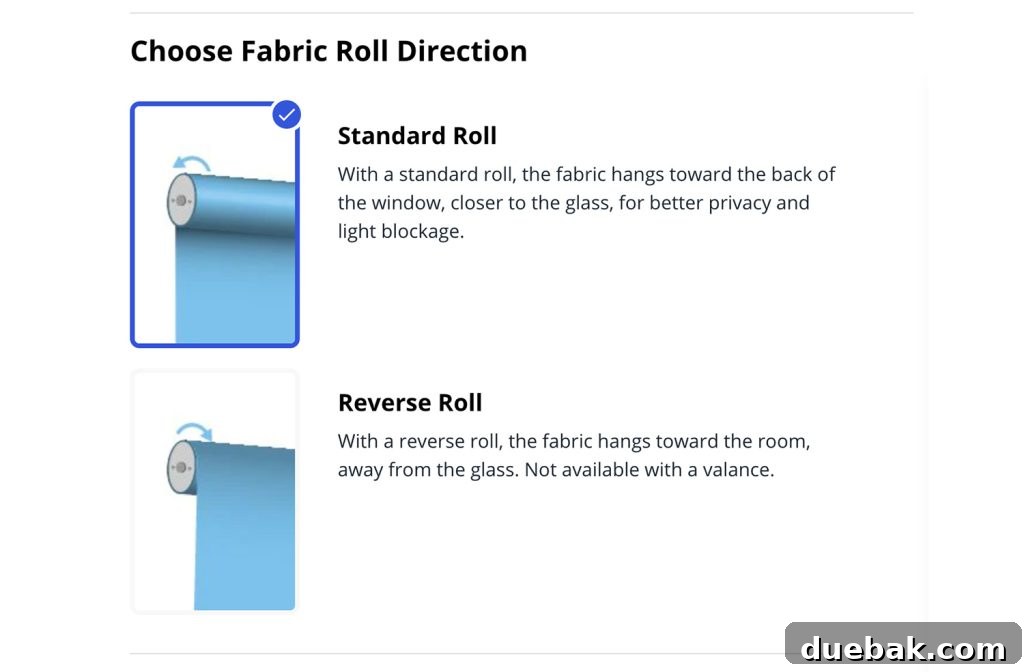
We strongly recommend opting for “Reverse Roll” instead. This ensures that the fabric cascades seamlessly from the front of the roll, displaying your chosen texture and color beautifully, even when fully retracted. This small detail makes a noticeable difference in the overall appearance and elegance of the shades. True to our previous positive experience with Blinds.com customer service, they understood our confusion and graciously offered to replace the initial test blind at no charge. With this critical kink resolved, we proceeded with complete confidence to order the rest of our home’s motorized shades, resulting in the flawless finish we enjoy today.

Expanding Your Smart Home: Further Automation Inspirations
Curious about other ways to enhance your home with smart technology? You’re in luck! Our initial post, “10 Ways We Use Smart Technology To Make Our Home More Efficient,” offers an excellent starting point for those looking to dip their toes into home automation, even with basic, budget-friendly lights and plugs. For a current overview, our updated favorite smart tech rundown from last month details our latest additions, a few devices we’ve retired, and our absolute favorites. Additionally, we recently shared our easy, 5-step guide to installing a wireless video doorbell, another impactful smart upgrade.

There you have it – my comprehensive and, dare I say, passionate thoughts on the wonders of smart blinds. While I can’t quite say “Alexa, publish this blog post!” (a girl can dream!), the manual effort is well worth sharing this invaluable smart home upgrade. For any questions, feel free to drop them below!
Note: You can also watch this video on YouTube to see our smart blinds in action.
*This post contains affiliate links, so we may earn a small commission when you make a purchase through links on our site at no additional cost to you.