
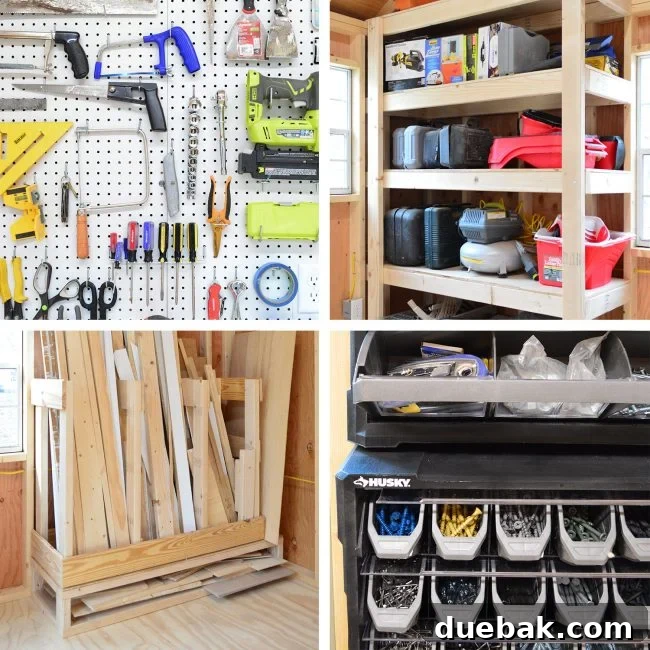
Transforming your shed from a chaotic clutter zone to a highly efficient and organized workspace is an incredibly satisfying endeavor. We recently undertook this very project in our spacious new shed, implementing a range of practical and innovative organization solutions that were all completed within a single weekend. This comprehensive guide will walk you through all the essential shed storage ideas and organization tips we utilized, along with a few standout favorites from other storage areas we’ve meticulously organized over the years. Our goal is to empower you to create a functional and inspiring space, whether it’s for woodworking, gardening, or simply storing household overflow. Dive into these proven strategies to maximize your shed’s potential:
- Mastering the Art of Shed Planning and Zoning
- Installing a Highly Functional Pegboard System
- Constructing Robust, Heavy-Duty Shed Shelves
- Designing an Efficient Scrap Wood Organizer
- Streamlining Storage for Small Fasteners like Nails and Screws
- Optimizing Storage for DIY Project Supplies
- Implementing Smart Solutions for Hanging Garden Tools
- Integrating a Versatile Workbench for All Your Projects
- Utilizing Clear Bins for Visible and Accessible Storage
- Exploring Wall-Mounted Organizers for Tiny Essentials
Planning Your Shed Organization for Optimal Efficiency
Embarking on a shed organization project can initially feel daunting, particularly when you aspire to pack a multitude of functions into a single space. Even with a generous 12×16-foot footprint, our new shed demanded a strategic approach to ensure every wall and corner served its purpose effectively. The key to success lies in thoughtful planning and prioritization. We began by thoroughly assessing our needs and outlining specific objectives. This critical first step helps to delineate priorities and ensures that the solutions you implement genuinely address your storage challenges.
Our planning process involved creating a detailed list to guide our decisions:
- **Defining Essential Functions:** What primary roles did the shed need to fulfill? For us, a dedicated workspace for DIY projects was paramount, alongside general storage.
- **Identifying Pressing Problems:** What existing organizational frustrations did we want to alleviate? The most significant issue was the overflowing storage situation in our garage, which needed a new home.
This structured approach allowed us to methodically prioritize the storage solutions that were absolutely essential for the shed. Anything that didn’t fit within the shed’s designated functions or wasn’t a high priority could then remain in the garage. By sticking to this plan, we avoided unnecessary clutter and focused our efforts on creating a truly functional and efficient space. Here’s a detailed look at the practical solutions we integrated into our newly organized shed:
#1: The Versatility of a Collapsible Workbench
Our absolute top priority for the new shed was establishing a dedicated work surface for various DIY projects. We were constantly frustrated by the sawdust and mess that inevitably spread throughout the garage whenever we engaged in cutting wood or other messy tasks. To remedy this, the very first addition to our shed was a highly practical collapsible workbench. While our specific model is no longer available, this adjustable workbench offers similar functionality and would be an excellent alternative for anyone looking to add a flexible workspace.
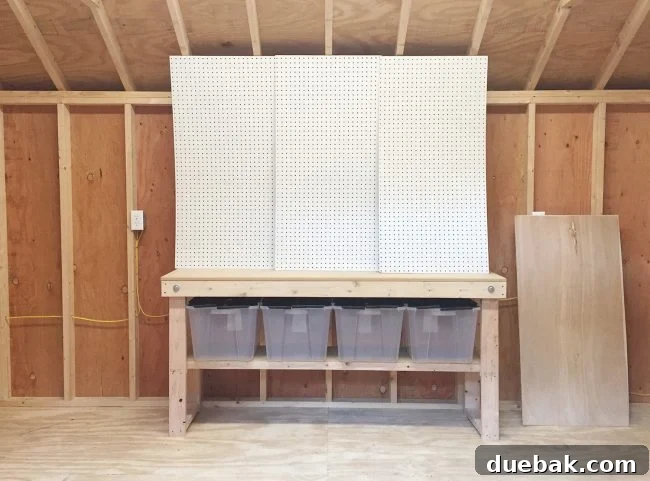
The appeal of a collapsible and easily movable workbench cannot be overstated. This design choice provides invaluable flexibility, allowing us to reconfigure the shed layout as needed or break down the bench entirely to reclaim precious floor space for larger projects or temporary storage. Beyond its portability, this particular model also featured a convenient lower shelf, significantly expanding its utility by offering additional storage for frequently used tools or materials right beneath the work surface. This integrated storage is a game-changer for keeping essential items within arm’s reach while maintaining an uncluttered workspace.
#2: Maximizing Visibility with Clear Storage Bins
For organizing a diverse array of DIY project supplies, we invested in several clear 12-gallon storage bins (with this bin option being another excellent choice). While solid-colored bins might offer a more uniform aesthetic, the practical advantage of clear bins far outweighed any cosmetic considerations. The ability to instantly see the contents of each bin without needing to pull it off a shelf or rely solely on labels dramatically speeds up project setup and cleanup, saving valuable time and reducing frustration.

Our clear storage bins are strategically sorted by project type, making it incredibly simple to grab exactly what’s needed for the task at hand. For instance, one bin holds all our tiling supplies, another is dedicated to plumbing and irrigation components, and a third contains various painting essentials. This categorization not only keeps everything contained and organized but also transforms the bins into portable toolkits. When starting a tiling, plumbing, or painting project, we simply grab the relevant bin, knowing all the necessary tools and materials are consolidated and ready to go. This “no-fuss” approach to storage significantly enhances efficiency and reduces project downtime.
#3: The Enduring Utility of Pegboards for Small Tools
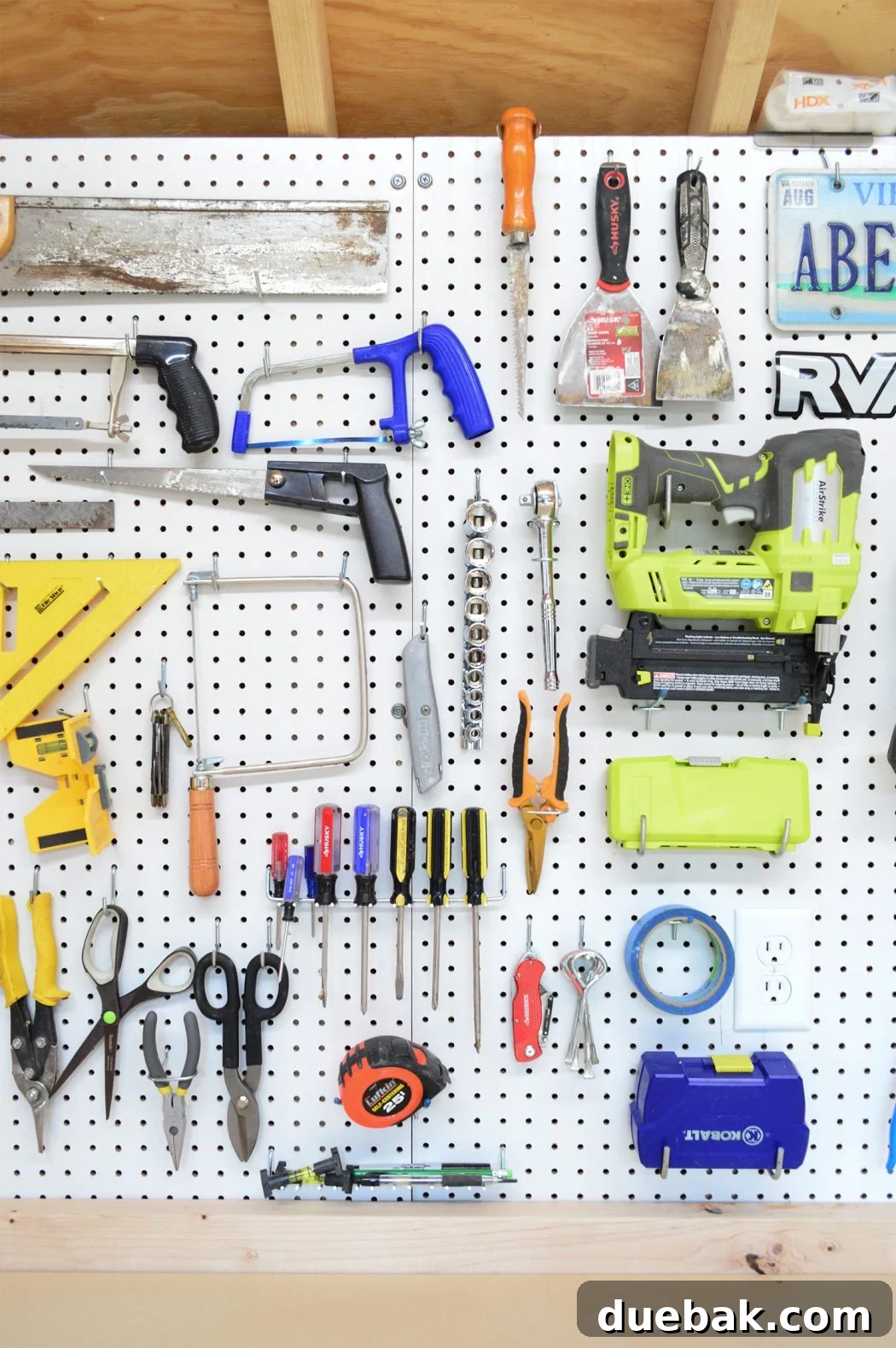
Pegboards remain one of our absolute favorite and most effective methods for organizing a wide array of shed essentials, including hammers, wrenches, screwdrivers, and countless other small tools and accessories. Having successfully utilized a pegboard system in our old workshop, we were eager to integrate this highly functional solution into our new shed. While often considered a classic, even cliché, organizational system, pegboards are undeniably both visually appealing and remarkably functional, offering an intuitive way to keep tools tidy and accessible.
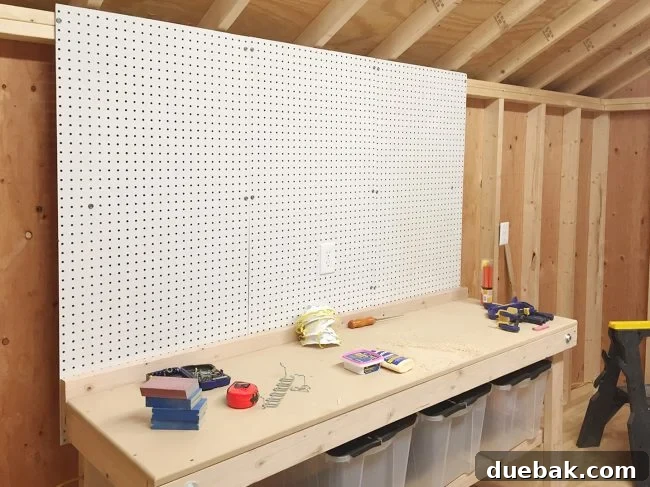
Installation was straightforward: we hung three 2×4-foot simple pegboard panels directly onto the exposed studs using screws and washers, ensuring a secure and sturdy mount. We then utilized an existing pack of pegboard hooks and clips to systematically arrange and hang all our tools. We even capitalized on the often-overlooked space above the pegboards, using it to stash items that aren’t easily hung, such as sanding blocks, tubs of wood filler, and other odds and ends, further maximizing the wall real estate.
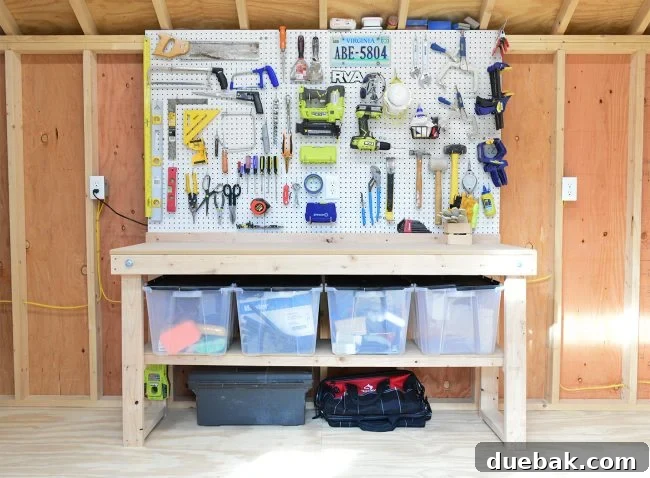
Pegboards are also an exceptional storage system for individuals who might struggle with maintaining organization. Once the initial setup work is complete, it becomes remarkably simple to keep every tool in its designated place. More importantly, it provides an immediate visual cue when something is out of place or missing, making it easy to spot and rectify disarray before it accumulates. This visual accountability is a major advantage for sustaining an organized workshop.
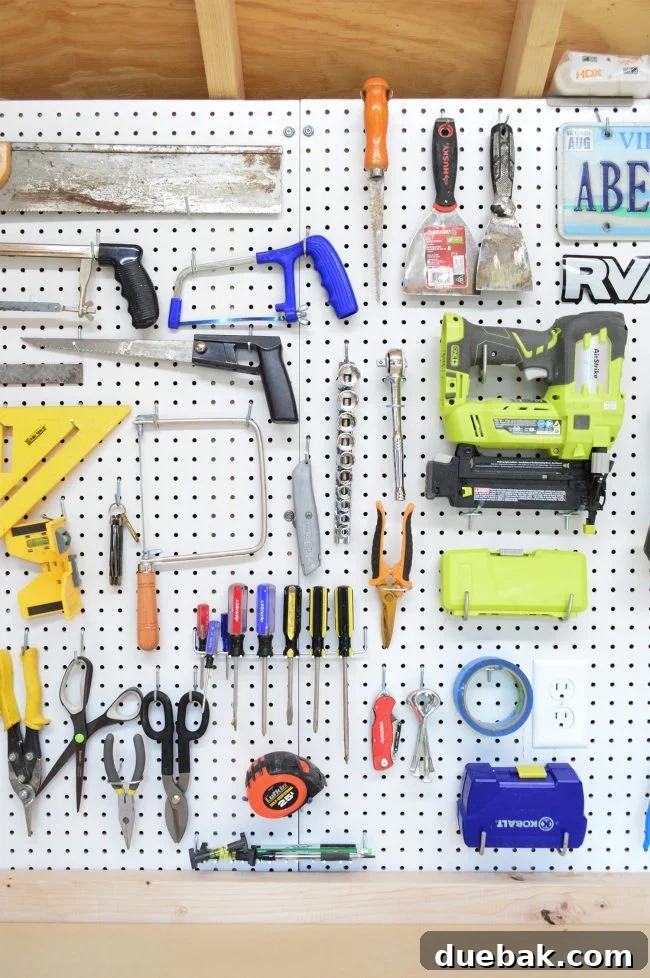
Some dedicated organizers take pegboard organization a step further by outlining or labeling the specific spots for each tool directly on the pegboard. While this can be effective, we found a simpler, less time-consuming method: taking a picture of the organized pegboard to keep on our phone. This digital reference serves the same purpose, allowing us to quickly confirm where each item belongs without additional effort. Alternatively, you could print out the photo and keep it laminated nearby for easy reference.
#4: Elevating Pegboard Aesthetics: Paint & Frame
If the idea of meticulously outlining tools on your pegboard feels like too much of a commitment, there’s a wonderfully simple and impactful way to enhance its appearance: painting the entire surface. In our previous basement workshop, we gave our pegboards a sophisticated coat of navy blue paint (specifically, Hale Navy by Benjamin Moore). This not only unified the look but also made them appear significantly more custom and integrated into the space. To achieve an even more refined and polished finish, we took the extra step of framing the edges with simple window molding, transforming a utilitarian storage solution into an attractive design element. You can delve deeper into the process of dressing up our pegboard in this detailed post.
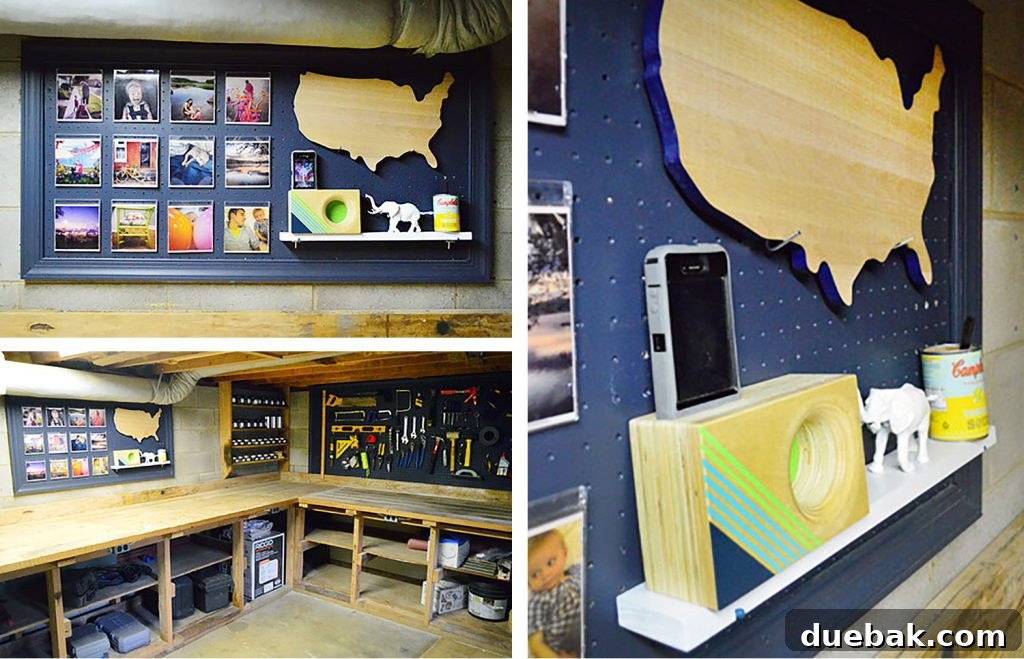
Beyond practical tool storage, pegboards offer incredible versatility for creative displays. In another instance, we repurposed a section of pegboard into a charming decorative photo display. The ingenious part was what we used for the picture frames – a surprisingly common and affordable item that you might already have lying around! This demonstrates how pegboards can transcend their primary function to add personality and style to any workspace or storage area.
#5: Mastering the Scrap Wood Organizer Challenge
One of the most persistent and frustrating organization challenges we faced in our garage was the ever-growing pile of scrap wood. Creating an efficient and accessible system for storing this valuable resource in our new shed was therefore a very high priority. We began by relocating all our accumulated scrap wood into the shed to get a clear visual assessment of the volume and variety we needed to organize effectively. This initial inventory is crucial for designing a storage solution that truly fits your needs.
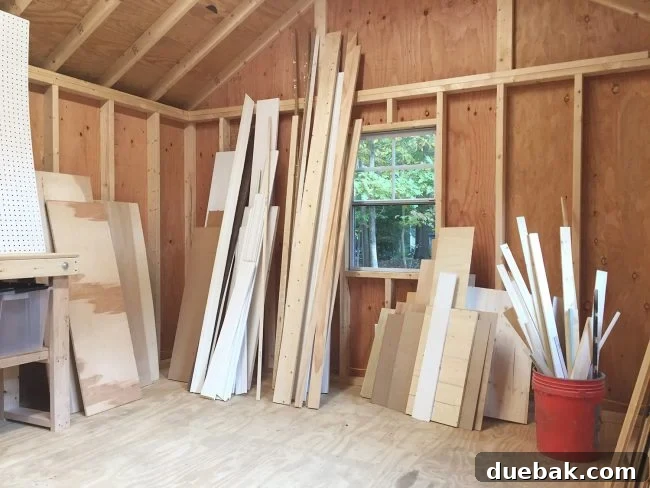
While many scrap wood storage systems found online (especially on platforms like Pinterest) often feature elaborate designs with spinning components or fold-out sections, our objective was to keep it as simple and straightforward as possible. A key principle guiding our design was to utilize as much of our existing scrap wood as the primary building material. We did purchase a few new 2x4s to ensure structural stability and robustness, but otherwise, we avoided buying additional lumber just to corral the lumber we already owned. This approach is both cost-effective and environmentally conscious.
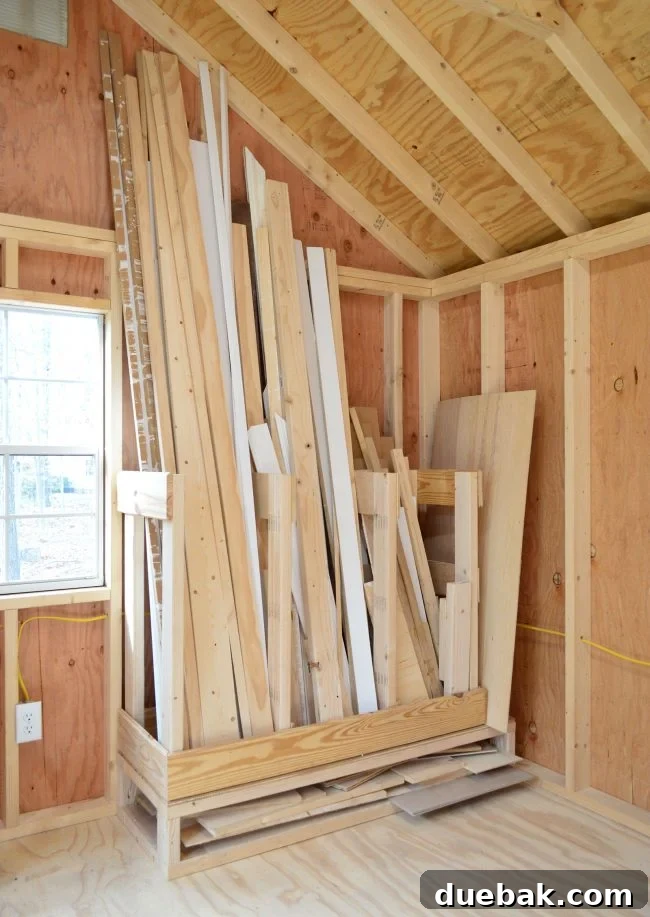
We’ve even prepared a comprehensive step-by-step building guide for this scrap wood storage system, which demonstrates just how much easier it is to construct than its finished appearance might suggest. The design incorporates several practical features: vertical sections are dedicated to storing longer boards, a low cubby provides perfect containment for smaller plywood panels and offcuts, and a flexible open area on one end accommodates larger sheets of plywood or wider planks. This multi-compartment approach ensures every type of scrap wood has a designated and easily accessible home.
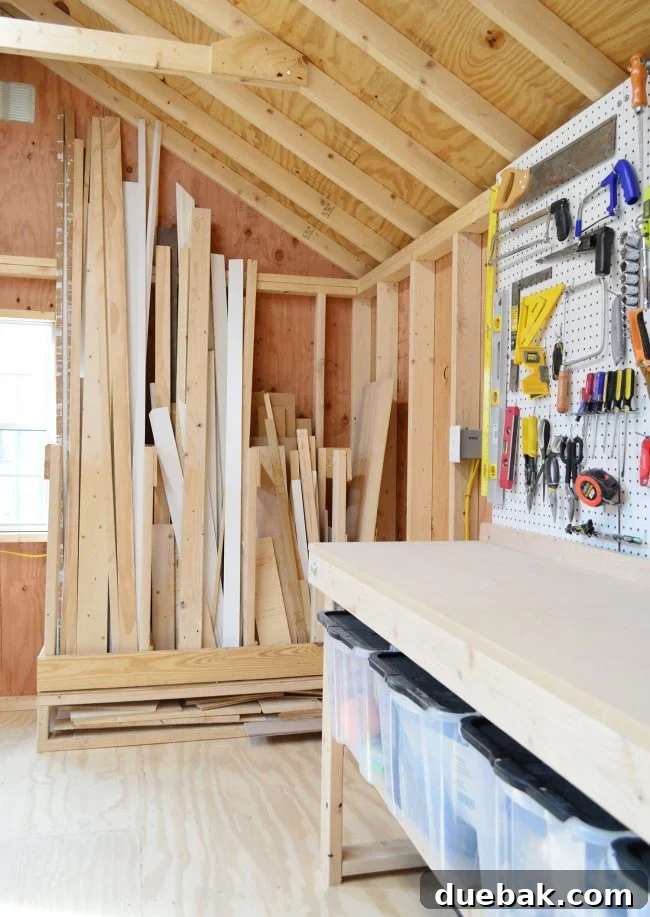
While it may not win any beauty contests for the “prettiest” scrap wood organizer on the Internet, its functionality is undeniable. It effectively solves the problem of scattered lumber, making it easy to find specific pieces and keeping the shed tidy and safe. Sometimes, the most effective solution is the simplest one.
#6: Constructing Reliable Heavy-Duty Shelves
Next on our comprehensive shed organization checklist was the installation of robust, heavy-duty shelving. Unlike typical plastic or wire garage shelves that often sag under pressure, we needed a solution capable of withstanding the substantial weight of larger tools, paint cans, and bulkier supplies. We found an incredibly straightforward and effective tutorial that guided us in creating these SUPER easy garage shelves. This DIY process is genuinely foolproof and stands out as one of our most recommended shed storage ideas on this entire list due to its simplicity and incredible strength.
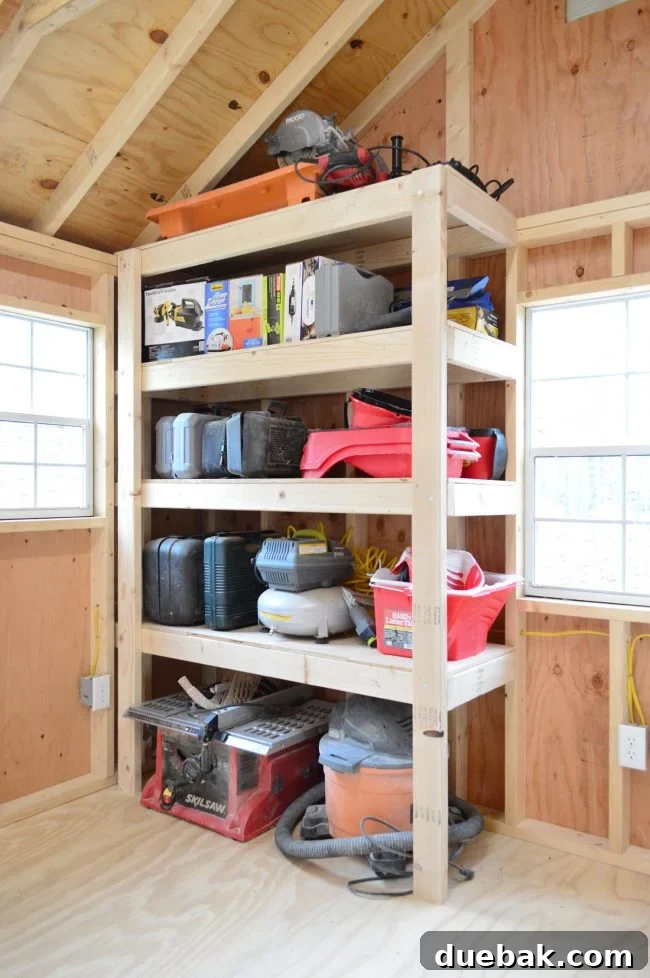
The beauty of these shelves lies in their minimal material requirements: just some sturdy 2x4s, plywood for the shelves themselves (we, again, made use of our scrap plywood to be economical), and a reliable level for accurate installation. This construction method is also highly adaptable, allowing you to customize the dimensions and spacing to perfectly fit any available space, whether it’s a garage, basement, or shed. The versatility is so impressive that we replicated and adapted the exact same process in our beach house shed just a few months later, proving its universal applicability and enduring effectiveness.
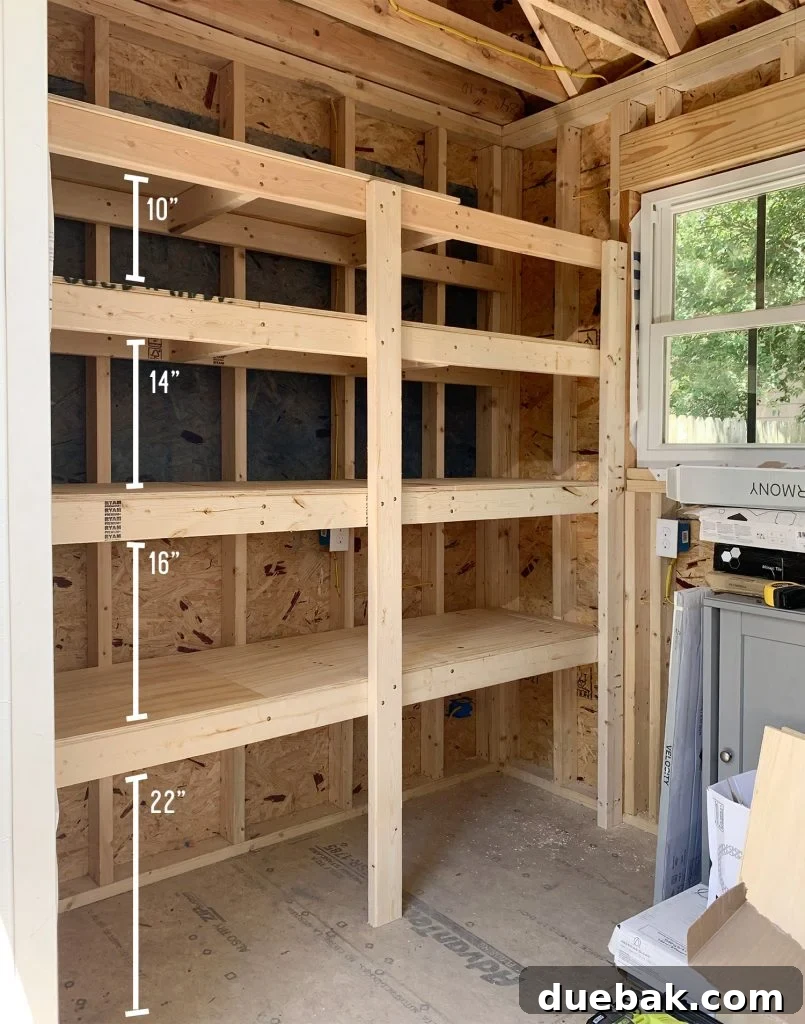
If you’re eager to discover more innovative and easy-to-build DIY shelf ideas for various areas of your home, we’ve compiled a fantastic collection of over a dozen different options that cater to a range of needs and aesthetic preferences. These solutions prove that functional and stylish storage doesn’t have to be complicated or expensive.
#7: Utilizing Large, Versatile Hanging Hooks
While our beach house shed shelves were perfectly suited for storing leftover tile, paint cans, and other infrequently needed items, we realized there was an untapped potential for organization right on the front edge of the shelves themselves. To maximize every inch of vertical storage, we strategically screwed in several large, robust rubber hooks. These are commonly referred to as bike hooks due to their strength and shape, but their utility extends far beyond just bicycles, making them incredibly versatile for various items.
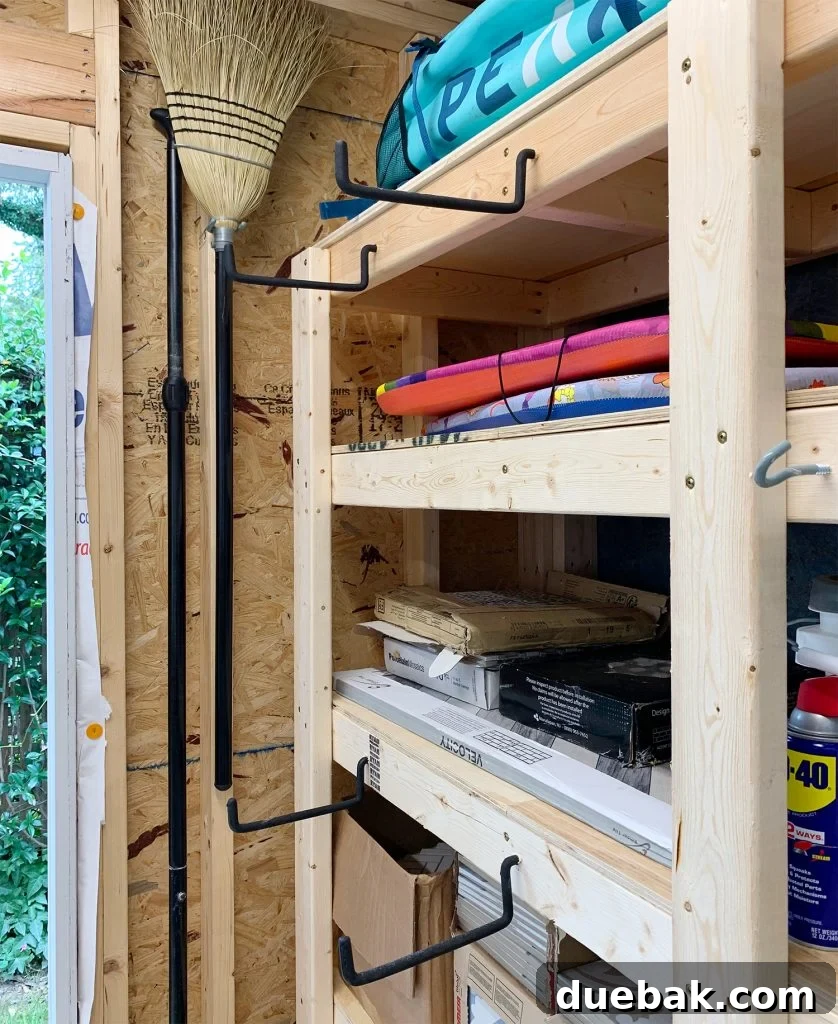
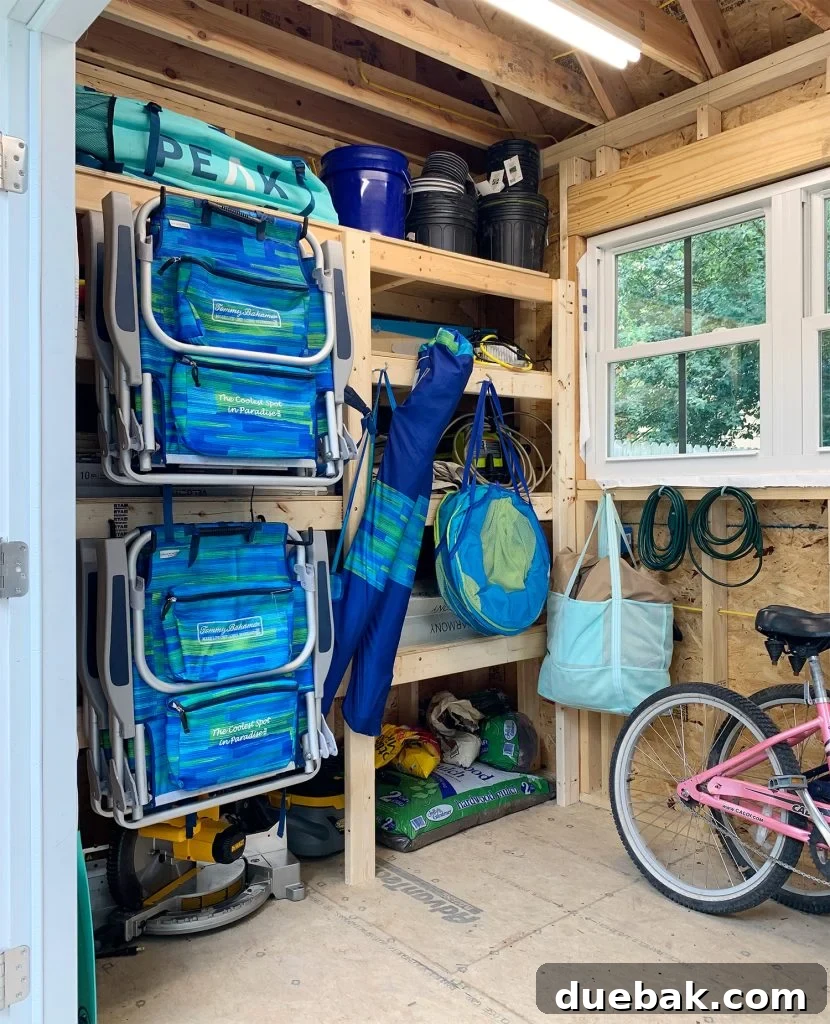
In the beach house shed, we ingeniously used these hooks directly on the shelf fronts to hang various beach gear, such as our foldable beach chairs and beach umbrellas. This not only kept them off the floor, preventing clutter and making cleaning easier, but also ensured they were readily accessible when heading out for a day at the shore. It’s an ideal solution for items that are frequently used and benefit from vertical storage.
Extending this concept to another wall in the main shed, we again employed these adaptable bike hooks to hang bulkier lawn equipment like our leaf blower and string trimmer. Their robust design easily supports the weight and awkward shapes of these tools. Even our ladder found a perfect, space-saving home, hanging securely on a pair of these sturdy hooks. This simple yet effective solution demonstrates how versatile and indispensable these hooks are for maximizing wall space and keeping larger items organized and off the ground.

#8: Simple Hanging Solutions: Screws & Nails
Achieving effective organization doesn’t always necessitate purchasing new, specialized, or expensive hooks and hangers. Often, the most straightforward and budget-friendly solutions are the most effective. Whenever possible, we rely on the simplicity of a single screw or nail to hang various items, especially in areas where aesthetics are less of a concern than pure functionality. This approach embodies smart, minimalist organization that doesn’t break the bank.
As demonstrated in our beach house shed, we efficiently hung a variety of yard equipment—including our rake, clippers, tree trimmer, and other long-handled tools—by simply drilling a single screw into an exposed stud. This method provides a surprisingly secure and accessible hanging spot for tools that would otherwise take up valuable floor space or clutter a corner. The exposed studs in many sheds and garages offer natural anchor points, making this solution incredibly easy to implement.
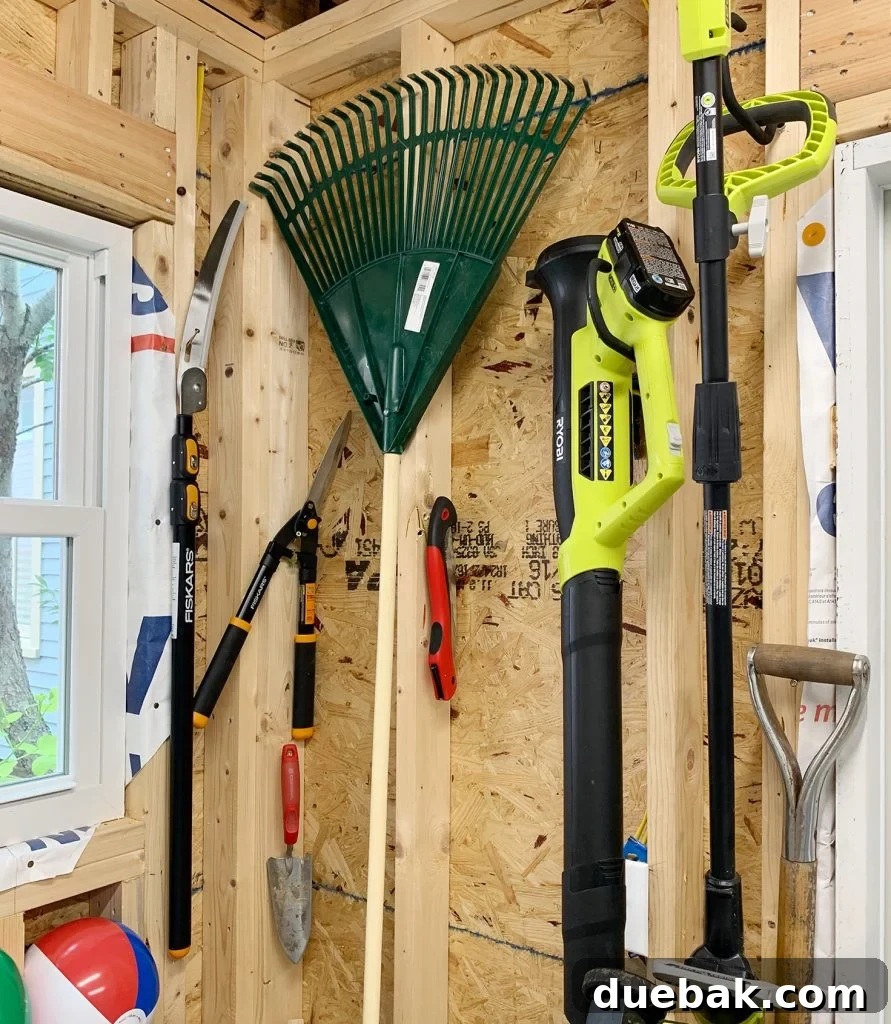
While it might require a bit of experimentation to determine the optimal arrangement and placement for each tool, the time invested is minimal compared to the cost and complexity of elaborate hanging systems. Why expend extra time or money on specialized hangers when a simple, well-placed screw or nail can effectively do the job? This approach highlights that practical shed organization is often about clever utilization of existing resources rather than endless purchasing.
#9: The Classic Charm of Mason Jar Small Part Storage
When it comes to efficiently storing tiny items such as nails, screws, washers, and other small fasteners, the classic method of using mason jars remains a beloved and highly effective choice. There’s a certain nostalgic charm to this approach, which contributes to its enduring popularity in workshops and sheds. This timeless organizational technique was a staple in our old basement workshop, where we embraced its simplicity and clear visibility. We even went a step further, taking the time to add clear labels to each jar and spray-painting some of the lids to introduce a touch of custom styling and a more unified aesthetic.
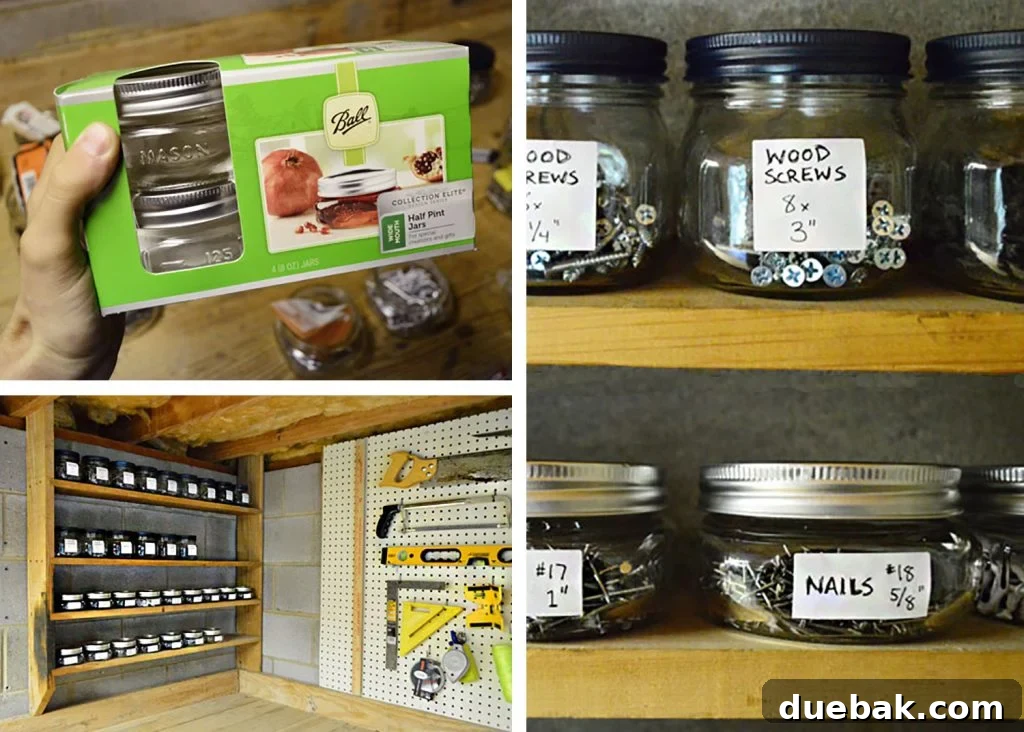
Mason jars proved particularly sensible for that specific workshop because it featured an existing, perfectly sized shelf. This shelf offered an ideal location to line up the jars, keeping them organized, easily visible, and within convenient reach. The transparent glass allows for quick identification of contents, eliminating the need to open multiple containers to find the right fastener. This method is not only practical but also adds a quaint, well-curated feel to the workspace.
#10: Modern Small Part Organization: Wall-Mounted Solutions
While mason jars offer a classic solution, for my new shed, I decided to explore a more modern and streamlined approach to organizing small parts. This decision was driven by a desire for even greater accessibility and a contemporary aesthetic.
To ensure a comprehensive sorting process, I brought all my existing small fasteners and hardware into the shed, laying them out to get a complete overview of what needed organizing. I then purchased three distinct styles of plastic, small part organizers, each offering slightly different sizes and configurations, to find the perfect fit for my varied collection: slide-out drawers, tip-out bins, and a portable organizer. Each was affordably priced under $20, allowing for experimentation. (Spoiler alert: I ended up returning the portable one, realizing I didn’t need that specific functionality.)
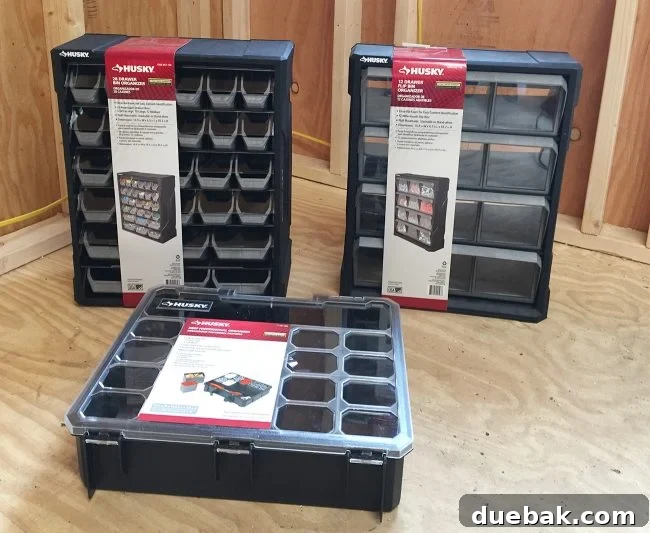
The two wall-mountable options featured convenient keyhole cutouts on their backs, making them incredibly easy to hang directly onto the exposed studs in the shed. I opted not to label anything, a choice I’ve found more sustainable for my own organizational habits (or, as someone humorously put it, “I’m a Millennial, I don’t like labels.”). However, the transparent compartments of these organizers, positioned at eye level, made it effortlessly simple to see exactly what was stored in each cubby, eliminating any guesswork.
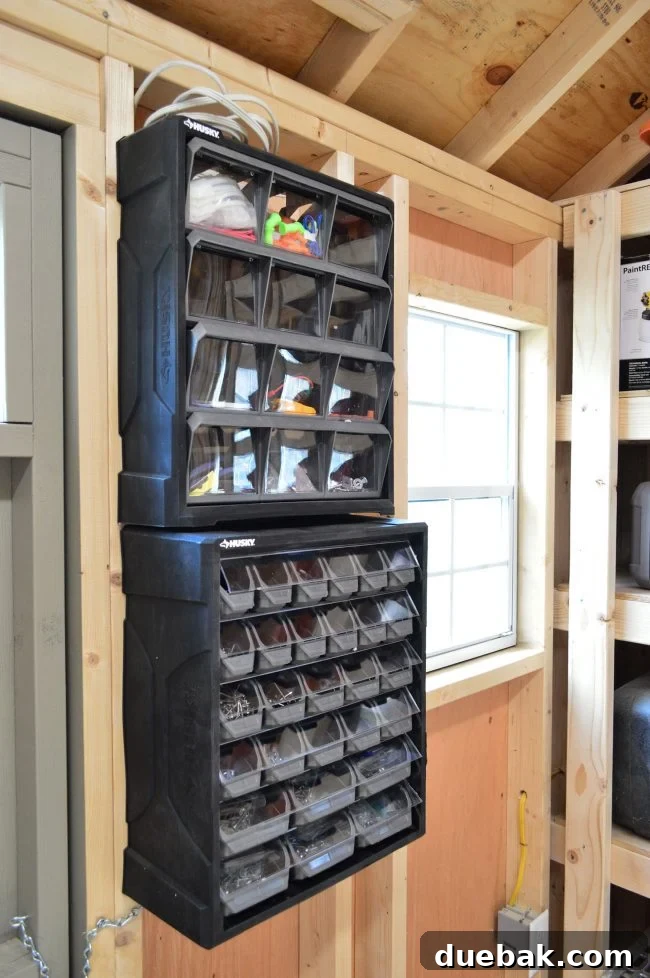
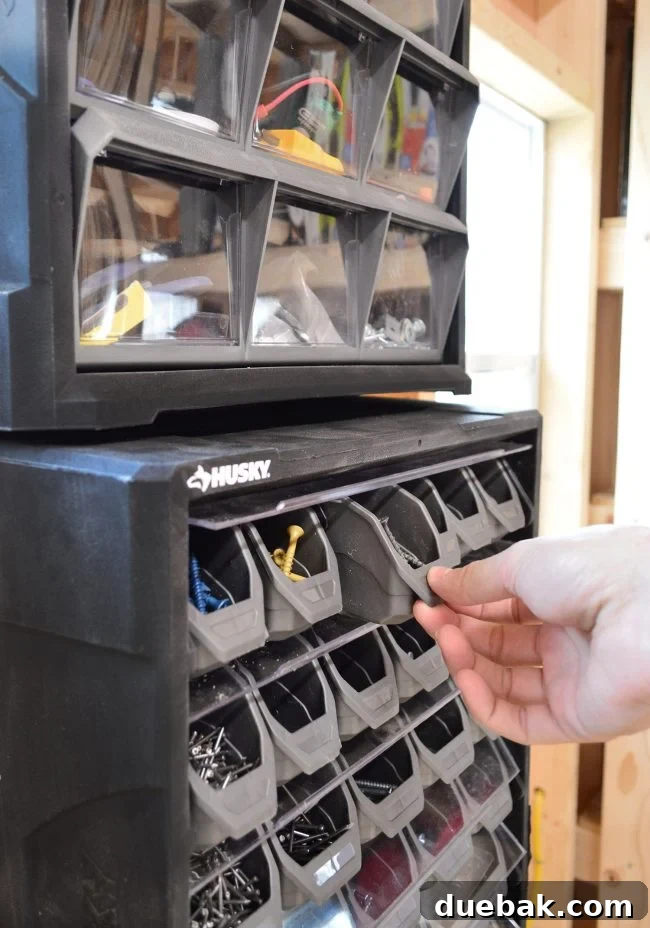
A particular feature I appreciate about the small gray compartments is their complete removability. This design allows me to easily take the appropriate container of screws or fasteners directly to my workbench or wherever the project is underway, significantly improving workflow and reducing trips back and forth for supplies. This blend of clear visibility, easy access, and portability makes these wall-mounted organizers an outstanding choice for modern shed organization.
Discover More Shed & Home Storage Ideas
We hope this detailed guide to our favorite shed organization ideas has inspired you to tackle your own storage challenges. A well-organized shed, garage, or basement not only enhances efficiency but also transforms these spaces into functional extensions of your home. If you’re eager for even more creative and practical solutions for organizing every nook and cranny, we invite you to explore some of our other successful projects. Dive into how we meticulously organized our beach house shed, decluttered and optimized our old garage, and created a highly efficient workspace in our former basement workshop. Each project offers unique insights and actionable tips to help you create an organized and inspiring environment.

**This post contains affiliate links, which means we may earn a small commission if you make a purchase through our links, at no extra cost to you.**