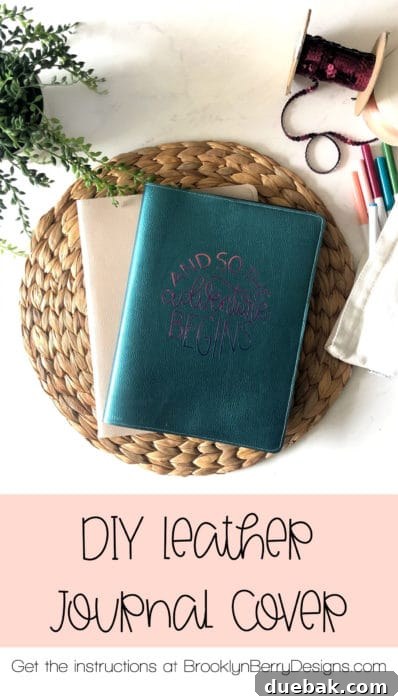
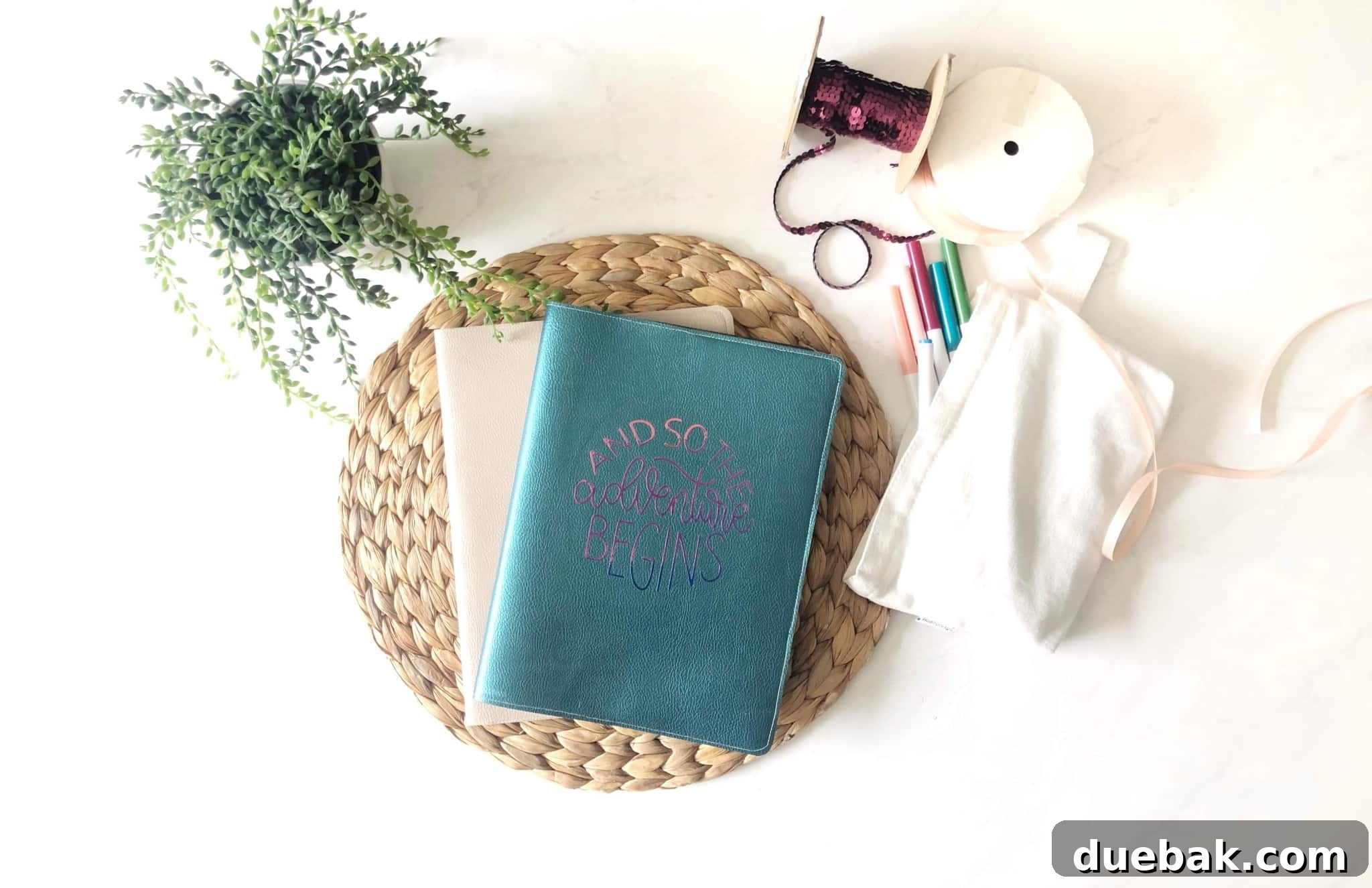
Ready to transform a simple composition notebook into a luxurious, personalized masterpiece? Discover how to craft your very own DIY leather journal cover that exudes high-end style without breaking the bank. Whether you prefer the precision of a Cricut cutting machine or the hands-on satisfaction of cutting by hand, this comprehensive, step-by-step tutorial will guide you through creating a custom leather composition book cover that is not only beautiful but also incredibly durable and wonderfully reusable. Elevate your everyday journaling experience with a cover tailored just for you!
Crafting Your Personalized Journal: More Than Just a Cover
There’s an undeniable joy in starting fresh, whether it’s a new school year, a new project, or a new phase of life. And what better way to embrace that feeling than with a crisp, new notebook? For students, it’s the excitement of fresh supplies. For professionals, artists, and dreamers, a new notebook offers a blank canvas for thoughts, ideas, and aspirations. Personally, I find the act of writing things down invaluable for organizing thoughts, prioritizing daily tasks, and capturing fleeting inspirations. So, why not take advantage of those back-to-school sales, grab an inexpensive composition book, and create something truly special for yourself or a loved one?
Unleashing Creativity: Diverse Uses for Your Custom Notebooks
The beauty of notebooks lies in their versatility. They can be molded into countless styles and serve a myriad of purposes. Beyond daily note-taking, I frequently utilize notebooks for various specialized functions. My collection includes a dedicated to-do list notebook for daily task management, a bullet journal for tracking habits and goals, a spiritual journal filled with doodles, reflections, and uplifting phrases, and a travel journal where I can affix ticket stubs, cherished photographs, and memorable notes as lasting keepsakes. Imagine a travel journal specifically designed to house the memories of your adventures!
What truly elevates a simple notebook is the tactile experience it offers. The smooth feel of quality paper, the perfect flow of a beloved pen, or the luxurious embrace of a leather journal cover – these are the qualities that transform a mundane object into a treasured companion. For me, it’s the combination of an aesthetically pleasing journal cover and a pen that makes my handwriting feel exceptional. These elements foster a deeper connection to the act of writing itself, making every entry a more enjoyable and meaningful experience.
Customized composition book covers are a thoughtful and unique gift, perfect for a friend, family member, or anyone who appreciates the art of journaling.
The Ultimate Easy DIY Notebook Cover: Luxe Leather for Less
If you adore the sophisticated look and feel of a luxurious journal cover, you are going to absolutely love the project I’m excited to share today: a truly elegant and reusable DIY leather journal cover. Starting with an incredibly inexpensive composition book – often found for a dollar or two – I’ll walk you through the process of crafting a high-quality leather cover with the help of your Cricut machine. This project is designed to be accessible and rewarding, turning a basic item into a cherished personal accessory.
But what if you don’t own a Cricut cutting machine? Don’t worry! I understand that not everyone has access to a digital cutter. This tutorial also includes options and a template that will allow you to cut all the necessary materials by hand, ensuring that you can still create a gorgeous DIY notebook cover using various other materials or traditional crafting methods. Everyone deserves to experience the satisfaction of a beautifully handmade journal.
Mastering Your Cricut: Essential Tips for Cutting Leather
Working with leather on your Cricut machine can yield stunning results, but a few key tips can make the process smoother and more successful:
- Material Choice: You have the flexibility to use either genuine leather or faux leather for this DIY journal cover. Faux leather is generally thinner and more pliable, which often makes it easier and quicker to cut with your Cricut machine, especially for intricate designs. Genuine leather, while more durable and luxurious, requires a bit more preparation and attention.
- Mat Placement and Design Mirroring: To prolong the life of your cutting mat and achieve clean cuts, always place your leather material pretty side down on the mat. Remember to mirror your design in Cricut Design Space before sending it to cut. This ensures your final product is oriented correctly.
- Protecting Your Mat (and Material): For materials with a fuzzy or textured backing, like some types of leather or faux leather, consider applying transfer tape to the fuzzy side before adhering it to your cutting mat. This prevents excessive lint and fibers from sticking to your mat’s adhesive, keeping it cleaner and stickier for longer.
- Secure Adhesion: It’s crucial that the leather is firmly attached to the mat. Use a brayer to press down evenly and thoroughly across the entire surface of the leather, ensuring maximum contact with the adhesive. For extra security, especially with thicker genuine leather, you can use painter’s tape or masking tape around the edges of the leather to secure it to your mat, preventing any shifting during the cutting process.
- Genuine Leather Consideration: When working with genuine leather, it’s essential to move the white star wheels on the roller bar of your Cricut machine to the sides. If left in their standard position, these rollers can create unsightly indentations or marks on the surface of the leather, compromising its smooth finish.
Your Creative Outcome: A Bespoke Leather Journal Cover
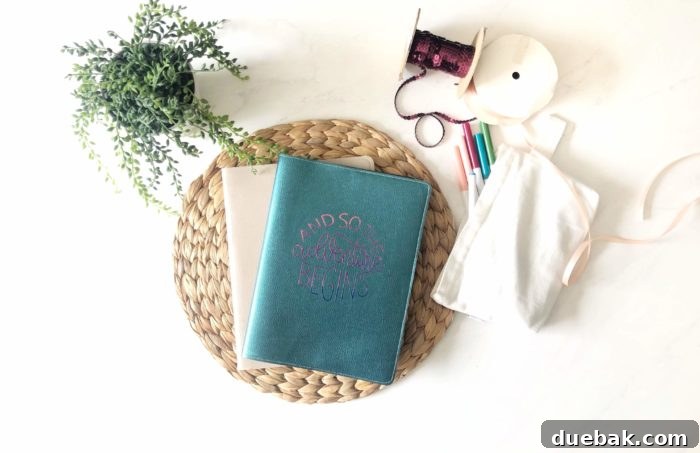
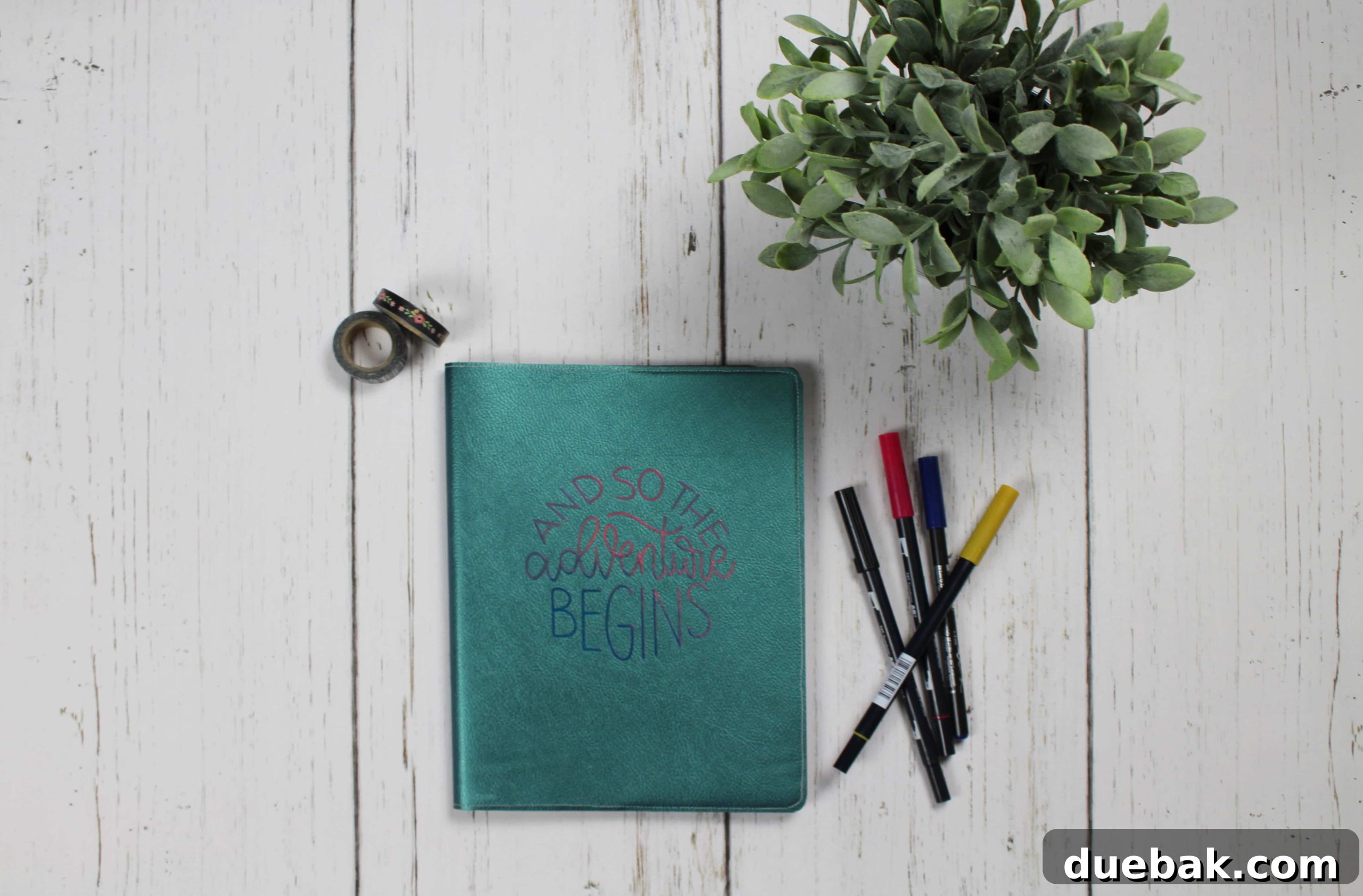
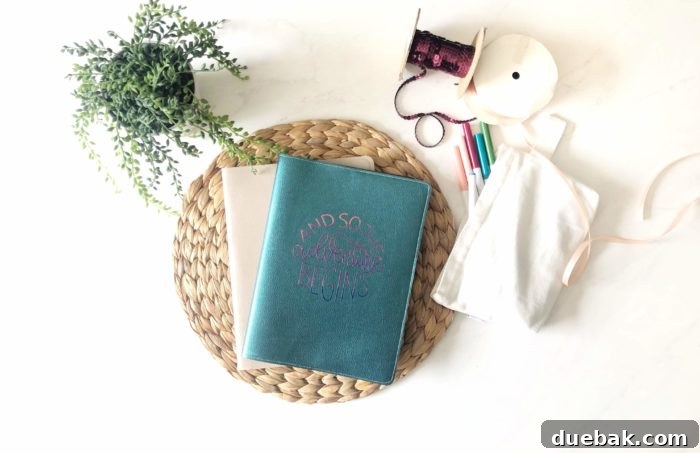
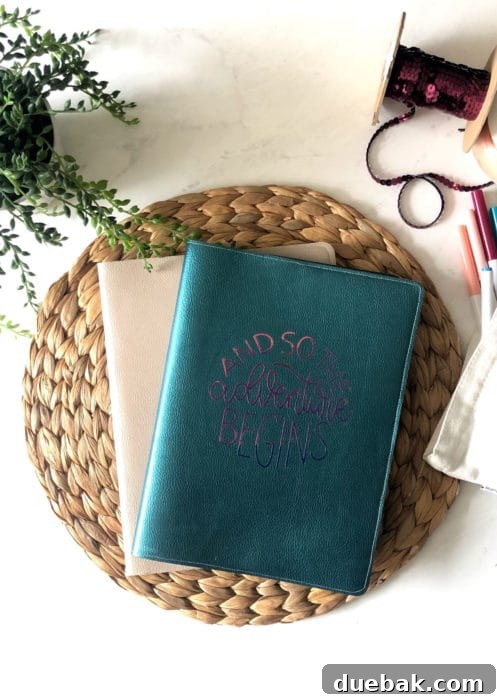
Upon completion of this project, you will have crafted a stunning, personalized leather journal cover that is perfect for students looking to add flair to their school supplies, or for bullet journal enthusiasts, artists, and writers who cherish their notebooks. This cover isn’t just a functional item; it’s a statement piece, reflecting your unique style and commitment to intentional living.
Essential Tools & Materials You’ll Need for This Project
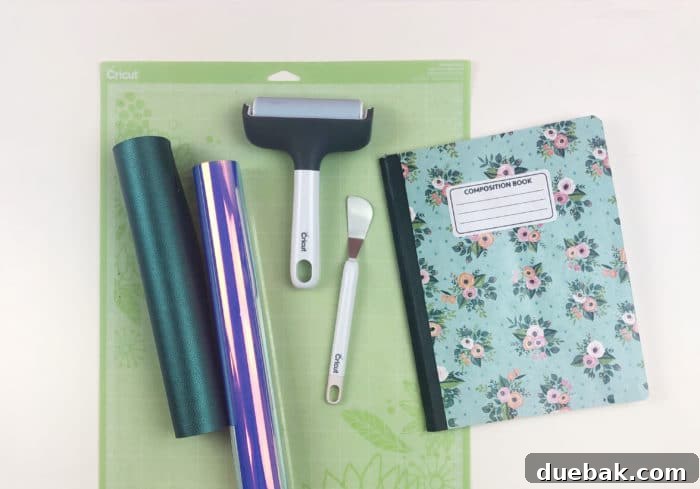
Gathering your supplies is the first exciting step in any DIY adventure. Here’s a detailed list of what you will need to create this elegant DIY leather journal cover. Having everything on hand before you begin will ensure a smooth and enjoyable crafting experience:
- Cricut Machine: A Cricut Maker or Cricut Explore machine is ideal for precise cuts on leather (also conveniently available on Amazon).
- Standard Grip Cutting Mat: Essential for holding your material securely in place during cutting.
- Deep Cut Blade: For genuine leather, a deep-cut blade is highly recommended. For faux leather, the standard fine-point blade often suffices, but a deep-cut blade can provide cleaner edges for thicker faux leather.
- Faux Leather: Cricut faux leather is an excellent choice, available in a variety of colors and textures.
- Holographic Iron-On Vinyl (HTV): To add a custom design or text to your cover, providing a beautiful metallic or iridescent finish.
- Cricut EasyPress: A Cricut EasyPress (or a standard iron with appropriate settings) is needed to apply the HTV design to your leather.
- EasyPress Mat: A protective EasyPress Mat ensures even heat distribution and protects your work surface.
- SVG Cut File: The digital design file for your journal cover (free with email signup, details below!).
- Sewing Machine or Hand-Stitch Tools: To assemble your leather cover. A sewing machine offers speed and consistency, while hand-stitching provides a classic, artisanal touch.
Comprehensive Step-by-Step Tutorial: Crafting Your Leather Journal Cover
Step 1 – Upload & Prepare Your SVG File in Design Space
Begin by downloading the SVG file for the journal cover template. Once downloaded, open Cricut Design Space and upload the SVG file. This file is available for free to my valued email subscribers – simply enter your email address at the end of this post to have it sent directly to your inbox. In Design Space, you can adjust the size of the template if you’re using a notebook that isn’t a standard composition book. Ensure all pieces are grouped correctly and ready for cutting.
Step 2 – Precisely Cut Your Leather with Cricut
Following the tips outlined earlier, carefully place your chosen leather material onto a standard grip mat, pretty side down. Select the appropriate material setting in Cricut Design Space (e.g., “Faux Leather (Paper Thin)” or “Genuine Leather”) and ensure you have the correct blade installed (deep-cut blade for genuine leather). Send your design to your Cricut Explore or Cricut Maker and let it perform its magic, cutting out the precise leather pieces for your cover.
Step 3 – Cut and Apply Your HTV Design for Customization
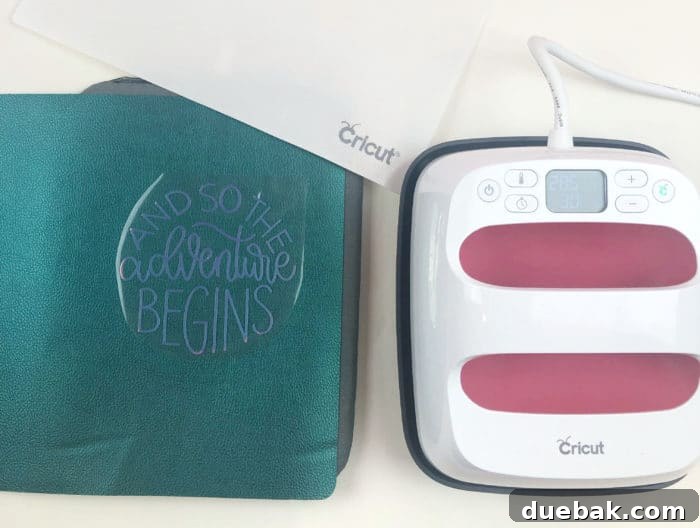
Now comes the fun part: personalizing your cover! Choose a design or text from Cricut Design Space (I used design #MAEFFD90, but any design that speaks to you will work beautifully) or create your own. Cut your holographic iron-on vinyl (HTV) design. Remember this critical step: always cut HTV with the shiny, carrier sheet side up and ensure you mirror the image in Design Space before cutting. Once cut and weeded (removing excess vinyl), carefully position the design on the front of your notebook cover. Use your Cricut EasyPress, following the recommended temperature and time settings for your specific HTV and faux leather. Apply firm, even pressure to ensure a secure adhesion. You could even add a complementary design or your initials to the back cover for extra flair!
Step 4 – Expertly Sew the Leather Cover Together
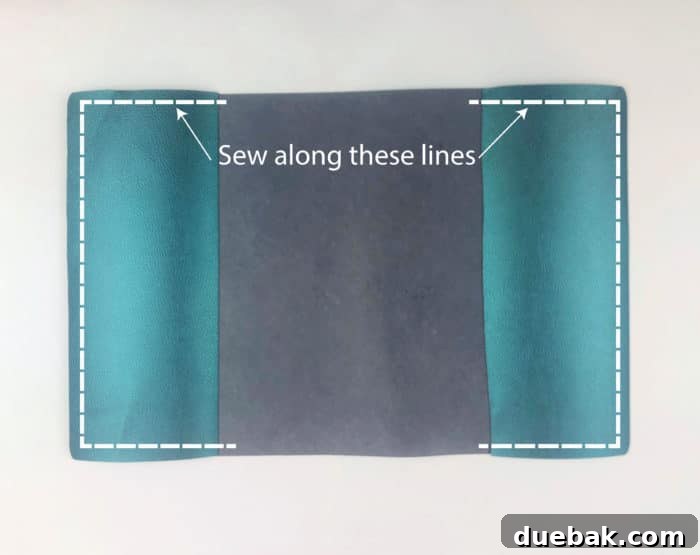
Since leather does not fray, we’ll be sewing the notebook cover with the raw edges exposed for a clean, modern finish. Unlike fabric projects, there’s no need to sew right sides together. Begin by clipping your leather pieces securely in place, carefully working your way around the rounded corners. Binder clips are an excellent choice as they hold the pieces together firmly without creating permanent holes in the leather. Before sewing, perform a quick test fit: slide your actual composition notebook into the sleeves of the pinned cover to ensure both the right and left sides fit comfortably, allowing the notebook to close properly.
Once you’re satisfied with the fit, take your project to the sewing machine. Use a leather needle and a sturdy thread (polyester or nylon works well). Sew your notebook pieces together with a very small seam allowance, approximately 1/8 inch, sewing a straight line along each of the edges. I recommend starting at the center of the bottom edge of the notebook. Exercise extra caution and reduce your speed along each side of the notebook where there are two layers of leather, as this area will be thicker. If you don’t have a sewing machine, you can hand-stitch the pieces together using a leather punch and a strong needle for a rustic, handmade aesthetic.
Step 5 – Insert Your Notebook and Enjoy Your Creation
With all the sewing complete, the final step is incredibly satisfying. Gently slide the front and back covers of your composition notebook into the newly sewn leather sleeves. Adjust as needed to ensure a snug and even fit. And just like that, your beautiful, custom-made leather journal cover is ready! Use it daily for notes, journaling, doodling, or as a stylish accessory to carry with you. Enjoy the sophisticated feel and personalized touch of your handmade creation.
Beyond Leather: Exploring More DIY Composition Notebook Covers
While a leather cover offers unmatched elegance, there are countless other creative and budget-friendly ways to decorate and personalize a plain notebook. Here are a few popular ideas to spark your imagination:
Creative Ways to Decorate a Plain Notebook
- Contact Paper or Gift Wrap: This method is incredibly versatile and allows for endless patterns and colors. Simply cut contact paper or a beautiful piece of gift wrapping paper to size, adhere it to the front and back covers, and smooth out any bubbles. This tutorial demonstrates using a pretty floral gift wrapping paper sealed with Mod Podge for durability. To finish, use a coordinating piece of duct tape to reinforce and decorate the spine. If your chosen paper is light-colored, consider adding a base layer of white paper first to prevent any bright colors or patterns from the original notebook cover from showing through.
- Duct Tape or Washi Tape: For a vibrant, incredibly durable, and highly customizable cover, create a design entirely with duct tape or washi tape. Both come in an astonishing array of pretty patterns, colors, and designs, allowing you to layer, weave, or simply cover the notebook for a unique look that’s also very resilient to wear and tear.
- Fabric Cover: Unleash your inner seamstress (or beginner crafter!) by creating a fabric cover. You can use pretty fabric scraps, even charming fat quarters, to make a soft, tactile cover. There is a detailed, easy-to-follow tutorial on Dainty Dress Diaries for a simple sew fabric cover. For those looking for a more advanced option, this tutorial even includes clever interior pockets for pens, notes, and other small essentials, adding both style and functionality.
- Acrylic Paint Designs: For the artistically inclined, grab some acrylic paints and paint your own custom designs directly onto the notebook cover. From abstract splashes to intricate illustrations, this method offers complete freedom for creative expression. Seal with a clear acrylic spray sealant for protection and longevity.
Explore More Cricut Leather Projects
If you’ve enjoyed crafting this DIY leather journal cover, you’ll love diving into these other fantastic leather projects, all made effortlessly with your Cricut machine!
-
DIY Faux Leather Earrings
-
DIY Leather Monogram Charms
-
DIY Leather Mary Jane Booties
Download Your Free Journal Cover Template!
Ready to bring your personalized leather journal cover to life? Enter your email address below to immediately receive the free SVG cut file for this project and start crafting today! This template makes it simple to achieve professional-looking results, whether you’re using a Cricut or cutting by hand.
This versatile file is Printable File C64, a treasured item in our exclusive Freebie Library! Gain instant access to the entire library by signing up for our email list using the form below. If you’re already a subscriber and have the password, feel free to jump straight over to the Freebie Library to download this fantastic file now!
All free downloads from Brooklyn Berry Designs are provided strictly for PERSONAL and CLASSROOM USE ONLY. You MAY NOT share, distribute, sell, or utilize these files for commercial purposes, including print-on-demand services. Commercial licenses for SVG and PNG crafting files are available for purchase separately if you wish to use them for business endeavors.
Happy Crafting!
Absolutely! While a Cricut offers precision, this tutorial thoughtfully includes options and a printable template for those who prefer to cut the material by hand. You can still achieve a beautiful, custom cover with traditional crafting methods.
The provided template is perfectly sized for standard composition books, which are commonly available. However, the beauty of a digital template is its adaptability – you can easily adjust the SVG file in Cricut Design Space (or scale the printed template) to accommodate almost any other sized notebook or journal you wish to cover.
Yes, generally speaking, faux leather tends to be thinner and more uniform in texture, which makes it considerably easier to cut with a Cricut machine compared to thicker, more fibrous genuine leather. It’s often more forgiving for beginners and allows for quicker, cleaner cuts.