

In the dynamic world of interior design, a powerful movement is taking root: the integration of vintage pieces into modern living spaces. You’ve likely heard designers championing the idea that “every room should have something old in it.” This isn’t just a passing trend; it’s a profound shift towards creating homes with character, history, and a unique narrative. While some design maxims, like incorporating “something black” (which, aside from practical elements like dark curtain rods, hasn’t quite permeated our decor), might not resonate with everyone, the “something old” philosophy has truly captured my imagination. It’s about bringing soul into a space, adding layers of texture, and telling a story that contemporary mass-produced items simply cannot. And now, after a recent, thrilling acquisition, I am officially a devout believer in the charm and value of vintage treasures.
My journey into the world of vintage furniture truly began with a specific need and a persistent search. We were on the hunt for a substantial piece of wooden furniture – perhaps a dresser, a sideboard, or a buffet – to serve multiple purposes in our home. Specifically, we envisioned converting one into an elegant TV stand for our living room, providing both functionality and a touch of antique flair. Simultaneously, a large, buffet-style piece was desired for our entryway, promising to anchor the space and offer much-needed storage right by the front door. This quest led me to the digital treasure trove known as Craigslist, where I meticulously browsed, searching terms like “dresser,” “sideboard,” and “buffet” every week or so, always hopeful for that elusive perfect find. And then, as if by magic, something extraordinary appeared:
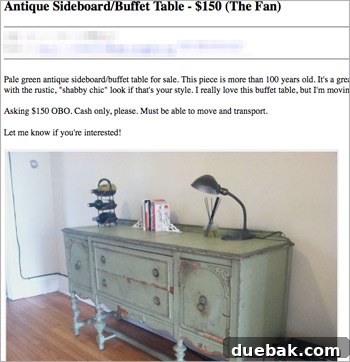
The moment I laid eyes on it, I was consumed by what I can only describe as “sideboard lust.” This wasn’t just another piece of furniture; it was *the* piece. Its captivating blue-green hue, the sturdy yet elegant form, and the promise of character it brought instantly captivated me. It had just been posted that morning, and I knew I had to act fast. I immediately emailed the seller, my heart pounding with excitement and anticipation. For those curious about my Craigslist technique, here’s an insider tip, one that has proven invaluable in countless successful transactions:
Tip Number One: Keep Your Initial Inquiry Simple and Direct. When reaching out to a seller, especially for a highly desirable item, resist the urge to bombard them with a barrage of questions. I’ve found that the most effective way to elicit a positive and prompt response is to express genuine interest and simply ask about availability. My email read: “I love your sideboard, is it still available?” This concise approach demonstrates enthusiasm without making you seem high-maintenance or overly demanding from the get-go. Avoid complicated questions about dimensions, finish imperfections, delivery options, or price negotiation in your first message. These details can be discussed once you’ve established that the item is indeed still for sale and the seller is receptive to further conversation. A straightforward inquiry ensures you get your foot in the door quickly, which is crucial in a competitive market.
The waiting period was agonizing, stretching for about five hours, but thankfully, the seller’s response was incredibly friendly and informative. She confirmed my suspicions: there were already a number of interested parties, and her plan was to sell it to the first full-price bidder who could arrange for immediate pickup. This information came as no surprise to me, as I had done my homework on the local market in Richmond. I knew she wasn’t bluffing because the prices for dressers, buffets, and sideboards on Craigslist here are often inflated, even for items of significantly lower quality. We’re talking about particle board dressers from big box stores like Walmart listed for a ridiculous $180! In stark contrast, most solid wood sideboards of comparable size and potential usually fetch around $400 or more, much like the one I was currently coveting. This understanding of the market value underscored the incredible deal this piece represented and the fierce competition it would undoubtedly attract.

Understanding the competitive landscape, it was time to formulate a strategy. This brings me to another crucial piece of advice for vintage furniture hunting:
Tip Number Two: Leverage the “Cash & Immediate Pickup” Approach Strategically. My preferred tactic for negotiating a better price, especially when I sense there isn’t much competition, is to offer immediate cash payment and prompt pickup. This appeals greatly to sellers who prioritize convenience and a quick, hassle-free transaction. However, this strategy is most effective when you’re one of only a few interested parties. When multiple buyers are vying for the same piece, the seller has the upper hand and will typically wait for the highest bid, as their fear of the item not selling is alleviated. As soon as I learned that others were also interested in this beautiful buffet, I knew that standard negotiation tactics might not work. This wasn’t a piece where I could leisurely haggle; it was a battle for a highly coveted item. And let me tell you, we wanted that sucker. Badly. John was completely on board, crossing all his appendages in an act of sideboard solidarity, signaling his full commitment to acquiring this gem.
Our assessment of its value was clear. We probably would have happily paid $200 for it, given our research. A quick search online for similar solid wood sideboards on reputable sites like Antiques.com and even other Craigslist listings revealed prices ranging from $400 to $500. When I specifically looked for painted sideboards with that desirable antique blue-green finish, the prices soared even higher, often reaching $695 or more. While we could have certainly purchased an unpainted wood sideboard and undertaken the DIY project of distressing and painting it ourselves, finding another solid wood piece with the same unique chunky, curved legs and perfect hefty size would have been incredibly difficult, if not impossible. Moreover, this piece was already finished exactly as we liked, saving us hundreds of dollars in materials and countless hours of labor compared to buying a raw piece and painting it. The convenience and existing beauty made it an undeniable steal at its current price. We decided it was worth going all in.
I crafted my follow-up email with a blend of urgency, enthusiasm, and a strategic offer. I wrote: “Oh please, oh please let me buy it! I’ll pay $155 so you’ll pick me over the others! I absolutely love it. If you’re available, we can come get it tonight and pay you in cash. Just say the word. I really am in love with it and promise to give it a nice home!” This message wasn’t just an offer; it was a plea, demonstrating genuine passion for the piece.
This leads to two more essential Craigslist strategies:
Tip Number Three: Offer at Least Full Asking Price (or Slightly More) for Undervalued Items. If you’ve found something on Craigslist that you genuinely believe is worth more than the seller is asking – a common occurrence with vintage treasures – it is crucial to offer at least the full asking price, if not a small increment over. Many savvy individuals scour Craigslist specifically to find underpriced items to resell for a profit. I knew this particular buffet could easily fetch $400 or more if someone took the time to link it to a similar piece online selling for $700 and effectively articulated its true value. Offering just five dollars over the asking price was my subtle way of saying, “Please pick me!” It was a minimal investment to gain a significant advantage and stand out from the swarm of other interested buyers, signaling my seriousness and appreciation for the item’s true worth.
Tip Number Four: Prioritize Immediate Pickup. Whenever possible, offer to collect the item right away. The faster you can complete the transaction, the less chance there is for another buyer to swoop in with a higher offer in the day or two it might take you to arrange pickup. Sellers highly value a quick, hassle-free exchange. So, after sending that impassioned “please pick me” email, I waited with bated breath. About half an hour later, the magical email arrived: “Sold!” All that remained was to drive over that evening with cash in hand and bring our new treasure home. We quickly swapped cars with John’s dad, borrowing his spacious Honda Pilot – essential for hauling large furniture pieces like this – and made haste to the seller’s house. Clara, our daughter, happily spent the evening with her grandparents, which brings me to another practical piece of advice:
Tip Number Five: Delegate Childcare When Moving Heavy Furniture. When you know you’ll be wrestling a giant piece of solid wood furniture, potentially down multiple flights of stairs, it’s always a good idea to leave children in someone else’s care if at all possible. This eliminates one major worry and allows you to focus entirely on the challenging task at hand. Trust me, you’ll appreciate having one less thing to manage while you’re (perhaps silently) cursing the day you ever laid eyes on that heavy-a$$ solid wood buffet. Safety first, and a focused mind makes a world of difference!
Roughly thirty minutes later, our beloved new acquisition was safely ensconced in our entryway. We stood there, John and I, completely mesmerized, staring at it with that cliché, love-at-first-sight expression typically reserved for cheesy romantic comedies. The sheer satisfaction of a successful hunt, combined with the immediate aesthetic impact of the piece, was overwhelming.

Given the piece’s age and its painted finish, a crucial safety check was next on the agenda. This leads to an often-overlooked but vital tip for vintage furniture buyers:
Tip Number Six: Always Test Old Painted Furniture for Lead. For any painted antique or vintage piece, especially those from an era when lead paint was common, it makes absolute sense to test for lead. Safety should always be a priority. I used one of those readily available lead paint test strips from Home Depot (they come in a convenient set of four), and to my relief, it tested out clean. While many antique pieces were kept in their natural wood state for decades and only received a painted finish much later, after lead paint was phased out, it’s never a guarantee. I had high hopes that this wouldn’t be lead paint, but having it confirmed provided immense peace of mind. Whew! While I do plan to apply some sort of clear sealer to protect the paint and prevent further chipping, I honestly don’t mind the existing chips at all. In fact, I think they add to its charm and character, giving it that perfectly imperfect, authentically distressed look that Anthropologie or Restoration Hardware might try to replicate (and sell for over $1,000!) by aggressively sanding down a brand-new piece.

Once we carefully moved it into its intended spot in the dining room, any lingering doubts about the purchase or the strenuous effort of dragging it down those three long sets of stairs vanished instantly. It looked absolutely stunning! The antique blue-green finish harmonized beautifully with the subtle green tones in our dining room curtains, creating a cohesive and inviting aesthetic. This particular view from our kitchen peninsula now boasts a focal point that breathes life and history into the space. I’m already envisioning its full potential: adding elegant lamps, curated stacks of books, and captivating art behind it to complete the vignette. Wahoo! The transformation is already remarkable, and I can’t wait to fully style it.
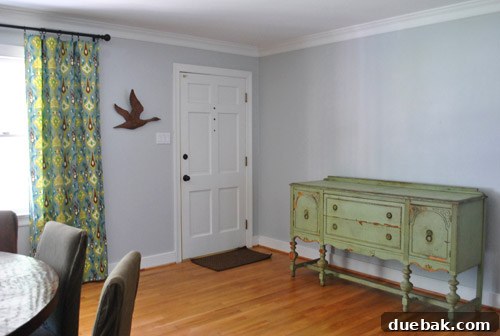
This sideboard has quickly become my absolute favorite piece in our entire house. Beyond its undeniable aesthetic appeal, it offers an incredible amount of much-needed storage space, a practical bonus that makes it even more invaluable. I am particularly enamored with its beautifully curved baluster legs, a detail that speaks volumes about its craftsmanship and unique vintage charm. And every time a tiny pang of doubt tries to surface about spending $155, I just remind myself of other incredible scores. For instance, we only paid a mere $20 for Clara’s dresser that we lovingly refinished back in 2010.
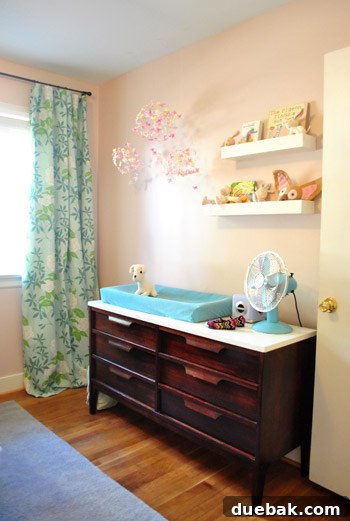
That $20 dresser is a testament to the enduring value of vintage finds; we’ve consistently seen similar pieces selling locally for $200 or more every time they pop up. So, when you average it out, scoring one substantial six-drawer dresser and this magnificent, leggy sideboard for a combined total of $175 brings the average price per piece down to a remarkable $87. That’s a figure I can absolutely live with, especially considering that it’s roughly the price of a small, three-drawer dresser made of laminate from Ikea. To sweeten the deal even further, the old wood dresser in our master bedroom was a cherished hand-me-down from John’s parents, meaning it was completely free! If we factor that into our vintage furniture equation, we now have three exceptional old wood pieces in our home for an astonishing average cost of just $58 each. This demonstrates the incredible long-term value and budget-friendly potential that savvy vintage shopping offers, allowing us to acquire high-quality, unique furniture that will last for generations, far surpassing the ephemeral appeal of disposable, mass-produced items.
So, as much as we appreciate and gravitate towards clean, modern aesthetics, we wholeheartedly agree that the concept of incorporating “an old piece in every room” is not just a trend but an awesome, character-building idea. Our home is slowly but surely becoming a testament to this philosophy. Beyond our newest sideboard, we already proudly feature that old dresser in our bedroom, along with an antique chair and another charming dresser in Clara’s room. Our home office also boasts a pair of old secondhand chairs, each adding its own layer of history and unique style. We really shouldn’t be surprised by our growing affection for old furniture. After all, we’re drawn to older homes themselves – structures packed with inherent character, architectural details, and stories from the past. It only makes sense that a piece of furniture imbued with its own history and charm would resonate so deeply with us. For me, the thrill of finding such a gem is right up there with a box of Oreos and a “Don’t Be Tardy For The Wedding” marathon. John, however, wanted me to clarify that his idea of such a marathon is, in fact, his idea of a nightmare. But when it comes to the enduring beauty and unique personality that vintage furniture brings to a home, we are both enthusiastically on the same page.