

When curating the perfect outdoor ambiance, every detail contributes to the overall aesthetic. Our front porch, a vibrant extension of our home’s personality, thrives on a simple yet effective decorating philosophy: “plants and more plants.” This strategy not only seamlessly connects the porch to the lush greenery surrounding our property but, as we’re thrilled to share today, also masterfully conceals some less-than-charming elements that once dominated this lovely outdoor space. We affectionately refer to them as “wall warts”—specifically, a trio of large, rectangular utility boxes that were far from appealing. But before we unveil their verdant disguise, let’s journey back in time to truly appreciate the transformation.

The Unseen Challenge: Our Front Porch’s Unwanted Eyesores
To truly grasp the magnitude of this particular challenge, let’s rewind to February of last year, a time when our real estate agent stood proudly on what was soon to be our front porch, utterly oblivious to the aesthetic dilemmas that lay ahead. The house had a charm of its own, but its exterior presented a few quirks, primarily the prominent placement of its electrical infrastructure.

As evident from those early photos, we’ve embarked on a significant journey of exterior updates and enhancements, including a dedicated front porch refresh that laid the groundwork for today’s transformation. You might also spot a colossal “pool dirt pile” in the background of some initial shots—a testament to another grand project underway, which has since been leveled. For real-time updates on our pool progress, be sure to follow our journey on Instagram Stories.

The Triple Threat: Electrical Panels Front and Center
One of the most perplexing design choices of this house’s original construction was the placement of the electrical meter box. It sits squarely on the front of the house, mere feet from the main entrance. This configuration is highly unusual, diverging from the standard practice of positioning such utilities on the back or at least the side of a property, unlike most of our neighbors. Our utility box quite literally became the first thing visitors saw, practically greeting them with an inquiry about our kilowatt consumption! The problem escalated last fall when we installed a whole-house generator, a crucial step for hurricane preparedness. This necessitated the addition of not one, but two more substantial electrical panel boxes adjacent to the existing meter. Suddenly, we were faced with a prominent trio of utilitarian eyesores marring our picturesque front porch. A lone potted fern, our initial attempt at camouflage, simply wasn’t cutting it anymore.

A Strategic Solution: Blending In and Standing Out with a DIY Plant Shelf
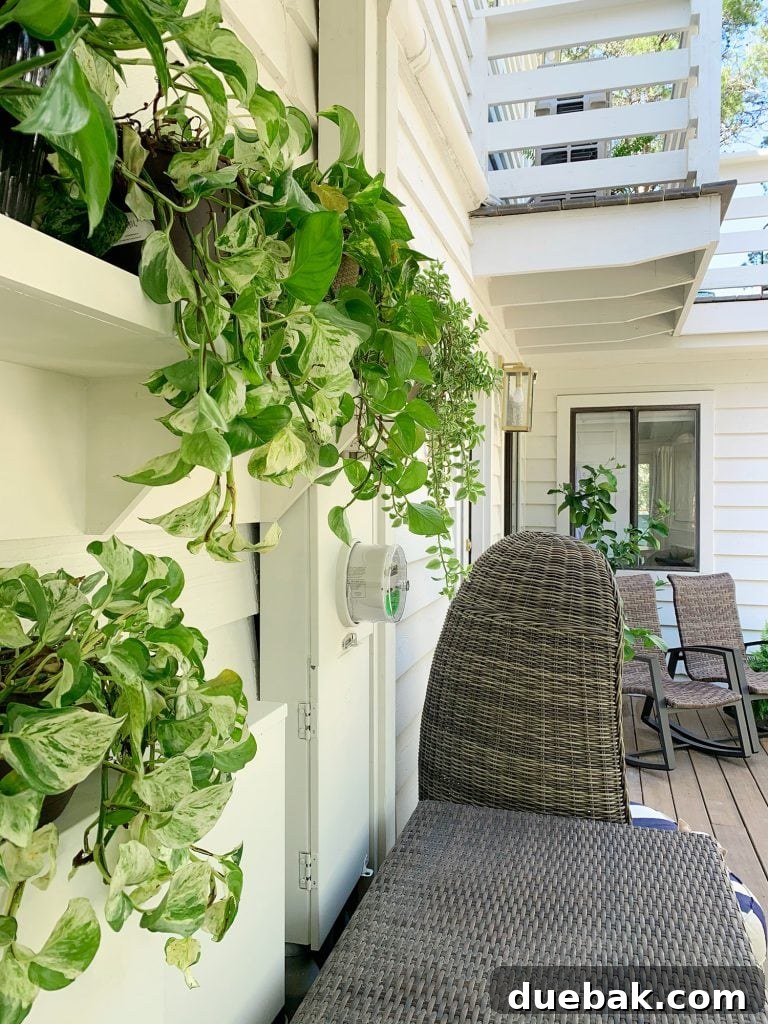
Our approach to solving this aesthetic dilemma involved a two-pronged strategy: first, making the boxes less noticeable, and second, redirecting attention with beautiful greenery. We painted all three electrical boxes a crisp white, matching our house siding. This technique of camouflaging utility boxes by blending them into the surrounding wall color is a trick we’ve successfully employed since our very first home. It’s important to note that you should always check with your utility company before painting any meter components; ours granted approval during their inspection. With the boxes visually minimized, our next step was to craft a super simple yet incredibly effective DIY outdoor plant shelf. This creation not only provides an elegant screen for the utilitarian structures but also significantly elevates Sherry’s already impressive plant collection.

The Power of Trailing Plants: Our Green Disguise
The shelf currently hosts four larger trailing plants, with a fifth, smaller one positioned directly atop the outermost panel box. While they’re still in their early stages of growth, these plants are destined to become true masters of disguise. Even now, they have dramatically improved the visual appeal of this wall. The eye is immediately drawn to the lush, cascading greenery, rather than the three remarkably prominent metal boxes positioned just feet from our front door.
Over the past eleven months, we’ve experienced incredible success cultivating trailing plants like pothos in various outdoor settings, including our outdoor shower. They’ve thrived even through the cooler winter months, demonstrating their resilience and versatility. If the plants on our new shelf perform even half as well, we’re confident in their ability to create a stunning, natural screen. For more details on our outdoor shower makeover, you can find the full story here. Sherry is eagerly anticipating their growth, and we expect to share progress updates, perhaps alongside an update on her two ponderosa lemon trees, which are promising a much larger yield this year!

DIY Outdoor Plant Shelf: A Step-by-Step Guide
The construction of this outdoor plant shelf is surprisingly straightforward, relying on a few basic components. As you can see from our rudimentary, color-coded diagram, it consists of four main parts, designed for durability and ease of installation.

- Backplate (Green): This foundational piece is a 1×8″ primed board. We securely screwed it directly into our wood siding. The 1×8″ dimension was chosen strategically to span across the highest points of two siding boards, providing a perfectly flat and stable surface for construction, rather than contending with the angled profile of the siding itself. Note: The slight visual irregularity on the left side is due to a cord running behind it.
- Supports (Blue): These crucial elements are fashioned from pieces of 1×8″ board, precisely cut at a 45º angle to form robust triangular supports beneath the main shelf platform. We pre-attached these supports to the backplate using a combination of strong wood glue and screws before mounting the entire assembly to the house siding.
- Platform (Pink): This is the primary surface where your beautiful plants will reside. It’s constructed from two 1×10″ primed boards. These boards rest horizontally across the top edge of the backplate and the angled supports. They are firmly screwed in from the top, securing them to both the supports and the backplate. To achieve a substantial and finished look, we used two 1×10″ boards sandwiched together, joined with wood glue and finish nails, matching the thickness of the…
- Face Trim (Purple): These are the finishing touches, crafted from 1×2″ primed boards. We meticulously nailed these along all the exposed front edges of the platform. This trim serves a dual purpose: it provides a polished, finished appearance to the shelf and cleverly conceals the fact that the platform itself is composed of two boards stacked together.
Once all the components were assembled and any screw holes were expertly puttied, we applied a coat of paint matching the house’s exterior. This ensures the shelf blends seamlessly with the architecture, reinforcing its role as a subtle, structural element. For the plants, however, their mission is quite the opposite: to boldly distract and draw attention, transforming an unsightly utility area into a focal point of natural beauty.

Permission Granted: Painting the Meter Box
Regarding the painting of the utility boxes, we went beyond just speaking with our inspector; we also contacted the utility company directly to confirm permission. To our pleasant surprise, they even approved painting the clear, round meter part, explaining that all meter readings are now conducted remotely. However, we opted to leave the meter unpainted as a precaution, just in case you ever decide you really do need to verify our kilowatt usage!

Enhanced Functionality: More Than Just Pretty Plants
This new plant shelf design offers significant functional improvements over our previous, simpler strategy—which involved placing a single large fern directly on top of our storage box. While the fern was lovely, it posed an access challenge. Our storage box is a vital repository for outdoor essentials: beach chairs, umbrellas, bike helmets, and more. (You can peek inside the box towards the bottom of this post). The fern, though in a lightweight plastic pot for easy movement, still required an extra step of relocating it every time we needed something from the box. Furthermore, its lightweight nature meant it was prone to being blown down on windy days – a frustrating “fern on the loose” scenario that we no longer face with our more stable pothos plants. This new setup is truly a win-win, combining superior aesthetics with practical accessibility and enhanced stability.
Transform Your Outdoor Spaces: Explore More DIY Projects
For those inspired to tackle other simple and affordable outdoor DIY projects, our home’s exterior evolution offers a wealth of ideas. While our comprehensive house exterior before & after (showcasing new paint, decking, and more) involved significant effort, many of our other projects are designed to be accessible and rewarding for any DIY enthusiast:
- Discover how we achieved a plant-filled porch update, including how we addressed an unsightly metal ceiling.
- Revitalize a unique feature by bringing our quirky outdoor shower back to life.
- Learn how to build a DIY outdoor daybed and get essential tips on how to hang it securely.
- Create a relaxed and functional low-maintenance upper deck area perfect for dining and entertaining.
- Transform an overlooked space by creating a cozy firepit area in a formerly dull side yard.
- Give an existing covered porch an update with floor paint and an inviting hanging tent.
Our archives boast nearly as many outdoor projects as indoor ones for this house, a testament to how much time we cherish spending outdoors. When downsizing with the primary goal of reducing square footage and maximizing outdoor living—especially in a warmer climate that truly facilitates it (you can read more about our downsizing journey here)—the ability to fully utilize and enhance your outdoor spaces becomes paramount. Transforming these areas into bonus “outdoor rooms,” without the added cost of heating and cooling, represents the ultimate sweet spot for our lifestyle today.
For everyone eagerly awaiting a comprehensive blog post about our pool planning and progress, we anticipate that will be our next major update, hopefully sometime in May, once we’ve reached a more significant milestone. Fingers crossed!
Cultivate Your Green Thumb: Essential Plant Guides
If you’re looking to expand your knowledge of our favorite plants—both real and artificial—explore these detailed guides:
- Golden Pothos Care Guide
- Marble Queen Pothos Care Guide
- Neon Pothos Care Guide
- Monstera Deliciosa Care Guide
- Snake Plant Care Guide
- Fiddle Leaf Fig Care Guide
- Tree Philodendron Care Guide
- How to Build An Easy Plant Shelf
- Protecting Outdoor Plants In A Deep Freeze
- Getting Started With Houseplants: An Expert Interview
- My Favorite Faux Plants
- Easy Houseplants To Keep Alive
- 10 Houseplants For Better Indoor Air Quality
*This post contains affiliate links, so we may earn a small commission when you make a purchase through links on our site at no additional cost to you.