
Craft Your Own Custom Resin Letter Keychains: The Ultimate DIY Guide
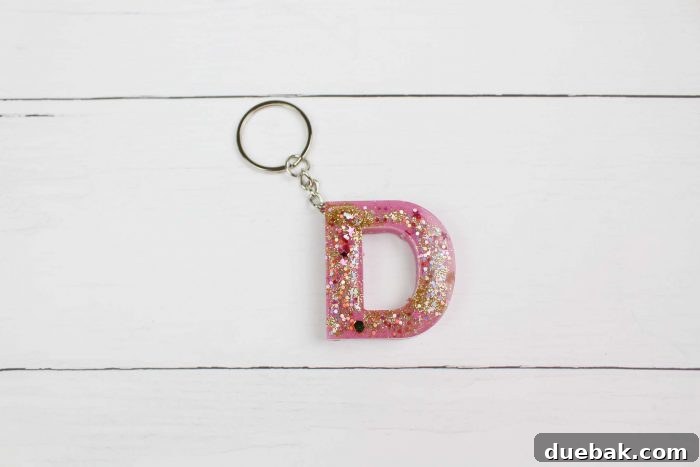
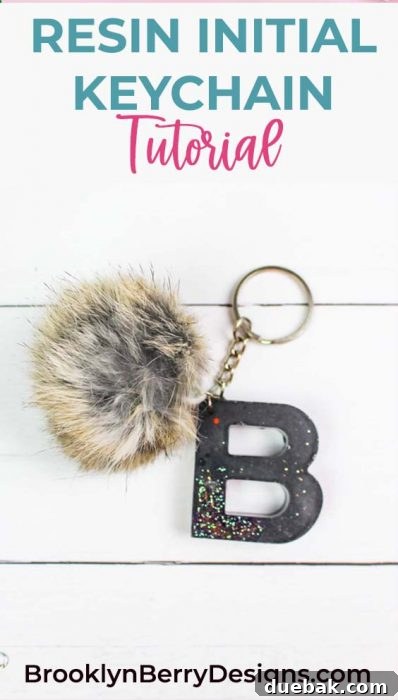
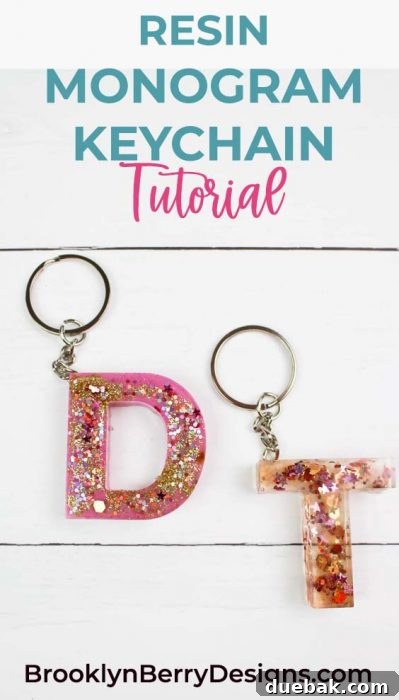
Looking for the perfect blend of personalization and handmade charm? This comprehensive guide will walk you through creating stunning resin letter keychains – an incredibly easy DIY gift that adds a thoughtful, custom touch to any present or everyday carry. Imagine these vibrant, personalized creations adorned with a delicate tassel or a playful pompom, bringing a burst of color and individuality wherever they go. They make ideal stocking stuffers, party favors, or simply a heartfelt token for someone special.
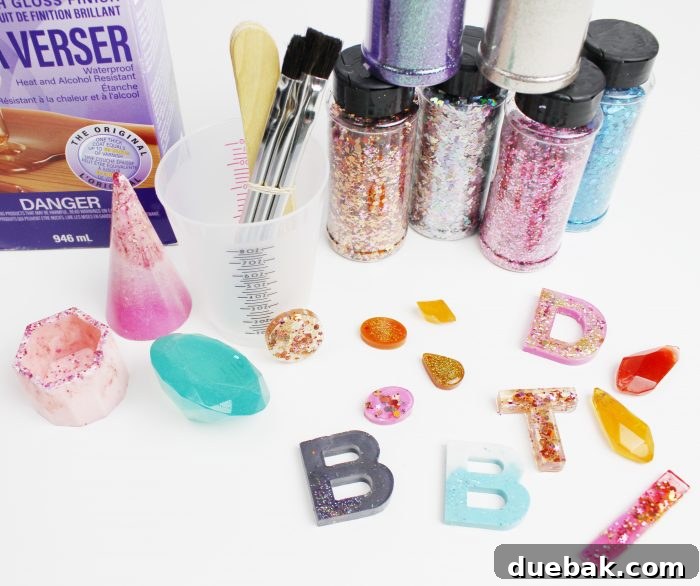
One of the most captivating aspects of crafting these monogram keychains is the boundless realm of design possibilities they offer. Your imagination is truly the only limit! Dive into a world of vibrant creativity by experimenting with different dyes, rich paints, delicate dried flowers, shimmering glitters, or even tiny cherished keepsakes. Each element you choose contributes to a unique, bespoke gift, ensuring that every recipient on your list receives something truly one-of-a-kind. Join us as we explore the simple steps to transform liquid resin into a treasured keepsake.
New to the world of resin crafting? Our beginner’s guide to resin is packed with essential tips to help you get started with confidence and creativity.
Crafting Personalized Resin Letter Keychains: A Step-by-Step Tutorial
Creating beautiful, custom resin initial keychains is a rewarding project, perfect for beginners and experienced crafters alike. This detailed guide will walk you through each stage, from preparing your workspace to adding the final hardware, ensuring your handmade gifts are polished and professional.
Essential Supplies & Tools for Your Resin Project:
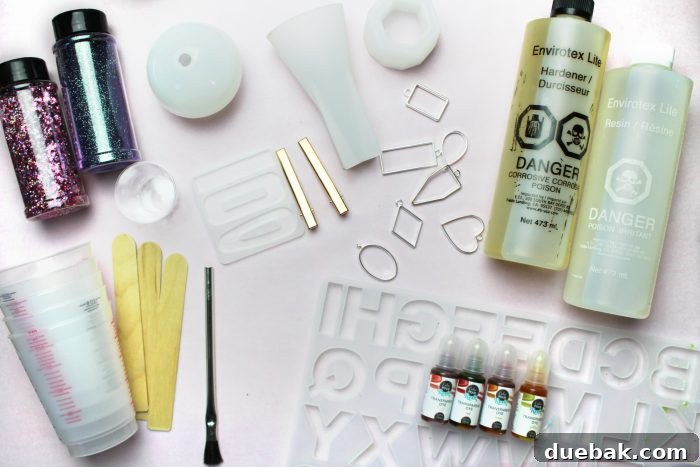
Having the right tools and materials is crucial for a smooth and successful resin crafting experience. Gather these items before you begin:
- Silicone Letter Mold: Opt for high-quality, flexible silicone molds for easy demolding and crisp letter shapes.
- Epoxy Resin Kit (e.g., Envirotex Lite Pour-On High Gloss Finish): Ensure it’s a two-part epoxy resin suitable for casting, known for its clarity and durability.
- Stir Sticks/Toothpicks: Essential for thorough mixing and delicate bubble popping. Silicone stir sticks are reusable and eco-friendly.
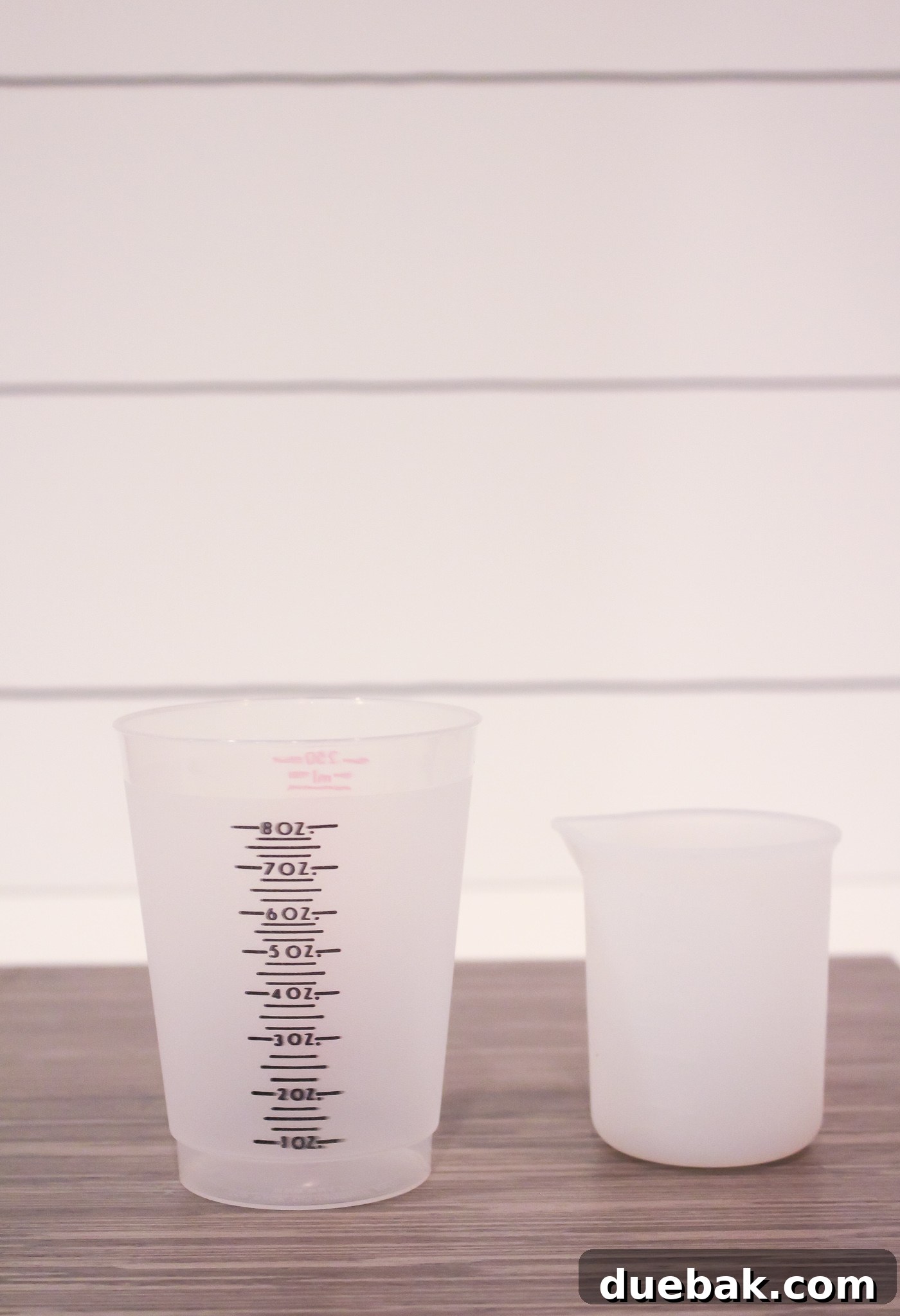
- Resin Mixing Cups (with measurements): Crucial for accurate resin-to-hardener ratios. Silicone cups are excellent for reusability.
- Assorted Glitters, Dyes, or Pigments: Unleash your creativity with fine glitters, liquid resin dyes, mica powders, or even alcohol inks for unique effects.
- Hand Drill (Pin Vise) with Small Drill Bits: Necessary for creating holes for attaching hardware to cured resin.
- Jump Rings: Small metal rings to connect your resin charm to the keychain hardware.
- Keychain Rings/Hardware: The functional component that turns your resin letter into a usable keychain.
- Safety Gear: Nitrile gloves, safety glasses, and a respirator if working in an enclosed space (highly recommended for proper ventilation).
- Workspace Protection: Silicone mat, old newspapers, parchment paper, or a tarp to protect your surfaces from spills.
- Precision Knife (Exacto knife): For carefully trimming any excess resin after demolding.
- Heat Gun or Butane Torch (optional): For removing stubborn bubbles effectively.
- Pliers (needle-nose): Helpful for opening and closing jump rings with ease.
Preparing Your Workspace for Resin Art
Before you even open your resin bottles, proper setup is key to a mess-free and successful project. Begin by choosing a well-ventilated room to work in; good airflow is paramount for safety and to help dissipate resin fumes. Lay down a protective barrier like a silicone mat, a sturdy tarp, or several layers of parchment paper to safeguard your work surface from accidental spills or drips. Ensure your workspace is level and stable to prevent resin from pooling unevenly in your molds. Don’t forget to put on your nitrile gloves and safety glasses at this stage to protect your skin and eyes.
Mixing the Epoxy Resin to Perfection
Accurate mixing is arguably the most critical step in resin crafting. Begin by carefully reading the instructions provided with your specific brand of epoxy resin. Most casting resins require equal parts (1:1 ratio) of resin and hardener by volume. Using mixing cups with clear, easy-to-read measurements is highly recommended to ensure your proportions are correct. Any deviation from the recommended ratio can result in sticky, uncured resin or a brittle finished product. Pour the resin (Part A) into your mixing cup first, followed by the hardener (Part B), matching the exact volume for each.
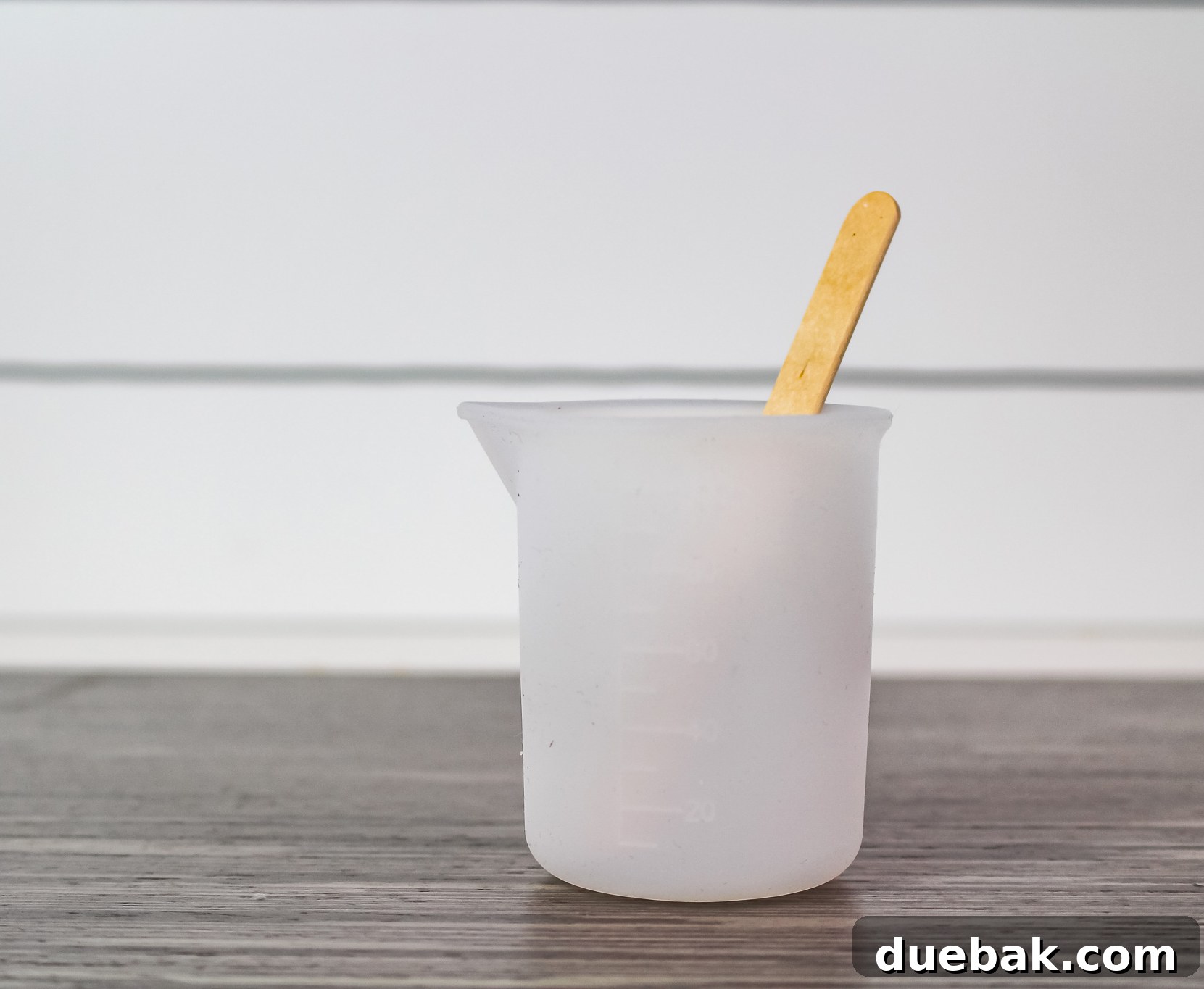
Once both parts are in the cup, start stirring slowly and deliberately. A common tip to prevent excessive bubble formation is to keep the stir stick continuously touching the bottom and sides of your cup as you mix. This scraping motion ensures that all resin and hardener are fully incorporated, without whipping air into the mixture. Continue mixing for approximately 3 minutes, or as specified by your resin’s instructions, ensuring a uniform, streak-free consistency. Scrape the sides and bottom of the cup frequently to ensure no unmixed resin or hardener remains, as this will prevent proper curing.
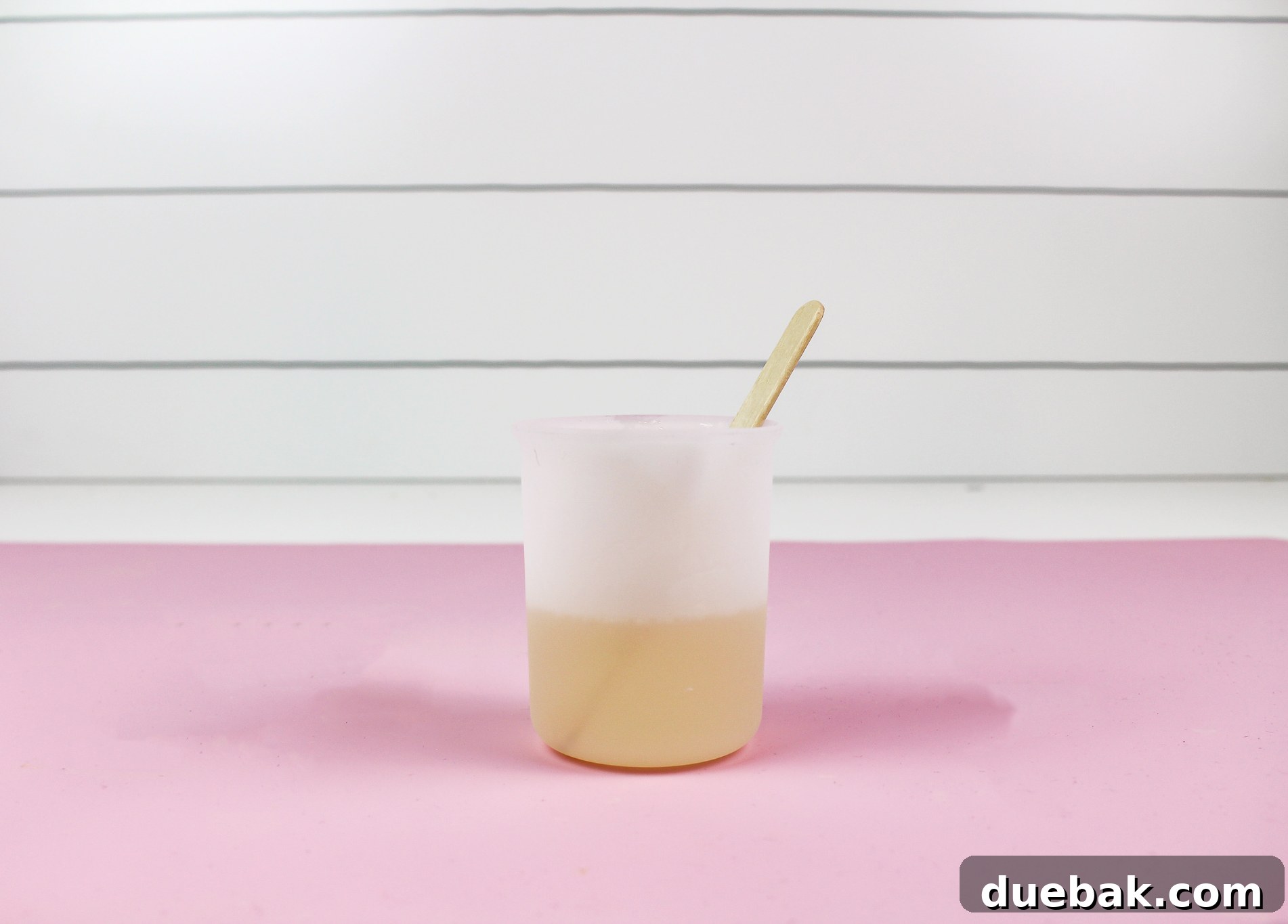
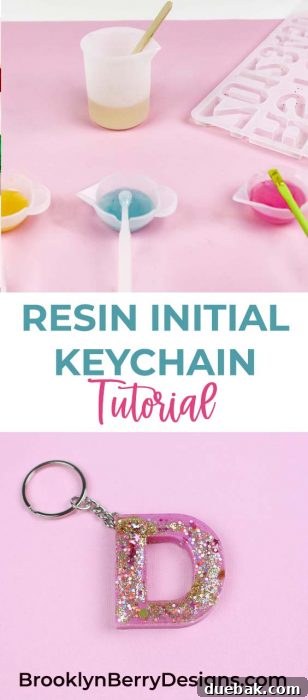
Now comes the fun part: adding your decorative elements! If you’re incorporating glitter, liquid dye, mica powder, or other small items, add them to your thoroughly mixed resin and stir gently until evenly distributed. For larger inclusions like dried flowers, small charms, or heavier glitters, you might consider a two-part pour. Pour a thin layer of clear or lightly colored resin first, allow it to partially cure (becomes gel-like), then place your items before pouring the final layer. This prevents heavier items from sinking completely to the bottom of the mold, ensuring they remain suspended beautifully within your resin piece.
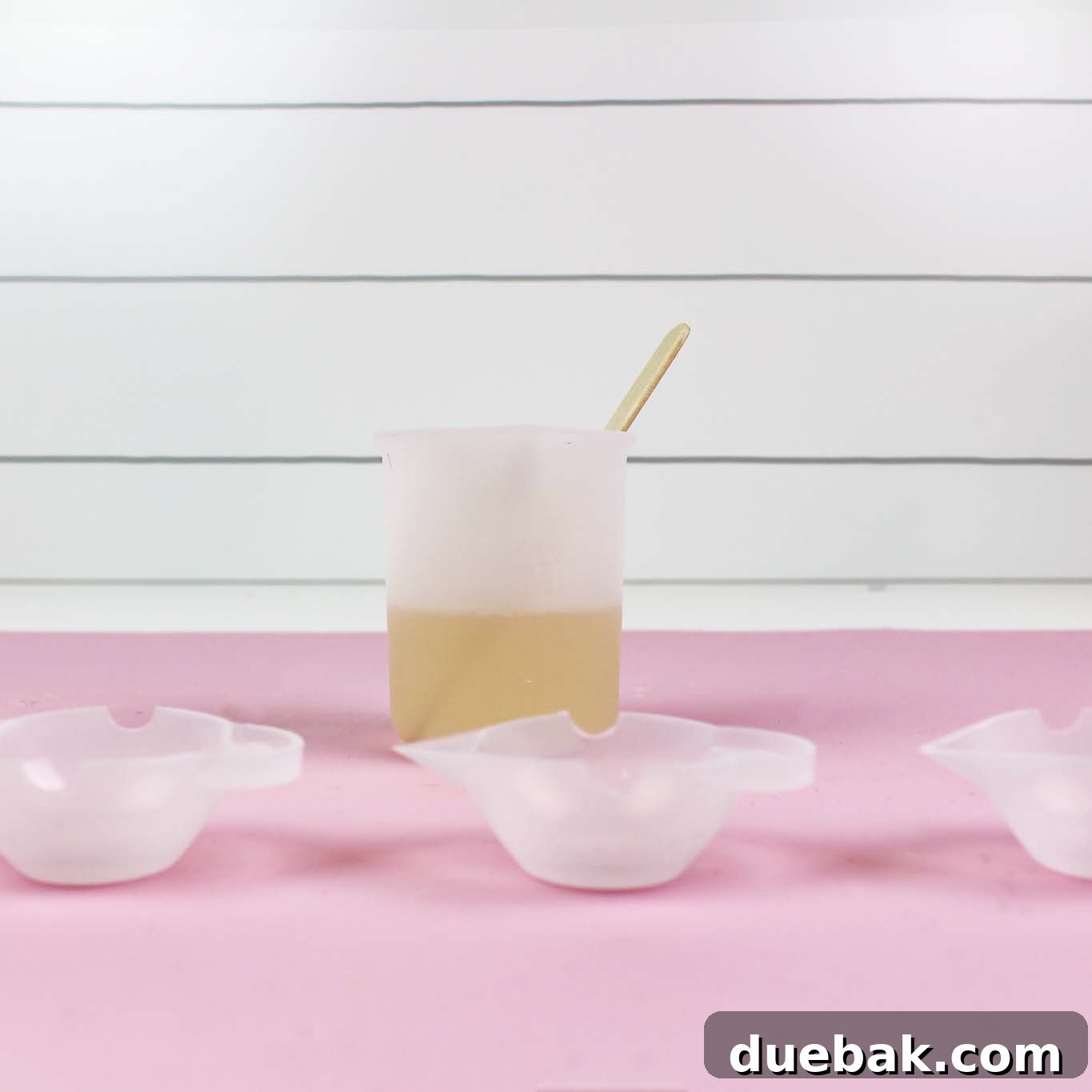
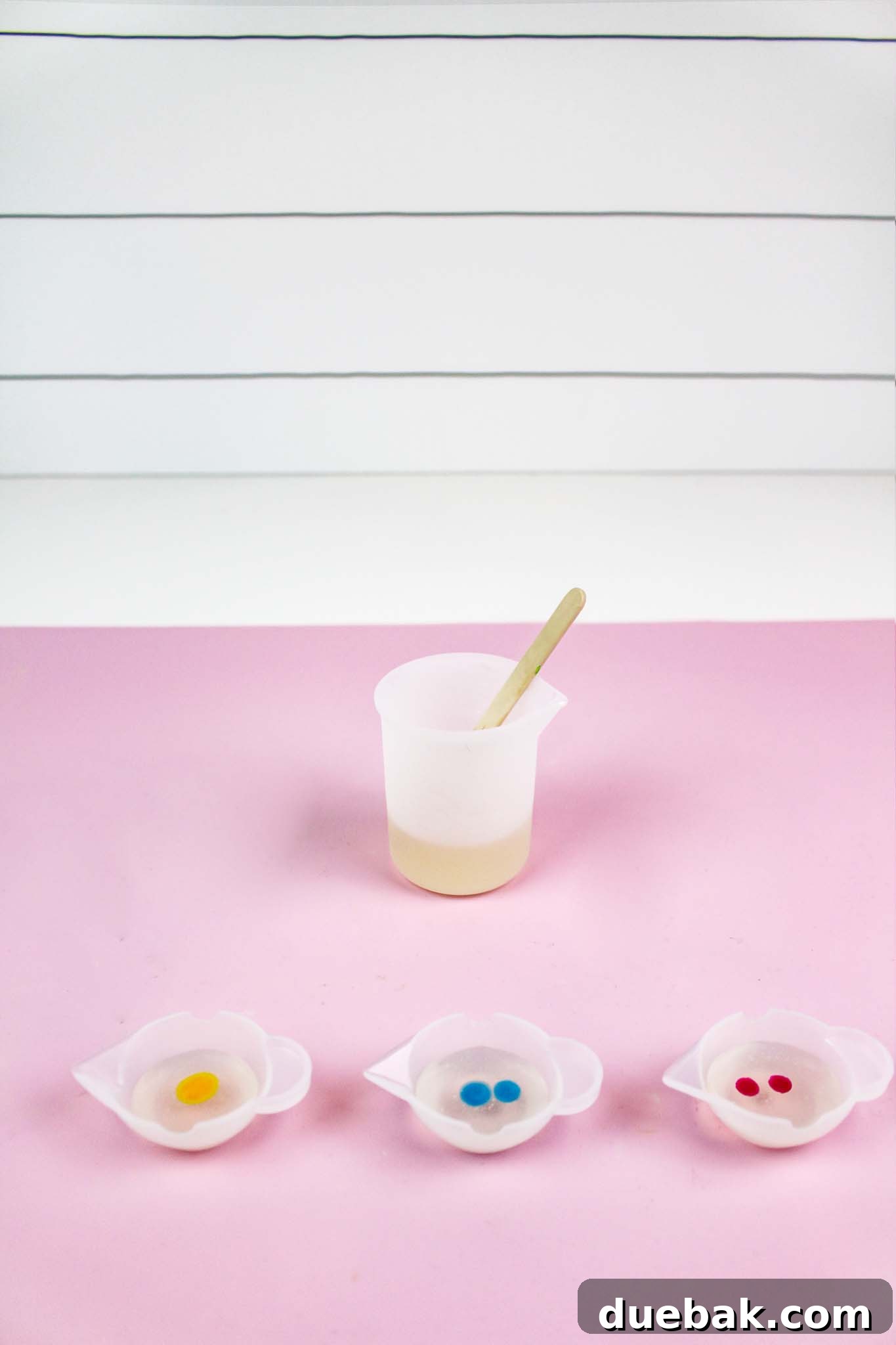
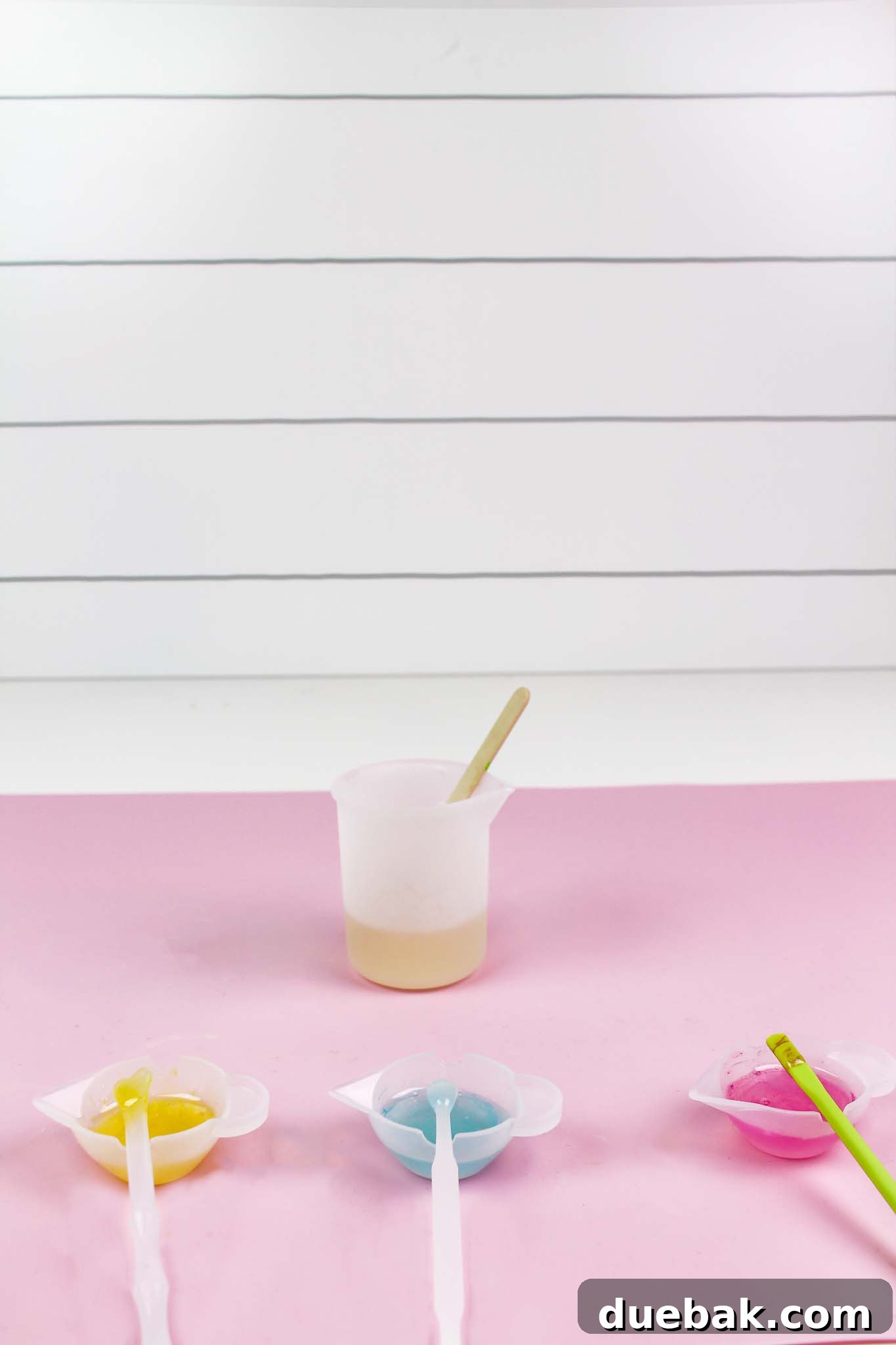
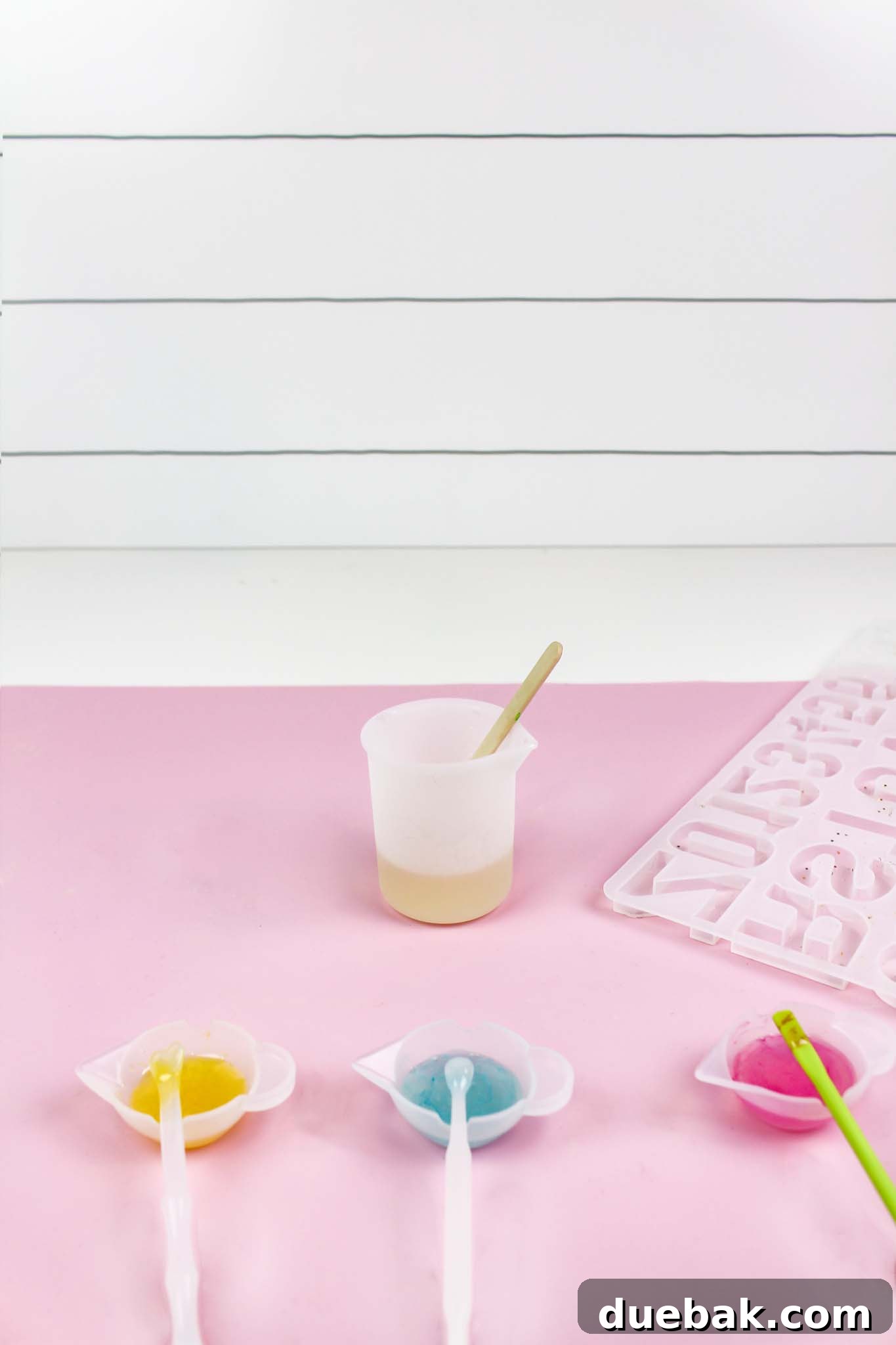
If your vision includes multiple colors within a single keychain, pour the well-mixed clear resin into separate smaller containers before adding any dye or paint. This allows you to create distinct color batches. I’ve personally had great success using both acrylic paint (sparingly, as too much can affect curing) and semi-transparent glass paint for vibrant and unique effects. Experiment with different colorants to achieve your desired opacity and shade – remember a little goes a long way with resin dyes!
Pouring the Resin and Curing Process
Carefully pour your mixed resin into the silicone letter molds. The amount you fill them is entirely up to your design preference and how you plan to attach your hardware later in this post. A full pour creates a thicker, more robust keychain, while a thinner pour might be lighter. Once poured, wait a few minutes for any trapped air bubbles to rise to the surface. You can then gently pop these bubbles using a toothpick or, for a more efficient method, lightly pass a heat gun or a quick sweep of a butane torch (held several inches away) over the surface. Be cautious not to overheat or scorch the resin or mold.
To protect your curing resin from dust, pet hair, or any other airborne particles, immediately place a box or a cover over your molds. This creates a clean environment for the resin to harden without imperfections. Now, the hardest part: patience! Let your resin pieces sit undisturbed for a minimum of 24 hours, or even longer depending on your specific resin’s instructions and ambient temperature. It’s incredibly tempting to touch them, but resist the urge! Touching partially cured resin will result in sticky fingerprints and a compromised finish. Trust me, speaking from experience, patience here pays off immensely.
Once fully cured, the most satisfying moment arrives: removing the resin piece from the mold. Gently flex the silicone mold, and your solid, beautiful resin letter should pop out with ease. If there are any thin, hardened resin overflows or “flashing” around the edges from your pour, carefully use a small Exacto knife or a pair of precision scissors to trim them away, creating a clean and smooth finish. For a truly professional edge, you can also lightly sand these areas with fine-grit sandpaper.
Adding Hardware to Your Resin Initial Keychain: Four Secure Options
Attaching the hardware is the final step that transforms your resin letter into a functional and fabulous keychain. There are several effective methods, each suitable for different preferences and resin thicknesses.
Option 1: Embedding Hardware with a Doming Layer
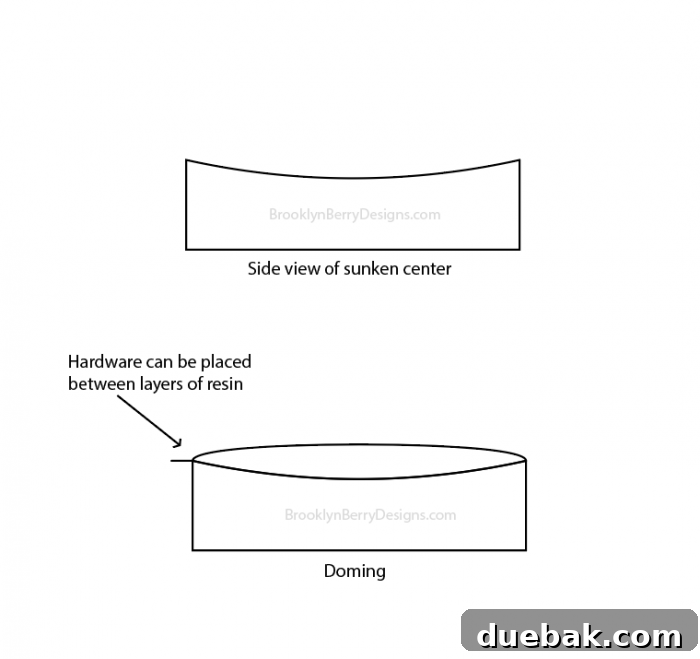
This method is excellent for a seamless, super-secure attachment. If the center of your cured resin letter has a slight dip or “sink” compared to its edges, which can sometimes happen, this option is perfect. This can also leave a slightly sharp edge, which can be remedied. Prepare a small amount of fresh, clear resin (often called a “doming” layer). Before it cures, place a jump ring or the end of your keychain hardware onto the back or top surface of your resin letter where you want it to be. Then, carefully pour a small amount of the freshly mixed resin over the hardware, ensuring it’s completely encapsulated and creating a slightly domed, smooth surface. Once this second layer dries and cures completely, that piece of hardware will be permanently glued in place, providing an incredibly strong bond that won’t go anywhere!
Option 2: Drilling a Small Hole Through the Corner
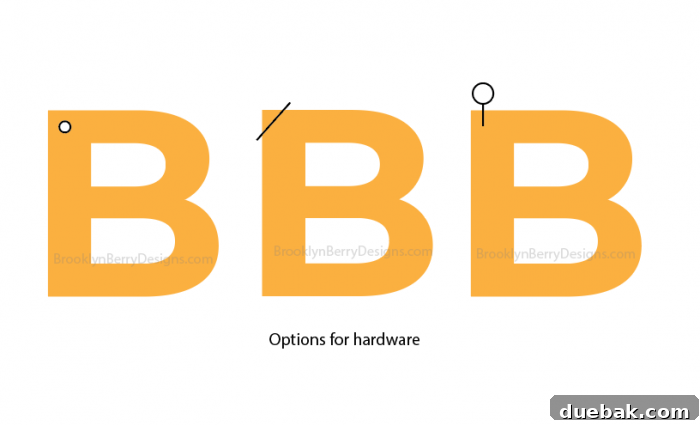
This is a straightforward and popular method, particularly suitable for thinner resin pieces (around 1/4″ or 0.6 cm thick). Using a small hand drill (pin vise) with an appropriately sized drill bit, carefully drill a small hole through one corner of your resin letter. Choose a drill bit that is slightly smaller than the gauge of your jump ring. Once the hole is made, use small jewelry pliers to gently open a jump ring. Thread it through the drilled hole and then attach it to your chosen keychain hardware. This method creates a clean and minimalist look.
Option 3: Drilling Through the Corner at an Angle
For thicker resin pieces that might require a larger, more robust jump ring, drilling at an angle can be more effective. This technique allows the jump ring to sit more flush with the resin piece without compromising its structural integrity. Hold your hand drill at a slight angle (around 45 degrees) and drill through the corner. This creates a slightly elongated hole that accommodates larger jump rings more comfortably, providing a secure attachment point for heavier keychain hardware or multiple accessories.
Option 4: Inserting an Eye Screw (Partial Drill)
If you prefer not to drill all the way through your resin piece, or if you want a more decorative attachment point, an eye screw is an excellent choice. Drill a pilot hole into the edge or corner of your resin, but only about halfway or two-thirds of the way through the piece. Ensure the pilot hole is slightly smaller than the threads of your eye screw. Then, carefully screw the eye screw into the resin until it is snug and secure. You can add a tiny drop of super glue into the hole before inserting the screw for extra security. This option is fantastic for creating a loop directly on the resin for easy attachment of jump rings and other findings.
Finishing Touches for All Options:
Once your chosen attachment method is complete, simply connect your keychain hardware (such as a split ring or clasp) to the jump ring. This is also the perfect moment to add any extra accessories like tassels, pompoms, small charms, or beads that complement your design. With these final touches, your cute new custom resin letter keychain is ready to be admired, gifted, and enjoyed!
Unleashing Creativity: Advanced Design Ideas for Your Resin Keychains
While glitter and basic dyes are fantastic starting points, the world of resin inclusions is vast and exciting. Consider embedding tiny photographs, dried miniature flowers (ensure they are completely dry to prevent rot), iridescent flakes, foils, or even small pieces of fabric or paper. Experiment with alcohol inks for mesmerizing “petri dish” effects, or combine different opacities of resin – translucent base with opaque swirls – for added depth. Think about themes: create seasonal keychains for holidays, birth flower keychains for birthdays, or incorporate tiny objects representing hobbies and interests for truly personalized gifts. The more you experiment, the more unique and stunning your custom resin keychains will become!
Care and Maintenance for Your Resin Keychains
To ensure your beautiful, handmade resin letter keychains last for years to come, a little care goes a long way. While epoxy resin is durable, it’s not entirely indestructible. Avoid prolonged exposure to direct sunlight, which can cause some resins to yellow over time. Keep them away from harsh chemicals or abrasive cleaners, as these can dull the surface. If your keychain gets dirty, simply wipe it clean with a soft, damp cloth and mild soap, then dry thoroughly. Store them away from extreme heat or cold. With proper care, your personalized resin keychains will maintain their vibrant colors and glossy finish for a long time.
Troubleshooting Common Resin Keychain Issues
Even seasoned crafters encounter issues sometimes. Here are a few common problems and how to address them:
- Sticky or Uncured Spots: This is almost always due to an incorrect resin-to-hardener ratio or insufficient mixing. Ensure precise measurements and thorough stirring. Sometimes, if only a small area is sticky, you can try mixing a tiny fresh batch of resin and applying a thin coat over the sticky part.
- Excessive Bubbles: Beyond the tips mentioned earlier (slow stirring, heat gun), warming your resin bottles slightly before mixing can reduce viscosity, allowing bubbles to escape more easily. Also, avoid working in very cold environments.
- Yellowing: Over time, some resins can yellow, especially with UV exposure. Using UV-resistant resin and keeping finished pieces out of prolonged direct sunlight can help.
- Rough Edges: If trimming with an Exacto knife isn’t enough, gently sand the edges with fine-grit sandpaper (e.g., 400-grit, then 600-grit) followed by polishing compound for a smooth finish.
Creating custom resin letter keychains is an incredibly rewarding and enjoyable craft. Not only do you get to explore your artistic side, but you also end up with beautiful, durable, and highly personalized items that make perfect gifts for any occasion. From sparkling glitter keychains to delicate floral initial charms, the potential for creativity is boundless. So, gather your supplies, set up your workspace, and get ready to pour some magic into your next DIY project. Happy crafting, and enjoy sharing your unique, handmade resin keychains with the world!