Welcome back to our ongoing home renovation journey! When we last invited you into our hall bathroom adventures, we had just completed the challenging task of removing layers of old wallpaper. What remained was a space yearning for a fresh start – a blank canvas, but one clearly showing the wear and tear of time. The walls were uneven, bearing the ghost of patterns past, and the overall atmosphere felt dated and dim. This initial phase of clearing out the old truly sets the stage for the exciting transformation ahead, highlighting the potential for dramatic change even in a small, functional space like a hall bathroom. It’s a moment of both exhaustion and anticipation, ready to tackle the next steps in creating a more inviting and modern environment.
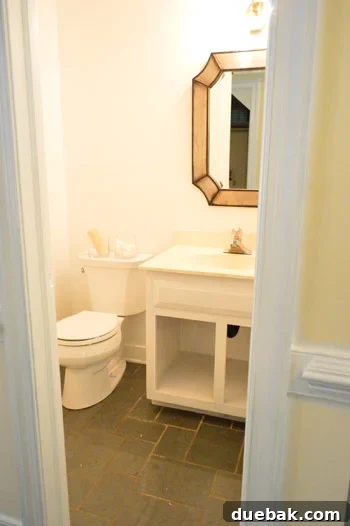
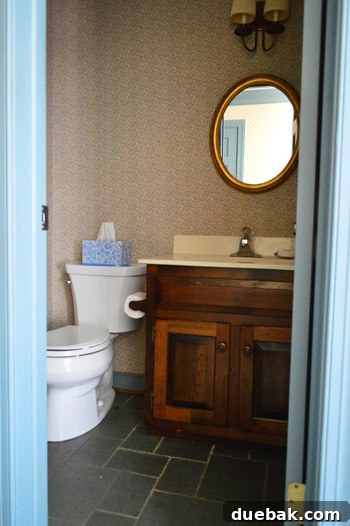
Stepping back to assess the situation, it was clear that the yellowed, faded walls were screaming for a vibrant, fresh coat of paint. Beyond the purely aesthetic issues, the existing mirror presented a significant functional problem. To put it simply, John, my partner, couldn’t even see his entire face when looking into it. Anything from his nose upwards was completely cut off, which, while sufficient for a quick check for food in his teeth, made proper grooming nearly impossible. If he were having a significant hair mishap, a la “Something About Mary” (though certainly not for the same reason!), he wouldn’t have had a clue until he left the house. A functional mirror is a fundamental requirement for any bathroom, and this one clearly fell short, hindering daily routines and contributing to the overall outdated feel of the space. Addressing this was a top priority for improving both usability and design.

Beyond the undeniable issue of the undersized mirror, another significant design challenge emerged from the light fixture itself. This particular fixture ungracefully drooped approximately eight inches from where it connected to the wall. This meant that simply installing a larger mirror, which was clearly needed, would be an architectural impossibility without it crashing directly into the ‘legs’ or lower structure of the light fixture. This design flaw severely limited our options for upgrading the space, forcing us to consider creative solutions. We were faced with a dilemma: how to incorporate a more practical, full-sized mirror while accommodating or altering this rather intrusive light fixture. This problem underscored the importance of not just replacing individual elements but understanding how they interact within the bathroom’s overall layout, especially in a compact hall bathroom where every inch counts for both functionality and aesthetic appeal.

Our solution to this spatial predicament was as simple as it was effective: we literally turned our frown upside down. And by ‘frown,’ we mean the problematic light fixture. While certainly not a permanent electrical overhaul, a quick 180-degree spin of the fixture dramatically freed up valuable vertical real estate. This ingenious, albeit temporary, adjustment allowed us to finally hang a significantly larger mirror that we discovered at a fantastic price point at HomeGoods. We were instantly drawn to its elegant shape, and while we’re still contemplating whether to eventually paint its distressed silver-ish frame to better match future decor, for now, the improvement is monumental. The immediate benefit of being able to see full reflections, without cranial decapitation, brings a huge sigh of relief and instant satisfaction. Just look at the difference in visibility for John, standing in the exact same spot! This small but clever change illustrates how even minor, budget-friendly tweaks can yield massive improvements in both the functionality and perceived size of a small bathroom.

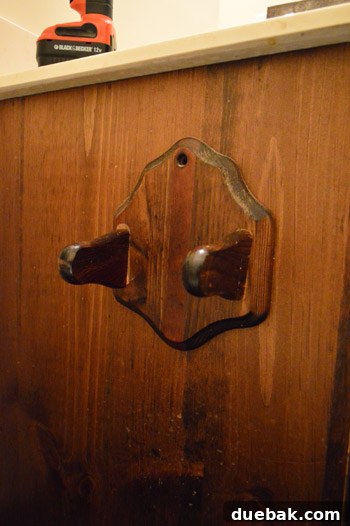
Beyond the mirror and lighting conundrum, we tackled a few other quick, impactful updates that significantly enhanced the bathroom’s aesthetic and usability. One of the first items on our list was the removal of the outdated wooden toilet paper dispenser. While functional, its style clashed with our vision for a clean, modern space. It felt clunky and added to the ‘old’ feel we were working to eliminate. Our plan is to replace it with a sleek, simple oil-rubbed bronze dispenser, which will not only introduce a touch of sophisticated metallic detail but also seamlessly integrate with other planned fixtures. It’s often these smaller, overlooked elements that, once updated, contribute immensely to the overall cohesiveness and polished look of a renovated bathroom, proving that a budget bathroom makeover doesn’t always require grand gestures.
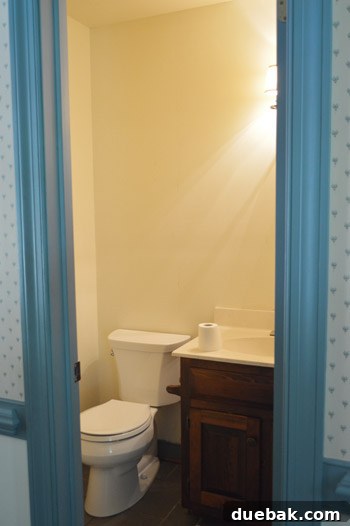
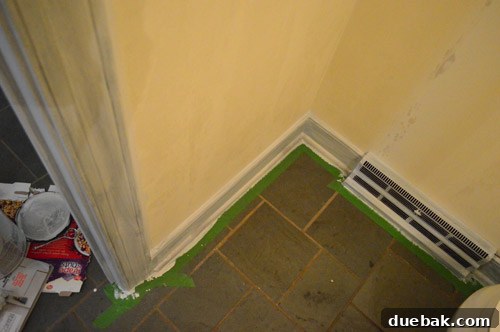
Next on our list was addressing the pervasive blue trim that encircled the bottom perimeter of the room and framed the bathroom door. This particular shade of blue, while perhaps fashionable in another era, simply felt heavy and dated, creating a visual break that shrunk the already compact space. Our goal was to transition to a crisp, clean white trim, a classic choice that would brighten the room and provide a seamless transition to the walls. Before diving into painting, meticulous preparation was crucial. We carefully taped off the slate floor tiles to protect them from any errant drips or brush strokes, ensuring a clean and professional finish. This step, while time-consuming, is non-negotiable for achieving sharp lines and preventing costly clean-ups. Transforming the trim from its dated blue to a fresh white promised to dramatically alter the room’s perception, making it feel more spacious and modern.
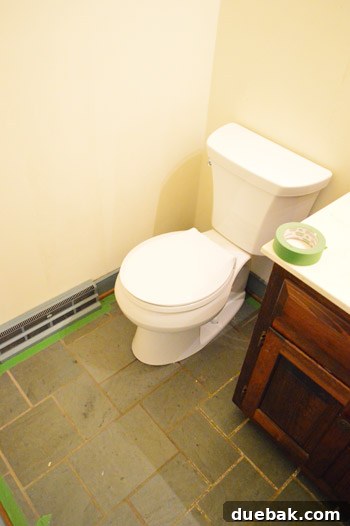
The transformation of the blue trim proved to be a multi-step process, requiring a total of four coats to achieve the desired flawless finish – two layers of high-quality primer followed by two coats of paint. The primer was essential not only for blocking out the strong blue undertones but also for providing a smooth, uniform surface for the final paint. This image captures the progress after what I believe were the first two primer coats. Even at this stage, the room was already beginning to feel lighter and more neutral, a stark contrast to the dominant blue it once had. This meticulous layering ensures durability and a professional look, showcasing that a successful DIY painting project relies heavily on patience and thorough preparation, especially when covering darker colors. The effort invested in these initial layers truly pays off in the final, radiant result, making this small bathroom feel utterly renewed.

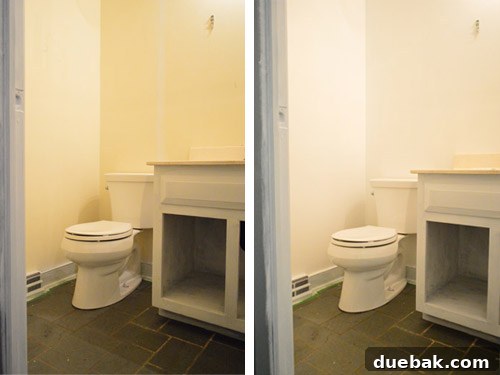
While engrossed in the priming and painting of the trim, we shifted our focus to the vanity, realizing it too desperately needed an update. The existing vanity wasn’t crafted from the best quality wood; it had a rather reddish hue, appeared dulled, and bore several scrapes and marks from years of use. More concerning, however, was a persistent odor issue. Despite countless scrubbing attempts, I couldn’t seem to banish the lingering scent, which pointed to underlying issues like moisture or ingrained grime. I knew with certainty that a robust coat of odor-blocking primer, followed by fresh paint, would be the definitive solution. This also presented an exciting opportunity to inject a burst of much-needed color into the room. Our vision was to pair clean, pristine white walls with a brightly painted vanity, creating a playful yet sophisticated focal point, much like the inspirations we’d saved on Pinterest. So, the odor-blocking primer went on, not only to the vanity’s exterior but also generously applied with two coats to its interior to definitively resolve the smell. This initial picture captures the vanity after its first crucial coat of primer, a vital step in transforming both its appearance and its environmental impact within our hall bathroom.
After the essential priming stage, it was time for the fun part: applying the two final coats of paint. This image showcases the vanity and trim after the first coat, already hinting at the stunning transformation to come. For this crucial step, we selected Simply White (OC-117)by Benjamin Moore in a semi-gloss finish. This specific choice wasn’t accidental; we had previously used it on the trim upstairs and absolutely adored its clean, crisp appearance and durable finish. The semi-gloss is perfect for trim and bathroom elements as it offers excellent resistance to moisture and is easy to clean, critical factors in a high-traffic area like a hall bathroom. The beauty of Simply White lies in its subtle warmth, preventing it from appearing too stark or cold, which can sometimes be an issue with pure whites. It provides the perfect bright, neutral base for our design aspirations, allowing future colorful accents to truly pop.
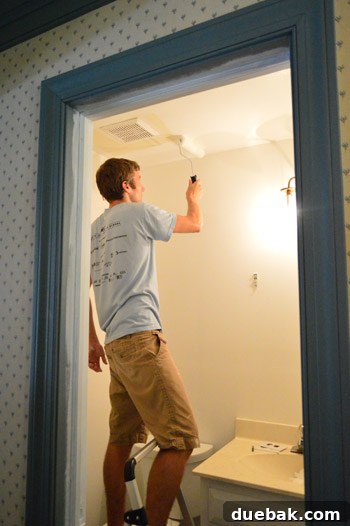
To ensure a cohesive and expansive feel, we painted both the walls and the ceiling in the exact same pristine white tone: Benjamin Moore’s Simply White. However, we cleverly varied the paint finish to create a subtle yet effective contrast, adding depth to the room. While the trim received a durable semi-gloss finish for its easy-to-clean and slightly reflective properties, the walls and ceiling were painted with an eggshell finish. This difference in sheen allows the semi-gloss trim to subtly stand out, appearing brighter and more polished against the softer, matte look of the eggshell walls. It’s a common trick in interior design to add visual interest without introducing another color. Our painting process was a classic partnership: I meticulously handled the “cutting in” – the delicate work of painting along the edges and corners – while John efficiently rolled the larger, flat surfaces. This division of labor ensures precision and speed. Two diligent coats later, after a full day of focused effort, the room was dramatically transformed, showcasing a fresh, unified, and incredibly bright appearance.
With two thorough coats of paint applied and a day allowed for proper drying and curing, the hall bathroom emerged completely transformed. The difference was truly night and day. What was once a yellowed, blue-trimmed, cramped space now felt expansive, luminous, and incredibly clean. In person, the impact of the fresh white paint is palpable; it evokes a feeling of crispness and serenity, creating an inviting atmosphere that was previously absent. The uniform Simply White on the walls and ceiling, contrasted with the semi-gloss trim, provides a sophisticated backdrop. This clean slate allows for immense design flexibility. While a white palette is undeniably classic and might seem less daring than bold colors, we firmly believe it provides the perfect foundation. Our strategy is to infuse personality and vibrancy not through wall color, but through carefully selected artwork, stylish accessories, and, as planned, a brightly colored vanity. This approach prevents the space from feeling overwhelmed and allows for easier updates to the decor down the line, demonstrating how a minimalist paint scheme can be the most versatile choice for a DIY bathroom renovation, maximizing impact with simplicity.
The immediate sense of spaciousness and renewed energy in our hall bathroom after this initial painting phase is truly remarkable. The decision to go with a classic white for the main surfaces has paid off immensely, making the room feel far more open and welcoming. While white might sometimes be perceived as a safe choice, its timeless elegance and versatility are exactly what we were aiming for. We envision bringing in pops of color and character through carefully chosen art pieces, a vibrant rug, and of course, our planned colorful vanity, allowing these elements to shine against a serene backdrop. This method allows for easier updates and avoids committing to a wall color that might quickly feel dated. This entire process, from wallpaper removal to fresh paint and mirror upgrade, represents Phase 1 of our hall bathroom overhaul. It’s a series of budget-friendly, impactful tweaks designed to make the space significantly more comfortable and aesthetically pleasing for daily use, while we diligently save funds for more substantial, “deep tissue” updates further down the line. Future aspirations include upgrading the permanent light fixture and sink, and perhaps even bolder design choices like grasscloth wallpaper, a tiled accent wall, or even a charming pedestal sink to truly elevate the space. But for now, the current transformation is a dramatic departure from its starting point, setting a beautiful stage for what’s to come.
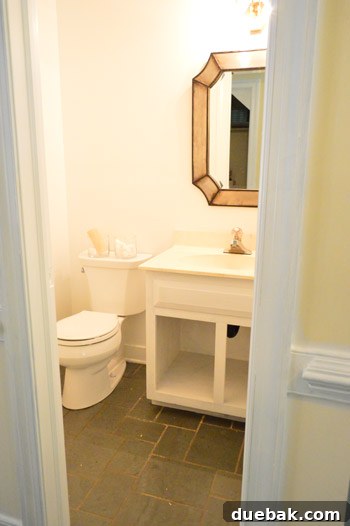
Looking back at the very beginning, it’s genuinely astonishing to see how far this hall bathroom has come in just a few weeks. The transformation from a tired, dated, and functionally deficient space to one that feels bright, clean, and vastly more inviting is a testament to the power of thoughtful DIY home improvement. This journey, beginning with the messy but necessary wallpaper stripping and culminating in fresh paint and functional upgrades, truly highlights the potential hidden within every corner of a home. We’re incredibly proud of the progress made during this initial phase, knowing that each small step contributes to a larger vision for a more beautiful and comfortable living environment. It’s a powerful reminder that even the most daunting renovation projects can be broken down into manageable, rewarding stages. The “before” image, captured just weeks prior, now serves as a vivid benchmark of our achievements, reinforcing our dedication to continually enhancing our home.
And for those with keen eyes, you might have already noticed in that second-to-last picture that our renovation endeavors haven’t been confined solely to the hall bathroom. We’ve also bravely started the monumental task of stripping wallpaper in the adjacent foyer, alongside our ongoing mission to ‘de-blue’ all the persistent trim throughout that area. This particular project, however, is proving to be an epic undertaking. Not only did we uncover a frustrating second layer of wallpaper, but that same stubborn, omnipresent blue trim in the foyer is demanding its full four coats of primer and paint to achieve the desired transformation, mirroring the bathroom’s efforts. The sheer scale and unexpected challenges mean it’s taking an incredibly long time, testing our patience and dedication. We sincerely hope to return with a comprehensive update on these foyer projects someday in the near future. That is, of course, if we aren’t found hiding under a kitchen table somewhere, muttering incoherently about “blue trim… blue trim… it’s haunting my dreams… it’s eating my soul…” Home renovation is full of these unexpected battles, but the end result always makes the struggle worthwhile.
*****************************
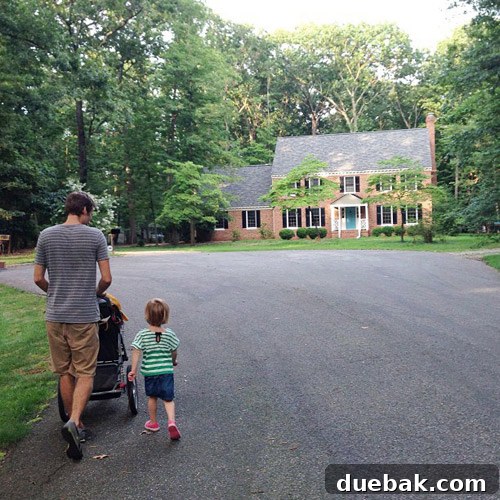
P.S. Just last night, while winding down from our evening walk, I quickly snapped this Instagram picture. It beautifully captures the subtle green undertone in our teal front door, making it finally appear as it does in real life. It’s always fascinating how the humble cell phone camera can sometimes render a more accurate portrayal of true colors than even our fancy DSLR. #nofilter #instagrambeatsDSLR – a testament to the evolving capabilities of mobile photography!