
Transforming Old Floors: A Comprehensive Guide to Hardwood Floor Refinishing
Are you looking to revitalize your home’s aesthetic and boost its value? Hardwood floor refinishing can be a transformative project, breathing new life into worn-out spaces. Join us as we delve into the intricate process of refinishing 600 square feet of our home’s original 50-year-old yellowed wood flooring, a journey undertaken to seamlessly match the sleek, new prefinished mocha hardwood installed in our kitchen, den, laundry nook, and half bathroom.
The Unveiling: Before & After The Mocha Magic
The decision to refinish our floors wasn’t taken lightly. Our existing floors, after half a century, had developed an unmistakable yellowish hue and showed signs of wear, creating a jarring contrast with the modern, rich mocha tones of our newly installed prefinished hardwoods. The goal was cohesion, an elegant flow that would unify the different areas of our home. Witnessing the transformation firsthand is always the most satisfying part of any renovation.
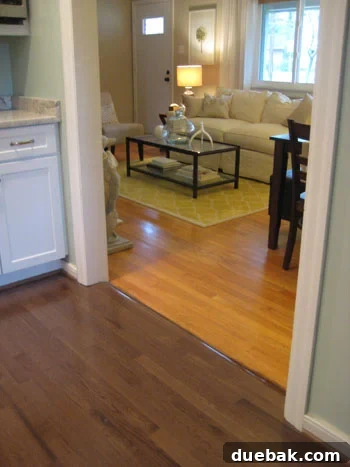
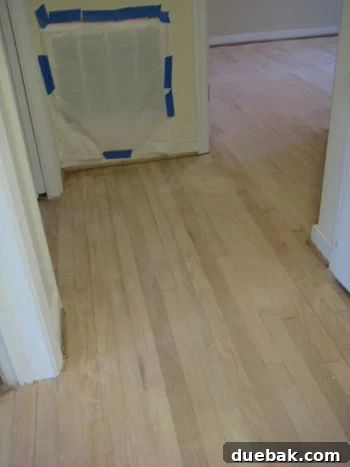
Our 50-year-old hardwood floors, showing their age and yellowed patina.
And now, prepare for the stunning “after.” The difference is truly remarkable, isn’t it?
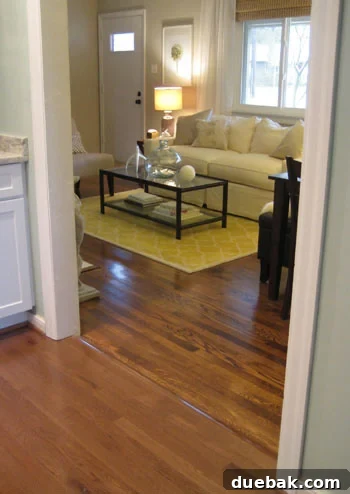
The dramatic transformation: rich mocha floors bringing warmth and elegance.
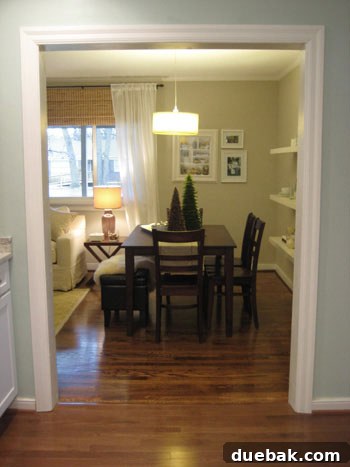
A closer look at the stunning, unified appearance.
Achieving such a precise match between existing oak flooring and newly installed prefinished oak is a testament to skill and dedication. Our exceptional floor professional meticulously blended three different batches of stain to formulate the perfect color. While factory prefinished oak often boasts a perfectly uniform appearance, on-site refinished floors, having been sanded and stained by hand, can sometimes reveal the wood’s natural knots and veins with a bit more distinction. However, we are absolutely delighted with the outcome; the consistency and seamless transition from room to room create an inviting and unified ambiance from the moment you step inside.
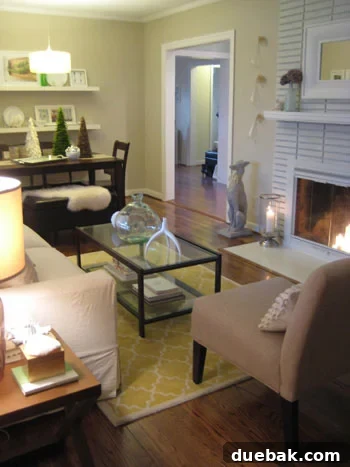
The subtle beauty of the newly refinished floors, enhancing the home’s character.
The Journey to Mocha Perfection: A Step-by-Step Refinishing Process
How did we achieve these beautiful mocha floors? Here’s a detailed play-by-play, offering insights and tips for your own hardwood floor refinishing project.
1. Finding the Right Professional: Research and Recommendations
The first and arguably most crucial step was securing a highly recommended and reputable floor refinisher. For a project as significant as matching existing floors to new ones, we emphasized pre-screened professionals. We reached out to practically everyone we knew in the area for recommendations, and it paid off when multiple friends independently suggested the same person. This strong consensus gave us confidence. However, even with glowing recommendations, we diligently obtained a second estimate to ensure competitive pricing and the best possible deal. Always prioritize a contractor with a proven track record, especially for custom color matching.
2. Negotiating a Smart Deal: Saving Without Compromising Quality
Once we identified our preferred refinisher, we explored opportunities to optimize costs. We successfully negotiated a significant saving of $300, bringing our total cost for 600 square feet down to just $900. Our secret? Instead of incurring the expense of replacing the existing shoe molding with costly new wood, we asked our refinisher to carefully sand and re-stain it. This small change made a big difference in our budget while maintaining a cohesive look throughout the space. Always ask about such options; a good contractor will be transparent about cost-saving alternatives.
3. Comprehensive Room Preparation: Clearing the Canvas
With the contractor selected and the terms agreed upon, it was time for the arduous but essential task of clearing each room slated for refinishing. This included the living room, all three bedrooms, and every closet within those spaces. We meticulously removed all furniture, rugs, and décor. Additionally, window treatments were taken down to prevent dust accumulation. While we couldn’t find a safe, dust-free place for all our fragile artwork (as our kitchen and den were already packed with furniture), we opted to leave the pieces on the walls, knowing we’d face a thorough dusting session later. This decision highlighted the critical need for detailed post-refinishing cleaning, as sanding dust inevitably settles everywhere.
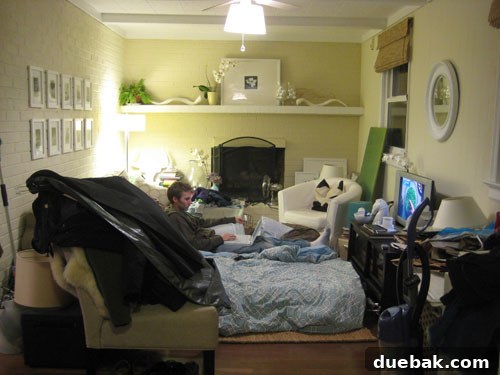
Empty rooms awaiting their transformation.
4. Dust Containment Strategies: Protecting Your Home
Effective dust control is paramount in any floor refinishing project. Before the sanding commenced, we carefully taped plastic bags over all our heating vents to prevent abrasive dust from entering the HVAC system and clogging air filters. This also helps minimize dust circulation throughout the house. Furthermore, we hung an old sheet across the doorways leading to our kitchen and den, creating a barrier to shield these areas, where all our furniture was temporarily stored, from the fine renovation dust. Proper containment saves immense clean-up effort later.
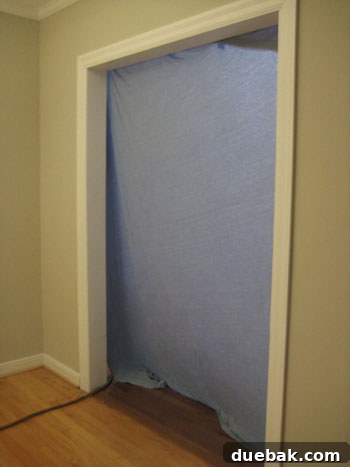
Protecting our living spaces from the inevitable dust.
5. The Sanding Process: Stripping Away the Old
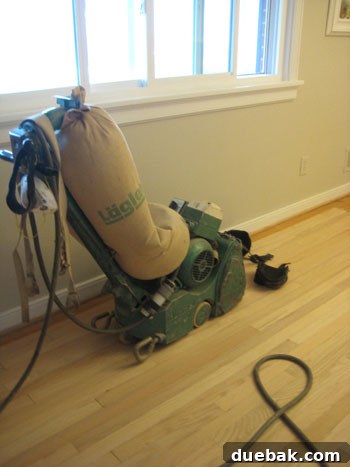
The next day, our refinisher began the intensive sanding process. This was the longest duration any contractor had spent working in our house, a testament to the meticulous nature of floor preparation. He utilized a professional-grade sander equipped with an integrated dust bag, designed to capture as much airborne debris as possible. Despite this, a certain amount of fine sanding dust is unavoidable and will settle on horizontal surfaces like door frames, windowsills, and closet shelves. After the sanding was complete, he performed a thorough dusting and vacuuming of the floors to ensure they were completely free of dust and wood shavings, creating a pristine surface for the subsequent staining.
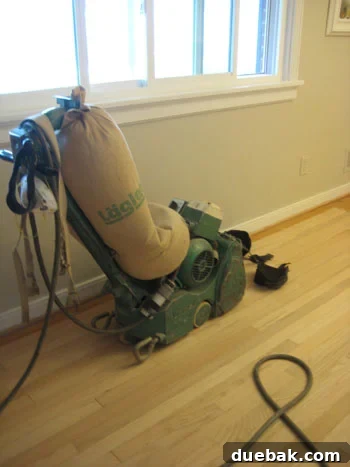
The powerful sander at work, preparing the wood for its new finish.
6. Temperature Control: Optimizing for Stain Application
Before any stain was applied, we removed the plastic covers from our heating vents and set our thermostat to a warm 75 degrees Fahrenheit. Maintaining a consistent, warm temperature is crucial as it significantly aids in the drying and curing process of both the stain and the subsequent polyurethane coats. Given that we wouldn’t be able to walk on the newly stained floors for approximately 20 hours, ensuring optimal drying conditions from the start was vital to prevent any issues and keep the project on schedule.
Setting the ideal temperature for the staining process.
7. Custom Stain Matching and Application
This stage truly highlighted the expertise of our floor refinisher. He carefully mixed several different stain concoctions and applied small samples of each directly onto our stripped flooring, strategically placing them near the new kitchen hardwood. This allowed us to easily compare and identify the closest match. Once we collectively agreed on the perfect shade, he meticulously applied the chosen stain across the entire 600 square feet, working his way towards the front door, effectively “painting himself out of the house” to avoid stepping on the fresh finish.
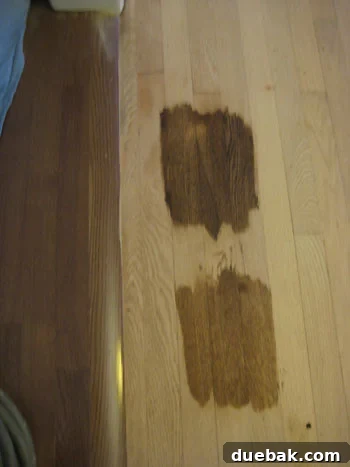
The careful process of selecting and applying the perfect mocha stain.
8. Polyurethane Application: Layering for Protection and Durability
The following morning, our refinisher returned to apply the first coat of polyurethane. This step, while only taking about 45 minutes, generated a very strong odor. We immediately cracked open several windows to aid ventilation, as the fumes from polyurethane can be quite potent and lingering. Understanding the potential health concerns associated with these toxins, especially for our tiny pooch, we had proactively arranged to stay with John’s sister for the entire polying process. We cannot stress this enough: we strongly recommend making arrangements to stay elsewhere—be it with a friend or in a hotel—from the moment the first coat of polyurethane is applied. We personally did not sleep in our house for a full week to ensure the air was thoroughly cleared. This precaution is particularly vital for expectant mothers, families with small children, or pet owners; staying far away for as long as possible should be a top priority.
The subsequent morning, our floor expert was back to apply the second coat of polyurethane. As recommended by all experts, he lightly sanded the first coat before applying the second. This intercoat sanding is crucial for ensuring optimal adhesion between layers and achieving a smoother, more refined finish. This stage took approximately an hour and forty-five minutes, and again, he “painted himself” out of the house. The smell, if possible, was even more intense after this coat. We opened every accessible window in the den and kitchen, and despite the heat being cranked to 75 degrees to facilitate drying, we happily overworked our heating system for much-needed ventilation.
On day four, our floor guy returned for the third and final coat of polyurethane. This is also when he received payment for his exceptional work. It is widely accepted that three coats of polyurethane offer far superior durability and protection compared to just two. Always confirm how many coats your refinisher intends to apply; three coats are often indicative of an expert-level job, ensuring maximum longevity and resilience for your beautiful new floors.
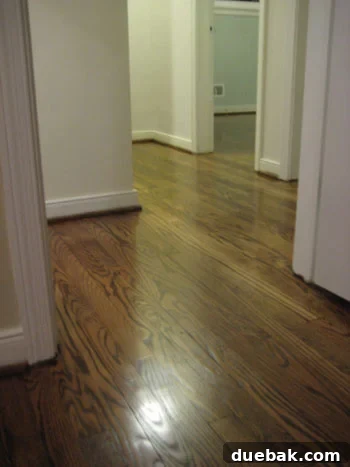
The protective layer of polyurethane being applied.
9. Post-Refinishing Care: Patience is Key
After the final coat, we were strictly instructed not to walk on the floors for at least 48 hours. This allows the polyurethane to dry sufficiently and begin the curing process without disturbance. Thanks to the holiday season, we were able to stay out of our house for three full days, providing extra assurance that everything was thoroughly dry and the fumes had further dissipated. Even then, upon our initial return, we still detected lingering chemical odors from the polyurethane. Consequently, we continued to avoid prolonged stays in the house for a few more days, keeping windows cracked for additional ventilation. We did, however, lower the heat back to our normal unoccupied temperature of 64 degrees to balance comfort with ongoing airing.
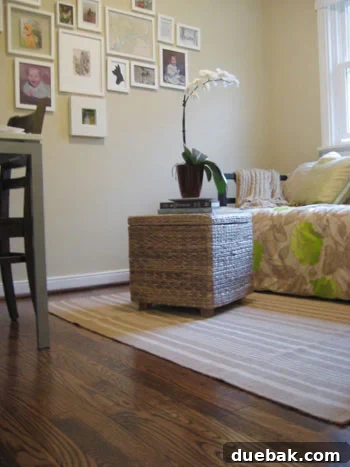
Once we finally settled back in and returned all our furnishings to their rightful places, we were absolutely ecstatic. The rich mocha flooring underfoot not only provided a stunning backdrop but also made our existing furnishings “pop” more vibrantly and imbued the entire space with a distinctly luxurious feel.

Our living and dining room, transformed by the elegant new floors.
The transformation wasn’t limited to the living/dining room. Take a look at the newly spiffed floor in the third bedroom:
The third bedroom’s floor, reflecting the home’s newfound cohesion.
And the inviting guest bedroom:

A warm welcome awaits guests on these beautiful floors.
Our serene main bedroom also received a sophisticated update:
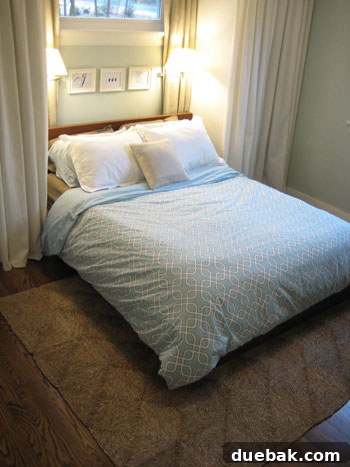
The master bedroom, feeling more luxurious than ever.
Even our closets now boast a sleeker, more unified look with their newly mocha-fied floors. It’s the small details that complete the picture!

Closets, often overlooked, now contribute to the cohesive design.
Embrace the Transformation: Is Hardwood Floor Refinishing Right for You?
There you have it – a comprehensive, step-by-step breakdown of what to expect when undertaking a hardwood floor refinishing project. Whether you choose to embark on a DIY journey or enlist the expertise of a professional, we extend our best wishes. While the process involves a degree of dust, lingering odors, and temporary chaos, the end result is undeniably worth it: glossy, fabulous floors that enhance your home’s beauty, value, and overall appeal. The satisfaction of walking on newly restored floors, perfectly tailored to your vision, is an unparalleled reward.
Psst – For more detailed information on the specific professional we hired for our floor refinishing project and the entire journey, click here.
Explore More Hardwood Floor Refinishing Projects
If you’re eager to learn more about diverse hardwood floor refinishing projects, including intricate matching scenarios and historical floor restorations, explore the posts below. They offer valuable insights into tackling challenges from seamlessly blending old hardwoods with new prefinished flooring to meticulously restoring century-old pine floors.
- Matching New & Old Hardwood Floors In Our Third House
- Refinishing Historic Heart Pine Floors in Our Beach House
- Repairing Historic Oak & Pine Floors In Our Duplex
- Clear Sealing Our Refinished Floors In Our Florida House