The journey to an organized home often begins with a single, often daunting, task: cleaning out the closet. Like a classic song that motivates us to tackle deep cleaning, the idea of a fresh start in our wardrobe is universally appealing. For many, the closet can become a repository of forgotten items, mismatched socks, and aspirational garments that rarely see the light of day. This was certainly the case for us, and while the initial inspiration might have been a catchy tune, the motivation for change stemmed from a very real need for order.
Beyond the playful nod to pop culture, the reality of our bedroom closet had become a significant source of frustration. For over three months, we had been navigating piles of socks, pajamas, and other clothing items sprawled across the floor of our shared closet. It was, in plain terms, a chaotic disaster. Despite our best intentions, establishing a functional system seemed impossible until a crucial piece of furniture entered our lives: a proper dresser. This wasn’t just any dresser; it was one with fully functional drawers, a stark contrast to our old unit which had a broken drawer that consistently sabotaged our efforts at organization. The arrival of this new dresser eliminated all our excuses, leaving us with no choice but to confront the overflowing “skeletons” – or rather, mountains of clothes – within our closet.
Naturally, we still procrastinated for a few more weeks. But the persistent visual clutter finally spurred us into action. We committed to a full-scale decluttering and organization project. To truly appreciate the transformation, we captured some “before” shots, albeit slightly tidied up to spare you the intimate details of our unmentionables. These images serve as a raw look into the challenges many couples face with shared closet spaces.
Before the Closet Transformation: A Glimpse of the Chaos
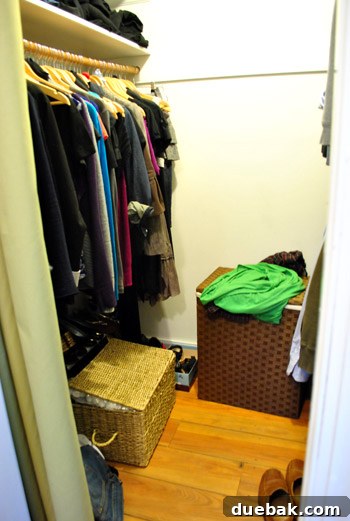
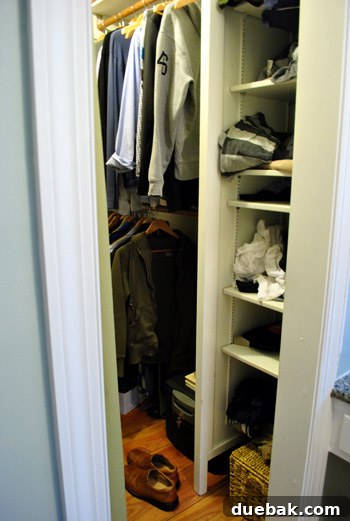
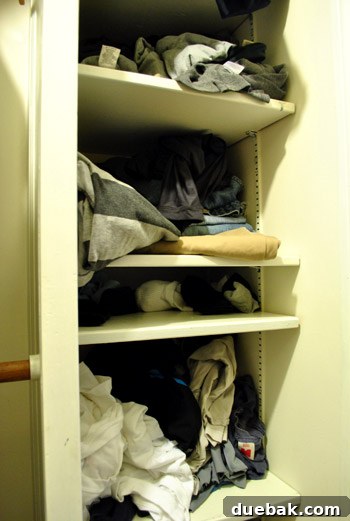
Our initial focus was on the cubbies prominently featured in the middle “before” picture. These cubbies were stuffed haphazardly with various items, lacking any clear system or purpose. The first crucial step was to decide what categories of clothing would reside in these cubbies versus what would find a new home in our newly acquired dresser. This decision-making process is vital for any successful closet organization, as it establishes clear zones for different types of garments.
Strategic Space Allocation: Cubbies and Dresser Drawers
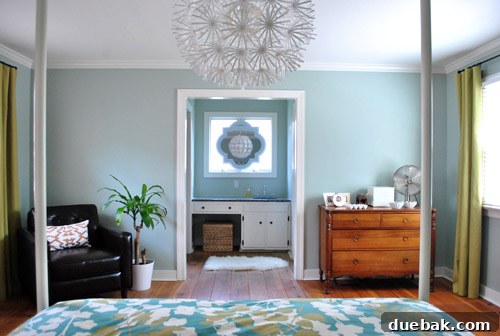
After much deliberation, we designated all the cubbies within the closet to John, maximizing his vertical storage. My personal items were allocated to the top two drawers and the middle drawer of the new dresser. This division allowed for distinct personal spaces within our shared storage. My socks and underwear found a neat home in the top left drawer, bathing suits were neatly folded into the top right, and pajamas and bras were organized in the middle drawer. This strategic arrangement not only brought order to my side but also freed up the bottom drawer for John’s running clothes.
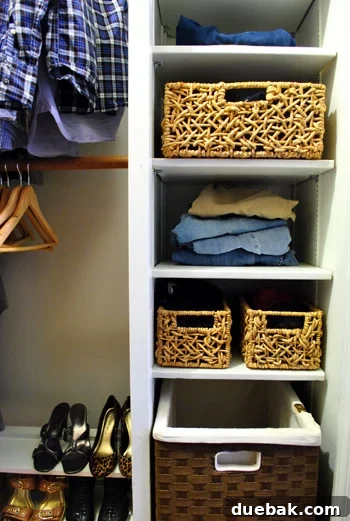
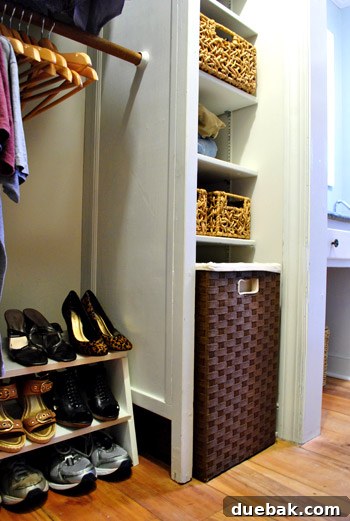
John’s other garments, including pajamas, underwear, jeans, swimsuits, and shorts, were then meticulously organized into his designated closet cubbies. To prevent items from overflowing and to create a more polished look, we repurposed some old baskets we’ve had for ages, originally from our wedding registry. These baskets acted as “faux drawers,” effectively containing smaller items like socks and underwear, preventing them from spilling out and maintaining visual tidiness. Another key improvement was relocating the bulky, cluttered hamper. We moved it into the bottom opening of the cubbies, creating an easily accessible drop-off point for dirty clothes. We even unscrewed the lid, leaving it open for effortless tossing – a small but significant change that streamlined our daily routine.
Decluttering and Maximizing Hanging Space
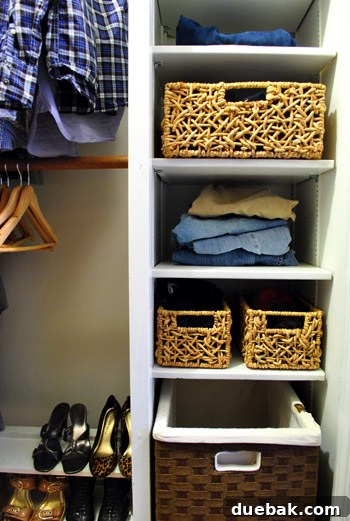
With the cubbies and dresser sorted, John embarked on a comprehensive decluttering of his clothes, resulting in a substantial donation bag. What truly surprised me was his decision to hang his t-shirts. Initially, I expected them to be folded, but he smartly realized that hanging them was the most efficient use of space, given the limited room in both the cubbies and the new dresser. This innovative approach kept all his shirts in one designated area, preventing them from scattering and ensuring he could easily see his entire collection. It was a clever strategy to maintain a vast selection of t-shirts while keeping the closet organized!
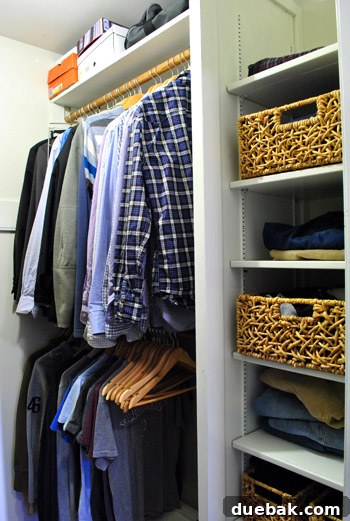
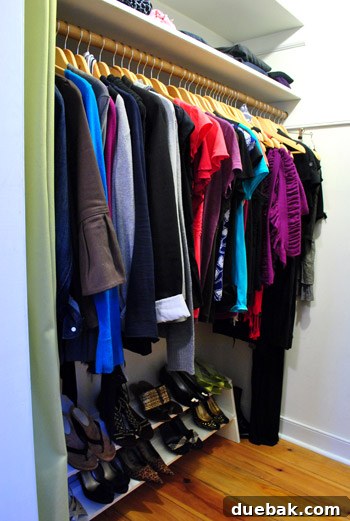
Next, it was my turn to tackle my side of the closet. Following John’s lead, I pulled out numerous items I rarely wore, adding them to our growing donation pile. Any “transitional” clothing from after I had Clara, which I was no longer wearing, was relocated to my maternity clothing bin in the attic. This left me with a streamlined collection of t-shirts, tops, sweaters, cardigans, scarves, jackets, pants, dresses, suits, blazers, and skirts. We deliberately choose to hang these items rather than folding them in drawers, and we don’t store out-of-season clothes elsewhere. Aside from pajamas (which are in my dresser) and winter coats (which reside in the hall coat closet), this now represents every single item of clothing I own. This rigorous decluttering process is crucial for maintaining a functional and accessible wardrobe, especially in a shared, smaller closet space.
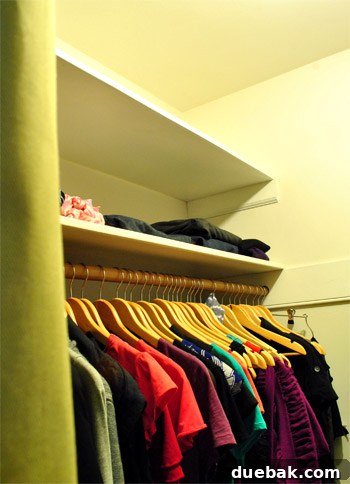
While it’s challenging to capture the full scope in these images due to the closet’s compact size, the shelf above my hanging bar underwent a significant transformation. What was once cluttered now holds only three pairs of my most frequently worn jeans (all maternity ones finally put away) and two go-to sweaters folded neatly in the corner, a stark contrast to the ten sweaters I never wore previously. This minimalist approach on the shelves creates a sense of spaciousness and ease of access.
Please pardon the yellow glare in the following picture – a quick photo op meant I forgot to white balance, and frankly, I’m too busy enjoying my organized closet to bother with Photoshop fixes! This shot, despite its imperfection, beautifully illustrates the newfound space we now have. The top shelf on my side is completely empty, and the shelf below it holds only a few essential items. This “breathing room” not only makes the closet feel larger but also provides ample space for future growth or seasonal adjustments without falling back into disarray.
My Passion: Shoes and Accessories Organization
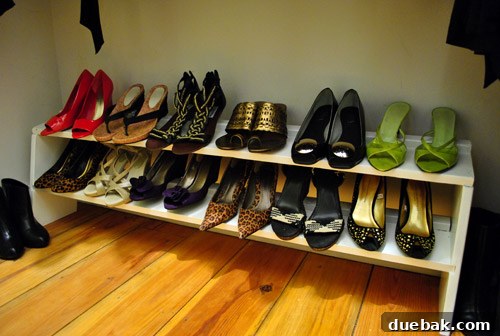
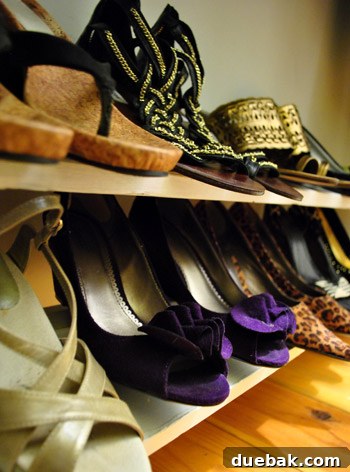
Just for a bit of fun, allow me to share my shoe collection – or at least, most of it. Some overflow onto John’s shoe shelf because he’s wonderfully accommodating (and only has about five pairs himself!). Shoes are undeniably my weakness. I confess to being a shoe enthusiast, but I manage my passion responsibly. Nearly all my footwear is acquired for less than $20 from places like DSW or consignment stores. For instance, those studded heels on the bottom right were a steal at $7 from a consignment shop, in never-worn condition! This budget-friendly approach allows me to “hoard” a collection of “special occasion” footwear. I’ll be honest, lime green sandals or red wedges aren’t everyday staples. However, when the perfect occasion arises, they bring immense joy and complete an outfit in a way only a great pair of shoes can. And yes, you counted correctly – I do own two pairs of leopard print heels. Perhaps they’re like ceramic animals to me; I just enjoy having them around to “cuddle”!
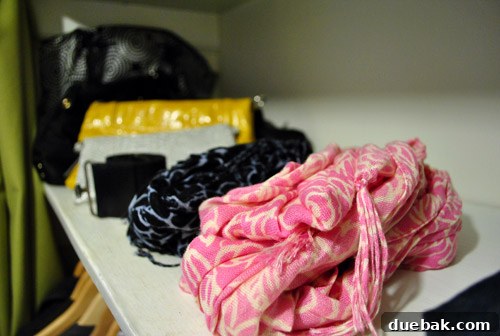
Having veered momentarily into fashion blog territory, here’s a shot of the other side of the shelf above my hanging bar. This space is dedicated to a few favorite scarves, a versatile wide black belt, a couple of elegant clutches, and two purses currently out of my regular rotation. Even these smaller accessories benefit from designated homes, preventing clutter and making it easy to find what I need.
One more gratuitous shoe shot, just because my enthusiasm for footwear knows no bounds.
The Final Transformation: Space, Serenity, and Sustainability
The most striking outcome of this extensive closet makeover is the visual impact. With so much floor space now visible, the entire closet feels significantly more expansive and inviting. Stashing the hamper discreetly within those cubbies on the side was a game-changer, truly making the area feel much roomier and less obstructed. This transformation from chaos to calm has profoundly affected our daily routine, reducing stress and making getting ready a much more pleasant experience.
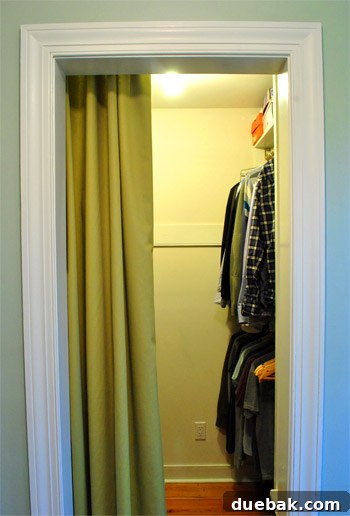
Of course, life happens, and we’re realistic. Should the closet ever succumb to a surge of temporary madness again, our ultimate, albeit humorous, contingency plan involves a quick fix: turning off the light, drawing the curtain, and simply hiding the chaos. It’s a testament to the fact that while organization is a goal, perfection is rarely the outcome. The most important thing is creating systems that work for you most of the time, and knowing when to simply close the door and reset.
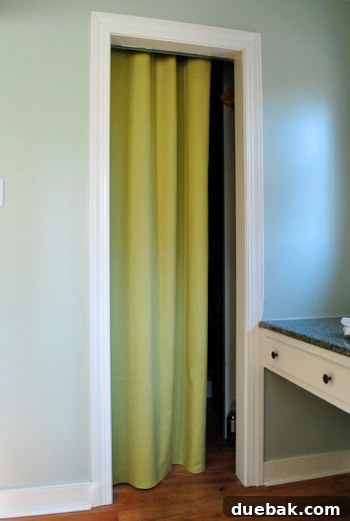
What? At least I’m honest about the realities of home organization! But seriously, this overhaul has provided us with a truly functional and aesthetically pleasing shared closet space, making daily life a little bit smoother and a lot less cluttered. It proves that with a clear plan, smart storage solutions, and a willingness to declutter, even the most challenging spaces can be transformed into areas of calm and efficiency. We hope our journey inspires you to tackle your own closet challenges and discover the joy of an organized wardrobe!