

Revitalizing Your Kitchen: From Outdated Trash Compactor to Dynamic Slide-Out Storage
Every home has its quirks, and for us, it was the persistent void left by our old kitchen trash compactor. While a relic of a bygone era, its removal marked the beginning of a truly transformative DIY journey. After months of contemplation and strategic planning, we’ve officially breathed new life into that neglected space, converting it into highly functional, aesthetically pleasing slide-out basket storage. This project wasn’t just about filling a gap; it was about maximizing potential, enhancing kitchen efficiency, and adding a touch of personalized design that truly elevates our home.
The journey from an empty opening to a fully integrated storage solution was a labor of love, taking a little over three months from concept to completion. While the immediate aftermath of the compactor’s departure left us with a rather unglamorous, albeit temporary, “Clara hiding spot” (our daughter’s favorite game of hide-and-seek often involved predictable locations), we knew this space deserved to work harder, smarter, and look infinitely better.

The initial gap, while functional for a brief period as an impromptu toy hideaway, was far from ideal for a bustling kitchen environment. It was an eyesore, a testament to an incomplete project, and a constant reminder that valuable kitchen real estate was going to waste. Our goal was clear: to create a dedicated, accessible, and organized storage solution that would seamlessly integrate with our existing kitchen cabinetry and truly serve our daily needs. This meant moving beyond the temporary and embracing a permanent, practical upgrade.

Designing the Perfect Solution: From Trash to Treasure
Before diving into construction, we meticulously debated several options for this newfound space. The idea of incorporating a dedicated trash or recycling bin crossed our minds, but our current cabinet hack for waste management was already performing flawlessly. Open shelving, similar to what we implemented in our master bathroom, was another consideration, offering easy access and a light, airy feel. However, we ultimately settled on a more enclosed, pull-out system: sliding basket storage. This concept, inspired by pinterest inspirations like these clever designs, promised to consolidate our dishcloths, cloth napkins, and paper napkins from their scattered locations throughout the kitchen into one distinct, easily accessible spot.
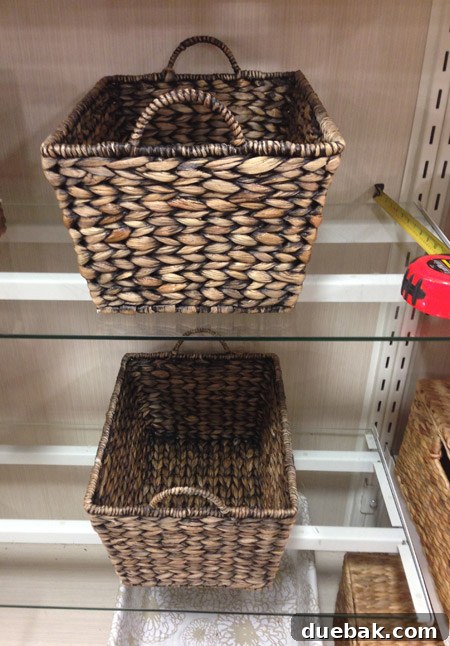
Beyond immediate organization, this project served a dual purpose: it was our “Phase 1” test. We love utilizing smaller projects as a proving ground to determine if a particular feature or design element truly suits our lifestyle before committing to it in a larger, more permanent kitchen remodel. With a few crucial measurements in hand, Sherry embarked on a successful scouting mission to HomeGoods, where she discovered two perfectly sized and wonderfully colored baskets that would become the stars of our new storage system. Almost leaving our indispensable tape measure behind was a minor, humorous hiccup in an otherwise smooth start!
Preparing the Foundation: Structuring the Cabinet Void
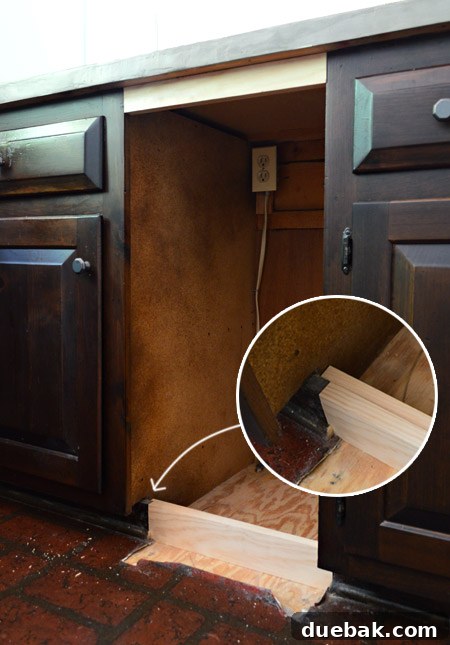
Before our beautiful baskets could take center stage, there was essential structural work to be done. My first task was to transform the raw opening into something resembling a true cabinet interior. This involved carefully adding a sturdy board across the top of the void and fabricating a new toe-kick at the bottom. These pieces not only provide a finished, integrated look but also serve as crucial anchor points for the subsequent construction. I secured both by first screwing a brace piece into the back of the existing cabinet lip, ensuring a robust connection, and then neatly nailing the face pieces into place. This attention to detail in the initial framing is paramount for the stability and longevity of the entire unit.
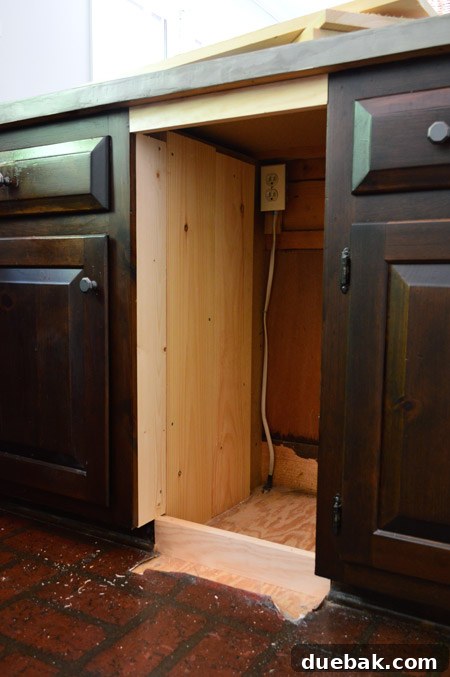
The next critical step was to build out the sides of the cabinet void. The existing cabinet structure had an outer lip, and for the drawer slides to function smoothly without obstruction, the interior side walls needed to be perfectly flush with this lip. To achieve this, I strategically screwed in several pieces of scrap wood, meticulously cut to the exact dimensions required. This process of shimming out the interior walls created a clean, flat surface necessary for securely attaching the drawer slides. A moment of genuine satisfaction came from realizing that, up to this point, every single piece of wood used in the project had been salvaged from my ever-growing scrap pile. There’s a special kind of DIY victory in repurposing materials and keeping costs low!
Crafting Custom Slide-Out Basket Frames
With the cabinet void structurally prepared and its sides built out, it was time to move on to the heart of the project: creating the custom frames for our slide-out baskets. Since the baskets had a tapered design, a simple flat shelf wouldn’t suffice; they needed a supportive frame that would cradle them securely and allow them to slide in and out effortlessly. I opted to construct these frames using 1.5-inch square dowels, sourced from Lowe’s, as this specific thickness was crucial for mounting the drawer slides correctly. This was one instance where my beloved scrap pile couldn’t quite deliver the precise material needed, a small setback in an otherwise scrap-friendly project.

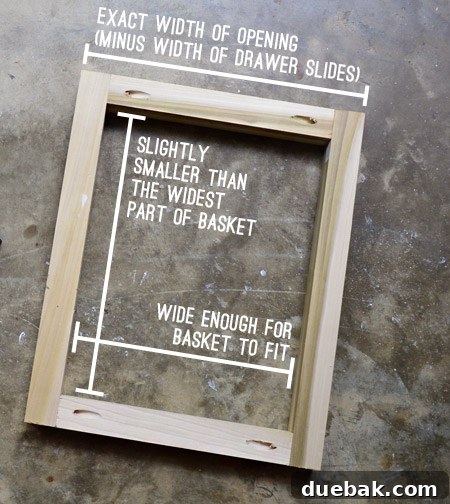
The construction of these frames was arguably the most intricate part of the entire endeavor, demanding meticulous planning and precision. Using my Kreg Jig, I created pocket hole joints to assemble strong, seamless frames. Several critical factors had to be carefully balanced to ensure optimal functionality:
- Basket Fit: The frame needed to be precisely sized so that the tapered basket would fit snugly into the opening, preventing it from wobbling or falling through entirely.
- Cabinet Integration: The assembled frame had to fit perfectly into the prepared cabinet void, accounting for the additional width that the drawer slides would add to the overall assembly.
- Slide Attachment: The dowels used for the frame needed to be thick enough to provide a secure and stable attachment point for the drawer slides, ensuring smooth operation for years to come.
This phase involved a significant amount of triple-checking measurements and dry-fitting components to guarantee accuracy. While I won’t provide my exact measurements, as they are specific to my unique cabinet opening and chosen baskets, the key takeaway is to carefully measure your own components. Focus on creating a frame that precisely accommodates your baskets while leaving adequate clearance for your chosen drawer slides within your specific cabinet opening. This methodical approach ensures a custom fit every time.
Installing High-Quality Drawer Slides for Smooth Operation
For the drawer slides, we opted for these ball-bearing full-extension slides from Home Depot. While slightly pricier than basic wheeled slides (around $15 compared to $5), the investment in full-extension capability and a soft-close mechanism was absolutely worth it. Full-extension slides allow the entire basket to pull out of the cabinet, offering complete visibility and access to its contents, which is invaluable for kitchen organization. The soft-close feature adds a touch of luxury and prevents noisy slamming, a small detail that significantly enhances the user experience.
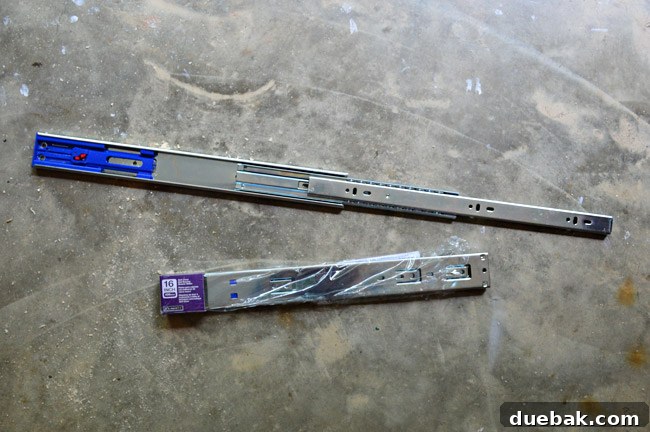
Following the manufacturer’s instructions, I began by detaching the drawer rail part of the slide from the cabinet rail. I then carefully screwed the drawer rail into each side of my two custom frames. To ensure precise placement, I found it incredibly helpful to mark the screw holes with a pen, drill small pilot holes, and then follow through with the screws. This prevents wood splitting and ensures the screws go in straight and securely.
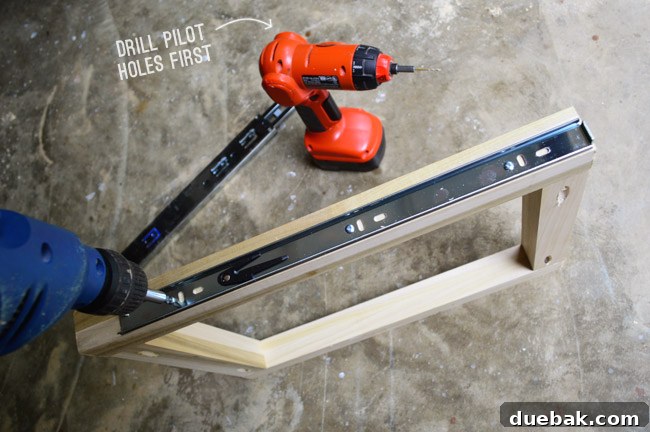
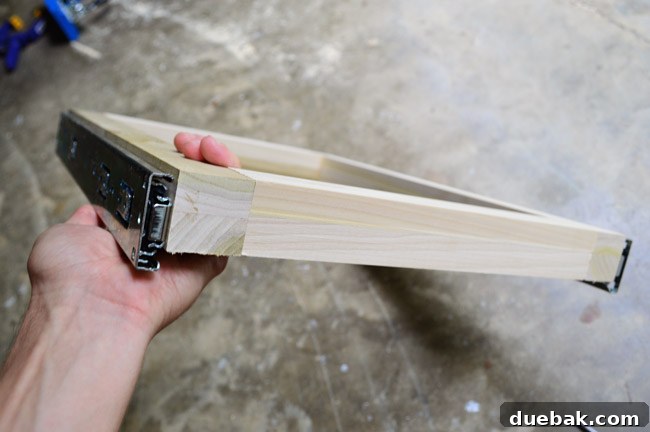
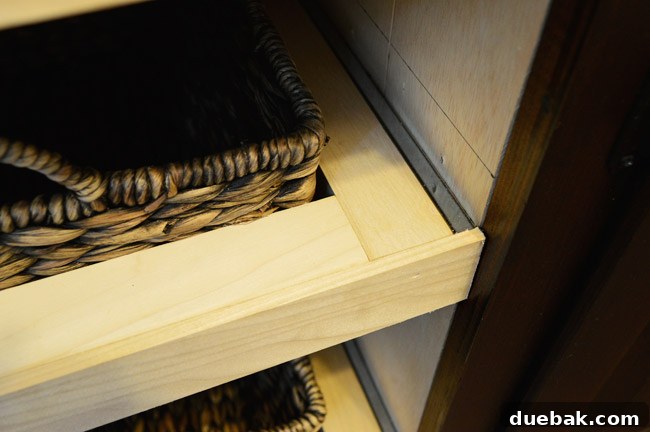
I attached these drawer rails along the bottom edge of each drawer frame. This strategic placement served two important purposes: it made it much easier to keep the rails perfectly straight and level during installation, and it ensured that when the rest of the thicker slide mechanism was reattached, it wouldn’t protrude above the frame. This thoughtful planning avoided potential snags and created a clean, unobstructed top edge for the baskets – a true “#thinkingahead” moment!
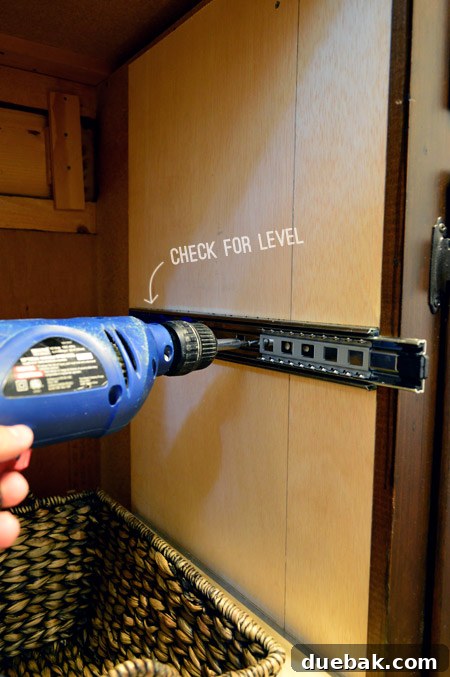
Back inside the cabinet, the real challenge of aligning the cabinet rails began. I held up the assembled drawer frame (with its attached drawer rails) inside the cabinet void to mark the precise placement for the cabinet rails. Then, detaching the cabinet rail part of the slide, I held it in place, marked my holes, drilled pilot holes, and carefully screwed the first one in. This step can certainly be managed with two hands, but it’s significantly easier and more accurate with four. I highly recommend enlisting the help of a partner, friend, or even a willing neighbor – anyone but your dog, who, while supportive, might not be the most effective assistant for holding things level! As you can see in the image, the bottom drawer and its slide were already successfully installed at this point, serving as a guide for the upper one.
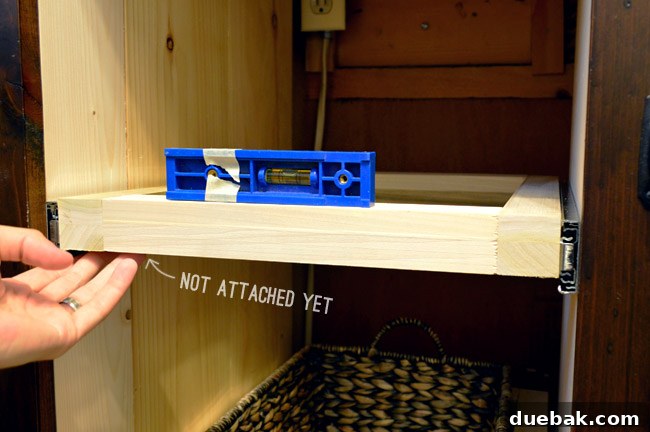
Before permanently screwing in the second cabinet rail, a crucial step for ensuring smooth operation was to temporarily reassemble everything. This allowed us to perform a quick level check. Not only does a level installation guarantee a visually straight appearance, but more importantly, it ensures that the drawers slide effortlessly and quietly. Adjustments can be made at this stage, preventing frustrating issues down the line.
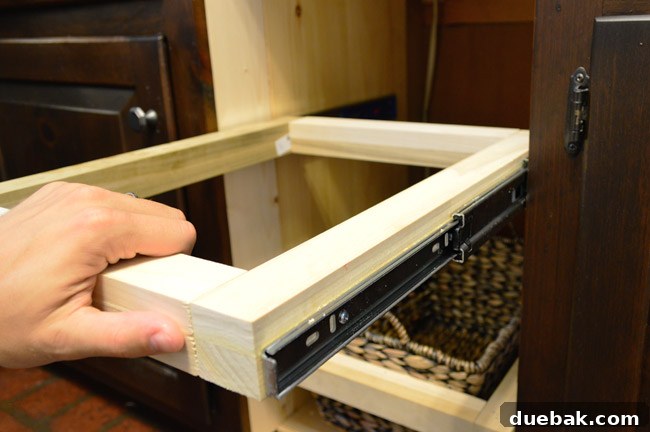
With the second side securely screwed in, I carefully reattached the drawer to the slides, held my breath, and tested the mechanism. The satisfying glide and soft close were met with a profound sigh of relief – the hard work had paid off!
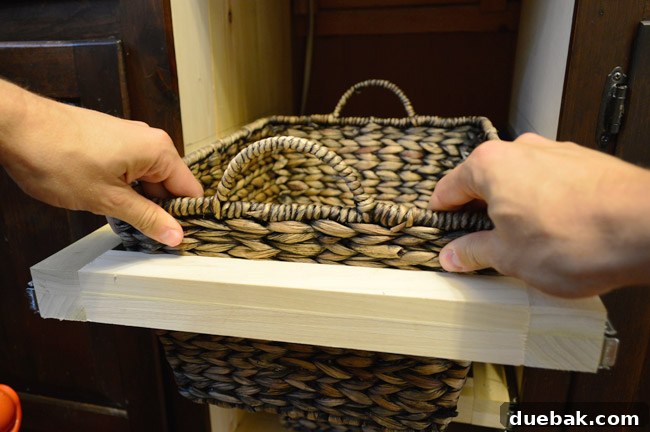
The next step was to carefully place the baskets into their custom-built frames. They settled in nicely, but I gave them a gentle push down to ensure a snug and secure fit. This prevents any rattling or movement as the drawers are opened and closed, maintaining a sense of quality and stability.
Adding Functionality: Storage and Smart Tech Integration
Here are both basket drawers fully installed! We initially pondered a third basket, but HomeGoods only had two of the perfect size, and we also realized a unique opportunity: the existing working outlet from the old trash compactor (which was plugged in, not hard-wired). We decided to leverage this power source, which meant forgoing a third basket for a more innovative solution.
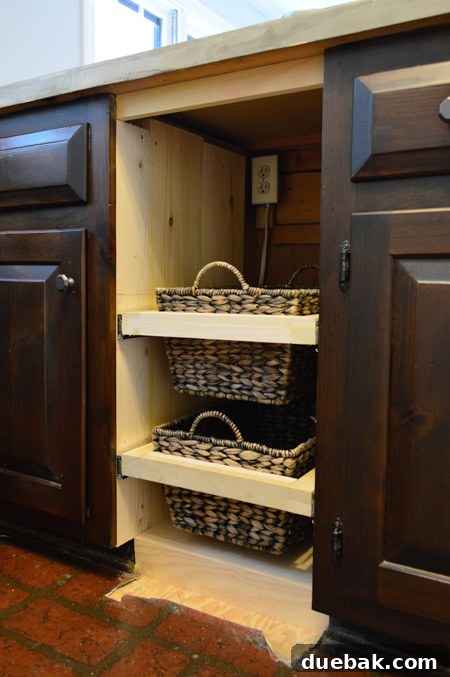
Taking advantage of that outlet simply meant adding a small, simple shelf, once again built from our versatile scrap wood pile. Sherry brilliantly suggested using it as a convenient phone charging spot, but I saw it as the perfect excuse to finally justify purchasing the Bluetooth speaker I’d been eyeing for ages. Our kitchen radio reception at this house is notoriously spotty, and having my phone tethered to an auxiliary cable meant our music system went largely unused. This shelf became our new kitchen tech hub, solving both a charging dilemma and our music problem simultaneously – a classic win-win DIY outcome!
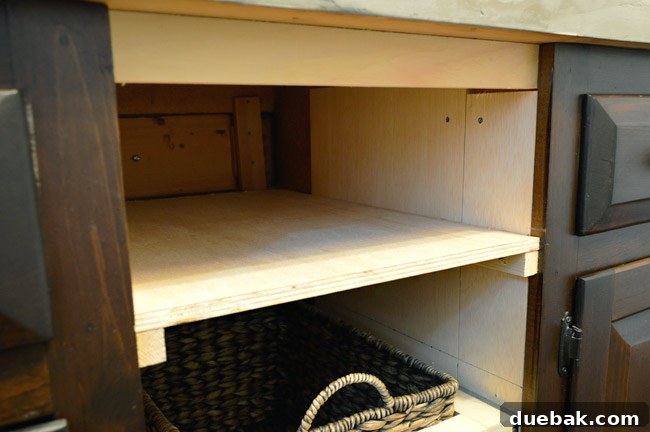
To give the entire unit a truly finished and integrated look, the final construction piece involved adding thin decorative boards to the front of each drawer frame and the new tech shelf. These front panels not only provide a clean, consistent aesthetic but also cleverly conceal the drawer slides, ensuring a polished, built-in appearance. This small detail makes a significant difference in elevating the overall craftsmanship of the project, making it look less “DIY” and more like a custom cabinetry feature.
The Finishing Touch: Staining for a Seamless Match
With all the components built and assembled, the final, crucial step was staining everything to match, or at least “match-ish,” our existing kitchen cabinets. Our cabinets were originally stained with PolyShades in a Tudor color, and while I wished it were as simple as repeating that exact process, the raw wood of our new pieces had a significantly different starting point compared to the medium brown-red stain already present on the older cabinetry. Achieving a cohesive look required a bit more finesse.
Sherry took charge of the staining process, starting by darkening the new wooden pieces with a coat of Dark Walnut stain we had on hand. This initial layer provided a crucial depth and helped to neutralize some of the lighter tones of the raw wood, preparing it for the subsequent PolyShades coats. This layering technique is often essential when trying to blend new wood with existing finishes, creating a more uniform base color.
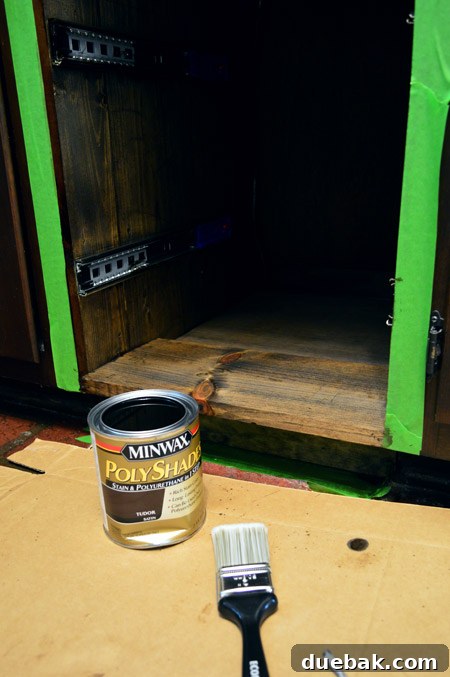
After the Dark Walnut stain had thoroughly dried, Sherry meticulously applied multiple coats of PolyShades. It ultimately took three coats to achieve a tone closely resembling that of the surrounding cabinets. While it’s not an absolutely perfect match – the original cabinets possess a slightly redder hue – the result is more than close enough for us. The subtle variation adds character, and the overall effect is one of thoughtful integration rather than a glaring disparity. It’s a testament to patience and careful application when aiming for a custom, blended finish.
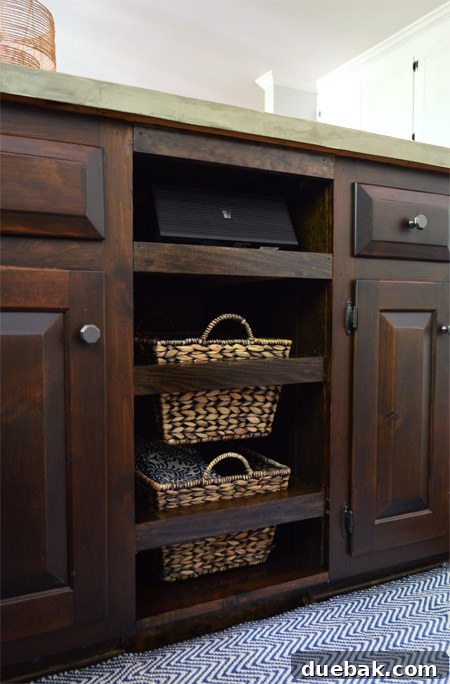
Final Reveal and Project Reflections
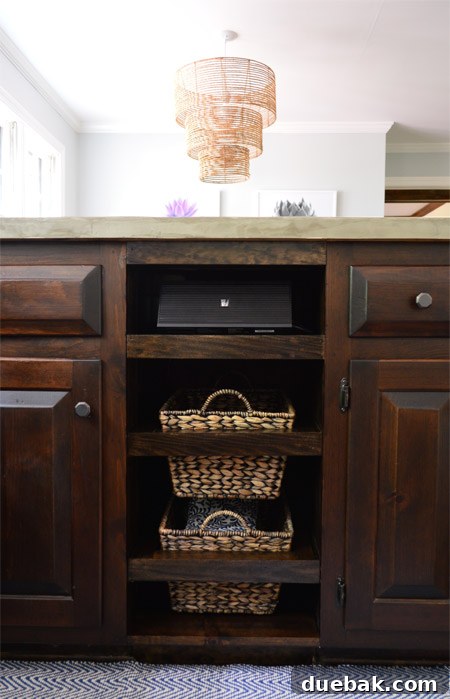
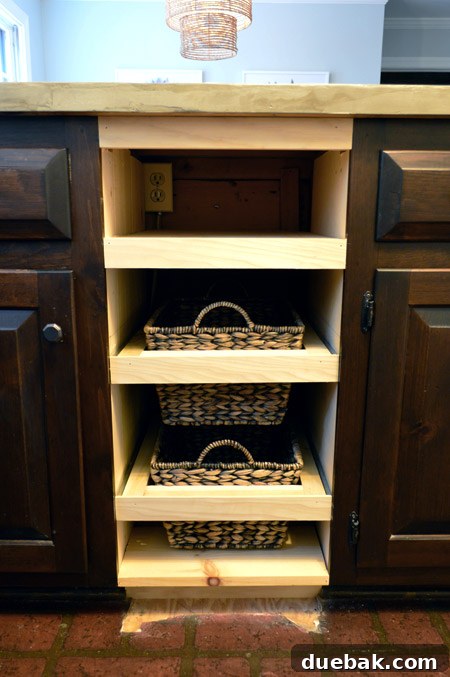
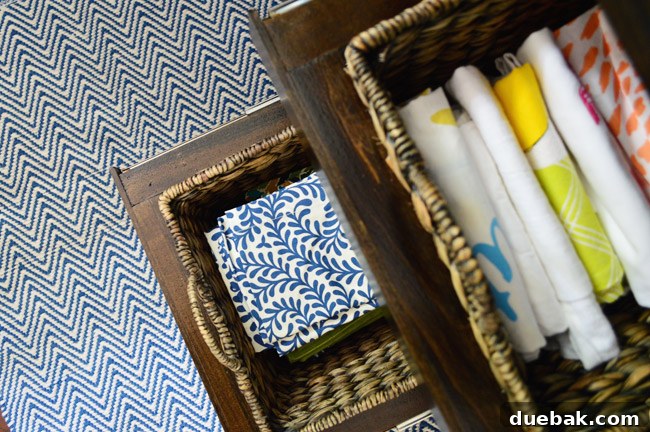
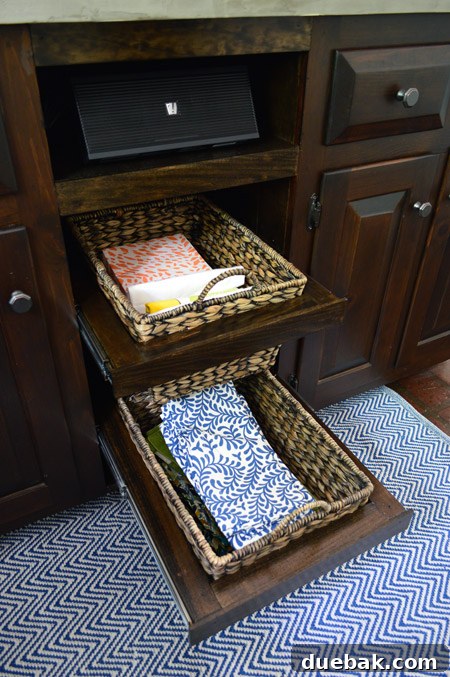
To address the less-than-perfect laminate flooring visible beneath the new unit – which, admittedly, isn’t looking its best anywhere in our kitchen with its scratched-up faux brick pattern – Sherry found a fantastic solution: a $12 HomeGoods runner. This simple addition instantly covered the worn area, tying the whole space together and adding a cozy touch. As planned, the top basket is now perfectly organized with dishcloths and paper napkins, while the bottom basket neatly houses our collection of cloth napkins, making them all easily accessible for daily use.
And of course, the Bluetooth speaker that justified the hidden shelf is this sleek model from Target. It’s conveniently plugged in and charging on the shelf below, and it’s become an instant favorite, easily removed for use around the house – so far, it’s mostly enjoyed its time out on the back deck, providing tunes for outdoor activities. This small addition truly showcases how a DIY project can solve multiple needs and integrate modern conveniences into a functional space.
Witness the Magic: Our Slide-Out Baskets in Action!
Sherry insisted I include a video demonstrating the soft-close function of the drawers, and who am I to argue? While a quick three-second clip would have sufficed, I couldn’t resist adding a touch of cinematic flair with some music and slow-motion action to truly showcase the smooth operation of our new custom storage solution.
It’s almost as captivating as our vintage console video from way back!
There’s not much left to say after witnessing that smooth operation. We’re incredibly pleased with our new sliding baskets, which have brought much-needed organization and a modern touch to our kitchen. What projects have you been tackling lately? Whether it’s kitchen renovations, custom builds, painting projects, or outdoor updates, we’d love to hear about them! With this project complete, we’re simultaneously energized to tackle the kitchen floors immediately and also tempted to ignore them for a few more months.