
Transform Your Awkward Living Room: An E-Design Journey to a Harmonious Home
Moving into a new home is an exhilarating adventure, but it often comes with its unique set of design challenges. Imagine the excitement of new beginnings quickly turning into the frustration of fitting beloved furniture into an unfamiliar, sometimes “awkward,” space. This is precisely the scenario our client, Randa, found herself in just a week after moving into her new house. Her living room, despite its generous dimensions, presented a puzzle that needed a fresh pair of eyes and expert guidance.
This is where the power of an online e-design service truly shines. E-design offers a convenient, accessible, and often more affordable way to tap into professional interior design expertise without the need for in-person consultations. It’s about leveraging technology to visualize your space’s potential, ensuring every piece of furniture, every splash of color, and every design element contributes to a cohesive, beautiful, and functional environment. For Randa, an e-design was the perfect solution to transform her living room from a perplexing puzzle into a picture of harmony and style.
The goal was clear: to create a living room that not only looked stunning but also felt effortlessly comfortable and truly reflected Randa’s vision for her new home. Let’s dive into the specifics of her design dilemma and explore the tailored e-design solutions that brought her space to life.
The Design Conundrum: Navigating a Long, Narrow Living Room
Randa’s initial plea perfectly captured the essence of her challenge: “Please excuse this space, I just moved in Friday. This living room is 21 ft x 11 ft and awkward with my furniture.” This instantly tells us we’re dealing with a common design hurdle: a long and relatively narrow room. Such dimensions can make furniture placement tricky, often leading to spaces that feel like hallways rather than inviting gathering spots.
Her existing furniture included a 78″ W x 38″ D sofa, a 55″W x 38″D loveseat, a 30 W x 48 D cocktail table, and two 2ft x 2 ft end tables. While these pieces are perfectly functional on their own, fitting them into an elongated layout requires careful planning to maintain flow and create distinct zones. The bay window behind the sofa was another key feature, offering natural light but also dictating certain placement possibilities and constraints.
Beyond the layout, Randa expressed specific aesthetic desires and concerns. She planned to paint everything a warmer grey, but was torn between a light or dark shade, admitting she was “drawn to dark.” The “valance wall” above the window was another point of contention; it felt awkward, and she desired drapes but was unsure if they would be feasible in the space.
These details paint a clear picture of a homeowner eager to get it “right” from the start, a sentiment many can relate to when furnishing a new house. Understanding these pain points was crucial for crafting an e-design that was both practical and inspiring.
The Living Room: Before the E-Design Transformation
Inspiration Picture: Capturing the Desired Aesthetic
After E-Design: A Vision of Harmony and Style
The E-Design Solution: Crafting a Functional and Beautiful Living Space
The core of any successful e-design lies in addressing the client’s specific pain points while infusing the space with aesthetic appeal and practical functionality. For Randa’s challenging living room, the design plan focused on maximizing storage, enhancing architectural features, optimizing natural light, and creating a cohesive color palette.
Maximizing Storage and Visual Balance with Faux Built-ins
One of the most impactful suggestions for Randa’s living room was to incorporate IKEA cabinets as console tables or faux built-ins on either side of the fireplace, situated beneath the windows. This idea is a masterclass in combining form and function, particularly effective in long, narrow rooms where every inch counts.
Why this works:
- Increased Storage: Living rooms invariably collect items – remote controls, books, games, blankets. These “built-ins” provide essential closed storage, helping to keep clutter at bay and maintain a serene environment.
- Visual Weight and Balance: Fireplaces are natural focal points. By flanking it with substantial cabinetry, we add visual weight to that side of the room, creating a sense of balance and grounding the space. This is especially important in a narrow room, as it helps to define the central area.
- Hiding Electronics: Modern living rooms are often laden with TV components and their unsightly cords. These consoles offer the perfect discreet solution to house media players, soundbars, and cable boxes, keeping cables neatly tucked away for a streamlined look.
- Custom Look on a Budget: The “faux built-in” approach using IKEA cabinets (such as BESTÅ or SEKTION with custom fronts) allows for a high-end, custom aesthetic without the hefty price tag. Adding trim, painting them to match the wall color, or even adding a continuous countertop can elevate them to look truly integrated into the architecture.
This strategy not only solves a practical storage problem but also enhances the room’s architectural integrity, making the fireplace wall a more pronounced and purposeful feature.
Elegant Window Treatments: Roman Shades for Style and Function
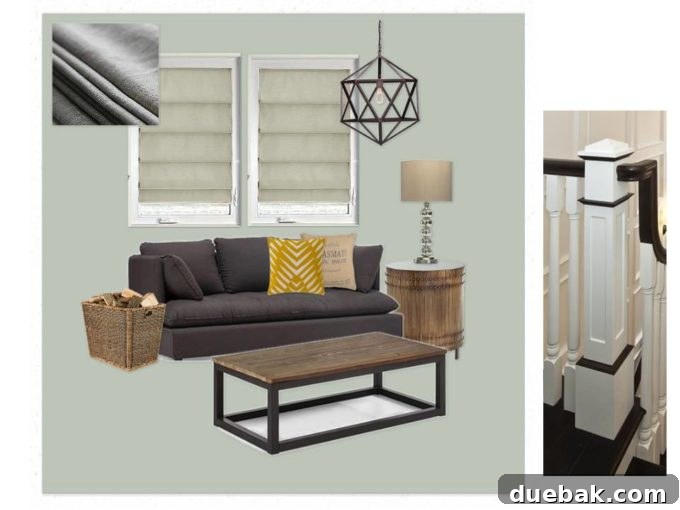
Randa’s concern about the “awkward valance wall” and her desire for drapes presented an opportunity for a sophisticated solution. The e-design recommended a roman shade in grey, specifically highlighting the Tuscany Linen, Oatmeal Slub fabric from Tonic Living. This choice is deliberate and strategic for several reasons:
- Clean Lines and Modern Appeal: Roman shades offer a tailored, crisp aesthetic that is inherently modern and timeless. Unlike traditional drapes, they stack neatly when raised, minimizing fabric bulk and not encroaching on the room’s footprint, which is crucial in a narrow space.
- Addressing the “Awkward Valance Wall”: By mounting roman shades either inside the window frame or just above it, the awkwardness of the existing valance area is bypassed or covered elegantly. The shade itself becomes the focal point, drawing the eye to the window’s beauty rather than the architectural peculiarity above it.
- Light Control and Privacy: Roman shades provide excellent control over natural light and privacy. Depending on the lining, they can filter light gently or block it entirely, essential for both comfort and energy efficiency.
- Texture and Warmth: The specified Tuscany Linen, Oatmeal Slub fabric introduces a beautiful textural element. Linen offers a natural, inviting warmth, and the slub detail adds a subtle visual interest that prevents the grey from feeling flat. This choice aligns perfectly with Randa’s desire for a “warmer grey” palette.
- DIY Potential: The suggestion that Tonic Living can manufacture the shades, or that Randa could order the fabric and sew them herself, highlights the versatility and accessibility of this solution, appealing to different budgets and skill levels.
While drapes can be beautiful, in a narrow room with specific wall quirks and a bay window, they might have felt too heavy or cumbersome. Roman shades offer a lighter, more streamlined approach that complements the room’s dimensions and Randa’s desire for a fresh, updated look.
Elevating Entryway Aesthetics: Pendant Light and Newel Post
The e-design extended beyond the living room’s immediate confines, acknowledging the importance of transitional spaces like the foyer and how they influence the perception of the main living area. Two key suggestions were made for this adjoining space:
- Statement Pendant Light in the Foyer: A well-chosen pendant light in the foyer serves multiple purposes. It acts as a welcoming beacon, defining the entry space and setting the tone for the rest of the home. A thoughtfully scaled fixture adds architectural interest and can draw the eye upwards, enhancing the feeling of spaciousness in a potentially confined entry area. The right design can add a touch of personality and elegance right from the moment one steps inside.
- Large Newel Post for Architectural Character: The suggestion of a large newel post to add character to the railing, separating the room from the hallway and entry, is a brilliant way to introduce architectural detail and subtle spatial definition. In homes with open-concept layouts or where a living room flows directly into an entry, a substantial newel post creates a visual anchor. It signifies a transition, adding a sense of grandeur and structure without erecting a physical wall, thereby maintaining an open feel while providing a hint of separation and improving safety on stairs if present.
These elements work together to create a more cohesive and thoughtfully designed flow between the entry and the living room, enhancing the overall aesthetic and functional appeal of Randa’s new home.
The Perfect Hue: Embracing a Warm Grey Paint Color
Randa’s desire for a “warmer grey” paint color was a central point of her design dilemma, and the e-design offered a precise solution: Benjamin Moore’s Grey Wisp. The decision between light and dark grey in a narrow room is critical, and a “colorful grey” like Grey Wisp can offer the best of both worlds.
- Understanding Warm Greys: Unlike stark, cool greys, warmer greys typically have undertones of beige, green, or sometimes even a hint of purple, which prevent them from feeling cold or sterile. These undertones allow the color to adapt beautifully to different lighting conditions throughout the day.
- Benjamin Moore’s Grey Wisp: Grey Wisp (OC-50) is renowned for its subtle green undertones, which lend it a soothing, organic warmth. It’s a sophisticated shade that can make a room feel cozy and inviting without being overly dark or heavy. In a narrow room, a medium-toned grey with warm undertones can create depth and definition without making the space feel smaller, especially when contrasted with lighter trim or ceiling colors.
- The Importance of Swatches: The advice to “get the paint chip if you can, because it’s much better in real life than on the screen” cannot be overstated. Paint colors vary drastically depending on lighting conditions (natural vs. artificial, time of day), surrounding furnishings, and even geographical location. A large swatch painted directly on the wall allows Randa to see how Grey Wisp interacts with her specific room, furniture, and natural light, ensuring she makes an informed decision that she’ll love for years to come.
Choosing the right paint color is foundational to any design scheme, setting the mood and influencing how all other elements in the room are perceived. Grey Wisp provides that desired warmth and sophistication, perfectly complementing the other design choices.
Optimizing Furniture Arrangement for a Long, Narrow Room
Beyond the specific items, the overall arrangement of Randa’s furniture (sofa, loveseat, cocktail table, and end tables) in the 21 ft x 11 ft living room is paramount to its success. Here’s a refined approach to furniture placement:
- Creating Zones: In a long room, it’s often beneficial to create distinct functional zones. The primary seating area could be focused around the fireplace and bay window, while a secondary zone (perhaps a small reading nook or a console table with bar stools) could be established at the other end of the room.
- Floating Furniture: Instead of pushing all furniture against the walls, consider floating the sofa or loveseat away from the wall. This can help create better flow and make the room feel wider by allowing for circulation space behind the furniture.
- Defining the Bay Window: The bay window behind the sofa offers a natural focal point. Positioning the sofa here, as suggested, anchors the main conversation area. However, ensure there’s enough space to access the window treatments and that the sofa doesn’t entirely block the view or light. Adding a slim console behind the sofa in the bay can also be functional.
- Strategic Seating: The sofa and loveseat should face each other or be arranged in an L-shape to encourage conversation. The cocktail table should be easily accessible from both, and end tables placed at the arms of the sofa and loveseat provide convenient surfaces for drinks and lamps. Ensure there’s adequate space (at least 18 inches) between the seating and the coffee table for comfortable movement.
- Traffic Flow: Always consider the pathways through the room. A clear path from entry points to exits should be maintained, without forcing people to navigate around furniture. In a narrow room, this often means keeping the central axis as clear as possible.
By thoughtfully arranging the existing furniture, the e-design ensures that Randa’s living room is not only aesthetically pleasing but also highly functional and comfortable for everyday living and entertaining.
Beyond the Blueprint: Bringing the E-Design to Life
While the e-design provides a robust framework, the true magic happens when Randa begins to implement these suggestions and personalize her space. This involves layering in additional elements that add depth, texture, and personality:
- Rugs for Definition and Warmth: A strategically placed area rug can anchor the main seating area, defining the space and adding a much-needed layer of warmth and texture, especially over hard flooring. Choose a size that allows at least the front legs of all main seating pieces to rest on it.
- Layered Lighting: Beyond the proposed foyer pendant, consider incorporating ambient, task, and accent lighting within the living room itself. A combination of floor lamps, table lamps on the new built-ins or end tables, and perhaps even dimmable overhead lighting can create different moods and cater to various activities.
- Art and Mirrors: Thoughtfully chosen artwork can inject personality and color. Mirrors, strategically placed, can reflect light and make the narrow room feel more expansive. Ensure scale is appropriate for the wall space.
- Greenery: Houseplants not only add a touch of natural beauty and life but also contribute to a healthier indoor environment. Choose plants that thrive in the room’s light conditions.
- Personal Touches: Finally, the room should reflect Randa’s personal style and story. This means incorporating cherished photographs, decorative objects collected over time, and books that speak to her interests. These elements are what truly transform a house into a home.
Your Journey to a Beautiful Home Begins Here
Randa’s story is a testament to how professional design guidance, even delivered remotely through an e-design service, can utterly transform a challenging space. By systematically addressing her concerns – from the awkward layout and furniture placement to paint color choices and window treatments – the e-design provided a clear, actionable roadmap to a harmonious and stylish living room.
The beauty of e-design lies in its ability to offer a fresh, expert perspective on your home, helping you see beyond the immediate challenges and unlock the full potential of your space. Whether you’re navigating a recent move, a renovation, or simply seeking to refresh your surroundings, an e-design can be the catalyst for creating the home of your dreams. Embrace the opportunity to “do it right” from the start, and watch as your vision comes to life.
For more inspiration and examples of successful e-design transformations, explore some of our other projects:
- A Vibrant Red Kitchen Redesign
- Solving “The Wow Factor” in a Kitchen Design
- Dining Room Makeover: Before and After
- Bright Family Kitchen DIY Project