Revitalizing Relics: Our Journey of Piano Transformations with Annie Sloan Chalk Paint
There’s something uniquely charming about a vintage piano. It holds history, evokes melodies, and can be a magnificent centerpiece in any home. However, sometimes, even the most cherished pieces need a little refresh to truly shine in their new surroundings. That was precisely the situation I found myself in when a family friend generously gifted me a beautiful, yet stylistically challenging, piano. While its musical capabilities were flawless, its vibrant original color cast an overwhelming orange glow throughout my living space, clashing with my carefully curated decor. My husband, ever practical, suggested I relegate it to my small home office. But the thought of playing my beloved instrument in such a confined area felt creatively stifling. I was determined: this piano belonged in the heart of our home – the living room – and its transformation would begin with a fresh coat of paint.
The idea of painting such a large, significant piece of furniture was, understandably, daunting. The fear of irreversibly altering a beautiful instrument loomed large. Would I regret the color choice? Would I diminish its value? Could I actually pull off a professional-looking finish? These questions swirled in my mind, creating a whirlwind of apprehension. Fortunately, I wasn’t alone in this endeavor. My sister-in-law, Bree, was facing a similar dilemma with her own piano, providing the perfect opportunity for a collaborative DIY project. Together, we deliberated, encouraged each other to trust our instincts, and ultimately decided to take the plunge, embracing the motto: ‘jump in feet first.’
The Genesis of a Grand Makeover: My Piano’s Transformation Story
Our journey began with my piano, a piece whose character was strong but whose color was simply not cohesive with my interior design vision. The initial stage of the project involved visualizing the desired outcome – a rich, muted tone that would exude elegance rather than assert dominance. This image captures a glimpse of the original finish, starkly contrasting with the smooth, solid application of the first layer of chalk paint, marking the exciting start of its metamorphosis.
The transformation was truly remarkable. What began as an aesthetically jarring piece was evolving into a sophisticated statement. The chosen colors began to breathe new life into the wood, creating a sense of harmony within the room. This next image showcases the culmination of my efforts, presenting my piano in its finished, painted glory. The surface now reflects a refined elegance, perfectly complementing the ambiance of our living room and inviting me to play without the distraction of an clashing color palette.
Bree’s Piano Transformation: A Parallel Project of Inspiration
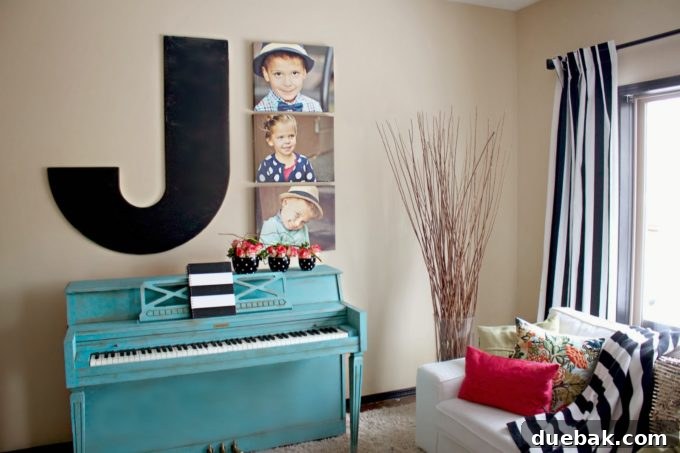
My sister-in-law, Bree, embarked on her own piano painting adventure alongside me, which proved to be an invaluable source of shared experience and motivation. Her piano, much like mine, possessed great potential but needed a stylistic update to align with her home’s aesthetic. Here, you can see Bree’s piano in its ‘before’ state, a testament to the character of untouched vintage furniture, yet ripe for a creative refresh.
The ‘after’ shot of Bree’s piano beautifully illustrates the profound impact a well-chosen paint color can have. Her vision brought forth a stunning transformation, proving that with a little courage and the right materials, even large, traditional pieces can be re-imagined to perfectly suit contemporary living spaces. Witnessing each other’s progress and overcoming challenges together made the entire process even more rewarding.
The Color Palette: Crafting Personal Style with Annie Sloan Chalk Paint
For both our piano makeovers, we turned to the renowned Annie Sloan Chalk Paint – a choice celebrated by DIY enthusiasts for its distinctive matte finish and minimal prep requirements. My piano received a custom blend of Annie Sloan’s Violet and Graphite, creating a deep, sophisticated hue that resonated with the aesthetic I envisioned. To add depth and a subtle vintage patina, I carefully applied dark wax, working to achieve a slightly darker, aged effect that enhanced the custom color. Bree, on the other hand, opted for the serene and timeless Duck Egg Blue for her piano, a choice that instantly brightened her space and introduced a calming, elegant touch.
Navigating the Chalk Paint Process: Triumphs and Tribulations
To truly convey the depth of this DIY experience, it’s essential to share not just the successes, but also the moments of genuine stress and eventual happiness that shaped our journey. Painting a piano, especially with new techniques, is a full emotional spectrum.
Initial Success and the Allure of Chalk Paint
The initial application of the Annie Sloan Chalk Paint was nothing short of exhilarating. The paint glided on with incredible smoothness, defying the need for any tedious sanding or priming – a major time-saver and a huge benefit for any DIY project. The rapid drying time was another instant win, allowing me to progress quickly through coats and feel an immediate sense of accomplishment. This effortless start instantly validated our choice of paint and boosted my confidence.
The Dark Wax Dilemma: A Moment of Panic
My enthusiasm, however, hit a snag with the application of the dark wax. Unlike the paint, which offered ample working time, the wax dried remarkably fast. This rapid drying made blending a significant challenge, and I quickly found myself staring at uneven patches and streaks. A wave of panic washed over me as I feared I had ruined all my hard work. The smooth base coat was now marred by what felt like irreversible dark smears. My initial thought was, “I’ve ruined my beautiful piano!”
Seeking Solutions: Online Resources and Expert Tools
Desperate for guidance, I immediately turned to Google, searching for videos and tutorials on dark wax application. To my surprise, most tutorials made it look deceptively simple, and I couldn’t find any alternative methods that seemed to address my specific predicament. This lack of immediate solutions only intensified my panic. Determined not to give up, I decided to invest in the right tools and resources. I headed out to purchase mineral spirits, an Annie Sloan branded brush specifically designed for wax application, and her comprehensive idea book. The new brush immediately made a difference, allowing for a much more even and controlled paint application. The mineral spirits were my secret weapon for blending the stubborn dark wax. I also experimented with applying clear wax first, then layering the dark wax, finding that the clear wax provided a better base for blending and made the dark wax more manageable.
Embracing the Imperfection: A Design Philosophy Emerges
What initially felt like “panic” and “mistakes” began to transform into something beautiful. Poring over Annie Sloan’s idea book, I discovered numerous projects featuring distressed finishes, chippy paint, and multi-colored layers – styles that embraced imperfections rather than striving for factory-like flawlessness. Suddenly, my “uneven” dark wax applications started to look less like errors and more like character. I was aiming for a matte finish that would subtly show smudges and wear over time, contributing to a loved, vintage feel. This realization shifted my perspective from panic to appreciation, allowing me to embrace the unique, handcrafted aesthetic I had inadvertently created.
Why Chalk Paint Wins: Unpacking the Benefits for DIY Enthusiasts
My experience reaffirmed my absolute love for Annie Sloan Chalk Paint, particularly for ambitious DIY projects like piano makeovers. Its benefits are truly game-changing for anyone looking to transform furniture without the extensive preparation typically associated with painting:
- No Prep, No Prime: This is arguably its greatest advantage. Skipping the sanding, stripping, and priming steps saves an enormous amount of time and effort, making daunting projects feel much more accessible. You can literally start painting directly over old finishes.
- Fast Drying Time: The rapid drying allows for quicker recoats and faster project completion, reducing the downtime of your furniture and making it feasible to finish projects within a weekend.
- Excellent Coverage: A little goes a long way with chalk paint. Its rich pigmentation means fewer coats are often needed, making it an economical choice despite the initial investment. Annie Sloan herself often advises adding a bit of water to the paint for smoother application and extended coverage, further maximizing its value.
- Versatility in Finishes: From a smooth, modern look to a distressed, vintage aesthetic, chalk paint is incredibly versatile. It adheres beautifully to almost any surface – wood, laminate, metal, even fabric – allowing for endless creative possibilities.
- User-Friendly: Even for beginners, chalk paint is forgiving. Mistakes can often be easily painted over or blended, reducing the pressure of achieving perfection.
Essential Tips for Chalk Paint Beginners
Based on my own learning curve, I can offer some crucial advice for those new to Annie Sloan Chalk Paint, especially when it comes to waxing:
Start with Clear Wax: If you’re a beginner (like I was!), I highly recommend beginning your journey with clear wax. It’s much more forgiving and easier to apply and blend smoothly. Mastering clear wax first will build your confidence and help you understand the waxing process without the added pressure of blending darker pigments.
Experiment with Dark Wax on a Test Piece: Once you feel confident with clear wax, then—and only then—venture into the world of darker waxes. A small, inconspicuous piece of scrap wood or an old drawer front makes an excellent testing ground. This allows you to practice your application and blending techniques without the stress of working on your main project. Starting directly on a large, prominent piece like a piano, as I did, can be tricky due to the need for consistent application across vast sections while still figuring out the technique.
Work in Small Sections: When applying any wax, especially dark wax, work in small, manageable sections. Apply a thin layer, then immediately begin buffing or blending. This prevents the wax from drying too quickly and becoming difficult to work with.
Invest in Quality Brushes: A good quality brush, like Annie Sloan’s own wax brush, can make a significant difference in application and blending, leading to a much smoother and more professional-looking finish.
Leveraging Resources: The Power of an Idea Book
I cannot stress enough the value of a comprehensive resource like the “Paint Transformations” book. I wish I had acquired it when I first embarked on this project. This book proved to be an invaluable guide, meticulously explaining various chalk paint looks and providing step-by-step instructions on how to achieve them. It’s filled with inspiring projects, detailing the specific colors used and the stories behind each transformation. Such a resource not only provides technical guidance but also sparks creativity and helps in visualizing the endless possibilities with chalk paint. It taught me to appreciate the artistic elements of distressing and waxing, truly elevating my understanding of this versatile medium.
Beyond the Piano: The Future of DIY Home Projects
While Annie Sloan Chalk Paint might feel like a significant investment upfront, the professional and beautiful end results undeniably justify the cost. The satisfaction of transforming a piece of furniture with your own hands, creating something truly unique and tailored to your home, is priceless. It’s an investment not just in paint, but in skill, creativity, and the joy of personalized home decor.
My successful piano makeover has ignited a passion for future DIY projects. What’s next on my list? My mom’s dining room hutch is calling my name. I’m already envisioning a sophisticated transformation, perhaps in a timeless Paris Grey, to bring a touch of French elegance to her space. The possibilities feel endless, and the confidence gained from tackling the pianos has me eager to take on more challenges.
Have you ever used Annie Sloan Chalk Paint or embarked on a similar furniture transformation? Share your experiences and tips in the comments below – I’d love to hear about your creative journeys!