
Transform Your Home: A Step-by-Step Guide to DIY Vintage Wood Signs on a Budget
Are you looking for a unique way to personalize your living space without breaking the bank? We’re thrilled to unveil the simple, accessible steps for creating your own chic and wonderfully vintage-looking wood signs. We first introduced these handcrafted beauties in our recent bathroom reveal post, and now we’re ready to share the full, detailed process so you can easily replicate this project at home. Get ready to tap into your creative spirit and design custom decor that tells your story!
The Inspiration Behind Our Vintage Wood Sign Project
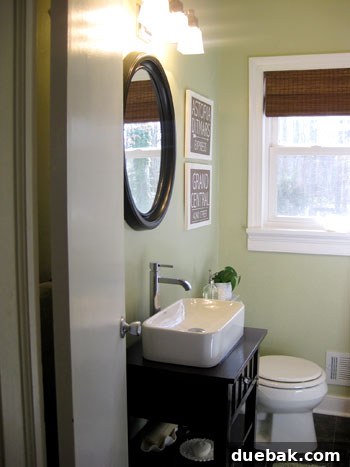
The journey to these charming vintage wood signs began with a common design dilemma: how to effectively balance different shapes within a room. Facing a beautiful rounded mirror, the idea of adding standard square frames felt like it might create an unwelcome visual clash. What we needed was something simpler, artwork without reflective glass or prominent raised edges that could compete with the mirror’s frame. This led to the perfect solution: flat, single-plane wood signs, an ingenious idea that blends seamlessly into the aesthetic.
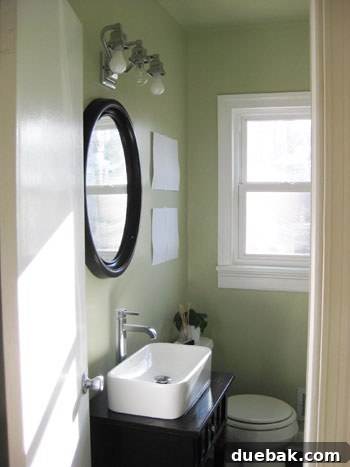
Determining the ideal size and quantity of artwork can often be a guessing game. To overcome this, we employed a brilliant, free, and incredibly effective strategy: paper templates. We cut white paper into various sizes and taped them onto the wall in several arrangements. This allowed us to visualize different layouts and assess how they interacted with the existing elements in the room. Ultimately, we settled on two rectangular signs, placed one above the other. This configuration subtly echoed the shape of the nearby window, creating a sense of balance and warmth next to the mirror, and beautifully dissolving any concerns about competing with its elegant curves. This simple trick of using paper templates is invaluable for any art placement decision, eliminating guesswork and ensuring a harmonious result. After deciding on the layout, we measured our paper cutouts, which turned out to be 16″ x 13″ each, setting the stage for the actual signs.
Designing Your Personalized Vintage Subway Signs
With the dimensions sorted, our next step was to define the visual style. Drawing inspiration from our cherished memories in New York City – the place where our story began and love blossomed – we decided to emulate the classic aesthetic of old NYC subway signs. A quick search online revealed numerous examples, showcasing their iconic typography and layout. While some authentic vintage signs can fetch upwards of $1600 (a significant sum for home decor!), they served as perfect inspiration for our DIY version.
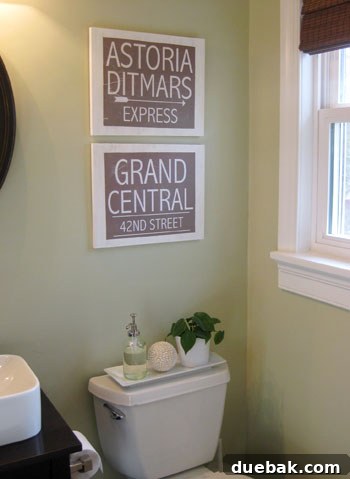
Of course, we adapted the concept to suit our specific needs. We opted for a horizontal format to fit our chosen layout and softened the overall darkness to complement the light, neutral palette prevalent in our bathroom and home. To infuse a truly personal touch, we selected two subway stops that hold deep significance for us: Grand Central, near where we first met and worked together, and Astoria Queens, where we both resided at different times. This personalization transforms the signs from mere decorations into meaningful narratives.
Creating the designs was straightforward. We used Photoshop, but any graphic editing software that allows for text manipulation will work. We incorporated subtle yet engaging details, such as an arrow and horizontal lines around “42nd Street,” to add visual interest and authenticity. While the designs looked crisp as JPGs on screen, we knew the real magic would happen once we printed them and applied our chosen vintage aging techniques. For those looking to replicate our design closely, the typeface we used was Abadi MT Condensed Light.

Gathering Materials & Preparing the Wood
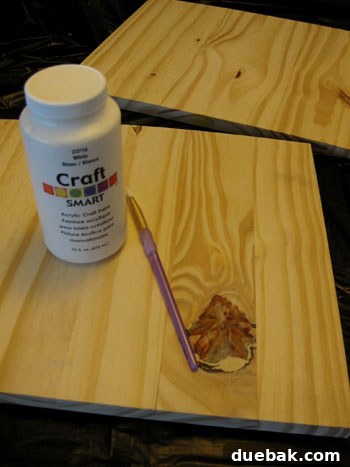
Once our designs were ready, we printed them at home on standard printer paper. Printing a few extra copies is always a good idea for testing distressing techniques later. Our next stop was a local home improvement store, where we found an economical solution for our sign bases: a $6 piece of 1-inch thick plywood. This particular sheet, measuring 16″ x 30″, was conveniently located near chair legs among various plywood options. The friendly staff in the wood-cutting section expertly sliced our single plank into two 16″ x 13″ rectangles, leaving very little scrap. This meant we effectively created two pieces of custom art from one inexpensive piece of wood – a true budget-friendly win.
Bringing our precisely cut wood planks home, the preparation was simple. We applied a coat of white craft paint that we already had on hand. Craft paint is often thinner than typical latex wall paint, which was ideal for our project as it allowed some of the natural wood grain to subtly show through, adding to the authentic, rustic charm of the finished signs.
Achieving an Authentic Vintage Look: Distressing Your Prints
With our white-painted wood planks drying, it was time to transform our modern computer printouts into convincing “vintage signs.” This phase involved experimenting with various aging techniques. We started by brewing some tea and rubbing the empty tea bags onto one of our test prints. While it did create a distressed effect, the resulting yellowed appearance didn’t quite match our vision. We wanted to maintain the crisp, clean look of the white painted wood underneath, even after distressing, aiming for an airy feel rather than a heavily stained one. So, we decided against the tea-staining method.
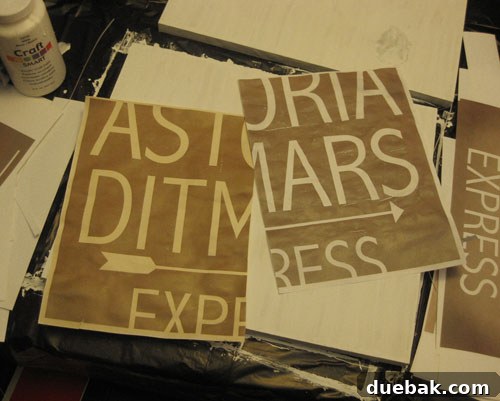
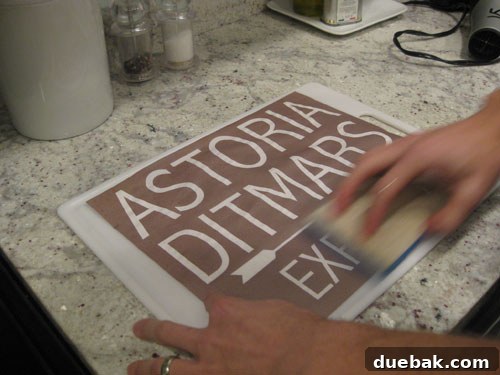
Moving on, we opted for a more hands-on approach to age our prints. We placed one of the printed designs onto a slightly textured surface – in our case, a nubby plastic cutting board. Then, using a damp sponge, we gently ran it across the surface of the print. The goal was not to smear the ink, but to subtly wear away at the perfectly printed finish, buffing it down to create a timeworn appearance. This method surprisingly worked wonders, creating an authentic, soft degradation of the print without making it look messy.
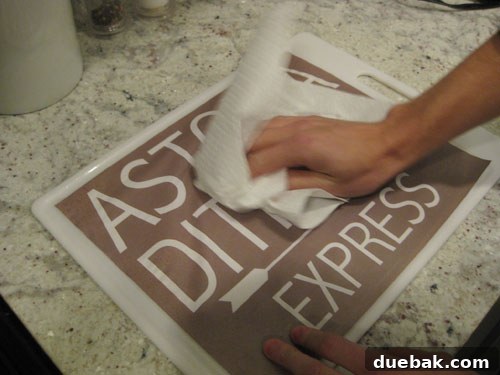
Following the sponge treatment, we used a paper towel to rub across the dampened surface more vigorously. The key here was to apply enough pressure to further roughen the paper and wear down its crispness, but carefully enough to avoid tearing. This two-step process created a beautiful, subtle erosion of the print, mimicking years of gentle wear.
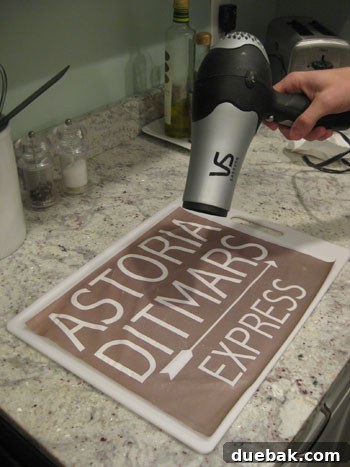
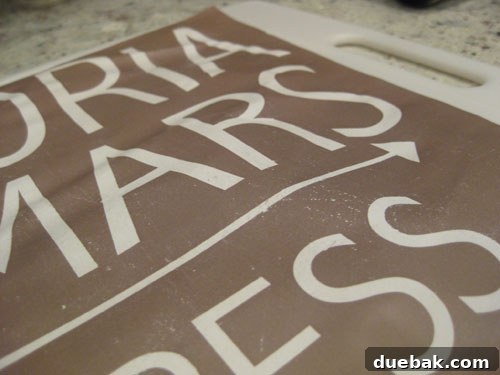
After achieving the desired level of distress, it was crucial to remove any remaining moisture from the paper. A hairdryer proved to be the perfect tool for this, quickly drying the print and preparing it for attachment to the wood plank. It’s important to note that the paper might dry with a slightly lumpy or bumpy texture, but this is entirely part of the plan and contributes significantly to the vintage appeal. At this stage, you might worry the print looks ruined, but trust the process – it all comes together beautifully in the end. This close-up illustrates the worn-down areas and slightly rubbed-off spots created by the sponge and paper towel technique, demonstrating how effectively these simple steps transform a fresh print into a timeworn piece of art.
Applying Your Art: The Magic of Mod Podge
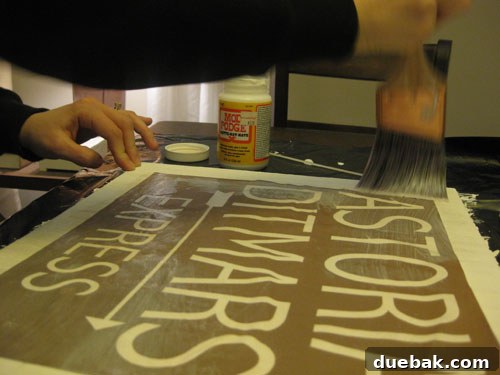
With our beautifully distressed prints ready, it was time for the hero of many DIY projects: Mod Podge. We already owned a large tub of this versatile product, making this step as cost-free as the printing and distressing phases. Using a paintbrush, we applied a semi-thick, even coat of Mod Podge to the back of the print. We then carefully flipped the print over, centered it precisely on our white-painted wood plank, and smoothed it down. To ensure everything was securely adhered and to provide a protective finish, we then applied a generous, thick layer of Mod Podge over the entire surface of the print.
The beauty of Mod Podge lies in its transformative nature. Although it appears white and glue-like upon application, it dries completely clear. This means our top coat not only firmly sealed the print to the wood but also created a lovely glossy, hardened appearance. This glossy finish is particularly advantageous for a bathroom setting, as it effectively “seals” the sign, protecting it from moisture and ensuring its longevity. The clear, durable finish also enhances the vintage look, giving the paper a more substantial, almost varnished feel.
The Final Touch: Hanging Your Masterpiece
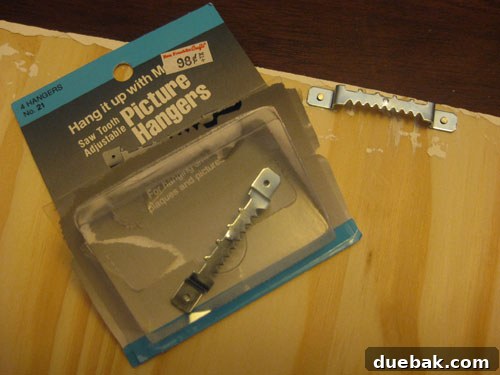
Once the Mod Podge had completely dried and cured, we carefully flipped each sign over (placing them on an old towel to protect the newly finished fronts). To ensure easy and secure hanging, we gently hammered in two small nails to attach 98-cent picture hangers. These hangers were conveniently found in our existing hardware drawer, making the final step of hanging our new bathroom art completely free. If you don’t already have white craft paint, Mod Podge, or picture hangers, these essential items can typically be purchased at any craft store like Michael’s or Hobby Lobby for a combined total of approximately five dollars, keeping the project incredibly affordable.
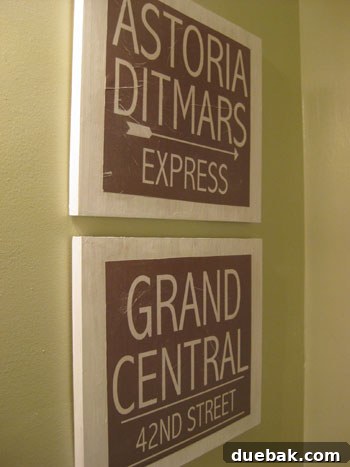
And there they are – our newly “vintage” wood signs, proudly adorning our bathroom wall. One of the most satisfying outcomes of the wetting, distressing, and drying process was the subtle wrinkling that occurred on the prints. When sealed with Mod Podge, these slight imperfections transformed into beautiful, authentic-looking worn and weathered textures, perfectly aligning with the imperfect vintage aesthetic we aimed for. Notice the subtle crease through the ‘D’ in Ditmars and the ‘G’ in Grand Central? Once the Mod Podge dried, these wrinkles became seamless and sealed, creating a flush, flat, and remarkably fantastic finish that truly elevated the signs’ character.
Unleash Your Creativity: Endless Possibilities for Personalized Signs
This project showcases how a mere $6 investment and a dash of creative experimentation can result in truly unique and personal wooden sign art for your home. But don’t limit yourself to just subway sign ideas! The possibilities for customization are virtually endless. Consider creating a sign featuring a beloved local shop from your hometown, adding a personalized message like a “Please remove your shoes” reminder for your entryway, or crafting a custom name sign for your child’s bedroom or playroom. The beauty of this DIY approach is its adaptability; you can tailor every aspect to reflect your personal style, memories, and needs.
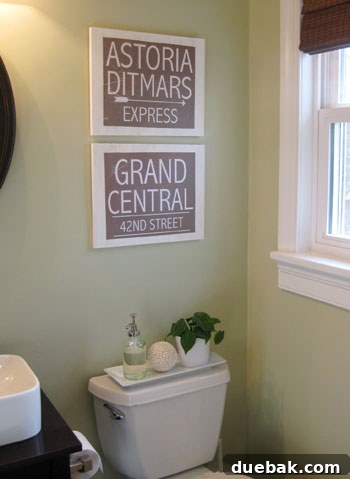
We hope this detailed guide inspires you to try your hand at creating something similar. It’s truly rewarding to craft personalized decor that adds character and warmth to your home. Take a closer look at this detail shot, showcasing our gently distressed signs hanging contentedly above the toilet – a place where all art, we’re sure, secretly aspires to be hung.
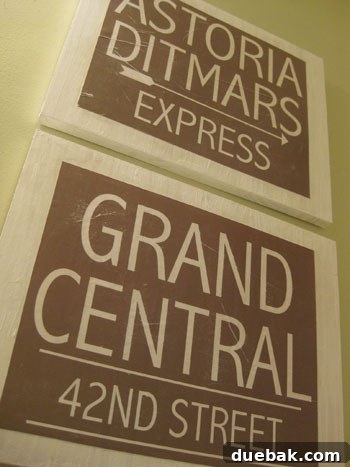
It’s amazing how two pieces of paper, initially taped to a wall for planning, can transform into such sophisticated decor with just a few dollars and an open mind to “let’s-see-what-happens” experimentation. This project is a testament to the power of DIY – affordable, personal, and incredibly satisfying.
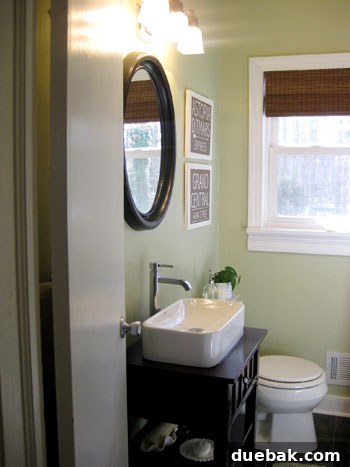
Share Your DIY Art Creations!
Now that you’ve seen our Mod-Podge-meets-Ace of Base DIY fest, we’re eager to hear about your own creative projects! What kind of art have you been crafting with your own hands lately? Whether you’re painting vibrant canvases, framing unique collections like bottle caps or matchbooks, or embarking on other creative ventures, we’d love to know what made-it-myself masterpieces are proudly displayed on your walls.
Psst – Speaking of DIY art, if you’re looking for more inspiration, here are a few other homemade art projects you might enjoy: learning how to make a magazine monogram, whipping up custom pet art, creating free inspiration art, utilizing chalk for freehand wall decor, painting pop art over old art, and exploring a variety of other cheap wall art ideas.