
Transform Your Home Office: The Ultimate Guide to Built-In Desk Trim and Seamless Cord Management
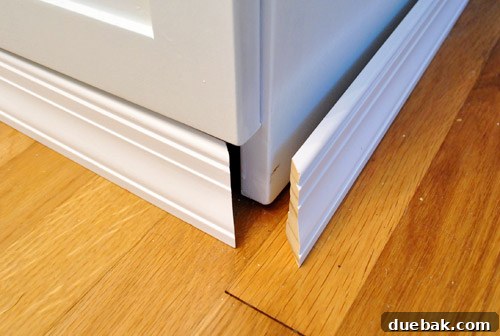
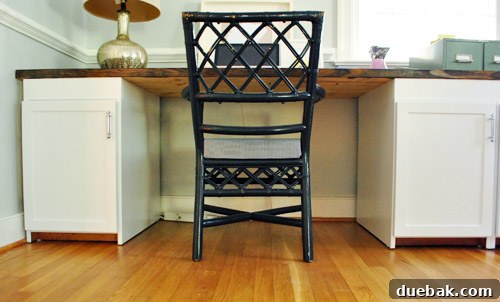
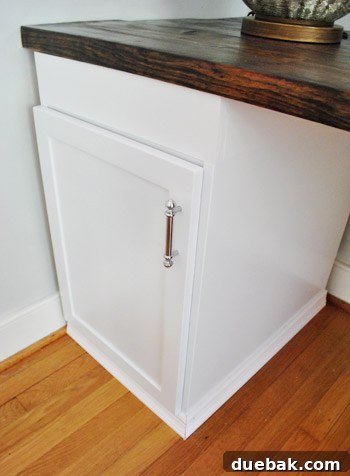
Every detail counts when crafting a functional and aesthetically pleasing home office. Sometimes, the smallest additions can make the biggest impact. As we recently shared in our Day In The Life post, we embarked on a project to elevate our office desk, specifically by adding trim to the cabinet bases. The goal was simple yet transformative: to give our standard cabinets the sophisticated, custom-built look of integrated cabinetry. Before this upgrade, the bottom sections of our desk cabinets appeared somewhat unfinished, detracting from the overall polish of the workspace. This seemingly minor enhancement was designed to bridge the gap between off-the-shelf and custom-made, providing a sleek, professional finish that truly elevates the entire room.
Mastering the Measurements: Precision for a Professional Finish
The success of any trim installation hinges on meticulous measurements. Armed with my trusty tape measure and a carefully prepared cheat sheet, I meticulously recorded every dimension. A key tip for anyone tackling angled miter cuts, like those needed for corners, is to clearly mark the direction of your cuts. My cheat sheet wasn’t just numbers; it included small arrows indicating the exact angle and orientation for each cut. This simple visual aid acts as a crucial safeguard against common errors, especially when anxiety about cutting in the wrong direction can lead to costly mistakes. Precision at this stage saves time, material, and frustration down the line, ensuring that each piece of trim fits perfectly and seamlessly integrates with your existing cabinetry.

One particularly critical measurement, often overlooked, was the trim height. Our specific setup presented a unique challenge: less than 3 inches of clearance between the floor and the cabinet doors. This tight space immediately ruled out traditional, taller baseboard molding. It’s essential to always verify these practical constraints before heading to the hardware store. After careful consideration and a bit of searching, I found the perfect solution: trim very similar, if not identical, to what we had successfully used around our bathroom mirror. This proved to be a budget-friendly choice, with three 8-foot pieces costing a mere $14. This experience highlights the importance of adaptability and finding creative solutions when standard materials don’t quite fit the bill for your DIY home office upgrade.

Cutting with Confidence: Ensuring Flawless Angles and Fits
With the trim selected and measurements validated, the next step was cutting the pieces. Once again, I meticulously measured each section of trim and, just as importantly, reaffirmed the required angles for each cut directly on the wood. These visual cues serve as invaluable last-second reminders, preventing any accidental backward cuts or incorrect blade positioning on the miter saw. When working with angles, it’s remarkably easy to get disoriented, so these simple markings are crucial for maintaining accuracy and reducing waste. Each cut was approached with deliberate care, double-checking the measurements and angle markings before engaging the saw blade.

Even with thorough preparation, vigilance is key during the cutting process. After each piece was cut, I immediately performed a quick dry fit, checking both its length and the accuracy of the angles. This immediate verification step is vital; it allows for minor adjustments before moving on, ensuring that every piece contributes to a seamless, professional-looking installation. It’s far easier to recut or slightly trim a piece if an error is caught early, rather than discovering a misalignment when you’re ready to secure it in place. This methodical approach to cutting and checking is what separates a good DIY project from a truly exceptional one, particularly when aiming for a custom built-in aesthetic for your home office desk.

Confirming each cut’s precision meant the pieces were ready for installation. The final dry run, where all cut pieces were temporarily put in place, confirmed that everything lined up perfectly. This crucial step prevents surprises during the permanent fastening stage and guarantees a smooth workflow. Once satisfied with the alignment, it was time to move on to securing the trim, confident that the careful measuring and cutting had paid off, laying a solid foundation for the new built-in look of our office cabinets.

Securing the Trim: Nailing for a Sturdy and Clean Finish
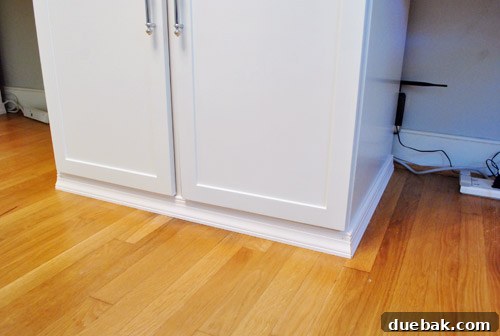
With all pieces perfectly cut and aligned, the next phase was securing the trim to the cabinets. We opted for small finishing nails, initially hammering them most of the way in by hand. The real trick for achieving a professional finish lies in the final stage: using a nail punch. This indispensable tool allows you to sink the nail heads slightly below the surface of the trim without damaging the surrounding wood. This technique ensures that the nail heads are virtually invisible once filled, contributing significantly to that coveted built-in appearance. It’s a small detail that makes a monumental difference in the overall quality and longevity of the trim installation, giving your DIY office upgrade a truly custom look.

While meticulous effort goes into cutting and fitting, it’s rare for edges and joints to be 100% perfect. This is where caulk becomes your best friend. A thin bead of caulk, gently smoothed into the edges with a finger, seamlessly fills any minor gaps, creating a unified and polished look. Caulk is also perfect for concealing those slightly sunken nail heads, completing the illusion of a single, continuous piece of cabinetry. Although we haven’t tackled the caulking and painting yet, it’s high on our priority list to truly finalize this built-in desk project. The existing white trim blends remarkably well with the cabinet color, so we’re deferring the painting until the caulking stage, ensuring a truly unified and flawless finish. Each piece of trim was secured with two or three nails directly into the cabinet structure, not the floor, ensuring stability and a clean look.
Conquering Cable Clutter: The Unseen Detractor
As soon as the trim was in place, the immediate visual improvement was undeniable. However, these new, polished lines suddenly highlighted another pervasive issue: the unsightly tangle of cords beneath our desk. Up to this point, we’d somewhat ignored the messy collection of power strips, chargers, and network cables. But with the refined look of our newly installed trim, these cords became an undeniable eyesore, actively detracting from the “finished” aesthetic we were striving for. It became clear that a comprehensive cord organization solution was not just a luxury but a necessity to fully complete our home office transformation.
Streamlining Sherry’s Setup: A Simple, Effective Solution
Sherry’s side of the desk presented a relatively straightforward challenge. With only a couple of devices – her computer and a lamp – requiring power, a single, compact power strip sufficed. The primary outlet was conveniently hidden behind the desk, a detail we thankfully considered during the initial desk setup. This foresight allowed us to plug in the power strip before the desk was fully positioned, making access much easier. Leveraging a small gap behind the cabinet, we were able to tuck her power strip entirely out of sight. This minimal space, designed to accommodate the plug, proved perfect. From above, the countertop appears flawlessly seamless against the wall; only someone on their knees would spot the slight gap where the cabinets don’t sit flush against the wall. (As a side note, the raw bottom edge of the countertop, visible only from extreme low angles, is another minor detail we plan to address someday, purely for our own satisfaction).

Taming My Tech Hub: Creative Cord Management
My side of the desk was a different beast altogether. My workstation demands a more robust power solution, stemming from our previous office setup. I typically juggle a larger power strip, numerous plugs for my computer, phone, external hard drives, and, adding to the bulk, a sizable wireless FiOS router. The result, before intervention, was an undeniable “hot mess” of tangled wires and bulky electronics that undermined the clean lines of our new built-in desk. This scenario called for a more creative and robust cord management strategy to achieve the same seamless look.

Since simply tucking everything behind the cabinet, as Sherry did, wasn’t an option due to the sheer volume and bulk of my equipment, I opted for a more direct approach: mounting the power strip directly to the wall, just underneath the counter. This strategic placement ensures it’s virtually invisible from a standing or seated position. Many power strips come with pre-drilled notches on the back for mounting, which I leveraged. To ensure perfect alignment for the mounting screws, I devised a simple, yet highly effective, homemade guide. This technique ensures that your holes are drilled precisely where needed, making the installation process much smoother and minimizing frustration.
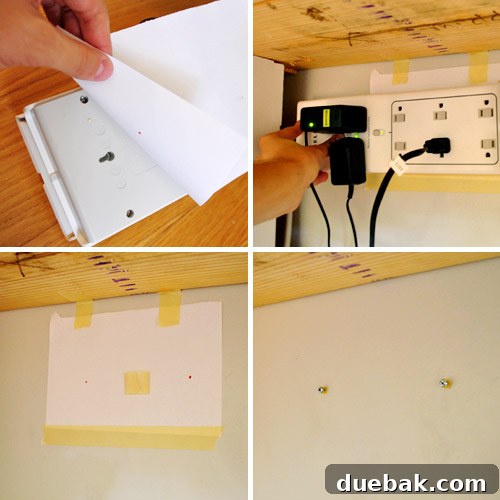
For those interested in replicating this precise mounting method, here’s a quick breakdown of my homemade guide system, which guarantees perfectly placed screw holes every time:
- First, I taped a piece of paper directly onto the back of the power strip.
- Using a red pen, I then poked through the paper at the center of each mounting notch on the power strip, creating clear markers.
- Next, I carefully positioned the power strip (with the paper still attached) exactly where I wanted it on the wall, and then taped the paper securely to the wall, ensuring it wouldn’t shift.
- Gently pulling the power strip away from the wall, the paper remained taped to the wall, leaving me with two perfectly positioned red dots indicating where to drill.
- I simply drilled right through the paper, guaranteeing that my holes for the anchors and screws were in the exact right spots.
- Finally, I hung the power strip on the wall, plugged all my devices back in, and neatly tucked the bulky router behind the cabinet, completely out of sight.
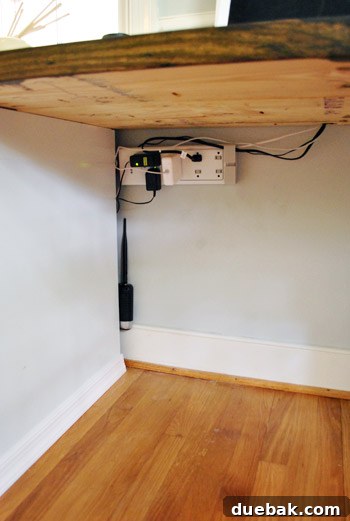
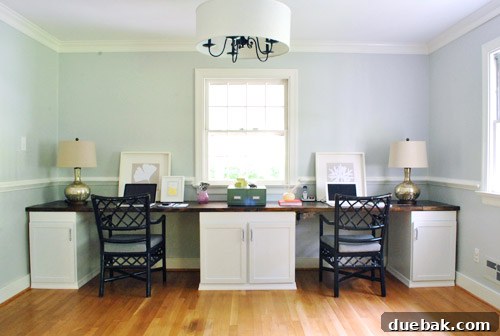
While the above picture might still show a glimpse of the cables, from a broader perspective, when viewing the entire room, the difference is night and day. The once-distracting cable clutter is now significantly minimized, allowing the eye to appreciate the clean lines of the freshly added trim and the overall improved aesthetics of the office. This transformation allows your focus to remain on the beautiful new built-in look of the desk. Of course, the room isn’t entirely “done” – we still have exciting plans for art, window treatments, lighting, and general desk organization. But with the desk itself now looking fantastic, we’re well on our way to creating our dream home office.
Before & After: A Visual Testimony to Transformation
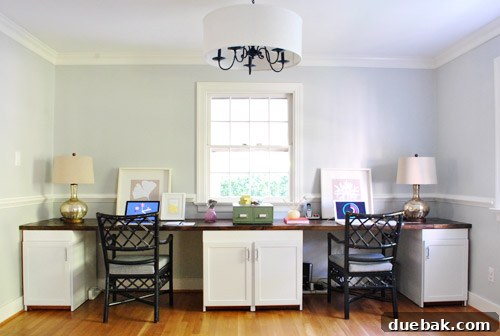
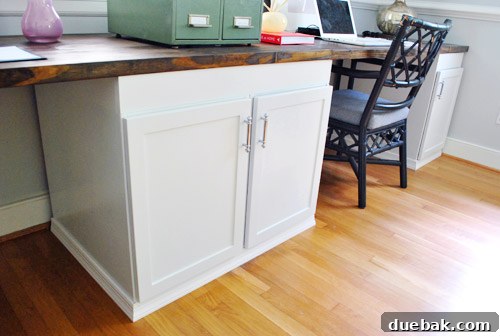
To truly appreciate the impact of these changes, it’s worth revisiting where we started. Here’s a stark reminder of what the room looked like before the trim installation and the crucial cord organization. The added trim, a modest $14 investment, has truly elevated the desk from a basic assembly of cabinets to a refined, custom-built feature. It’s amazing what a little polish can achieve, adding significant perceived value and a touch of elegance to our daily workspace. This side-by-side comparison clearly demonstrates that even small DIY projects can yield impressive, transformative results for your home office.
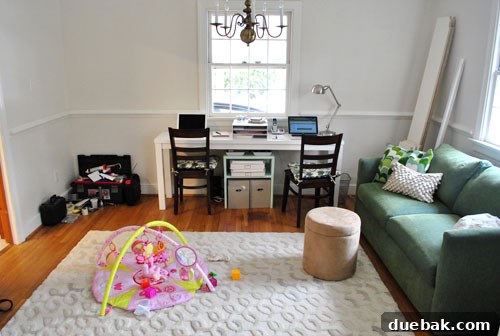
And for a real trip down memory lane, here’s an image of the room from nine months ago, right after we moved in. It serves as a powerful testament to the journey this space has undergone. The transformation from an empty canvas to a personalized, functional, and stylish home office is truly gratifying. It’s a powerful reminder that with a vision and a bit of DIY effort, any space can be reimagined and brought to life.
This home office has truly come a long way, especially over the last month or so. It’s incredibly rewarding to see it take shape, particularly since we spend such a significant amount of our time working and creating in this very room. The continuous improvements make it a more enjoyable and inspiring environment.
Finalizing the Desk Project: Costs and Conclusion
Initially, I considered adding trim to the side edges where the cabinets meet the walls to achieve an even more integrated look. However, after numerous discussions with Sherry, we concluded that the effort wouldn’t justify the outcome. Achieving a truly flush look would involve extensive, intricate cutting around the existing baseboards, a task that seemed more troublesome than rewarding. A half-hearted attempt, we agreed, would likely detract from the overall aesthetic rather than enhance it. Therefore, once we complete the caulking of the newly added trim corners and fill the nail heads, we are officially declaring this office desk project D-O-N-E. This 13-foot-long, wall-to-wall double desk has been a labor of love, and here’s a transparent breakdown of the total investment:
- Cabinets (from Habitat For Humanity ReStore): $6.30
- Kilz Clean Start No-VOC Primer: $0 (leftover from painting the kitchen paneling, but typically around $20)
- Electric sander & sandpaper: $0 (already owned, but would be around $25)
- Benjamin Moore Advance paint (in Decorators White, satin): $40 (after a successful haggle for 10% off)
- Pre-primed & unprimed wood to build up cabinets (from Home Depot): $51
- Framing lumber for counter (from Home Depot): $27.30
- Stain & poly for top: $0 (already owned, typically about $8 and $20 respectively)
- Drillbit for boring cord holes in counter: $4 (from Lowe’s)
- Trim for bottom: $14 (from Lowe’s)
- TOTAL: $142.60
For just under $150, we’ve created a custom, built-in double desk that not only meets our functional needs but also significantly enhances the aesthetic of our home office. This budget-friendly approach, leveraging salvaged materials and existing tools, proves that a high-end look doesn’t have to come with a high-end price tag. It’s a testament to the power of DIY and thoughtful planning in creating a space that feels both personal and professional.
Unsurprisingly, our attention has already shifted to yet another exciting project within the office, and we are incredibly eager to share it with you all. Let’s just say that Sherry is feeling the after-effects, there’s paint in her hair, and she’s far from finished! More detailed updates and pictures will certainly follow tomorrow. Until then, we’d love to hear from you! Have any of you tackled similar projects, adding trim to make something look more built-in, or perhaps launched a full-scale cord organization mission in your own home? Share your experiences and tips in the comments below!
Psst- To delve deeper into our complete desk building saga, from initial conception to the finishing touches, explore these related posts:
- Planning the room layout
- Purchasing the cabinets
- Our extensive cabinet research
- Sanding and priming the cabinets
- Building them to desk-height and painting
- Constructing and staining the counter
- Drilling cord holes into the counter