
Welcome back to our ongoing journey of transforming Emily’s nursery into a delightful and functional space, all while adhering to a strict budget. We’re thrilled to share yet another exciting update in our series of affordable makeovers. Previously, we’ve showcased how we revitalized the room by painting modern vertical stripes, creating an illusion of expanded space with strategically placed large mirrors, and crafting an incredibly simple no-sew bed skirt. We even added a personal touch with free, custom art pieces and enhanced functionality by installing practical hooks. Each step has been a testament to stylish, budget-friendly nursery design, and today, we’re tackling a crucial element that ties everything together: the lighting.
In any nursery, lighting plays a pivotal role, not just for aesthetics but for practical functionality and creating the perfect ambiance for both baby and parent. Beyond a basic overhead fixture, Emily’s nursery was notably lacking in diverse light sources. This presented a clear challenge: how could we introduce additional illumination to ensure the room felt bright, welcoming, and adaptable for various needs – from playful daytime activities to calm, soothing nighttime feedings? Emily wisely pointed out the invaluable perk of being able to softly illuminate one corner without the harshness of the main overhead light, a must-have for those peaceful late-night moments with a newborn.
Our initial thoughts gravitated towards traditional options like a sleek floor lamp or a small, clean-lined table lamp to complement Emily’s cherished reading/nursing chair. This chair, a fantastic $40 thrift store find from years past, was destined for a cozy corner. However, after careful consideration and imagining the spatial dynamics, we quickly realized that a conventional lamp might clutter the precious floor or side table space in a nursery where every inch counts. We needed a solution that offered both illumination and smart space management. The ideal answer emerged: a wall-mounted swing arm lamp.
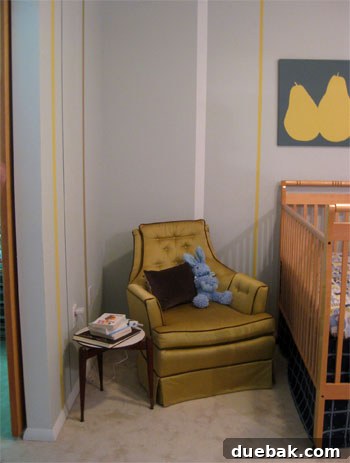
Opting for a swing arm lamp was a game-changer for this corner. It promised to free up valuable real estate that would otherwise be occupied by a lamp base or a side table, creating a less cramped and more open feel. This strategic choice allows for flexible lighting direction, perfect for reading or nursing, without encroaching on the floor space needed for crawling babies or growing toddlers. It perfectly aligned with our goal of functional, budget-conscious nursery design. Here’s a glimpse of that corner before our brilliant swing arm lamp addition transformed it:
And here’s the same corner just a mere twenty minutes later, after John, with his characteristic DIY prowess, expertly mounted the swing arm lamp. It was a swift and satisfying transformation, and we were, of course, on hand to provide enthusiastic supervision and well-deserved compliments on his handyman skills! The immediate impact was undeniable, turning a previously underutilized space into a focal point of comfort and light. This small change instantly elevated the room’s functionality and aesthetic appeal, making the corner with the nursing chair even more inviting and practical for Emily and her little one.
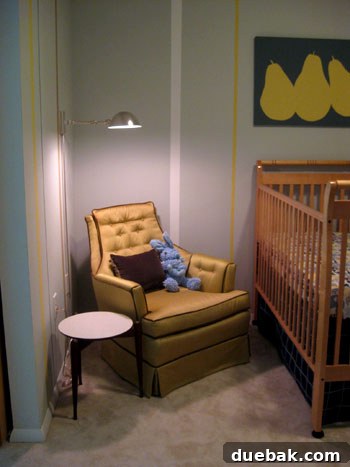
The best part? This incredible swing arm lamp was a true budget victory! We snagged it for an unbelievable $39, a staggering discount from its original price of $159 at The Decorating Outlet here in Richmond. Finding such a high-quality piece at a fraction of the cost felt like hitting the jackpot, perfectly aligning with our budget-friendly nursery makeover theme. This modern, sleek lamp instantly made the corner feel airier and more expansive than any floor or table lamp ever could, seemingly floating serenely above the chair. It adds a sophisticated touch while maximizing floor space, a critical consideration in any nursery setting.
Beyond its aesthetic appeal, this swing arm lamp boasts impressive functionality. It features a built-in dimming option, offering both a soft, gentle setting perfect for soothing late-night feeds and a brighter option for reading or playtime. This versatility is incredibly useful for adapting the light levels to the baby’s mood and schedule, whether they’re in restful slumber or wide awake and ready for engagement. The ability to control the light intensity ensures comfort and practicality, making it an indispensable addition to the nursery’s lighting plan and a fantastic example of smart, functional design.
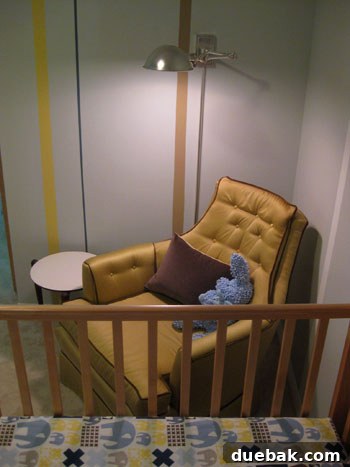
During installation, we paid meticulous attention to detail to ensure the lamp was positioned perfectly. We carefully hung it at an optimal height and distance so it wouldn’t impede movement when someone sat down or stood up from the nursing chair. For a seamless and polished look, we also utilized discreet metal cord covers to neatly run the power cord down the wall. This not only contributes to a clean aesthetic but is also a crucial safety measure, keeping the cord securely in place and out of reach of curious little hands, making it significantly more child-friendly than a dangling alternative.
With the lighting dilemma in one corner of the room elegantly resolved, our attention shifted to the opposite side of the nursery. Here, a small armoire, which Emily had purchased years ago for her daughter’s previous room, awaited its own lighting solution. Rather than simply purchasing another generic table lamp to place on its freshly painted surface, we embraced our budget-friendly, DIY philosophy. We decided to repurpose an existing lamp that Emily already owned. This presented a perfect opportunity to inject some personality and vibrant color into the room without breaking the bank.
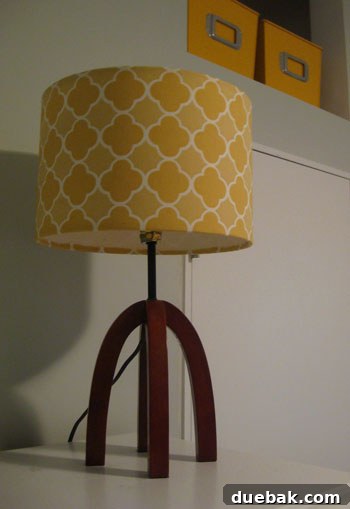
Our plan involved giving the lamp’s basic white fabric shade a complete facelift. We found some fun, graphic yellow fabric for less than eight dollars, an incredibly small investment for such a transformative impact. This creative approach allowed us to customize the lighting fixture to perfectly complement the nursery’s emerging color scheme and playful vibe, proving that stunning results don’t always require expensive new purchases. The aim was to create a unique, eye-catching piece that felt intentional and personalized. Here’s a peek at the illuminating finished product that brings a pop of sunshine to the armoire:
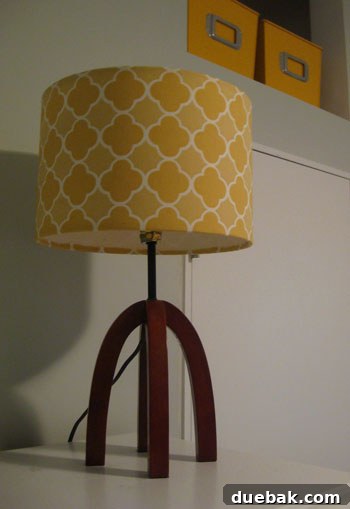
The wonderful news for any DIY enthusiast is that refreshing an old lamp shade with new fabric and a trusty glue gun is an incredibly accessible project! This budget-friendly makeover is suitable for almost anyone looking to add a personalized touch to their home decor. It works best with fabric shades, as opposed to paper ones, which can pose a risk of overheating and potentially melting the glue. For enhanced security and peace of mind, especially when dealing with light sources, you might consider using high-temperature glue sticks with your glue gun. While we successfully used regular glue sticks without any incidents, the high-temp option offers an extra layer of melt-resistant stability. Completing our custom shade from start to finish took us a surprisingly quick half-hour, demonstrating just how impactful and efficient this DIY project can be.
Our first step was to gather our materials, starting with a half-yard of graphic yellow fabric from our favorite local fabric store, William’s & Sherrill. We knew this amount would be more than sufficient to elegantly cover the lamp’s existing white shade. When selecting fabric, we consciously chose a moderately thin yellow material. This decision was crucial because it ensured that the lamp would still cast a generous amount of light into the space, maintaining a bright and airy feel. A dark or overly thick fabric, while stylish, would significantly diminish the lamp’s ability to glow, resulting in less ambient light. Next, we carefully laid out the fabric and measured both the circumference and the height of the original shade. To allow for neat wrapping and secure finishing, we added a generous two inches to each measurement before precisely cutting our fabric swatch to size.
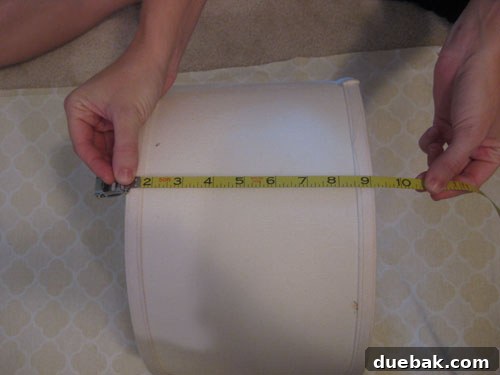
Given that our chosen fabric featured a distinct pattern, we exercised particular care while cutting. It was essential to follow the lines of the pattern precisely, ensuring that our final fabric swatch wouldn’t look crooked or off-kilter when wrapped around the lamp. After meticulously trimming the fabric to be two inches longer and wider than the shade’s circumference and height, we were left with one long, rectangular panel of fabric. This panel was perfectly sized to be wrapped around the shade, with a slight overlap on all ends. These extra inches were vital for securing the fabric neatly in place, allowing us to create a professional and seamless finish that truly elevates the lamp’s appearance. The attention to detail at this stage sets the foundation for a polished end result.
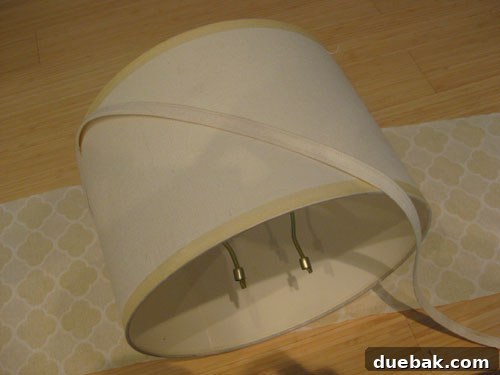
A key step in preparing the shade for its new covering involved a bit of careful deconstruction. Our particular shade featured a decorative banding around both the top and the bottom edges, which was simply glued on. To create a perfectly flat and smooth surface – an ideal foundation for adhering our new fabric – we gently and methodically pried off both of these strips. This ensured that the fabric would lie flawlessly without any bumps or irregularities caused by the existing trim. This seemingly minor step is crucial for achieving a truly professional and seamless finish, allowing the new fabric to completely transform the shade’s appearance.
With the shade prepped, we moved on to adhering the fabric. Using one of Emily’s trusty, well-loved glue guns, we carefully applied a line of glue along one end of the fabric and pressed it firmly onto the shade. This step required a swift hand, as we quickly discovered that the glue needed to be applied and the fabric adhered almost immediately; if the glue had too much time to dry, nothing would stick. Our initial attempt was a bit too slow, so we simply peeled off the fabric, applied a fresh bead of glue, and picked up the pace, resulting in a much better, secure bond. Working quickly is key to successful hot gluing, especially on curved surfaces like a lampshade.
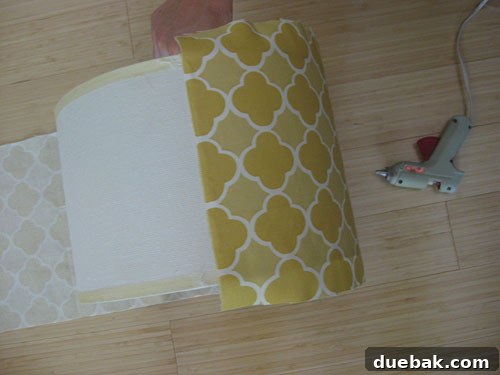
Once the first edge was securely in place, our next step was to create a neat, finished edge on the other side of the fabric that would form the seam. We achieved this by folding about a half-inch of the fabric over itself, creating a clean hem, and then carefully gluing this hem in place (though this specific action isn’t depicted in the photograph, it’s a vital part of the process). Following this, we applied another continuous bead of glue on top of this newly formed, finished edge of the fabric, preparing it for the final wrap around the shade.
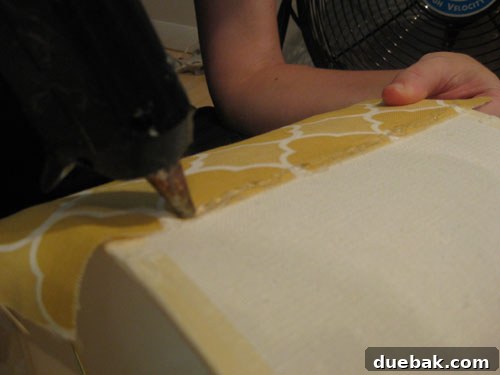
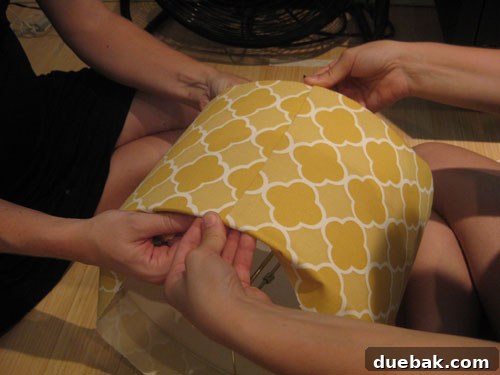
The critical moment arrived: wrapping the entire fabric panel tightly around the shade. The goal was to overlap the fabric ends, creating a crisp, clean-looking seam. The keyword here is “tight” – ensuring the fabric is pulled snugly is paramount for a professional and sleek result. To achieve this, we highly recommend enlisting a helping hand; having someone hold the shade steady while you meticulously pull the fabric taut and secure it will make a significant difference. A baggy or loose wrap will simply not look as refined as a perfectly fitted fabric, so take your time to ensure every inch is smooth and wrinkle-free. This careful attention to tension is what truly elevates a DIY project to a custom-made masterpiece.
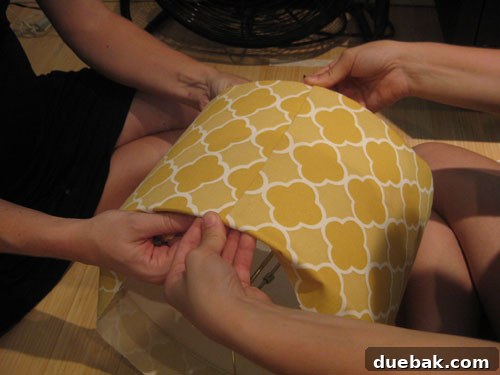
While your fabric pattern might not perfectly align at the seam, especially with intricate designs, the key to a polished look is ensuring everything else on the shade is perfectly straight and even. Pay close attention to the top and bottom edges, making sure the fabric doesn’t appear to be slowly slipping up or down. This meticulous attention to detail creates an overall refined finish, even if the pattern doesn’t flawlessly meet. And here’s a clever trick: once your lamp shade makeover is complete, simply turn the seam to face the wall. This allows the perfectly wrapped and unblemished front of the shade to be prominently displayed, showcasing your beautiful custom creation without any visible imperfections.
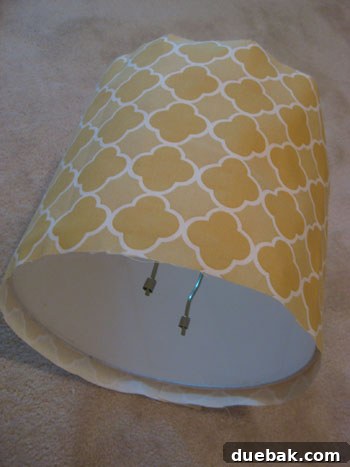
As you can observe from the preceding photo, after we securely attached the main fabric panel around the lamp shade at the seam, we still had a bit of excess fabric extending beyond the top and bottom rims. Our next step was to carefully trim some of this excess, leaving just enough to create a neat, finished edge on the inside. Then, using our reliable glue gun, we meticulously adhered this remaining sliver of fabric around the inside rim of both the top and bottom of the shade. This step is essential for a truly polished look, as it conceals any raw edges and gives the shade a professional, store-bought finish. We found it easiest to work in small sections, running the glue gun along the inside lip of the shade and gluing down three to four inches of fabric at a time; attempting much longer sections proved difficult to manage before the glue dried, leading to a less precise finish.
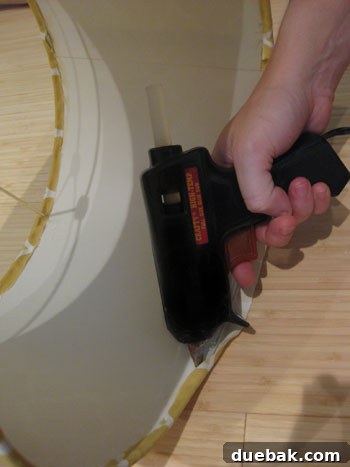
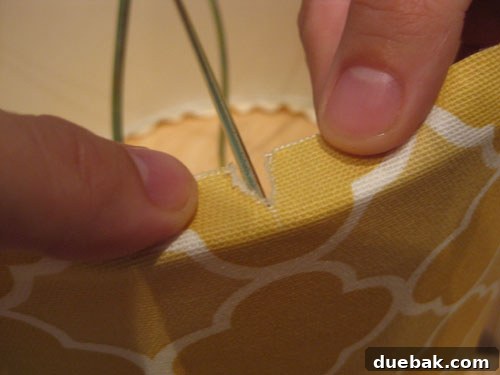
To achieve an even tighter and more seamless edge, especially around the internal structure of the lampshade, we made another important realization. The fabric needed to be carefully snipped around the metal rods that connect the shade to the light bulb socket. Without these precise snips, the fabric would bunch, creating an uneven finish. So, we made tiny, strategic cuts around each rod and then meticulously glued these small fabric flaps down on either side. This technique allowed the fabric to conform perfectly around the rods, ensuring a smooth, uninterrupted look from every angle. The photo above provides a clear example of one of these finished sections, demonstrating how these small details contribute to a truly professional and integrated appearance.
So there you have it – a complete guide to transforming a basic lamp shade into a custom design piece! All you truly need for this impactful DIY project is about a half yard of your chosen fabric, a sharp pair of scissors, a reliable glue gun, a tape measure for precise cutting, and ideally, a helping hand. While it’s certainly doable solo, this project is definitely easier and more efficient with two people, especially when it comes to keeping the fabric taut and even. And for a grand total of less than eight dollars for materials, you can completely spruce up an old table lamp, or even apply this technique to a floor lamp or a large ceiling pendant, giving any room a fresh, personalized look on a minimal budget.
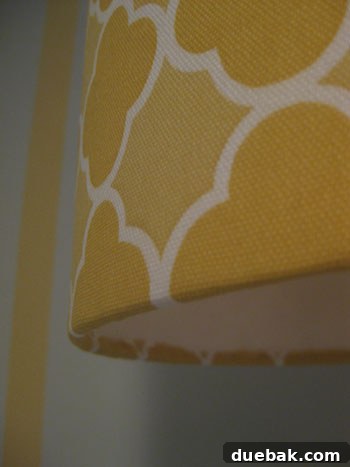
Here’s a delectable detail shot, showcasing the vibrant pattern and the impeccable finish of our newly recovered lamp shade. We truly lucked out with our fun fabric find; its playful yellow pattern perfectly complements the cheerful and modern aesthetic we’re cultivating in Emily’s nursery. This close-up highlights how the fabric wraps smoothly around the shade, creating a seamless and inviting texture that adds visual interest to the room. Every stitch and glue point contributes to a cohesive design that feels both professional and deeply personal, proving that thoughtful details make all the difference in a custom decor project. It’s a small element that brings a big impact to the overall nursery design.
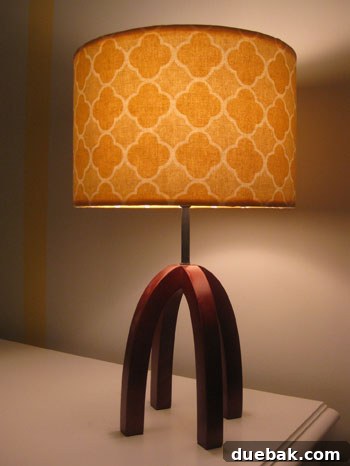
And here it is, our transformed lamp, all lit up and glowing, casting a warm and inviting light across the nursery. It’s truly remarkable how a simple fabric change can so completely alter the character of a room. Speaking of babies, isn’t Emily’s little guy going to be one lucky man? With this fun, stimulating little lamp shade to gaze at from his crib, we can’t help but think he’s destined for greatness. It’s more than just a light source; it’s a playful design element that engages the senses and adds a layer of joyful whimsy to his growing world. This personalized touch makes the nursery truly unique and full of character.
In summary, for an incredible total of just $47, we completely transformed the nursery’s lighting situation by installing a functional swing arm lamp and crafting a unique, custom lamp shade. These additions provide more than enough light to brighten the room, offering versatile options for both general illumination and targeted tasks, day or night. This project truly exemplifies how strategic choices and a touch of DIY can yield significant design impact without a hefty price tag, making a budget nursery feel luxurious and thoughtfully designed. Next on our agenda are just a few more finishing touches and some stimulating accessories to complete this cozy haven. This is excellent news, especially considering the baby’s October due date is now just around the corner!
What are your thoughts on these lighting upgrades? Are there any aspiring DIYers out there considering taking on a lamp shade recovering project to breathe new life into an old fixture? Or perhaps you’re a “swing arm seeker” contemplating adding one to free up valuable table or floor space in your own home? We’d love to hear if anyone else is currently embarking on a fun nursery or kids’ room project. And on a lighter note, are there any newly pregnant ladies among our readers? So many of our friends and family members have recently shared their joyful news of having a “bun in the oven” that we can’t help but wonder if there’s something wonderfully fertile in the water these days!
Psst- A crucial safety reminder for all lighting projects: Always proceed with caution. When recovering a lamp shade, ensure that the lamp’s original fabric shade remains in place and in good, stable condition. This provides an essential barrier, ensuring that your exterior layer of fabric is an ample and safe distance away from the light bulb, thereby preventing any potential fire hazards. Furthermore, opting for CFL (Compact Fluorescent Lamp) or LED bulbs, which produce significantly less heat and are much cooler to the touch, will further reduce the risk of anything overheating. And, of course, if you are undertaking any hardwiring of a fixture, such as installing a swing arm lamp directly into your home’s electrical system, always remember to turn off the power to the entire house at the main breaker before you begin. Safety first, always!