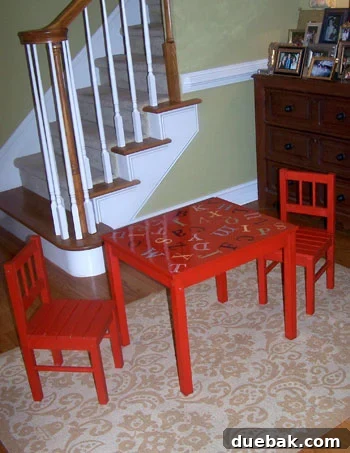
Transforming an IKEA Kids Table: A Budget-Friendly & Creative DIY Makeover
Every parent dreams of creating a vibrant, functional, and inspiring space for their children. Often, this vision comes with a hefty price tag, especially when browsing high-end children’s furniture stores. However, with a dash of creativity and a DIY spirit, it’s entirely possible to craft unique and personalized pieces that are both affordable and stylish. Today, we’re thrilled to share an exceptional example of this ingenuity: Jennifer’s charming customized kids’ table makeover. Her project serves as a brilliant testament to how a simple, inexpensive IKEA base can be transformed into a one-of-a-kind educational and play surface.
Jennifer’s journey began with a common dilemma faced by many parents: admiring the beautiful, albeit expensive, children’s furniture sets from brands like Pottery Barn Kids, but struggling to justify the significant investment. Rather than compromising on style or functionality, she embraced the challenge of DIY. Her solution? A resourceful approach to personalize an IKEA table and chair set, turning it into a delightful focal point for her son’s play area. This imaginative transformation not only saved her a considerable amount of money but also resulted in a truly unique piece that perfectly suits her family’s needs.
The Humble Beginnings: A Blank Canvas from IKEA
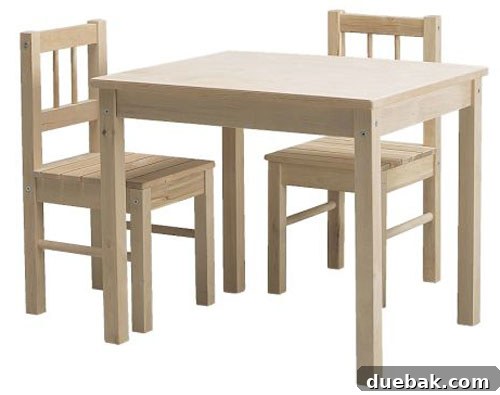
Jennifer started with a popular and incredibly versatile choice for budget-conscious parents: an IKEA kids’ table and chair set. These sets, often crafted from simple pine or plywood, offer a sturdy foundation and a minimalist aesthetic, making them ideal for customization. Her specific purchase, acquired for a mere $39.99, proved to be the perfect blank canvas for her creative vision. The affordability of the base unit is a key factor, as it leaves ample room in the budget for paints, finishes, and decorative elements.
The beauty of starting with an IKEA piece lies in its universality. Millions of these tables and chairs exist in homes worldwide, yet with a bit of paint and imagination, each can become distinctly individual. This initial step is crucial for any DIY project; selecting a base that is both affordable and receptive to modification sets the stage for a successful and rewarding transformation. Jennifer’s choice highlights the smart consumer’s approach to home decor: seeking value without sacrificing the potential for personalization.
A Splash of Color: The Glazing Paint Application
With her IKEA set ready, Jennifer embarked on the first major step of the makeover: adding color. She opted for three coats of vibrant red glazing paint, also sourced from IKEA, at an incredibly budget-friendly price of just $4.99 a can. This choice of glazing paint is noteworthy; unlike opaque paints, glazes often provide a more subtle, translucent finish, allowing some of the wood grain to peek through while imparting a rich hue. However, applying multiple coats, as Jennifer did, can build up the color intensity, resulting in a solid, appealing shade.
The application of three coats ensured not only a deep, consistent red color but also contributed to the overall durability and professional appearance of the table. Painting in multiple thin layers, allowing adequate drying time between each, is a fundamental technique in furniture refinishing that prevents drips, streaks, and ensures a smooth, even surface. This meticulous attention to detail in the painting stage is what elevates a simple DIY project to something truly polished and long-lasting.
Adding Whimsy and Education: The Alphabet Stamps
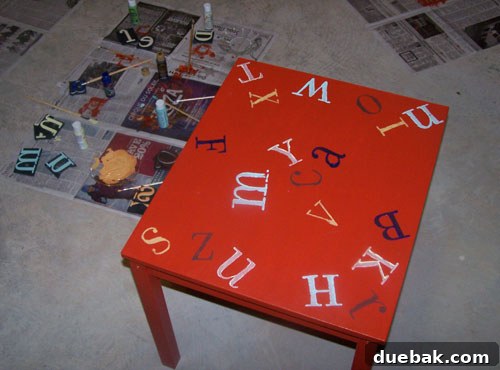
Perhaps the most enchanting aspect of Jennifer’s design is the playful inclusion of alphabet letters on the tabletop. For this, she delved into her existing craft supplies, unearthing some whimsical letter stamps she had previously acquired on clearance from Target for around $5. This demonstrates another brilliant budget-saving tip: repurpose what you already own or look for discounted craft supplies. Complementing these stamps, she utilized her stash of colored acrylic paints from Michael’s, each costing less than a dollar.
The process involved stamping the letters “haphazardly” across the tabletop, a technique that adds an organic, artistic touch rather than a rigid, perfectly aligned grid. This seemingly random placement contributes to the table’s unique charm and playful aesthetic. Beyond its decorative appeal, the alphabet motif serves an ingenious dual purpose: an early learning tool for her two-year-old son. As Jennifer aptly noted, “my two-year-old can learn the alphabet while playing in style, right?” This integration of education into everyday furniture is a fantastic example of smart, functional design for children’s spaces.
The Professional Touch: High-Gloss Protection
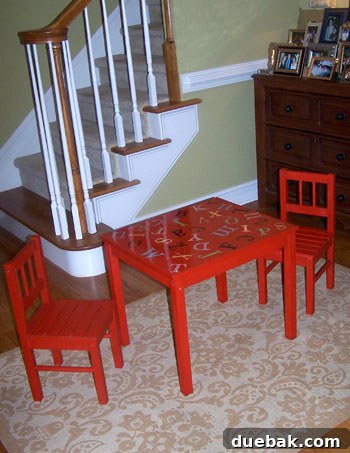
To truly elevate her custom creation and ensure its longevity, Jennifer followed a piece of advice previously shared on a popular blog post: applying a Pour-On High Gloss finish. This crucial final step, purchased from Michael’s, provided a durable, protective layer over the painted and stamped tabletop. High-gloss finishes are renowned for their ability to create a smooth, glass-like surface that not only enhances the visual appeal by giving it a more “expensive look” but also offers superior protection against spills, scratches, and everyday wear and tear.
The practical benefits of this sealant are immense, particularly for a kids’ table. The original plywood surface, while sturdy, can be prone to staining and is often challenging to clean effectively. With the high-gloss finish, the tabletop becomes exceptionally easy to wipe down, making sticky messes and crayon marks a breeze to clean. This final layer transforms the table from a pretty craft project into a highly functional and resilient piece of furniture, designed to withstand the rigors of enthusiastic playtime for years to come.
The Financial Revelation: A Smart Investment
Let’s crunch the numbers. Jennifer’s total investment for this stunning, custom-designed kids’ table and chair set amounted to approximately $63. This figure includes the initial IKEA set, the glazing paint, the stamps, and the high-gloss finish. When contrasted with the hundreds, often thousands, of dollars that similar high-quality, personalized children’s furniture can cost from boutique retailers, Jennifer’s project stands out as an incredibly cost-effective solution. Her “few days of time & effort” yielded a result that is not only cheap in monetary terms but rich in character and personal value.
The satisfaction derived from creating something beautiful and functional with your own hands is immeasurable. Beyond the financial savings, DIY projects like Jennifer’s foster a sense of accomplishment and allow for complete creative control. This project demonstrates that a modest budget, combined with a willingness to get creative, can lead to truly remarkable outcomes. It’s an inspiring message for anyone looking to furnish their home with unique pieces without breaking the bank.
Here’s what the table looked like before the transformation, straight from the IKEA catalog:
Here’s Jennifer’s table in progress, showcasing the creative process with the foam alphabet stamps visible in the background and a portion of the tabletop already adorned with whimsical letters:
And here’s the table after the entire alphabet makeover, sealed with a high-gloss finish, ready for playtime and learning:
Beyond Red and Alphabet: Unleashing Endless Design Possibilities
Jennifer’s transformation is truly inspiring, but it’s just one example of the vast potential these basic IKEA sets hold. The beauty of this DIY approach is its incredible versatility. Imagine the possibilities! You could paint the table a soft pastel blue and the chairs a gentle yellow for a serene nursery theme. Or, for a bolder look, consider a dark navy table with white chairs and geometric patterns stamped in metallic gold. You could even emulate Jennifer’s idea with different motifs – perhaps an outer space theme with planets and stars, or a nature scene with trees and animals.
The design choices extend beyond paint and stamps. Think about using stencils for more intricate patterns, or decoupaging the tabletop with child-friendly fabric or comic book pages for a truly unique texture. Chalkboard paint could turn the entire surface into a giant drawing board, while a road map design would delight any budding adventurer. The chairs don’t have to match the table; contrasting colors or even painting each chair a different shade can add dynamic visual interest. The only limit is your imagination and, perhaps, the color palette of your child’s room. This project is a fantastic opportunity to involve older children in the design process, allowing them to contribute to their own special space.
Why DIY? The Unbeatable Benefits of Custom Kids’ Furniture
Jennifer’s project underscores several compelling reasons to embrace DIY for children’s furniture:
- Unmatched Personalization: No mass-produced item can truly reflect your child’s personality or your home’s unique aesthetic quite like a custom piece.
- Significant Cost Savings: As Jennifer proved, you can achieve a high-end look for a fraction of the cost of retail equivalents.
- Enhanced Durability & Easy Maintenance: With the right sealant, a DIY table can be more resilient and easier to clean than its factory-finished counterpart, perfectly suited for the demands of playtime.
- Educational Integration: Designs like Jennifer’s alphabet table cleverly blend learning with play, fostering cognitive development in a fun, organic way.
- Sustainable Choice: By customizing an existing piece or a basic, affordable item, you’re making an environmentally conscious choice, reducing waste and giving new life to furniture.
- Joy of Creation: There’s immense satisfaction in creating something beautiful and functional with your own hands, knowing it was made with love for your child.
Ready to Start Your Own Kids’ Table Makeover?
Jennifer’s ingenious transformation is a powerful reminder that creativity doesn’t have to come with a prohibitive price tag. We absolutely adore how she utilized her ingenuity and resourcefulness to turn a basic IKEA kids’ table into something truly special. The versatility of this project means it can be adapted to any color scheme or design preference, making the possibilities truly endless.
Inspired by Jennifer’s fantastic example, we encourage you to consider embarking on your own kids’ table makeover. It’s a project that seems incredibly doable and, dare we say it, immensely fun! Gather your supplies, choose your colors, and let your imagination soar. Your little ones will undoubtedly appreciate a unique space crafted just for them, and you’ll cherish the satisfaction of creating something beautiful and practical. A huge thank you to Jennifer for sharing her incredible photos and inspiring story with us. What creative ideas do you have for customizing a kids’ table? We’d love to hear your thoughts and see your transformations!