
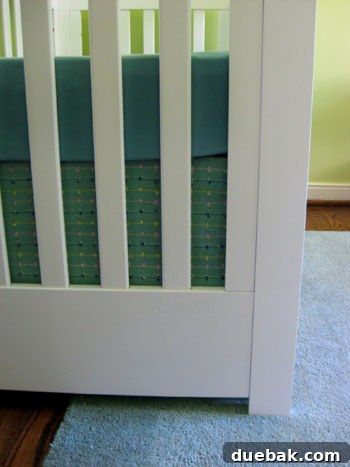
Transforming your baby’s nursery into a cozy, functional, and aesthetically pleasing haven is a rewarding journey for any parent-to-be. Among the many elements that contribute to a polished nursery design, the crib skirt often plays a subtle yet significant role. Not only does it add a touch of softness and style, but it also cleverly conceals the space beneath the mattress, perfect for hiding storage drawers or simply creating a cleaner, more organized look. Many people shy away from DIY projects, especially those involving fabric, due to the perceived need for advanced sewing skills. However, what if we told you that creating a custom-fitted, removable, and washable crib skirt could be incredibly simple, fast, and require absolutely no sewing? That’s right – no needles, no thread, just a few basic tools and a brilliant trick up our sleeve: iron-on hem tape.
We’re thrilled to share our foolproof, step-by-step guide to crafting a beautiful crib skirt in under an hour, proving that you don’t need to be a seasoned seamstress to achieve professional-looking results. Get ready to banish the clutter under the crib and elevate your nursery decor with this unbelievably easy and budget-friendly project. Let’s dive into how you can make a custom crib skirt that perfectly complements your nursery’s unique style.
Effortless DIY No-Sew Crib Skirt: A Complete Step-by-Step Guide
Creating a custom crib skirt doesn’t have to be a daunting task. Our innovative no-sew approach utilizes the power of iron-on hem tape to deliver a crisp, clean finish that looks professionally made. This method is ideal for busy parents or anyone looking for a quick and cost-effective way to personalize their baby’s space. Follow along as we walk you through every stage, from initial measurements to the final attachment.
Why Choose a No-Sew Crib Skirt?
The appeal of a no-sew crib skirt extends far beyond its ease of creation. Here are some compelling reasons why this DIY method is a game-changer for nursery decor:
- No Sewing Skills Required: The most obvious benefit! If you’ve ever felt intimidated by a sewing machine, this project is for you. All you need is an iron and a steady hand.
- Cost-Effective: Save money on custom-made skirts or expensive fabric. With this method, you only pay for the fabric and a roll of hem tape.
- Custom Fit: Achieve the exact dimensions needed for your specific crib, regardless of its unique design or mattress height. No more ill-fitting, off-the-rack options!
- Personalized Style: Choose any fabric you love to perfectly match your nursery theme and color palette, allowing for endless creative possibilities.
- Washable & Durable: Our chosen hem tape is designed to withstand washing, ensuring your crib skirt remains fresh and clean through all of life’s little messes.
- Removable & Adjustable: The Velcro attachment method means you can easily remove the skirt for washing, or adjust it as your baby grows and the mattress height changes.
- Quick Project: You can complete this entire project in under an hour, making it perfect for a weekend afternoon or even a busy weekday evening.
Materials You’ll Need
Gathering your materials is the first step towards a successful DIY project. The beauty of this no-sew crib skirt is that it requires very few specialized tools:
- Fabric: The star of the show! We recommend choosing a durable, washable fabric that complements your nursery decor. A yard to a yard and a half should suffice for a three-sided skirt. Consider patterns and textures that add visual interest.
- Iron-On Hem Tape: Our secret weapon! We swear by heavy-duty iron-on hem tape like “Heat N’ Bond Ultra Hold” (available at most craft stores). This tape creates a strong, lasting bond without a single stitch.
- Sharp Scissors: Essential for clean, precise cuts. Fabric shears are ideal, but any sharp scissors will do.
- Tape Measure: Accuracy is crucial for a perfectly fitted skirt.
- Iron and Ironing Board: For activating the hem tape and creating crisp folds.
- Velcro: To securely attach your finished crib skirt to the crib frame. We used self-adhesive Velcro squares, but you can also opt for sew-on Velcro if you want to add a few reinforcement stitches (though it’s not strictly necessary for the fabric side).
Step-by-Step Tutorial: Crafting Your No-Sew Crib Skirt
1. Accurate Measurements Are Key
Precision starts here. Before cutting any fabric, you need to determine the exact dimensions for each panel of your crib skirt.
- Vertical Height: Measure the distance from the bottom of your crib mattress to the top of your storage drawer or the desired finished length of your skirt. This measurement should be consistent around the entire crib.
- Horizontal Lengths: Measure the horizontal distance of each side of the crib where you want the skirt. We opted for a three-sided skirt (front and two sides) as the back of the crib often faces a wall and won’t be seen, saving on fabric. Note down the lengths for the two side panels and the longer front panel.
Once you have your core measurements, you’ll need to add a crucial allowance for hemming:
- Add for Hemming: Add three inches to *each* of your vertical and horizontal measurements. For example, if a side panel’s measured height was 12 inches, it becomes 15 inches for cutting. If its measured length was 30 inches, it becomes 33 inches. This extra three inches provides a generous allowance for creating a neat, double-folded hem on all sides.
2. Cutting Your Fabric Panels
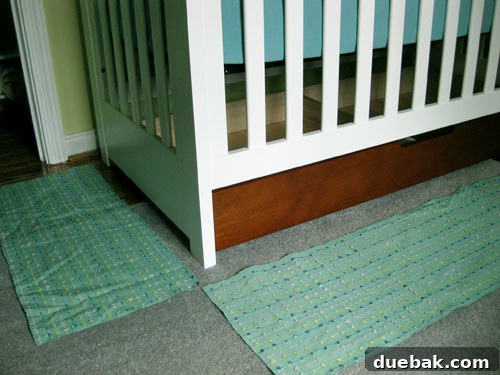
Now that you have your final cutting dimensions (including the 3-inch hem allowance), it’s time to cut your fabric. Lay your fabric flat and smooth it out to avoid any wrinkles or distortions. Using your tape measure and sharp scissors, carefully cut out three separate rectangular panels:
- Two side panels of the same width and your calculated height.
- One front panel, longer than the sides, but with the same calculated height.
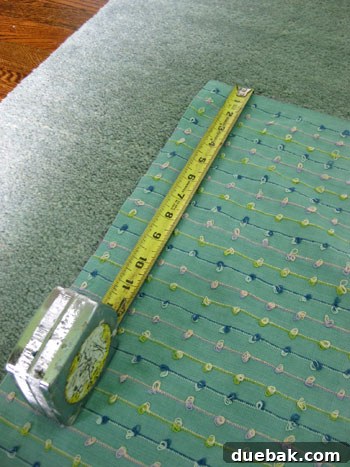
Important Fabric Tip: If you’re working with patterned fabric, especially stripes or repeating motifs, pay close attention to the direction of your cut. Ensure that all panels are cut in the same orientation (e.g., all stripes running vertically) to maintain a cohesive look. You wouldn’t want one side panel with vertical stripes and another with horizontal ones unless that’s a very specific design choice!
3. The Magic of Iron-On Hem Tape: Hemming Each Panel
This is where the no-sew magic truly happens. We’ll be using iron-on hem tape to create beautifully finished edges on all your fabric panels.
- Prepare Your Workspace: Set up your iron and ironing board. Ensure your iron is set to the appropriate temperature for your fabric (usually a medium-high setting for most cottons, without steam).
- Apply Hem Tape to Edges: Take one of your fabric panels. Starting with one edge, cut a strip of your “Heat N’ Bond Ultra Hold” tape to the length of that edge. Place the hem tape on the back side of the fabric, as close to the raw edge as possible. Remember the tip: keep the clear, adhesive side down against the fabric, and the paper backing facing up. This prevents the adhesive from touching and potentially ruining your iron.
- Iron in Place: Press your iron firmly over the paper-backed hem tape for about 10-15 seconds (check your hem tape instructions for exact timing). The heat will activate the adhesive, bonding it to the fabric.
- Cool and Peel: Let the fabric cool for a few seconds. Then, carefully peel back the paper backing, revealing a strip of sticky, clear adhesive on the fabric. This looks much like double-sided tape.
- Fold and Press: Without disturbing the exposed adhesive strip, fold the raw edge of the fabric over so that it perfectly covers the sticky tape. Press this fold down firmly with your iron for another 10-15 seconds. This creates a crisp, clean hemmed edge that is incredibly durable.
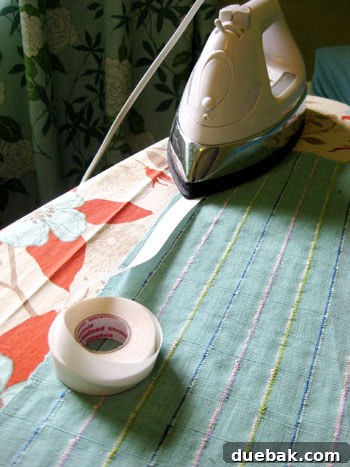
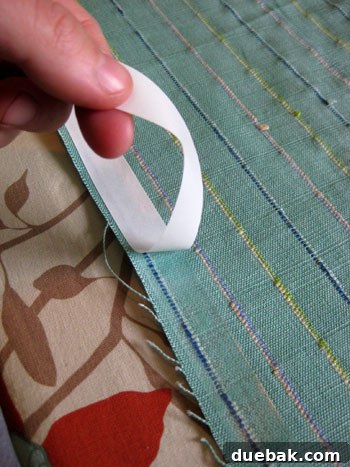
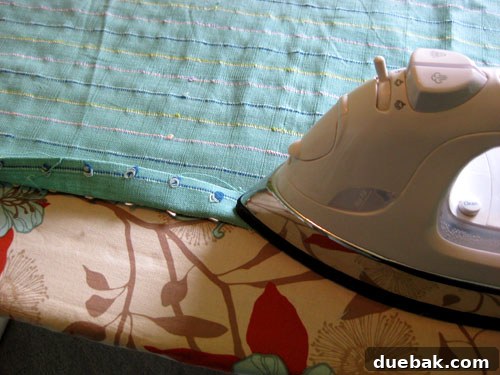
Repeat this precise hemming process for all four edges of your two side panels. For your longer front panel, hem only the top and bottom edges. The two side edges of the front panel will remain unhemmed for now, as they will be joined to the hemmed side panels.
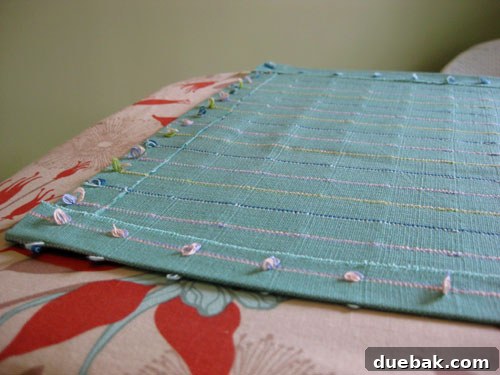
You’ll be amazed at the professional finish you achieve without a single stitch! This method eliminates common sewing issues like puckering or uneven stitches.
4. Joining Your Fabric Panels
Now that your individual panels are beautifully hemmed, it’s time to join them together to form one continuous crib skirt. This technique creates a strong, invisible seam.
- Align Panels: Take one of your hemmed side panels and align its hemmed vertical edge next to an unhemmed vertical edge of your front panel. Position them so the front (right) sides of the fabric are facing up, with the edges just touching.
- Apply Hem Tape for Joining: Cut another strip of hem tape. Place it directly on top of the already hemmed edge of the side panel, aligning it perfectly with the edge. Iron it in place, cool, and peel off the paper backing, exposing the adhesive strip on the top of the side panel’s hem.
- Press to Join: Carefully lay the unhemmed edge of the front panel over the sticky strip on the side panel’s hem. Ensure they overlap precisely. Press firmly with your iron to create a strong bond, effectively joining the two panels together.
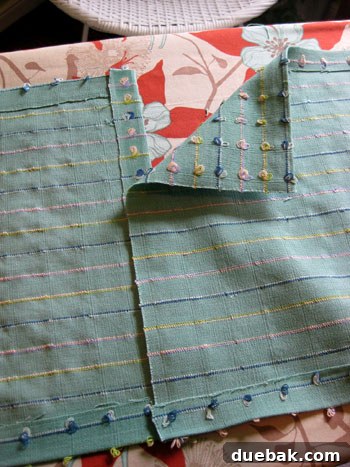
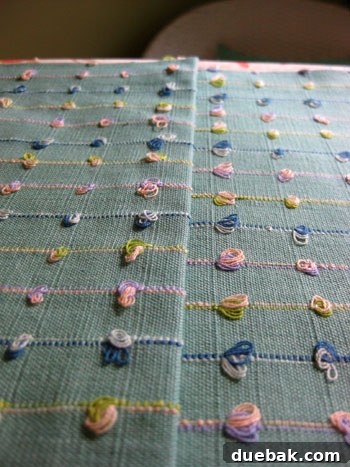
Repeat this process to join the other side panel to the remaining unhemmed edge of your front panel. If you were creating a four-sided skirt, you would continue joining panels in the same manner until you have one long, continuous band of fabric with beautifully finished edges. The result will be a neat, almost invisible seam from the front.
Why join panels instead of cutting one long strip? While cutting one long piece of fabric would seem simpler, most standard fabric widths aren’t long enough for a crib’s perimeter. This panel-joining method is a practical solution that allows you to use standard fabric yardage (like 1 to 1.5 yards, as we did) without compromising on the finished look.
Attaching Your Custom Crib Skirt
With your beautiful, continuous fabric band ready, the final step is to secure it to your crib. We chose Velcro for its versatility and convenience, making the skirt both easy to install and remove for cleaning.
- Prepare Velcro Strips: Cut several 1-inch by 1-inch squares of self-adhesive Velcro. You’ll need about three to four squares per side of your crib skirt.
- Attach Velcro to Crib Frame: Adhere the hook side (the rougher side) of the Velcro squares directly to the top of your crib’s metal frame, where the mattress rests. Space them evenly along the sides and front of the crib.
- Attach Velcro to Fabric Skirt: Carefully align your finished crib skirt with the Velcro strips on the crib frame. Mark where the corresponding loop side (the softer side) of the Velcro needs to be attached to the back of your fabric skirt. Press the loop-sided Velcro firmly onto the fabric.
- Optional Reinforcement: While self-adhesive Velcro is quite strong, if you want extra peace of mind, you can add a quick stitch or two through the Velcro squares attached to the fabric. This ensures they won’t detach during washing.
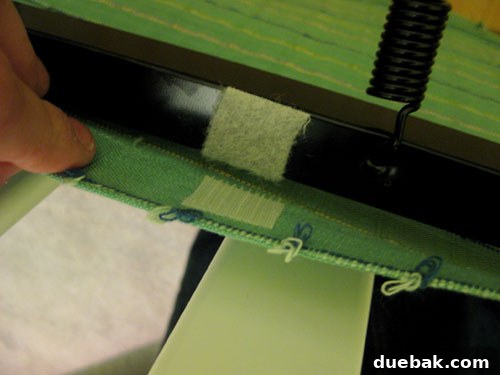
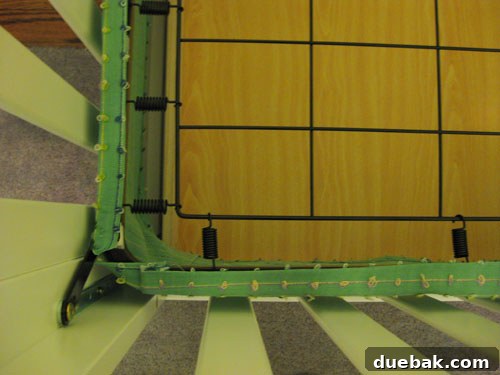
The Velcro attachment offers several advantages: it allows for easy removal for washing (yes, Heat N’ Bond is completely washable and extremely durable!), and it means you can adjust the skirt’s position as needed. As your baby grows, the crib mattress may be lowered; with Velcro, you can simply reposition your skirt to bridge the gap effectively.
Final Touches and Benefits Unveiled
Once your custom crib skirt is attached and the mattress is back in place, step back and admire your handiwork. You’ll find a beautifully polished, fitted, and sleek-looking addition to your nursery.
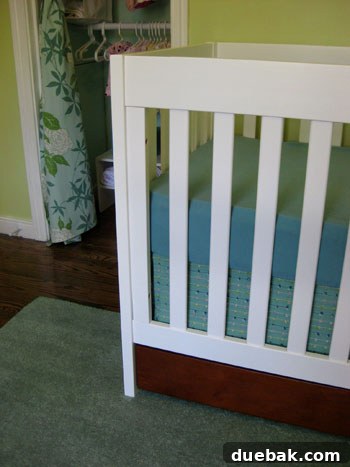
We love how this simple project allows for creative expression. In our nursery, the colors of the crib skirt coordinate seamlessly with other elements like the curtains, creating a cohesive yet understated look. We opted for colors in the same family to avoid a high-contrast, “stripey” effect, letting the curtains be the main textile focal point in the room.
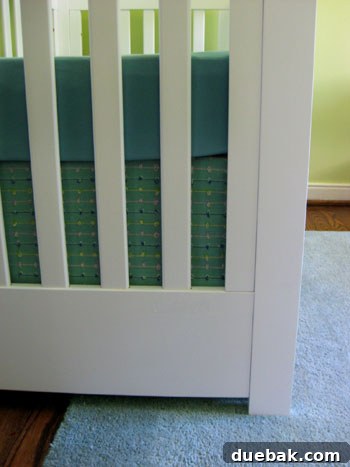
This entire project, from start to finish, took us less than an hour and cost us only the price of the fabric – just $14 for a yard and a half! (You can read more about our fabric hunting adventure here). It’s a testament to how accessible and affordable custom nursery decor can be.
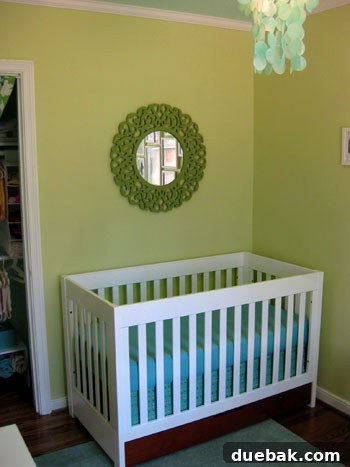
And there you have it – another innovative way to create a custom crib skirt without the need for a sewing machine or a hefty budget. This fitted, no-sew version is fantastic for concealing drawers and maintaining a tidy look. If you’re looking for a more traditional, floor-length option that allows for sliding storage bins underneath, we’ve also tackled a different method right here.
Are you inspired to whip up your own DIY crib skirt? Have you already completed a similar project for your little one’s nursery? We’d love to hear about your experiences and see your creative solutions! And on a related note, what are your thoughts on bed skirts in general for “grown-up” beds? Do you find them too frilly, or a brilliant way to hide under-bed storage and declutter? Share your opinions in the comments below!
Psst- Eager to see our entire nursery transformation journey from the very beginning? Explore our previous posts covering every detail: our painting adventure, our major shopping spree, our detailed crib hunting rundown, our helpful curtain-making tutorial, our fun little chair search, our dazzling mirror-painting extravaganza, this engaging DIY faux sheepskin project, our extensive dresser makeover, and our strategic closet organization efforts. Enjoy the journey!