
Seamless Smart Home Integration: Our Journey with DIY Nest Thermostat Installation and Energy Savings
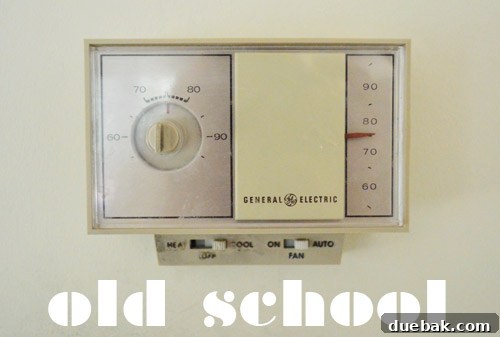
In today’s rapidly evolving world, the demand for efficiency and convenience touches every aspect of our lives, especially within our homes. From aesthetic refreshes to crucial functional enhancements, the opportunity to upgrade outdated systems is everywhere. We recently embarked on a significant home improvement project: replacing our old, rudimentary office thermostat with a state-of-the-art smart alternative. This wasn’t merely about aesthetics; it was a strategic move towards greater energy efficiency and smarter home management, especially after investing in a new furnace system.

Why Upgrade to a Smart Thermostat? The Allure of Nest
Having previously experienced the benefits of a basic programmable thermostat in our first home, the concept of intelligent climate control wasn’t entirely new to us. However, the advancement in smart home technology, particularly with devices like the Nest Learning Thermostat, promised a far more intuitive and impactful upgrade. The sheer volume of positive feedback from friends and online communities about their love for Nest convinced us to take the plunge. My partner, initially hesitant about embracing more tech, surprisingly agreed, leading me to eagerly acquire one of these innovative devices.
The Nest Learning Thermostat stands out as a true game-changer in home climate management. It’s not just a device that allows you to set a schedule; it’s a “learning thermostat” designed to actively adapt to your lifestyle. By observing your habits – when you adjust the temperature, when you’re home or away – Nest intelligently creates and fine-tunes a personalized heating and cooling schedule for you. This unparalleled level of intuition translates directly into significant energy savings, often surpassing what a typical programmable thermostat can achieve. Its ability to sense occupancy, turning itself down when no one is home, further maximizes efficiency.
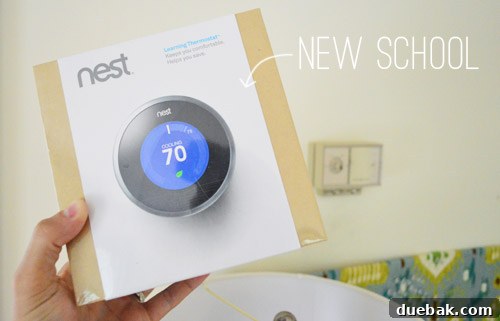
Designed by some of the brilliant minds behind the iPhone, Nest boasts a sleek interface and a host of user-friendly features that we were eager to explore. Since its debut in 2010, its premium pricing had kept it just out of our reach. However, the recent release of the 2nd generation Nest brought good news for budget-conscious smart home enthusiasts: prices on the 1st generation models saw a significant drop, making them an incredibly attractive option.
The Quest for Savings: Finding the Perfect Deal
The price reduction on the first-generation Nest thermostats was so substantial that they became quite elusive. After a bit of searching, I finally tracked down two units at a Lowe’s store roughly 30 minutes away. Recognizing the potential for even greater savings, I armed myself with a change-of-address coupon we had received. Our home features two distinct HVAC systems – one for upstairs and one for downstairs – making the purchase of two Nests a sensible, albeit initially pricey, investment.

The final price point for these smart devices became a testament to smart shopping. Combining the reduced sale price with an additional $25 off from my coupon and a 5% discount for using my Lowe’s credit card (a discount graciously applied by the cashier despite an initial coupon glitch), our per-unit cost dropped to an impressive $158. While still an investment for a thermostat, this felt like a significant victory when compared to the $249 price tag of the newer models, representing a total saving of $180 on two units. This substantial saving, coupled with our previous good fortune of having our downstairs furnace replaced by our home warranty (saving us approximately $5,000), further rationalized our decision to spend around $300 on these cutting-edge thermostats.
Update: For those interested in replicating our smart home upgrade, first-generation Nest thermostats are often available at discounted prices. You might find similar deals on platforms like Amazon.
Demystifying DIY: Nest Thermostat Installation
The thought of installing an expensive piece of smart home tech, especially one connected to our HVAC system, brought a mild sense of trepidation. I had heard conflicting reports about Nest’s compatibility with various HVAC systems, and our upstairs unit, in particular, was quite old. The primary concern was, of course, avoiding any damage to the “thermom-o-robot” during the process. However, as I soon discovered, Nest’s design philosophy extends beyond just intuitive operation to incredibly user-friendly installation.
Step-by-Step Downstairs Unit Installation:
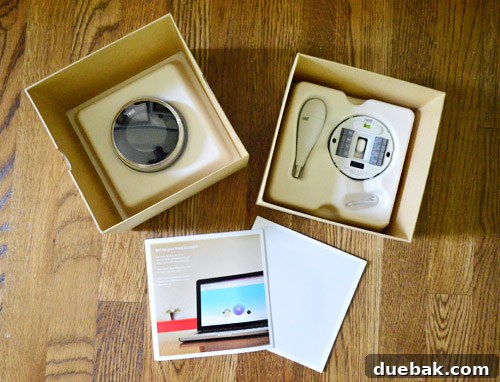
I began with the downstairs unit, a logical starting point. The initial step, removing the old thermostat, was remarkably straightforward. First, the faceplate easily detached. Then, with a crucial safety measure in place – the power turned off at the breaker! – I unscrewed the inner plate, exposing the labyrinth of wires behind it. Nest, seemingly anticipating every need, thoughtfully included a small screwdriver in the box, simplifying this task immensely. This attention to detail immediately impressed me; it’s clear they designed the installation process with the average homeowner in mind. (Note: This glowing review is entirely organic; Nest isn’t sponsoring us. We’re just genuinely thrilled with the product!)
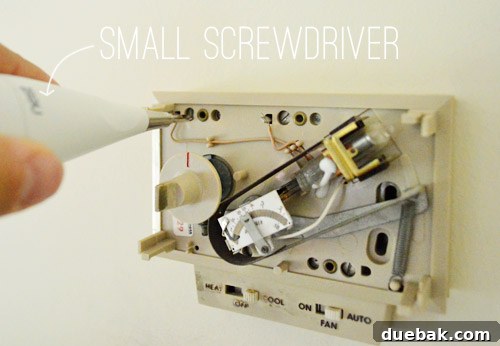
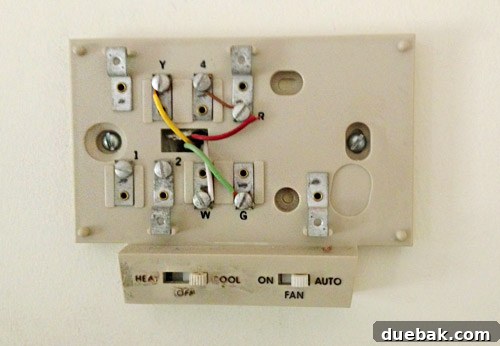
Peering into the exposed wiring of our old unit could be intimidating, resembling something from a bomb defusal kit. However, following Nest’s clear and concise installation instructions quickly dispelled any fears of a project gone awry. They truly minimize the potential for error, guiding you through each stage with confidence.
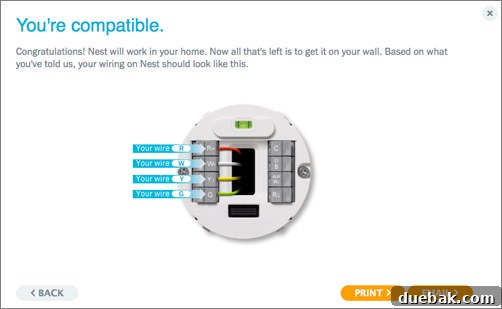
Nest goes above and beyond to support DIY installers. In addition to a helpful video installation guide, they offer an indispensable online “Compatibility Check” tool. This feature meticulously walks you through your existing wiring setup, determining its compatibility with Nest. In hindsight, I probably should have utilized this tool before making the purchase, but happily, we were fully compatible.

The installation instructions didn’t stop at just confirming compatibility; they provided a personalized, step-by-step guide tailored specifically to our wiring configuration. This level of customization transformed what could have been a complex task into an incredibly simple one. If only all instruction manuals were this intuitive!
Another brilliant “thought-of-everything” detail was the inclusion of small wire labels within the paper manual. These labels prevent any confusion about which wire connects where once everything is detached from the old unit. While my wiring was straightforward enough that I didn’t need them, this feature solidified Nest’s commitment to a seamless installation experience in my tech-nerd handbook.

With the wires safely labeled (or mentally noted in my case), I carefully detached each one and removed the final remnants of the old thermostat from the wall, leaving a clean slate for the new smart device.
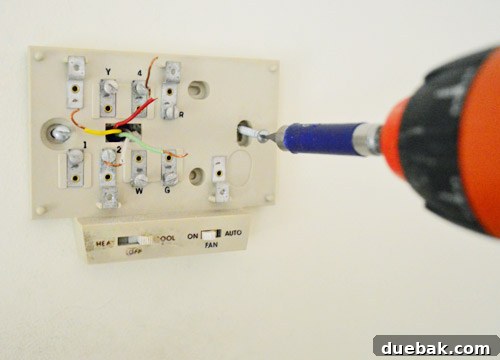
The Nest base then slid effortlessly into place. One of the most genius features, making the installation even more foolproof, was the tiny built-in level directly on the base. This ensured perfect alignment on the wall, adding a professional touch without any extra tools.
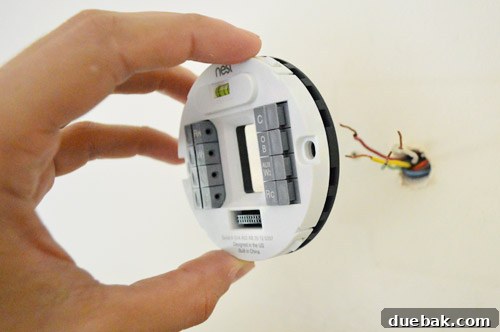
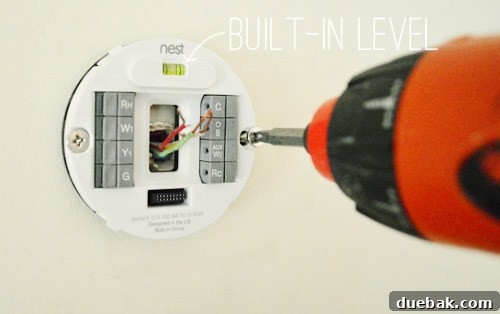
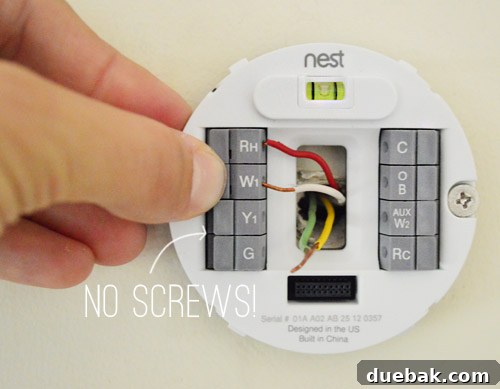
Following the personalized wiring guide, connecting the wires to the Nest base was a breeze. Each wire simply “popped” into its designated slot using intuitive little tabs. The entire wiring process was surprisingly simple and satisfyingly secure.
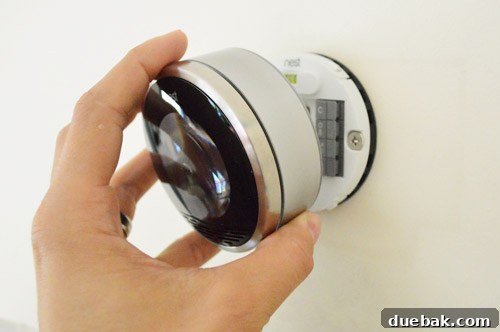
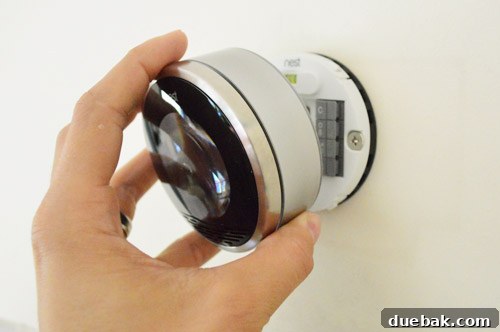
For the grand finale, I snapped the Nest face into place, completing the physical installation of the downstairs unit. The sleek, modern design immediately elevated the aesthetic of the wall.
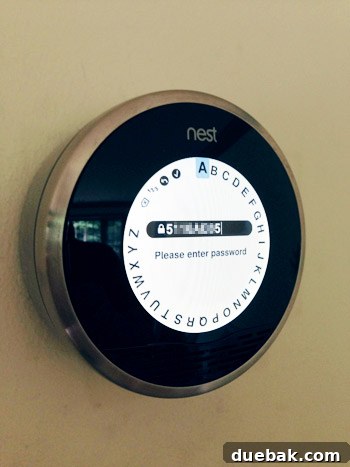
Finally, I restored power at the breaker, and the Nest unit sprang to life. The initial setup involved a few guided steps: confirming our heating system type and connecting to our home Wi-Fi network. If there was one minor “first-world problem” moment, it was the slightly tedious process of entering our long alphanumeric Wi-Fi password using the dial. Beyond that, the setup was quick and seamless.
Living with Nest: Smart Comfort and Energy Insights
The Wi-Fi connectivity is a standout feature, allowing us to control our thermostats remotely from our smartphones. While Nest often highlights this for travelers, we quickly discovered its immediate utility in daily life. On the very first night, I found myself adjusting the AC from the comfort of our bed because our bedroom was too warm. This level of convenient control instantly made us feel like we were living in the lap of luxury.
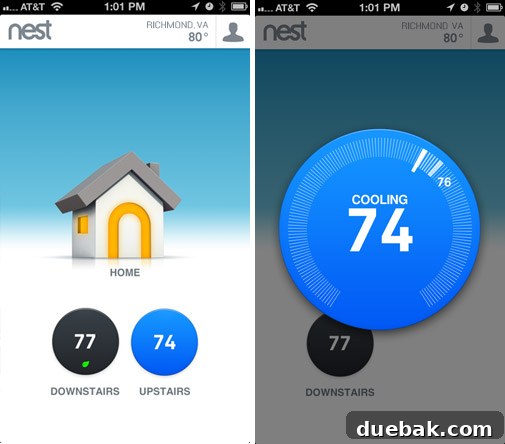
Nest typically takes a couple of weeks to fully “learn” your schedule and preferences, so we’re still eagerly anticipating the full benefits of its intelligent programming. However, its presence in our home is already proving invaluable, especially given the significant temperature fluctuations we experience due to intense afternoon sun exposure. We’re optimistic that Nest will quickly adapt to these unique environmental factors, providing consistent comfort and maximizing efficiency.

First Generation vs. Second Generation: A Value Proposition
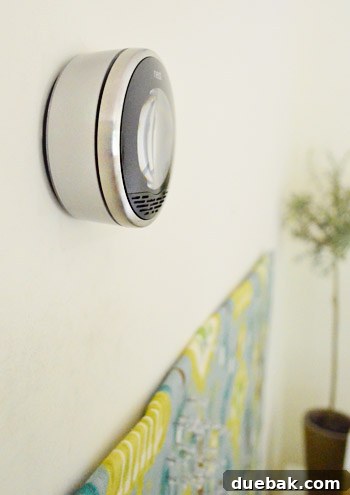
Initially, a part of me wondered if I would regret not splurging on the 2nd generation Nest. However, a closer look at the differences revealed that, aside from broader compatibility with certain HVAC systems (which wasn’t an issue for us), the improvements are largely cosmetic. The newer version boasts a slightly slimmer profile, omits the small grill at the bottom, and features a shinier side designed to better reflect wall color. While these are certainly “nice-to-have” enhancements, they didn’t justify the additional $180 cost for us. We remain extremely content with our first-generation units, finding them to deliver exceptional value and performance. Perhaps I’ll reconsider when a hypothetical 3rd generation offers features like babysitting or laundry folding!
Conquering Compatibility: The Upstairs Unit Challenge
Before concluding this “lovefest” (or “lovenest,” as I like to call it), I must share an anecdote about installing the upstairs unit. Here, we had a slightly less ancient thermostat already in place, leading me to expect an even smoother installation. However, during the crucial compatibility check, I was met with an unexpected alert. Ruh roh.
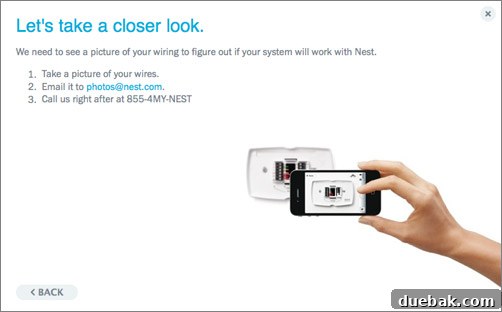
Rather than panic, I followed Nest’s clear instructions for troubleshooting. Within minutes, I was on the phone with a Nest representative. After emailing them a photo of my wiring, they quickly analyzed the situation and provided precise guidance on how to connect my specific wires. This outstanding customer support turned a potential headache into a brilliant demonstration of Nest’s commitment to user success, regardless of the challenge.
Final Verdict: A Smart Investment in Home Comfort
In total, the installation of both Nest units took me less than an hour – an impressive feat considering I was also pausing to capture photos for this blog post. I couldn’t be happier with the result. The ease of installation, coupled with the promise of enhanced comfort and energy savings, makes this one of the most satisfying home upgrades we’ve undertaken.
While I am incredibly pleased, there’s always room for a tiny bit more happiness. Many localities offer rebates to incentivize homeowners for choosing energy-efficient solutions like Nest (Nest provides a list of such programs here). Unfortunately, our area doesn’t currently participate in such programs. Despite a few calls to our electric and gas companies, I struck out on getting any direct money back. Nevertheless, the long-term energy savings from more efficient heating and cooling, coupled with a small write-off for donating our old units to Habitat for Humanity, still represent a significant financial win.

Are you a Nest owner? We’d love to hear your tips and tricks for maximizing its potential! Or perhaps you’ve recently embraced another tech-forward upgrade in your home? Share your experiences in the comments below. Though, perhaps don’t give me too many more ideas – my partner might just regret letting me explore the smart home universe so freely!