
Ensuring Home Safety and Landscape Beauty: The Prudent Decision to Remove Dangerous Trees
As homeowners, we often find ourselves wishing we could turn back time – perhaps to choose a different planting spot for that once-tiny sapling now towering precariously over our roof. While Cher’s iconic lyrics might resonate deeply, the reality is that proactive tree management is a far more effective strategy than wishing for a rewind button. This article delves into our journey of identifying and addressing the hidden dangers posed by large trees on our property, the process of safe removal, and the unexpected benefits that followed.
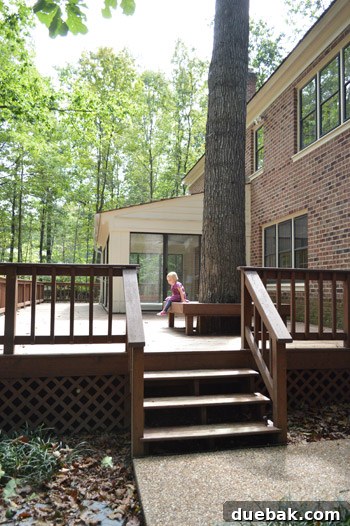
Every homeowner dreams of a beautiful, safe property, and often, majestic trees are a key part of that vision. However, what starts as a charming sapling can, over decades, transform into a formidable giant that poses significant risks to your home’s structure and the safety of its inhabitants. Our story began with an ancient oak tree, undoubtedly planted with good intentions, but whose impressive growth had, unfortunately, positioned it directly over our house. The initial charm gradually gave way to growing concern, a common predicament for many homeowners seeking to balance natural beauty with essential home safety.
The Unseen Threats: Why That Beautiful Tree Might Be a Hazard
The first wake-up call often comes through a professional assessment. For us, it was during a routine home inspection when an expert crawled beneath the house, meticulously assessing the root system. His grim but necessary verdict – “this tree has got to go” – was met with a mix of sadness and a sense of impending inevitability. While the tree’s beauty was undeniable, the inspector’s report highlighted critical structural threats that could no longer be ignored, prompting us to consider professional tree removal as a priority for home safety.
Foundation Integrity: A Silent Battle Below Ground
The roots of a large tree are incredibly powerful, constantly seeking water and nutrients. When a tree is planted too close to a house, its expanding root system can exert immense pressure on the foundation, leading to cracks, shifts, and costly structural damage over time. Even if we could somehow conjure a “root-growth-suppression rain dance,” as we jokingly called it, the underlying risk was profound. Addressing these issues after damage occurs is far more expensive and disruptive than preventative tree removal. Protecting your home’s foundation is a cornerstone of long-term property value and structural integrity.
Roof Protection: The Immediate Overhead Danger
Beyond the subterranean threats, the visible danger of a tree’s canopy overhanging a house is perhaps even more immediate and concerning. In our case, nearly 50% of the oak tree’s massive canopy extended directly over our roof. This wasn’t just an aesthetic issue; it was a constant source of anxiety. Even a single falling branch during a moderate storm could cause substantial damage to our relatively new roof, leading to leaks, compromised insulation, and further repair expenses. The potential for a complete tree collapse, especially during severe weather, presented a catastrophic scenario we were desperate to avoid, highlighting the urgent need for professional tree care.

The memory of past storms only reinforced our decision to prioritize tree removal. Over recent years, our region has experienced its fair share of severe weather, demonstrating the immense power of nature. We’ve witnessed firsthand the devastation trees can inflict when they succumb to high winds or heavy ice. The image of a tree crashing onto a home is not just a distant news report for us; it’s a vivid local memory, underscoring the vital importance of storm preparedness and preventative tree removal.

Indeed, the peril was not theoretical. We distinctly recall Hurricane Irene in 2011, when a tree fell directly onto the house right behind ours. Such events underscore the critical importance of proactive tree management. It’s a stark reminder that while trees add beauty and shade, unmanaged, they can become significant liabilities, particularly during extreme weather conditions that are becoming increasingly common and intense. Professional tree services are key to mitigating these risks.

Comprehensive Property Assessment: Identifying All Potential Risks
Once the decision was made to remove the primary oak tree, we realized this was an opportune moment to conduct a thorough assessment of our entire property. We enlisted the expertise of a professional arborist, supplementing the initial notes left by our home inspector. This comprehensive evaluation revealed that the oak was not an isolated problem. Several other trees on our property, three in the front yard and another near the back deck, also presented significant concerns. These trees were either too large and too close to the house for comfort, or they displayed clear signs of decay such as holes, rot at the base, or partially hollow trunks. Such conditions make a tree inherently unstable and far more susceptible to collapse than a healthy, robust specimen, making professional tree health assessment crucial for property safety.

Partnering with Experienced Professionals: The Art and Science of Tree Removal
Selecting the right tree service is paramount for a job of this magnitude. We were fortunate to re-engage a crew we had worked with back in 2007 at our very first home – Shady Tree Service. William, the head of the operation, is not just a skilled arborist but also a genuinely pleasant individual. It was a nostalgic moment to reconnect, reflecting on how much our lives had changed since our last encounter; he’s now a husband and a father of two, while John and I have welcomed Clara and our dog, Burger, into our family. This personal connection, coupled with their consistent professionalism and commitment to safe tree removal, made the decision easy.
Watching a professional tree removal crew in action is truly awe-inspiring. It’s an intensely demanding and inherently dangerous profession that requires exceptional skill, precision, and an understanding of physics. Imagine a person perched high above your house, wielding a chainsaw with incredible dexterity, all while carefully calculating the trajectory of each falling limb. It’s far from a haphazard process; it’s a finely choreographed operation where safety and precision are paramount, demonstrating why hiring a licensed and insured tree service is non-negotiable.

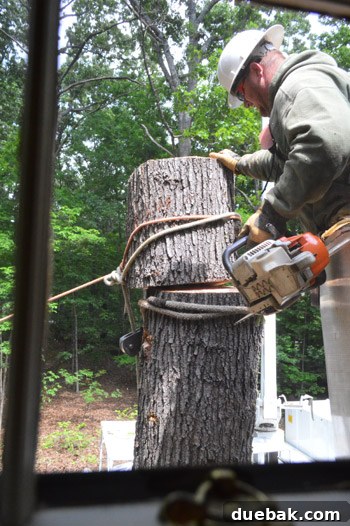
William, in particular, demonstrated remarkable control and expertise. From his position in the bucket lift, he meticulously tamed the lower sections of the deck tree. The entire operation is a masterclass in applied mathematics – angles, momentum, and trajectory are constantly being assessed to ensure that no part of the tree swings unpredictably towards the house or other structures. The meticulous planning and execution are nothing short of amazing to observe, showcasing the true skill involved in complex tree cutting and removal.

From the guest room window, the proximity of the tree was truly striking. There was no need for zoom on the camera; the tree was directly outside, emphasizing the immense precision and caution William and his team had to exercise throughout the process. This close vantage point truly highlighted the specialized nature of their work and the importance of hiring professionals who prioritize safety above all else, especially when dealing with trees near residential structures.
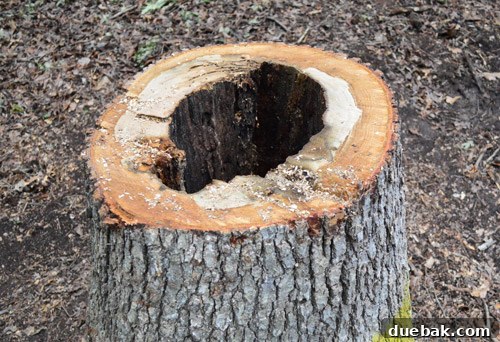
Another stark revelation during the removal was the extent of internal decay in some of the trees. It was genuinely shocking to see how hollow certain trunks had become. While a photograph struggles to capture the full scale, imagine a cavity so vast that our daughter Clara, and perhaps four of our dog Burger, could comfortably fit inside. This visual confirmation underscored the severity of the problem and validated our decision to remove them, preventing what could have been a disastrous collapse and ensuring long-term home safety.
The Transformative Impact: Enhanced Safety, Aesthetics, and Property Value
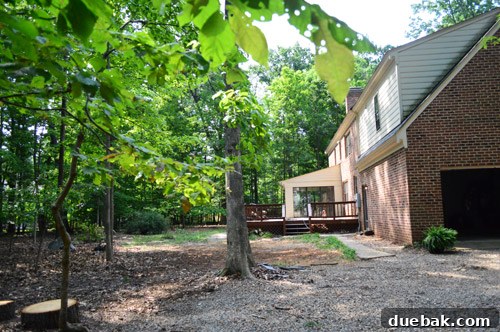
With the two most dangerous trees in the back removed, the transformation was immediate and significant. The landscape, while still lush and leafy, now offered a much safer environment with considerably less risk of “tree-on-house” incidents. The visual openness and increased sense of security were palpable, enhancing both the aesthetic appeal and the practical safety of our backyard space. This strategic tree removal has significantly improved our outdoor living area.
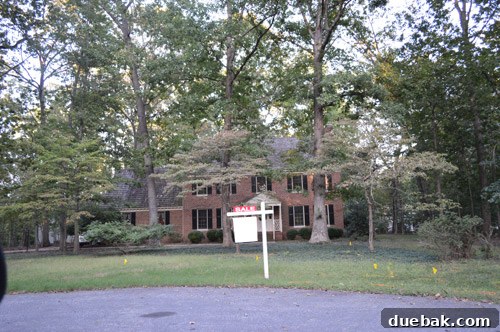
The front of the house also saw a dramatic change. For comparison, here’s a snapshot from when we first purchased the property, showcasing the dense canopy of the three problematic trees. This “before” image clearly illustrates the extent of the overgrown vegetation and its impact on the home’s facade and surrounding landscape.
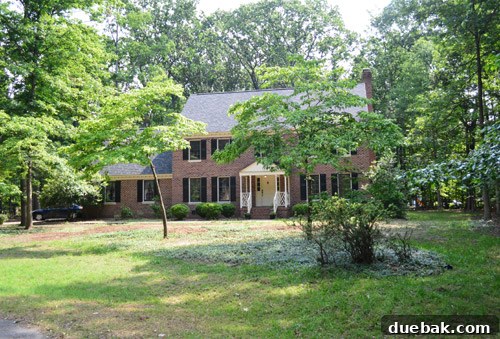
And here is the “after” view, with those three trees thoughtfully removed. The difference was far more pronounced than we had anticipated. While we initially hoped to preserve at least one of them, the peace of mind that comes from eliminating these hazards far outweighs any sentimental attachment. This proactive step means we no longer have to dread incoming storms, a huge relief for any homeowner. Furthermore, the removal has ushered in a host of other benefits, contributing significantly to our home’s long-term health and our quality of life:
- **Increased Natural Light:** Our home now enjoys significantly more natural light, creating a brighter, more welcoming interior and reducing the need for artificial lighting during the day.
- **Improved Landscape Health:** The increased sunlight will be instrumental in helping us grow a healthier lawn, finally filling in the patchy areas of our yard and fostering a more vibrant outdoor space.
- **Roof Longevity:** A drier roof, less shaded and less prone to accumulating moisture, moss, and debris, is expected to have a considerably longer lifespan, saving us on future maintenance and replacement costs, a key aspect of proactive home maintenance.
- **Preventing Structural Decay:** Reduced shade and moisture will also help deter further rot in our siding and trim, an existing issue we were already dealing with, thus preserving the exterior integrity of our home.
Navigating the Costs of Professional Tree Removal and Smart Negotiation Strategies
Investing a few thousand dollars in professional tree removal might seem steep at first glance, but the peace of mind and long-term benefits for home safety and property preservation are invaluable. Tree removal costs are highly variable, influenced by several key factors:
- **Tree Size:** Larger trees naturally require more labor, specialized equipment, and time. The sheer volume and weight of the wood, coupled with the complexity of felling massive trunks, significantly impact the price.
- **Accessibility:** If a tree is difficult to reach due to obstructions, power lines, or tight spaces, requiring cranes, complex rigging, or manual climbing, the cost will increase. Ease of access for machinery is a major determinant.
- **Location:** Regional labor rates, the cost of disposing of tree debris, and specific permit requirements from local municipalities can all impact pricing. It’s always advisable to consult local regulations.
For context, removing a medium-sized oak tree in close proximity to a house in our area typically ranges between $1,000 and $2,000. However, when you have multiple trees, the cost per additional tree tends to decrease significantly. This is because a substantial portion of the initial quote covers the mobilization of the crew and heavy machinery to your property. So, while a single tree might be quoted at $1,000, negotiating a total of $3,000 to get five of them taken care of, especially if some are smaller or easier to manage, represents excellent value. Always remember that comprehensive projects often yield better per-tree pricing when engaging a professional tree service.
Effective Tree Service Negotiation Tips: Maximizing Value and Ensuring Safety
- **Gather Multiple Estimates:** Unless you have an established relationship with a trusted arborist, obtaining several quotes is crucial. This allows you to compare pricing, assess different approaches, and ensure you’re getting a fair market rate for tree removal. In our case, William’s reputation and consistently competitive pricing, validated by friends we’ve recommended him to, made this step less necessary.
- **Verify Licensing and Insurance:** This is non-negotiable. Tree removal is inherently dangerous work. Ensure the company is fully licensed and carries comprehensive insurance (liability and workers’ compensation). This protects you from financial responsibility should an accident occur on your property or if a worker is injured. Never compromise on this vital safety measure; it’s paramount for any tree care project.
- **Leverage Repeat Customer Status:** If you’ve used a company before, remind them! Loyalty often translates into better pricing, priority scheduling, or additional perks. A strong client relationship is mutually beneficial, so don’t hesitate to mention your history when seeking tree services.
- **Seek Out Competitor Coupons and Promotions:** Keep an eye out for local advertisements or online promotions from other tree service providers. Many companies are willing to honor a competitor’s coupon or match a lower bid to secure your business. It’s a simple yet effective way to negotiate and potentially reduce your tree removal cost.
- **Master the Art of the “Best Price” Question:** When a quote is presented, politely ask, “Is that your best price?” Then, and this is key, remain silent. Allow the arborist to respond. This simple question, often accompanied by a friendly smile, frequently results in a revised, lower price, complimentary services like stump grinding, or other added benefits. It’s a powerful negotiation tactic for securing better value.
Cherishing Memories: Preserving a Piece of Nature
Of all the home projects we’ve undertaken, this one was arguably Clara’s favorite to observe. She was captivated by the sheer power of the wood chipper, mesmerized by the men working high in the trees, and absolutely delighted by standing on the remaining stumps. The largest deck tree’s stump held a special allure for her. We initially considered transforming a section of it into a table base for the deck, but its exact location would have placed the table too close to the house, rendering it impractical for everyday use and hindering functionality.
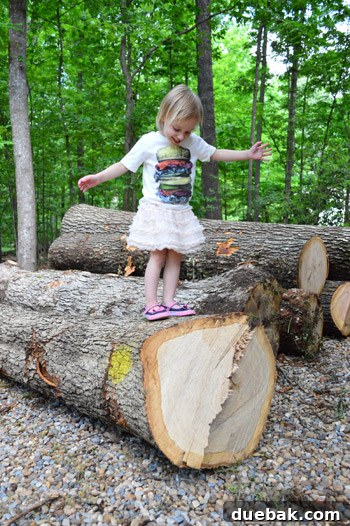
Instead of letting the entire tree go, we chose a creative way to “keep” a part of it. We asked the crew to slice several large, flat sections from the trunk before hauling the rest away for chipping and recycling into mulch. These unique, natural stepping stones now form a charming pathway, serving as a beautiful reminder of the majestic oak and the transformation of our property, integrating nature into our landscape design.
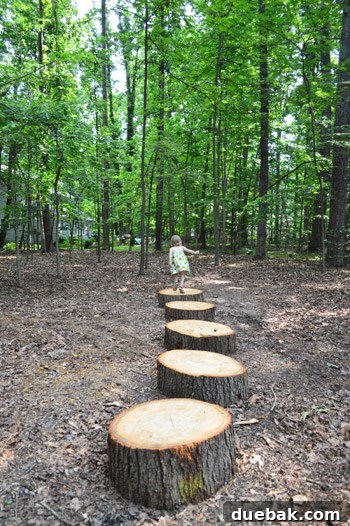
Despite their seemingly manageable appearance, these stepping stones were incredibly heavy, each weighing a significant amount. Moving them into their perfect, clean alignment required the heavy-duty tractor and the expert maneuvering of the crew. It was quite a spectacle to watch them meticulously position each one with powerful machinery, a testament to the strength and skill involved even in the final, artistic touches of a tree removal project, showcasing both practicality and aesthetic integration.
Living with Nature: An Unexpected Epilogue
And now for an enchanting epilogue to our tree removal saga. You might recall John mentioning our new “deer friends” at this house. It seems our property, even with fewer trees, continues to be a favorite spot for local wildlife. They possess an uncanny ability to sneak up on us, blending seamlessly into the environment. Case in point: I was busy capturing “after” photos of the newly cleared areas when John spotted a deer observing me from directly behind. Unbeknownst to me, a quiet observer had joined my photoshoot, a charming reminder of living in harmony with nature.
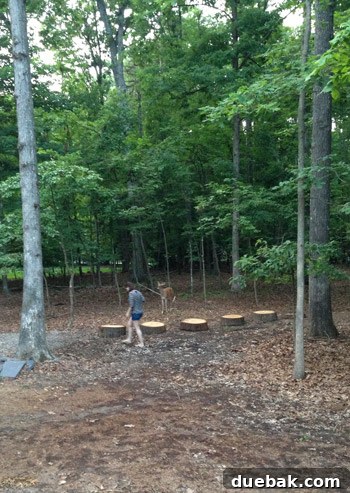
Upon realizing its presence, I quickly turned and managed to snap this picture – a moment of unexpected wildlife photography! It was a delightful reminder that while we’ve made our home safer, we still share our space with the natural world, and that tree removal doesn’t necessarily mean losing all connection to local fauna.
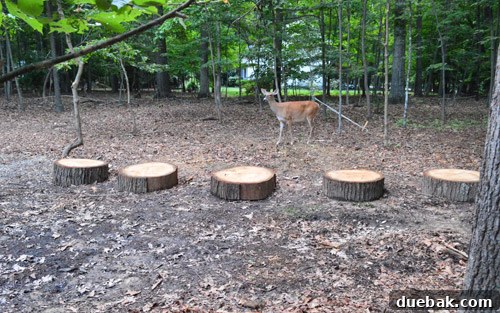
However, the moment of tranquil observation was short-lived. Our ever-vigilant dog, Burger, let out a bark, and with a graceful bound, the deer disappeared back into the forest. So, it appears we truly do inhabit a “Fairy Tale Forest,” a place where home safety and natural beauty can coexist. Thankfully, a multitude of healthy, leafy trees still grace our property, ensuring the title remains well-deserved, offering shade, habitat, and a continued connection to nature’s tranquility and beauty.
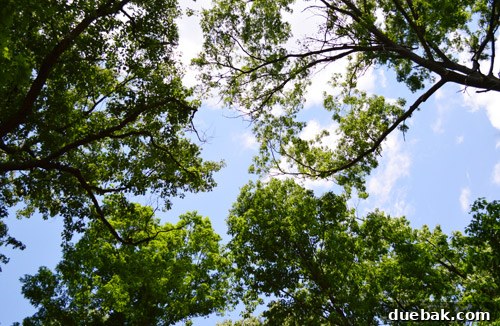
Have you embarked on similar tree projects – limbing, trimming, or full removal? It’s a fascinating, complex process, isn’t it? Honestly, I could easily watch a 24/7 reality show dedicated to professional tree work. If any HGTV producers are reading this, consider it a pitch! An hour-long program showcasing skilled arborists expertly tackling giant trees, demonstrating their ingenious lever-systems and breathtaking swinging contraptions, would be absolutely captivating. It’s a testament to human skill and engineering that truly deserves recognition in the field of professional tree care and land management.