
DIY Home Repair: Tackling Wall Cracks and Launching a Laundry Room Makeover
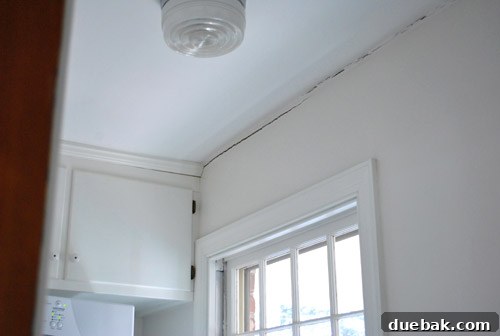
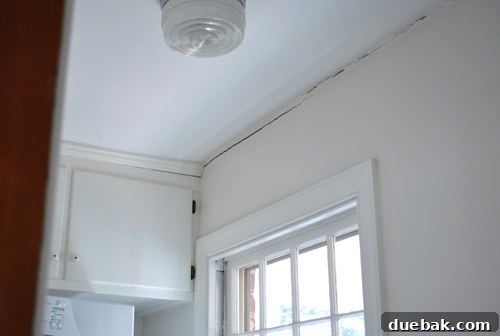
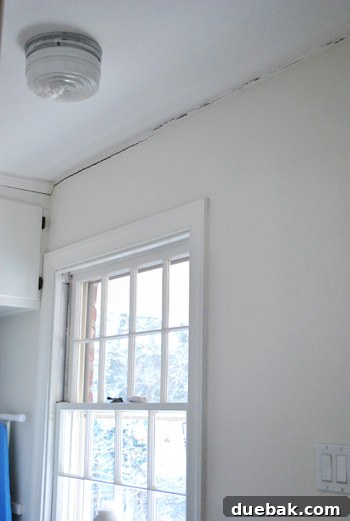
Every homeowner knows the feeling – you spot a minor imperfection, a small sign of wear and tear, and suddenly it demands your full attention. For us, it was a prominent crack snaking its way across the ceiling in our laundry room. While seemingly minor, these tell-tale lines can often be a source of worry or, at the very least, an aesthetic nuisance. But here’s the good news: many such issues are incredibly straightforward to fix, paving the way for bigger and bolder home improvement projects. This particular crack became the catalyst for a much-needed transformation of our compact laundry space, proving that even the simplest repair can kickstart an exciting home renovation journey.
Let’s take a look at the initial state – a persistent reminder that our laundry room needed some love:
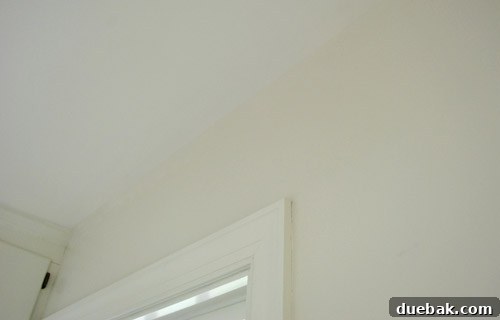
And now, a glimpse of the seamless finish after our simple repair:
Understanding and Fixing Common Wall & Ceiling Cracks
Upon discovering the crack, our first step was a professional inspection during our home buying process. This crucial measure confirmed our relief: the crack was not indicative of foundation issues or structural damage, but rather a common result of normal house settling. This is a sigh of relief many homeowners can appreciate! With the cause identified as benign, the solution was surprisingly simple and budget-friendly: a tube of paintable white caulk.
Caulk vs. Spackle: Choosing the Right Material for Your Repair
When it comes to filling cracks, many DIYers wonder whether to use caulk or spackle. We opted for caulk, and here’s why experts often recommend it for settling cracks: spackle, while excellent for small nail holes and superficial imperfections, can sometimes shrink and fall out of dynamic cracks (those caused by slight movement or settling) over time. Caulk, especially flexible acrylic latex caulk, is designed to expand and contract with minor structural shifts, making it a more durable and long-lasting solution for areas prone to settling. Always ensure your chosen caulk is “paintable” if you intend to match it to your wall color – a non-paintable silicone caulk won’t take paint, leaving an obvious repair line. We typically reach for Dap’s white paintable window & door caulk for its reliability and ease of use.
Step-by-Step Guide to a Smooth Crack Repair
Repairing this ceiling crack was a remarkably straightforward process that any homeowner can tackle. Here’s how we achieved a flawless finish:
- Preparation is Key: Before applying caulk, ensure the crack area is clean and free of dust or debris. A quick wipe-down with a damp cloth and letting it dry completely is usually sufficient. This helps the caulk adhere properly.
- Apply a Consistent Bead: Using a caulk gun, we carefully squeezed out a steady line of caulk directly along the length of the crack. The key is to maintain even pressure and a consistent speed to create a uniform bead. Don’t worry about perfection at this stage; smoothing comes next.
- Smooth and Remove Excess: Immediately after application, use a wet finger (or a specialized caulk tool) to smooth the caulk bead into the crack. This pushes the caulk firmly into the gap and removes any excess, creating a clean, flush surface. The wetness prevents the caulk from sticking to your finger.
- Refine with a Wet Rag: For an even smoother, professional-looking finish, gently run a clean, wet rag over the newly smoothed caulk. This helps feather the edges and blend the repair seamlessly with the surrounding ceiling or wall surface.
- Allow Ample Drying Time: Patience is a virtue in DIY. We allowed the caulk to fully cure for approximately 48 hours. While some caulks dry to the touch faster, waiting the full recommended time ensures maximum durability and prevents cracking when painted. Drying times can vary based on humidity and temperature.
- Paint for a Perfect Blend: Once the caulk was completely dry and cured, we touched up the area with the existing wall and ceiling paint, thankfully left behind by the previous owners. The repair vanished, leaving behind a pristine surface.
This simple project serves as a powerful reminder: you absolutely can handle these home repairs. Even if you’re navigating the task from a wobbly chair, with a napping baby nearby, and a curious dog giving you “the stink eye” throughout the entire process. Trust me, the satisfaction of a job well done is worth the momentary awkwardness!

Even my mom, after multiple phone calls from the hardware store comparing caulk guns (a true DIY rite of passage!), successfully tackled caulking her entire bathroom herself. It’s incredibly empowering to learn these practical skills.
Beyond the Crack: Embarking on Our Laundry Room Makeover Journey
This “mundane” crack repair was more than just a fix; it was the first domino in a much larger project: giving our tiny 3.5′ x 8′ laundry room a complete makeover. For too long, this essential space had been overlooked, functioning purely as a utility area with little thought given to aesthetics or optimal functionality. But that changes now. We’re ready to transform it into a highly efficient, aesthetically pleasing, and joy-inducing part of our home. Let the fireworks begin!
The Laundry Room: From Drab to Fab – A Visual Evolution
Let’s rewind and see the journey of our laundry room, from its initial state to where we are now, laying the groundwork for exciting changes.
Here’s what our laundry room looked like when we first moved in – a blank slate, but with plenty of room for improvement:
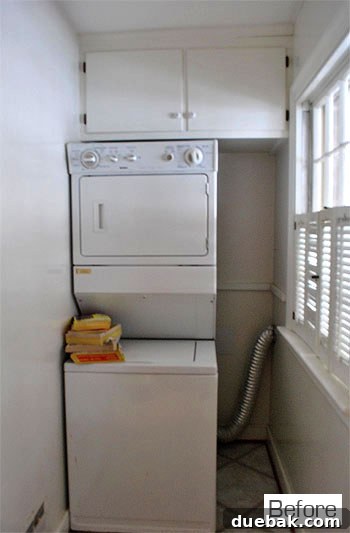
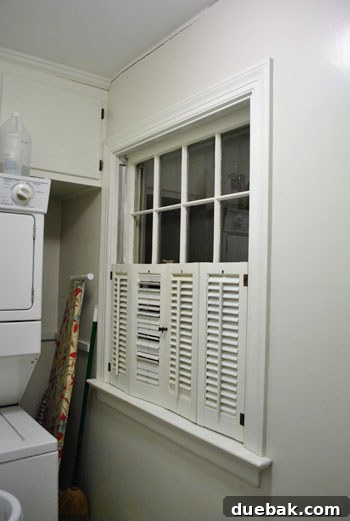
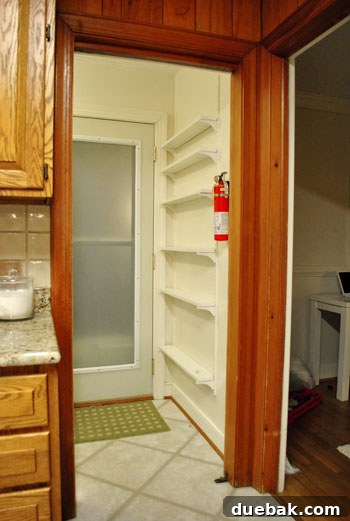
Since then, we’ve made several impactful changes that have already significantly improved the space and set the stage for our upcoming projects:
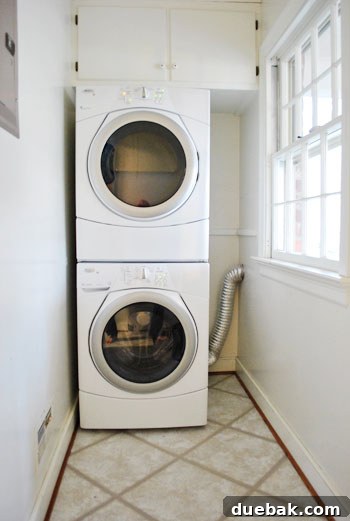
- We upgraded to sleek new front-loading appliances, which we snagged at a fantastic sale price. These not only boost efficiency but also free up valuable vertical space.
- We removed the bulky window shutters, instantly allowing more natural light to flood into the room.
- To maintain privacy without sacrificing light, we frosted the side door that leads into the kitchen. This was particularly important given its visibility and proximity to our living areas.
- We also removed the existing shelves located behind the side door, opposite the washer and dryer, clearing the way for a custom storage solution.
Here’s how the laundry room looks today, after these initial but impactful modifications:
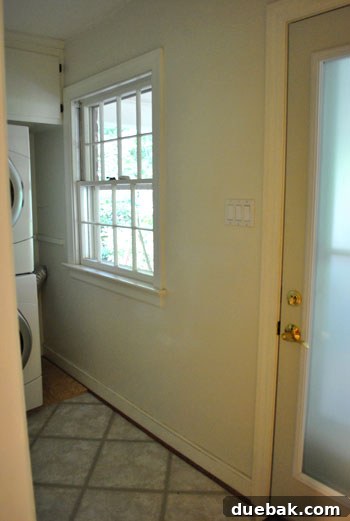
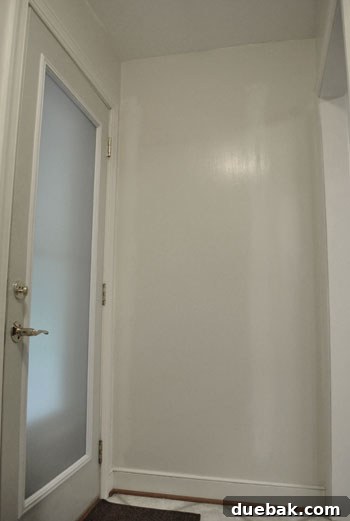
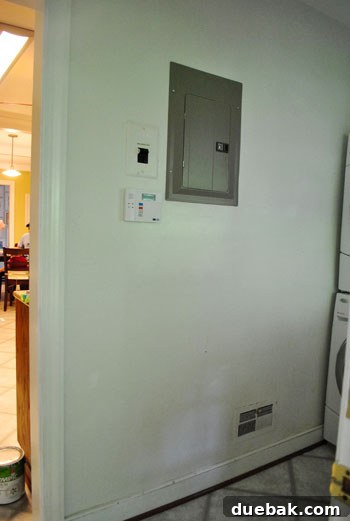
Our Comprehensive Laundry Room Makeover To-Do List
With the foundations laid, it’s time to dive into the details. Our current to-do list focuses on maximizing both the functionality and aesthetic appeal of this compact space:
- Paint the Baseboards and Quarter Round: The existing brown quarter round near the baseboards creates a visual interruption. We’ll paint it a crisp, glossy white, along with the baseboards themselves, to create a seamless, brighter look that visually expands the room.
- Refresh All Trim Work: The dinged-up trim needs attention. We plan to re-paint all existing trim in a fresh semi-gloss white for durability and a clean, updated appearance.
- Update Wall Color: A new wall color will dramatically change the room’s ambiance. We’re still finalizing our color choice but will share details later this week. We’re leaning towards a light, airy shade to make the small space feel larger and more inviting.
- Install Adjustable Built-in Shelving: This is a major project for us. We intend to build adjustable shelving in the narrow nook next to the stacked washer and dryer. Since the room is only 3.5 feet wide, unstacking the appliances is not an option (it would leave only seven inches of usable space!). Custom built-ins are essential for utilizing vertical space efficiently and providing much-needed storage.
- Replace Cabinetry Hardware: Small details make a big difference. We’ll replace the outdated hinges and knobs on the existing upper cabinetry to instantly modernize their look without the expense of full cabinet replacement.
- Upgrade the Light Fixture: The old light fixture (visible in the first two ‘before’ pictures) is not only dated but also inefficient. We’re looking for a new fixture that offers better illumination and complements our desired aesthetic – perhaps even a creative DIY solution!
- Add a Window Treatment: To soften the space and add a touch of personality, a new window treatment is on the agenda. We’re considering a simple, homemade option that allows for privacy while still letting in natural light.
- Incorporate Functional Storage Near the Door: Entryway essentials like shoes, our dog Burger’s leash, and other quick-grab items need a designated spot. We’ll design smart storage solutions near the door to keep these items organized and out of sight.
- Hang Cheerful Art & Conceal the Fuse Box: To bring joy into the space and cleverly obscure the giant metal fuse box, we’ll strategically hang some cheerful artwork. This combines aesthetics with a practical need to camouflage unsightly utility elements.
Long-Term Vision: Hardwood Floors and Beyond
Our long-term dream for this space (and connecting areas) involves ripping out the current vinyl tile, with the hope of uncovering beautiful hardwood floors underneath. If successful, we would then refinish these hardwoods, ideally extending them into the kitchen for a seamless flow. However, this is a significant undertaking that would necessitate removing all our kitchen cabinets (as they rest on the current vinyl tile and a layer of plywood, with hardwoods below). So, while the hardwood dream is still a “waaay down the road” aspiration, for now, our focus remains on enhancing everyday function, storage, and injecting some much-needed cuteness into our laundry room. Game on!
Your DIY Adventures & The Spectrum of Home Improvement
We’d love to hear about your home improvement journeys! Do you have any laundry room makeovers underway? What projects, art pieces, or color schemes have you found particularly successful in your own laundry areas? Sometimes, tackling home projects can feel daunting, like facing a challenge that seems bigger than it is. It’s often about perception, isn’t it?
For more DIY inspiration and practical tips, check out some of our past projects:
- See how we skillfully hid a large electrical box in our first home: here and here.
- Discover how we transformed an old bi-fold laundry closet into a functional space: here and here.