
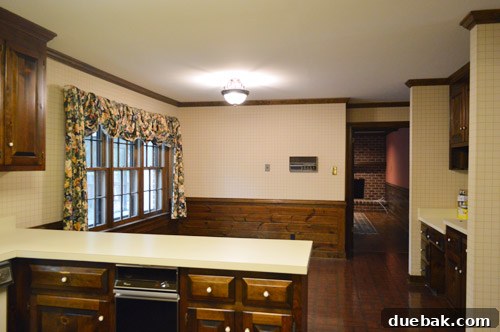
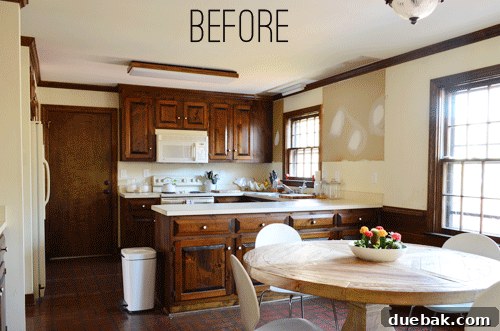
Stepping back into our kitchen today, it’s almost surreal to recall how it once looked when we first toured this house. Do you remember the initial impression? That very first glimpse, revealing a space that held so much potential, yet was draped in the hues of its past?
Fast forward through weeks of planning, priming, and painting, and the transformation is nothing short of breathtaking. The same kitchen, once cloaked in shadows and dated tones, now radiates a vibrant, welcoming glow.
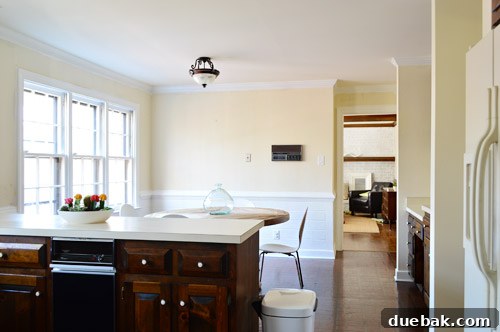
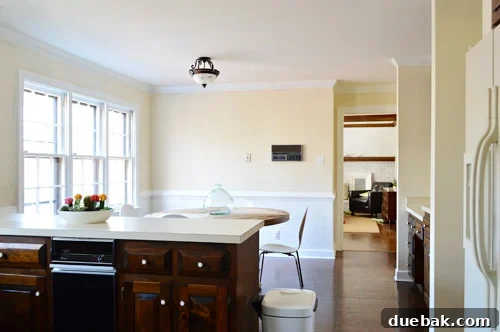
The difference from certain angles is truly astounding, almost as if the room itself has expanded. What appeared once to be a cozy, albeit somewhat confined, space has now opened up, breathing a new lease of life into our home’s heart.
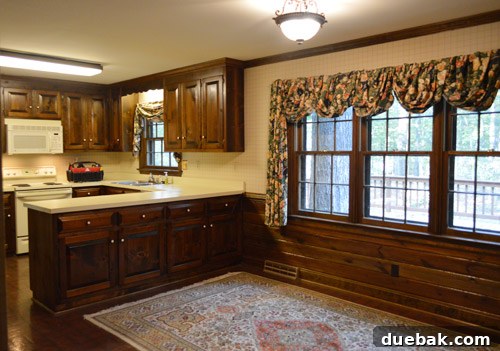
It’s like walking into a completely different room altogether, a space where you instinctively wonder if someone secretly installed five extra lights. The sheer amount of brightness is remarkable, creating an atmosphere that feels not just lighter, but also more inviting and expansive. Natural light now dances off the newly painted surfaces, illuminating every corner and crevice in a way it never could before.
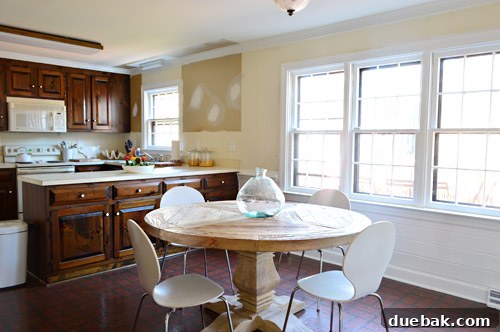
Yes, we took the plunge – headfirst into the ambitious project of priming and painting the kitchen’s baseboards, the intricate crown molding, and, perhaps most dauntingly, the window trim. With a staggering fifty-two window panes to meticulously tackle, this task alone felt like a marathon. Yet, as often happens in home renovation, one thing led to another, and we found ourselves fully committing to an all-out transformation. We extended our efforts to the entire wood paneling throughout the kitchen, as well as the doors leading to both the pantry and the garage. While we hold nothing against the charm of dark wood paneling, our vision for this house leaned strongly towards a brighter, more contemporary aesthetic. Our inspiration came from countless hours spent drooling over awesomely classic spaces that effortlessly blend elegance with a fresh appeal, much like this captivating design, this beautifully curated interior, and this inspiring transformation. These images solidified our belief that a painted finish would truly unlock our kitchen’s full potential, aligning it with the modern, airy feel we desired for our home.
Let’s be candid: this was far from an easy process. The sheer scale of the task, from meticulous preparation to countless hours of brushing and rolling, tested our patience and dedication. However, the outcome has unequivocally proven that it was SO WORTH EVERY SINGLE EFFORT. The room now feels incredibly brighter, shedding the heavy, somewhat oppressive atmosphere it once had. We find ourselves instinctively drawn to look out the windows now, a simple pleasure that was previously overshadowed. Before, the dark trim acted as a visual barrier, abruptly stopping the eye. Now, with the crisp white framing, the outside world is suddenly emphasized, transforming our view into a beautiful, living focal point – almost like a serene forest painting framed by our windows.
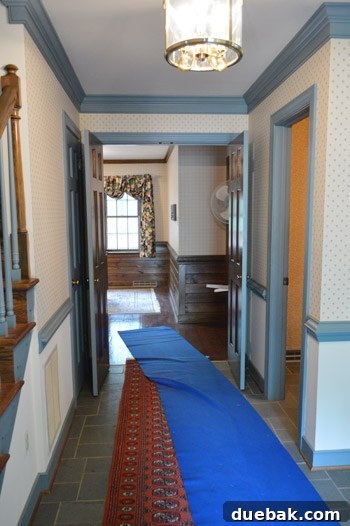
One of the most delightful new perspectives in our home is the view from the front door, offering a sweeping glance into the heart of the kitchen. Here’s a snapshot we captured during the initial inspection, a chaotic yet charming relic of what once was. Please excuse the disarray; at the time, a crew was busily moving out several old furniture pieces, creating a bustling scene.
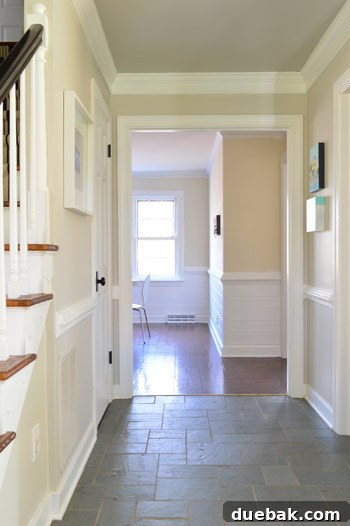
And now, behold the transformation! This photograph, taken just yesterday afternoon, showcases the dramatic shift. While the walls currently sport a neutral beige, it’s merely a temporary canvas. We’re excitedly planning for a soft, airy color on the kitchen walls to introduce a gentle break and add depth to the space, with more details on our color selection available in this dedicated post. Complementing this, the lower cabinets will eventually be painted a rich, dark hue, creating a striking and sophisticated contrast. Our long-term vision also includes installing large, dark (and heated!) tiles on the floor, which we anticipate will beautifully balance and ground the entire room. Imagine the exquisite interplay: pristine white paneling, subtly colored walls, deep, inviting floors, and a rustic wood dining table – a harmonious mix that promises warmth, character, and timeless elegance.
The painting process itself was a labor of love, requiring two diligent coats of a high-quality primer, meticulously followed by two full coats of paint, all applied by hand. We made a conscious decision to reserve our paint sprayer solely for items that could be easily removed and taken outside, such as future cabinet doors and drawers. This decision stemmed from a previous experience where we used it indoors once to paint all the upstairs baseboards, trim, and doors while the carpeting was being replaced. We observed a noticeable amount of overspray, which, while manageable in a gutted space, was something we wanted to avoid in our main living areas.
Based on that experience, and our successful outdoor projects like painting the sunroom ceiling planks, we’ve concluded that our particular sprayer is best suited for exterior applications or interior spaces that are truly gutted. We’ve seen other DIY enthusiasts impressively tape off entire rooms to spray every inch of woodwork, but our kitchen presents a unique challenge. With four distinct doorways leading to other finished spaces, fully blocking off and protecting these areas would have been an monumental undertaking. The mere thought of paint seepage onto the gleaming wood floors in the dining room or living room was enough to send shivers down our spines. We also carefully considered the time investment; if taping everything off meticulously took 10 hours or more, we questioned whether using the sprayer would genuinely save us any significant time in the long run. The trade-off just didn’t seem worth the risk or the effort for this particular project.
So, John and I tackled it the old-fashioned way, chipping away at the massive task over the course of five days. Our furry companion, Burger, unfortunately, refused to lend even a paw – a true diva, indeed! Thankfully, we discovered an exceptional stainblocking primer that made the process considerably smoother. This primer boasts zero VOCs (Volatile Organic Compounds), which was a huge relief, allowing me to join in on the fun without concerns about strong fumes. More importantly, it actually *works*! We’d previously experimented with other primers that resulted in frustrating wood-bleed, staining coming through the fresh coat of primer in a way you wouldn’t believe. But this particular one, Kilz Premium, was a game-changer. Just a quick tip: when you’re at the store, make sure you pick up the one with the label explicitly stating “no VOCs” and “stainblocking,” as Kilz offers a variety of different formulations. For the topcoat paint, we continued with our tried-and-true favorite, Benjamin Moore Simply White, in a semi-gloss finish. This elegant shade has become our go-to choice for all the trim and doors upstairs, as well as in other downstairs rooms we’ve refreshed, such as the foyer and the half bathroom. However, if you’re exploring other options, we’ve compiled a handy round-up of other popular white paint colors that you might find inspiring for your own projects.
Enough talk, it’s gif time, baybay:
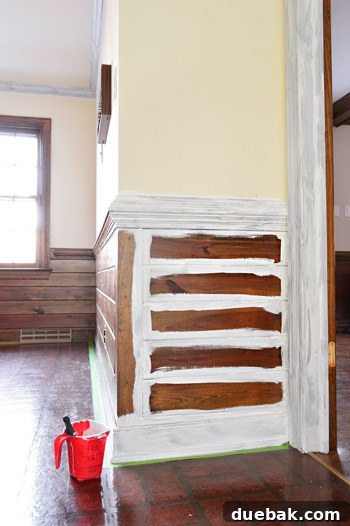
The entire application process, encompassing two coats of the Kilz primer followed by two thorough coats of paint, spanned approximately 12 hours of active work. Interestingly, the first coat always feels like the most challenging part of the entire endeavor. For some reason, it invariably takes longer to meticulously navigate all the nooks and crannies, and to carefully trace around every edge for that initial layer. It’s almost as if the surface is resisting the change. However, once that first coat is down, subsequent applications become progressively easier; your brush or roller seems to glide over the primed surface with far less friction and more fluidity, making each subsequent coat feel much quicker and more satisfying. Breaking down the time, it was probably around 4 hours for that initial, most laborious coat, then a quicker 3 hours for the second primer coat, and finally about 2.5 hours for each of the two subsequent paint coats, leading to a smooth and beautiful finish.
Regarding our application method, a dependable 2-inch angled brush became our primary tool. Both John and I utilized it to tag-team the intricate trim work and the numerous window frames, ensuring crisp lines and thorough coverage. For the broader surfaces of the paneling, we employed a combination approach: a brush was essential for meticulously working paint into the deep crevices and grooves of the paneling, ensuring no dark wood peeked through. Immediately after, a roller was passed over the flat fronts of each board. This technique effectively smoothed out any brush marks, providing a perfectly blended, uniform finish across the entire surface. This dual approach was crucial for achieving both detailed coverage and a professional-looking result on the textured paneling. Update: It’s important to note that if your trim or paneling features a super shiny, lacquered finish, we always strongly recommend an initial sanding followed by the application of a liquid deglosser before proceeding to the priming stage. This crucial step ensures proper adhesion of the primer. In our specific case, the existing wood was quite chalky and dry, lacking a thick layer of sealer, which fortunately allowed us to proceed directly to priming and painting. The paint has held beautifully, a testament to the surface’s readiness.
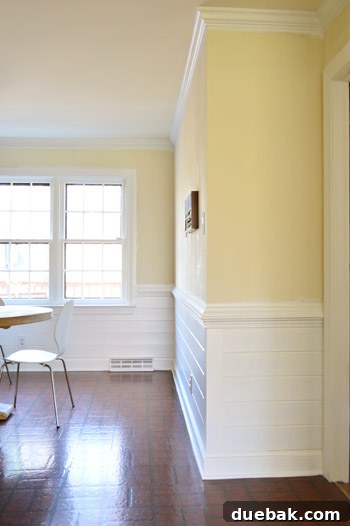
Now, standing in this freshly transformed kitchen, I honestly feel like Jasmine in “Aladdin,” floating through the room and singing A whole neeeeeew world with complete joy and wonder. The change is truly that dramatic!
*And then, my gaze inevitably lands on the intercom system, instantly shattering the illusion and transforming me into Ariel from “The Little Mermaid,” belting out, You want thingamabobs? I’ve got twenty. It’s a reminder that while the aesthetic has been drastically updated, some of the house’s original quirks remain, waiting for their own magical transformation.
Just look at this corner. The transformation here is truly a huuuge difference, a testament to the power of a fresh coat of paint and a clear vision. What was once a dark and unassuming nook has been completely revitalized, now reflecting light and radiating openness.
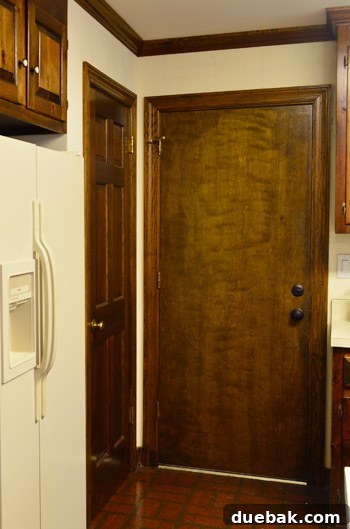
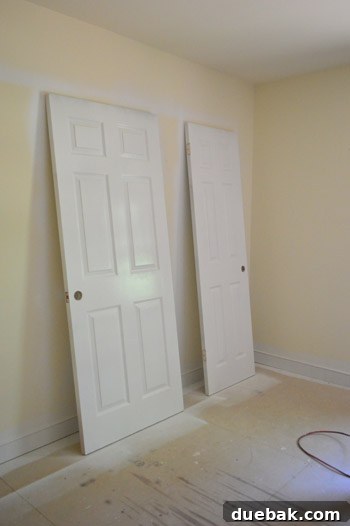
The door directly ahead in this view leads out to the garage, a vital functional entry point. To its left is the pantry door, a gateway to culinary organization. Someday, our dream is to replace the garage door with a paneled version, harmonizing it with the classic aesthetic we’re cultivating. However, this isn’t a straightforward task; it’s wider than other doors in our home and, crucially, needs to meet specific fire-safety standards. This might necessitate a custom order or, perhaps, a miraculous find at a local ReStore. For now, the fresh white paint on the existing door is a welcome and significant upgrade, instantly brightening the utility area. As for the pantry door, we were fortunate enough to avoid painting it from scratch. We had a spare door upstairs in our storage room that had been previously sprayed white when we tackled the other doors up there. This door was originally intended for a space between our bathroom and sink nook, but we ultimately decided against rehanging it as it blocked off the area, making us happier without it. Repurposing it here was an ideal solution. The garage door, on the other hand, was too essential to remove for spraying. Taking an exterior door off its hinges for several days would have meant a drafty and unsecured entryway, so we opted to paint it in place. We still need to replace those brass hinges, though – they’re definitely on the list for a more cohesive finish!
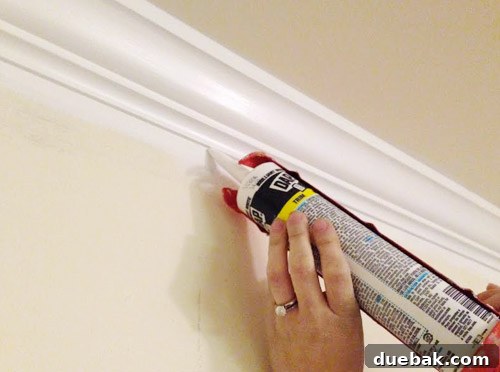
Oh, and here’s a crucial tip for anyone embarking on a project involving wood trim, paneling, or crown molding: it’s quite common to discover all sorts of hidden dark cracks that become glaringly obvious once you start applying primer and paint. The darker wood tones have a remarkable ability to camouflage these minor imperfections and shadows. However, as soon as a lighter, opaque coat of paint goes on, these previously unseen cracks tend to pop out. So, our golden advice is to diligently search for these cracks *after* you’ve applied one or two coats of primer. You wont be able to spot them before applying anything, as they only reveal themselves as the wood lightens. Once identified, fill them meticulously with paintable caulk. We’ve had great success with paintable Dap window & door caulk in white for a seamless blend. As long as you take care of this step before your final coat of paint, the paint will glide smoothly over the newly caulked areas, resulting in a beautifully finished, professional-looking surface.
With this major painting project now proudly checked off, our ever-evolving to-do list for the kitchen is looking a little something like this. It’s a comprehensive roadmap guiding our journey towards the ultimate dream kitchen:
Remove wallpaperMove fridge cabinet forwardRemove upper cabinets on window wall to prep for open shelves
Reinstall crown molding(You can delve into the details of how we tackled these initial four crucial steps by clicking here)
Prime & paint the pantry and the door to the garage
Prime & paint the trim, crown molding, & baseboardsPrime & paint the paneling- Patch and paint the ceiling
- Replace the fluorescent light in the cooking area and the pendant over the sink
- Replace and center the light over the dining table
- Paint the walls (Discover the beautiful color we’re currently leaning towards here)
- Hang floating shelves on the window wall
- Consider replacing the existing microwave with a countertop model (perhaps tucking it away in the pantry?) and adding an affordable range hood to visually lighten that entire wall. We’ve seen some fantastic options for around $20 on Craigslist!
- Paint the cabinets (Explore the exciting color palettes we’re considering for the cabinets here)
- Update the old cabinet hinges and knobs for a fresh, cohesive look
- Find the perfect rug for the eat-in area? Or perhaps experiment with peel and stick tiles throughout the space for a quick refresh?
- Select and hang curtains for the windows, adding a final touch of warmth and style?
Psst – For a deeper dive into the strategic choices behind Phase 1 of our renovation (for example, our rationale for painting the cabinets, why we decided against attempting to paint the linoleum floors, and a sneak peek into what’s on the agenda for Phase 2), you’ll find a wealth of background information and context in this comprehensive post. It’s packed with insights into our decision-making process!
While a significant number of items on our extensive list still await their triumphant cross-out, we are absolutely thrilled with the incredible progress this room has already made. The transformation has exceeded our expectations, bringing us closer to our dream kitchen with every completed task. What exciting projects or relaxing moments were you guys up to this past weekend? We’d love to hear about your adventures!