
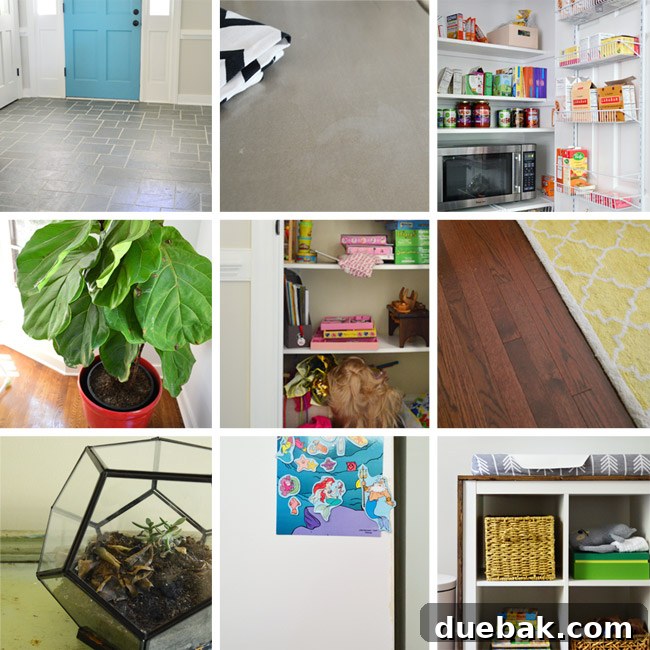
Welcome back to another edition of our “Post-Haste” series, where we take a deep dive into how our home projects and lifestyle choices are truly holding up over time. We understand your curiosity—from the durability of our concrete counters to the resilience of our foyer grout, and even the nuances of our adjusted blogging schedule. Life often moves at a fast pace, especially when juggling family and blogging, making it challenging to provide timely updates on every single project. But today, we’re dedicated to offering a comprehensive and honest assessment, sharing the long-term performance of various elements in our home. This is our third such installment, building upon previous updates where we tackled other frequently asked questions. We believe that true insights emerge not immediately after a project is completed, but after it has withstood the test of daily life, family chaos, and the ebb and flow of seasons. So, grab a cup of coffee and settle in as we revisit a range of topics, giving you the full scoop on what’s working, what’s not, and what we’ve learned along the way.
Our Ardex Concrete Counters: A Two-Year Retrospective
When we first embarked on the journey of creating our own Ardex concrete counters, it felt like a significant undertaking. Two and a half years later, we can confidently say these counters have been nothing short of awesome. The key to their remarkable durability, far exceeding our initial expectations, has undoubtedly been our careful sealer choice. We genuinely anticipated seeing scratches, divots, and various marks accumulate over time, given the typical wear and tear kitchens endure. Yet, to our pleasant surprise, after hundreds of meals prepared and countless moments spent in the kitchen, not a single scratch or divot has emerged.
This impressive resilience might be attributed to a couple of factors. Perhaps our culinary adventures aren’t quite “Top Chef” level, meaning we’re not constantly wielding ultra-sharp knives directly on the surface. Our meals tend to be relatively basic, reducing the likelihood of intense surface interaction. More practically, we consistently utilize two large wooden cutting boards strategically placed on the counter. These serve as our primary zones for slicing, dicing, and, crucially, for placing hot pots and pans. This simple habit has likely shielded the concrete from the harshest elements of kitchen use. For those considering a similar project, it’s worth noting a tip we’ve heard: opting for a dark stain with Ardex might potentially show more scratches than our au-naturale finish. Our decision to keep the natural concrete aesthetic has not only contributed to its industrial charm but also seems to have been a wise choice for concealing any minor imperfections that might arise.
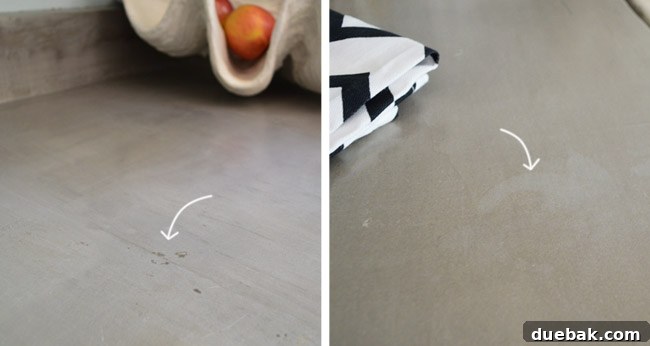
Stain resistance has also been a major win. Most spills—whether it’s water, juice, or other liquids—simply bead up on the sealed surface, much like they would on a well-sealed piece of wood. A quick wipe is usually all it takes to make them disappear without a trace. We have, however, observed a few instances, possibly from citrus splatters, where liquids sat long enough to subtly soak in, leaving behind faint dark spots on the concrete (see image below left). These don’t genuinely bother us; in fact, they subtly enhance the counter’s inherent industrial, lived-in character, adding to its unique patina rather than detracting from it. One incident involved a piping hot cup of tea placed directly on the surface without protection. This resulted in an almost imperceptible, very vague ring of haze, which is practically impossible to detect unless you’re examining it closely from just an inch away at the perfect angle (see image below right). This experience reinforced our commitment to using cutting boards for all hot items, and since then, we haven’t encountered any further heat marks. Overall, these counters have proven to be a fantastic, durable, and aesthetically pleasing addition to our kitchen, holding up beautifully to the demands of everyday family life.
Foyer Grout Stain: Still Immaculate After Months of Traffic
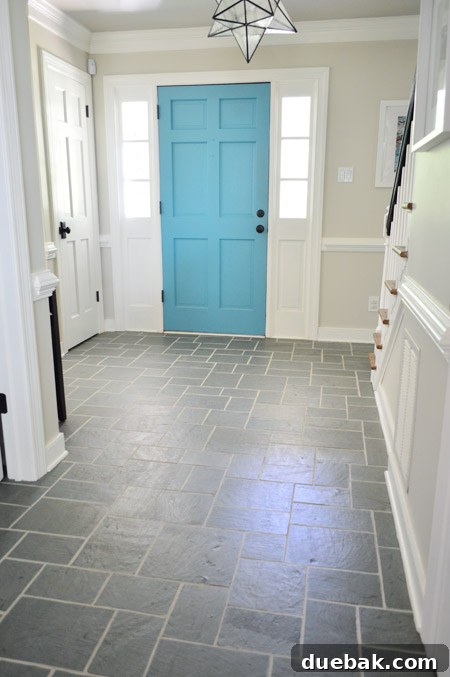
The transformation of our foyer grout, achieved by applying this specialized stain back in early January, continues to impress us. Despite being in a high-traffic area that sees frequent muddy shoes and paws, as well as semi-regular moppings, the grout lines look as pristine as the day they were stained. This durability is a testament to the product’s effectiveness and the thorough application process we undertook. The foyer is a gateway to our home, constantly exposed to dirt, moisture, and the wear of daily comings and goings, making its continued flawless appearance particularly satisfying. It’s not just our experience that speaks volumes; we’ve also received incredibly encouraging feedback from readers who used this same product in demanding environments like showers many years ago. Their reports consistently confirm the long-lasting integrity and aesthetic appeal of the grout stain, solidifying our recommendation. It’s rare to find a product that performs so well under such varied and continuous stress, maintaining its original look without fading, chipping, or degrading.
Appliance Paint on Our Fridge: A Durable DIY Upgrade
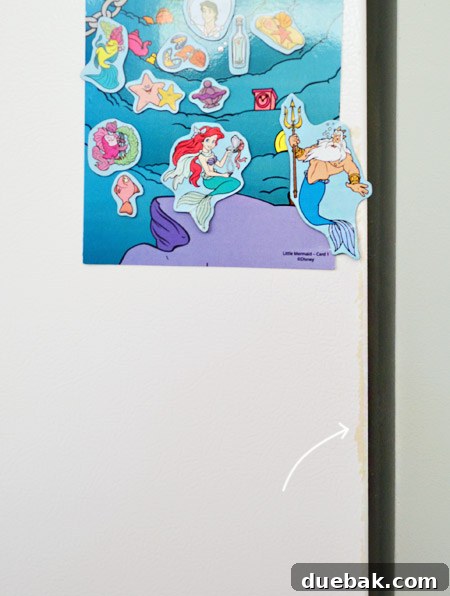
Our refrigerator, once a bisque color and now a crisp white thanks to our DIY appliance paint project, has largely maintained its fresh appearance. The most noticeable change since we first painted it is the sheer volume of magnets adorning its surface, courtesy of our daughter, Clara. This, surprisingly, has been a fantastic real-world test for the paint’s durability. We’re thrilled to report that these magnets, frequently dragged and rearranged, haven’t caused any scratches or peeling whatsoever. The paint has held up remarkably well to constant magnetic activity and casual handling on the doors and handles.
However, we did encounter one isolated incident that resulted in a scraped area along the right side of the door. We suspect this occurred when we were carrying a large, heavy object, likely a piece of lumber, and it inadvertently brushed against that edge. This specific type of impact, a heavy scrape against a sharp edge, seems to be the only thing that has managed to mar the paint’s surface. It was a “d’oh!” moment, to be sure. The key takeaway here is that for everyday use—the constant touching of handles, the opening and closing of doors, and even the playful dragging of magnets by little hands—the appliance paint is exceptionally robust. Its resilience to routine family activity is truly impressive. Our advice remains consistent: while the paint is incredibly durable for standard use, extreme impacts from sharp or heavy objects can still cause damage. If you’re undertaking a similar project, be mindful of those corners when moving large items, and your painted appliance should remain in excellent condition for years to come.
Our New Washer & Dryer: Embracing Efficiency with a Newborn
We are absolutely in love with our new washer and dryer! The timing of this upgrade couldn’t have been more perfect, as we’ve been putting these machines to hardcore use with a newborn in the house. The sheer volume of laundry that comes with a baby—from tiny onesies to countless burp cloths—demands a reliable and efficient system, and these appliances have exceeded our expectations. We detailed our research and selection process here, but suffice it to say, every feature we prioritized has proven invaluable.
The washer does an outstanding job of getting everything super clean, tackling even the toughest baby-related stains with ease. One of its most impressive features is its powerful spin cycle, which extracts an incredible amount of water from the clothes. Garments emerge only damp, not soaking wet, significantly reducing the required dryer time. This efficiency is not only a time-saver but also provides a fantastic bonus: it makes sun-drying clothes a much more appealing and practical option, as they don’t need to spend hours on the line. Beyond performance, the ergonomic design has been a game-changer. We specifically opted for a top-loader washer, and the reduced crouching required has been surprisingly handy, especially when you’re frequently carrying a baby in your arms. This seemingly small detail has made the daily chore of laundry much more comfortable and less strenuous, allowing us to manage household tasks with greater ease while tending to our little one.
Pantry Re-organization: A Sustained Upgrade for Kitchen Functionality
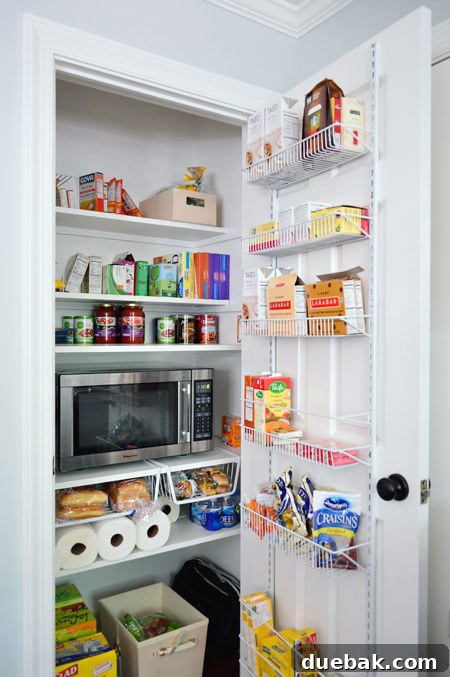
Our comprehensive pantry re-organization and food-storage upgrade has truly held its own. While it may not consistently maintain the perfectly styled, magazine-ready appearance it had on day one, it represents an enormous leap forward from its previous state. Before this makeover, our pantry was characterized by dark, inefficient shelves and a complete lack of any coherent storage system, leading to lost items and constant clutter. The transformation has not only improved aesthetics but, more importantly, enhanced functionality significantly.
Among the various improvements, the decision to tuck the microwave within the pantry has been a resounding success, freeing up valuable counter space in the kitchen. However, the true MVPs of this makeover are undoubtedly the door organizer and the hanging bread baskets. The door organizer provides an incredibly accessible spot for frequently used smaller items, spices, and sauces, making them easy to grab without rummaging. The hanging bread baskets, meanwhile, keep bread, tortillas, and other baked goods fresh and off the shelves, preventing them from getting crushed or lost. A key benefit derived from this re-organization is the creation of much more narrow storage. This ingenious design ensures that nothing can accidentally fall to the back of a deep shelf and become forgotten or expired, a common frustration in many pantries. This newfound accessibility and visibility for every item have been invaluable, streamlining our meal prep and grocery management. The pantry is no longer a source of frustration but a highly efficient and appreciated part of our kitchen, even if it has a charming, lived-in feel now.
The Game Closet: Our “Toy Library” in a New Phase of Life
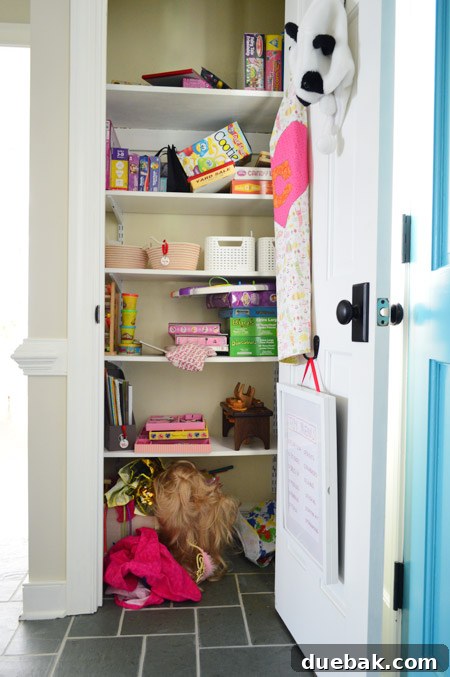
Our little “toy library,” as we affectionately call this game closet, has undergone a natural evolution since the arrival of our newborn, Teddy. While Teddy isn’t yet old enough to be playing with board games or puzzles, the dynamics of our household have certainly shifted. With a baby frequently in my arms or comfortably resting on my chest, the time I can dedicate to helping Clara meticulously put away her toys in an “über organized” fashion has, understandably, decreased. Consequently, what was once a perfectly categorized haven now often resembles a charmingly chaotic pit.
However, the genius of this closet design remains its ability to contain this mess. All the delightful disarray is tucked neatly behind a closed door, and for that, I am eternally grateful. The visual clutter is completely out of sight, maintaining a sense of order in our main living areas. Miraculously, Clara still adheres to her “one-thing-out-at-a-time” rule. This self-imposed discipline is the primary reason why the chaos remains confined to this closet and hasn’t spilled out into our office or living room. So, ultimately, this game closet has been nothing short of a lifesaver. It provides a dedicated space for Clara’s imaginative play without letting toys take over the entire house, even if its internal state is a little less pristine these days. And yes, for those eagle-eyed viewers, that is indeed my Kahleesi wig on the floor, now a favorite prop for Clara’s imaginative games. Her obsession with it provides endless moments of hilarious entertainment for us all.
Our Fiddle Leaf Figs: A Journey of Green Thumbs and Growing Pains
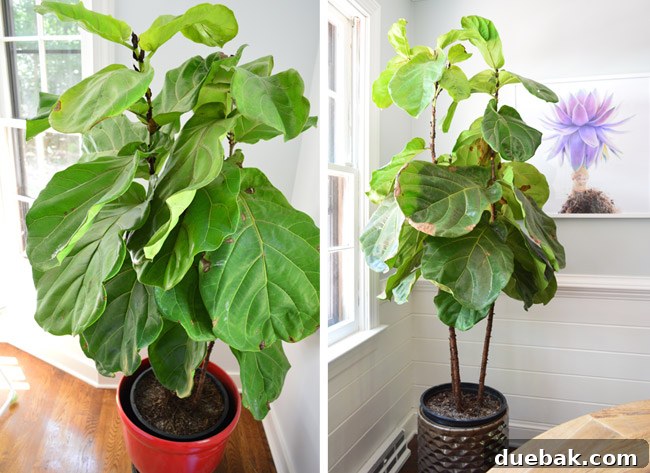
We’ve received a flurry of questions about our fiddle leaf figs, so let’s clear the air and share their story. Both magnificent plants were a fantastic find at Home Depot, purchased during a sale for just $58 each—a price that still feels like a steal for their size and presence. The striking red pot housing one of them is from Lowe’s, as is the convenient little wheeled cart it sits on, making repositioning a breeze. Our care routine is simple: a deep watering once a week, typically around 20 ounces, and ensuring they receive ample indirect sunlight. These conditions generally seem to keep them thriving.
The fiddle leaf fig nestled in the corner of our office continues to be a picture of health and happiness (see image below left), consistently producing new leaves and standing tall. However, the story of its sibling has been a bit more dramatic. It was initially content in another office corner, but when we introduced shelves along that wall, a relocation became necessary. We moved it into the dining room, a decision that, in hindsight, was a very bad idea. Despite what seemed like adequate indirect light and our consistent watering schedule, the plant clearly detested its new home. It began to show signs of distress, losing leaves and generally looking unhappy. Recognizing my mistake, I executed what I can only describe as a “fiddle leaf fig hail-mary” yesterday, moving it into the corner of the kitchen (see image below right). This spot receives abundant indirect light, and I’m fervently hoping it proves to be the ideal environment for its recovery. It’s a reminder that even with seemingly straightforward plant care, finding the perfect microclimate for each plant can be an ongoing experiment, requiring patience and observation. We’re crossing our fingers for a swift and full recovery for our finicky friend!
Our Organic Mattress: Five Years of Unwavering Comfort
Our organic mattress has now been a cornerstone of our bedroom for half a decade, and our satisfaction with it remains incredibly high. When we initially invested in this mattress, we heard various anecdotes from others about issues with dents and body impressions forming over time. However, after five years of continuous use, we are delighted to report that our mattress shows no signs of pitting, denting, or any significant sagging. It has maintained its integrity and, crucially for us, its desired firmness. We specifically prefer a firm mattress, and when we “built” this mattress, we customized it to precisely meet that specification. The fact that it has held up to our expectations for firmness and lack of depressions is a testament to its quality and the thoughtful construction. It continues to provide the consistent support and comfort we value, proving to be a wise and long-lasting investment in our sleep health and overall well-being. We’ve experienced no degradation in comfort or support, affirming our initial decision to prioritize quality and specific firmness levels in our mattress choice.
Our Target Hooks: A Simple Solution for Tangled Trinkets
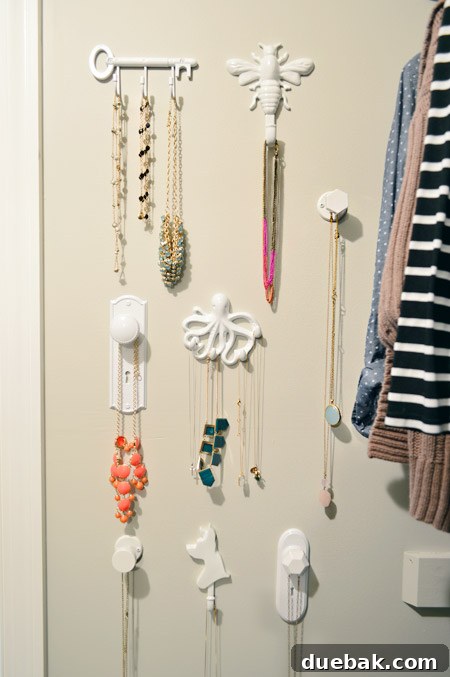
Many of you have inquired if we’ve found uses for our line of hooks beyond the initial picture hanger in our house. The answer is a resounding yes! I recently put a mismatched collection of our white hooks to use in my closet, specifically to tackle the perennial problem of tangled necklaces. Before this simple yet effective solution, all my necklaces were crammed and inextricably tangled within a drawer in my nightstand. The frustration of untangling them often meant I simply wouldn’t bother wearing them.
Now, thanks to the hooks, each necklace hangs neatly and individually, making them easily accessible and visible. This small organizational change has had a surprisingly large impact: I actually wear necklaces again! It’s amazing how a minor convenience can reignite the enjoyment of accessories. As an added bonus, we’ve discovered that these hanging necklaces also serve as a source of fascination for Teddy. He finds their gentle sway and sparkle utterly hypnotizing, providing a few moments of quiet engagement for our little one. It’s a simple, affordable fix that has brought both practical utility and unexpected charm into our daily routine.
Our White & Stained Kitchen Cabinets: A Half-Year Performance Review
Our kitchen cabinets, featuring white painted upper cabinets and wood-stained lower cabinets, have been performing exceptionally well after approximately six months of use. This contrasting two-tone design was a deliberate choice to add depth and character to our kitchen, and we’re pleased with its sustained appearance and functionality. The white upper cabinets, often a concern for many regarding cleanliness, have proven to be surprisingly manageable. I perform an occasional wipe-down if I spot a drip or splash, and a quick dusting of the ledges a few times a month is usually sufficient to keep them looking fresh. Their bright, clean aesthetic remains a highlight of the kitchen, contributing to an airy and open feel.
The stained lower cabinets, on the other hand, offer a different set of advantages. They are remarkably effective at hiding everyday dirt, fingerprints, and minor splatters, which can be both a blessing and a curse. While it means they don’t constantly demand attention for minor imperfections, there’s a subtle debate in my mind about whether this concealment is always a positive. With the white uppers, I have an immediate visual cue that they are clean, or if a significant spill like a glob of syrup is present. The stained lowers might be harboring more grime without it being obvious, requiring a more intentional cleaning schedule. Despite this philosophical musing, the practical performance of both sets of cabinets has been stellar. Crucially, neither the painted uppers nor the stained lowers have shown any signs of chipping, bubbling, or peeling—a testament to the meticulous preparation work we undertook. We absolutely cannot overstate the importance of thorough prep work (including sanding, deglosser, etc.) and using high-quality primer and paint if you’re considering painting your cabinets. Skipping these critical steps can lead to paint easily scraping off, undermining the longevity and aesthetic appeal of your efforts. Our experience reinforces that investing time in proper preparation pays dividends in durability and satisfaction.
Our Homemade Terrarium: A Moment of Silence for a “Black Thumb” Project
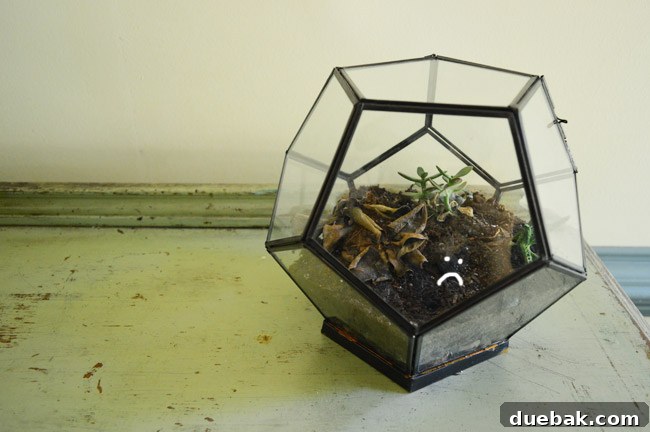
Please, a moment of silence for our homemade terrarium. It is with a heavy heart that I report this guy is, unequivocally, dead as a doornail. Womp-womp. Despite our best intentions and efforts, including positioning it in what we believed was adequate sunlight and meticulously using the supposedly beneficial “activated charcoal” layer, something went fundamentally wrong. The lush miniature ecosystem we envisioned simply failed to thrive, gradually wilting and succumbing to an unknown fate.
This project, unfortunately, falls squarely into the “Black Thumb Petersik” category. It’s a humbling reminder that not every DIY endeavor results in a glorious success, especially when living things are involved. We’re still not entirely sure what went awry—perhaps it was too much sun, not enough, an imbalance in moisture, or a deficiency in the soil composition. Regardless of the exact cause, the outcome is clear: the terrarium is no more. While it’s disappointing to see a project fail, it also serves as a valuable learning experience, reinforcing that plant care, even in a contained environment, requires a delicate balance and sometimes, a bit of luck. Perhaps our next botanical adventure will yield greener results!
Our Expedit Changing Table: Practicality Meets Parenthood
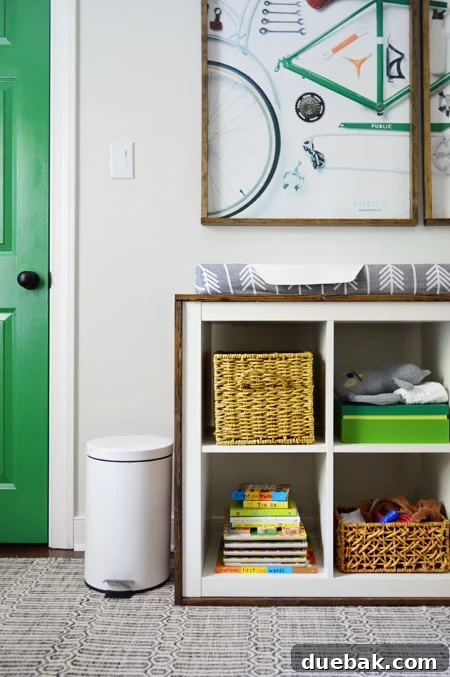
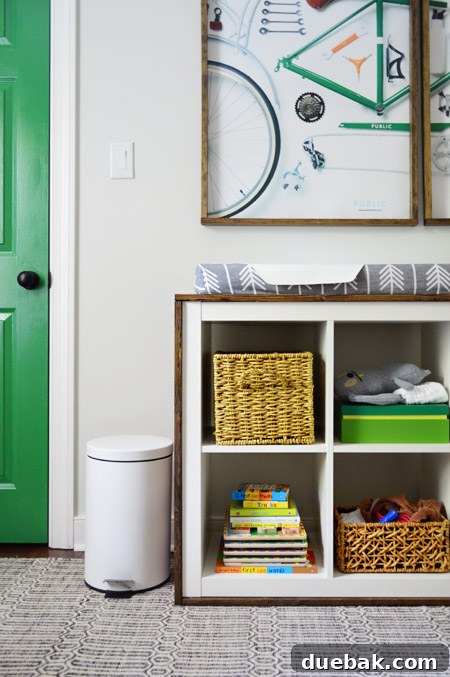
Our Expedit changing table setup has been an absolute godsend since the arrival of our newborn. Its design lends itself perfectly to creating an efficient and comfortable changing station. We’ve organized it thoughtfully: a large basket conveniently holds a supply of diapers, while wipes are kept readily accessible on the surface to the right of the changing pad. This arrangement ensures that everything we need is within arm’s reach, making diaper changes swift and hassle-free.
Both of us have been utilizing it extensively, often opting to walk upstairs to change Teddy there even when we’re downstairs. The comfort and ergonomic height it provides far surpass our temporary downstairs changing station on an ottoman. It makes a big difference in saving our backs and creating a dedicated, clean space for diaper duties. Currently, we’re still using disposable diapers. We did attempt cloth diapers, but they were a little loose on Teddy, and I’m currently living in a state of fear regarding “blowouts” that could potentially overwhelm a cloth system. However, we are very much looking forward to transitioning to cloth diapers soon and anticipate the changing table will continue to be a perfect fit for that as well. Our plan is to store the cloth diapers in the same large basket where we currently keep our disposables. For soiled cloth diapers, we’ll line a white trash pail with a wet-bag and likely move this pail into the bathroom. This way, we won’t have to bring diapers that require spraying back into the nursery, maintaining hygiene and convenience. We’ll be sure to keep you posted on how that transition unfolds!
Our Upstairs Hardwoods Laid with Elastilon: Mostly Perfect, One Small Caveat
The combination of the hardwoods we chose and our decision to use Elastilon as the underlayment for our upstairs flooring has been, for the most part, an outstanding success. The wood floors themselves have held up remarkably well. Despite the constant activity of a dog and a rambunctious preschooler, they haven’t felt overly soft, nor have they accumulated noticeable scratches or dents. This resilience to daily family life, including pet claws and toy-induced impacts, is truly impressive.
In terms of installation, the Elastilon system has performed admirably. After over a year of use, spanning periods of extreme heat and extreme cold, the flooring has shown no signs of flexing, gapping, or shifting. The seams remain as tight and clean as the day we laid them, maintaining a seamless and polished appearance throughout. In all areas where the subfloor beneath the Elastilon was perfectly level, the floors feel incredibly solid and secure, indistinguishable from a traditionally nailed-down hardwood floor. This includes our hallway, our bedroom, Clara’s room, and Teddy’s room – visitors would never guess these are floating floors. BUT… (and here comes the important caveat)…
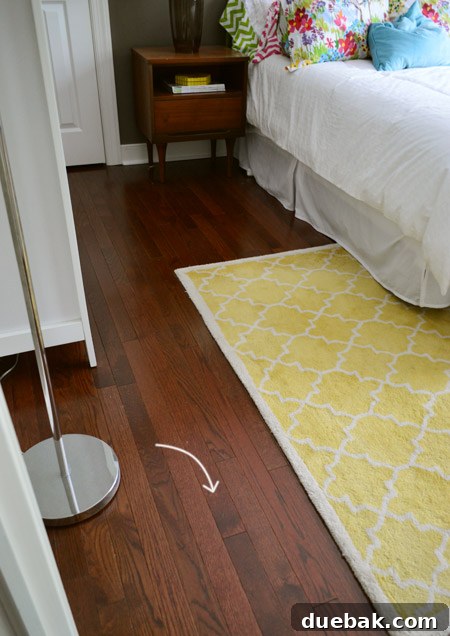
…there is one specific spot in the guest room where we believe the underlayment wasn’t perfectly level during installation. We deeply regret not having recognized this at the time, as it’s an issue we would have immediately addressed. Now, that particular area of the floor has a slight, subtle bounciness to it. While it doesn’t look unsightly or “janky” in any way—and in fact, guests whom I’ve confessed this minor flaw to often say they don’t even notice it—it nonetheless lacks the super solid, nailed-down feeling that characterizes the rest of our upstairs hardwoods. This small imperfection, though minor, bugs us because we know it’s there. So, while our overall love for Elastilon and our hardwoods remains strong, this serves as a crucial warning to anyone considering this system: meticulous attention to ensuring a perfectly level subfloor is paramount. Any unevenness can lead to subtle flexing and a less-than-solid feel in those specific areas. Aside from this singular instance, we wholeheartedly recommend Elastilon for its ease of installation and excellent long-term performance.
Our Scaled-Back Blogging Schedule: Prioritizing Family and Well-being
Our decision to slow down our blogging schedule has been met with immense personal satisfaction. As some of you anticipated, fewer posts have indeed correlated with a dip in website traffic and a reduction in income. These outcomes were expected trade-offs, and we weighed them carefully against our priorities. The change, however, has felt profoundly good for us. The past two months, in particular, have allowed me to embrace a more hands-on role as a mom than ever before. This period, especially with a newborn, is fleeting and precious, and I am incredibly grateful that I haven’t missed out on those invaluable moments in the relentless pursuit of “one more project” or “one more blog post.”
The shift has brought a greater sense of balance and presence to our daily lives. While our professional output has adjusted, the quality of our family life and personal well-being has significantly improved. This isn’t to say that blogging isn’t important to us—it absolutely is—but it’s about recalibrating priorities and recognizing when to step back and cherish what truly matters. We’ve learned that sometimes, less truly is more, particularly when it comes to time and attention with our children. The trade-off has been entirely worth it for the richness and fulfillment it has brought to our family life. It’s a continuous journey of finding that sweet spot between creative output and personal fulfillment, and for now, we’re incredibly content with where we’ve landed.

We hope this comprehensive update has provided the candid insights you were seeking regarding our home projects and recent life adjustments. From the enduring strength of our concrete counters to the learning curves of plant care and the evolving balance of our work-life, we believe in sharing both our successes and our lessons learned. We are always eager to hear from you, our readers! Do you have any products, projects, or lifestyle changes that you’ve tried and ended up passionately loving or, perhaps, profoundly regretting? We encourage you to share your own “gushiness” or crucial warnings in the comments below. Your experiences not only enrich our community but also provide valuable insights for others embarking on similar journeys.
Psst- In the realm of “oops, that was a bad call,” we’ve certainly had our share of missteps. You can explore some of our previous learning experiences in this post, this post, and this post. Sometimes, finding the best choice can be elusive, but there’s a comforting wisdom in the old adage: if at first you don’t succeed, try, try again. Every project, successful or not, adds to the tapestry of our home and our lives.
*This post contains affiliate links to things we have purchased and loved, offering a transparent glimpse into our recommendations and trusted products.*