
The call to create something extraordinary from the ordinary, particularly for a good cause, is always an exciting challenge. When presented with the unique opportunity to select an item from the Habitat for Humanity ReStore and transform it into a chair to be auctioned for charity, a flurry of ideas immediately began to swirl. This wasn’t just about crafting a piece of furniture; it was about infusing it with character, charm, and ultimately, value that would directly benefit a community in need. The task presented a delightful dilemma: should I lean into the truly avant-garde, crafting something so bold and unconventional that it would undoubtedly spark conversation and admiration? Or, would it be more strategic to design something aesthetically pleasing and universally appealing, a piece that would not only catch the eye but also ensure a higher bid, thereby maximizing the donation to Habitat for Humanity? The primary objective was, without question, to generate the most funds possible for the cause. With that in mind, I knew my best approach would be to strike a harmonious balance – something undeniably cute and inviting, yet distinctive enough to truly stand out from the crowd.
Adding another layer of complexity, I was merely two weeks away from welcoming a new baby into the world. This meant my husband, bless his heart, would understandably be fully occupied with preparing for our new arrival and wouldn’t have the time to lend his invaluable assistance. Consequently, the chosen project couldn’t be an elaborate, multi-stage undertaking. It absolutely had to be a straightforward, manageable endeavor that I could complete efficiently and single-handedly within the tight timeframe. This constraint, rather than limiting creativity, actually served to sharpen the focus, guiding the selection towards a project that promised significant impact with minimal fuss.
Before: The Humble Beginnings of an Upcycled Gem
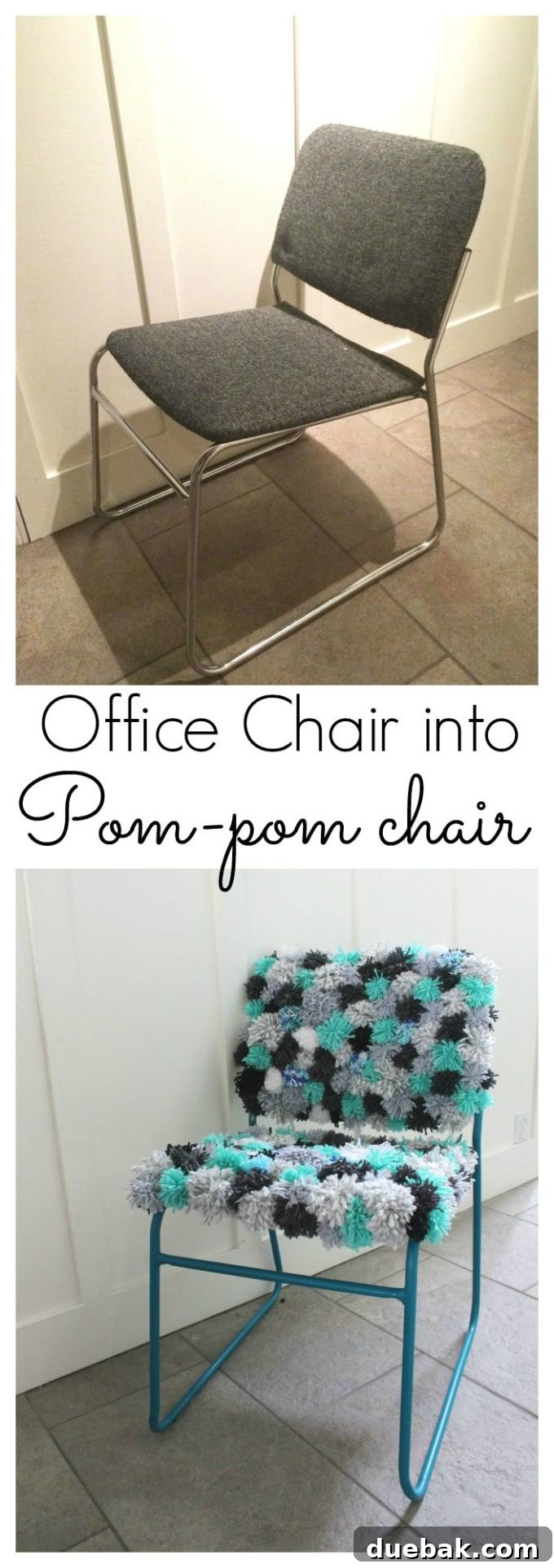
Behold the ‘before’ image of our unassuming protagonist: a classic, perhaps even quintessential, office chair. It was, without a doubt, a plain Jane. While certainly functional, it lacked any discernible spark or personality. Yet, beneath its rather bland exterior, I recognized something crucial – it possessed truly “great bones.” The structure was solid, the frame sturdy, and the basic form was sound. This made it an ideal candidate for an upcycling project. Often, the most rewarding transformations begin with pieces that are fundamentally well-made but have lost their aesthetic appeal or simply need a fresh perspective. Its simplicity was its strength, offering a blank canvas ripe for a creative intervention.
In the realm of DIY and home decor, inspiration can strike from the most delightful corners. Lately, I had been utterly captivated by the vibrant energy and playful texture of pom-pom rugs. The way bright, contrasting color combinations or subtle, graduating ombre shades could transform a simple floor covering into a statement piece was truly inspiring. This visual trend sparked an immediate idea: what if that same charming, tactile quality could be translated onto a piece of furniture? The notion of a fun, whimsical pom-pom chair began to take shape in my mind. It seemed like the perfect solution for an otherwise drab office space that craved a touch of personality, or perhaps, an imaginative and cozy addition to a teen girl’s desk area or bedroom. This project promised not only a unique aesthetic but also a functional piece that would bring joy to its future owner.
Crafting Charisma: Tips for Your DIY Pom-Pom Chair
While I won’t delve into an exhaustive, step-by-step tutorial on making pom-poms – as I’m sure many of you have delightful memories of crafting them in your youth – I would love to share some invaluable tips and tricks that I discovered during this project. These insights are designed to help you achieve a beautifully lush and durable pom-pom chair, should you decide to embark on your own creative upcycling adventure. Remember, attention to these small details can make all the difference in the final outcome of your unique furniture piece.
- The Pom-Pom Proliferation: My initial estimation of the number of pom-poms required was, to put it mildly, dramatically underestimated. I made tons and tons, then even more, and then seemingly an endless supply beyond that! It truly seemed to take more pom-poms to achieve the desired fullness and luxurious feel for this chair than I could have ever imagined. My best advice? Start making them early, make more than you think you’ll need, and embrace the repetitive nature of the task. The sheer volume is crucial for that wonderfully plush, dense effect that makes the chair so inviting. Consider inviting friends for a “pom-pom party” to speed up the process, or invest in a good quality pom-pom maker tool to ensure consistency and efficiency.
- The Importance of Long Strings: When you’re tying off your pom-poms, resist the urge to trim the connecting strings short. Instead, leave them exceptionally long – I recommend at least 6-8 inches. These long tails are absolutely essential for securely attaching the pom-poms to your base fabric. Short strings will make it incredibly difficult to tie firm, lasting knots, leading to loose or even detached pom-poms over time. Long strings provide ample material for sturdy double knots, ensuring each pom-pom remains firmly in place, even with regular use.
- The Mesh Foundation: Your Secret Upholstery Weapon: This tip is perhaps the most crucial for the structural integrity and longevity of your pom-pom chair. Instead of trying to tie the pom-poms directly onto the chair’s existing upholstery, which can be challenging and lead to unevenness, tie them onto a separate mesh sheet. For this project, I ingeniously repurposed a foamy shelf liner – you know, the white kind with perforated holes that provides grip? This material became my ‘fabric of sorts’ to upholster the chair with. Its open, grid-like structure is perfect for threading and tying the pom-pom strings through, and its inherent flexibility allows it to conform to the chair’s curves. This method not only helps the pom-poms stay sturdy and in place but also prevents them from easily falling off, creating a much more durable and professional-looking finish. I drew general inspiration for this technique from a tutorial on Say Yes about making a pom-pom rug, adapting the concept for a furniture application.
- Achieving Ultimate Fullness and Durability: Depending on how many pom-poms you’ve created and how closely you’ve managed to place them, you might encounter some minor “bare spots,” especially around the edges or where the chair fabric flexes. To ensure a truly full and luxurious appearance, I found it beneficial to strategically glue some of the pom-poms down, particularly around the perimeter. This prevents those annoying gaps from appearing once someone sits on the chair. You could, of course, keep fluffing and adjusting the poms endlessly, much like raking a shag carpet, to temporarily hide these spots. However, for a lasting solution, a few dabs of strong fabric glue or hot glue in strategic areas can secure the pom-poms in their optimal position. The decision to glue depends on your desired level of perfection, how closely the finished piece will be scrutinized, and the anticipated wear and tear the chair will receive. For an auction piece, aiming for maximum fullness and durability is always a good strategy to enhance its appeal and value.
After: The Revelation – A Pom-Pom Paradise!
And here it is, the grand reveal! From its humble beginnings as a utilitarian office chair, this piece has been utterly transformed into a vibrant, textural delight. The sea of fluffy pom-poms has breathed new life into every contour, creating a seat that is not only visually captivating but also incredibly inviting. The chosen color palette brings a burst of playful energy, making it an undeniable focal point in any room. This is more than just a chair; it’s a testament to the power of imagination and the joy of upcycling. It stands as a prime example of how discarded items from places like the Habitat for Humanity ReStore can be reimagined and given a second, far more interesting, life, all while contributing to a noble cause. It successfully marries the goal of creating something cute and appealing with the imperative of crafting a standout piece that would surely inspire competitive bidding at the charity auction.
Now, I’m genuinely eager to hear your thoughts! What’s your verdict on this pom-pom chair transformation? Do you find it wonderfully crazy, or utterly cute? Perhaps a delightful blend of both? I truly would love to know your opinions and hear any creative ideas this project might spark in your own minds. Your feedback is always incredibly valued!
If the sheer delight of giving new life to old objects, embracing sustainable practices, and creating unique pieces through DIY projects resonates with you, then you’re in for a treat! Upcycling and repurposing items are not just hobbies; they are pathways to expressing individuality, reducing waste, and crafting a home filled with character and stories. The satisfaction of taking something forgotten and transforming it into a cherished item is truly unparalleled. You might find further inspiration and exciting ideas in these related posts, showcasing how everyday items can be reimagined into extraordinary decor:
- DIY Giant Clock: A Statement Piece from Upcycled Materials
- Repurposed Spoon Holder: Creative Storage from Found Treasures