

Transforming Your Space: The Art of DIY Granite Backsplash Removal for a Seamless Aesthetic
Embarking on a home transformation journey often reveals a fascinating truth: sometimes, the most impactful changes come from what you remove, rather than what you add. Much like our past projects – from bidding farewell to dated bi-fold doors and frosted side entrances to tackling complex built-ins and creating more breathing room – our current endeavor is deeply rooted in refining our existing space. We believe in working with what we have, subtly altering elements to better align with our personal aesthetic instead of always starting from scratch. This philosophy guides us in every decision, ensuring our home evolves into a true reflection of our style. Just as the old matted carpets and outdated curtains in our previous home were stripped away to reveal a fresh canvas, we recently embarked on a mission to remove the granite backsplash surrounding the bathroom sink in our main bedroom nook. This wasn’t just about renovation; it was about reimagining functionality and design.
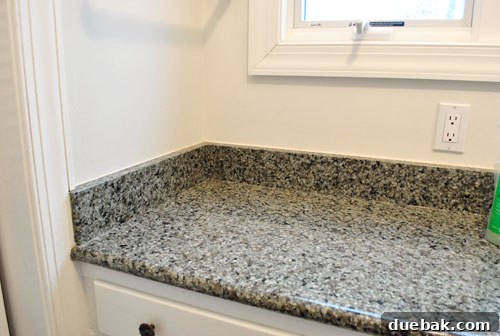
Why Bid Farewell to the Backsplash? Rethinking Bathroom Aesthetics
You might wonder why we’d remove a perfectly functional granite backsplash. The answer lies in our vision for the space. This particular sink is uniquely situated within a cozy nook in our main bedroom. While we appreciate the convenience of having a sink nearby, the existing granite backsplash seemed to loudly declare, “Look at me! I am a utilitarian sink, right here in your sleeping sanctuary!” Our goal was to soften this declaration, to transform the sink from a purely functional fixture into a more integrated, furniture-like element. By removing the backsplash, we aimed for a whispered elegance: “Hello, I’m a sink, but I blend seamlessly and stylishly, much like a sleek piece of furniture.” This project wasn’t about relocating the sink, but about reimagining its presence, allowing it to complement the room’s décor rather than stand out as an obvious bathroom component. It’s the crucial first step in a broader plan to enhance the entire area’s aesthetic appeal.
Practicality also played a significant role in our decision. Concerns about splashing or water damage without a backsplash are common, but our experience offers a reassuring solution. In our previous home, neither bathroom featured a traditional backsplash, and a combination of waterproof caulk around the edges and durable semi-gloss paint on the walls proved incredibly effective. This approach not only protected the walls but also created a clean, modern line. The caulk formed an impermeable barrier, while the semi-gloss paint provided a washable, moisture-resistant surface that stood the test of time. This tried-and-true method gave us the confidence to pursue a backsplash-free design once again, knowing we could achieve both beauty and durability without compromise.
Essential Tools for Backsplash Removal: Preparing for Your DIY Project
Before diving into the removal process, gathering the right tools is paramount. Having everything on hand ensures a smooth and efficient workflow, minimizing interruptions. Here’s a list of what you’ll need to successfully tackle a granite backsplash removal:
- Box Cutter or Utility Knife: Indispensable for scoring caulk and ensuring clean breaks. A sharp blade is crucial for precise cuts.
- Thin Metal Spackle Knife (or Putty Knife): This tool is your best friend for prying and scraping. Its thin profile allows it to get into tight spaces without causing undue damage.
- Safety Glasses: Always protect your eyes from flying debris or dust.
- Work Gloves: To protect your hands from sharp edges, caulk, and adhesive.
- Scraper Tool: For removing stubborn adhesive and caulk residue from the counter and wall.
- Lightweight Spackle or Joint Compound: Essential for repairing any damage to the drywall after removal.
- Sanding Sponge or Fine-Grit Sandpaper: For smoothing out patched drywall surfaces.
- Waterproof Paintable Caulk (e.g., DAP Door and Window Caulk): For sealing the seam between the counter and the newly exposed wall.
- Caulk Gun: For easy and controlled application of caulk.
- Clean Cloths and Water: For wiping down surfaces and cleaning tools.
- Drop Cloth or Tarp: To protect the surrounding area from dust and debris.
The DIY Process: A Step-by-Step Guide to Backsplash Removal
Once your tools are assembled, you’re ready to begin the transformation. Patience and precision are key throughout this process.
Step 1: Scoring the Caulk
The first crucial step is to meticulously score the existing caulk. This ensures that when you pry the backsplash away, it separates cleanly from both the wall and the countertop, preventing damage. I began by running a sharp box cutter along the top edge of the clear silicone caulk where the backsplash met the wall. This cut creates a clean line and releases the adhesion. Next, I used the same method to score the caulk between the bottom edge of the backsplash and the granite countertop. Take your time with these cuts; a clean score line makes the subsequent steps much easier.


Step 2: Gently Prying the Backsplash Away
With the caulk thoroughly scored, it’s time to separate the backsplash from the wall. This step requires a delicate touch to avoid damaging the drywall behind it. I carefully inserted a thin metal spackle knife into the scored lines, working it behind the backsplash and against the wall. The goal is to apply gentle, consistent pressure, wiggling the knife slightly to break the adhesive bond. Rather than forcing it, I worked slowly, gradually increasing the space between the backsplash and the wall. For the three separate pieces of granite backsplash, I used a “teetering” motion – gently rocking each piece back and forth, away from the wall and then back again. This rhythmic pressure gradually weakened the adhesive until each piece completely broke free and could be lifted away. These granite pieces were surprisingly heavy, but the satisfaction of accomplishing this on my own, while my partner John was on “Clara duty,” was immense. It truly felt like a personal victory!

The Unplanned Surprise: A Solo DIY Adventure
Confession time: this entire project began on a whim, without prior discussion with John. My intention was merely to test the feasibility of removal. However, once I started and saw the potential for a transformative change, there was no turning back – or frankly, no opportunity to explain what I was doing, as the sink area quickly looked like this! (Cue the dramatic music and the sound of children gasping in a classroom when a name is called over the loudspeaker.)

Despite the spontaneous start, I wasn’t entirely going rogue. I knew John would appreciate the “backsplash-less” concept, as we had consciously chosen this aesthetic for both of our previous bathroom renovations in our old house. My main concern was to clean up the aftermath and make it presentable before he and Clara returned. This led to a furious scraping session, working to remove the remnants of silicone caulk from the granite counter surface. I found the same trusty spackle knife I used for removal worked wonders, effortlessly cleaning the granite without a single scratch. Its versatility truly shone through in this project.

Step 3: Cleaning and Preparing the Wall Surface
After the backsplash pieces were removed and the countertop was cleaned, the wall behind revealed its less-than-glamorous state, often with adhesive residue and some minor surface damage. Using the same reliable spackle knife, I meticulously scraped off all the nasty glue and dried caulk from the drywall. This revealed a slightly roughened but significantly less bumpy surface. Removing all adhesive is vital for achieving a smooth, seamless finish later on. When John eventually came in, drawn by the sounds of my industrious scraping, he was met with a sight that was, thankfully, far less “grody” than it could have been. And to my great relief, he was not only understanding but genuinely pleased with my surprise DIY initiative. Whew!

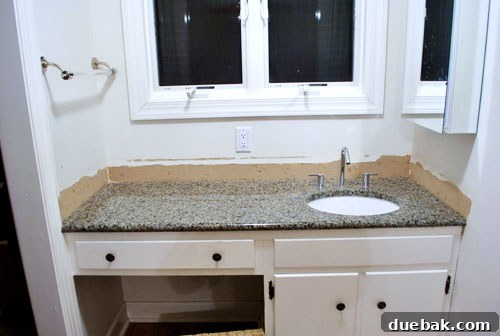
Step 4: Skim Coating and Finishing the Wall
The next critical step was to repair and smooth the drywall. To achieve a seamless look that integrated with the rest of the wall, I applied a skim coat to all the roughed-up areas. While some prefer traditional joint compound for skim coating, I opted for the lightweight DAP spackle, which I’ve used successfully in other projects. Its ease of application and sandability make it ideal for achieving a perfectly smooth and even surface. Remember, patience is key: allow the spackle to dry completely before attempting to sand. Once dry, I used a fine-grit sanding sponge to gently smooth the patched areas, ensuring they were perfectly flush with the surrounding wall. This meticulous attention to detail is what truly elevates a DIY project to a professional finish.
Step 5: Sealing with Waterproof Caulk
With the drywall flawlessly smooth, the final touch was to seal the perimeter of the countertop. I used a high-quality white waterproof paintable caulk (specifically, the DAP door and window variety, known for its durability and flexibility). Applying a thin, even bead of caulk along the join between the granite counter and the newly repaired wall fills any tiny hairline cracks and creates a robust seal. This prevents any water from collecting or dripping behind the counter, safeguarding against moisture damage and ensuring the longevity of our beautiful new design. This step not only provides essential protection but also contributes to the clean, finished aesthetic we were striving for.

The Transformed Space: A Glimpse into the Future
Even without the final coat of paint, the difference is remarkable. From a distance, the sink area now exudes a much cleaner, more integrated feel (please disregard the baskets and current clutter – organizing is always the next step!). The absence of the bulky granite backsplash immediately lightens the space, making the nook feel more expansive and less like a confined utility area. Comparing it to its “glory days” – the day we moved in, before removing the bi-fold doors and, of course, that prominent backsplash – the transformation is undeniably significant. The overall visual noise has been dramatically reduced, paving the way for a serene and harmonious bedroom environment.
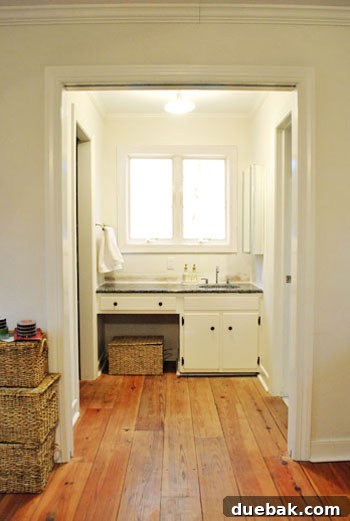
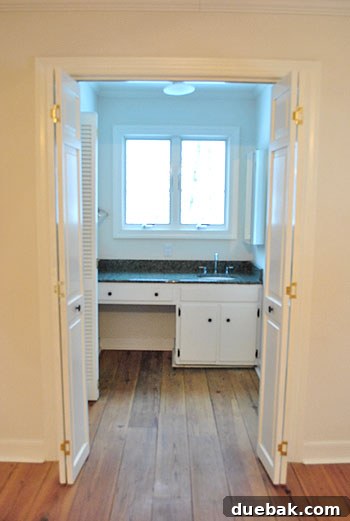
My apologies for the slightly distorted blue light in the older photos; mastering the nuances of our Nikon camera is still an ongoing learning process! Regardless of photographic imperfections, the “after” picture, even in its current state, fills us with enthusiasm. We can vividly envision how a fresh coat of wipeable semi-gloss paint will further enhance the walls of that little nook, adding both beauty and practicality. Moreover, this is just the beginning of our ambitious plans for this area, all designed to make it feel even less like a conventional “bathroom sink” and more like an intentional design feature within our bedroom. As for the three slabs of granite we removed? They’re headed straight to the Habitat For Humanity ReStore. It’s our hope that someone else might find a perfect use for them – perhaps for a homeowner who might, contrary to our design choice, wish to add a backsplash back into their home, especially if they acquired it from someone who, like me, impulsively stripped theirs out while their partner was minding the baby. Haha!
Conclusion: Empowering Your Home’s Potential
This DIY backsplash removal project stands as a testament to the power of thoughtful renovation and the belief that a house truly becomes a home through personalized touches. By embracing simplicity and focusing on elements that enhance comfort and style, we’ve taken a significant step in transforming our bedroom nook from a functional but visually jarring area into a more cohesive and elegant part of our living space. We hope our experience encourages you to look at your own home with a fresh perspective, identifying small yet impactful changes that can dramatically improve your environment. Whether it’s removing an outdated fixture or simply repainting a wall, every DIY project contributes to making your home uniquely yours. So, go ahead, grab those tools, and unlock the full potential of your living spaces – one thoughtful renovation at a time!